
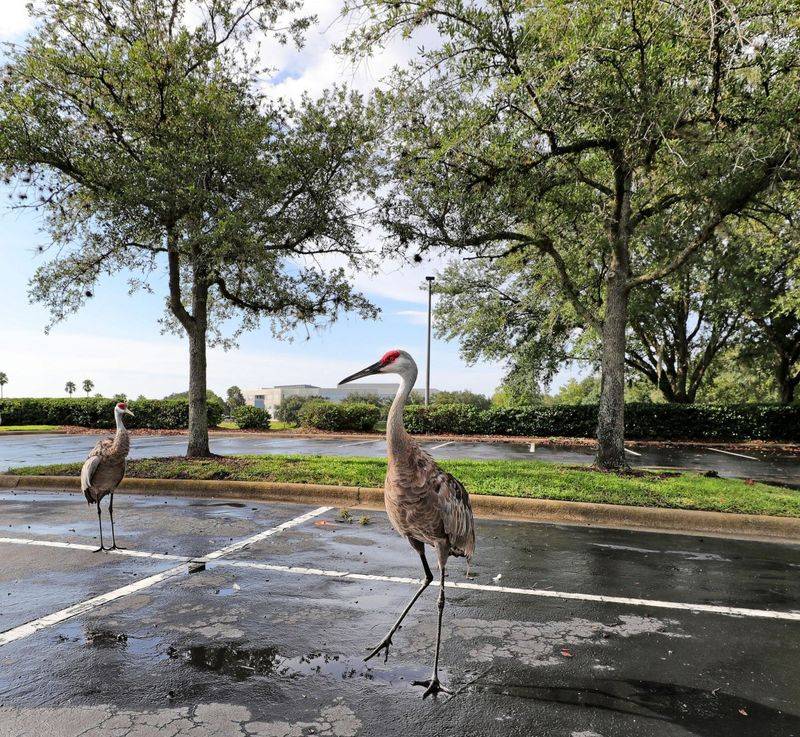
Walk outside on a fall morning in Florida, and you might find a tall gray bird with a red forehead stalking across your grass. Sandhill cranes live in Florida all year, and in late fall more of them arrive from the north to spend the winter.
Knowing which cranes are around, and why they like your lawn, helps you enjoy them and protect your turf without hurting the birds.
Florida’s fall crane season brings residents and migrants together
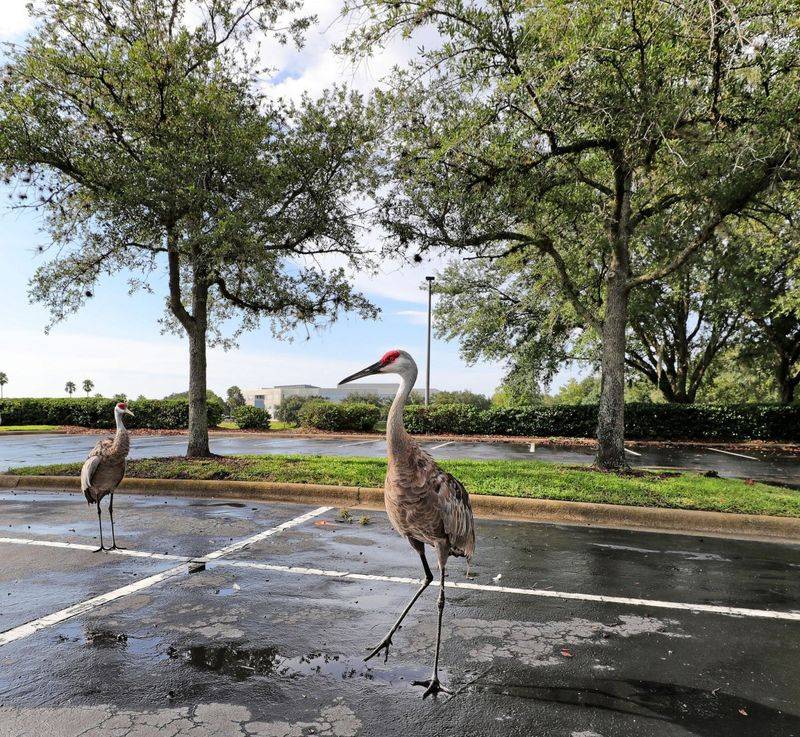
Florida has a mix of cranes, and that mix changes with the seasons. A resident subspecies, the Florida sandhill crane, lives here year-round and nests in the state.
Each fall and winter, migratory greater sandhill cranes from farther north also settle in Florida to spend the colder months.
Timing is a broad pattern, not a calendar appointment. FWC’s sandhill crane profile says large flocks arrive in November and December and leave in March and April.
FWC’s conservation guidelines and UF/IFAS Extension give a wider window, with arrivals in October and November and departures from January through March. Because sources differ, think of it as roughly October through December for arrivals and late winter into spring for departures.
So a crane in your yard in October or November may line up with migration season. It might also be one of the resident birds that live in your neighborhood and visit the same lawns year after year.
Residents are common in suburbs, and nothing about a single visit tells you which group a bird belongs to.
Think of fall as the time when the local crane population can grow, not as a signal that the bird in front of you just flew in from the Midwest. That small distinction keeps your expectations realistic and your wildlife watching accurate.
A yard visit cannot predict winter weather
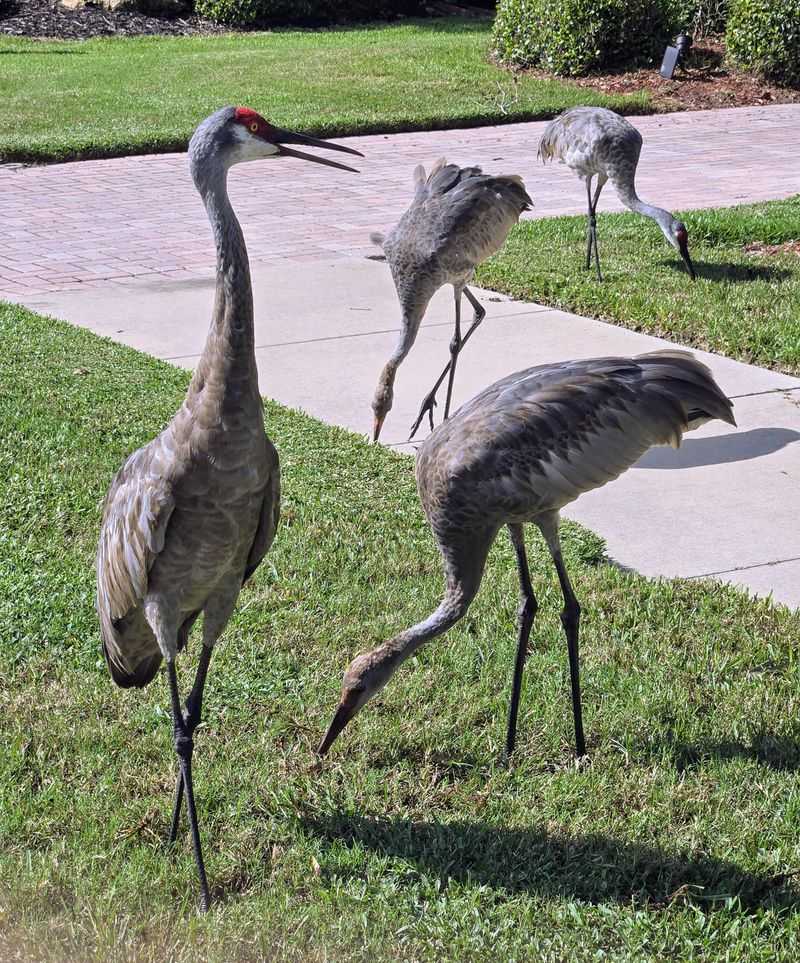
Residents and migrants look so much alike that even experienced observers struggle to tell them apart. FWC’s species conservation guidelines treat the two subspecies as hard to separate visually.
That means the crane in your yard could be local or from the north, and you cannot know by looking.
Here is what the sightings do tell you. Fall is when migratory cranes are heading into Florida, so more birds may be around, and open lawns are good places for them to feed.
That is a seasonal connection.
What the sightings do not tell you is whether winter will be cold, mild, early, or late. No source links a crane walking through a yard to winter severity.
Cranes move on long seasonal rhythms tied to their annual cycle, and a bird on your grass on a warm October afternoon says nothing about January.
If a neighbor says the cranes are a sign of a harsh winter, you can smile and keep watching. Check your local forecast for weather.
Use the cranes as a reminder that the season is changing and that Florida is a winter home for many birds.
Short, open lawns make foraging easier
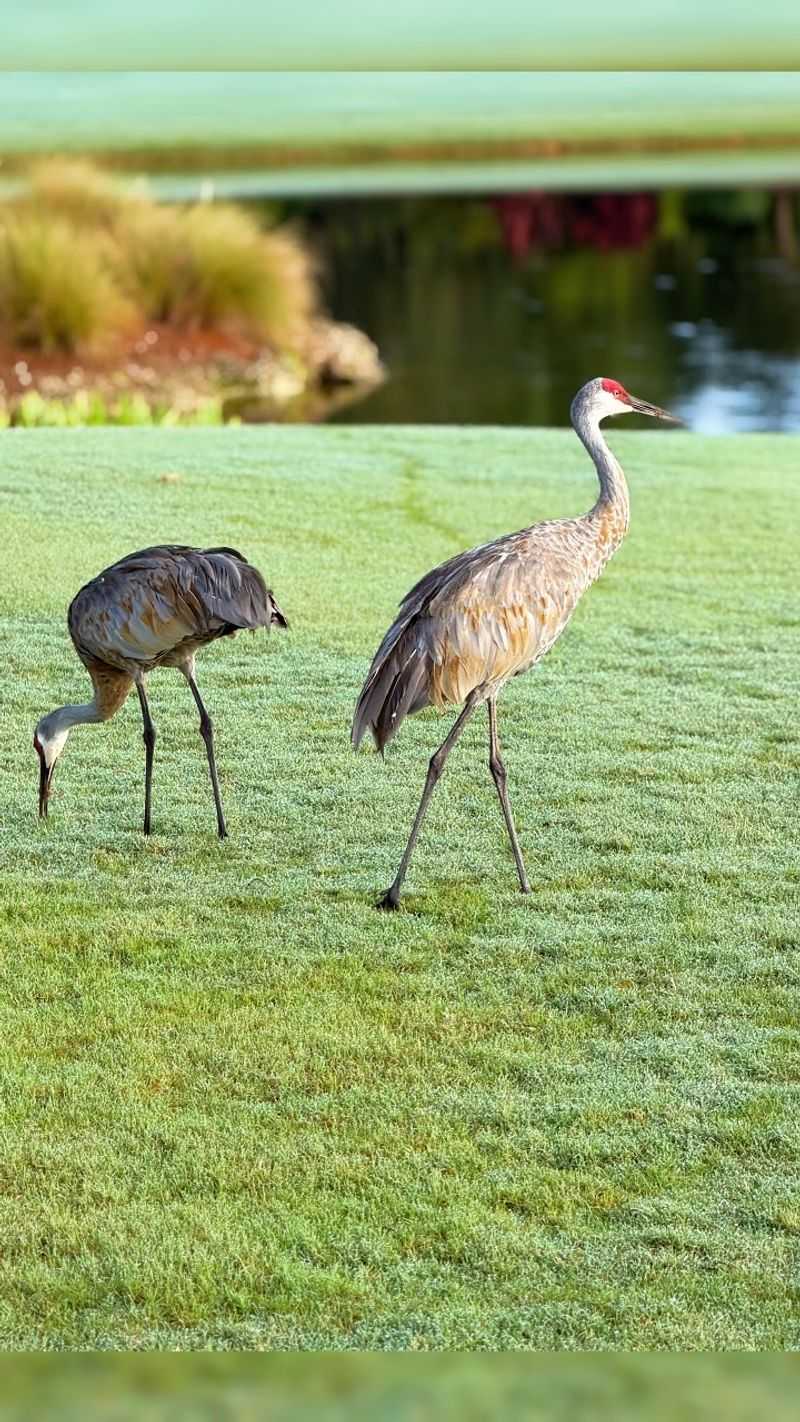
Cranes are tall birds that like to see around them while they feed. According to FWC’s Living with Sandhill Cranes guidance, Florida sandhill cranes are drawn to open, mowed grass.
Short vegetation makes it easier to walk, spot danger, and find food at ground level.
Mowed turf also exposes things that tall plants would hide. Foods FWC lists include acorns, earthworms, mole crickets, and turf grubs.
A neat yard can double as an open foraging patch, which helps explain why cranes show up on lawns, golf courses, and road edges.
Not every visit has the same cause. One pair may be passing through on a morning walk, another may be raising chicks nearby, and a third may be checking a spot that worked for them last week.
Cranes also use wetlands, pastures, and prairies, so lawns are one option among many and not their only habitat.
If your yard gets regular visitors, look at what it offers. A wide expanse of short grass, a nearby pond or wet area, and oak trees dropping acorns can all add up.
Noticing those features helps you understand the birds without needing to guess what they are eating on any given day.
Grubs are one possible draw, not a lawn diagnosis
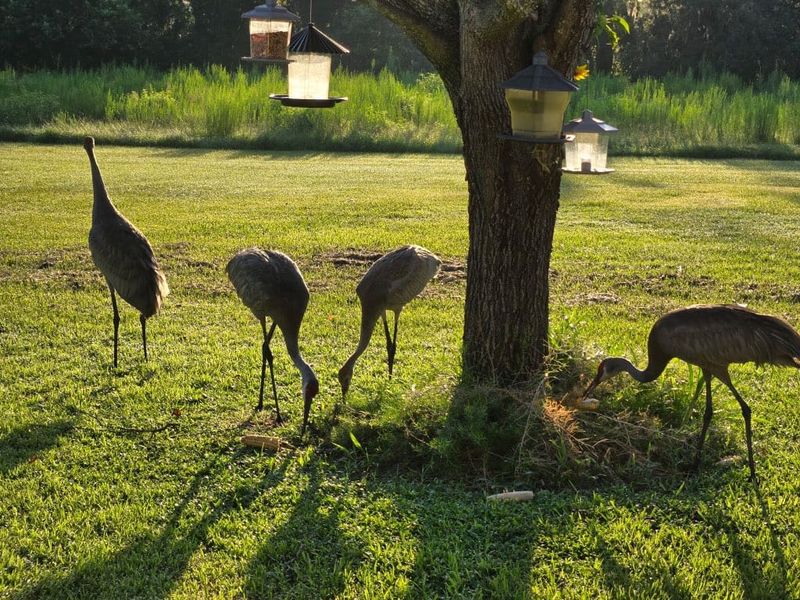
Cranes eat a wide range of foods, and lawns can hold several of them. FWC’s species profile describes a varied diet, and FWC’s yard guidance names earthworms, mole crickets, turf grubs, and acorns among possible foods.
Some plant material, including roots and shoots, can be on the menu too.
That list is a set of possibilities. Seeing a crane on your grass does not prove it is eating grubs, and it does not prove your lawn has a pest problem.
The bird may be taking earthworms, picking up acorns under an oak, or just walking through.
Digging is where homeowners notice the effects. Cranes sometimes probe the soil with their bills and can leave small holes or loosened turf.
FWC notes that this foraging can also provide natural control of turf pests, so the same behavior that mars a patch of grass may be doing some pest work.
Also, cranes are not grazing on your grass like a rabbit. If you want to know whether you actually have grubs or mole crickets, check the lawn itself, or ask your local UF/IFAS Extension office, rather than using the birds as a test.
Everyday lawn choices can limit unwanted digging
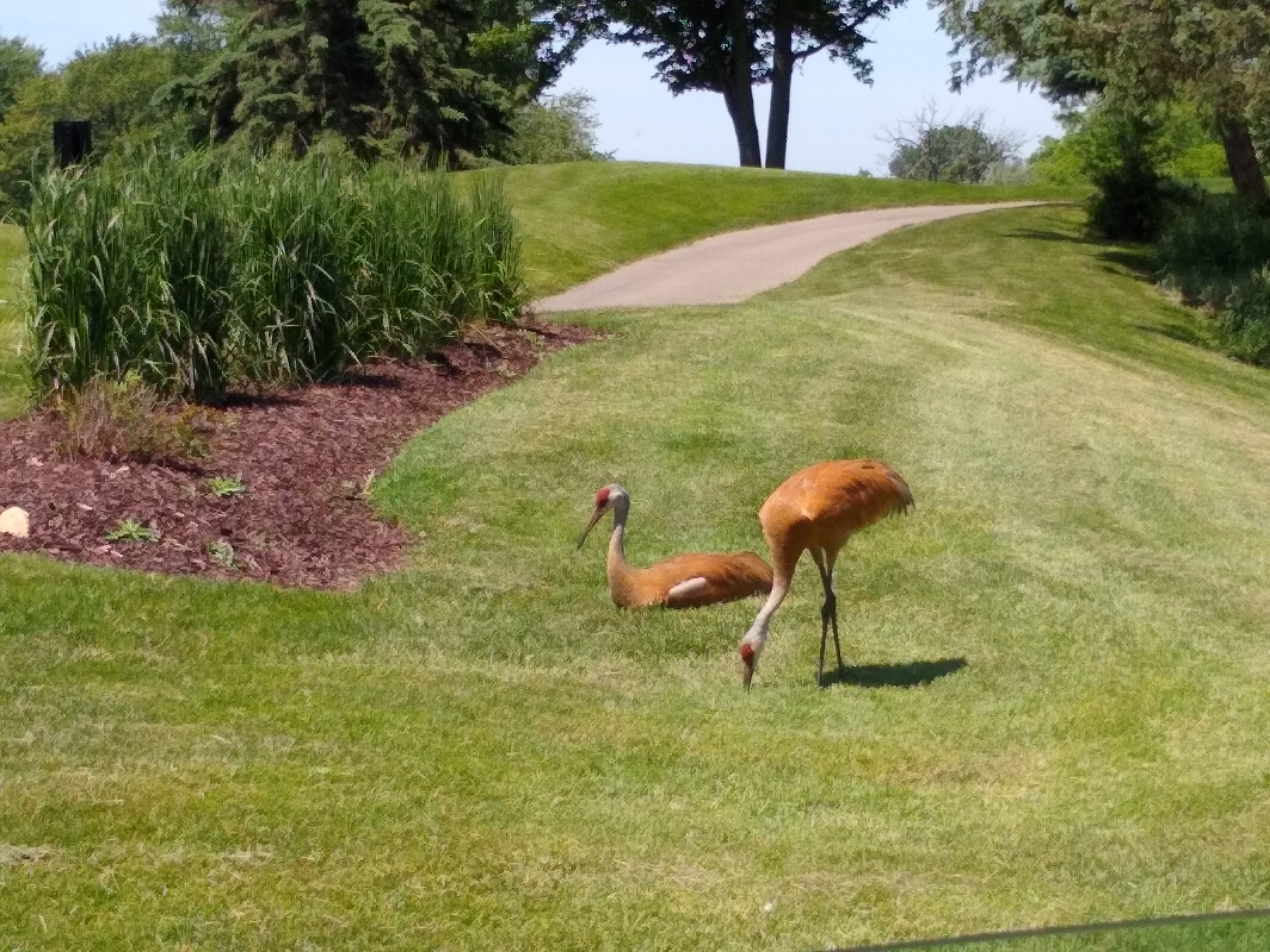
Start with water. FWC’s guidance for sandhill cranes and golf courses advises watering only as needed, because overwatering can make soil more attractive to the underground insects cranes look for.
Watering to your grass’s real needs also fits Florida’s water-saving habits.
Plants matter a little too. FWC identifies nutsedge and other turf plants as possible sources of roots and shoots that cranes dig for.
If you see a crane working at a clump of nutsedge, treat it as one possible food source, not a firm explanation.
Next, take away anything that works like a handout. Intentional feeding of cranes is illegal in Florida, and FWC’s feeding guidance explains how feeding wildlife causes problems.
Cranes can lose their wariness of people and rely less on their natural, varied diet.
That includes indirect feeding. Sweep up spilled birdseed under feeders, bring pet food dishes inside, and keep trash cans closed so cranes cannot get to the contents.
Be careful with pesticides. FWC reports that young cranes have died of pesticide poisoning after heavy pesticide use in urban lawns.
That does not mean every product is dangerous, but it is a reason to avoid heavy applications where cranes forage and to ask your local extension office about lighter options.
Enjoy the visit while respecting crane protections
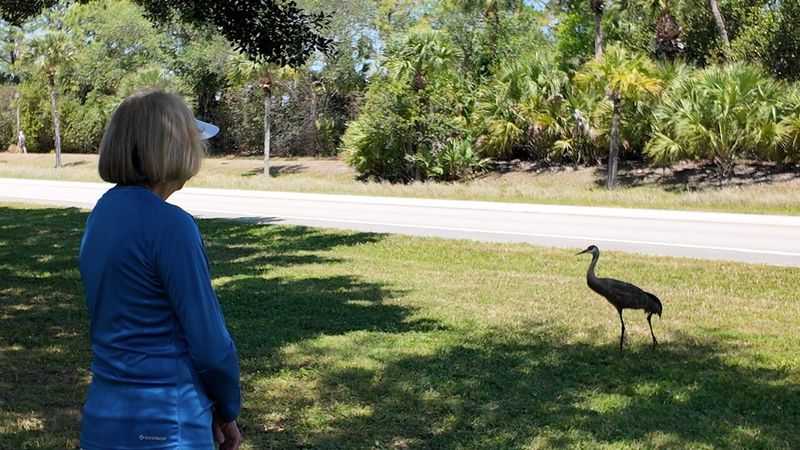
A fall crane in your yard fits Florida’s seasonal mix of resident and migratory birds, and your open lawn and its natural foods help explain why they stop to forage. Watching from a distance is the best way to enjoy them.
Let the birds move at their own pace.
Cranes are protected, so do not harm them, and skip homemade deterrents. FWC’s sandhill crane information and its conflict guidance limit hazing during breeding season and near nests or flightless young.
If a crane is causing real trouble, check current FWC guidance first.
The cranes are on a schedule much older than your lawn, and they will be gone by spring.