
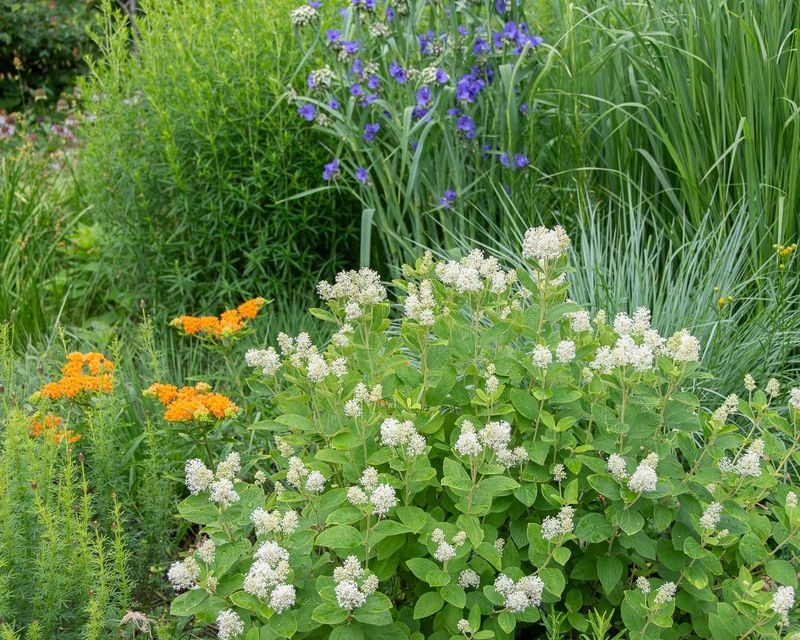
Butterfly bush earns its name every summer when adult butterflies crowd its purple spikes. But a garden that only feeds visitors leaves out the next generation, the caterpillars.
A compact North Carolina native called New Jersey tea offers nectar and leaves for caterpillars too. Here is how it compares, where it grows best, and what to do with the butterfly bush you may already own.
Butterfly bush attracts adults but cannot feed native caterpillars
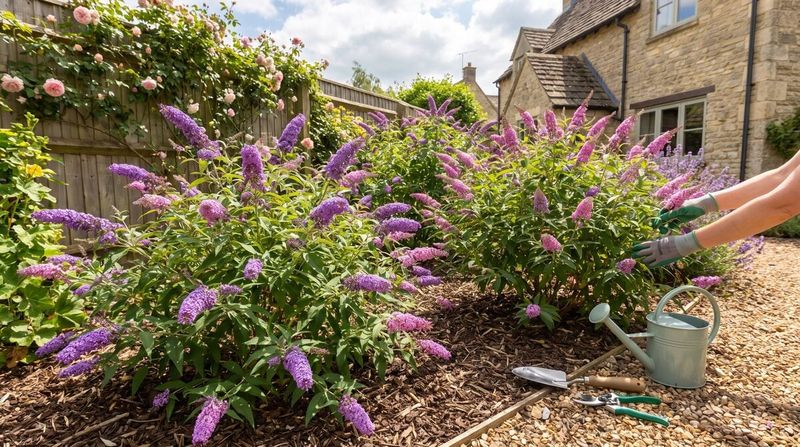
Plant a butterfly bush and the show starts fast. Adult butterflies visit its summer flowers for nectar, and that is a real draw for any gardener who wants wings in the yard.
The catch comes after the visit. NC State Extension’s plant profile says native butterfly larvae cannot feed on its leaves.
A butterfly may sip there, but it will not find a place where its caterpillars can eat.
Size matters too. NC State gives a typical range of 6 to 12 feet tall and 4 to 15 feet wide, so it can take over a bed quickly.
There is also a spread issue. The same profile notes that butterfly bush self-seeds, can naturalize, and can outcompete native plants.
NC State lists it as invasive in North Carolina’s Mountains and Piedmont. That listing is regional, so a gardener on the coast should not assume the same label applies there, though the plant’s ability to naturalize is still worth keeping in mind.
None of this means the shrub is worthless. It means that if your goal is a yard that supports more than visiting adults, a nectar source alone leaves a gap.
Filling that gap takes plants that caterpillars can actually eat.
A butterfly garden needs more than nectar
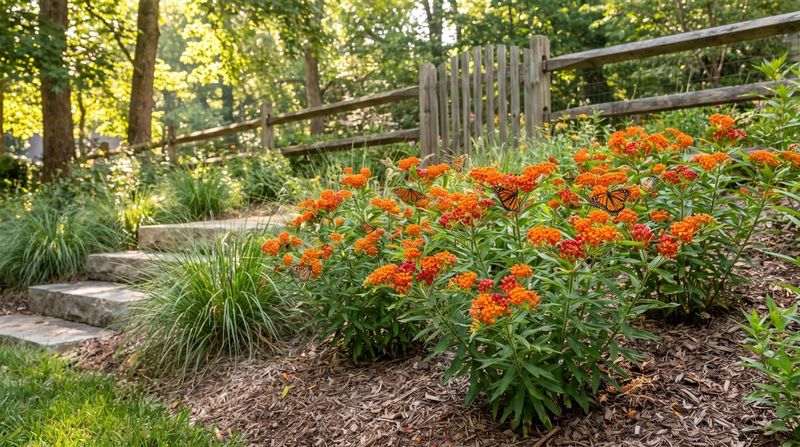
Butterflies live in stages, and each stage eats differently. Adults sip nectar from flowers.
Caterpillars chew leaves, and many species will only eat leaves from certain host plants.
That is why NC State Extension’s backyard butterfly guidance recommends combining nectar plants with larval host plants. A bed full of blooms with no host plants feeds the adults and skips the babies.
The guide also points to site conditions. Pick plants that suit your sun, soil, and moisture, because a plant struggling in the wrong spot will not feed anybody for long.
Shelter counts as well. Butterflies use vegetation at different life stages, so leaving some leafy cover and not tidying every corner gives them places to rest and develop.
Here is a quick check you can do this weekend. Walk your yard and list what you grow for nectar and what you grow for caterpillars.
If the second list is empty, you have found your next planting project.
No single shrub covers every species or every stage. Think of the garden as a team, with each plant filling a different role.
New Jersey tea provides nectar and larval food
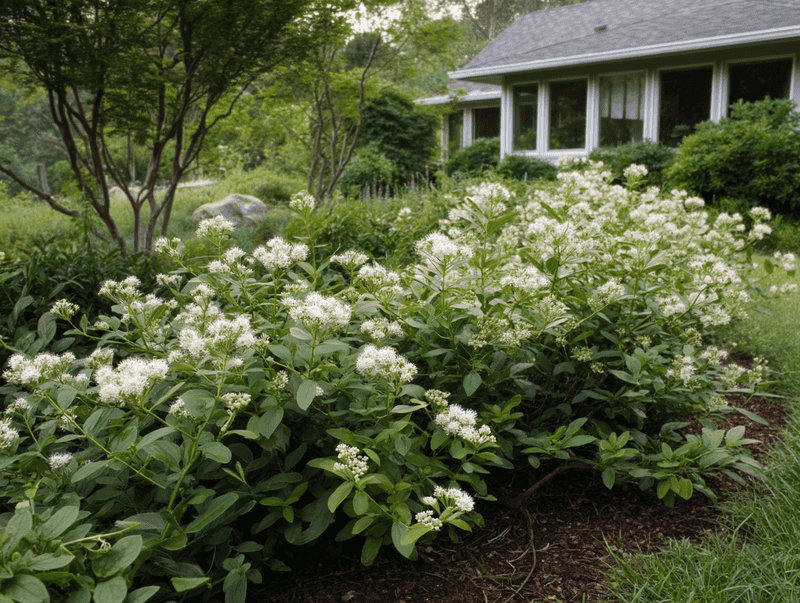
New Jersey tea (Ceanothus americanus) is the native swap worth knowing. NC State Extension lists it as native throughout North Carolina, so it belongs in every region of the state, from the mountains to the coast.
It does two jobs. Its flowers offer nectar for adult butterflies, and its leaves feed caterpillars of three butterflies: the mottled duskywing, the spring azure, and the summer azure.
NC State’s butterfly plant table also marks it as both a nectar source and a larval host.
That pairing is the real appeal. A butterfly bush gives adults a place to drink.
New Jersey tea gives adults a place to drink and gives those three species a place to raise their young, all on one plant.
Keep the claim in proportion, though. This shrub does not host every butterfly in North Carolina, and nobody has measured whether it feeds more butterflies overall than a butterfly bush.
What it offers is a different kind of value, one that reaches the caterpillar stage for a few specific species.
If you have ever wanted to see a tiny azure butterfly flutter out of your own shrubs, this is a plant that can make that happen. Expect some leaf nibbling, and treat it as a sign the plant is doing its job.
Choose a well-drained site for this compact shrub
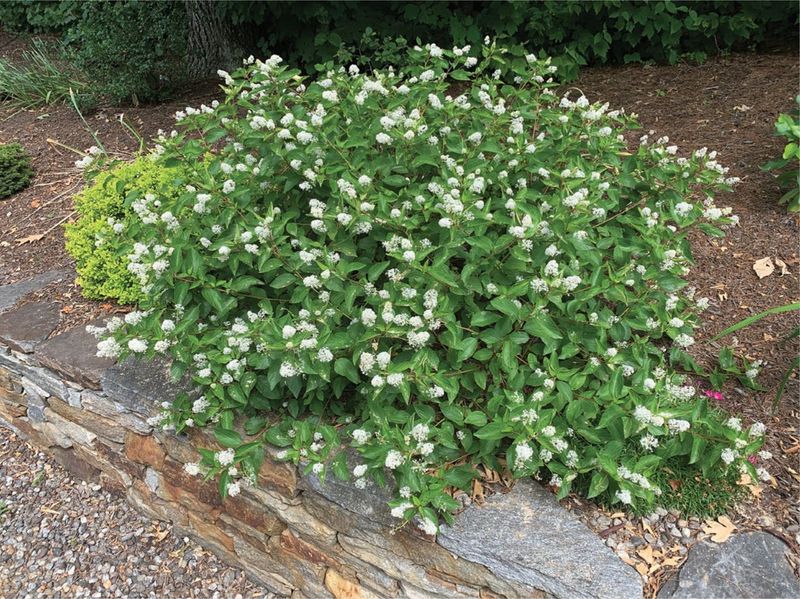
Before you buy, picture the spot. New Jersey tea is a compact shrub, typically about 3 feet tall and 5 feet wide, so it fits in places a butterfly bush would swallow.
NC State’s profile says it blooms in early summer.
Soil is the big deal. It grows best in well-drained sandy loam or rocky soil, in full sun to partial shade.
Once established, it tolerates drought, which helps during dry stretches.
That makes it a poor match for soggy ground. If water pools in your yard after rain, look at the wet-site option in the next section instead.
Plan for permanence. Deep roots make New Jersey tea hard to transplant, so you will not get an easy do-over if you plant it in the wrong place.
Mark out the spot, check the sun at several times of day, and make sure the soil drains before you dig.
Buy from a nursery rather than digging from the wild. NC State advises using nursery-grown native plants, which protects wild populations and spares you the root problem of a dug plant.
For wet ground, consider buttonbush for nectar
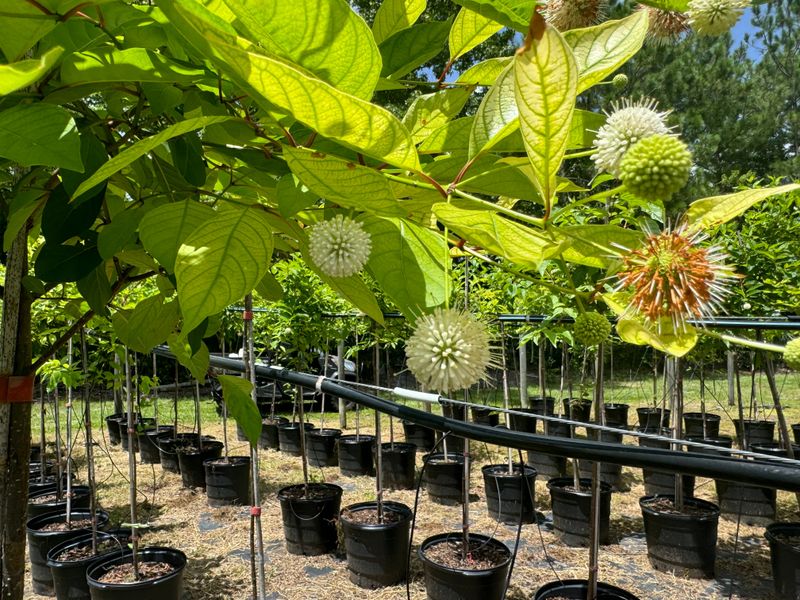
Some yards simply stay wet, and that is where buttonbush earns its spot. NC State describes it as a North Carolina native shrub for pollinator and butterfly gardens that needs consistently moist to wet soil.
Its round, ball-shaped flowers offer nectar from summer into early fall, which helps fill the calendar after many spring bloomers fade.
Set expectations correctly. NC State’s butterfly plant table marks buttonbush as a nectar plant, not a butterfly larval host.
So it does not play the same two-part role that New Jersey tea does.
There is a caterpillar link, but it belongs to a moth. A North Carolina Parks moth database entry documents a moth whose caterpillar uses buttonbush.
The takeaway is about matching plant to place. New Jersey tea wants well-drained ground, and buttonbush wants wet feet.
Pick the one that fits your soil, and you will spend less time fighting the site.
Manage an established butterfly bush before replacing it

Already own a butterfly bush? You do not have to rip it out tomorrow.
N.C. Cooperative Extension advises removing spent flower heads before they set seed and pulling any seedlings that pop up.
Where you live on your lot matters. Extension recommends replacing it with native shrubs particularly when it sits near natural areas, streams, roadsides, or woodland edges, where seeds can escape.
The reason traces back to what NC State says about the species: it self-seeds and naturalizes easily, and it is listed as invasive in the Mountains and Piedmont.
You may see cultivars sold as sterile. NC State’s Buddleja page and its Lo & Behold Pink Micro Chip profile describe some Lo & Behold cultivars as sterile or virtually seedless.
That may ease seed-spread worries for those plants, but it does not turn them into larval hosts for native butterflies, and it does not mean every cultivar behaves the same way.
A practical plan: deadhead this season, pull seedlings, and replace the shrub with a native when it is time. New Jersey tea fits dry, well-drained spots, and buttonbush suits wet ones.
Build a garden with multiple host and nectar plants
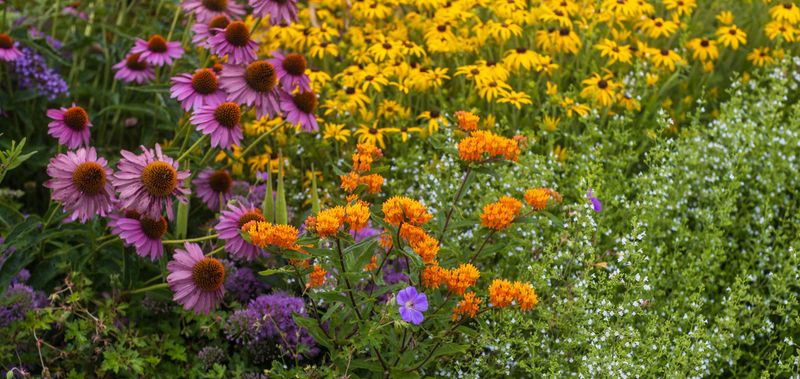
New Jersey tea is a strong two-in-one native, giving nectar and caterpillar food for three butterflies. Other species need other host plants, so pair it with more nectar and host plants that suit your yard.
Start with your conditions, then shop for nursery-grown natives that fit them.
A butterfly garden is never finished, only fuller each year.