
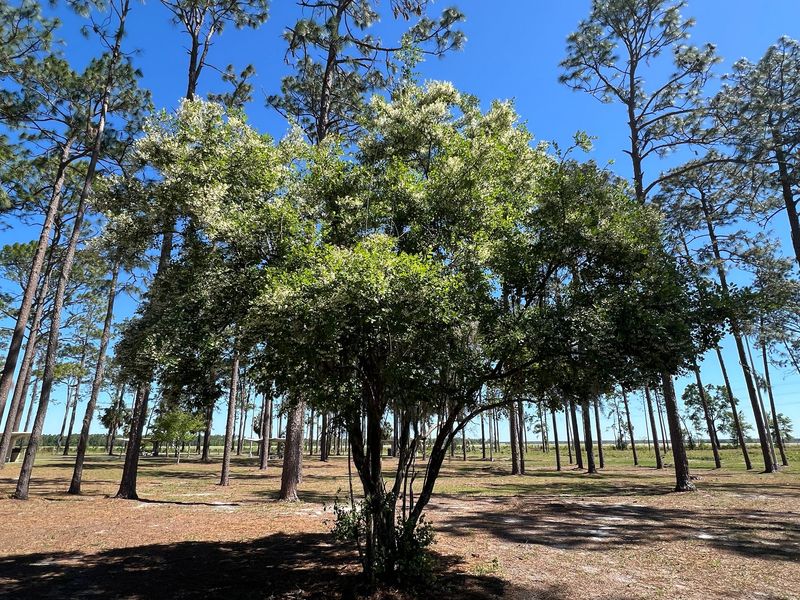
A neat driveway border should not turn every weekend into a pruning job. Florida native shrubs and small trees can bring flowers, berries, and privacy without needing to be shaped into place each season.
The trick is choosing plants that fit your part of Florida, your soil, and the space beside your pavement. These eight options offer different ways to build a handsome border with less fuss once their roots are established.
1. Yaupon Holly
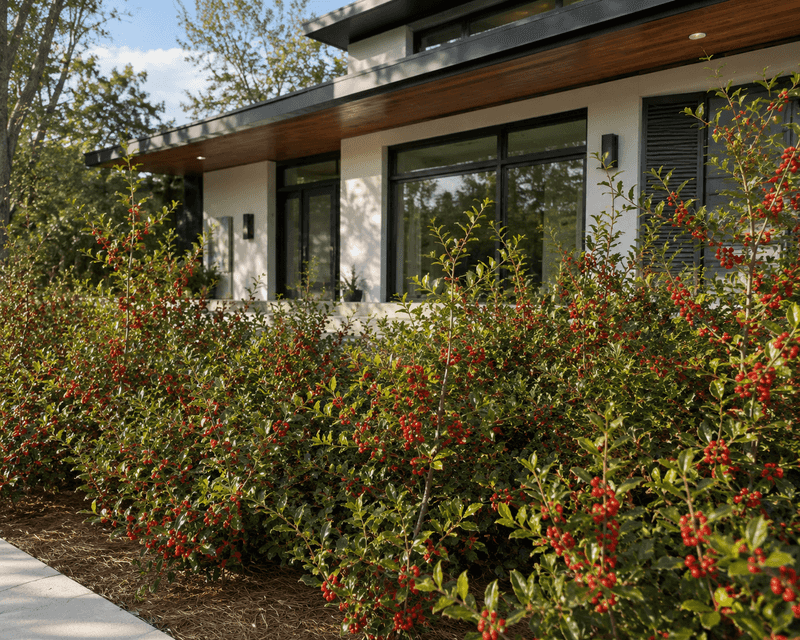
A driveway border can stay green all year without looking like a row of clipped boxes. Yaupon holly offers small leaves, fine branching, and a naturally tidy look that works especially well in North and Central Florida.
The straight species, Ilex vomitoria, commonly reaches about 15 to 25 feet tall, though named selections vary widely. Choose a compact form for a low border or a larger plant for a fence screen, checking its mature width before buying.
Full sun gives the fullest growth, but partial shade is workable. Once established, yaupon handles dry spells and a range of soils, making it useful where sandy ground dries quickly beside pavement.
Female plants produce berries when a compatible male grows nearby, giving birds a food source. Ask the nursery about plant sex if berries are part of your plan.
For less work, let the branches keep their natural outline and remove only damaged or poorly placed growth. Position plants so their mature spread stays out of the driving lane, and use low selections near driveway exits where clear sightlines matter.
2. Simpson’s Stopper
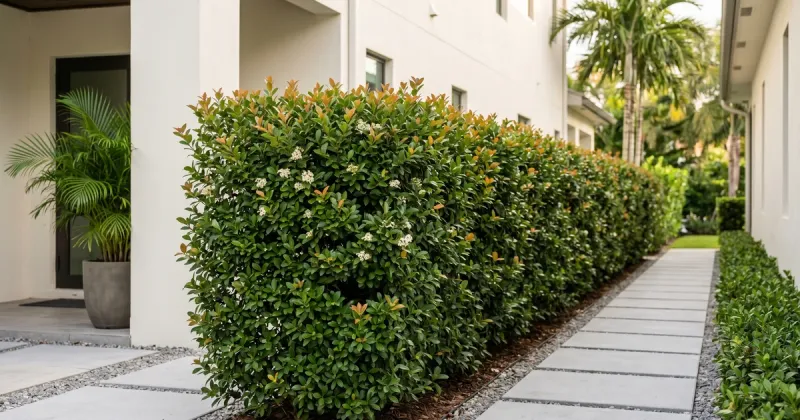
White flowers, colorful fruit, and attractive bark give one planting several seasons of interest. Simpson’s stopper brings that layered look to warmer parts of Florida without requiring a formal hedge routine.
Myrcianthes fragrans is best suited to Central and South Florida, with local cold exposure guiding placement near its northern limits. It can become a large shrub or small tree, often around 10 to 20 feet tall in landscapes, so it needs more than a narrow strip against a fence.
Plant it in sun or partial shade with well-drained soil. Established plants tolerate dry periods, but a newly planted row still needs careful watering while roots spread into the surrounding ground.
The small white blooms attract visiting insects, and birds eat the orange to red fruit. Leaving its natural shape also preserves more flowers and berries than frequent shearing would.
Use it where a fence needs softening rather than where an exact height must be maintained. A little selective pruning can reveal the bark, while enough room at planting prevents branches from becoming a regular driveway obstacle.
3. Walter’s Viburnum
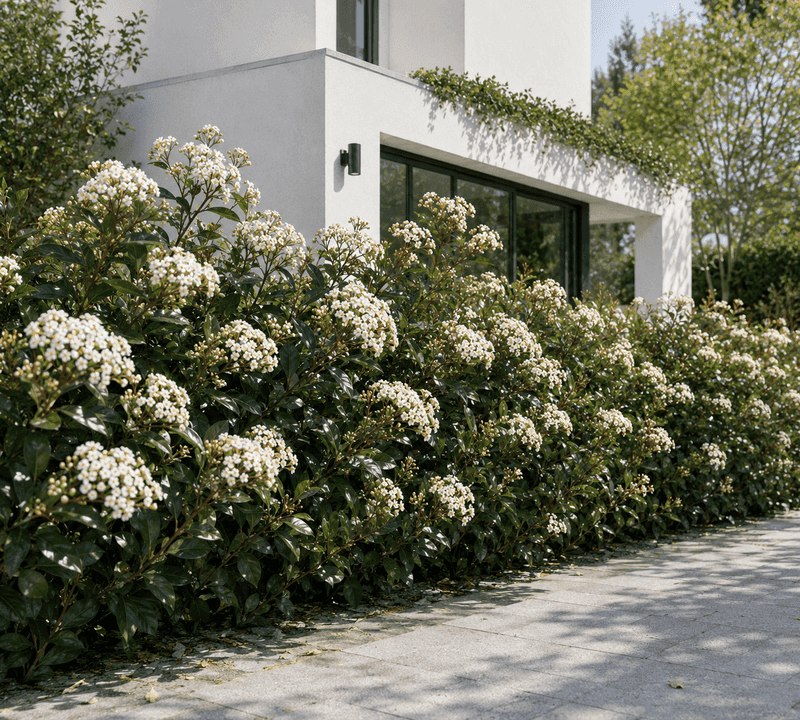
For a brief stretch in late winter or spring, a quiet green fence line can turn into a ribbon of white flowers. Walter’s viburnum delivers that seasonal show while serving as a useful screen during the rest of the year.
Viburnum obovatum fits many North and Central Florida landscapes. Its small leaves give it a fine texture, and it may be evergreen or partly deciduous depending on weather and location.
Size is the detail to settle before planting. The species can reach roughly 10 to 20 feet tall, while compact cultivars stay much shorter, so choose by the label’s mature dimensions rather than the nursery pot.
Sun to partial shade works, and the plant tolerates a range of soils, including moist sites. Some forms sucker, which can help fill a broad screen but create extra cleanup in a tight pavement strip.
Give it a bed wide enough to spread naturally instead of forcing it into a narrow hedge. If shaping is needed, prune after flowering so you keep the spring display; avoid using a tall form where it could block views of approaching traffic.
4. Wax Myrtle
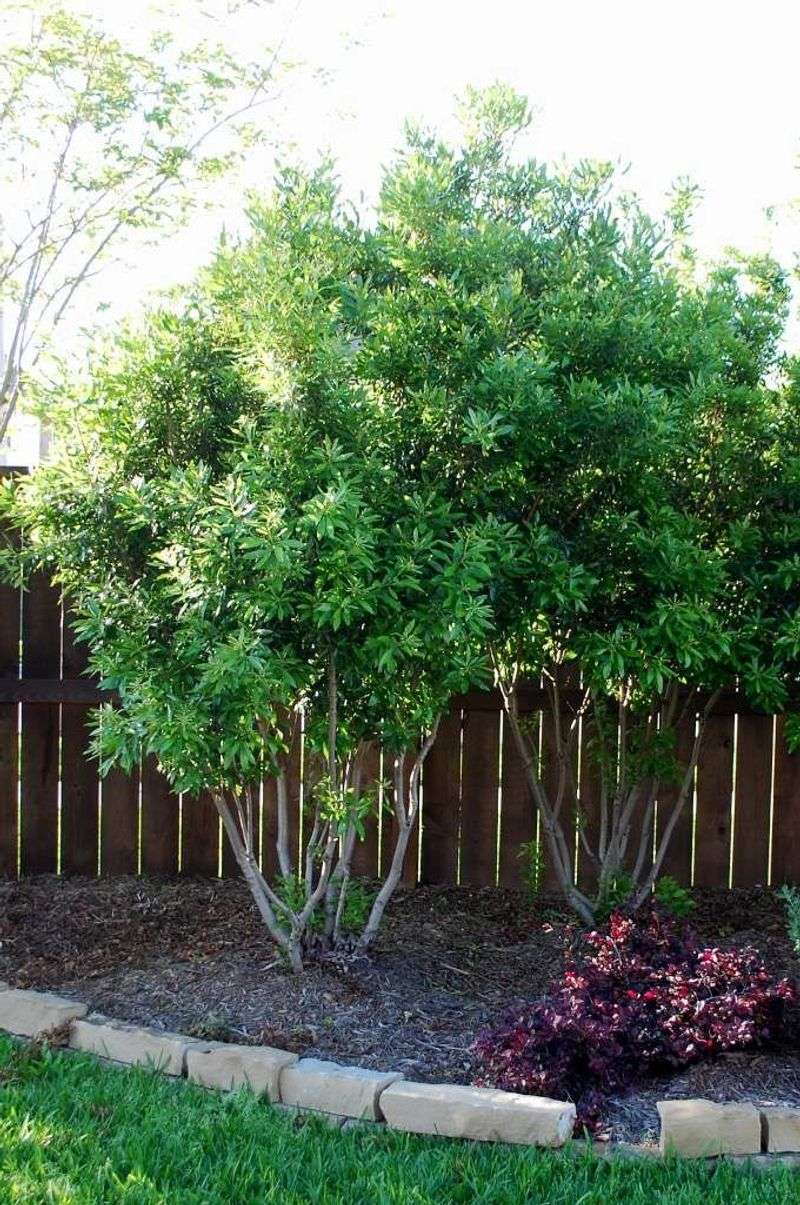
Need to soften a long, bare fence without waiting for a slow-growing specimen? Wax myrtle grows relatively quickly and creates a relaxed screen with narrow, aromatic leaves.
Morella cerifera is native across Florida and handles a broad range of conditions. It grows in sun or partial shade and tolerates both seasonally wet ground and dry periods once established, though growth changes with the site.
Expect a large shrub or small tree, often about 10 to 20 feet tall with considerable width. That makes it a better choice for a roomy property edge than a skinny bed trapped between concrete and fencing.
Female plants carry small, waxy fruits when pollinated, feeding birds that visit the yard. Its loose branching also offers cover without the rigid look of a heavily clipped hedge.
The maintenance savings depend on giving it space: crowded plants can require repeated trimming, and unwanted shoots may need removal. Keep wax myrtle away from buildings and ignition sources because its foliage is flammable, and follow local defensible-space guidance rather than placing it against the house.
5. Dahoon Holly
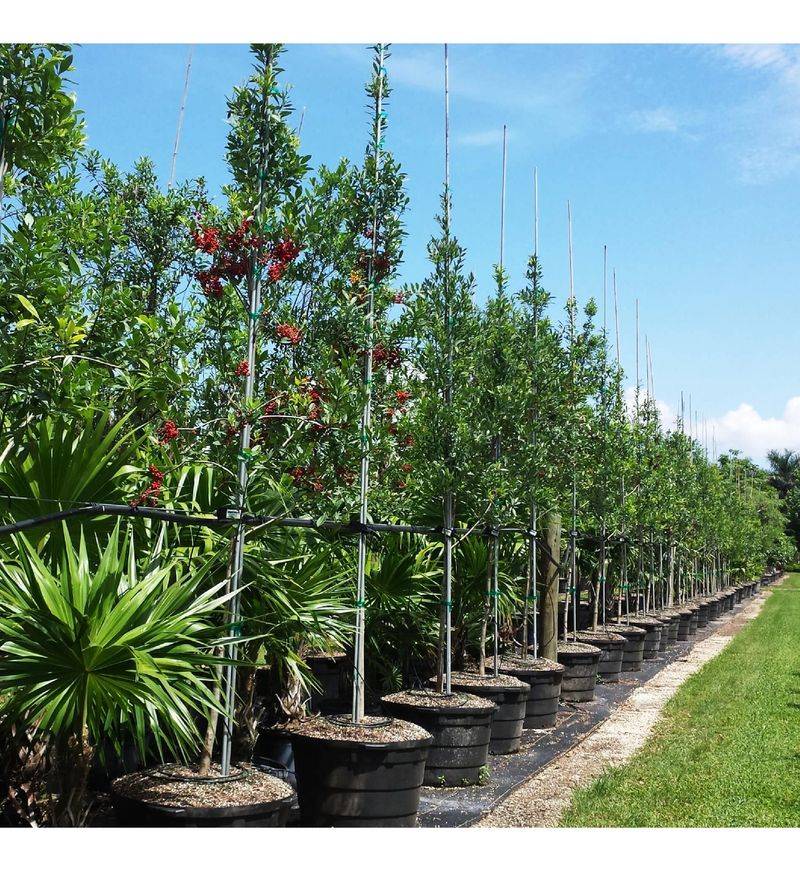
A damp stretch beside the fence calls for a different plant than the hot, dry edge of a sandy driveway. Dahoon holly earns its place where soil stays moist and many dry-site shrubs struggle.
Native throughout much of Florida, Ilex cassine typically develops into an evergreen small tree around 20 to 30 feet tall. Its upright outline can create a taller border without the broad, low bulk of some screening shrubs.
Choose sun or partial shade and a site with reliable moisture. Although established trees have some drought tolerance, a baking strip of dry fill beside concrete is not the low-maintenance setting this species prefers.
Female trees bear red fruit when a male pollinator is nearby. Birds use the berries, while the smooth-edged foliage offers a softer appearance than people often expect from a holly.
Allow room for the canopy and keep trunks well back from pavement, utilities, and fence footings. Train the young tree with light structural pruning rather than repeated topping, and check overhead wires before choosing a planting spot.
6. Florida Privet

Not every useful border plant needs showy flowers to pull its weight. Florida privet offers dependable green structure, making it a practical backdrop for a driveway or an exposed fence.
Despite the common name, Forestiera segregata is a Florida native, not one of the nonnative Ligustrum privets. It is especially useful in Central and South Florida, including suitable coastal landscapes where salt spray and sandy soil narrow the choices.
Plant in full sun or partial shade and provide good drainage. Once established, it tolerates drought well, which can reduce supplemental watering along sunny property edges.
Untrimmed plants often reach about 10 to 15 feet tall, sometimes more, and can become broad. The small flowers are easy to miss, but dark fruit on female plants provides food for birds when pollination occurs.
Let it grow as an informal screen for the easiest upkeep rather than clipping it into a precise wall. Confirm mature dimensions with the nursery, leave access for fence repairs, and avoid positioning a tall row where drivers need an open view.
7. Sparkleberry
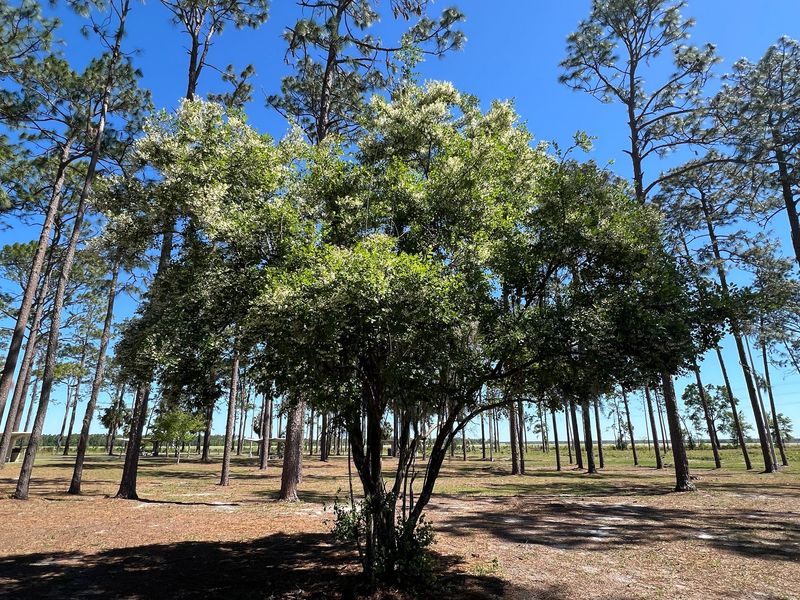
Sometimes a fence line needs character more than a solid wall of leaves. Sparkleberry brings twisting branches, peeling bark, and tiny bell-shaped flowers to a loose, woodland-style border.
Vaccinium arboreum is a native blueberry relative suited mainly to North and Central Florida. It commonly grows about 10 to 20 feet tall, with an irregular outline that looks best when it is allowed to develop naturally.
Its strongest fit is well-drained, acidic soil in sun or partial shade. That makes it worth considering for sandy yards, but not for a planting strip filled with alkaline construction debris or soil affected by concrete runoff.
Spring flowers support pollinators, and the small dark fruits feed wildlife. Leaves may persist or drop depending on conditions, so do not choose it where year-round visual screening is essential.
Use a few plants as spaced accents along a long fence rather than forcing them into a hedge. Buy nursery-grown stock, water through establishment, and keep pruning light; its branching pattern is the feature you are trying to preserve.
8. Necklacepod
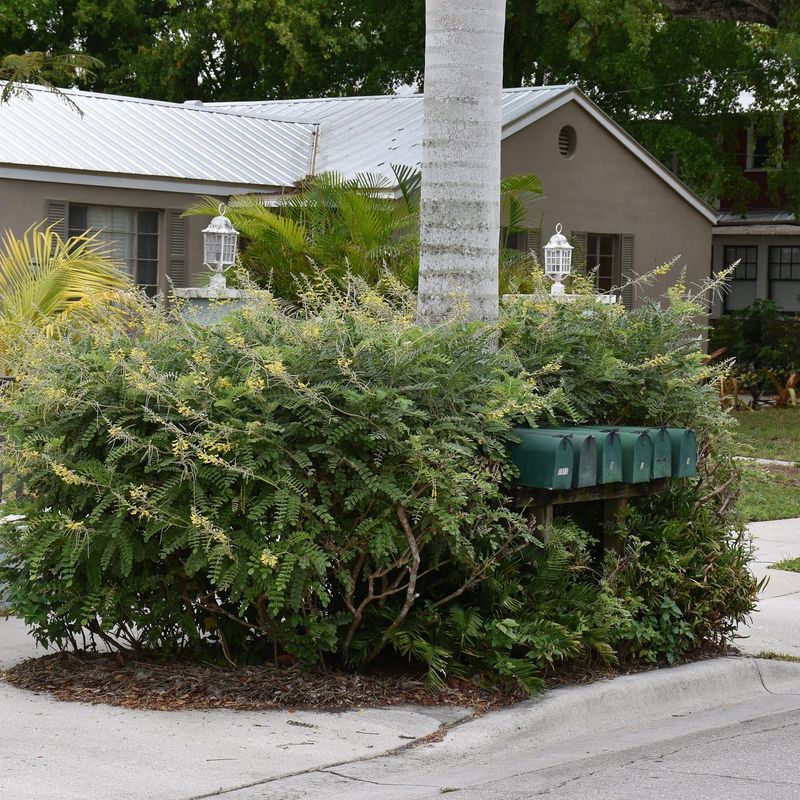
Yellow flower spikes can brighten a sunny fence without creating another small tree to manage. Necklacepod supplies that color in a loose shrub that suits warm, coastal Florida gardens.
Ask for the native Sophora tomentosa var. truncata from a nursery that knows its stock. A nonnative variety is also sold, so the botanical label matters when your goal is a genuinely Florida-native border.
This shrub generally reaches about 6 to 10 feet tall and can spread just as widely. It fits South Florida and suitable warmer coastal parts of Central Florida, but it is not a dependable choice for frost-prone inland yards.
Full sun, sandy soil, and good drainage suit it well. Once rooted in, it handles drought and coastal exposure, while yellow blooms attract pollinating insects and beadlike seedpods add a distinctive detail.
Keep its arching branches back from car doors and walking routes, and avoid sites that stay soggy. The seeds are poisonous if eaten, so place it away from children or pets likely to mouth fallen pods; selective trimming is usually more sensible than regular shearing.