
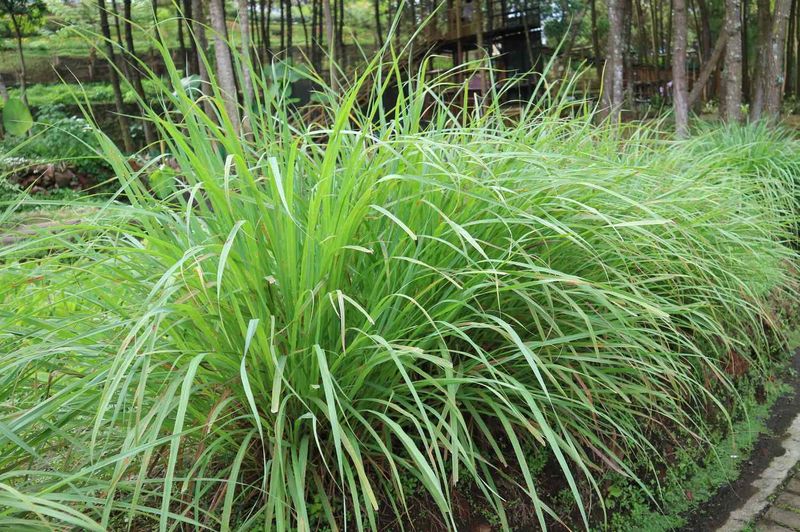
Lemongrass grows fast all summer, then a cold snap can turn the whole clump brown in a night. Many Southern gardeners lose their plant this way and have to buy a new one every spring.
A small rooted piece kept in a pot indoors gives you a chance to start next season with a plant you already own. Here is how to do it, and what to expect when winter is over.
Does your winter put the clump at risk?
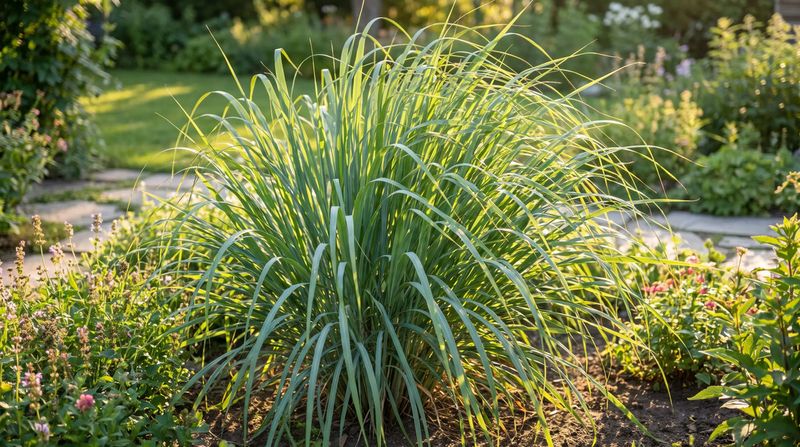
Lemongrass is a tender perennial, so cold is its main enemy. Even so, the South is not one climate.
A gardener in South Florida may see the clump come through winter outdoors, while someone in North Florida or Texas may watch it brown after a hard freeze.
UF/IFAS guidance for North-Central Florida describes lemongrass as a landscape perennial that turns brown after a hard freeze, and it suggests keeping cold-sensitive plants in movable containers. Texas A&M AgriLife lists lemongrass among ornamental grasses that may not return after freezes.
So the first question is local. Think about how cold your yard gets, whether your spot is sheltered, and how your plant did last winter.
If freezes are rare and mild where you live, you may not need to dig anything. If cold reaches your yard most years, a protected starter plant is cheap insurance.
Illinois Extension also treats lemongrass as a plant to bring indoors where winters are cold.
Move it before damaging cold arrives
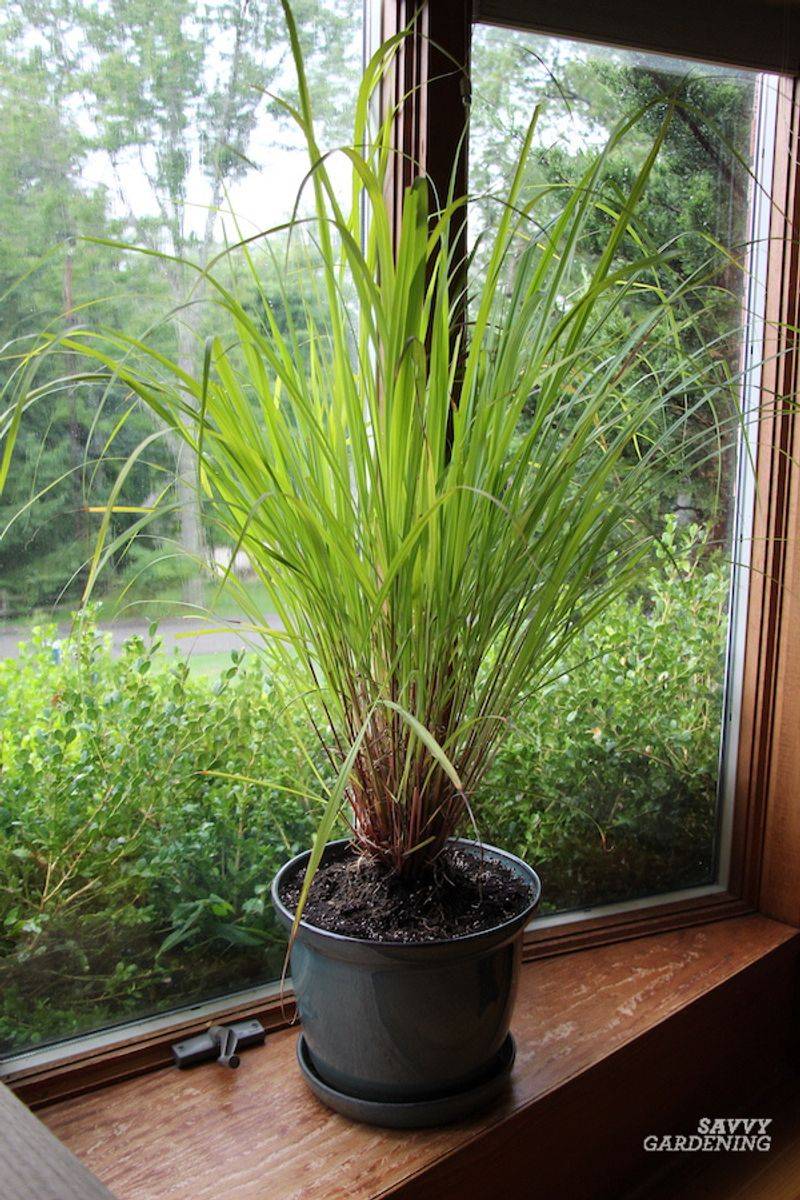
Your local forecast is the best timer you have. Plan to act before damaging cold, while nights are still cooling but nothing has hit yet.
Waiting for frost as your only signal can leave you too late.
Sources do not agree on one warning point, and that is useful to know. UC Master Gardeners of Sonoma County reports damage when temperatures drop into the 40s.
Wisconsin Horticulture advises digging before overnight temperatures reach freezing.
Those are different kinds of cold harm, so please do not treat any single number as a safe line. A practical habit is to check the extended forecast each week in fall.
When a cold night shows up in the next few days, set aside an afternoon to dig your division. Doing it a little early costs you almost nothing, and you can put the main clump back in the ground or leave it outdoors to take its chances.
Save the roots and basal growth
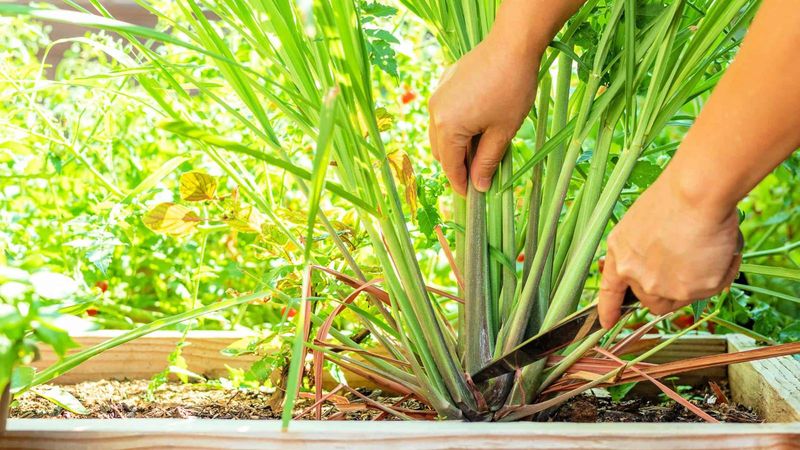
Start by putting on gloves, since lemongrass leaf edges can be sharp. Use a spade or garden fork to lift a small section from the edge of the clump.
Keep the roots attached, along with the swollen, bulb-like base of the stalks. Utah State Extension describes saving a section of the shoot base with its roots.
A loose stalk with no roots is not the same thing. Grocery store stalks or cut pieces may be worth trying for other reasons, but this rescue depends on a true rooted division.
Next, trim the tall leaves so the piece is easy to handle and fits in a pot. Sources vary on how much to take off, from about 6 to about 10 inches, as shown in UC Sonoma County guidance and a University of Guam fact sheet.
You do not need to cut level with the soil. Just keep the roots and basal growth intact.
Set the division in a pot with drainage
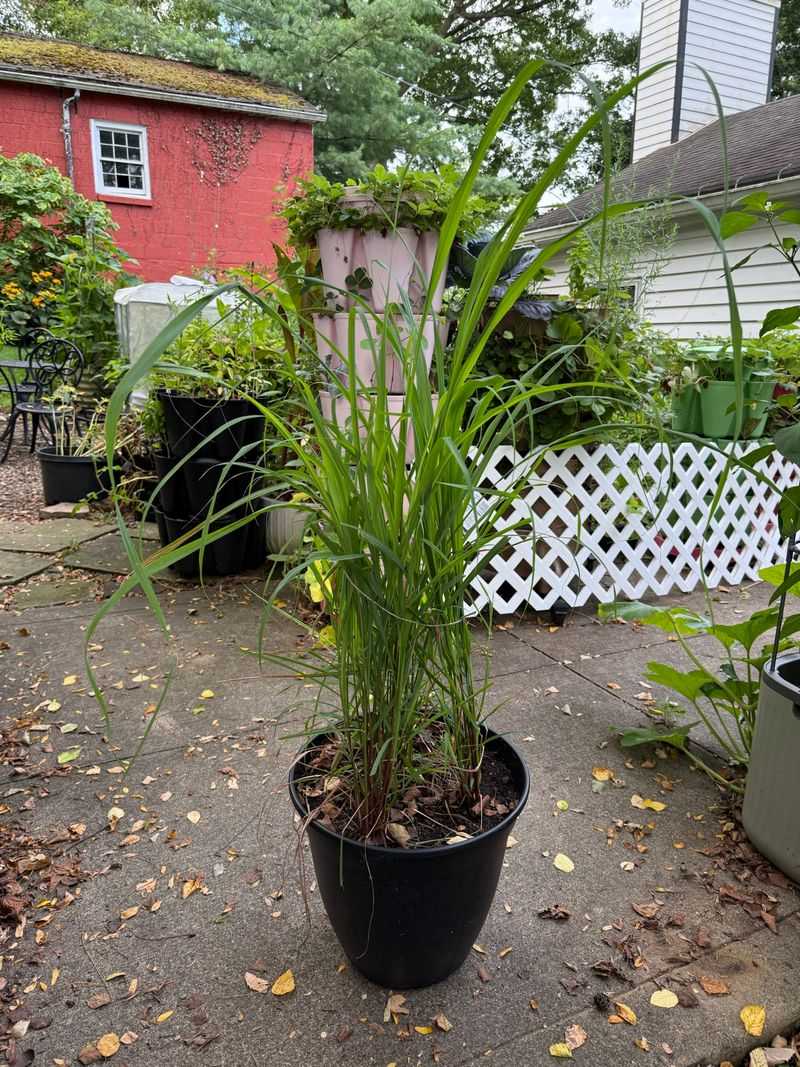
Choose a container with drainage holes and fill it with prepared potting mix. Sources do not call for a certain pot size or a special soil recipe, so use a pot that holds the roots comfortably and a mix you trust for container plants.
Set the division so the swollen base sits at about the depth it grew in the ground, then firm the mix around the roots. Water it in until moisture drains from the bottom, and let the pot empty before moving it.
Do not plant it straight into a pot and rush it indoors on the same day if the weather is still mild. A few days on a porch gives the plant a gentler change, as long as no damaging cold is forecast.
Utah State Extension recommends a warm, sunny spot for the potted plant. Illinois Extension also supports moving container plants indoors before cold.
Then carry it to its protected winter place.
Give it bright light, not a winter-harvest promise
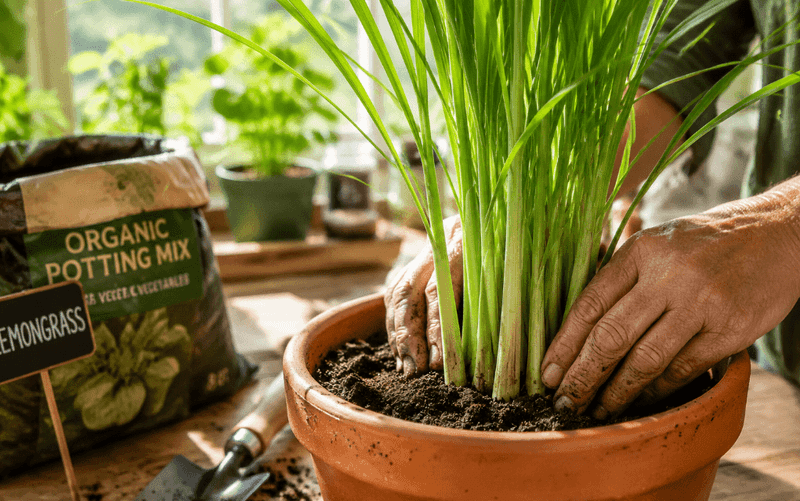
Park the pot in the warmest, brightest spot you have, such as a sunny south-facing window. Illinois Extension recommends very bright light indoors and less water and fertilizer than in summer.
Water when the top of the mix feels dry, and let extra drain away. Soggy mix is a bigger threat than a little thirst.
Skip heavy feeding while growth is slow.
Here is the honest part. Indoor light is weaker than summer sun, and Utah State Extension notes that indoor lemongrass produces fewer stalks.
Your plant may mostly sit and stay green, or some leaf tips may brown. That can still be a good outcome if the crown and roots stay alive.
Plan to buy stalks for winter cooking, and treat this pot as a starter for spring planting.
Check for pests before it joins your houseplants
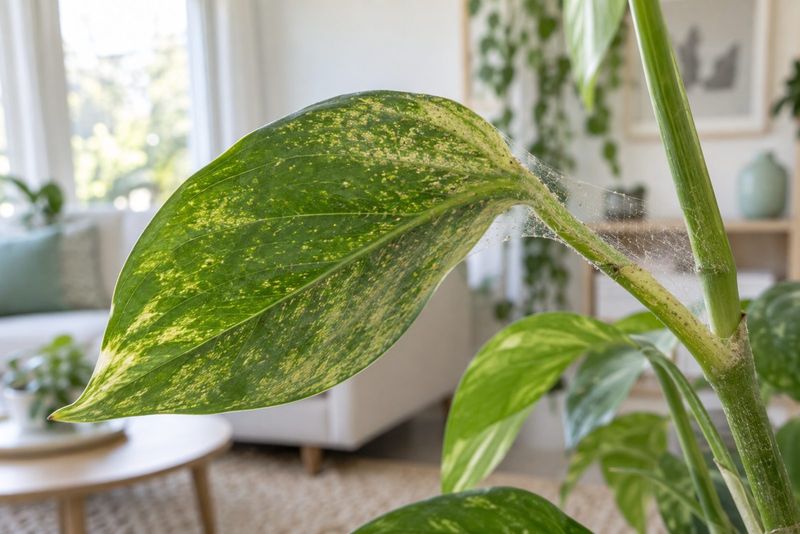
Outdoor plants can bring tiny hitchhikers inside. Look over the leaves, the leaf bases, and the surface of the mix before the pot comes in.
Nebraska Extension recommends inspecting plants you bring in and keeping them apart from other houseplants for several weeks.
Watch for spider mites in particular. Utah State Extension lists them as an indoor problem on lemongrass.
Fine webbing or pale speckles on the leaves are clues worth acting on.
Wear gloves while handling the plant, because Wisconsin Horticulture notes that leaf edges can be sharp enough to cut skin. If you have pets, UC Sonoma County cautions that dogs, cats, and horses may get stomach upset if they eat large amounts, so set the pot where it will not get chewed.
Give one rooted division a chance to reach spring
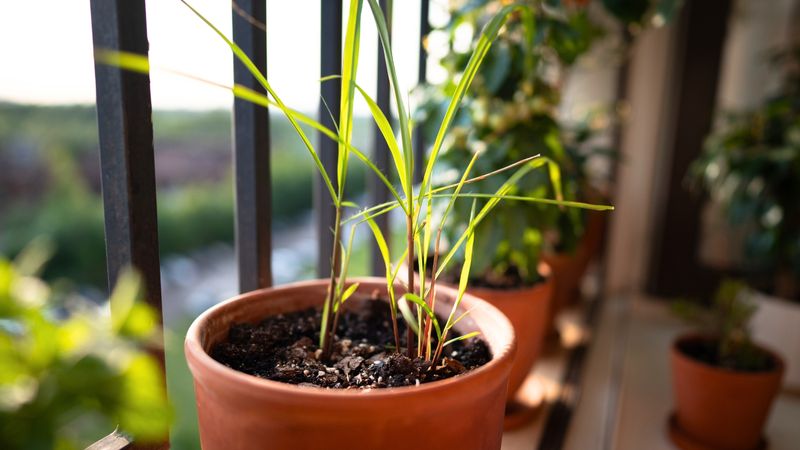
The routine is short: watch your local cold risk, lift a rooted division with its basal growth, pot it, and keep it bright and warm. Utah State Extension and Illinois Extension both support this kind of indoor carryover.
It gives a starter plant a chance, not a promise. Some pots thrive and some fade.
A small pot on a windowsill is a quiet bet on summer.