
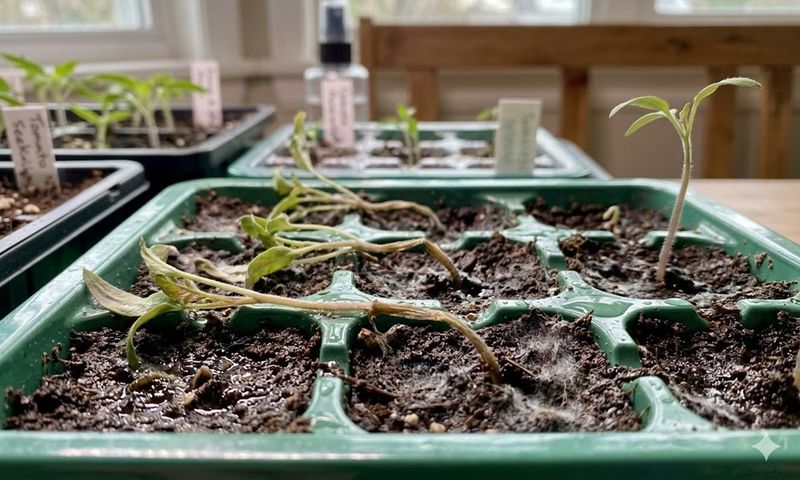
You water the bed, tuck in a row of tiny spinach seedlings, and a few days later they are lying flat like tipped-over pencils. It feels sudden, and it is easy to blame the weather or a mystery disease.
Damping-off is one possible cause, but it is not the only one. A few quick checks at the base of the plant can point you toward the likely culprit and help your next sowing do better.
Could damping-off be causing the collapse?
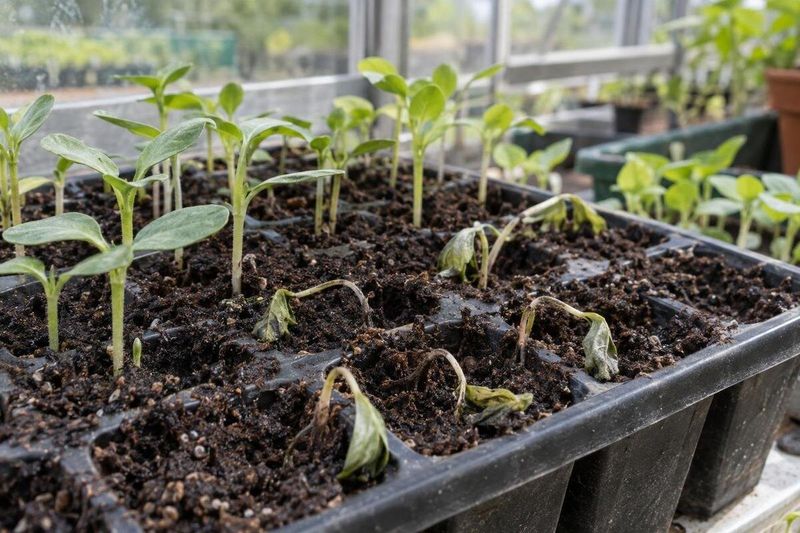
Look closely at where the seedlings fell. Damping-off becomes a plausible suspect when seeds fail to come up well, or when young plants develop water-soaked, discolored, or pinched stems near the soil line and then topple over.
Gently lift one fallen seedling and check the stem base and roots. A soft, narrowed, or rotting stem, along with brown, decayed roots, fits the pattern described in UC IPM spinach guidance.
Keep in mind that these signs are clues, not proof. A seedling falling over does not confirm infection, and you cannot name the exact pathogen just by looking.
Think of this check as the first step in sorting out what happened, so you can choose the right fix.
Wet soil raises risk, but cool weather is not the whole cause
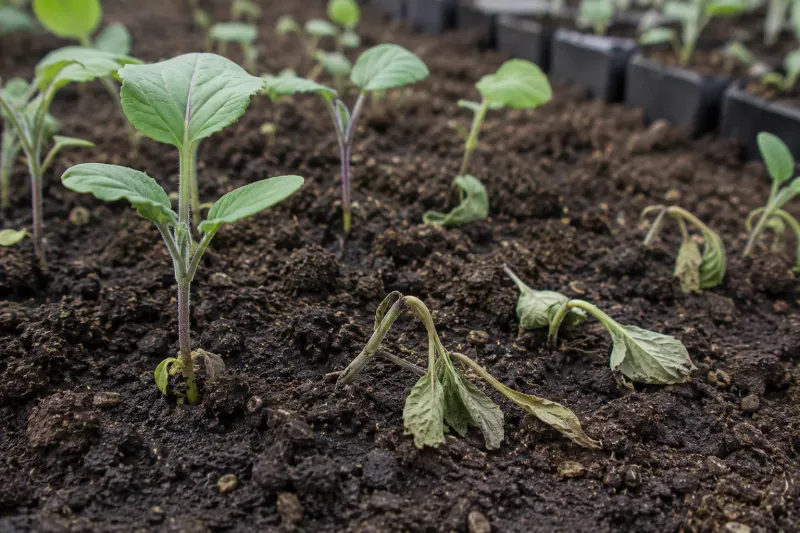
Damping-off is not a single disease. It is a group of problems that can involve different soilborne organisms, and in spinach those include Pythium, Rhizoctonia, and Fusarium, as UC IPM spinach guidance notes.
Saturated or poorly drained soil raises the odds of trouble.
Temperature is where the headline gets too simple. Some Pythium species are favored by cool, wet conditions, but the pathogens do not all follow one temperature rule.
Risk also depends on soil texture, irrigation, and whether the pathogen is present at all.
Spinach itself likes cool weather, and that is a different point from saying any cool bed will cause damping-off. Cool weather alone does not explain a collapse.
Wetness is the piece you can most easily change.
Check whether the stem is rotted or cut
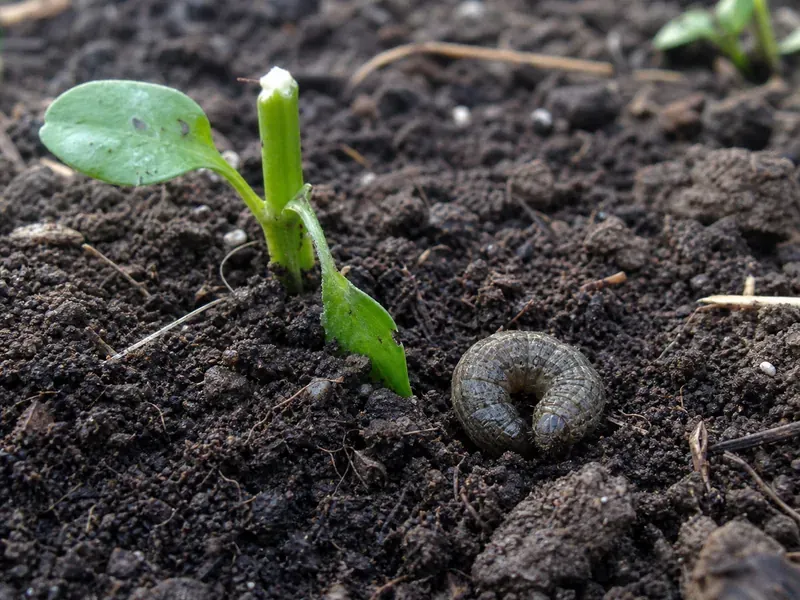
Not every fallen seedling points to disease. If the stem looks soft, dark, and mushy near the soil, rot is a good bet.
If it looks chewed through at or just below ground level, or the plant has vanished, cutworms may be the real problem, as University of Maryland Extension describes.
A quick dig can help. Scratch around the base of a damaged seedling in the morning and look for curled, gray or brown caterpillars in the top inch or two of soil.
Excess water adds another wrinkle. Soggy soil can injure roots and cause symptoms that look like disease, and UC IPM notes that some root rot symptoms can come from overwatering without a pathogen.
If the clues overlap, treat wet soil as a problem either way and fix it.
Improve drainage before sowing again
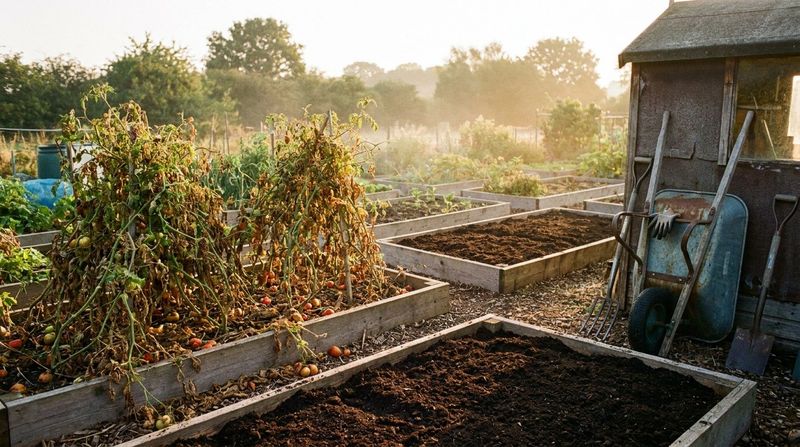
Before you reseed, walk the bed after a rain. Standing water, a soggy spot that stays dark for days, or hard, compacted soil are all signs the seedlings had a rough start.
UC IPM spinach guidance stresses preventing flooding and saturated soil when preparing beds.
You have a few options. Move the row to a better-drained spot, loosen compacted soil, or build the bed up.
A raised bed is one choice, not a requirement, and Clemson Extension says a bed about 3 inches high may reduce damping-off risk in spinach seedlings.
Better drainage lowers the odds of another loss, but it cannot guarantee survival. Think of it as stacking the deck in your favor.
Keep the seed zone moist, not saturated
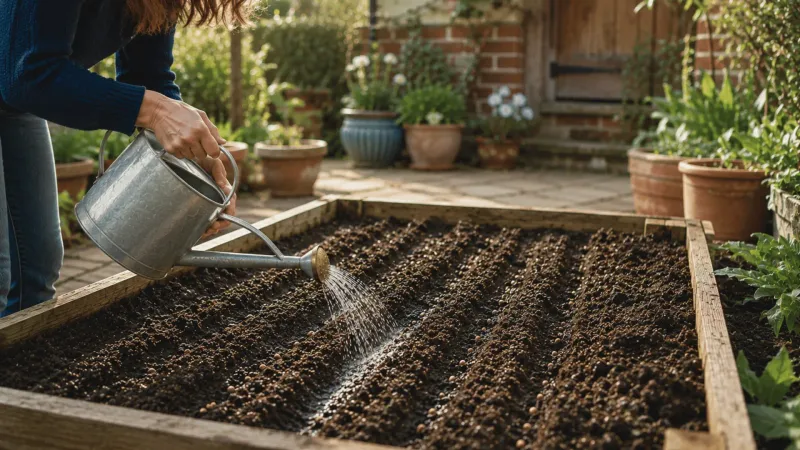
Spinach seed needs steady moisture to sprout evenly, so the goal is damp, not drenched. Aim for a seed zone that feels like a wrung-out sponge, and avoid flooding or keeping it waterlogged, which is the approach UC IPM spinach guidance supports for even, rapid germination.
Skip the fixed schedule. A week of fall rain may mean you skip watering, while a dry, breezy stretch may call for a light daily sprinkle.
A sandy Florida bed drains fast and a heavy Texas clay bed does not, so check the soil with a finger before you water.
Letting the bed dry out completely is not the answer either, since seeds and tiny sprouts need moisture. Light, careful watering that matches the weather can help lower risk without guaranteeing results.
Use local guidance for fall planting
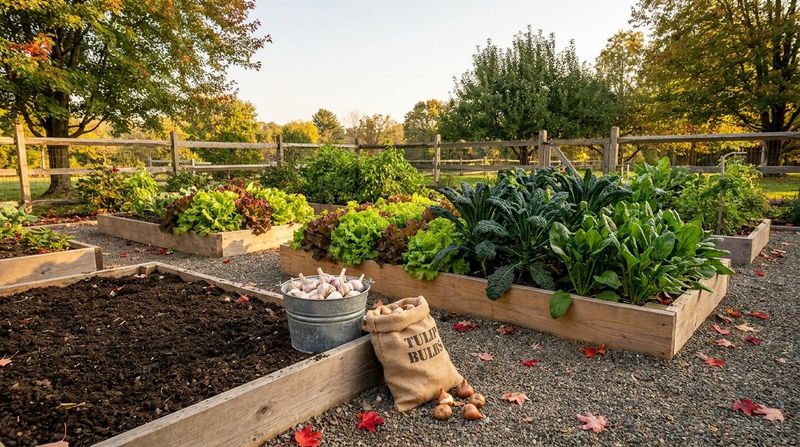
Planting dates vary across the South, so use them as a starting point. UF/IFAS lists spinach planting windows of September to March in north and central Florida and October to February in south Florida.
Texas guidance reads a little differently. Texas A&M says spinach may be planted in August or later in fall, while its plant disease handbook advises planting after soils have cooled and providing good drainage.
No single date or soil temperature fits every yard. Even extension sources, such as Penn State Extension, differ on ideal germination temperatures.
Check your county extension office and the seed packet, then adjust for your own soil and weather.
Lower risk for the next sowing
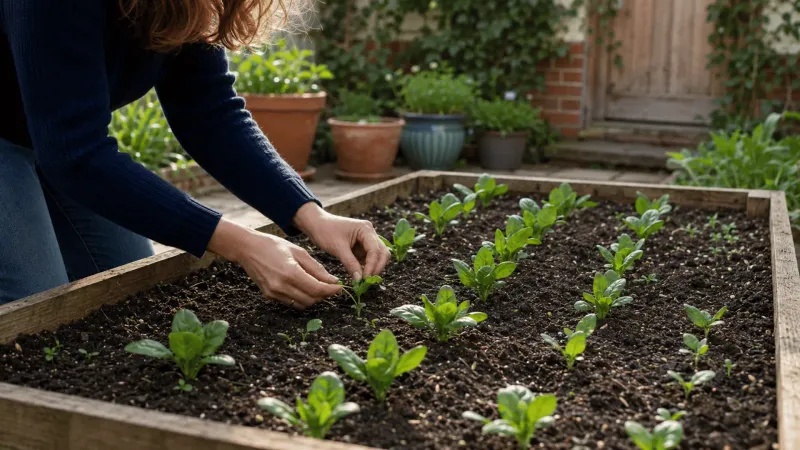
Start by inspecting the failed seedlings, checking stems and roots for rot or chewing. Then fix the bed so water drains, and keep the next seed zone evenly moist without letting it sit saturated, as UC IPM spinach guidance recommends.
These steps can lower risk, but they cannot promise survival or reveal which pathogen was involved. Sometimes the best clue is simply how your bed behaves after rain.