
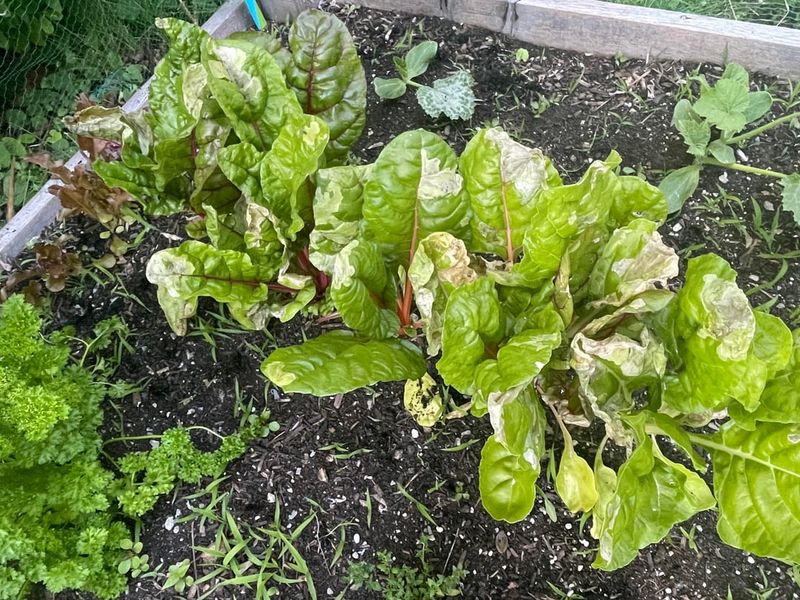
Your Swiss chard looked great last month, and now the leaves are freckled, torn, or full of holes. Wet weather often gets the blame, but spots and ragged edges can come from more than one cause.
Figuring out which problem you have helps you choose steps that fit. Here is how to read the damage and decide what to do next.
Inspect the spots before choosing a diagnosis
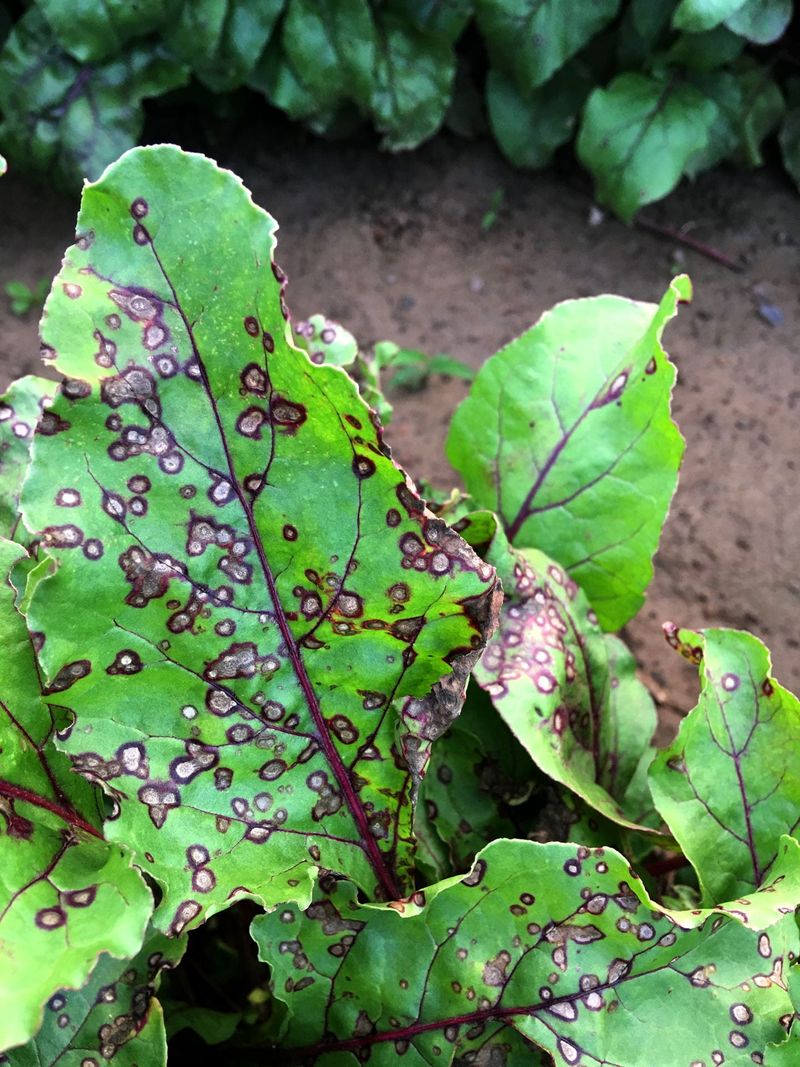
Grab a leaf and look at it closely in good light. University of Minnesota Extension describes Cercospora leaf spot as small, round spots that are tan to gray or brown, often ringed with a reddish-purple border.
In humid weather the centers may look fuzzy.
Notice where the spots show up. Older, lower leaves are often hit harder, so check those first.
As spots grow, their centers can dry out and drop away, leaving small holes that make the leaf look chewed.
Keep in mind that this pattern is a clue, not proof. Spots with those purple-red rims make Cercospora a reasonable suspect, but looks alone may not tell you which organism is responsible.
Other problems can leave blotches too, so avoid blaming every mark on wet leaves. Take notes or photos over a few days to see whether spots are spreading, staying put, or showing up on new growth.
Check holes and trails for signs of feeding damage
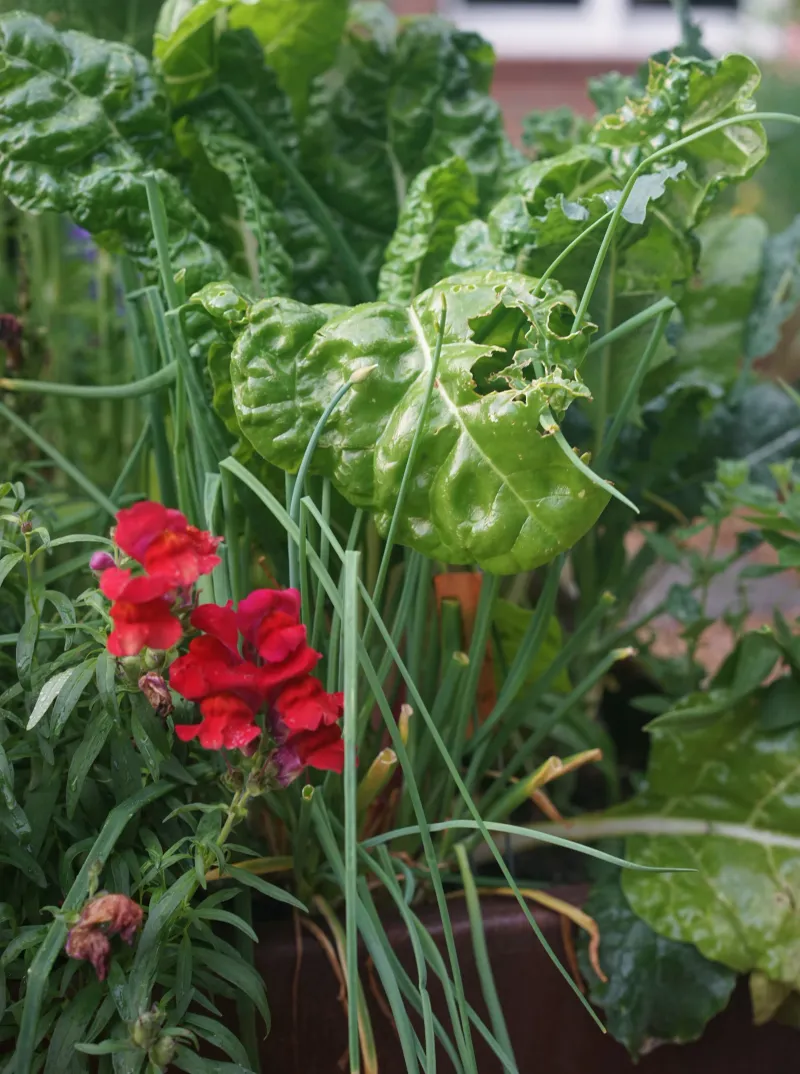
Ragged does not always mean diseased. A lesion is a spot of damaged but present tissue, while a hole means tissue is missing.
Irregular holes with no round, ringed spots nearby often point toward feeding, as described in this University of Minnesota holes guide. Slugs and chewing insects are common culprits.
Turn leaves over and look at both sides. Slime trails, droppings, or small insects tell a clear story.
Checking at dusk or early morning, when slugs are active, can help.
Now hunt for squiggly or see-through trails inside the leaf. Those can suggest leafminers, small insect larvae that tunnel between leaf surfaces, according to Minnesota Extension’s leafminer page.
One plant can have both problems at once. Sorting the damage by type keeps you from treating a pest issue like a fungal one.
Wet weather can raise disease risk without proving the cause
Warm, muggy stretches are the kind of conditions Cercospora likes. UMass Amherst Extension notes that the fungus is favored by warm, humid weather and that rain can help spread its spores from leaf to leaf.
That makes a soggy fall a risk factor, not a verdict. Plenty of ragged leaves have nothing to do with fungus.
Wet spells also bring out slugs, and they happily chew holes in chard whether or not any disease is around, as the Minnesota holes guide suggests.
Fall also does not look the same across the South. Rain patterns and temperatures differ between Texas and Florida, and even within each state.
So let the leaf tell you what is going on rather than the calendar.
Round lesions with reddish-purple borders favor disease, while ragged chewed edges and slime favor pests.
Remove badly affected leaves and reduce avoidable wetness
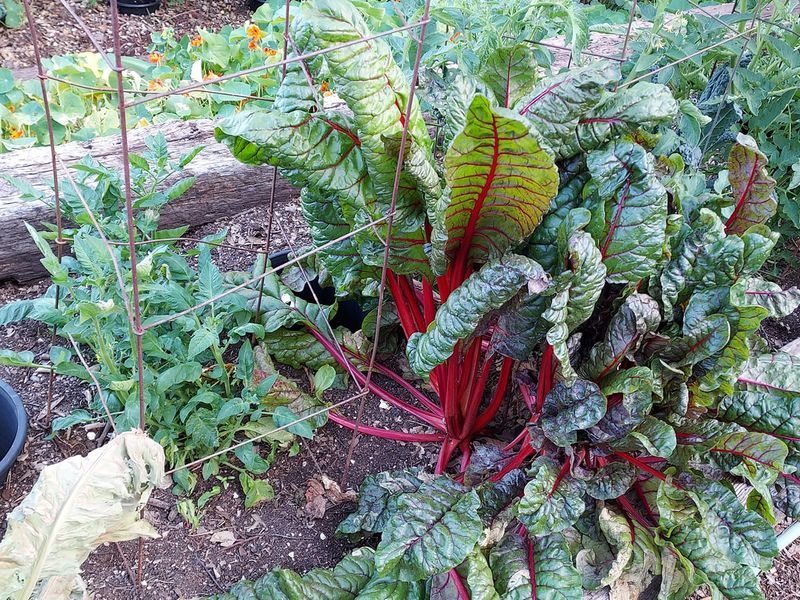
Once you suspect leaf spot, start with cleanup. UMass Extension advises removing badly spotted leaves and clearing fallen or diseased plant debris.
Pull the worst leaves, bag them, and keep them out of the compost pile if you are unsure it gets hot enough.
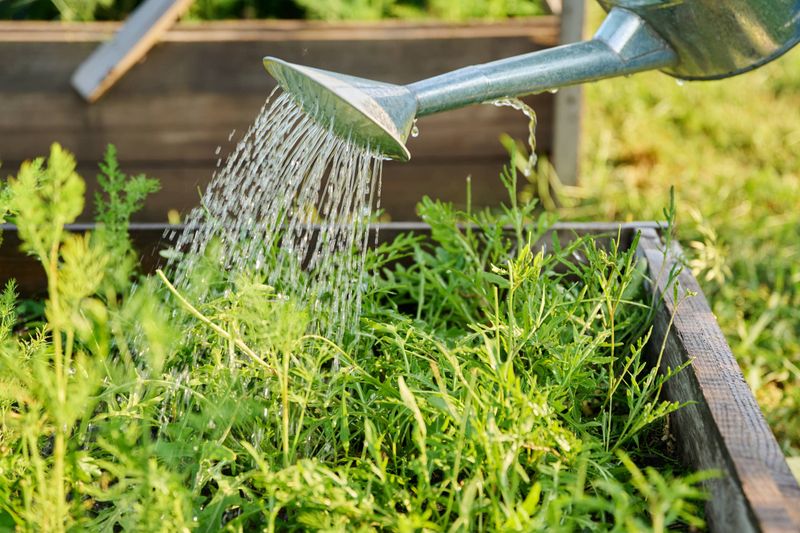
Next, look at how you water. When the plants need a drink, aim it at the soil with a drip line or a hose at the base instead of sprinkling the foliage.
Space plants so air can move through the leaves, which helps them dry faster after dew or rain.
Be realistic about what this does. These steps can cut down on avoidable leaf wetness, but they will not cure leaves that are already infected, and you cannot keep chard dry during a downpour.
Think of it as lowering the odds and slowing things down. Check lower leaves every few days, and keep your tools clean as you go.
Use prevention to reduce risk, not guarantee a clean flush
Good habits stack up over a season, though none of them can promise spotless new leaves. Clearing diseased debris keeps leftover infected material from sitting beside your plants.
Watering at the base and giving plants breathing room trim down the time leaves stay wet.
Rotation is the longer game. UMass Extension suggests keeping chard and its relatives, such as beets and spinach, out of the same spot for roughly two to three years.
Since those crops are all susceptible, planting any of them where another grew can give leftover problems a head start.
A simple garden map or a few phone photos each season makes rotation easy to track in a small yard.
Even with all of this in place, rain-driven spread can still happen, so a fresh flush may show some spots anyway. This article does not recommend specific fungicides for home edible gardens, since the research behind it does not support naming products.
If you ever consider a pesticide, it must be labeled for the crop and used exactly as directed.
Adjust harvesting and wash picked leaves properly

Most of the time, chard is picked by taking the outer, fully expanded leaves and leaving the center to keep growing, as UC IPM’s chard tips describe. That is the everyday routine.
When Cercospora is present, the advice shifts. UMass recommends a once-over cut rather than repeated cuts for regrowth.
Picking again and again does not guarantee clean leaves, so plan for the harvest you can get now instead of counting on a tidy second round.
Spots are also not a food-safety label. You cannot call a leaf safe or unsafe just by how it looks, so keep the plant-health question separate from the kitchen one.
For handling any produce, FoodSafety.gov advises rinsing under cold running water and skipping soap, bleach, or other chemicals.
A spotty bed is a puzzle, not a failure, and reading the damage is half the fix.