
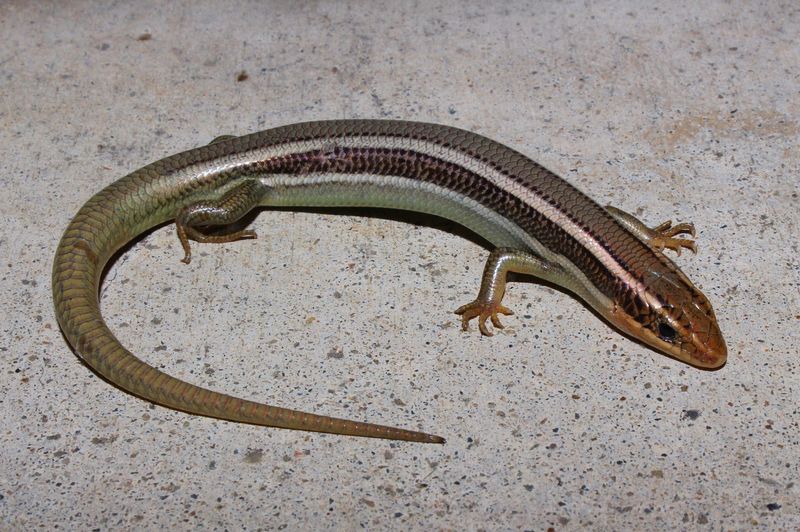
A small, shiny lizard with a brilliant blue tail darting under your garden bed is enough to make most California homeowners jump back. Many people assume it is dangerous or invasive and try to chase it off, but that instinct may be costing your yard a useful native predator. The lizard is likely a western skink, a secretive California native that feeds on a wide range of small invertebrates. Before you reach for a broom or a pesticide, here is what the evidence actually says about this animal and what it means for your seedlings.
That shiny yard lizard may be a western skink
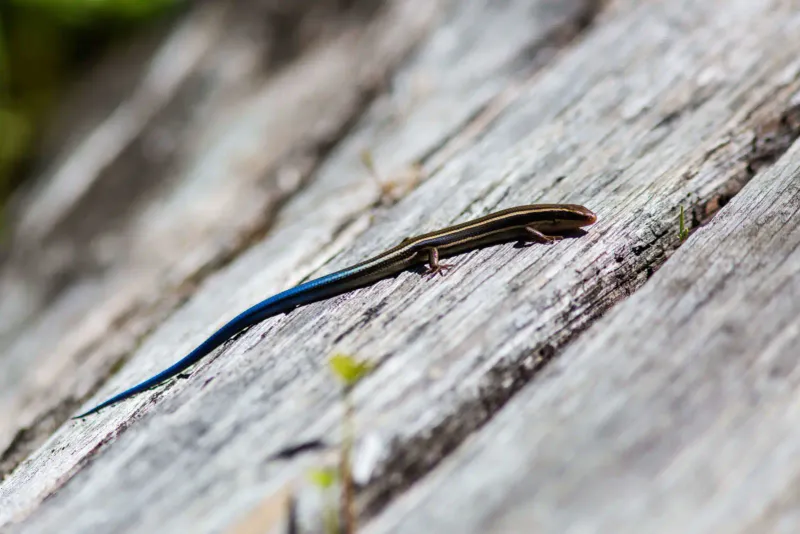
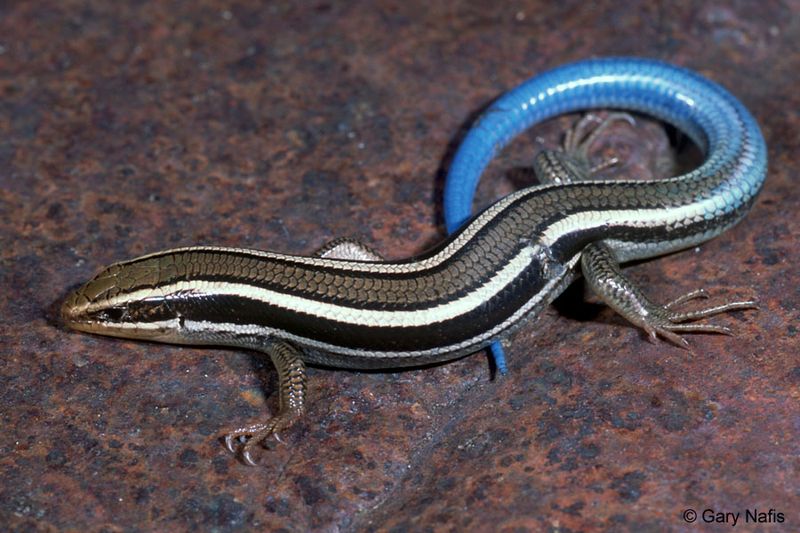
Smooth, fast, and almost metallic-looking in the right light, a western skink can stop a gardener mid-step. These are small lizards, typically reaching three to eight inches from snout to tail tip, with close-fitting, overlapping scales that give the body that characteristic sheen. Juveniles are the ones most likely to catch your eye because they carry a striking blue or blue-violet tail that seems almost painted on. Adults gradually lose that vivid coloration, settling into a brown or gray-brown body with faint stripes, so the two age groups can look like entirely different animals.
Western skinks are native across a broad swath of California. The California Department of Fish and Wildlife life history account for the western skink notes that in northern California they occur broadly across many habitat types, while in central and southern California they are more closely tied to Coast Range foothills and mountain areas, largely absent from the driest desert regions. If you are in a foothill neighborhood, a coastal valley, or anywhere with mixed chaparral or oak woodland nearby, a western skink sighting is entirely plausible.
Even so, a shiny body and a blue tail are not a guaranteed identification. The California Herps account for the northwestern skink points out that Gilbert’s skink and other related species can appear nearly identical to casual observers, and regional overlap adds to the confusion. A clear photograph and your specific location will narrow things down, but may still fall short of certainty. The sensible first move is to observe the animal calmly from a distance, keep children and pets from startling it, and resist the urge to pick it up or corner it.
A frightened lizard may bite, and the only thing you lose by watching quietly is a little time.
Its diet shows broad predation, not proven pest control
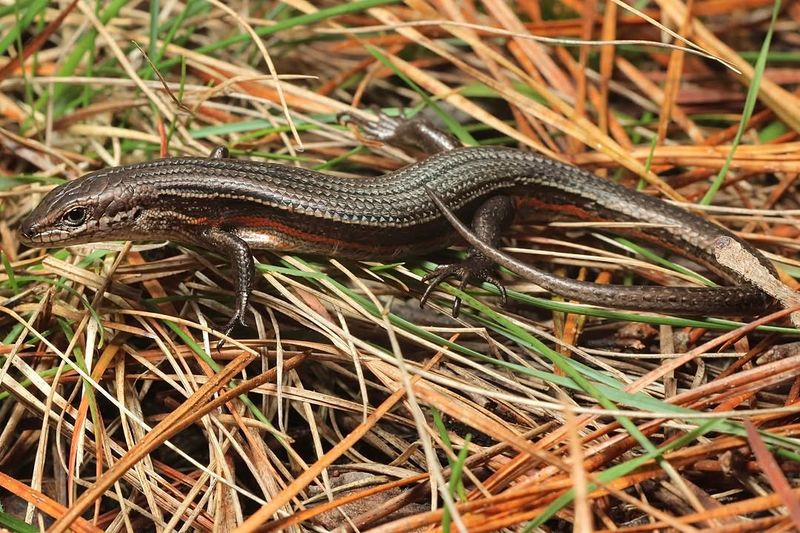
When gardeners hear that a lizard eats insects, the mental leap to “it will fix my pest problem” happens almost automatically. The diet record for the western skink does support calling it a generalist invertebrate predator, but it does not support that next step. The California Wildlife Habitat Relationships System account for the western skink lists documented prey that includes insect eggs, beetles, caterpillars, moths, grasshoppers, crickets, insect larvae, spiders, centipedes, and sow bugs. That is a genuinely broad menu, and it tells us these lizards are opportunistic hunters working their way through whatever small invertebrates they encounter.
What the same source does not list is earwigs or slugs. Earwigs are insects, so consumption is biologically plausible, but the strongest California diet documentation located for this article does not specifically record them. Slugs present a bigger gap: they are mollusks, not insects, and the authoritative diet accounts list insects, spiders, centipedes, and sow bugs without mentioning slugs or snails. Calling a western skink a slug predator goes beyond what the evidence currently supports.
There is also a meaningful difference between “eats some of these animals” and “measurably reduces their numbers in your garden.” Diet records describe what a lizard consumes; they say nothing about how many individuals it takes per week, whether that number moves the population of a pest species up or down, or whether seedling survival improves as a result. A single skink foraging through a raised bed may well snap up a beetle larva or two. That is not the same as demonstrated biological control of earwigs or slugs at garden scale. Replacing the original certainty with an honest qualified possibility is not pessimism; it just keeps expectations realistic so you address the actual source of seedling damage rather than waiting on a lizard.
Support compatible skink habitat without overpromising
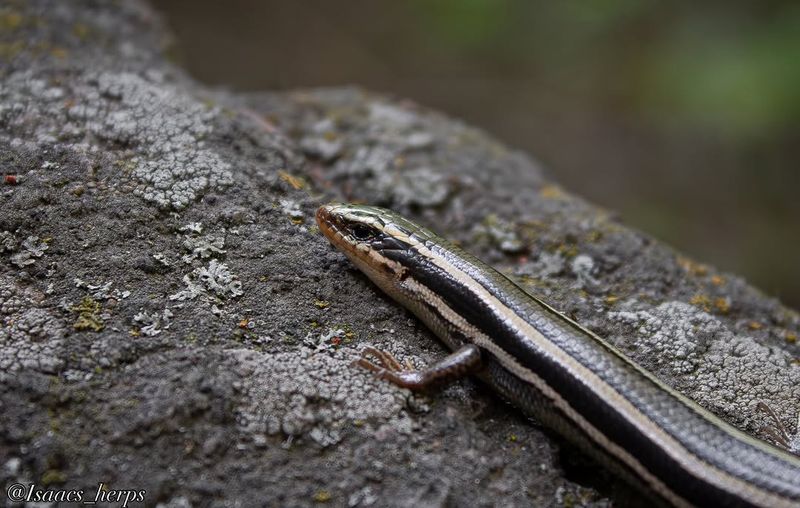
Knowing what western skinks need on a daily basis makes the habitat question practical rather than abstract. These lizards forage through leaf litter, move through dense low vegetation, and use cover objects such as flat rocks, rotting logs, and woody debris to rest, thermoregulate, and escape predators. Females nest in loose, moist soil. A yard that already has some native groundcover, a few flat stones, or an undisturbed corner near a slope is already offering usable habitat without any deliberate effort on your part.
Where fire safety, sanitation, and property access allow, avoiding unnecessary disturbance of those features is a reasonable form of support. That means not raking every fallen leaf from areas away from the house, leaving a flat rock or two in place if they are not in a fire-risk zone, and resisting the urge to tidy every corner of the yard to bare soil. Framing this as “habitat preservation” rather than “pest-control investment” matters: the Canadian federal management plan for the western skink notes that the species is part of a broader food web, serving as both predator and prey, and that its ecological value extends well beyond any single interaction with garden invertebrates.
Western skinks eat non-pest arthropods alongside any incidental pest species, so their presence does not translate into a net reduction of any specific garden pest. A skink foraging near your tomatoes is participating in a food web, not running a targeted service. Supporting that food web is a worthwhile goal for any California homeowner who wants a living, ecologically functional yard. Just be careful not to create cover in places where it conflicts with fire-safety requirements – that tradeoff deserves its own careful look, covered in a later section.
Inspect seedlings for confirmed slugs and earwigs
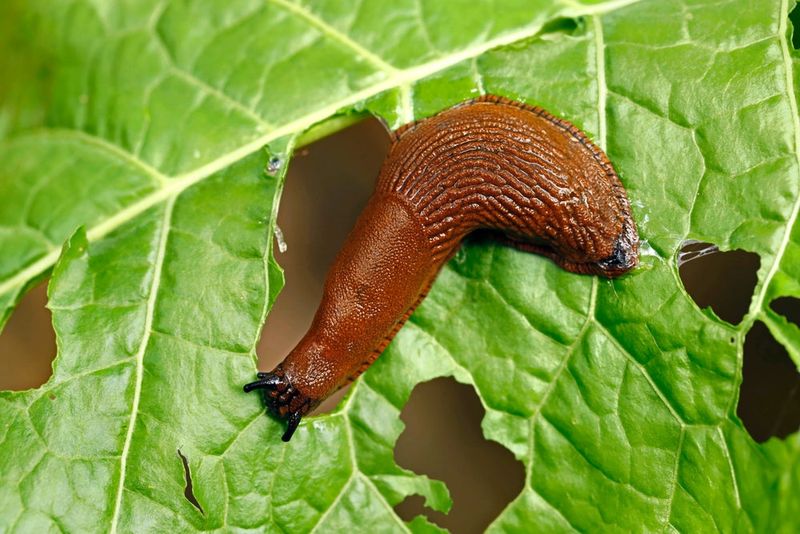
Ragged edges on seedling leaves, missing cotyledons, or stems chewed at soil level are frustrating, but they are not automatically a skink problem. Lizards do not eat plant tissue. If your seedlings are being damaged, the culprit is almost certainly a pest invertebrate, and the most reliable way to find out which one is a nighttime inspection. Slugs and earwigs are both nocturnal, and a flashlight walk through the garden after dark will tell you far more than daytime guesswork.
Earwigs deserve a careful assessment before you act. UC IPM’s earwig guidance points out that earwigs also eat aphids and other soft-bodied insects, so their presence in a garden is not automatically a problem. If you confirm they are feeding on seedlings, start by reducing the conditions they need: pull back excess mulch from around young plants, water in the morning so the soil surface dries by evening, and remove boards or debris that provide daytime shelter near the bed. Trapping with rolled damp newspaper, a short section of bamboo, or an oil trap placed near damaged plants overnight can remove large numbers without any chemical input.
Slug management follows a similar logic. UC IPM’s snail and slug guidance recommends nighttime inspections and hand-picking as a first step, along with reducing hiding places and avoiding evening irrigation near vulnerable seedlings. Physical barriers such as copper tape or coarse diatomaceous earth around a bed can slow slug movement. If baits become necessary, iron-phosphate products are considered safer around dogs, birds, and wildlife than metaldehyde-based baits.
Metaldehyde is effective but can poison dogs and birds that encounter treated areas, so product choice and placement matter. Every bait label is a legal document, and following it exactly is not optional.
Defensible space comes before extra wildlife cover
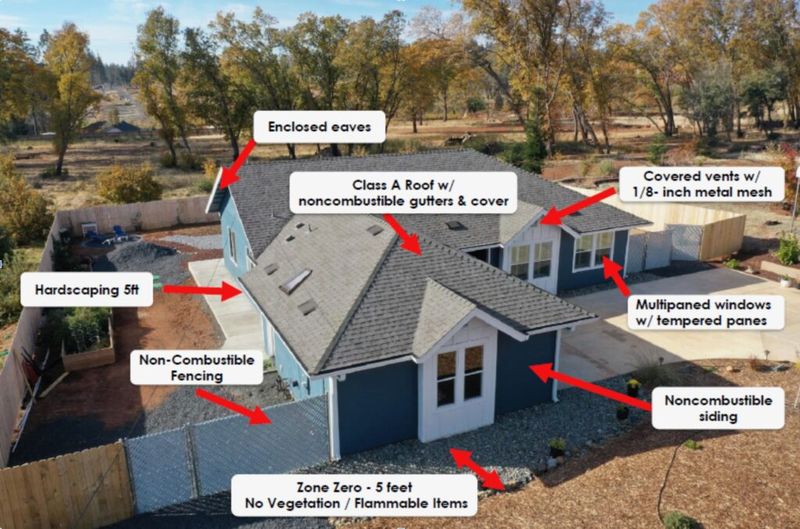
For California homeowners in fire-hazard severity zones, the conversation about wildlife habitat always has to pass through the defensible-space filter first. That is not a bureaucratic technicality – it is the difference between a house that survives an ember shower and one that does not. Habitat features that benefit skinks and other native wildlife, such as leaf litter, woody debris, dense low vegetation, and loose mulch, are also the materials that carry embers into a structure.
CAL FIRE’s defensible space guidance identifies the first five feet around any structure as an ember-resistant zone. Within that zone, the recommendation is to remove combustible mulch, dry leaves, dead vegetation, and debris entirely. No wildlife-habitat goal overrides that requirement. Creating or maintaining a pile of rotting logs, a leaf-litter accumulation, or a dense groundcover mat against your foundation because a skink might use it is not a safe tradeoff in a fire-prone community.
The California Board of Forestry and Fire Protection’s defensible space zone descriptions extend additional requirements beyond five feet, and local jurisdictions may be stricter than state minimums. The practical answer is to check your local rules before placing any cover object or planting dense vegetation near the house. Compatible habitat for skinks – flat rocks in a sunny spot, a patch of native groundcover, an undisturbed slope edge – can exist in the compliant portions of your property. Prioritize fire safety first, then look for the spots where habitat and compliance genuinely overlap.
Leave the skink alone unless it is inside
Most encounters with a possible western skink in a California yard call for exactly one response: watch it and walk away. These lizards are secretive by nature and will disappear into cover on their own without any intervention. Keeping pets and children from chasing or cornering the animal is the main practical task. A lizard that feels trapped may bite, and the bite, while not dangerous, is unpleasant and entirely avoidable.
UC IPM’s lizard guidance recommends that California garden lizards be left alone, noting that they cause no measurable plant damage and may contribute by eating pest insects. For a lizard found inside a building, UC IPM supports capturing it carefully and releasing it just outside – but that specific guidance is for an indoor situation, not a general recommendation to pick up and relocate wild skinks found in the yard. Moving a wild skink from its established territory to an unfamiliar location is unnecessary and potentially harmful to the animal.
Pesticides are not an appropriate response to a lizard in the yard under any circumstances. UC IPM is clear that no toxicants or repellents are registered in California to kill or repel lizards. Applying a broad-spectrum pesticide to drive a skink away would also remove the invertebrate prey it depends on and could harm other beneficial animals sharing the same space.
California Code of Regulations Title 14, Section 5.60 lists western skinks among reptiles subject to specified sport-take rules, but those rules are not an invitation for homeowners to capture, keep, or relocate wild individuals. State parks, ecological reserves, and local jurisdictions often carry additional restrictions, and the simplest legal and ecological answer is to leave wild skinks where you find them.
Let the lizard be a neighbor, not the garden’s solution
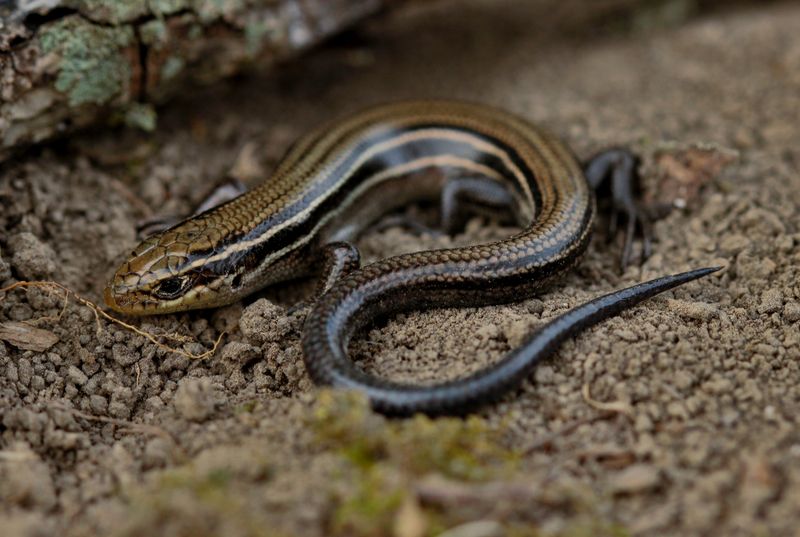
An unfamiliar shiny lizard crossing your garden path is worth a moment of appreciation rather than alarm. Treat it as a possible western skink, observe it from a comfortable distance, and let it go about its business. Where your property allows outside required defensible-space zones, preserving a rock, a native groundcover patch, or a naturally undisturbed slope edge supports this native predator as a genuine participant in your yard’s food web.
If your seedlings are being damaged, address that problem directly. Confirm the pest with a nighttime inspection, start with nonchemical measures, and consult UC IPM’s earwig guidance or UC IPM’s snail and slug guidance for specific steps matched to the pest you actually find. The California Wildlife Habitat Relationships System diet record gives western skinks credit as generalist invertebrate predators, and that is genuinely worth something. What the record does not do is establish the skink as a reliable control for earwigs or slugs, or as a protector of seedlings.
A yard that supports native lizards, leaves fire-safety zones clear, and responds to pest damage with targeted integrated pest management is doing most things right. The western skink does not need to be a hero of the garden to deserve its place in it.