
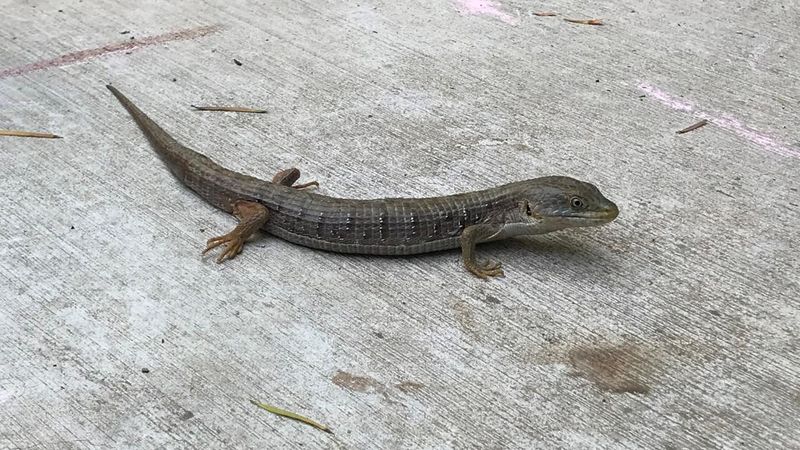
Spot a long, scaly lizard moving through your garden beds and your first instinct might be alarm, but that animal is likely doing your yard no harm. Southern alligator lizards are native California residents that eat a range of garden arthropods and have an interesting role in local tick ecology, though neither story is quite as simple as it sounds. Before you reach for a shovel or a broom, it helps to know what this lizard actually does, what it cannot do, and why leaving it alone is usually the right call.
The lizard in your yard may be a native California neighbor
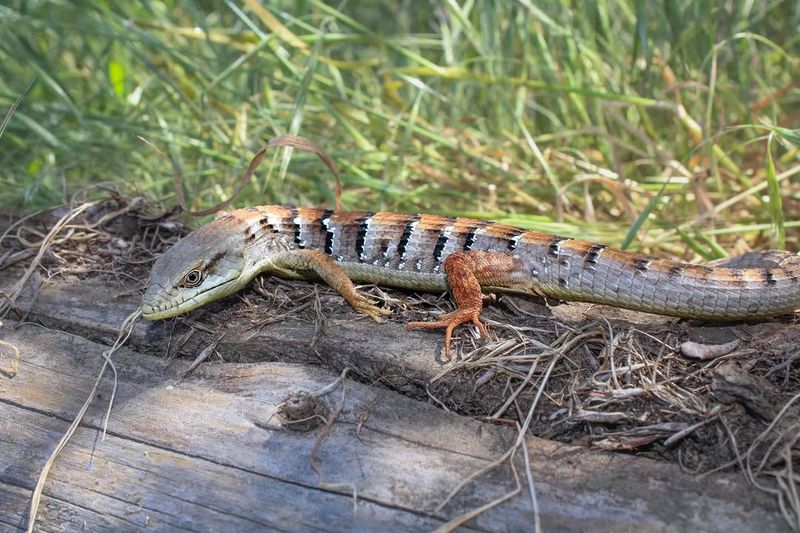
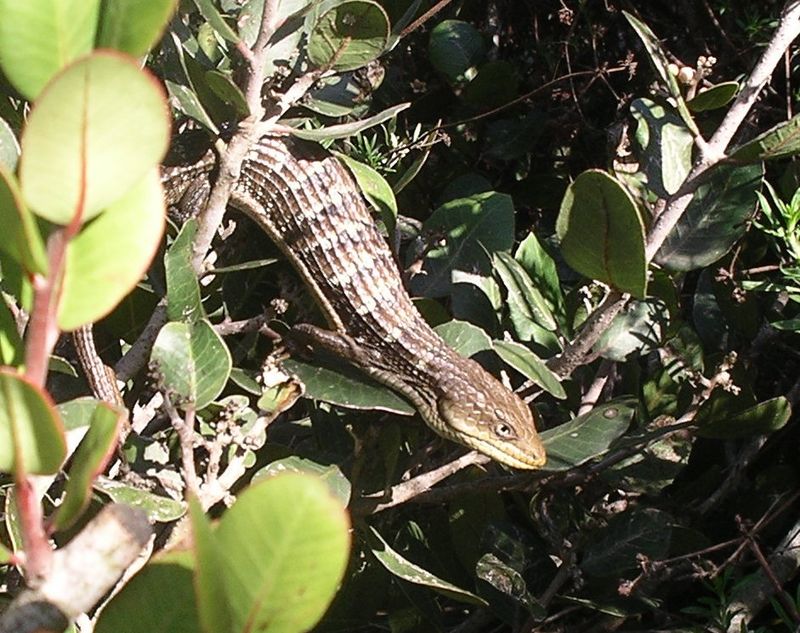
Rough, keeled scales and a long tail that seems almost too big for the rest of the body make the southern alligator lizard (Elgaria multicarinata) one of the more distinctive reptiles a California homeowner might find near a garden bed. The California Department of Fish and Wildlife’s life-history account places this species across much of California west of the Sierra-Cascade crest, including valley-foothill, chaparral, and mixed-conifer habitats, though it is absent or uncommon in parts of the extreme northwest and the southern Central Valley. Coastal yards, inland-valley subdivisions, and foothill communities are all within its range.
This lizard shelters under rocks, logs, dense vegetation, crevices, and surface debris, so a yard with any of those features can attract one. Its coloring runs from brown to olive with a lighter belly, and adults can reach roughly 10 to 17 inches from snout to tail tip, most of that length being tail. Because several other lizard species also live in California gardens, including the western fence lizard and the northern alligator lizard, a long brown lizard in your yard is not automatically this species. UC IPM’s lizard guidance notes that California has multiple common yard lizards, and species identification matters before drawing any conclusions about behavior or diet.
Around people, southern alligator lizards are generally nonthreatening. They do not pursue or attack humans, and an outdoor animal that is left undisturbed will almost always move away on its own. That said, “generally nonthreatening” is not the same as “handle freely,” and that distinction matters. Finding one in your yard is not a signal that pests are under control, but it is not a reason for alarm either.
This is a native animal doing what native animals do.
Its broad menu includes snails, but not a garden guarantee
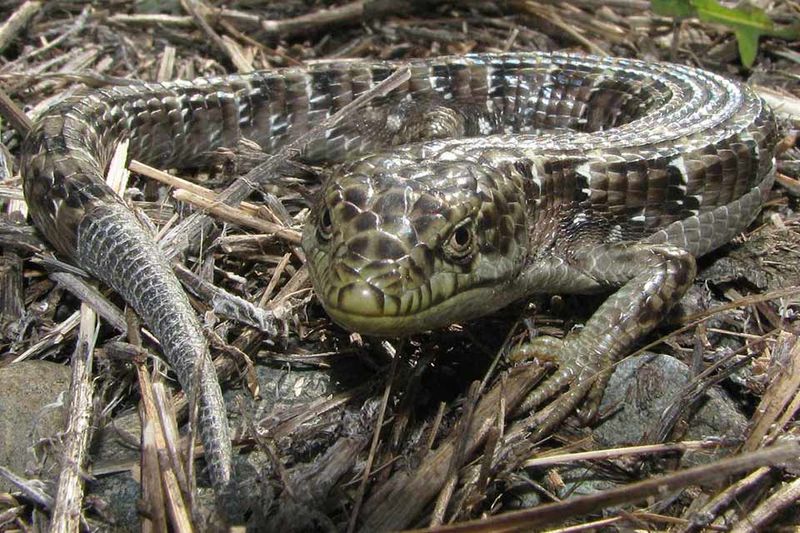
An alligator lizard does not specialize in any single prey item. The National Park Service’s profile of the southern alligator lizard lists insects and larvae, beetles, grasshoppers, crickets, spiders, centipedes, scorpions, sow bugs, and snails among reported prey items. The California Department of Fish and Wildlife similarly describes the diet as broad, centered on insects and other arthropods, with larger animals taken opportunistically. Snails do appear on that list, which is the factual kernel behind the popular idea that these lizards clean up your garden beds.
The problem is the leap from “eats snails sometimes” to “controls your snail problem.” No published source establishes a predation rate, a threshold of lizard density needed to reduce crop damage, or any measurable garden-scale effect. UC IPM’s snail and slug guidance names several natural enemies of garden snails but states directly that most natural enemies are rarely effective enough to provide satisfactory garden control on their own. A lizard visiting your raised beds may consume a snail or two, but that does not mean the broader infestation is being managed.
The same logic applies to insects and other arthropods the lizard might eat. UC IPM acknowledges that lizards may help with pest insects but does not present them as a sufficient standalone control method. A lizard’s presence in the yard tells you the habitat is suitable for that animal. It does not tell you whether your tomatoes are safe, whether your hostas will survive the next wet week, or whether you can skip your regular pest-monitoring routine.
Treating a native predator as a substitute for an actual pest-management plan sets up a frustrating outcome. The lizard is a welcome opportunist, not a hired hand.
Ticks feed on these lizards; the lizards do not clear your yard
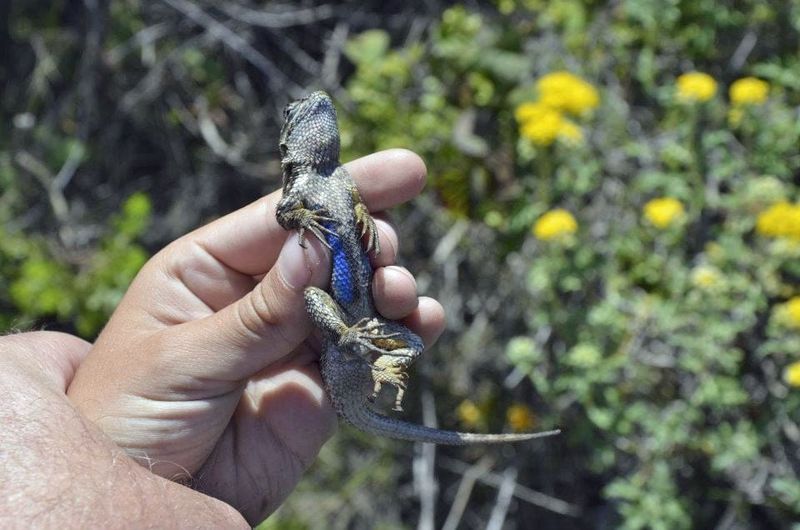
One of the most persistent misconceptions about California lizards and ticks gets the relationship exactly backward. Ticks do not get eaten by southern alligator lizards in any meaningful way. Instead, immature western black-legged ticks (Ixodes pacificus) use these lizards as hosts. Lane et al.’s research on alligator lizard infestation by Ixodes pacificus found that lizards can carry substantial numbers of larval and nymphal ticks, making them a significant part of the immature tick’s host pool in California.
Where the story gets genuinely interesting is what happens to the bacterium inside those ticks. Research identifies the southern alligator lizard as a poor reservoir for Borrelia burgdorferi, the pathogen that causes Lyme disease. A tick that feeds on one of these lizards may fail to retain or acquire the bacterium, which could reduce the proportion of nymphal ticks that are infectious. Studies on the experimental removal of lizards from California sites suggest that lizard hosts can influence infection prevalence in tick populations.
Related California research reinforces that lizard-tick interactions shape local Lyme disease risk in complex ways.
However, a lower proportion of infected ticks is not the same as fewer ticks in your yard. Because lizards provide blood meals for large numbers of immature ticks, their presence can actually support tick survival rather than reduce tick abundance. The widely cited “lizard blood cleanses ticks” story is most strongly associated with the western fence lizard (Sceloporus occidentalis), and community ecology research comparing lizard species in California shows that the two lizards play different ecological roles. Transferring every fence-lizard claim to alligator lizards is not supported by the evidence.
For practical tick safety, California Department of Public Health Lyme disease guidance recommends wearing long sleeves and pants in tick habitat, using EPA-registered repellents, checking your body carefully after outdoor time, and showering within two hours of potential exposure. Lizards in the yard are not a substitute for any of those steps.
Leaving an outdoor alligator lizard alone is the sensible default
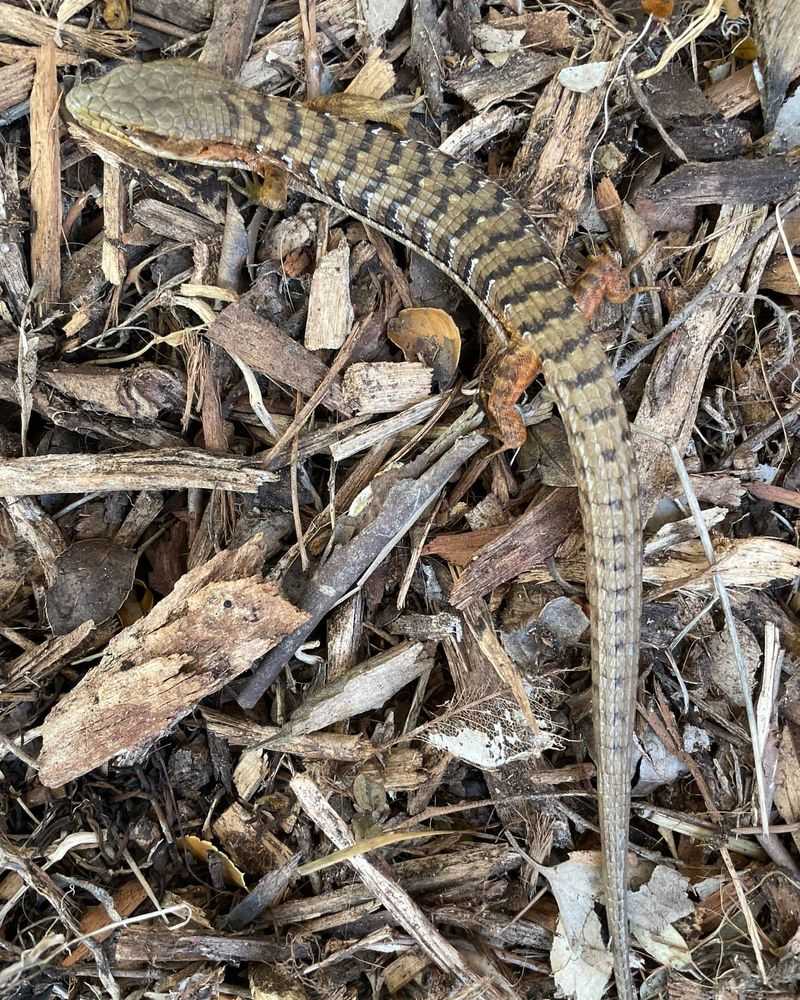
Correcting what a lizard cannot do does not change what it is: a native California animal that eats arthropods, causes no harm to structures or people when left outdoors, and belongs in the landscape. That alone is a reasonable basis for tolerating its presence. Some homeowners do react with alarm when they see one, understandably mistaking the rough scales and confident movement for something dangerous, but an outdoor alligator lizard that is not cornered or grabbed poses no threat.
Killing one is unnecessary. There is no documented pest damage, no venom, and no structural risk associated with an outdoor alligator lizard going about its business in a California garden. UC IPM’s lizard guidance recommends leaving outdoor lizards undisturbed, and that recommendation reflects both the animal’s ecological value and the absence of any reason to remove it. The CDFW life-history account treats this species as a native resident of California’s varied habitats, not a pest or an intruder.
“Generally nonthreatening” is the right frame, not “completely harmless.” Alligator lizards may bite when captured or roughly handled, and a bite from a larger adult can puncture skin. The practical answer is simple: do not pick one up. Watch it from a comfortable distance, let it move through the garden at its own pace, and resist the urge to relocate it. Moving a wild lizard long distances disrupts its familiarity with shelter locations, food sources, and escape routes.
An outdoor animal that is left where it is will almost always sort itself out without any help from you.
Use integrated pest management instead of outsourcing the job to wildlife
Garden snails and slugs need a real management plan, and that plan starts with knowing what you are dealing with. Go out after dark with a flashlight on a moist evening and you will quickly get a sense of how large the population actually is. Hand removal at that hour, when snails and slugs are most active, is one of the most effective low-risk methods available. Drop them into soapy water or seal them in a bag before disposal.
It is not glamorous, but UC IPM’s snail and slug guidance supports it as a practical first step alongside other nonchemical controls.
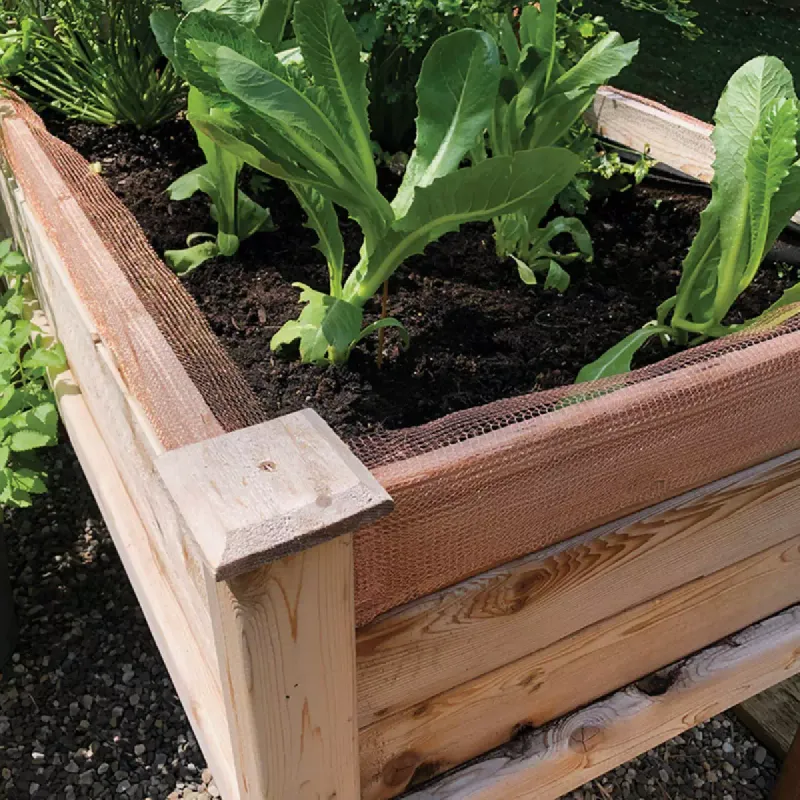
Physical barriers also work. Copper tape or copper mesh around raised beds creates a mild deterrent that many snails will avoid. Reducing overhead irrigation and watering in the morning rather than the evening cuts the moist nighttime conditions that snails and slugs depend on. Removing boards, dense ground cover, and other daytime hiding spots near beds reduces the population’s shelter and limits how fast numbers can rebuild between treatments.
When chemical controls are genuinely needed, the choice of product matters. UC IPM’s pesticide guidance recommends identifying the pest first, selecting the least-toxic effective option, and using spot treatments rather than broad spraying. Broad-spectrum pesticides can kill nontarget insects and other organisms that are beneficial to your yard. Snail and slug baits carry their own risks: UC IPM states that all such baits are toxic to nontarget mollusks, including predatory snail species that would otherwise help control populations.
Metaldehyde-based baits are especially dangerous around dogs and cats and should be avoided in yards where pets have access. Iron phosphate baits are generally considered lower risk for pets and wildlife, but any bait should be applied according to label directions and kept away from areas where nontarget animals forage.
A house visitor can go back outside without bare-handed handling
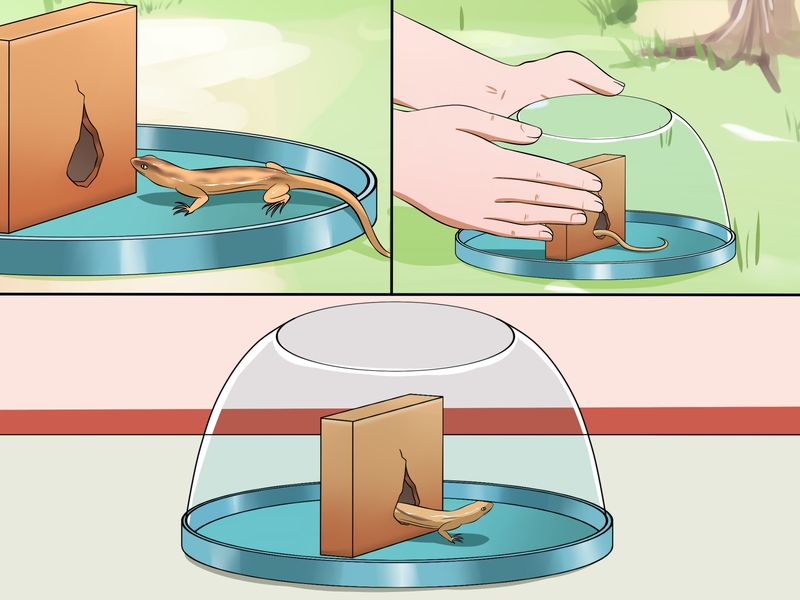
An alligator lizard that wanders into a garage, laundry room, or living space is not a sign of an infestation and does not need to be killed. It came in looking for warmth, prey, or a shortcut, and it can go back out the same way with a little help. UC IPM recommends capturing and releasing indoor lizards outdoors, which is both the safest outcome for the animal and the quickest resolution for the homeowner.
The capture itself does not require bare hands. Use a cardboard box or a small container to herd the lizard gently toward a corner, then slide a piece of cardboard under the box to secure it. Thick gloves are a reasonable precaution if you need to guide the animal directly, because alligator lizards may bite when they feel cornered. The bite is not venomous, but the teeth are sharp enough to break skin on a finger, so avoiding direct contact is the sensible approach rather than an overreaction.
Once outside, release the lizard in nearby cover, such as a shrub, a rock border, or a brushy area within a few feet of the entry point. Releasing it in the same general area means it has some familiarity with the surroundings, which matters for a small animal that relies on knowing its local terrain. Do not transport it across the neighborhood or to a park several blocks away.
If a bite does occur, wash the area thoroughly with soap and water. CDC guidance on reptile and amphibian contact recommends prompt handwashing after any reptile handling. Seek medical attention if the wound is deep, bleeds significantly, or shows signs of infection such as redness, swelling, warmth, or increasing pain in the days following the bite.
Create cover only where California fire rules allow it
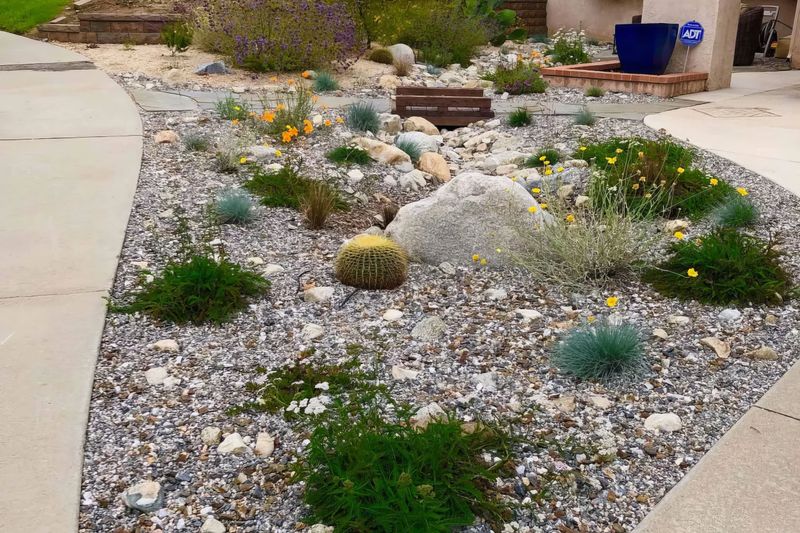
Rocks, logs, and patches of native ground cover genuinely do help alligator lizards find shelter, regulate body temperature, and hunt successfully. A yard with some structural complexity supports more wildlife than a yard of bare concrete and lawn. That said, “add habitat” and “leave everything in place” are not the same instruction, and in fire-prone California they can be opposite pieces of advice.
CAL FIRE’s defensible space requirements call for keeping the first five feet around any structure free of combustible bark, mulch, dead vegetation, and debris. Within the broader defensible-space zones extending out to 100 feet, vegetation must be spaced and managed so that fire cannot easily travel from plant to plant or from the ground into tree canopy. Piles of dry brush, stacked wood against a fence, or deep layers of combustible mulch near a house are fire hazards regardless of their value as lizard habitat. Local jurisdictions in Los Angeles, San Diego, Santa Barbara, and other counties often impose requirements stricter than the state baseline, so checking with your local fire authority before making landscaping changes is always worth doing.
Compatible habitat options do exist. Noncombustible rock borders and decomposed granite paths give lizards basking surfaces and hunting corridors without adding fuel load. Native, fire-resistant plants spaced according to defensible-space guidelines provide shade and prey insects. A single well-placed flat rock in a cleared, sunny area of the yard can serve as a basking spot without creating a combustion risk near the house.
The CDFW account for the southern alligator lizard confirms that this species uses a variety of microhabitats and is not dependent on any single cover type. A managed, fire-safe yard with some structural variety is genuinely useful habitat. An unmanaged debris pile near the eaves is not a conservation strategy.
Choose tolerance without making a pest-control promise
A workable decision rule for most California homeowners looks like this: identify the lizard carefully before reacting, leave an outdoor animal undisturbed, and release an indoor visitor nearby in suitable cover rather than relocating it far away. For snails, slugs, and other garden pests, follow an integrated pest-management approach, starting with monitoring, hand removal, and barriers before considering any chemical option. UC IPM’s lizard guidance and its snail and slug page both support this layered approach.
For tick safety, follow California Department of Public Health guidance: wear protective clothing in tick habitat, use appropriate repellents, do thorough tick checks after time outdoors, and shower promptly. Lizards in the yard do not change those steps. For habitat, retain or add cover only where it is compatible with CAL FIRE defensible-space requirements and any stricter local rules that apply to your property.
Southern alligator lizards may eat snails and various arthropods, and they participate in California’s tick ecology in ways that researchers are still working to understand fully. They do not eat ticks in any meaningful sense, and they do not guarantee a pest-free garden. What they do offer is the ordinary value of a native predator living where it evolved to live. That is enough of a reason to give one some room.