
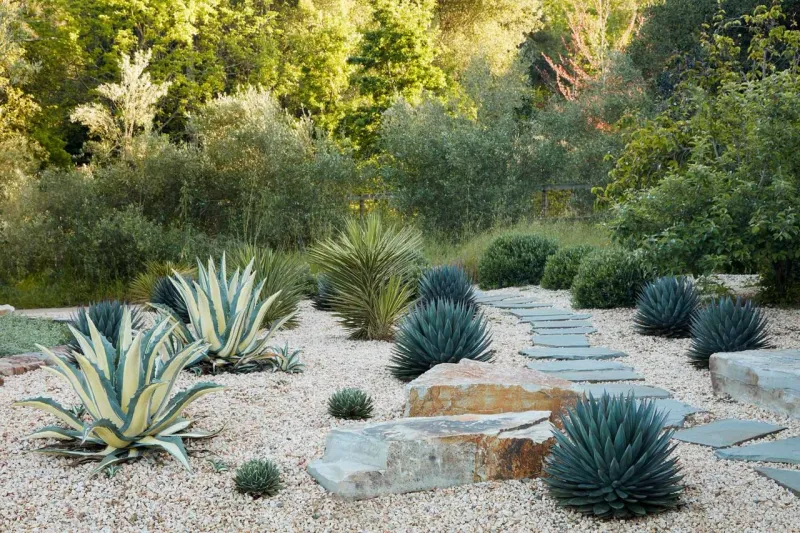
A walkway lined with lush-looking plants makes any California home feel high-end, but the water bill behind that look can be brutal during a long dry summer. The good news is that some of the most stunning entry path plants actually thrive on very little water once they settle in.
That means you can have curb appeal that looks like you hired a designer while barely turning on the hose. Here are seven plants that pull off the expensive look while quietly sipping almost nothing all season.
1. Blue Fescue (Festuca glauca)
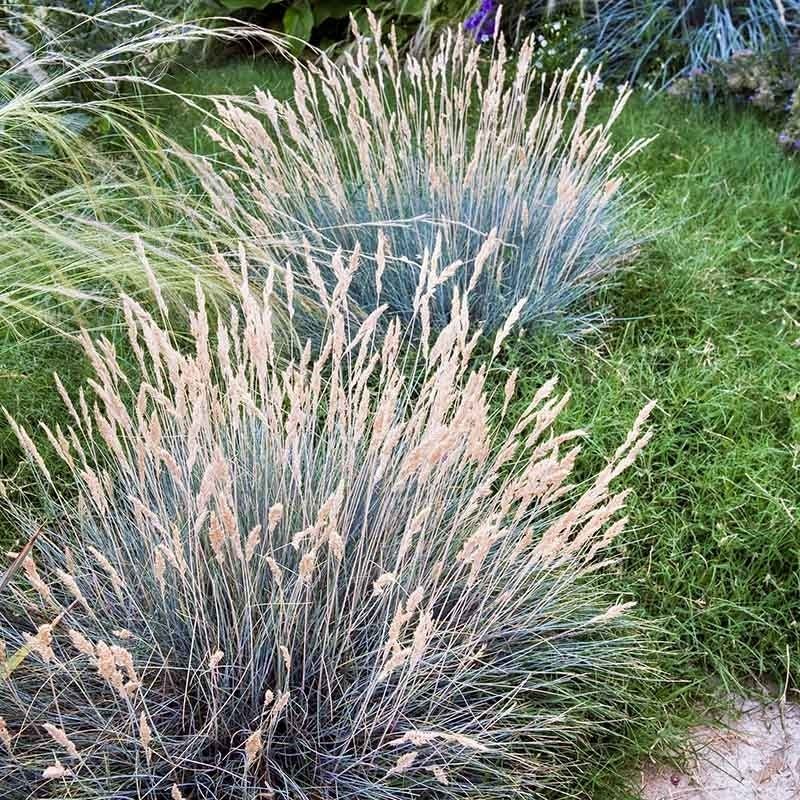
Picture tidy little pom-poms of silvery-blue grass marching along your path like they cost a fortune at a boutique nursery. Blue fescue delivers that sculpted, intentional look without asking for much in return.
Once established, it shrugs off California’s dry summers and only needs an occasional deep soak. The cool blue color also pops against warm-toned pavers and gravel, which makes the whole entry feel designed rather than thrown together.
Space the clumps evenly for that clean, repeating rhythm high-end landscapers love. A quick shear in late winter keeps them fresh, and they rarely fuss over poor soil.
For coastal and inland valley yards alike, this is an easy win that reads expensive on almost no water.
2. Lavender (Lavandula)
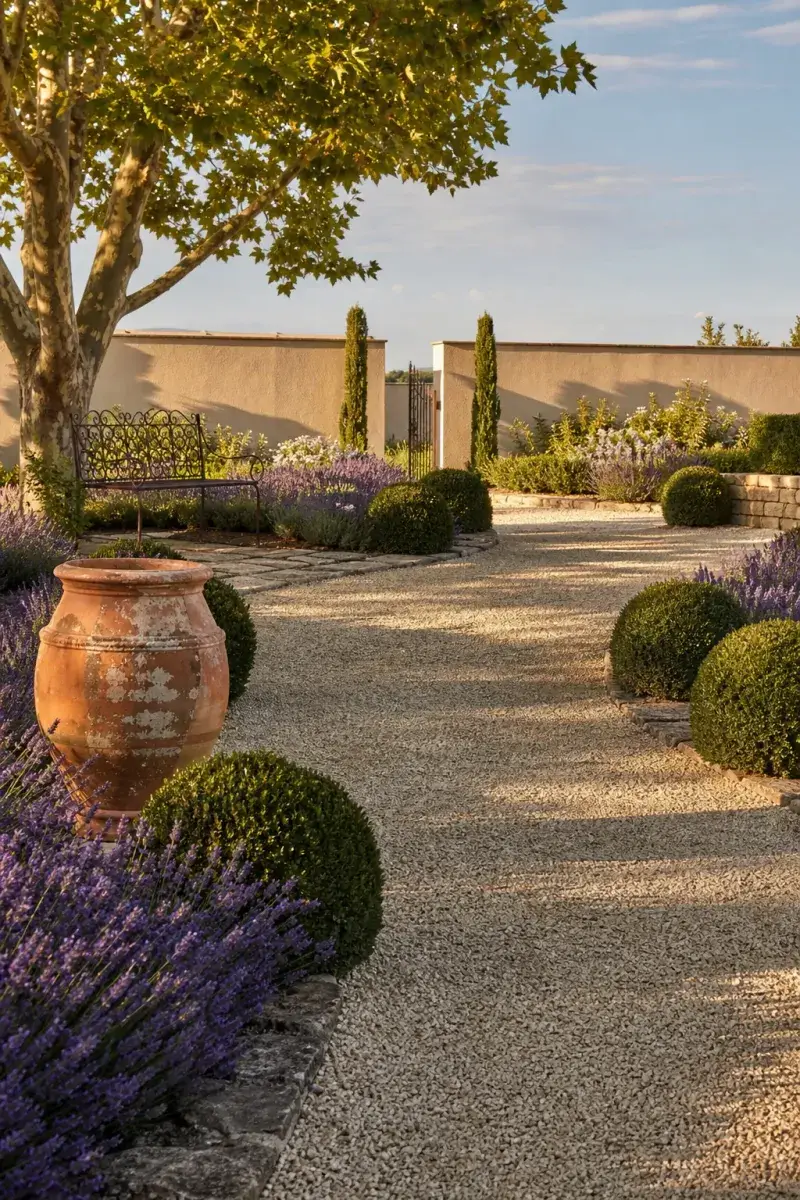
Few plants say “we vacationed in Provence” quite like a row of lavender releasing its scent every time you brush past. It looks luxurious, smells incredible, and California’s Mediterranean climate is basically its natural home.
After the first year, lavender wants dry feet and hates being overwatered, so summer neglect actually keeps it happy. The silvery foliage stays attractive even between bloom cycles, giving your path structure year-round.
Bees and native pollinators will thank you too, turning your entry into a small pollinator pit stop. Choose Spanish or English varieties suited to your zone, plant in gritty well-drained soil, and skip the heavy irrigation.
You get glamour, fragrance, and a wildlife bonus for pennies of water.
3. Agave (Agave attenuata and relatives)
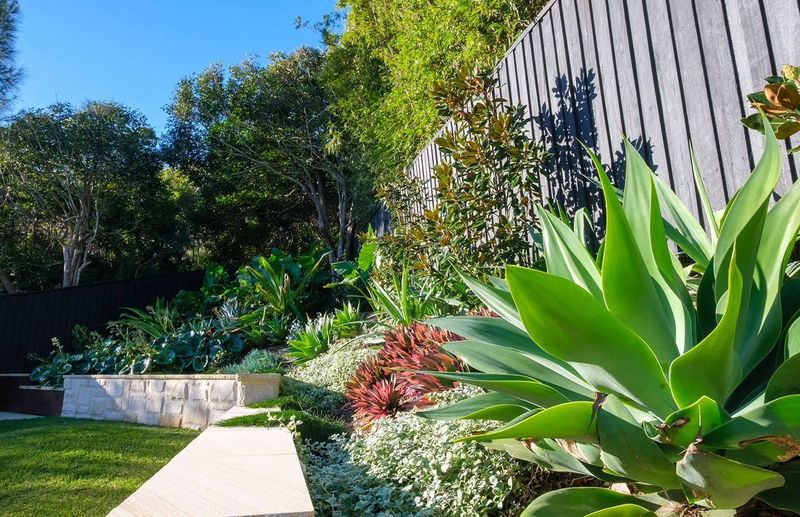
Bold, architectural, and impossible to ignore, agave is the plant that makes people slow down and stare. A single well-placed rosette can anchor an entry the way a designer statement piece anchors a living room.
These succulents store water in their thick leaves, so a real dry spell barely registers with them. Overwatering is actually the fastest way to lose one, which makes agave perfect for hands-off homeowners.
Softer species like Agave attenuata skip the sharp spines, so they play nicely near a path where people walk. Give them full sun and fast-draining soil, then mostly leave them alone.
The result is a sculptural, expensive-looking entry that survives California summers without complaint.
4. California Fuchsia (Epilobium canum)
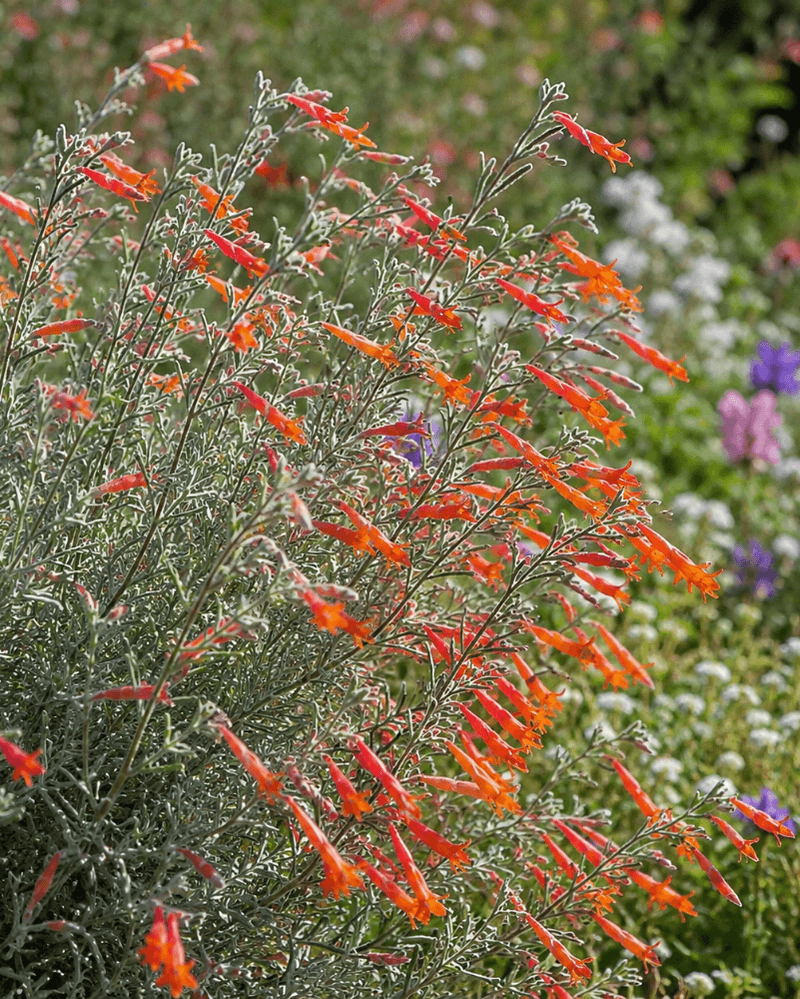
When most flowers are wilting in the August heat, California fuchsia is throwing a fireworks show of orange-red blooms. It brings color exactly when your entry needs it most, and hummingbirds treat it like an open bar.
Being a true California native, it’s built for our long dry summers and needs almost no supplemental water once rooted. That makes it a guilt-free choice for homeowners who want a lush, alive-looking yard without breaking water rules.
Let it spill and spread along the edges of a path for a relaxed, cottage-meets-native vibe. Cut it back in late fall and it returns stronger.
Vibrant, wildlife-friendly, and thrifty with water, it earns its spot easily.
5. Rosemary (Salvia rosmarinus)
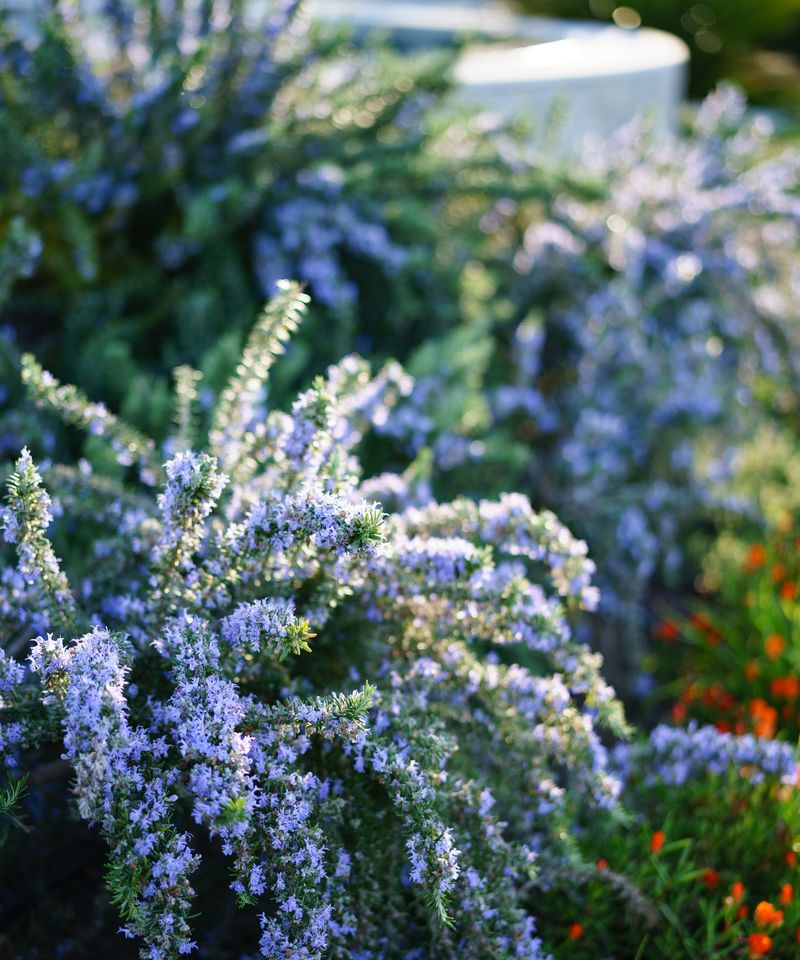
Two-for-one deals are rare in the garden, but rosemary hands you good looks and dinner ingredients in the same plant. Its fine evergreen texture and little blue flowers give a path that polished, established look.
Trailing varieties can cascade over a low wall or path edge, while upright forms make a soft, informal hedge. Either way, rosemary treats drought like a personal challenge and keeps on growing.
Once its roots are down, watering can drop to almost nothing through summer. Bees love the flowers, you love the fresh sprigs, and your entry looks like a Tuscan hillside.
Not bad for a plant that basically asks to be ignored.
6. Kangaroo Paw (Anigozanthos)
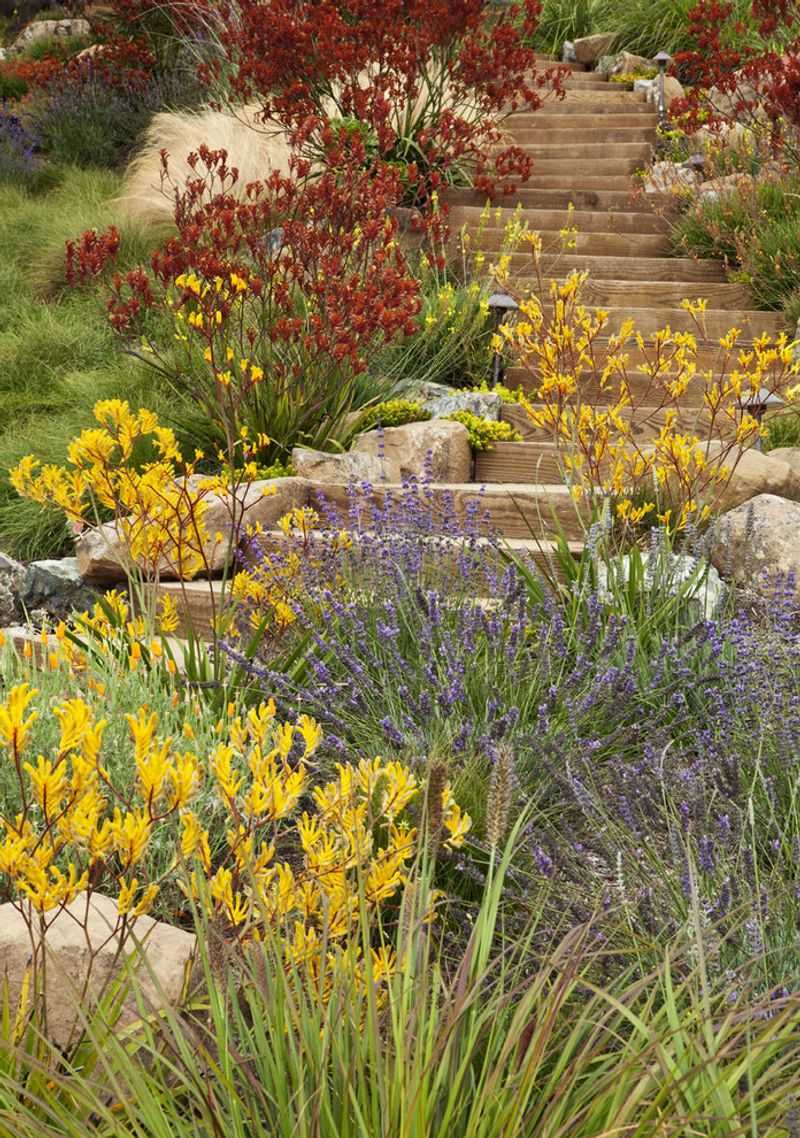
If you want visitors to ask “what is THAT?”, kangaroo paw is your plant. Its fuzzy, tubular flowers on tall stems look almost too exotic to be low-maintenance, yet here we are.
Native to Australia, it’s wired for hot, dry conditions that mirror much of California, so summer thirst is barely a thing. The flower colors range from fiery red to sunny gold, adding that pricey botanical-garden feel to an ordinary entry.
Plant it in full sun with sharp drainage and keep water light. Hummingbirds drop by for the blooms, and the strappy foliage stays neat between flushes.
Exotic looks, tough attitude, tiny water needs.
7. Society Garlic (Tulbaghia violacea)
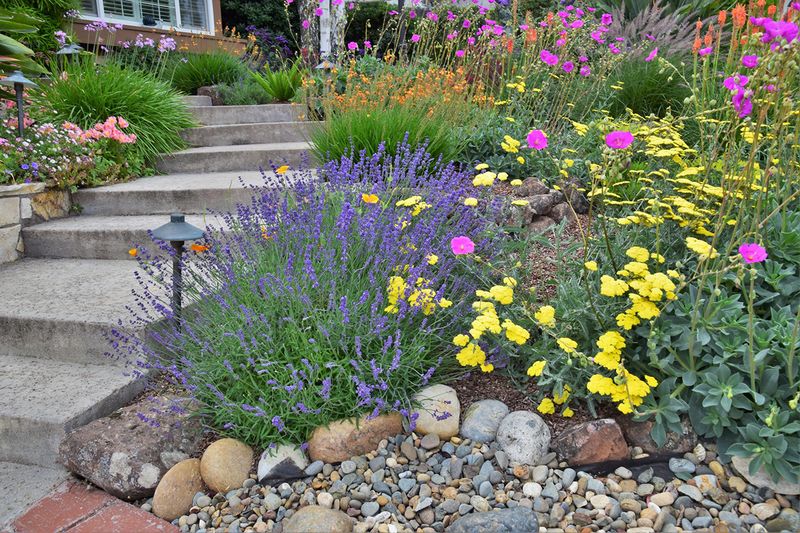
Delicate lavender-purple flowers floating above grassy foliage make society garlic look far more refined than its no-nonsense reputation. It brings a soft, airy elegance to a path edge that feels expensive and effortless.
Despite the dainty flowers, this plant is tough as nails through California heat and dry stretches. It blooms for months, giving you long-lasting color that most fussy annuals could never match on so little water.
Bonus quirk: the leaves carry a mild garlic scent that some gardeners believe helps keep certain pests browsing elsewhere. Plant it in clumps for a repeating border, give it sun, and water sparingly.
Pretty, persistent, and practically self-sufficient, it’s a fitting finish to any water-wise entry.