
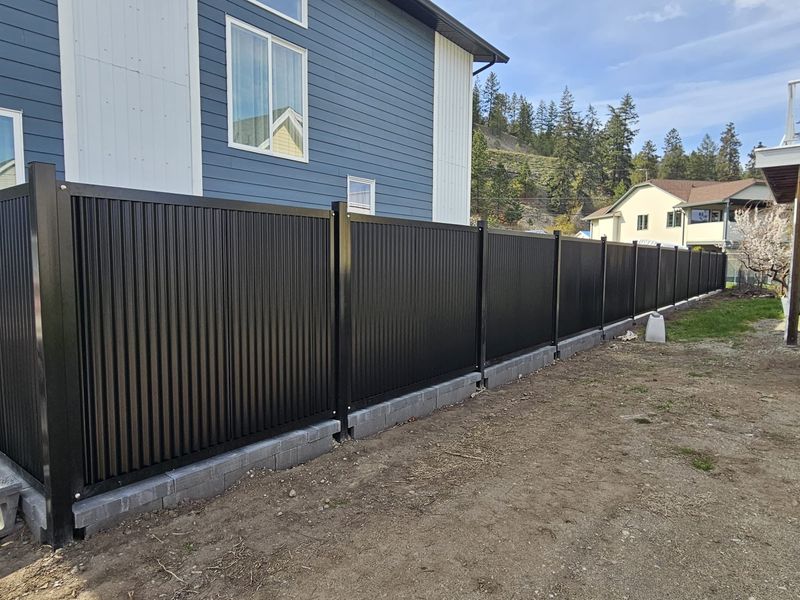
Your wood fence might look solid and harmless, but where it touches your house could be one of the most overlooked fire risks on your property. California fire agencies and wildfire researchers have repeatedly flagged combustible fences and gates attached to a home as potential pathways for fire to reach siding, windows, and eaves.
The good news is that you do not need to tear out the whole fence. Targeting just the section nearest the house with the right replacement material can interrupt that pathway without breaking the bank.
The concern is an attached combustible fence, not every wood fence
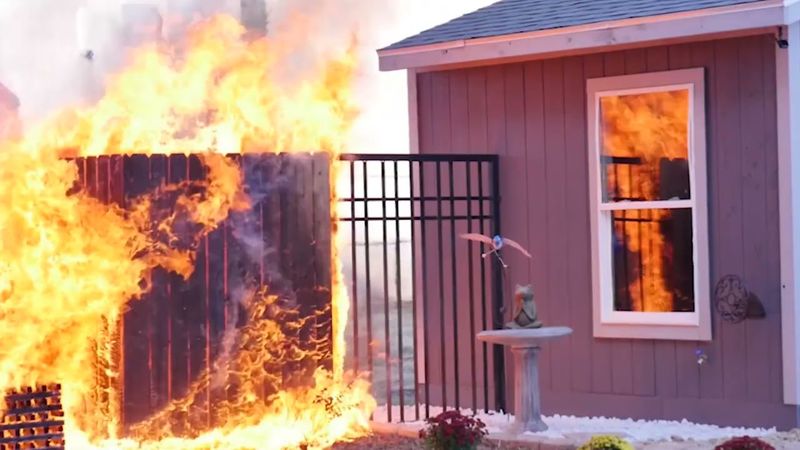
Not every wood fence in California is a fire emergency waiting to happen. The concern that California fire agencies, UC ANR, and wildfire researchers consistently raise is narrower and more specific: a combustible fence, gate, or arbor that is physically connected to a home or other attached structure.
That connection is the problem, not the fence material by itself.
When a solid wood privacy fence runs right up to a garage wall, side door, or porch, it creates a direct link between whatever is burning outside and the structure itself. A fence sitting in the middle of a yard, far from any building, presents a different situation entirely.
Distance, attachment, design, debris load, surrounding vegetation, and wind conditions all shape how much risk a given fence segment actually adds.
CAL FIRE’s home-hardening guidance specifically calls out three fence vulnerabilities: debris that collects at the base, ember-catching ledges where privacy fences intersect, and combustible fences or gates attached to the residence. The agency recommends noncombustible or ignition-resistant fencing and regular debris removal, not a blanket replacement of every wood fence on the lot.
UC ANR frames the practical response in cost-conscious terms: focus on the section where the fence meets the house rather than assuming the entire run needs to go. A solid wood privacy fence or combustible gate that meets a wall, garage door frame, or attached structure is the segment worth inspecting first.
Everything else can wait until you have assessed that critical connection point.
Starting with that attached section also gives homeowners a manageable, affordable entry point into home-hardening work without the sticker shock of a full perimeter replacement.
How embers and flames can move along a fence line
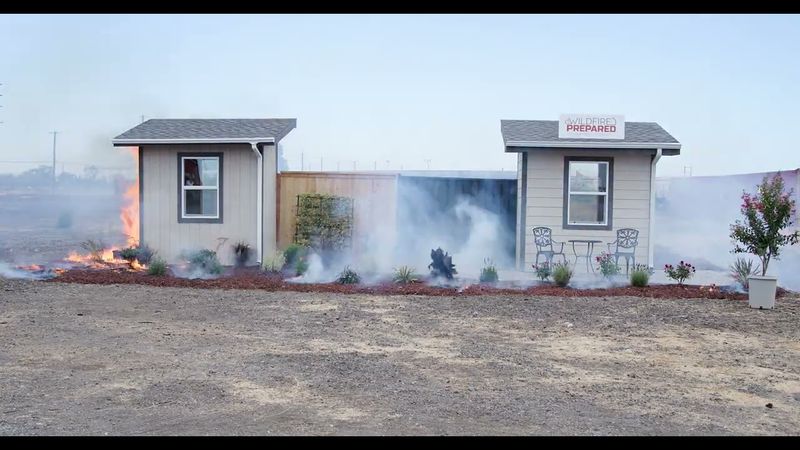
Fire does not need a match to get started at your fence line. During a wildfire, embers can travel miles ahead of the main fire front and land on or near a fence.
If leaves, mulch, or dried grass have collected at the base, those materials can ignite first and transfer heat directly to the fence boards above them.
NIST’s outdoor fence and mulch research, which involved 187 controlled experiments, found that mulch at the base of a fence increased fire spread, and that two combustible privacy fences placed just 18 inches apart were fully engulfed in under four minutes in one test setup. Those findings do not mean every fence will burn the same way during an actual wildfire, but they do point to debris-filled fence lines and paired combustible fences as priority conditions worth correcting.
Beyond carrying flames toward a house, fences can also generate embers of their own as they burn. NIST research on structure vulnerability to firebrands from fences and mulch shows that fence type, wind speed and direction, ground cover beneath the fence, and proximity to a structure all affect how embers travel and where they land.
A burning fence near a wall or window can deposit firebrands directly onto siding, into open vents, or onto a wooden deck.
Separate NIST work on wind speed and angle found that even moderate wind significantly changes how fast and how far fire moves along a fence panel. Fences running perpendicular to prevailing winds, or aligned so that wind pushes flames toward a structure, can accelerate the problem.
Knowing your property’s typical wind direction is worth factoring into any inspection.
Target the fence section where it meets the house
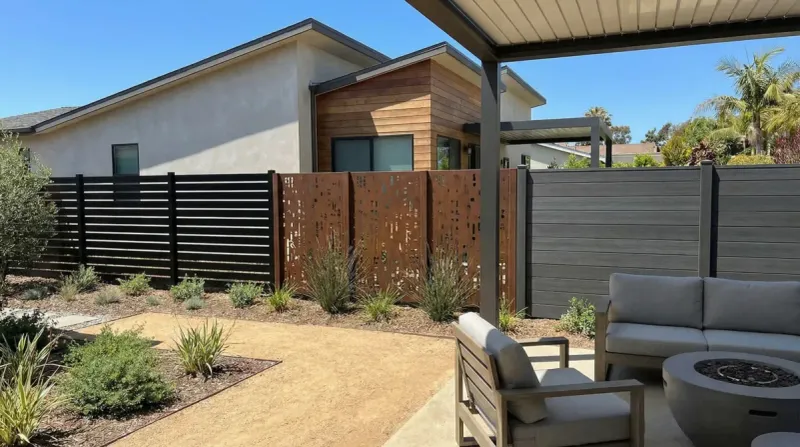
Replacing an entire fence line is expensive and, for most homeowners in wildfire-prone areas, unnecessary as a first step. The more practical approach focuses on one specific segment: the section where the fence or gate meets the house, garage, or any attached structure.
Interrupting that connection with a noncombustible material breaks the most direct flame pathway without touching the rest of the run.
UC ANR’s Fire Network fence guidance commonly describes replacing the last 5 feet of an attached fence with a noncombustible section, such as a metal gate, as the key retrofit move. The idea is straightforward: if flames traveling along a wood fence reach a metal section before reaching the house, they have nowhere combustible to go.
The fire pathway is interrupted, and the rest of the fence can remain in place.
CAL FIRE’s current home-hardening guidance recommends replacing the attached combustible portion for the first 8 feet rather than 5 feet. Both measurements appear in legitimate agency and research materials, and neither should be treated as a single universal legal standard.
The right number for your property depends on your local jurisdiction, whether you are in a State Responsibility Area or a Very High Fire Hazard Severity Zone, and what your local fire authority or building department currently requires.
The August 2026 Zone 0 draft regulation summary proposed a five-foot noncombustible section for fences attached to homes, with phased treatment for existing structures. That document was still in draft or final-consideration status at the time of its board meeting, so homeowners should verify which version is currently in effect locally before ordering materials or scheduling a contractor.
The practical takeaway remains the same regardless of which measurement applies: replace the section nearest the structure first, confirm the required length with local authorities, and use an approved noncombustible material for that segment.
Choose an approved material and evaluate the whole assembly
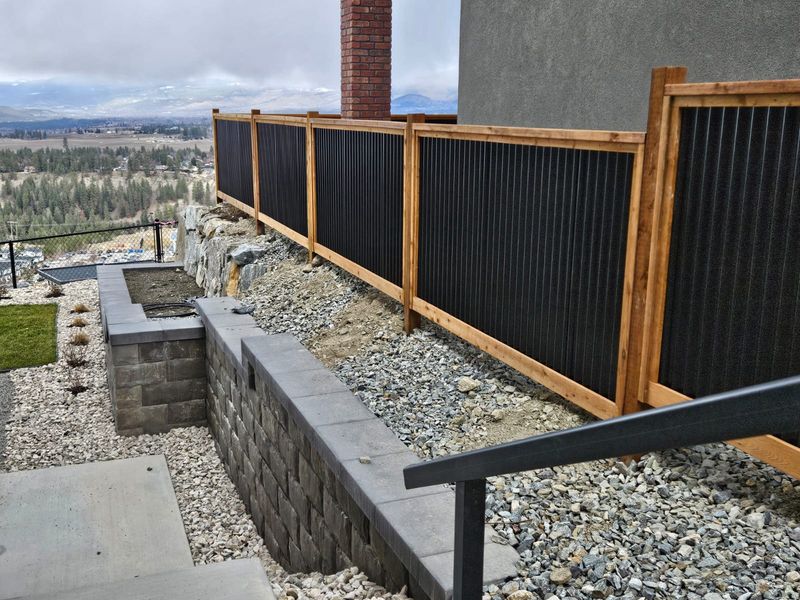
Picking a replacement material sounds simple until you realize that labels like fire-resistant, fire-rated, and low-maintenance do not automatically mean noncombustible in a technical or regulatory sense. California’s draft Zone 0 language defines noncombustibility by reference to ASTM E136, a specific materials test standard.
A product marketed with a fire-friendly name should be verified against local requirements before purchase.
UC ANR’s fence guidance lists metal gates, wire fencing, and chain-link fencing as possible noncombustible options, and also mentions thicker wood sections and ignition-resistant lumber as situation-dependent approaches depending on local rules and property configuration. Metal, masonry, and concrete are the most commonly cited examples of materials that meet a noncombustible standard, but the right choice for any given property depends on local code approval, the existing fence design, and the complete assembly being installed.
That last point matters more than many homeowners expect. A metal panel attached to combustible wood posts, framed with wood nailers, or covered in a privacy screen made from woven plant material is not a fully noncombustible assembly.
Vines growing through the panel, mulch piled at its base, or debris caught in the frame can reintroduce combustible fuel right at the house connection. UC ANR’s homeowner wildfire mitigation guide makes clear that the whole fence system needs evaluation, not just the panel material.
Vinyl deserves a specific note because it is sometimes pitched as a low-maintenance alternative. CAL FIRE acknowledges that vinyl fencing may resist ember exposure better than some other materials in certain conditions, but it can ignite under direct flame exposure involving debris and can deform under radiant heat.
UC ANR similarly flags that vinyl can melt or deform in fire conditions. Vinyl is not an automatic safe swap for the section nearest the house, and it should not be treated as equivalent to metal, masonry, or concrete for this application without local confirmation.
Clear fuel and debris from the entire fence line
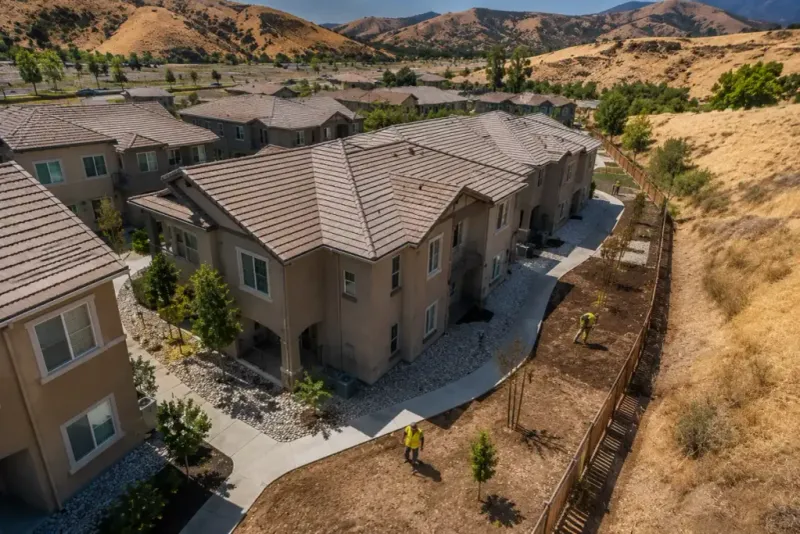
A noncombustible fence section at the house connection can still fail to protect the home if the rest of the fence line is loaded with fuel. Leaves, dried grass, mulch, firewood stacked against the boards, and overgrown shrubs along the fence base all give an ember or small flame something to grab onto.
Clearing that material regularly is not optional maintenance; it is what makes the retrofit actually work.
UC ANR’s homeowner wildfire mitigation guide recommends keeping the fence from touching soil, maintaining roughly a 1-inch gap beneath wood fence boards where applicable, and removing leaves, trash, mulch, firewood, grass, and shrubs from the fence base. That gap beneath the boards is easy to overlook but matters because soil contact accelerates wood decay and can hold moisture and debris against the bottom of the fence panel.
Using a fence as a trellis adds another layer of risk that homeowners in fire-prone areas should think through carefully. The Ready for Wildfire home retrofit guide warns that climbing plants can trap debris and create additional combustible fuel against the fence.
If vines are already established, they need to be kept trimmed back, free of dead material, and well away from the section nearest the house.
Paired combustible fences also deserve attention during any cleanup. NIST experiments showed that two combustible privacy fences spaced close together produced particularly intense fire behavior, with one test setup seeing both fences engulfed in under four minutes.
That research is not a universal code prohibition on back-to-back fences, but it does make the case for treating a narrow gap between two combustible runs as a high-priority fuel condition worth correcting through spacing, material change, or aggressive debris management.
Inspect the connection before you order materials
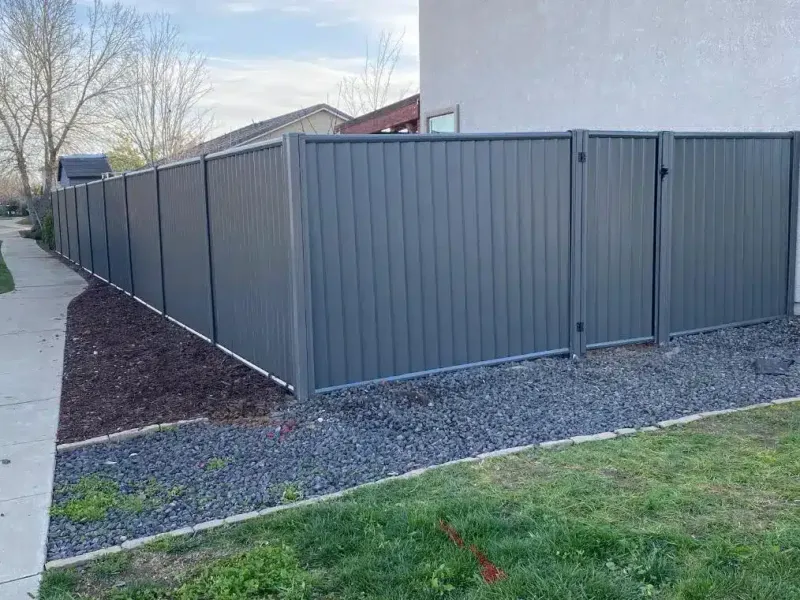
Before calling a contractor or pricing out metal panels, spend twenty minutes walking the fence line with fresh eyes. The goal is to trace every point where the fence or gate physically meets the house, garage, attached patio cover, or any other connected structure.
You are looking for the exact spots where a flame traveling along the fence would reach combustible building materials.
Pay close attention to ledges and intersections. CAL FIRE’s home-hardening guidance specifically flags ember-catching ledges at privacy-fence intersections as a vulnerability.
Horizontal surfaces where two fence panels meet at an angle, or where a fence top rail runs along a wall, can collect embers and debris in ways that a straight vertical surface would not. Check whether any combustible posts or framing members sit directly behind where a proposed metal panel would be installed, because those posts remain a fuel source even after the panel is swapped out.
At the base of every section near the house, note what is on the ground: mulch, bark, dried leaves, grass, stored items, or bare soil. UC ANR’s homeowner guide is direct about keeping that zone clear, and what you find during the inspection will tell you how much ground-level work needs to happen alongside the material swap.
Look outward from the house connection as well. Note whether a neighbor’s fence runs parallel and close to yours, whether any vegetation is growing into or over the fence, and which direction the prevailing wind typically blows across the fence line.
Take photographs of the connection point, the base, and any intersections or ledges before you meet with a contractor or inspector. Those photos will help you communicate exactly what needs to change, and they give you a reference point for OSFM building-in-the-wildland guidance when confirming what your property requires.
Verify which California rules apply to your property
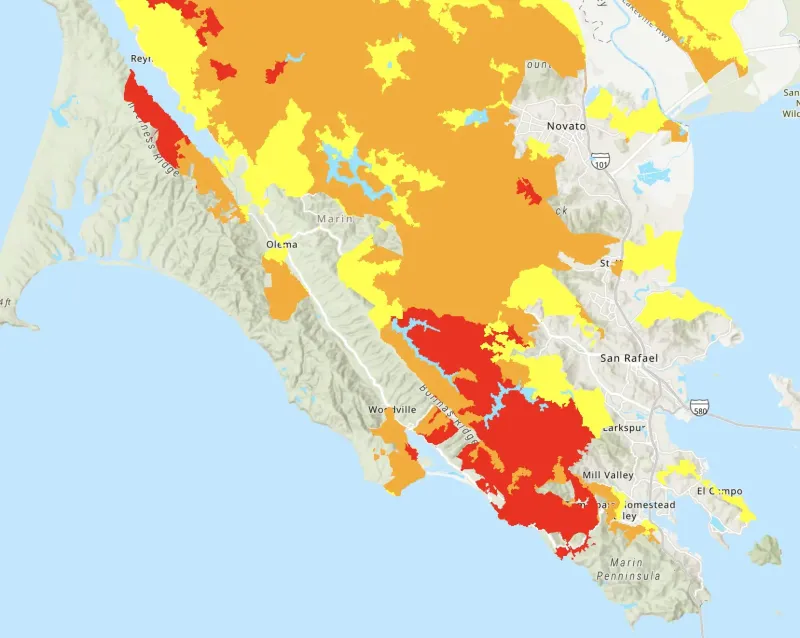
Agency guidance and enforceable rules are not the same thing, and the difference matters when you are deciding whether a retrofit is a good idea or a legal requirement. CAL FIRE recommends replacing the attached combustible fence section for the first 8 feet.
UC ANR guidance and a recent Zone 0 draft both use 5 feet. Neither number is universally enforceable without knowing your specific jurisdiction and the current status of any applicable regulation.
Where you live on California’s regulatory map determines which rules govern your fence. Properties in a State Responsibility Area fall under state fire law administered by CAL FIRE.
Properties in a Very High Fire Hazard Severity Zone within a Local Responsibility Area may be subject to a combination of state baseline requirements and stricter local ordinances. Some fire protection districts and cities have adopted rules that go beyond the state minimum.
OSFM’s Fire Hazard Severity Zone resources can help you identify your zone designation, but your local fire authority is the definitive source for what is currently required on your parcel.
The California Board of Forestry and Fire Protection’s Zone 0 program page tracks the ongoing development of the immediate zone requirements around homes. The August 2026 board materials included a draft Zone 0 regulation that proposed a five-foot noncombustible fence section for attached fences, with phased compliance timelines for existing structures.
The August 2026 board decision memo reflects where that process stood at the time of the meeting. Because rulemaking timelines shift, do not assume a specific deadline applies to your property without confirming the final adopted rule with a local official.
CAL FIRE’s defensible space program offers inspection resources and contacts that can help you find out what is currently required in your area. Your local fire department, fire protection district, or building department is the right first call before you buy materials, pull a permit, or schedule any work near the house connection.
Break the fence’s connection to the house first
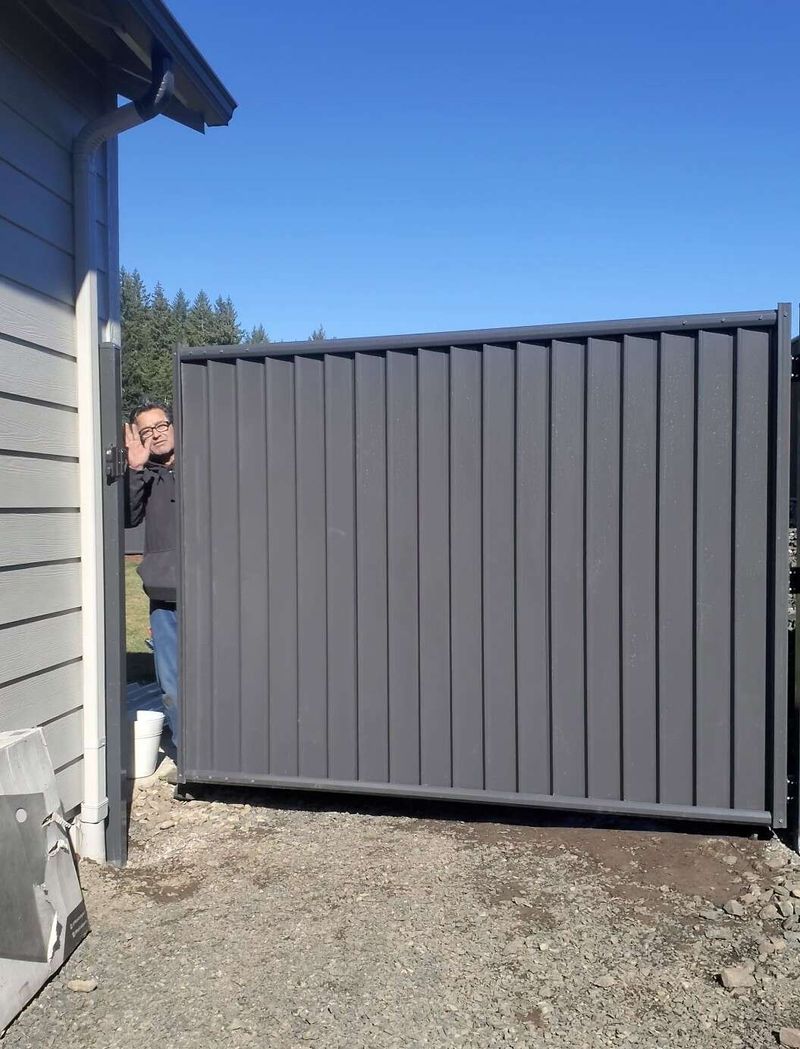
The order of operations here is straightforward. Start by identifying every combustible fence or gate that is physically attached to the structure.
Confirm with your local fire authority, fire protection district, or building department which measurement applies to your property and which materials are approved. Then replace or physically separate the nearest section using a locally approved noncombustible material, and clear the entire fence line of leaves, mulch, debris, and overhanging vegetation before you call the job done.
That sequence addresses one specific ignition pathway. CAL FIRE’s home-hardening program and UC ANR’s fence guidance both situate the fence retrofit within a broader home-hardening picture that includes roofs, vents, decks, siding, windows, mulch beds, and surrounding vegetation.
Fixing the fence connection does not make a home fire-safe; it removes one link in a chain that fire could otherwise travel.
Homeowners who complete the fence retrofit and want to keep building on that work can find the next set of priorities through OSFM’s building-in-the-wildland resources, which cover the full range of structure vulnerabilities worth addressing over time. The fence is a reasonable and cost-conscious place to start, but a home that survives a wildfire is usually one where every pathway has been considered.
One noncombustible gate at the right location, kept clean and verified locally, is a meaningful step in that direction.