
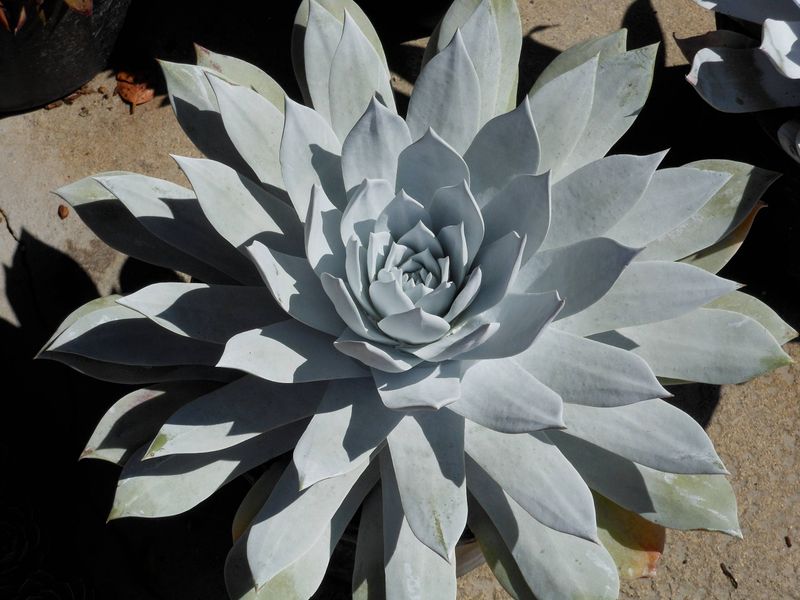
Your front porch is the first thing neighbors, guests, and delivery drivers see, and in California it also has to survive long, dry summers. The good news is that some of the best-looking porch plants are also the thirstiest-proof ones around.
Many of them feed bees and hummingbirds too, so your entry can look polished while helping local wildlife. Here are nine plants that bring designer style to your steps without running up your water bill.
1. Agave ‘Blue Glow’
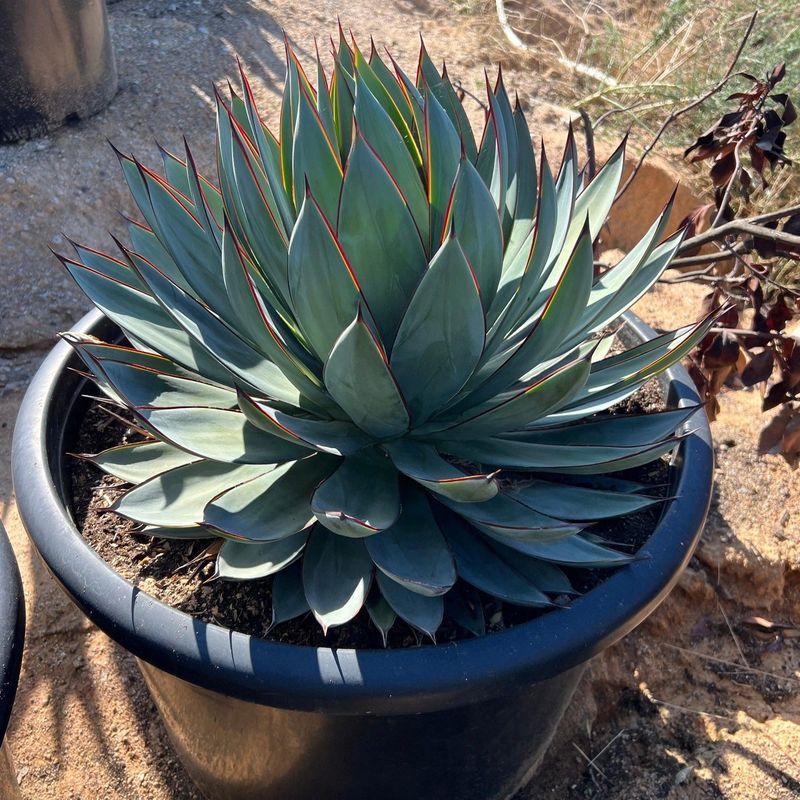
Sculpture you never have to water much. That is the easiest way to describe Agave ‘Blue Glow’, with its blue-green leaves edged in red and gold that seem to light up when the sun gets low.
It stays compact, usually around two feet tall and wide, so it fits a pot on the top step without crowding the doorway. Once settled in, it may only need a deep drink every few weeks in summer, and even less near the coast.
Use a fast-draining cactus mix and a pot with a big drainage hole, since soggy roots are its main enemy. Its leaf tips are softer than many agaves, which makes it a safer pick near walkways where kids and pets pass by.
2. Cleveland Sage
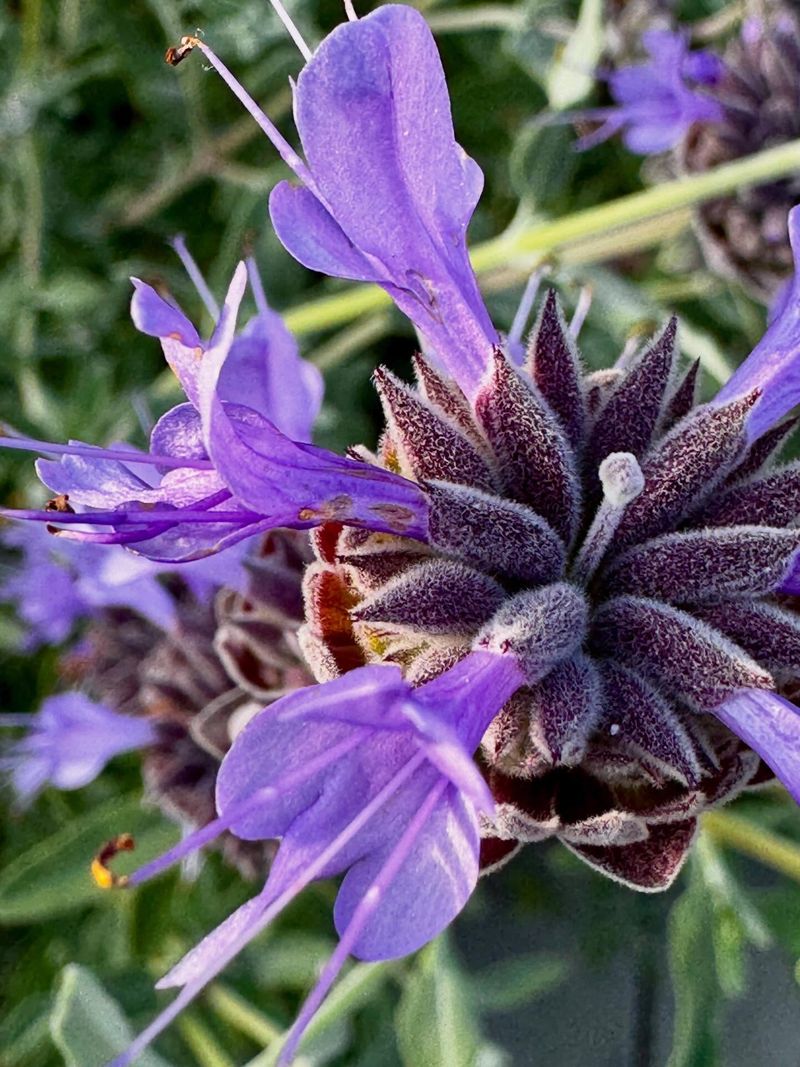
Brush past it on your way to the door and the whole porch smells like a Southern California hillside after rain. Cleveland sage (Salvia clevelandii) is a native shrub with gray-green leaves and stacked purple flower whorls in late spring and early summer.
Hummingbirds and native bees treat it like a snack bar, which makes it a solid choice if you want your entry to support local pollinators. After its first year in the ground, it can often get by on very little summer water, and too much can actually shorten its life.
Plant it in full sun along a walkway or in a large pot by the steps. A light trim after bloom keeps it tidy enough for a front yard that still looks put together.
3. Lion’s Tail
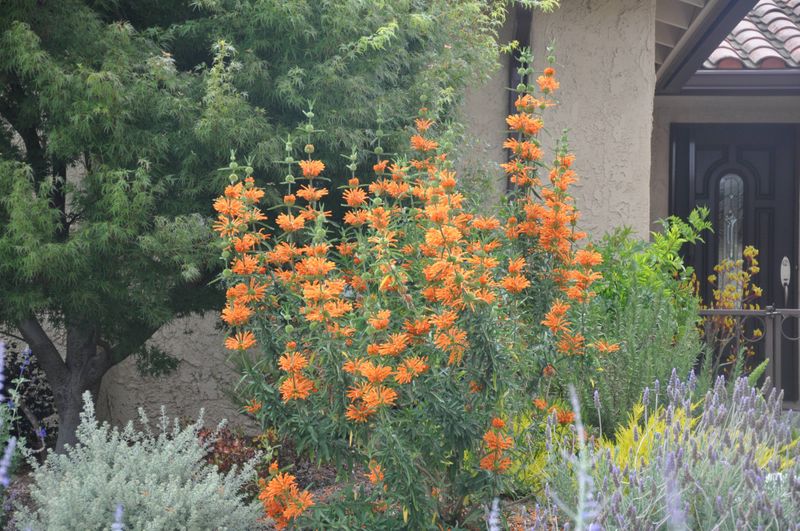
Ever seen a plant that looks like it is wearing stacked orange pom-poms? Lion’s tail, or Leonotis leonurus, brings that playful, tropical punch without the tropical water habit.
Its fuzzy orange flowers appear in rings up tall stems from summer into fall, right when many other plants look tired. Hummingbirds can’t seem to stay away.
Give it full sun and a spot where it can reach four to six feet, like flanking porch steps or filling a corner. Cut it back hard in late winter and it will bounce back fresh.
It is a great fit for inland valley yards where summer heat is intense.
4. Dudleya
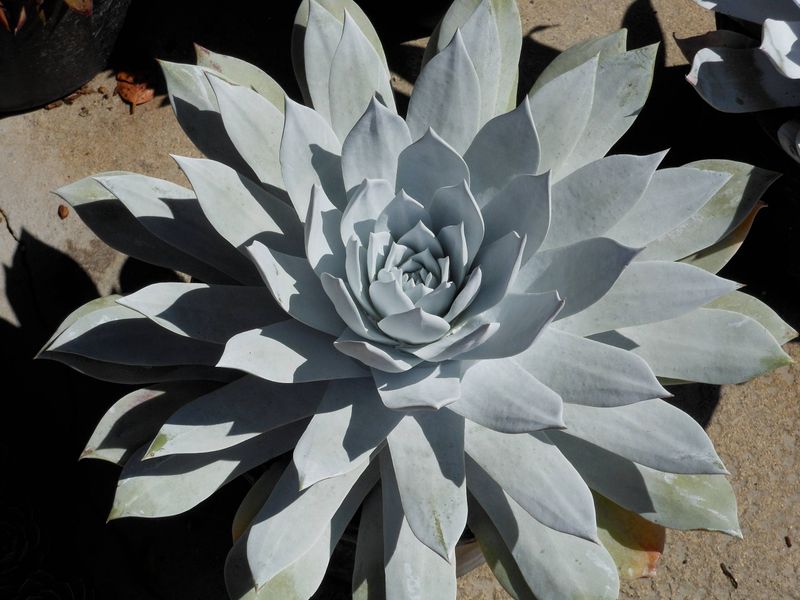
Chalk-white and almost glowing, Dudleya looks like something from a high-end nursery catalog. In fact, it is a California native succulent that grows on coastal bluffs and rocky slopes.
Its rosettes stay low, making it perfect for shallow bowls on porch steps or tucked between boulders near the entry. Here is the twist: it is summer-dormant, so it wants little to no water in the hot months and does most of its growing during our wet winters.
Plant it at an angle so water runs off the rosette instead of pooling. Avoid touching the leaves, because the powdery coating that gives it that silvery finish rubs off easily and doesn’t come back fast.
5. Kangaroo Paw
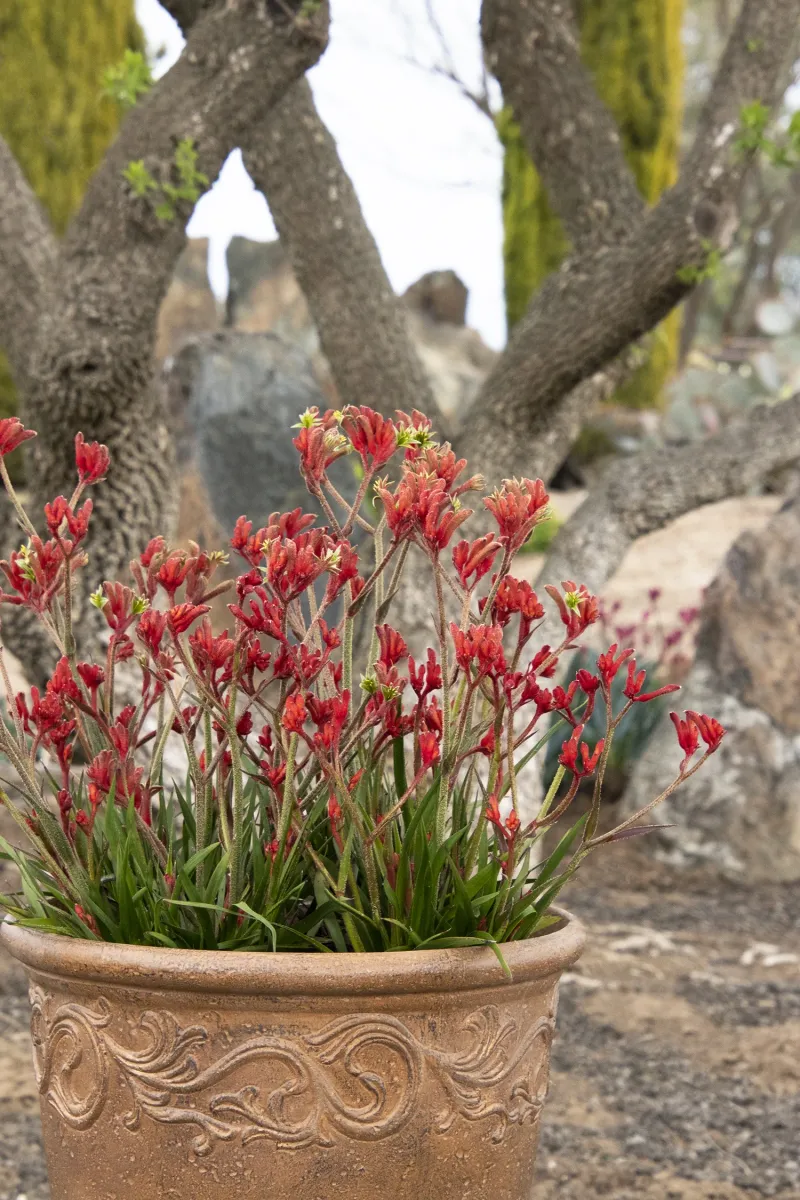
Australian by birth, kangaroo paw feels right at home in California thanks to a very similar dry-summer climate. The fuzzy, claw-shaped blooms come in red, yellow, orange, and pink, standing tall on stiff stems above strappy leaves.
Designers love it for adding height and a modern look to entry beds and containers. Hummingbirds visit often, and the flowers last well when cut for a vase inside.
Water deeply but not often, and give it full sun with excellent drainage. Snip old flower stalks down to the base after bloom to encourage new ones.
Dwarf types work well in pots on smaller porches.
6. California Fuchsia
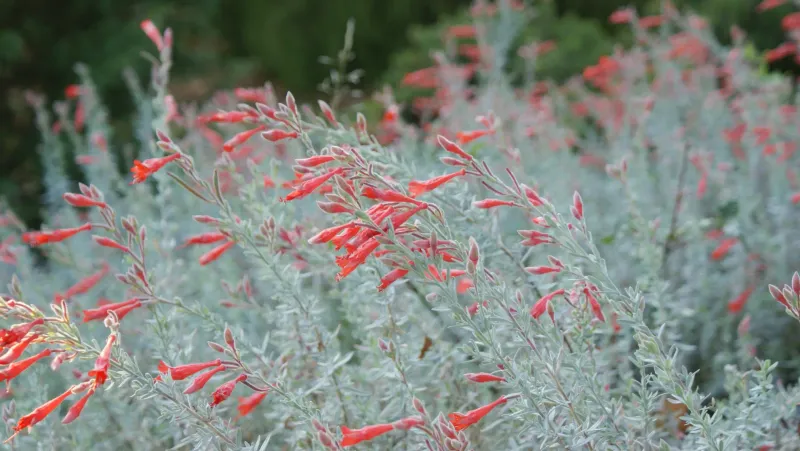
Late summer is when most front yards fade, and that is exactly when California fuchsia puts on its show. Bright scarlet trumpets pour over gray foliage from August into fall.
Native to the state, Epilobium canum is a key late-season nectar source for hummingbirds as they prepare for migration. That makes it one of the most useful plants you can add if you want your yard to help wildlife.
Let it spill over a low wall, a raised bed edge, or the rim of a wide pot. It spreads by underground runners, so give it room.
Cut it back to a few inches in winter, and it can come back thicker next year.
7. Blue Fescue
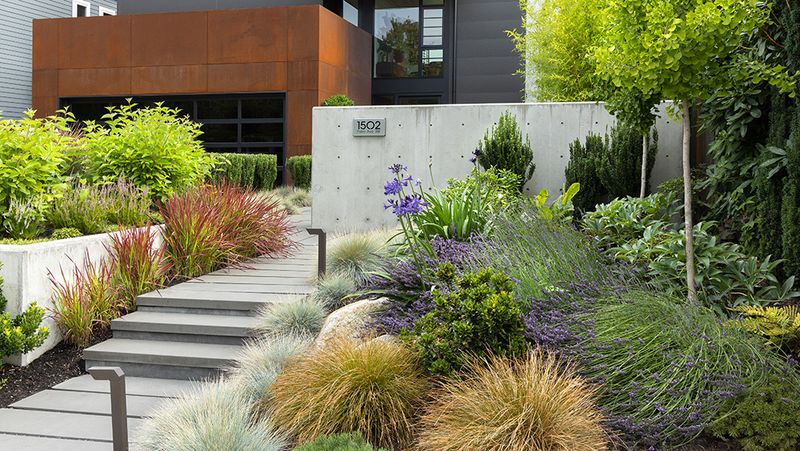
Tidy little blue pincushions. Lined up along a path or grouped in a trio of pots, blue fescue gives your entry that clean, landscape-architect look for very little effort.
Each clump stays around a foot tall and wide, with fine silvery-blue blades that pair beautifully with succulents and gravel. It handles dry conditions well once established, though it can appreciate some afternoon shade in hot inland areas.
Comb out dead blades with your fingers in early spring to keep it sharp. Clumps may thin after a few years, but dividing them is easy and gives you free plants for more spots.
8. Manzanita ‘Howard McMinn’
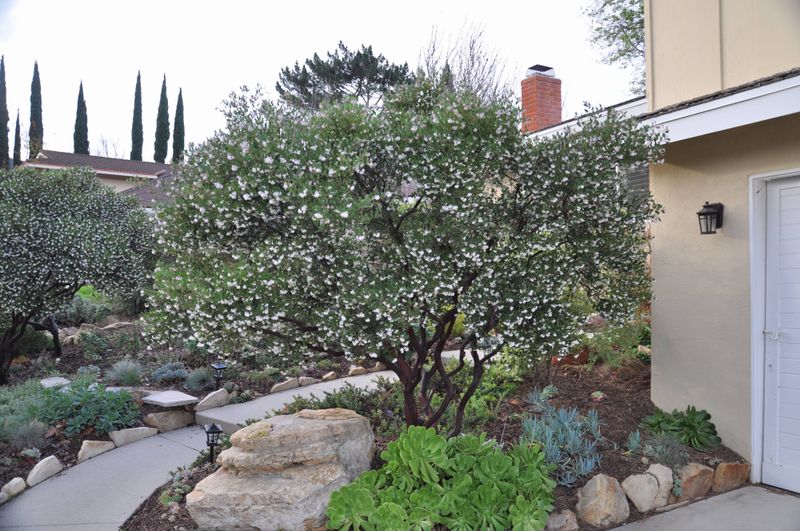
Smooth mahogany bark that looks hand-polished is the signature of manzanita, and ‘Howard McMinn’ is one of the most forgiving varieties for home gardens.
Tiny pink-white bell flowers show up in late winter, feeding early native bees and hummingbirds when little else is blooming. It typically grows into a rounded shrub around five to six feet, nice for framing a porch or screening a corner.
Once established, it generally wants almost no summer water, and overwatering in heat can invite root rot. If you live in a fire-prone area, keep it pruned, clear of dead material, and placed with spacing guidance from your local defensible-space rules in mind.
9. Aeonium ‘Zwartkop’
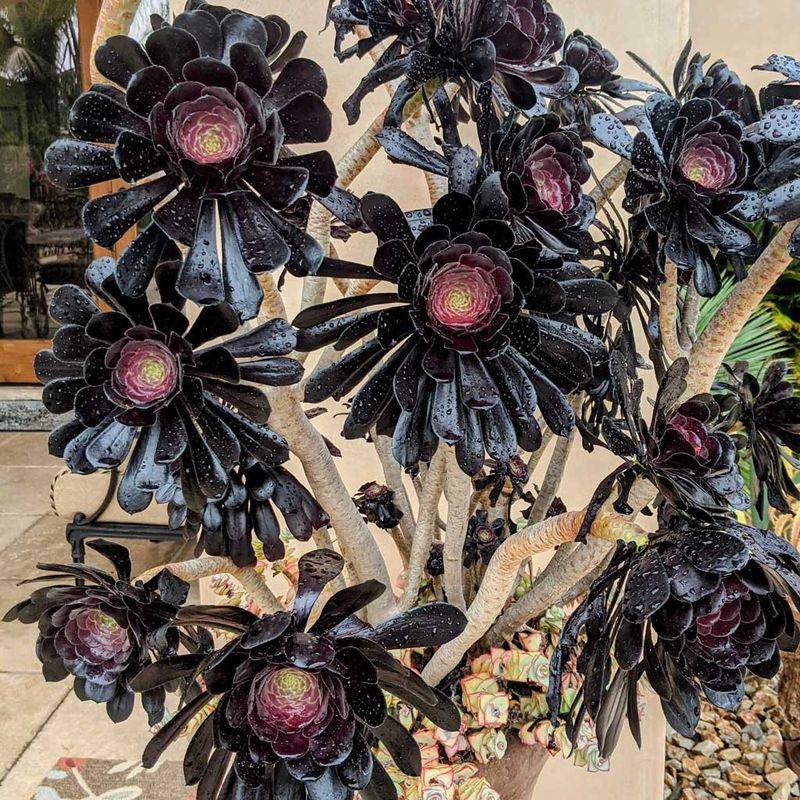
Nearly black rosettes on branching stems make Aeonium ‘Zwartkop’ the plant that stops visitors on the steps. Set it in a white or pale pot and it reads instantly modern.
Fun detail: like Dudleya, aeoniums do most of their growing in cool, wet months and slow down in summer heat. Coastal gardeners have the easiest time, while inland folks can keep it happy with bright shade in the afternoon.
It roots easily from cuttings, so one pot can turn into several. Water sparingly in summer and protect it from hard frost, and it will give your porch dramatic color all year.