
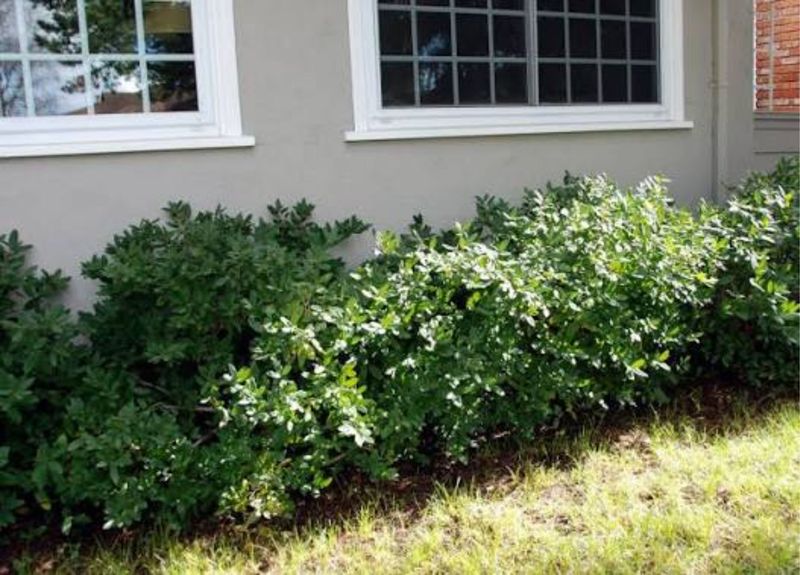
Privet makes a decent wall, but it asks for constant shearing, extra water, and it spreads into wild places where it does not belong. California has its own shrubs that grow dense, stay green through dry summers, and feed bees and birds while they block the neighbors’ view.
Many of them look best with just one light trim a year. Here are eight native picks that can give you real privacy without turning your weekends into hedge duty.
1. Toyon (Heteromeles arbutifolia)
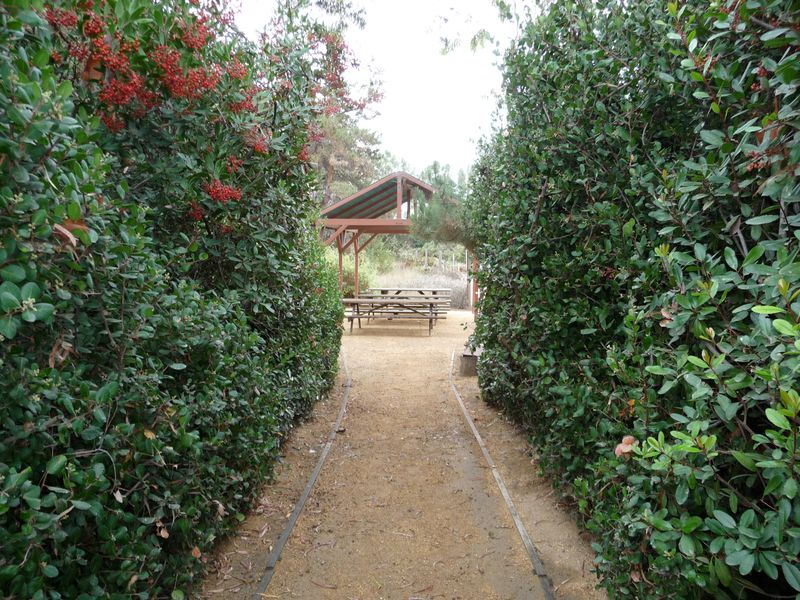
Hollywood is said to be named after this shrub, and once you see toyon covered in red berries each winter, the story makes sense. It grows into a tight, leafy screen 8 to 15 feet tall with almost no help from you.
Toyon handles clay, sun, and part shade, and once settled it can get by on occasional deep summer watering. Robins, cedar waxwings, and mockingbirds strip the berries in winter, so your screen doubles as a bird feeder.
One pruning in late winter keeps it shapely. Skip shearing it into a box, since a looser shape tends to stay fuller at the base.
2. Lemonade Berry (Rhus integrifolia)
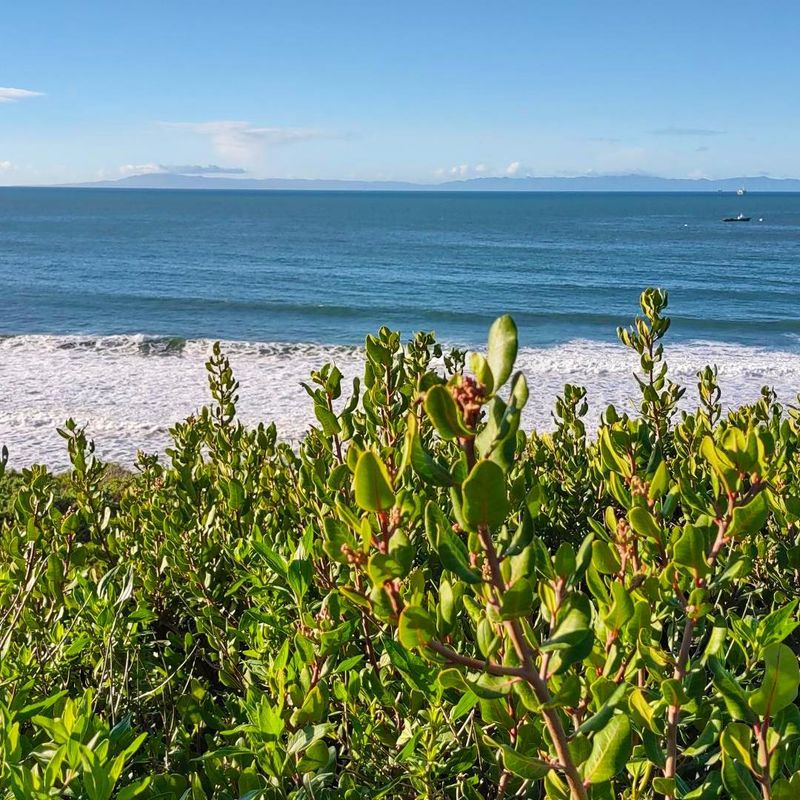
Coastal gardeners, meet your new favorite wall. Lemonade berry has thick, leathery leaves that shrug off salty wind and grow so densely you can barely see daylight through a mature plant.
Small pink flowers show up in late winter and draw native bees early in the season. The sticky, tart fruit was once soaked in water by Indigenous Californians to make a lemony drink.
Plan for 6 to 10 feet tall and just as wide. It prefers no summer water near the coast, so overwatering is the main way people go wrong with it.
3. Hollyleaf Cherry (Prunus ilicifolia)
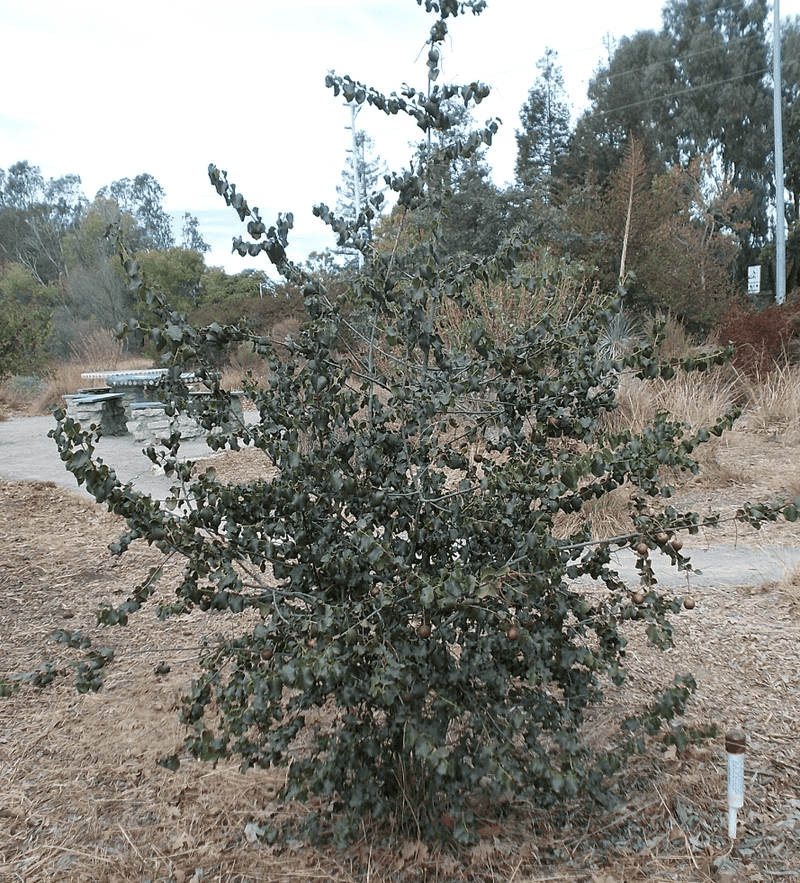
If you want something that can pass for a formal hedge, hollyleaf cherry is the native that comes closest. Its glossy, holly-like leaves pack tightly and accept shaping better than most California shrubs.
White flower spikes in spring buzz with pollinators, and dark cherries follow for birds. It grows slowly at first, then fills in to 10 to 20 feet if left alone.
Trim once or twice a year at most. Compared to privet’s monthly haircuts, that feels almost lazy.
4. Pacific Wax Myrtle (Morella californica)
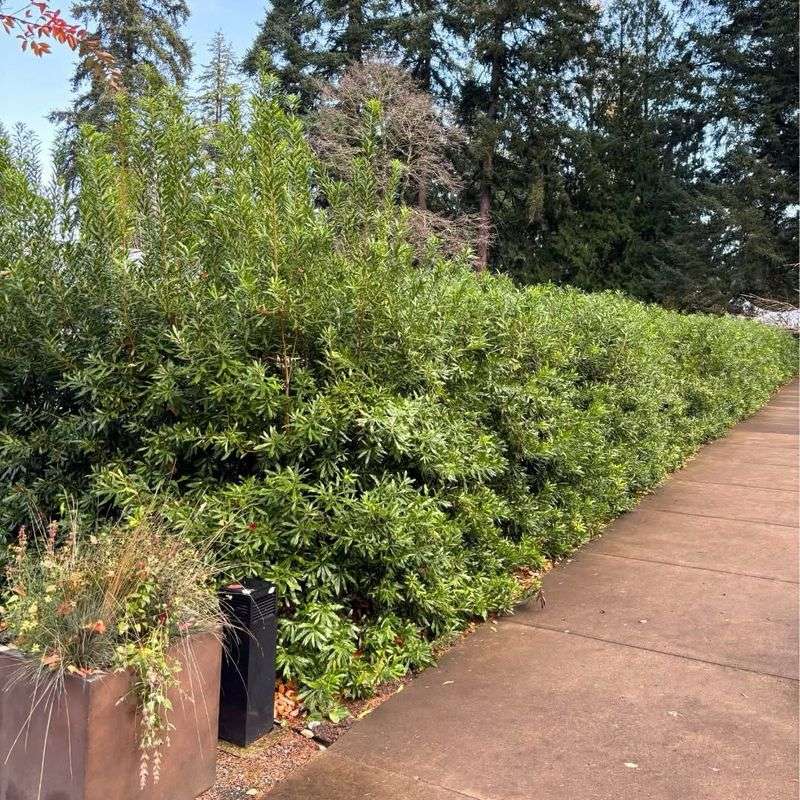
Got a spot that gets a bit more water, like a lawn edge or a low corner? Pacific wax myrtle is the fast filler for that job, often adding a couple feet a year.
Narrow, fragrant leaves grow thick from top to bottom, making it one of the quickest natives for blocking a second-story window. It can reach 10 to 25 feet but trims easily to a hedge height.
It does need some summer water inland, so group it with similar plants. Near the coast it often thrives on fog alone, and birds feed on its waxy purple fruit.
5. Coffeeberry (Frangula californica)
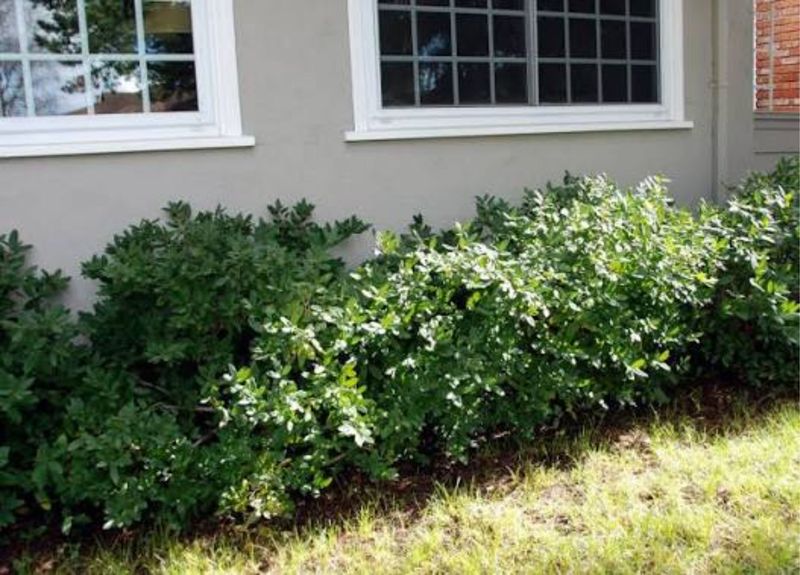
Coffeeberry is the friendly middle child of native screens. It stays a manageable 4 to 10 feet depending on the variety, and selections like Eve Case and Mound San Bruno stay tidy without much fuss.
Small flowers feed bees, and the berries ripen from red to black, a treat for thrushes and towhees. The plant is not related to real coffee, but the berries do resemble coffee beans.
It handles sun or shade and tolerates a range of soils. For a side yard or a lower screen under a window, few natives are easier.
6. Ceanothus ‘Ray Hartman’
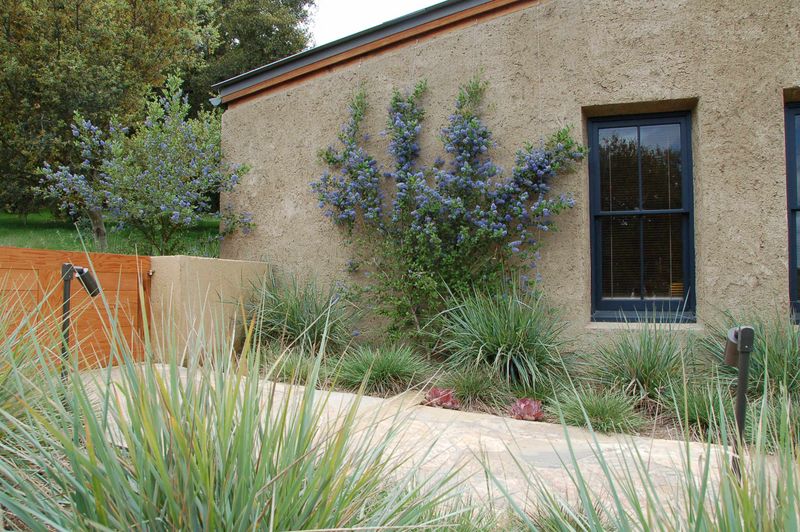
Picture a living wall that turns electric blue every spring and hums with bees. Ray Hartman is one of the largest California lilacs, reaching 12 to 20 feet with dense evergreen leaves.
It grows fast, which suits anyone who needs privacy soon. The tradeoff is a shorter life than some natives, often 10 to 20 years.
Water deeply only every few weeks in summer once established. Too much summer water is the number one reason ceanothus fails, so resist the urge to baby it.
7. Catalina Cherry (Prunus ilicifolia ssp. lyonii)
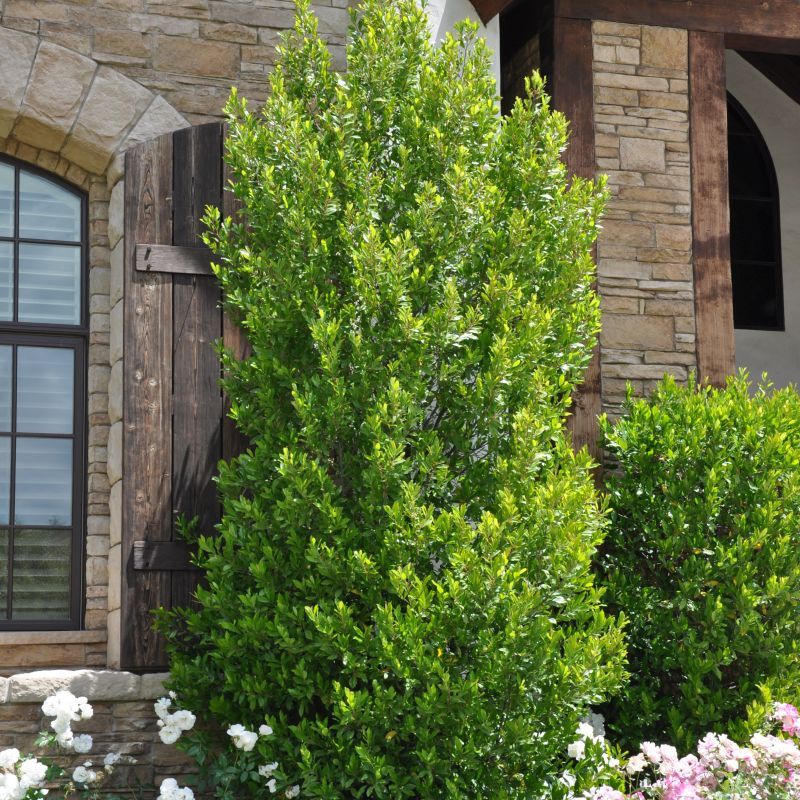
Need height more than anything else? The island cousin of hollyleaf cherry grows bigger and faster, with smooth, larger leaves and a lush, almost tropical look.
Catalina cherry can climb to 15 to 30 feet, enough to hide a two-story house next door. It works well as a row of small trees with full branches to the ground.
Give it room, sun, and deep occasional water. The large cherries are edible for people and birds, though mostly pit.
8. Manzanita ‘Dr. Hurd’ (Arctostaphylos manzanita)
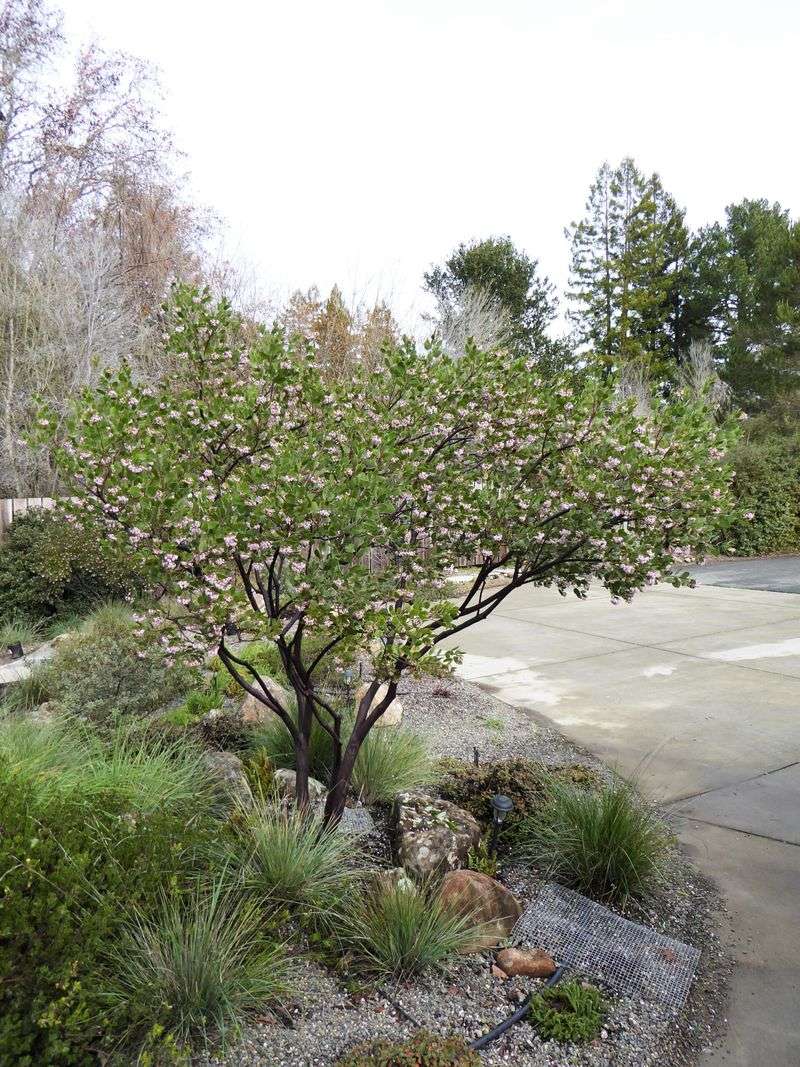
Sculptural and stubborn in the best way, Dr. Hurd manzanita brings mahogany bark and winter flowers that hummingbirds adore. It grows upright to around 10 to 15 feet, one of the best manzanitas for screening.
It is semi-open rather than solid, so plant a few together or mix it with toyon for full cover. Very little pruning is needed, and heavy cutting can actually harm it.
Once established it often needs little to no summer water. In fire-prone areas, keep it spaced and well away from the house per local defensible-space rules.