
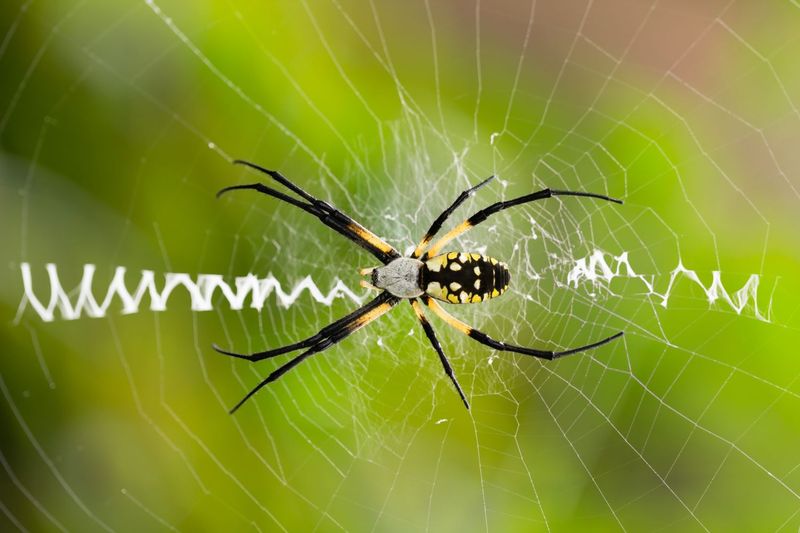
Every spring, California gardeners grab a broom and knock down the small webs strung across their raised beds and shrubs, not realizing those webs belong to creatures that may be doing quiet work against aphids and other plant pests. The praying mantis gets most of the credit in backyard pest-control conversations, but the science behind that reputation is shakier than most people know. Meanwhile, a whole community of resident spiders – tiny, easy to overlook, and often swept away before anyone thinks twice – can contribute to keeping pest populations in check as part of a broader natural-enemy network. Understanding who is actually working in your garden, and when to leave them alone, can change how you manage pests without reaching for a spray bottle.
California’s “garden spider” is a community, not one tiny species
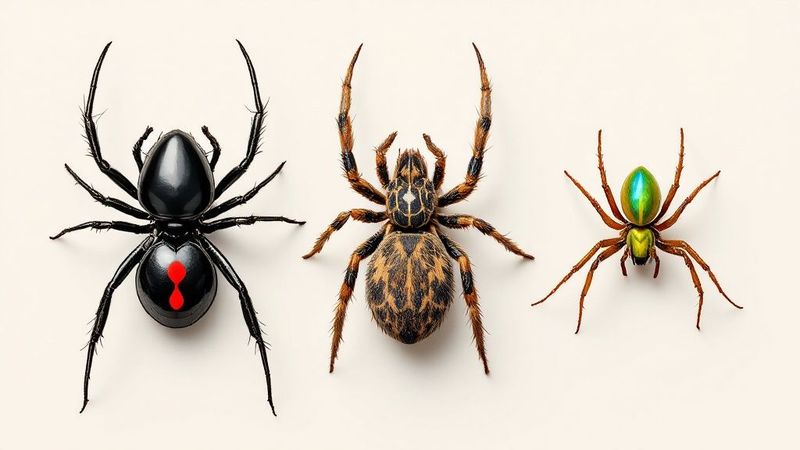
A single walk through a California garden on a dewy morning can reveal three or four completely different web styles within a few feet of each other. That variety is not a coincidence. UC IPM’s guide to common garden spiders notes that California is home to more than 1,000 spider species across at least 54 families, each with different body shapes, hunting strategies, and web architectures. The small spider you just swept off your tomato cage could belong to any one of several broad groups.
When people refer to “the garden spider,” they usually picture one recognizable animal. In California, that mental image collapses quickly. A tiny spider clinging to the underside of a pepper leaf might be a sac spider, which hunts without a web. The wispy silk stretched between two rose canes might belong to a cobweb weaver.
The funnel-shaped sheet low in ornamental grass is likely a funnel weaver. None of these is more “the” garden spider than another.
Species-level identification generally requires a clear photograph, diagnostic physical traits, or an expert examination. Web presence alone does not tell you which spider built it, what it has been eating, or whether it is contributing to pest suppression in your beds. What the evidence does support is discussing resident garden spiders as a collective community rather than singling out one unnamed champion. UC IPM’s Natural Enemies Gallery entry on spiders describes this community as including dozens of similar-looking species even within single families such as funnel weavers.
Accepting that diversity is the first step toward making smarter decisions about which webs stay and which ones come down.
How resident spiders may encounter aphids
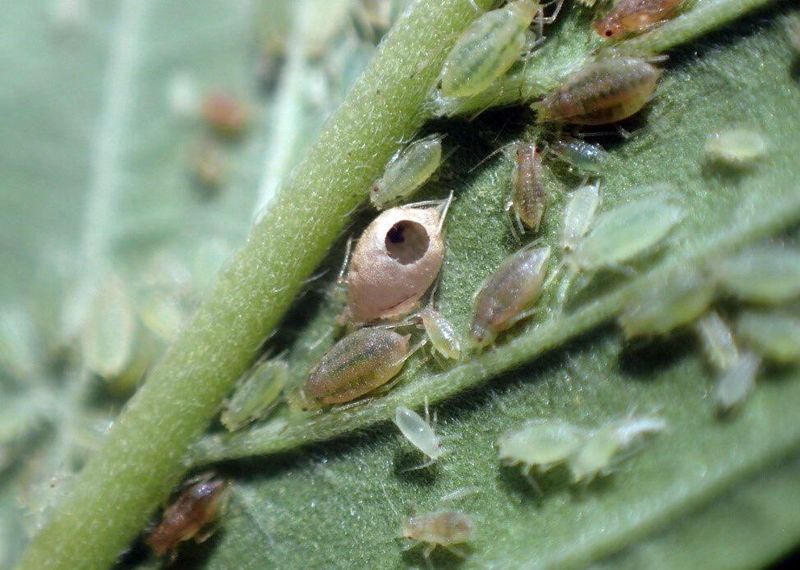
Aphids tend to cluster on new growth, and that is exactly where many hunting spiders spend their time. The connection between resident spiders and aphid populations is real, though it is more complicated than a simple predator-eats-pest story. Web-building spiders can intercept small flying insects, including winged aphid adults that disperse from plant to plant during warm California afternoons. Hunting spiders, which move through foliage without constructing prey-catching webs, can encounter aphid colonies directly while searching leaves and stems.
Research has added molecular evidence to this picture. A study using diagnostic PCR in apple orchards detected aphid DNA in the gut contents of multiple spider families, found evidence that spiders consumed aphids during early-season colony formation, and observed lower aphid numbers in areas where certain spiders were more abundant. That is meaningful data, but it comes from an agricultural orchard system, not a California homeowner’s flower bed or raised vegetable garden. The findings support ecological plausibility, not a guaranteed backyard performance rate.
Several factors shape what any individual spider actually eats on a given day. Prey availability shifts with the season, and a spider that fed on fungus gnats last week may encounter thrips or whiteflies this week. Weather affects both spider activity and aphid flight. Plant location, canopy density, and even the time of day all influence which arthropods a spider is likely to encounter.
A spider sitting near an aphid colony may be hunting something else entirely, using the plant as shelter, or simply passing through. UC IPM’s biological control overview describes spiders as generalist predators whose prey varies with circumstances – a useful quality in a diverse garden, but not the same as targeted aphid control.
Why UC IPM does not recommend mantises as dependable biological control
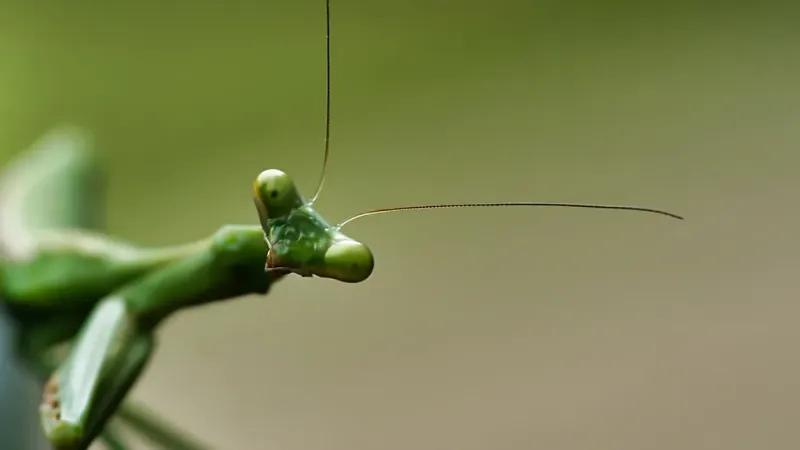
Praying mantises are striking animals, and it is easy to assume that something so visibly predatory must be doing tremendous pest-control work. Garden centers sell egg cases every spring, and social media posts showing mantises on rose bushes collect enthusiastic comments about natural pest management. The biology, though, does not support that enthusiasm as a pest-control strategy.
UC IPM’s entry on mantids states directly that mantids are of no benefit for biological pest control. The reasons are specific: they feed indiscriminately on whatever prey is the right size and accessible, they consume relatively few insects for their body size, and they readily eat beneficial insects including pollinators and other natural enemies. Releasing purchased mantis egg cases does not deliver targeted aphid control; it releases a generalist predator that may eat lacewing larvae or a foraging bee just as readily as a caterpillar.
Spiders deserve the same honest qualifier. They are also generalist predators, and they may consume pollinators, decomposers, other natural enemies, and harmless insects along with pests. The point is not that spiders win some universal pest-control competition against mantises. The point is that focusing on one dramatic-looking predator misses the bigger picture entirely.
UC IPM’s aphid management guidance names lady beetles, lacewing larvae, syrphid-fly larvae, and parasitic wasps as important natural enemies of aphids specifically. These are the specialists. Spiders can contribute to a broader pest-suppression community, but the strongest aphid control in a California garden typically comes from supporting a diverse mix of resident natural enemies rather than betting on one predator. UC IPM’s biological control overview reinforces that conserving resident organisms is generally more reliable than purchasing and releasing commercial insects.
What a web can—and cannot—tell you
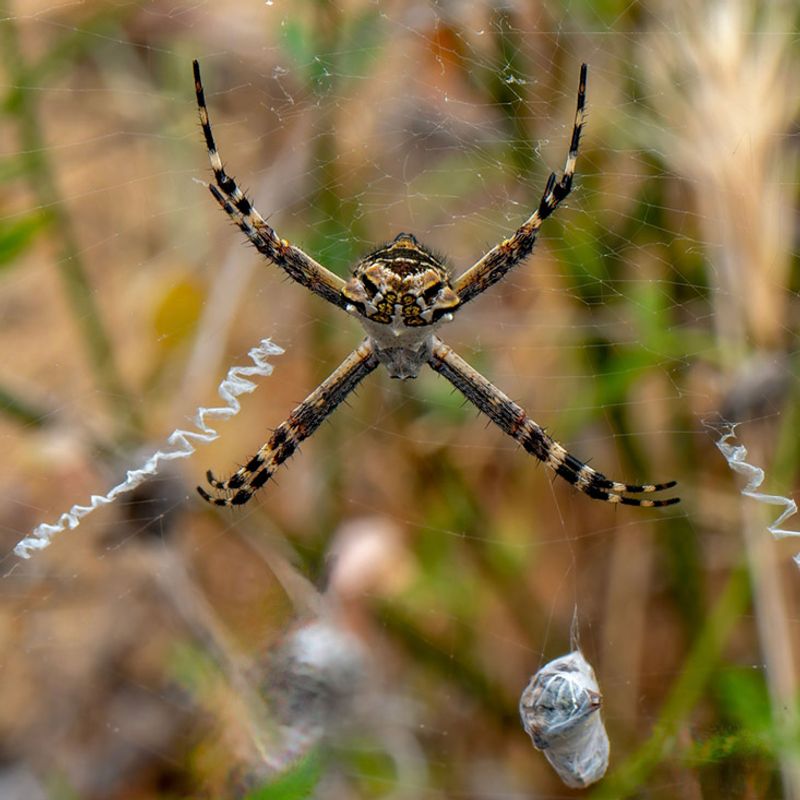
A web in your garden is a clue, not a complete story. The shape and placement of silk can tell you something useful about which broad group of spider built it and roughly how it hunts, but it cannot confirm the spider’s species, reveal its recent prey, or predict its contribution to pest management. Treating web type as a rough identification tool rather than a performance indicator is the more accurate way to read your garden.
Jumping spiders are active daytime hunters that stalk prey visually and pounce without constructing prey-catching webs. Finding no web does not mean no spider. Funnel weavers build a horizontal, slightly concave sheet of silk with a tube-shaped retreat at one end, typically low in dense vegetation or ground cover. When an insect stumbles across the sheet, the spider rushes out from the funnel to grab it.
UC IPM’s Natural Enemies Gallery on spiders notes that funnel weavers alone include dozens of similar-looking species in California.
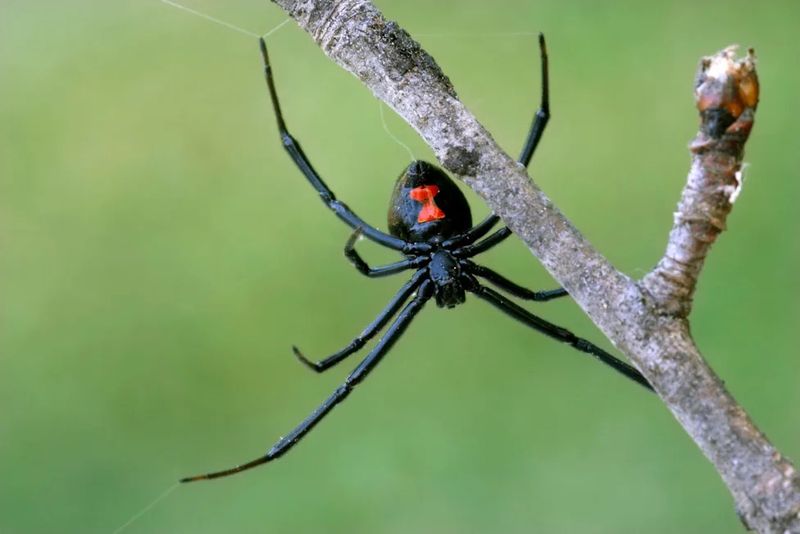
Orb weavers construct the familiar circular, spoke-and-spiral webs that catch flying insects. Cobweb weavers, a group that includes the medically significant black widow, build irregular, three-dimensional tangles that can intercept small flying insects and crawling arthropods. UC IPM’s common garden spiders page describes all four of these groups as regular outdoor residents in California yards.
Web placement matters for convenience and safety, not pest-control prediction. A funnel web stretched across a quiet corner of a raised bed does not necessarily provide more aphid suppression than one near a fence post. Use location to decide whether a web interferes with daily garden use or poses a safety concern. Do not use it to judge whether a spider is earning its keep.
Protect the garden’s resident natural-enemy community
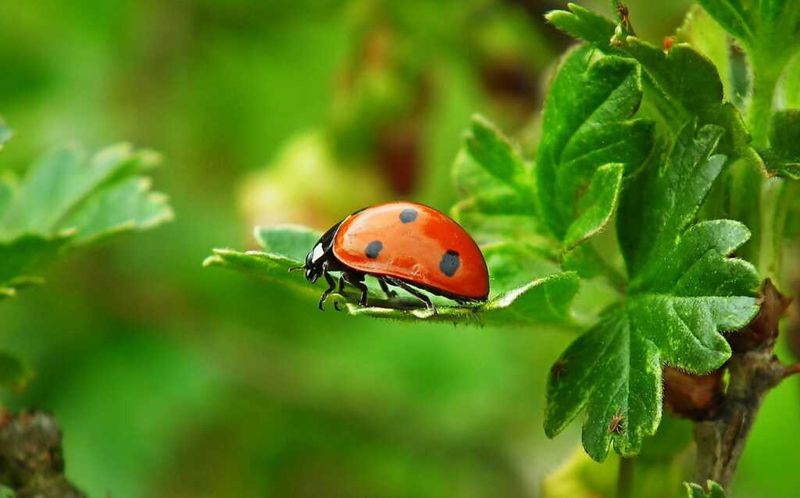
Keeping a healthy natural-enemy community in a California garden is less about adding creatures and more about not removing the ones already there. UC IPM’s biological control guidance describes conserving resident predators as generally more reliable than purchasing and releasing commercial organisms such as mantis egg cases or bags of ladybugs, which often disperse or fail to establish under garden conditions. The natural enemies already living in your beds have already adapted to your local microclimate and plant mix.
Leaving nonhazardous webs in less-trafficked garden areas is one of the simplest steps. A web strung inside a dense shrub, tucked under a raised-bed frame, or stretched between perennial stems in a back corner of the yard is not in anyone’s way. Removing it reflexively eliminates a predator that may have been contributing to pest suppression for weeks. Plant diversity supports the whole community: flowering plants that provide nectar and pollen attract and sustain lacewing adults, syrphid flies, and parasitic wasps, all of which are important aphid specialists.
Structural variety in the garden, including mulch, dense groundcover, and woody stems, gives spiders and other predators shelter and overwintering habitat.
Pesticide choices matter enormously here. Broad-spectrum insecticides kill natural enemies along with target pests, and some persist long enough to harm beneficial organisms that arrive after the spray dries. UC IPM’s guidance on protecting natural enemies and pollinators cautions that systemic insecticides can move into pollen and nectar, affecting pollinators and beneficial insects that were never the intended target. Avoiding routine preventive spraying, choosing selective products when treatment is necessary, and following label directions all reduce collateral damage to the resident community your garden depends on.
When aphids need more than natural enemies
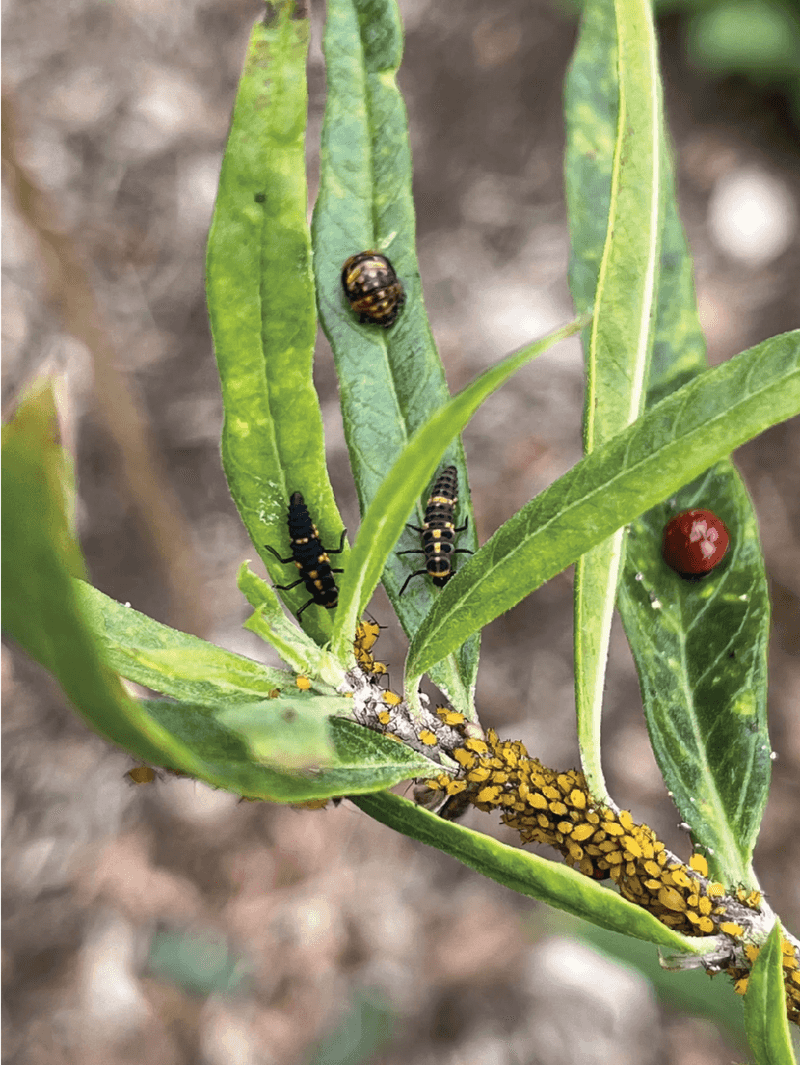
Natural enemies work best as a preventive buffer, not a rescue treatment. Once aphid populations are large enough to distort new growth, coat leaves with honeydew, or trigger sooty mold, resident spiders and other predators are unlikely to reverse the situation fast enough to protect your plants. Knowing when to step in – and how – keeps the response proportionate to the actual problem.
Inspect plants at least twice a week during rapid spring growth, focusing on new shoots and the undersides of leaves where aphids prefer to feed. Low or moderate aphid numbers on a healthy, established plant often cause no lasting damage. UC IPM’s aphid management page explains that treatment becomes more justified when aphids are distorting new growth, weakening seedlings, producing substantial honeydew or sooty mold, or transmitting plant viruses. A few aphids on a mature tomato plant in July is a different situation from a seedling pepper covered in aphids in April.
First-line responses require no chemicals at all. A strong stream of water directed at infested stems and leaf undersides knocks aphids off sturdy plants, and most cannot find their way back. Pruning out a single heavily infested shoot removes a large portion of a localized colony quickly. Avoiding excess nitrogen fertilizer matters too, because lush, fast-growing tissue is exactly what aphids prefer.
Managing ants is often overlooked but critically important: ants actively protect aphid colonies from predators and parasitoids in exchange for honeydew, so placing sticky barriers or bait around ant-tended plants can allow natural enemies to do more work.
If monitoring, water, pruning, and ant management are not enough, UC Master Gardener guidance on aphids identifies insecticidal soaps and horticultural oils as lower-residue contact options. Both require thorough coverage to work, may need repeat applications, and can harm natural enemies that are hit directly by the spray. Use only products labeled for your specific plant and pest, follow the label, and avoid spraying during heat or bright sun to reduce plant injury.
Remove webs when location or safety calls for it
Preserving webs in quiet garden areas does not mean tolerating every web in every location. Some webs genuinely need to come down, and doing so is a reasonable, practical decision rather than a failure of stewardship. The question is where the web is, not simply whether a spider built it.
Webs around doors, walkways, play equipment, and frequently handled plants create real inconvenience and can be removed without guilt. UC IPM’s spider management guidance recommends removing exterior webs around building entrances and reducing clutter near high-traffic areas as a standard practice. Knocking down a web in a doorframe on a Saturday morning is not an ecological crisis; it is ordinary home maintenance.
California-specific precautions apply in dark, dry, undisturbed spaces such as woodpiles, storage sheds, garage corners, under outdoor furniture, and along foundation walls. These are the microhabitats where black widows, a medically significant species present throughout California, commonly establish. UC IPM notes that visible spiders outdoors during the day are generally unlikely to bite, but hidden webs in undisturbed areas carry a different risk profile. Wear gloves when moving stored firewood, shifting outdoor pots, or clearing out a shed that has sat untouched through the dry season.
Shake out gloves and work clothes before putting them on if they have been stored in a garage or outdoor cabinet.
Recognizing the difference between a cobweb weaver’s irregular tangle in a dark corner versus an orb weaver’s geometric web stretched across open vegetation helps with this decision. The first warrants a closer look and some caution; the second is almost certainly a harmless garden resident. Neither needs to be treated with pesticides – removal by hand or broom is all that is needed when a web is in the wrong place.
Manage the garden instead of erasing every spider
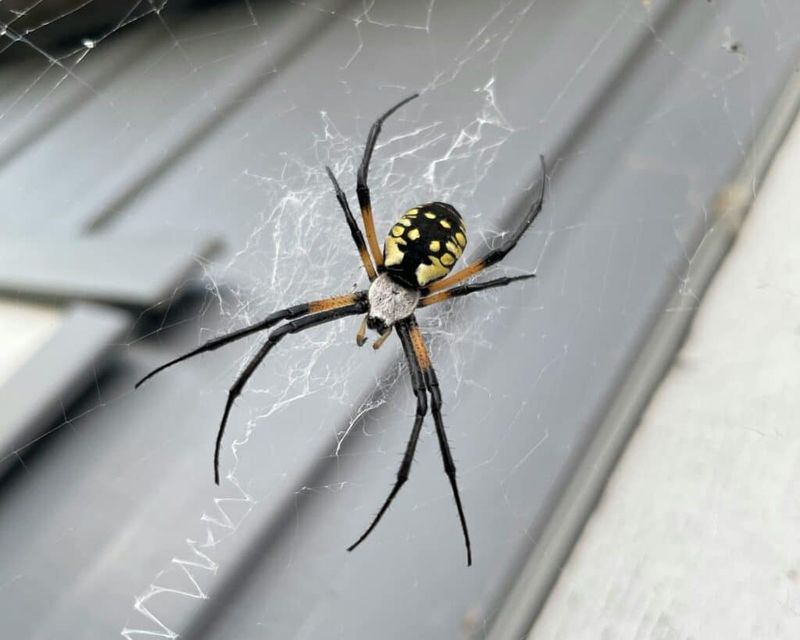
A sound California garden decision does not require identifying every small spider or tolerating every web in every corner of your yard. What it does require is a shift from reflexive removal toward a quick location check before reaching for the broom.
Resident spiders can contribute to aphid suppression as part of a broader natural-enemy community, but they cannot replace regular monitoring, the work of aphid specialists like lacewing larvae and parasitic wasps, or targeted treatment when plants show real damage. UC IPM’s aphid guidance ties intervention to observed plant symptoms, not to the presence or absence of any particular predator. Leave harmless webs where they do not interfere with people, protect the varied natural-enemy community already living in your beds, and address webs around doors, play areas, or dark undisturbed storage spaces where safety and convenience genuinely require it.
UC IPM’s biological control overview and its spider management page together point toward the same practical conclusion: a garden that supports diverse resident predators, monitors plants regularly, and intervenes selectively is better equipped than one that either chases a single dramatic predator or clears every web on sight. The spiders already in your garden are not a problem to manage; they are part of the solution already in progress.