
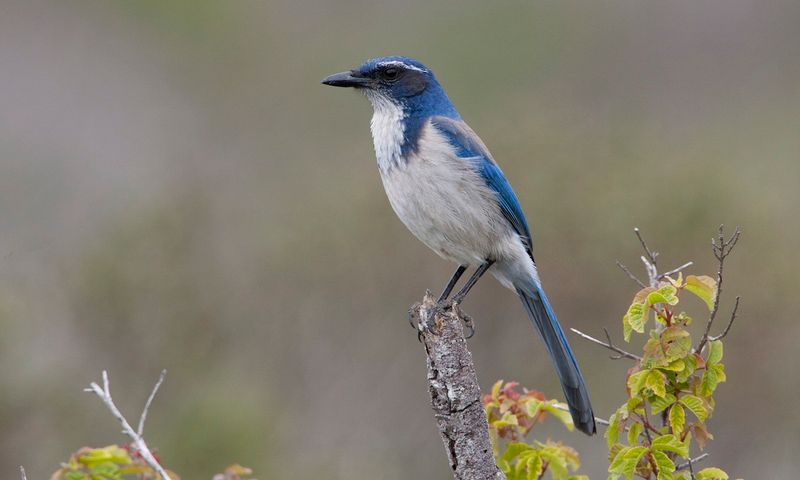
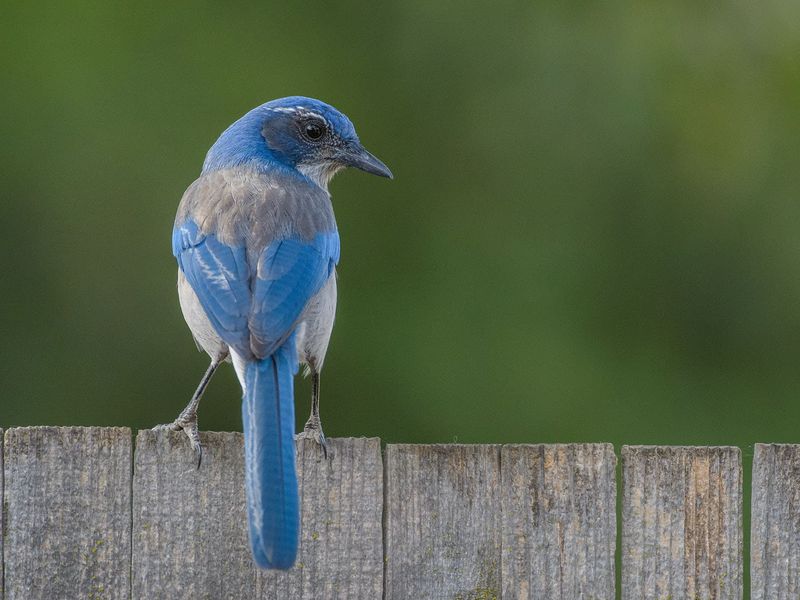
That bold, blue-and-gray bird hopping through your raised beds is not just making a mess. The California Scrub-Jay is an omnivore that occasionally picks off grasshoppers, caterpillars, and other insects while foraging through suburban yards. Whether that amounts to real pest control for your garden is a more complicated question, and the honest answer matters if you want to make smart choices about your plants, your soil, and the wildlife sharing your yard.
What California Scrub-Jays actually eat
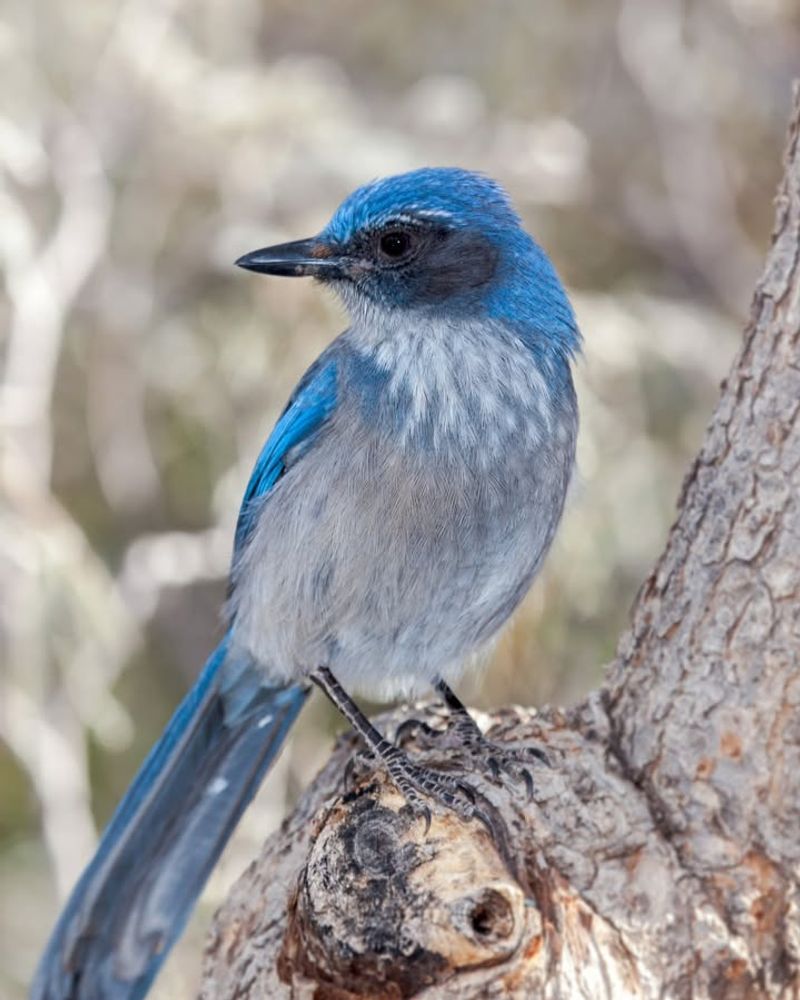
Stocky, assertive, and unmistakably blue-and-gray, the California Scrub-Jay (Aphelocoma californica) is a year-round resident across much of the state. You will find it in oak woodland, chaparral, parks, and residential neighborhoods, foraging both on the ground and up in the canopy. Audubon’s species account describes it as a common bird of open and shrubby habitats, well adapted to the suburban landscapes that cover much of California.
What it eats shifts with the seasons. During spring and summer, insects and fruit make up a large share of its diet. Come fall and winter, the jay pivots heavily toward nuts, seeds, and especially acorns. Cornell’s All About Birds notes that the jay also takes small reptiles, amphibians, rodents, and the eggs and nestlings of other birds, so its diet is genuinely broad.
On the insect side, the University of Michigan’s BioKIDS account specifically lists beetles, moths, grasshoppers, and planthoppers among documented prey. Moth caterpillars can make up a substantial portion of what adults bring to nestlings. That makes it reasonable to describe the jay as an insect-eating generalist, not a specialist predator that targets the particular grubs or grasshoppers damaging your beds.
Calling the jay an omnivore is the most accurate framing. It picks up whatever is available and worthwhile, which includes a wide range of plant and animal foods depending on the time of year, the habitat, and what happens to be accessible on a given day.
A bird can eat insects without controlling your garden
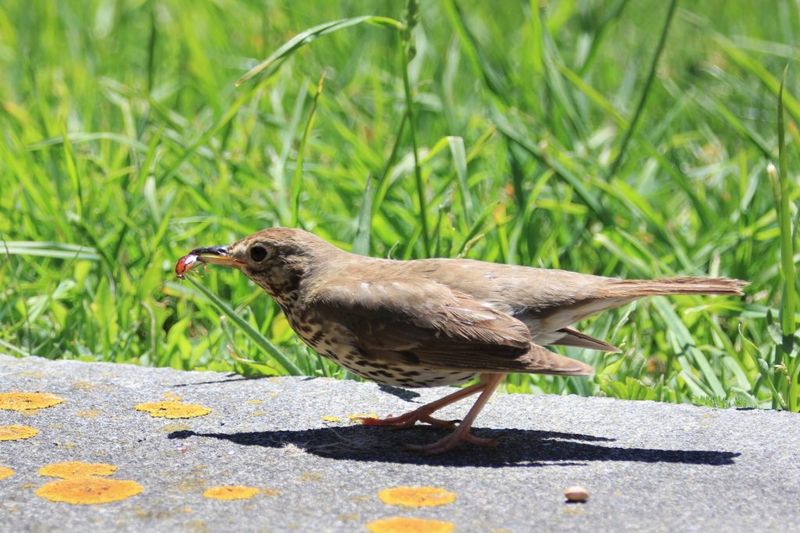
Watching a jay snatch a grasshopper off a tomato plant feels like natural pest control in action. The problem is that one observation does not scale up to population suppression, and the difference matters for how you manage your garden.
Broader research on birds and pest regulation offers some useful context. A meta-analysis published in 2023 found an overall positive average effect of birds on arthropod pest regulation, but nearly half of all recorded observations in the dataset were neutral, and effects varied considerably across bird species, pest types, habitats, and seasons. Birds can also consume beneficial insects, fruit, and other non-target organisms, which means their net impact on any specific garden situation is not predictable from diet lists alone.
A 2020 review in the Journal of Integrated Pest Management reinforces this point, noting that while avian predation can contribute to pest suppression in some agricultural contexts, the evidence is highly system-specific. What holds for a managed orchard or a research plot does not automatically transfer to a suburban raised bed with a single visiting jay.
California grasshopper outbreaks add another layer of difficulty. UC IPM’s grasshopper guidance explains that outbreaks can involve insects moving in from surrounding dry grasslands, roadsides, and foothills. A jay working your yard may remove a few individuals while hundreds more are migrating in from outside your property line. Treating a foraging bird as a control program under those conditions sets expectations that the evidence cannot support.
The practical takeaway is straightforward: appreciate the insect eating when you see it, but do not let it substitute for identifying what is actually damaging your plants and deciding whether a response is warranted.
What the caching research does—and does not—show
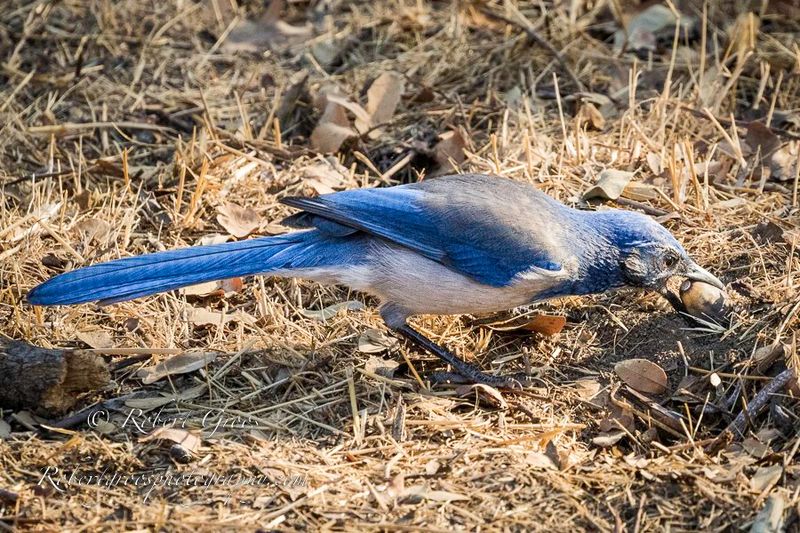
California Scrub-Jays have a well-earned reputation as sophisticated food cachers. They not only store food for later use but also re-cache items when they think they have been watched, a behavior that has attracted serious scientific interest. That reputation, though, comes mostly from acorn and nut caching, and it is worth separating what the lab studies show from what actually happens in residential garden beds.
Laboratory research on Western Scrub-Jay caching behavior has documented that the birds can cache perishable animal food, including wax worms, under controlled experimental conditions. That establishes a capability. It does not mean wild California Scrub-Jays are routinely burying grubs or grasshoppers in your vegetable beds.
The California-specific field evidence points strongly toward plant-based caching. A Sacramento-area study published by Western Field Ornithologists documented thousands of acorns cached at two urban sites, highlighting the jay’s role in potential oak regeneration. Acorns, nuts, and seeds are the foods the birds store most consistently and reliably in wild and suburban California settings.
The Audubon species account similarly emphasizes plant foods as the core of the jay’s caching behavior in California habitats. None of the reviewed sources document routine caching of garden pests, whether grubs or grasshoppers, in homeowners’ beds. Claiming that a jay is quietly burying your garden’s worst insects for later retrieval is a more specific and more dramatic claim than the evidence supports.
The corrected picture is still interesting: this bird stores thousands of acorns and may occasionally eat a grasshopper or caterpillar while foraging. That is genuinely useful to know. It just does not add up to a reliable garden-pest caching service.
Give the jay room without calling it universally beneficial
Tolerating a Scrub-Jay in your yard is a reasonable choice, and unnecessary harassment of any native wildlife rarely improves a garden’s health. But framing the bird as an unqualified ally overstates the case and can lead to surprises.
Cornell’s species account notes that California Scrub-Jays eat cultivated corn, almonds, walnuts, cherries, and other garden and orchard crops. They also raid the nests of smaller birds, taking eggs and nestlings. If you maintain nest boxes for bluebirds, wrens, or other small cavity nesters, a resident jay can become a genuine threat to those birds rather than a neutral or helpful presence.
Scrub-Jays can also be territorial and aggressive toward smaller species at feeders and in shared habitat. Their dominance in a backyard does not automatically translate to a more diverse or healthier bird community. A meta-analysis on avian pest regulation found that bird effects on ecosystems vary widely, and a predator that helps in one context can shift to consuming non-target organisms in another.
The balanced position is this: if a jay is foraging naturally through your yard, there is no good reason to chase it away out of frustration over its noise or boldness. Occasional insect predation is a real, if modest, benefit. At the same time, the bird may eat fruit you were planning to harvest, intimidate smaller birds, or raid a nest. Recognizing those tradeoffs lets you make informed choices about crop netting, nest-box placement, and general tolerance without either demonizing the bird or treating it as a guaranteed garden helper.
Identify the damage before choosing a treatment
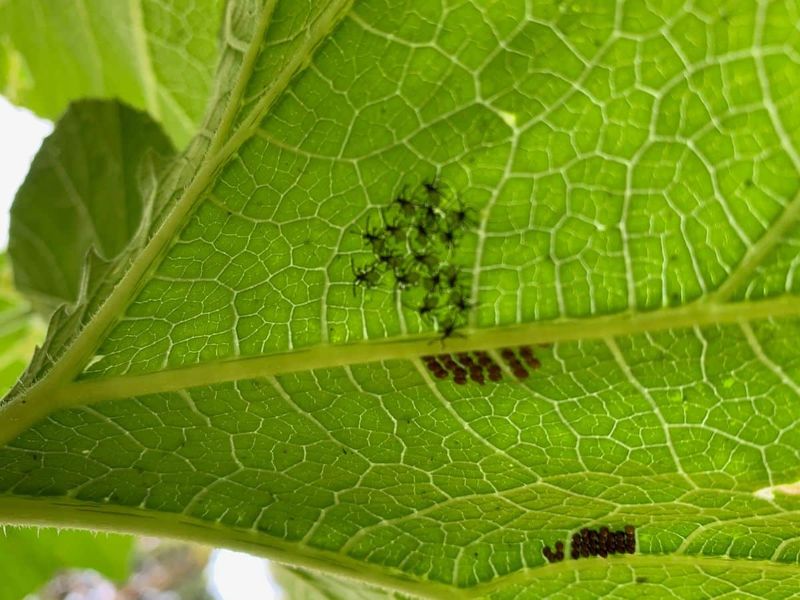
Before reaching for any control option, including the hope that a bird will handle it, the first step is figuring out what is actually causing the damage. Grasshopper problems and grub problems look different, occur in different parts of the yard, and require different responses.
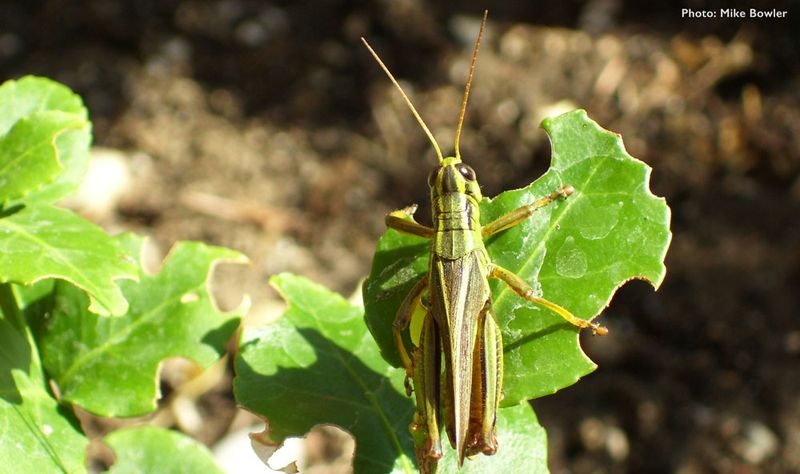
Grasshoppers feed above ground. They chew foliage, leaving ragged edges or stripped stems on vegetables, flowers, and ornamentals. UC IPM’s grasshopper resource explains that outbreaks can follow wet springs and that severe infestations may defoliate plants quickly. If you are seeing that kind of above-ground chewing damage, grasshoppers are worth investigating, but confirm the culprit before acting.
Grub damage is a different situation entirely. The word “grub” describes the larval form of many beetle species and is not a diagnosis on its own. UC IPM’s lawn insect guidance advises homeowners to identify the specific insect and confirm it is causing the damage before treating. Scarab beetle larvae, billbug larvae, and other soil-dwelling organisms may all look similar at a glance, but they have different life cycles, different damage patterns, and different management options.
Some soil organisms are harmless or even beneficial.
For white grubs in turf, UC IPM’s turfgrass monitoring guidance suggests a curative treatment threshold of roughly six grubs per square foot as a reference point for managed turf situations. That figure comes from monitored lawn contexts and does not automatically apply to vegetable gardens, raised beds, or ornamental borders, where plant types, root depths, and damage tolerances differ considerably.
Spend a few minutes on actual inspection before deciding anything needs to be done. Lift a section of sod, check the soil around affected plants, look at the undersides of damaged leaves, and try to identify what you find. A jar, a phone camera, and the UC IPM pest gallery are all you need to get started on an accurate diagnosis.
Use California IPM instead of recruiting the jay
Once you know what pest you are dealing with and whether it is actually causing damage worth addressing, California’s integrated pest management approach gives you a practical sequence to follow. The goal is the least disruptive effective intervention, not the elimination of every insect in the yard.
For grasshoppers at low numbers, UC IPM recommends hand-picking when populations are small, using fine-mesh row covers or screens to protect vulnerable transplants, and planting a perimeter trap crop that grasshoppers prefer so they concentrate away from your main beds. Once a large migration moves in from surrounding dry areas, management becomes much harder, which is another reason early identification matters.
When a chemical treatment is genuinely warranted, UC IPM’s pesticide guidance is clear that label compliance is not optional, and that risks to bees, natural enemies, birds, household pets, people, and nearby waterways must be factored into any product choice. Spraying broadly to protect plants from hypothetical damage, or to kill every insect a jay might otherwise eat, undermines the natural pest regulation that a healthy yard depends on and can create more problems than it solves.
On the habitat side, UC ANR guidance on wildlife-friendly landscaping recommends providing food, shelter, and water through landscape design, including California native plants that support the insects birds naturally forage on. That is meaningfully different from placing food or water out specifically to attract Scrub-Jays.
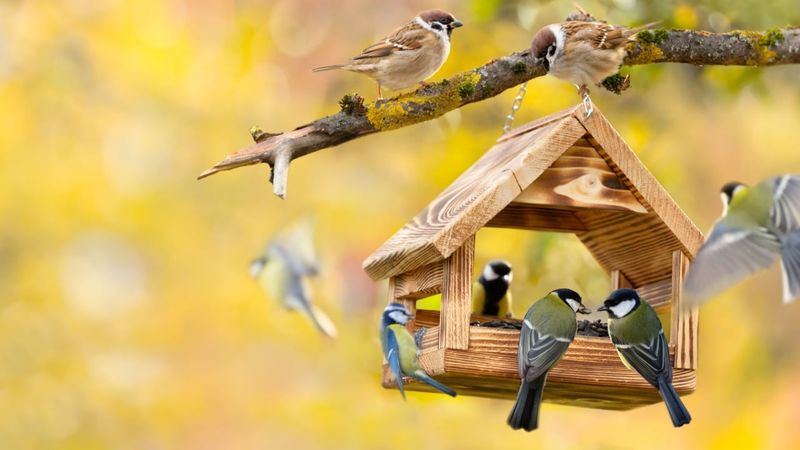
California Department of Fish and Wildlife’s Wildlife Health Lab recommends against artificial feeding of wild birds because feeders and birdbaths can increase disease transmission and draw rodents and other nuisance wildlife. Native plantings and structural habitat features support birds without those risks.
Respond to nuisance behavior without harming the bird
If a Scrub-Jay is raiding your cherry tree, pulling up seedlings, or intimidating smaller birds at your nest boxes, there are practical nonlethal steps you can take. Bird netting over fruiting plants and trees is effective when installed before fruit ripens. Relocating nest boxes to spots that are less visible or accessible to larger corvids can reduce predation pressure on smaller cavity nesters.
What you should not do is trap, injure, poison, or kill the bird. California Department of Food and Agriculture materials on jay management address the legal context around jays in agricultural and residential settings. Current California legislative activity reflects ongoing state attention to migratory nongame bird protections. Because statutes and permit rules can change, verify the current requirements with the California Department of Fish and Wildlife or the U.S.
Fish and Wildlife Service before taking any action beyond nonlethal deterrence.
For situations where deterrence is not enough, the right call is to contact your regional California Department of Fish and Wildlife office. They can advise on what options are legally available for your specific situation. Trying to resolve a wildlife conflict without checking current rules first can create legal exposure that a phone call would have avoided entirely.
Let the jay contribute without making it the pest plan
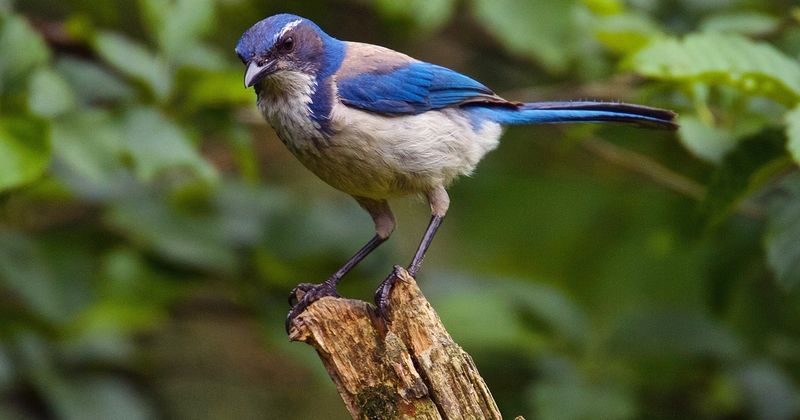
A California Scrub-Jay passing through your yard may eat a grasshopper, a caterpillar, or a beetle larva along the way. That is a real, if modest, contribution to the yard’s natural balance, and there is no good reason to drive the bird off when it is simply doing what it does.
What the evidence does not support is treating the jay as a reliable pest-management strategy. Cornell’s species account confirms the jay’s omnivorous, opportunistic nature, which means it eats what is available, not necessarily what is causing your specific problem. When UC IPM grasshopper guidance describes outbreaks arriving from outside the garden, one foraging bird cannot meaningfully close that gap.
The right approach combines tolerance for natural wildlife behavior with disciplined pest management. Identify the organism causing damage, confirm it is actually damaging your plants at a level that warrants action, and then choose the least disruptive effective response following California IPM principles. Skip the artificial feeding, skip the indiscriminate pesticide applications, and skip the assumption that any single creature is either the villain or the solution in a yard full of interconnected species.
A healthy suburban yard in California is genuinely complex. The jay is one thread in that fabric, not the whole pattern.