
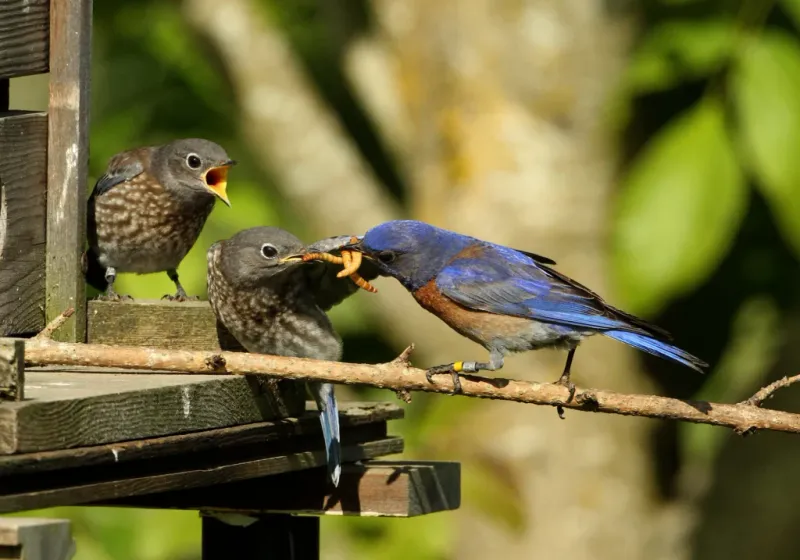
A small, bright-chested bird called the Western Bluebird has been quietly hunting insects across California yards, parks, and open woodlands for thousands of years. It eats caterpillars, beetles, grasshoppers, and other arthropods that chew through garden plants, which makes it a genuinely useful neighbor. The trouble is that the hollow trees, old snags, and weathered fence posts this bird needs to raise a family are often the first things homeowners clean up or cut down. Understanding what the Western Bluebird actually does, and what it actually needs, can help California gardeners make smarter choices for both their plants and their local wildlife.
Meet California’s Western Bluebird
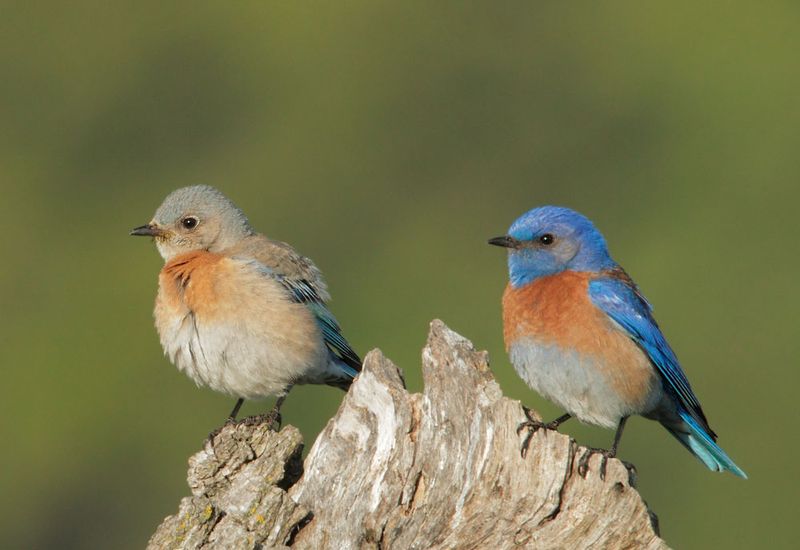
Sialia mexicana, the Western Bluebird, is a native California species that most people recognize by the male’s vivid blue head and wings paired with a warm rusty-orange chest. Females wear a softer version of the same palette, with gray-brown tones and a pale blue wash on the wings and tail. Both sexes are compact, roughly the size of a large sparrow, and they carry themselves with an upright, watchful posture on low branches, fence rails, or utility wires.
According to the California Department of Fish and Wildlife’s life history account for the Western Bluebird, the species is widespread across much of the state and is strongly associated with open woodlands, oak and pine-oak habitats, riparian corridors, grassland edges, parks, and other landscapes where scattered trees and shrubs alternate with open ground. That mix of cover and open space is not incidental. The bird hunts by watching from a low perch, then dropping down to catch prey on the ground or on low vegetation. A dense, unbroken canopy does not give it the sightlines it needs.
During the breeding season, the Western Bluebird’s diet is primarily animal food. CDFW documents prey that includes grasshoppers, caterpillars, beetles, ants, earthworms, snails, spiders, and other arthropods. Insect consumption is heaviest in spring and summer, when adults are also feeding nestlings and fledglings that need high-protein food to grow. As fall arrives and insects become less available, berries and other fruit take on a larger role in the diet.
Knowing that this bird eats caterpillars and grasshoppers is genuinely useful for California gardeners. Knowing that it does so from a perch in open habitat, rather than by systematically patrolling a flower bed, sets realistic expectations about how much difference a single pair can make in a specific garden.
The evidence supports potential, not guaranteed pest control
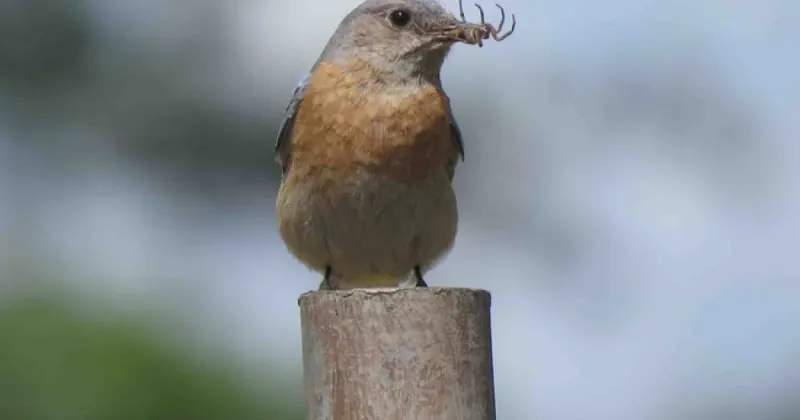
Eating insects and controlling a pest outbreak are two very different things, and the distinction matters for any California homeowner weighing whether a nest box will protect their vegetable beds or flower borders. Western Bluebirds consume a broad and impressive range of arthropods, but the research that best describes their diet was conducted in a setting quite different from a suburban yard.
A study published in The Auk used DNA analysis of fecal samples to identify what adult and nestling Western Bluebirds were actually eating in California vineyards. That California vineyard diet study identified 66 distinct arthropod taxa and found that herbivorous insects, particularly those in the orders Hemiptera and Lepidoptera, made up more than half of all identified prey items. Hemipterans include many true bugs and leafhoppers that feed on crops and ornamental plants; Lepidoptera includes the caterpillars that chew through leaves and fruit. That concentration of plant-eating prey is encouraging for anyone hoping bluebirds might help with pest pressure.
Grasshopper claims deserve more caution, though. Orthoptera, the insect order that includes both grasshoppers and crickets, appeared in only one adult sample and two nestling samples across the entire study. Cornell Lab’s Western Bluebird life history does list grasshoppers as typical prey, and they are certainly eaten when available, but the vineyard DNA data suggests they are not a dietary staple in every landscape or season. Diet shifts with habitat type, prey availability, and time of year.
Equally important is the study’s setting. Commercial vineyards differ from suburban gardens in scale, management intensity, and the kinds of insects present. The research demonstrates that Western Bluebirds can consume meaningful numbers of plant-eating insects and shows biological-control potential, but it does not predict how many caterpillars a pair nesting in a Pasadena backyard will eat, or whether that consumption will visibly reduce damage to a particular rose bush or kale bed.
Cavity loss can shrink local nesting options
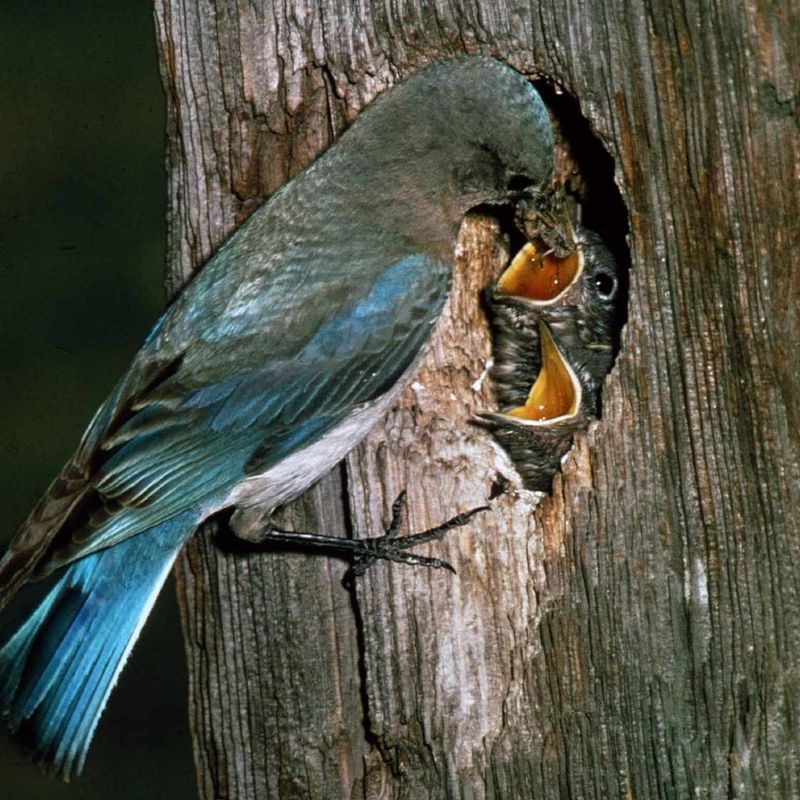
Western Bluebirds cannot excavate their own nest cavities. They are secondary cavity nesters, meaning they rely on holes created by decay, woodpeckers, or other forces, then move in once the opening exists. Suitable cavities turn up in living trees with rotted pockets, dead trees, snags, stumps, old woodpecker holes, and nest boxes. Without one of those options within reach of good foraging habitat, a pair simply cannot breed in that location.
CDFW’s Western Bluebird habitat account states directly that snag availability can limit local population density. That is a meaningful constraint. When snags disappear from a neighborhood, the ceiling on how many breeding pairs that area can support drops with them, regardless of how much insect food or open foraging space remains.
Wooden fence posts have historically added to that cavity supply. Older posts, especially round, untreated ones left in place for decades, develop cracks, splits, and hollow sections that bluebirds readily adopt. The Audubon Society’s bluebird nest box guidance notes this historical use of fence posts and observes that old, rotting trees are often removed, reducing the cavities available in many landscapes.
None of this means California homeowners are broadly responsible for a statewide bluebird decline, and the available sources do not establish that as a documented trend with a quantified cause. What the evidence does show is a clear mechanism: removing cavity-bearing features from a yard or neighborhood can reduce the nesting opportunities available to local birds. That is a narrower and more accurate claim than a sweeping indictment, and it is also more useful, because it points to a specific action homeowners can take or reconsider.
Evaluate the whole yard before adding a box
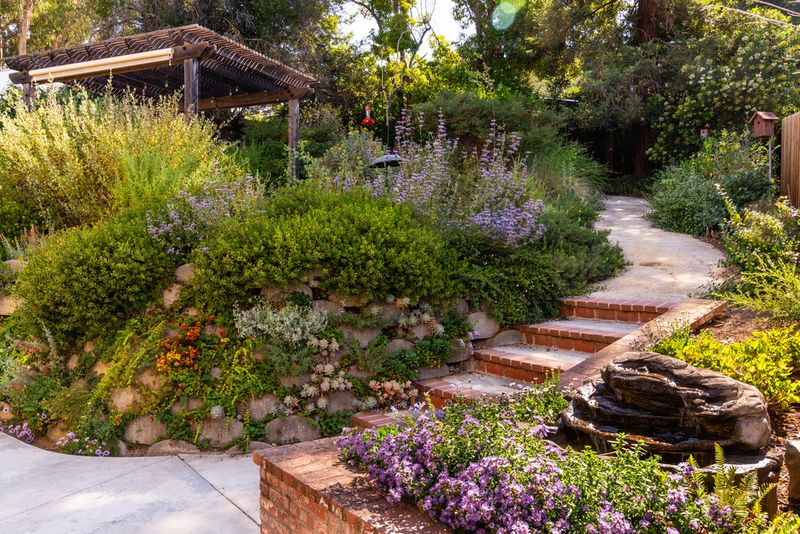
A nest box is not a plug-and-play solution for attracting Western Bluebirds. Before spending time and money on installation, it helps to look at the yard honestly and ask whether it offers what the bird actually needs beyond a cavity to sleep in.
Open foraging space is the starting point. CDFW’s habitat guidance consistently links Western Bluebirds to landscapes where open ground alternates with scattered trees or shrubs, giving the bird clear sightlines from a perch to its prey below. A yard that is entirely paved, densely shaded by a continuous canopy, or covered edge to edge with hardscape offers little foraging room. Low perches, such as fence rails, small tree branches at eye level, or garden stakes, matter too, because the bird hunts by watching and dropping, not by chasing prey through foliage.
Insects are the other non-negotiable. The California Bluebird Recovery Program’s nest box trail guidance notes that yards lacking grass or native plants may simply not be suitable for bluebirds, because those plants support the arthropod communities that make up most of the bird’s breeding-season diet. A yard maintained with heavy pesticide use or planted entirely with non-native ornamentals that host few insects may not produce enough food to sustain a breeding pair, even if a box is present.
If the yard has safe natural cavities, such as a sound old tree with a woodpecker hole at a reasonable distance from the house, preserving that feature is the first and lowest-effort step. UC Agriculture and Natural Resources’ Western Bluebird factsheet identifies limited natural nest sites as one of the primary reasons nest boxes are used at all. A box works best as a substitute for a lost natural cavity, not as a standalone wildlife magnet dropped into an otherwise unsuitable yard.
Install a nest box that does not invite extra risks
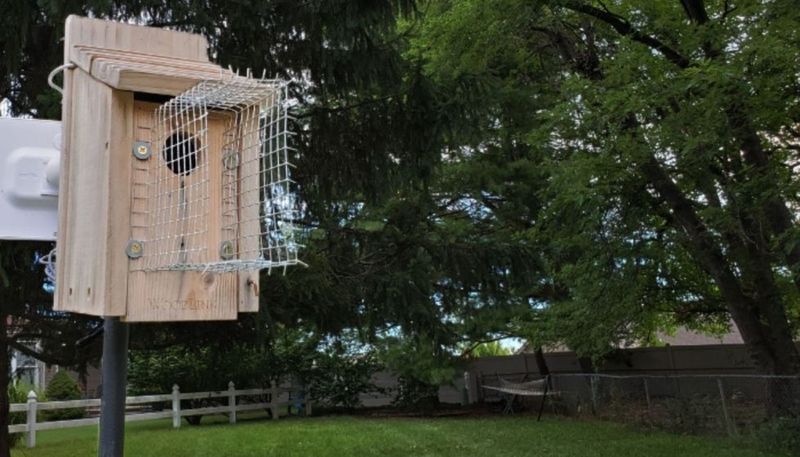
Once the yard assessment confirms suitable habitat, the physical details of the box and its placement shape whether bluebirds will use it and whether they will be safe once they do. Getting those details reasonably right from the start avoids problems that are harder to fix after a pair moves in.
Entrance hole size is the first spec to nail down. A 1.5-inch round entrance is the standard recommendation for Western Bluebirds. Cornell NestWatch’s nest box placement guidance describes a mounting height of 4 to 6 feet, an east-facing orientation toward open space, and approximately 215 feet between boxes as species-specific starting points. Treat these as general guidance rather than universal rules.
Local California programs, including regional bluebird trail coordinators, may suggest different spacing depending on habitat density, the presence of competing cavity nesters such as Tree Swallows, and local predator pressure.
The California Bluebird Recovery Program describes pole-mounted boxes as the safest and most successful general approach. A smooth metal or PVC pole is harder for many climbing predators, including raccoons and rat snakes, to scale than a wooden post or a rough tree trunk. Adding a baffle below the box improves protection further, though no mounting method is entirely predator-proof. A predator guard reduces risk; it does not eliminate it.
One addition to skip is an external perch below or beside the entrance hole. UC ANR’s bluebird factsheet and California Bluebird Recovery Program guidance both flag perches as a feature that can assist competitors and predators rather than the intended residents. Western Bluebirds do not need an external perch to enter their own box, and removing that feature costs nothing while reducing one avenue of risk. Following all of these specifications carefully improves the odds of occupancy, but correct installation does not guarantee that bluebirds will arrive.
Monitoring makes a nest box responsible habitat support
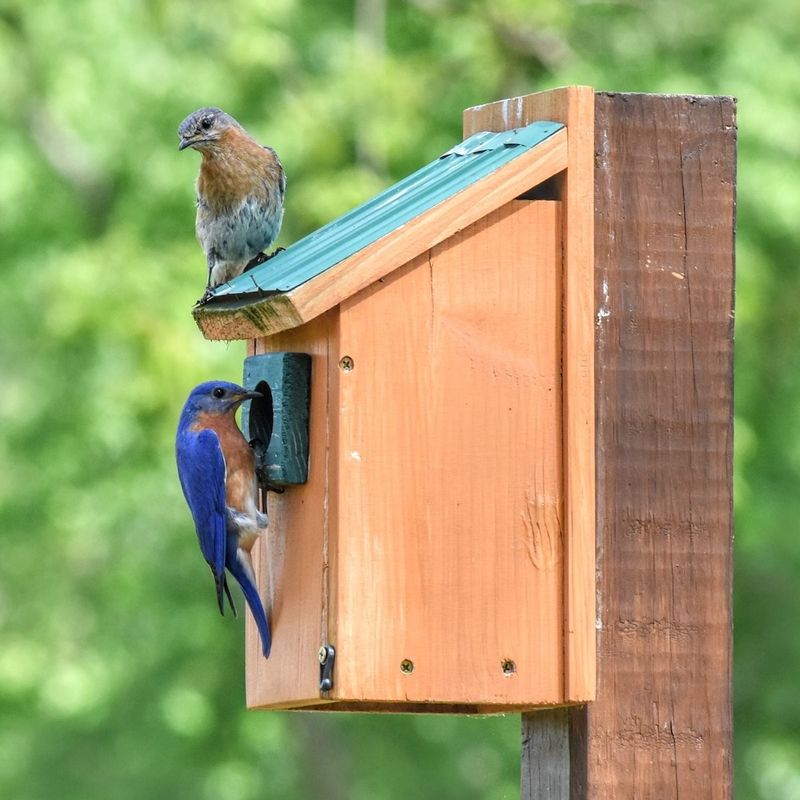
Putting up a nest box creates an ongoing responsibility, not a one-time project. A box left unmonitored can quickly become a problem rather than a benefit, sheltering invasive species or exposing nesting birds to avoidable hazards.
California Bluebird Recovery Program’s monitoring guidance recommends checking boxes weekly throughout the nesting season. Each visit gives the monitor a chance to identify who has moved in, note the progress of any nest, and respond quickly if House Sparrows or European Starlings have claimed the box. Both of those invasive species can displace bluebirds, damage eggs, or harm nestlings, and catching an early takeover is far easier than dealing with an established clutch from a competing bird.
CBRP’s nest box trail guidance also emphasizes that monitoring must continue even if the original installer can no longer do the work. A box without a committed monitor should be taken down rather than left as an unmanaged trap for cavity-nesting birds. Homeowners who travel frequently, plan to move, or cannot commit to a weekly schedule during spring and summer should factor that honestly into the decision to install.
One situation that requires particular care is any existing cavity in a tree, stump, or old post that might already be in use. Do not cut into, remove, or otherwise disturb a cavity that may contain an active nest. Cavities are difficult to inspect from the outside, and a hollow that looks empty may hold eggs or dependent young that are not immediately visible. The U.S.
Fish and Wildlife Service explains that destroying a nest with eggs or dependent young is illegal under the Migratory Bird Treaty Act. Before removing any tree, post, or structure with a suspected cavity, consult relevant wildlife authorities or a qualified professional about the federal, state, and local requirements that apply to your specific situation.
Fire safety determines which snags can remain
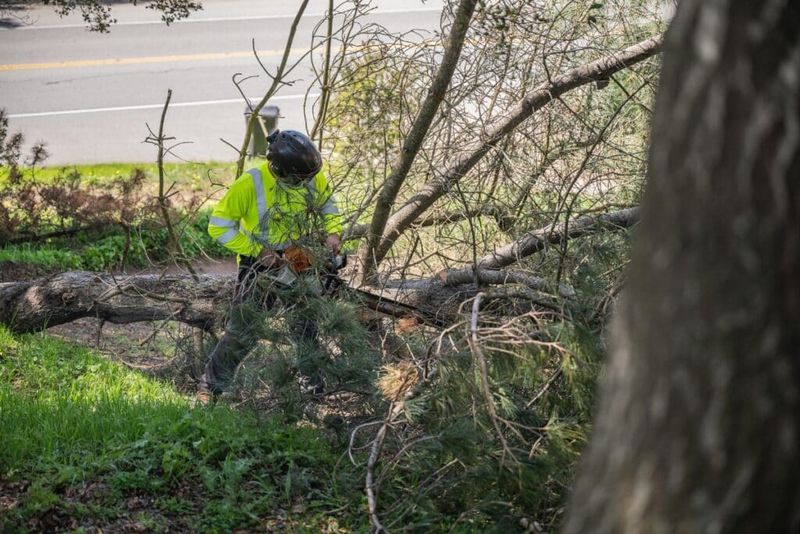
For many California homeowners, the idea of leaving a dead tree standing for wildlife runs directly into the reality of living in or near a fire-hazard zone. That tension is real, and fire safety takes priority. The goal is not to keep every snag at any cost but to make an informed, site-specific decision about which cavity-bearing features can safely remain.
California Board of Forestry and Fire Protection defensible-space guidance divides the area around a structure into zones with specific requirements for vegetation management. Zone 1, the 0-to-30-foot area immediately around a building, typically requires removal of dead plants, leaf litter, and other combustible material, along with spacing between trees and shrubs. A dead or dying tree in that zone is unlikely to qualify as safe habitat to retain, regardless of its cavity value.
Further from the structure, in Zone 2 or beyond, a stable snag that does not overhang a road, utility line, or frequently used area may be a genuinely low-risk feature worth preserving. The word “stable” carries weight here. Ready for Wildfire’s dead tree removal guidance describes the hazards of dead trees with compromised root systems, hanging limbs, or advanced decay that can cause a fall without warning. A tree that looks solid from the outside may not be.
When the safety status of a dead or dying tree is genuinely uncertain, the right move is to consult a local fire authority or a qualified, licensed arborist before deciding. An arborist can assess structural integrity and defensible-space compliance at the same time. If the tree must come down, a properly designed and monitored nest box installed in a safe location becomes the practical alternative. The box substitutes for the lost cavity space; it is not a reason to keep a tree that poses an unacceptable hazard.
Protect the insect supply with targeted garden care
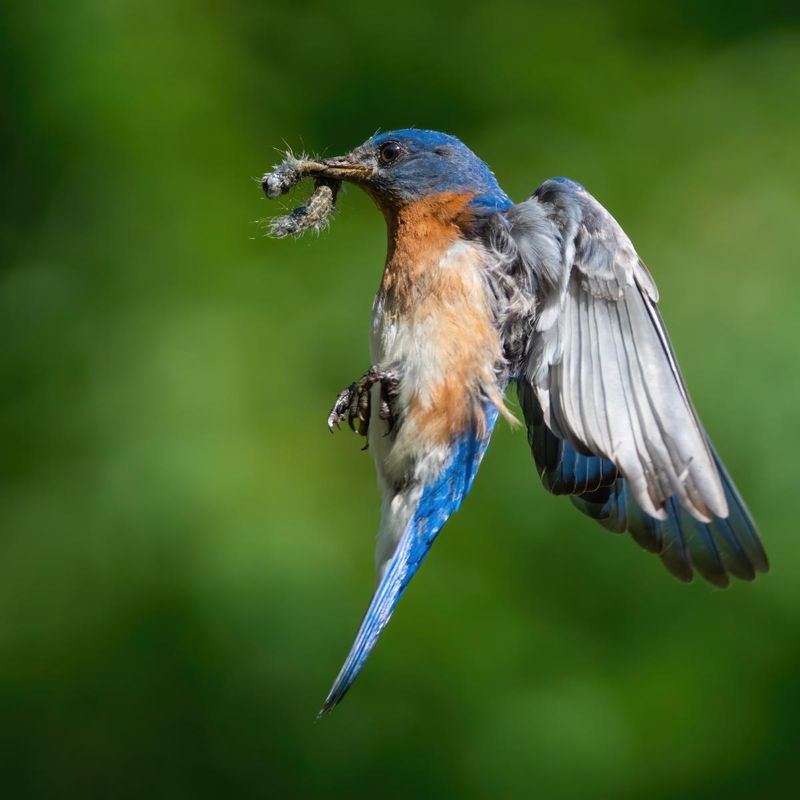
Any benefit a Western Bluebird pair provides in a yard depends entirely on there being enough insects to eat. A garden managed with broad-spectrum pesticides or herbicides can quietly undercut the very thing that makes the bird useful as a neighbor.
NestWatch’s nest box placement guidance warns that pesticides and herbicides can harm cavity-nesting birds directly through exposure and indirectly by reducing or eliminating the arthropod prey those birds depend on. A bluebird foraging in a yard treated with a broad-spectrum insecticide may find fewer caterpillars and beetles, not because it has eaten them all, but because the spray did first. That is the opposite of the outcome most homeowners are hoping for.
A more useful approach starts with identifying the specific pest causing damage before reaching for any spray. Many caterpillar and grasshopper problems respond well to cultural controls, such as hand-picking, row covers, or adjusting planting timing to avoid peak pest pressure. When a chemical treatment is genuinely necessary, the least-toxic option that targets the specific pest, applied at the right time and in the right location, does far less collateral damage to beneficial arthropods than a blanket spray across the entire garden.
The vineyard diet research found that Western Bluebirds consumed a wide variety of arthropod taxa, including many that gardeners would consider neutral or beneficial. Keeping that arthropod community intact, rather than reducing it with broad-spectrum chemicals, maintains the food web that supports bluebirds and other insectivorous birds. Growing native plants that host diverse insect communities, tolerating modest levels of insect activity, and spot-treating only confirmed pest outbreaks all support a yard where a bluebird pair can find enough food to raise a successful brood. None of that replaces targeted pest management when an infestation is genuinely damaging crops or ornamentals, but it creates conditions where a bluebird’s contribution is actually possible.
Support the bluebird without betting the garden on it
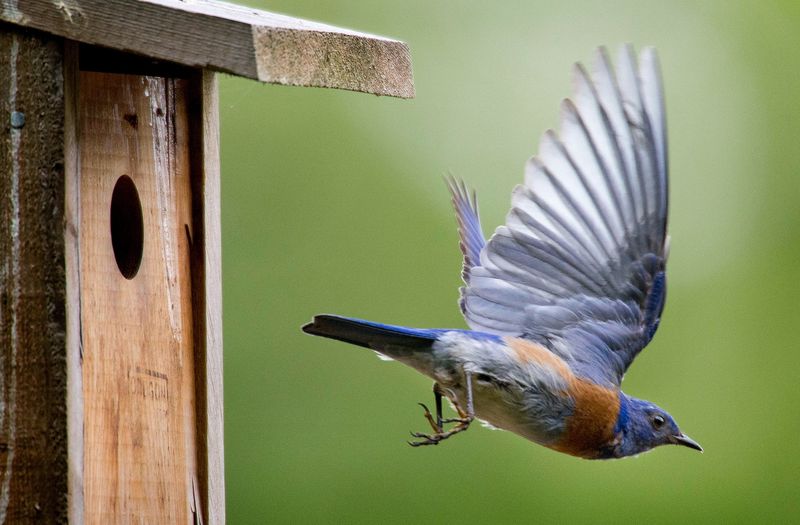
A practical path forward for California homeowners looks like this: confirm that the bird visiting the yard is actually a Western Bluebird, assess whether any existing cavity-bearing trees or posts can safely stay, and evaluate whether the yard offers open foraging space, low perches, and enough insects to support a breeding pair before buying a box.
If a nest box makes sense, follow California Bluebird Recovery Program installation and monitoring guidance, commit to weekly checks during nesting season, and manage the yard without broad-spectrum pesticides near the box or foraging areas. Check fire-safety requirements first for any snag or dead tree, and consult a qualified arborist or local fire authority when the status of a tree is unclear. CDFW’s Western Bluebird habitat account and California’s defensible-space rules both apply simultaneously, and neither one overrides the other by default.
Preserving a safe nesting cavity or installing a well-monitored box can genuinely support a native insect-eating bird and may contribute to some reduction in local pest pressure. No single pair will reliably clear a garden of caterpillars or grasshoppers, and no nest box substitutes for knowing your pests, managing your plants thoughtfully, and respecting the wildlife protections that apply to active nests. What a well-supported Western Bluebird pair offers is something quieter and more durable: a native bird doing what it evolved to do, in the landscape it belongs to.