
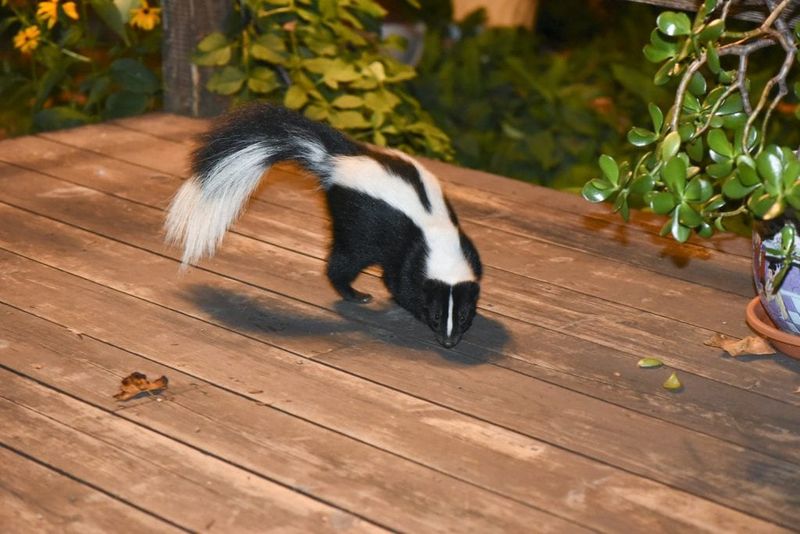
Skunks are not really trying to ruin your evening in California, they are just looking for an easy meal and a safe, dark place to sleep. The trouble is that a lot of everyday yard habits roll out the welcome mat without you noticing.
Once a striped skunk decides the space under your deck is home, getting it to leave without a smelly standoff gets hard fast. Here are the habits that quietly draw them in, and the ones worth fixing before your dry summer nights turn into a nose-holding problem.
1. Leaving Pet Food and Water Bowls Outside Overnight
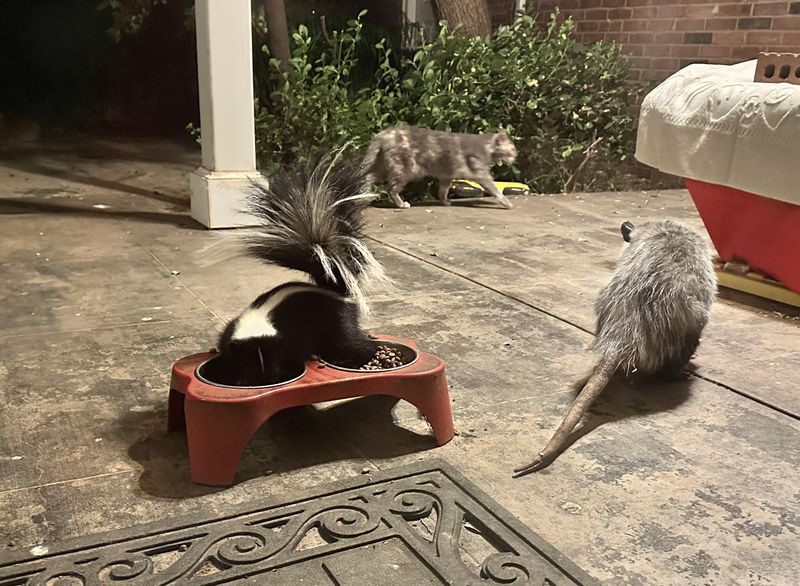
Picture a skunk waddling across your patio around 9 p.m., nose twitching, and finding a full bowl of cat kibble just sitting there. To a hungry animal in a long, dry California summer, that is a five-star restaurant with the door propped open.
Skunks are opportunists, and reliable food is the single biggest reason they stop treating your yard as a shortcut and start treating it as home. Once they know dinner shows up nightly, the deck nearby becomes their bedroom.
Water bowls matter too, since standing water is a rare treat during drought months.
The fix is simple and costs nothing. Bring pet bowls in before dark, and feed cats and dogs on a schedule instead of leaving food out all day.
If you care for outdoor or feral cats, put food down for an hour, then remove whatever is left. Breaking the free-buffet habit removes the main draw that keeps skunks coming back night after night.
2. Skipping Grub Control on Your Lawn
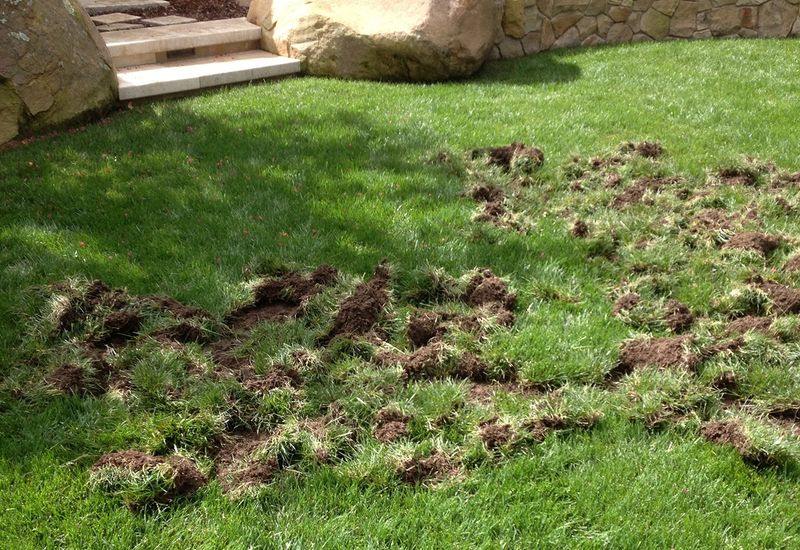
Those little cone-shaped holes appearing across your lawn overnight are a clue, not a mystery. Skunks dig for grubs, the fat beetle larvae living just under your turf, and a grub-rich lawn is like a treasure map leading straight to your yard.
Many California homeowners overwater and overfeed their lawns without realizing it creates the perfect grub nursery. The more grubs you grow, the more digging you invite, and the closer skunks settle to their food source, which often means right under the deck.
Cutting back on water fits California’s drought reality anyway, and a slightly leaner lawn supports fewer grubs. You can also check your soil in late summer and, if grub numbers are high, treat the area or switch problem sections to drought-tolerant native plantings that grubs and skunks ignore.
Fewer grubs can mean far less nightly digging and one less reason for skunks to linger.
3. Leaving the Space Under Your Deck Open and Unscreened
An open gap under a deck is basically a pre-built den waiting for a tenant. It is dark, dry, sheltered from summer heat and winter rain, and hidden from coyotes and hawks.
To a skunk scouting for a nursery, that is prime real estate.
Skunks especially love these spaces in late winter and early spring when females look for a safe spot to raise their young. Once babies arrive, your options shrink and the situation gets complicated.
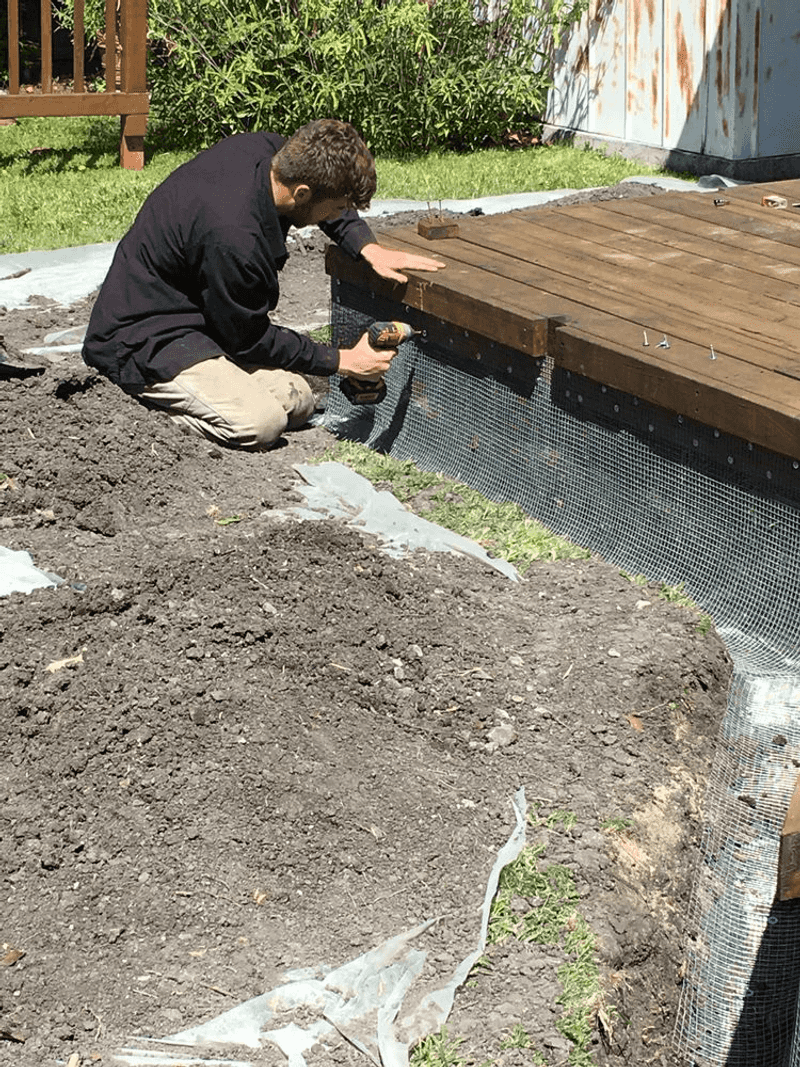
Seal the gap before anyone moves in. Attach heavy galvanized hardware cloth around the base of the deck and bury the bottom edge six to twelve inches deep in an L-shape so nothing can dig under it.
First, make absolutely sure no animal is currently living there by checking for tracks or scattering flour and looking for prints. Closing off the den site is often the single most effective habit change, because even a food-free yard loses its appeal when there is nowhere cozy to sleep.
4. Letting Fallen Fruit Pile Up Under Trees
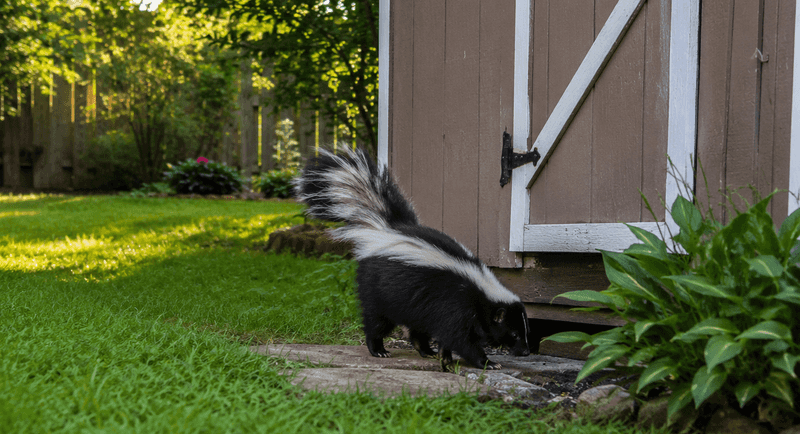
California backyards are full of citrus, plums, figs, and avocados, and all that homegrown fruit is a gift right up until it hits the ground. Rotting fruit ferments in the sun, and the sweet, funky smell carries a long way to a skunk’s sensitive nose.
Beyond the fruit itself, decaying produce draws insects, and skunks happily eat both the fallen fruit and the bugs feasting on it. A messy tree becomes a two-course meal.
Walk your fruit trees a couple of times a week during harvest season and scoop up anything on the ground. Compost it in a sealed bin rather than an open pile, since open compost is its own skunk magnet.
Keeping the ground clean under your trees removes a seasonal food source that can quietly anchor skunks to your property through the long warm months.
5. Storing Trash and Recycling in Loose-Lidded Bins
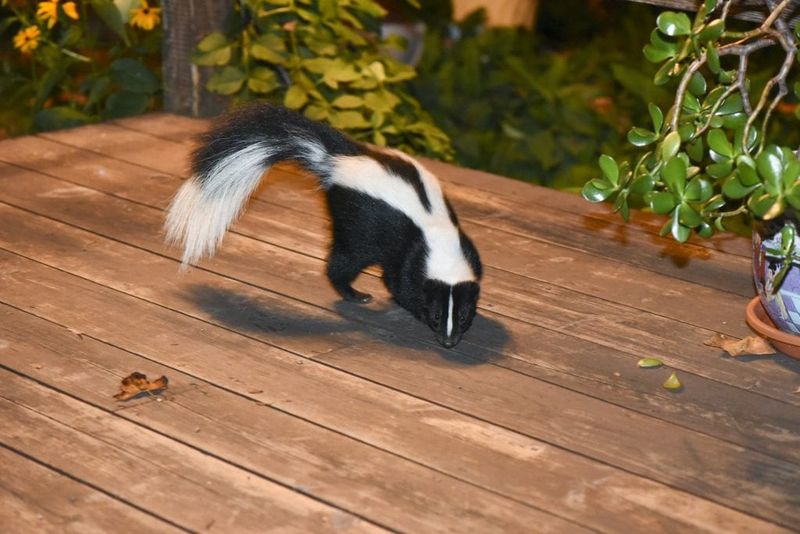
A trash can with a wobbly lid is an invitation written in scent. Skunks cannot climb like raccoons, but they do not need to when a bin tips easily or a lid pops off on its own.
Leftovers, greasy wrappers, and food scraps give off exactly the aromas skunks hunt for after dark. A regularly raided bin trains them to visit your yard on a schedule, and predictable food keeps them close to shelter.
Use bins with tight, latching lids, or add a bungee cord or a strap across the top for extra insurance. Store cans in a garage or shed until pickup morning if you can, and rinse out sticky recyclables before tossing them.
A locked-down trash routine cuts off an easy food supply and makes your yard a lot less interesting to a wandering skunk.
6. Overgrown Shrubs and Cluttered Yard Corners
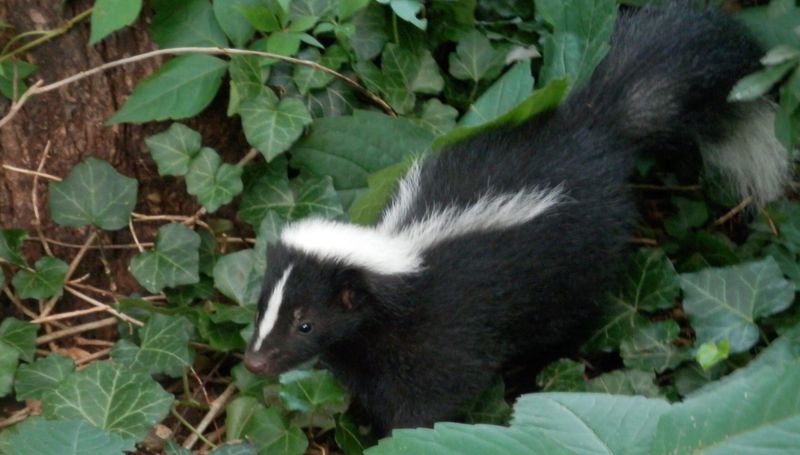
Skunks are shy animals that dislike crossing open ground where predators can spot them. Dense, overgrown shrubs and cluttered corners give them safe travel routes and hiding spots that lead right to the deck.
Woodpiles, stacked pots, old lumber, and forgotten equipment along a fence line all create cozy pockets a skunk can duck into. The more cover you offer, the more comfortable they feel moving through your space and the more likely they are to stay.
Trim shrubs so there is clear air between the bottom branches and the soil, and open up the ground beneath them. Stack firewood off the ground and away from the house, and clear out the junk piling up in shady corners.
As a bonus, thinning dense vegetation near your home also supports defensible space in fire-prone California neighborhoods, so you protect against two very different problems at once.
7. Leaving the Yard Dark and Undisturbed at Night
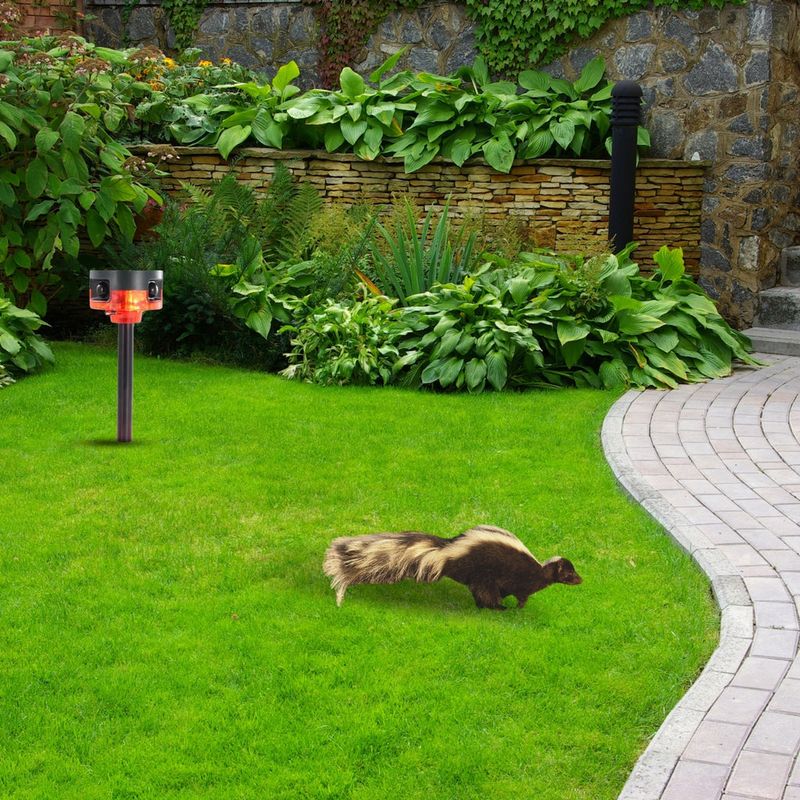
Skunks do their business under cover of darkness and calm, so a silent, pitch-black yard is their comfort zone. If nothing ever startles them near the deck, they have no reason to think twice about settling in.
Sudden light and unpredictable disturbance make a spot feel unsafe, which is exactly what you want around a potential den site. A little discomfort goes a long way toward convincing a skunk to look elsewhere.
Install motion-activated lights aimed at the deck perimeter and other dark hiding spots. Motion-triggered sprinklers work well too, and they double as a water-wise deterrent since they only run when something trips them.
Skunks are drawn to easy places, so making your yard slightly unpredictable at night, combined with removing food and sealing dens, tips their decision away from your deck for good.