
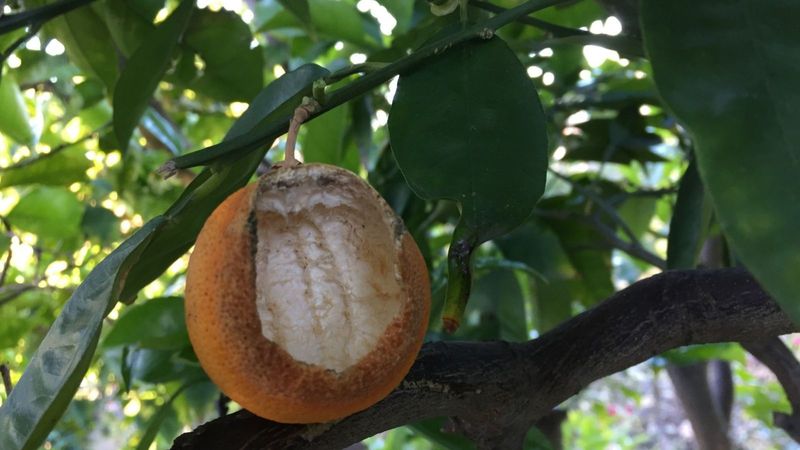
Most California homeowners with a backyard fruit tree never connect their harvest routine to the scratching sounds they hear at night. The habit of leaving fallen, ripe, or damaged fruit on the ground or in the tree can quietly provide food that helps roof rats stay active around a yard.
Knowing what to look for and what to change can make a real difference, especially during ripening season when rat activity tends to become more visible.
Neglected fruit can keep roof rats foraging
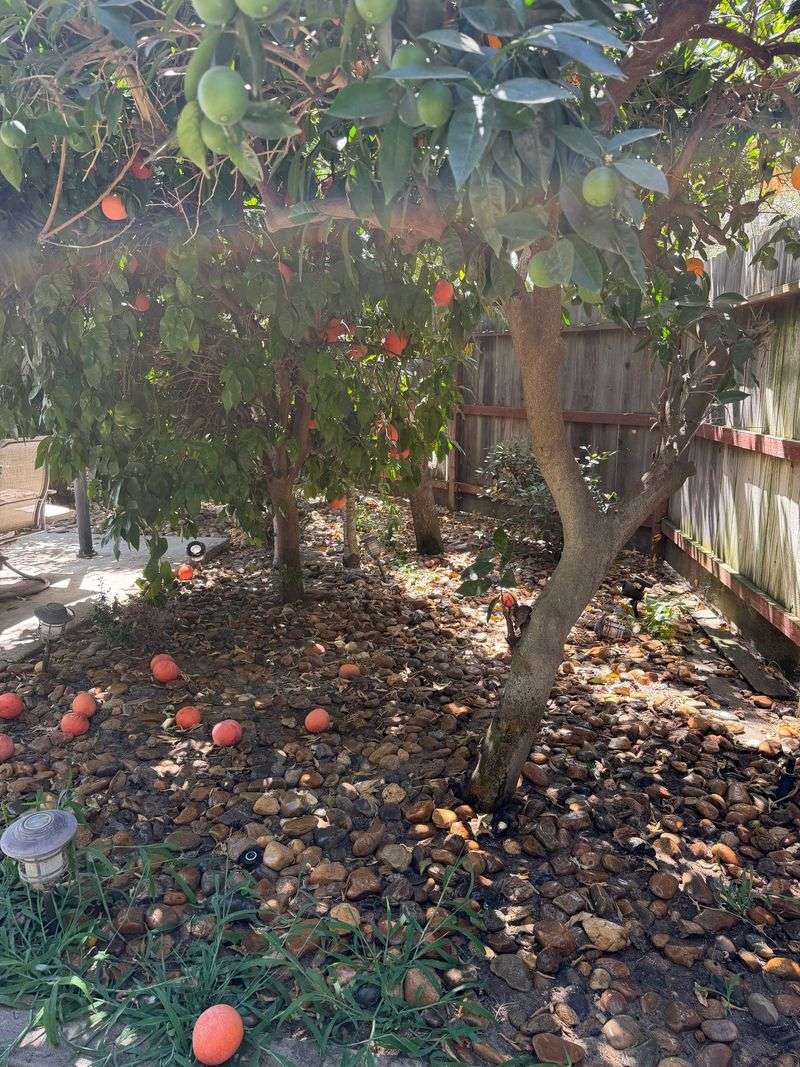
Fruit left on the ground is one of the most overlooked reasons roof rats stay active around California backyards. Ripe, overripe, damaged, or hollowed fruit sitting beneath a tree or still clinging to branches after harvest provides a reliable, calorie-dense food source that roof rats will return to night after night.
Citrus, avocados, figs, stone fruits, nuts, and berries are all on the menu, and the longer the fruit sits, the more attractive it becomes as it softens and ferments.
UC IPM guidance on rats specifically recommends removing fallen fruit and nuts promptly and cleaning up garden debris to reduce food sources that support roof rats. Even fruit that looks unappealing to a person, split citrus, a bruised avocado, a cluster of shriveled figs, is exactly what a foraging rat is looking for after dark.
Leaving that material in place can effectively turn the area beneath the tree into a reliable feeding station.
The important distinction here is that unattended fruit can help sustain rat activity around a yard, but it is not the only factor and does not by itself cause every infestation. Shelter, competing food sources, water access, and entry points into structures all play a role.
Fruit is the starting point of this conversation, not the complete explanation. Recognizing it as a meaningful but partial contributor sets up a response that actually works.
Why rats may seem more noticeable during harvest
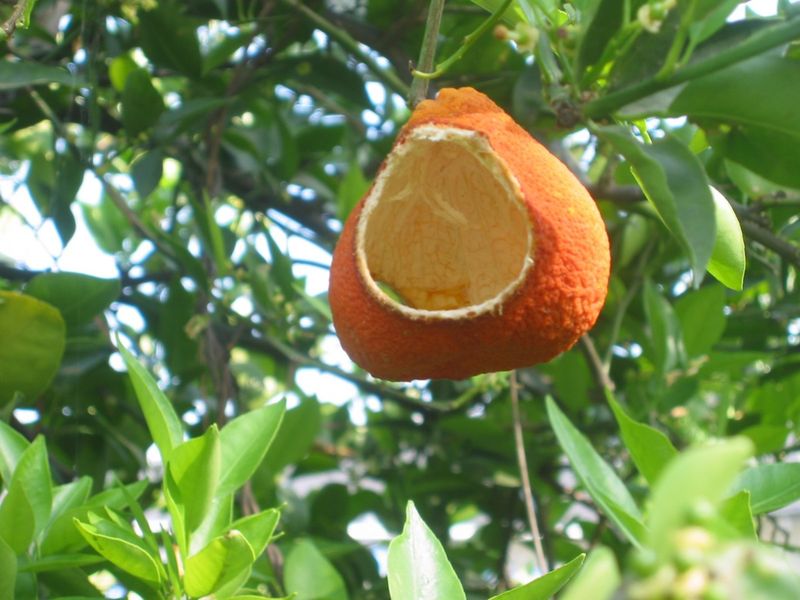
Roof rats do not follow a strict seasonal calendar. UC IPM’s citrus roof rat resource makes clear that this species is active throughout the year in California, not just in fall.
What changes during ripening and harvest is the concentration of available food. When fruit begins to mature on the tree, there is suddenly more to eat in one location, which can make rat activity around that spot more frequent and more visible to homeowners who might otherwise not notice it.
Roof rats are agile climbers. They move easily through tree canopies, along fences, over utility lines, and across rooftops.
Their preferred habitat is above ground: dense vegetation, tree hollows, and attic spaces suit them far better than open soil. UC Master Gardener guidance from Santa Clara County notes that roof rats become conspicuous when fruit starts to ripen, which aligns with what many California homeowners report seeing in late summer and fall.
Norway rats, by contrast, are more associated with burrows near foundations, garbage areas, moist soil, and ground-level food. If you are seeing burrowing near a structure or disturbed soil along a fence line rather than fruit damage high in a tree, the species identification may be different, and the response may need to shift accordingly.
For most California backyard fruit trees, roof rats are the more likely culprit. Understanding which species you are dealing with helps focus the fix.
What damaged fruit can—and cannot—prove
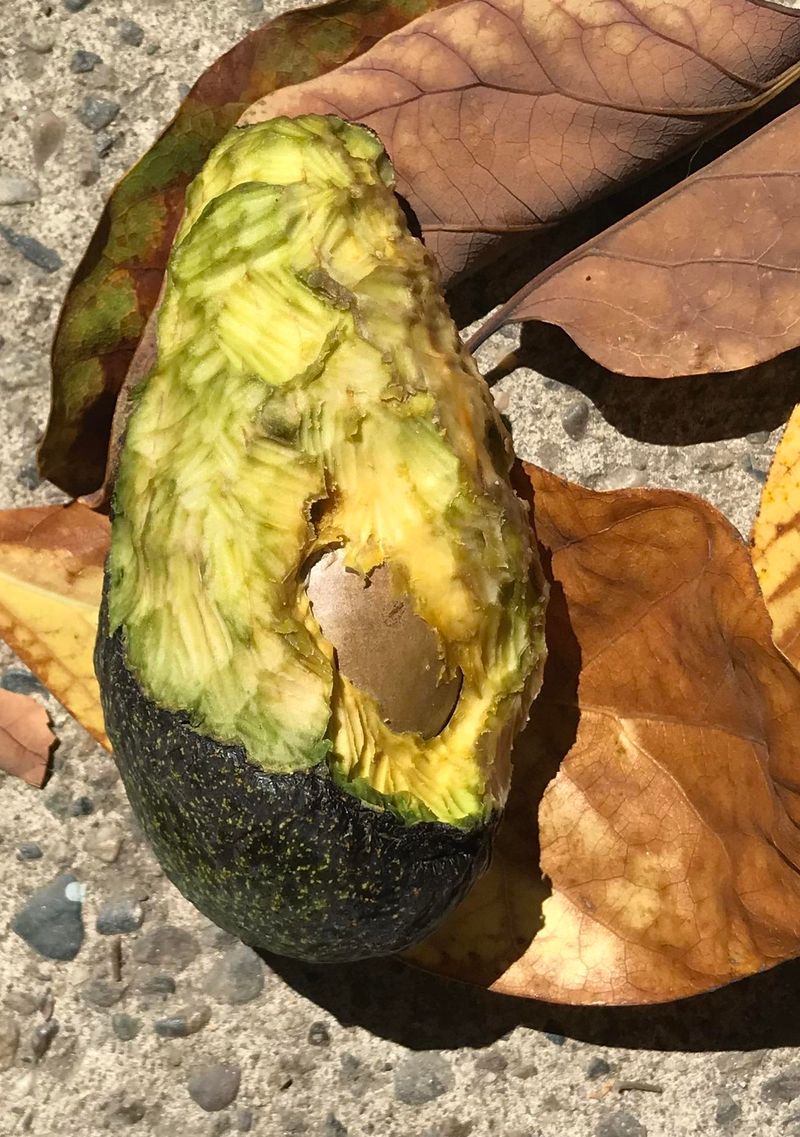
Chewed or missing fruit is a clue, not a verdict. Several animals active in California backyards can damage tree fruit in ways that look similar at first glance.
Squirrels, raccoons, opossums, and birds all eat tree fruit, and some leave damage that overlaps with what roof rats produce. Jumping to a conclusion before confirming the species wastes time and can lead to the wrong response.
UC IPM’s fruit damage identification guide specifically notes that opossums, raccoons, tree squirrels, and other vertebrates can produce similar-looking damage to what rats cause. Hollow citrus rinds left hanging in the tree are one of the more distinctive signs of roof rats, since they climb into the canopy and eat the pulp while leaving the skin behind.
Deep gnaw marks on fallen avocados, small cylindrical droppings near the base of the tree or along fences, and greasy rub marks along travel routes are additional indicators.
Nighttime behavior is another useful diagnostic. Roof rats are primarily nocturnal, and watching the yard at dusk can reveal rats traveling along fence lines, utility wires, or tree limbs in ways that squirrels, which are active during the day, would not.
The presence of burrows in the soil near the tree is more consistent with Norway rats or ground squirrels than with roof rats, which nest above ground in dense vegetation or structural voids.
Putting together multiple clues, hollow rinds in the tree, small dark droppings, nocturnal movement along elevated routes, and gnaw marks on fruit, gives a much more reliable picture than fruit damage alone. Only once the evidence points clearly toward roof rats does it make sense to move forward with a targeted response.
Harvest promptly and clear the canopy
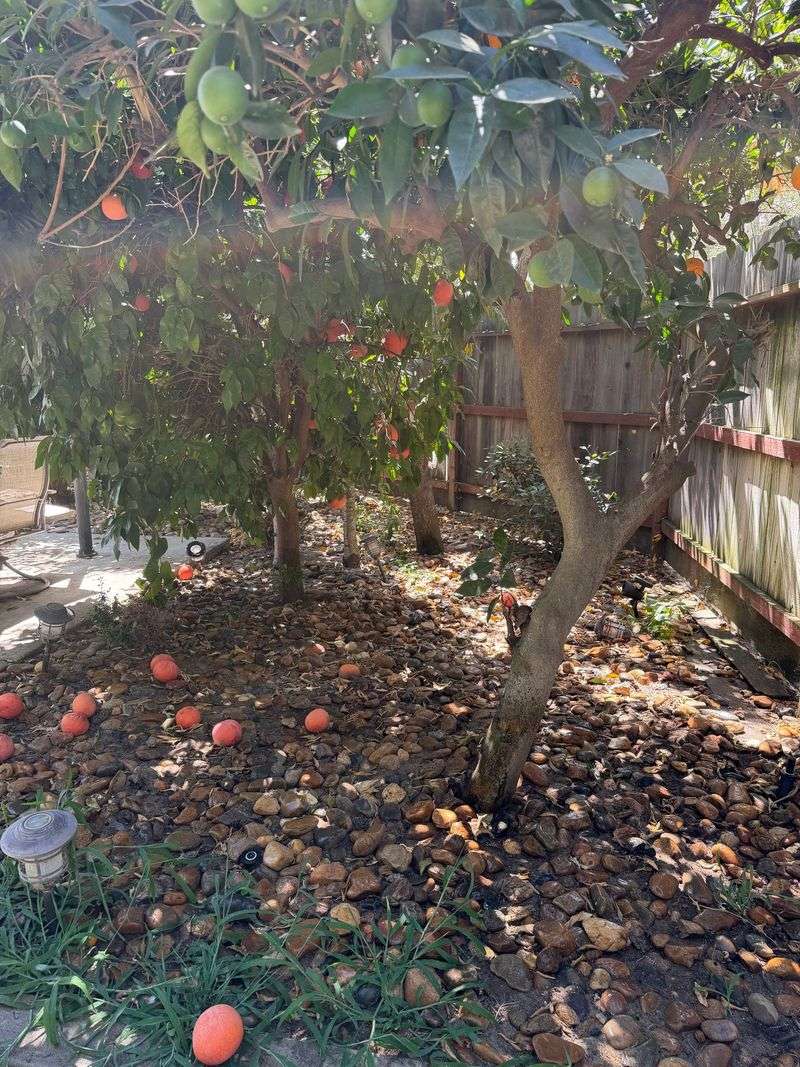
Once the evidence points toward roof rats, the first corrective step is also the most straightforward: remove the food. Harvesting ripe fruit promptly rather than letting it drop or become overripe on the branch cuts off one of the most reliable food sources roof rats have access to in a backyard.
UC Cooperative Extension in Ventura County recommends removing fallen fruit and nuts as part of a basic sanitation approach for reducing roof rat activity around fruit trees.
Clearing the canopy means more than picking the good-looking fruit. Visibly damaged, hollowed, or partially eaten fruit left hanging in the tree continues to provide food just as effectively as whole fruit sitting on the ground.
Soft, overripe fruit that has been overlooked during a harvest is particularly appealing to foraging rats because it requires less effort to eat. After picking what is ready to use, check the tree for anything left behind and remove it as well.
Beneath the canopy, any fallen fruit, nuts, or debris should be collected and disposed of in a sealed container rather than added to an open compost pile. UC Marin Master Gardeners recommend treating fallen fruit as part of general sanitation, not as a secondary concern after picking is done.
How often to inspect depends on how quickly the tree drops fruit and whether you are already seeing signs of activity. During active ripening, checking every few days is a reasonable starting point, though a tree that is dropping heavily may need more frequent attention.
Fruit cleanup reduces the available food supply, which matters. However, it does not remove shelter, eliminate travel routes, or address an established colony that has already moved into a structure or dense vegetation nearby.
Reduce the routes and cover around the tree
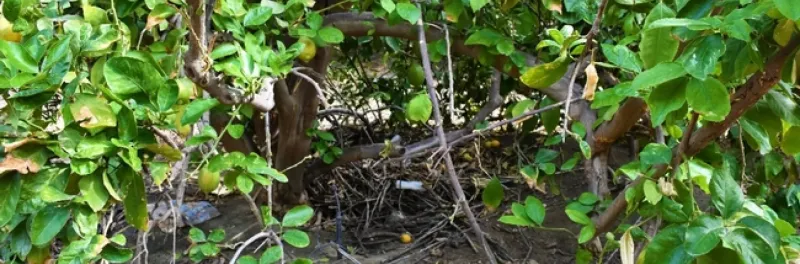
Removing the food source is the first step, but roof rats will return to a yard as long as they have easy routes into it and places to hide nearby. Tree branches that touch or overhang a roof, fence, utility line, or neighboring tree give roof rats a direct highway from the neighborhood into your yard and from your yard into your home.
Addressing those connections is a practical way to make the tree harder to reach, even if it does not create a perfect barrier.
UC IPM recommends removing overhanging limbs within 6 feet of roofs to reduce climbing access. UC Master Gardener guidance from Santa Clara County suggests leaving a 2- to 3-foot gap between fruit trees and nearby structures or other trees where feasible.
These are access-reduction measures, not guarantees. A determined rat can still jump, and gaps between neighboring properties are difficult to control entirely, but reducing obvious bridge points lowers the ease of access.
Dense vegetation around and beneath the tree deserves the same attention. Ivy, vines, brush, and untrimmed shrubs provide the kind of ground-level and mid-level cover that roof rats use for nesting and daytime shelter.
UC IPM guidance recommends creating roughly 2 feet of open space between shrubs and between shrubs and building walls, which makes it harder for rats to move unseen and reduces nesting habitat close to the house.
Woodpiles, stacked pots, and general yard clutter near the tree or along the fence line serve a similar function. Moving or eliminating those materials removes cover that rats rely on between foraging trips.
Pairing access reduction with fruit removal addresses both the food and the habitat side of the problem, which gives the overall response more staying power than sanitation alone.
Remove the other resources that keep rats nearby
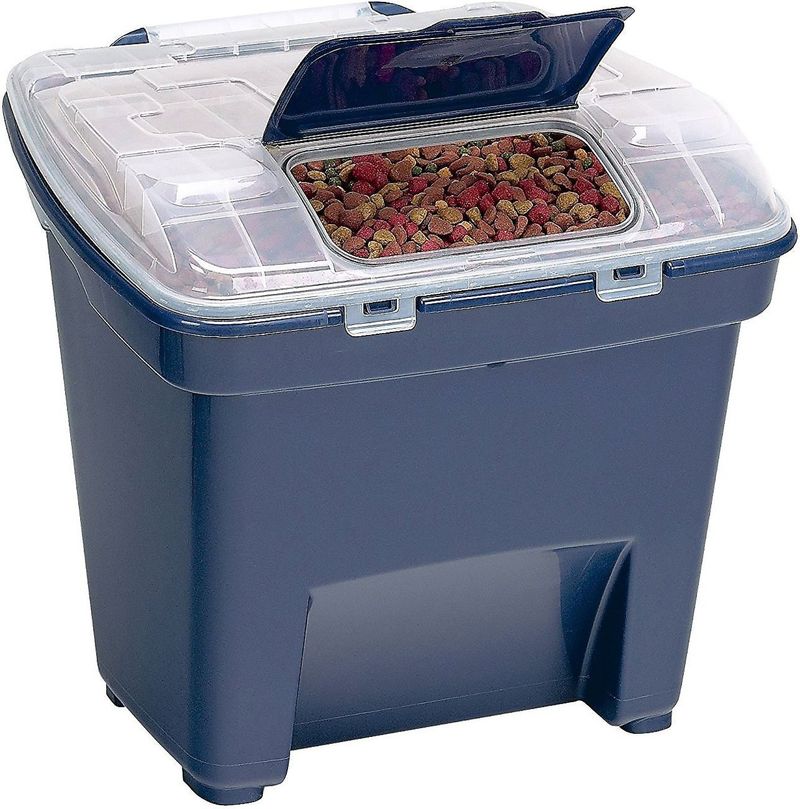
Cleaning up fruit is a meaningful first step, but roof rats rarely stay in a yard for one reason alone. Once fruit is gone or less available, a rat that has already established a presence nearby will look for the next available food source.
Pet food left outside overnight, unsecured garbage cans, open compost bins, and spilled birdseed are all capable of filling that gap and keeping rats active in the yard long after the last avocado has dropped.
CDC rodent control guidance recommends bringing pet food indoors at night, securing garbage in containers with tight-fitting lids, and storing bulk food, birdseed, and pet food in rodent-resistant containers. These steps matter most during and after the ripening period, when rats that have been feeding on fruit may shift their attention to whatever else is accessible in the yard.
Water is another resource worth considering. Roof rats, like all animals, need water, and birdbaths, drip irrigation runoff, leaky hose connections, and standing water in containers can all contribute to making a yard more hospitable.
Fixing drips and emptying containers that collect standing water removes one more reason for rats to stay close.
Building access is where the stakes go up. UC IPM advises sealing cracks and openings larger than one-quarter inch with durable materials such as steel wool, wire screen, or sheet metal.
Foam, plastic sheeting, wood, and standard caulk are not reliable because rats can chew through all of them. Gaps around pipes, vents, eaves, and roofline edges are common entry points.
Sealing those openings before rats find them, or as soon as activity near the house is confirmed, is one of the more important steps in preventing a yard problem from becoming a structural one.
Escalate control without creating a new hazard
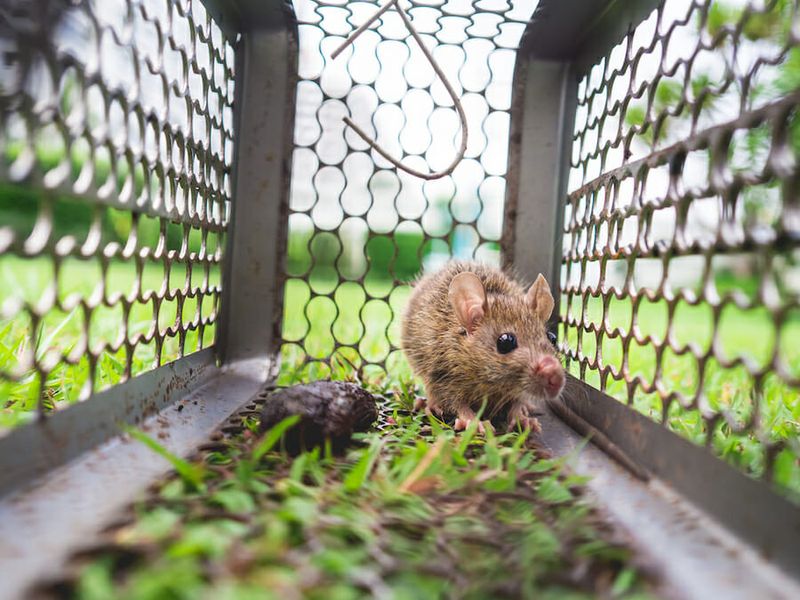
When sanitation, access reduction, and habitat cleanup have not resolved the problem, or when signs of an established presence are already clear, the next step is active trapping. Rat-sized snap traps are a well-supported primary option.
CDC trap guidance recommends placing traps against walls or along confirmed travel routes near droppings, gnaw marks, or nesting material, where rats are most likely to encounter them during their regular movement patterns. Traps must be kept inaccessible to children and pets, either by using a bait station housing or by placing them in locations that small hands and curious animals cannot reach.
If you find droppings or nesting material while setting traps or inspecting the area, resist the instinct to sweep or vacuum them up dry. CDC cleanup guidance is explicit: never sweep or vacuum dry rodent urine, droppings, or nesting material.
Instead, wet the material thoroughly with a household disinfectant, allow it to sit for the product’s recommended contact time, then wipe it up with gloved hands and place the waste in a sealed bag inside a covered container. This approach reduces the risk of disturbing airborne particles that can carry disease.
Rodenticides are a separate conversation and carry significant responsibility. California law changed on January 1, 2025, when AB 2552 took effect, prohibiting most uses of the first-generation anticoagulants chlorophacinone and warfarin.
Current CDPR guidance on these restrictions explains what is now prohibited, what limited uses remain, and what label and bait-station requirements still apply. Anticoagulant baits pose documented risks to hawks, owls, foxes, and other predators that eat poisoned rodents, as well as to pets that access bait stations.
UC IPM recommends prioritizing sanitation, exclusion, and trapping before considering any bait.
One more consideration before trapping or poisoning any unidentified animal: UC IPM’s citrus roof rat guidance notes that kangaroo rats and riparian woodrats are protected by California law. Homeowners in rural, wildland-adjacent, or habitat-sensitive areas should confirm species identification before taking any lethal action.
When identification is uncertain or the problem persists despite consistent effort, a licensed pest control professional can assess the situation and apply controls within current legal and safety boundaries.
Start with fruit, then address the whole yard
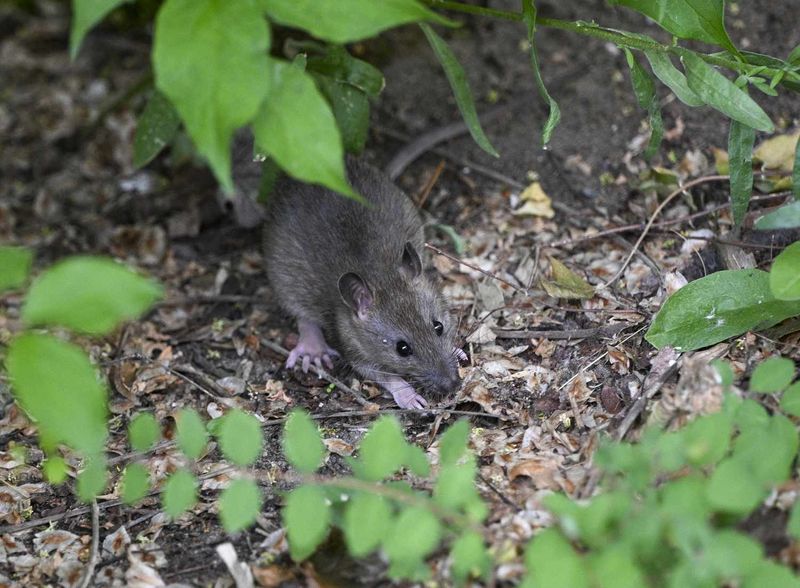
The sequence matters. Start by harvesting ripe fruit promptly and removing anything fallen, damaged, or overripe from both the tree and the ground.
Inspect beneath the canopy frequently during the ripening period, and dispose of collected fruit in a sealed container rather than an open pile. That first step reduces one of the most reliable food sources roof rats have in a backyard, and it costs nothing beyond consistent attention.
From there, work outward. Check branches for contact with roofs, fences, utility lines, and neighboring trees, and trim where feasible to reduce easy access routes.
Clear dense vegetation, ivy, woodpiles, and clutter near the tree and along building walls. Bring pet food in at night, secure garbage and compost, store bulk food in rodent-resistant containers, and fix drips or standing water.
Seal any opening larger than one-quarter inch in walls, eaves, or rooflines with steel wool, wire screen, or sheet metal.
UC IPM’s rat management guidance is consistent on this point: sanitation and exclusion are the foundation, and they work together rather than in isolation. Fruit cleanup can meaningfully reduce food availability, but it cannot promise to eliminate a colony that has already established itself in a structure or in dense nearby vegetation.
If signs persist after consistent effort, snap traps along confirmed travel routes are the next step, placed carefully and kept away from children and pets.
Roof rats are active year-round in California, so the habits that reduce their access to your yard are worth keeping past harvest season. A yard that offers little food, few hiding spots, and no easy way in is a less interesting destination, and that is really the goal.