
A privacy screen should give you peace, not a daily sweeping chore. Many popular hedge plants shed leaves, berries, and petals all over patios, staining pavers and clogging drains.
The good news is that several California-friendly shrubs stay tidy, sip little water once established, and still feed local bees and birds. Here are eight smart picks that can block the view next door while keeping your outdoor space clean.
1. Coffeeberry (Frangula californica ‘Eve Case’)
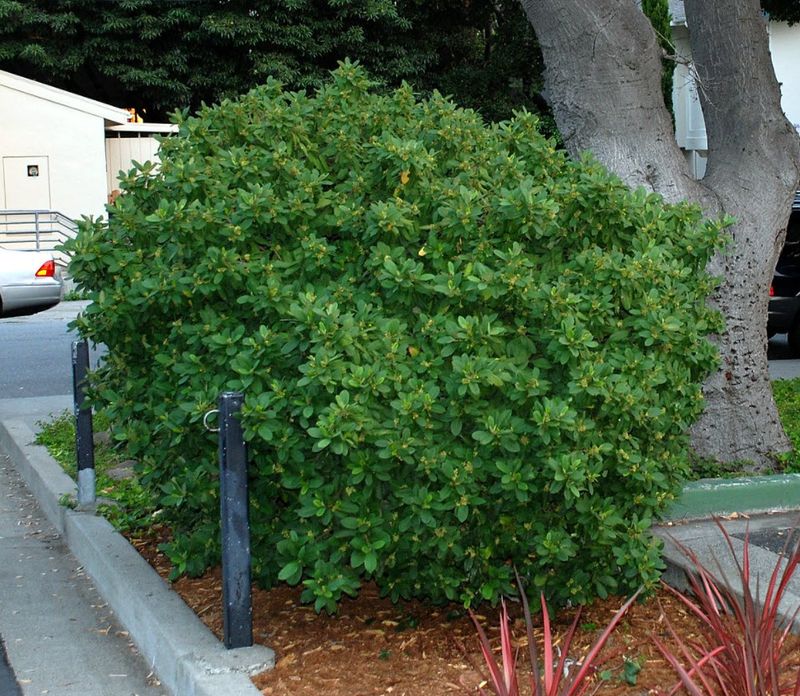
Ask a native plant nursery worker for a tidy hedge and the answer is often the same: get an Eve Case coffeeberry. This compact selection grows into a dense, glossy wall around 6 to 8 feet tall.
It keeps its leaves year-round, so you are not raking a sudden autumn drop.
Berries do form in late summer, turning from green to red to near black. Birds such as thrushes and towhees usually strip them fast, which means very little fruit ends up on the ground.
Planting it a few feet back from the patio edge can reduce any stray berry staining.
Once established, coffeeberry gets by on occasional deep summer watering in most coastal and inland valley yards. It handles sun or part shade and takes light shaping well.
For a small lot, it may be the most balanced mix of privacy, wildlife value, and low cleanup on this list.
2. Pacific Wax Myrtle (Morella californica)
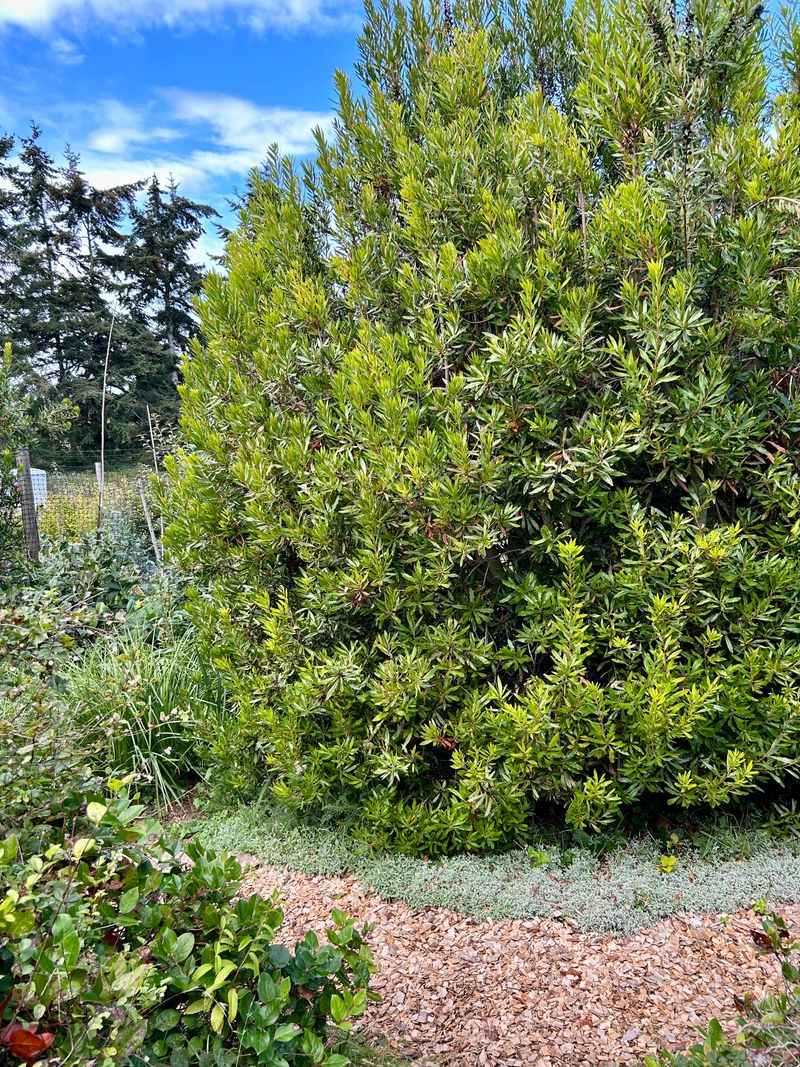
Coastal gardeners have a quiet secret weapon. Pacific wax myrtle shrugs off salty wind and fog, growing into a thick evergreen screen that can reach 10 feet or more without fuss.
Its narrow leaves are small and stay put through the seasons. Old foliage drops gradually rather than all at once, so a quick sweep now and then usually covers it.
The tiny purple fruits are waxy and modest, and birds tend to find them before your broom does.
Wax myrtle can be sheared into a formal hedge or left loose for a softer look. It likes a bit more water than desert natives, especially in hot inland areas, so it fits best near the coast.
If you live where summers hit 100 degrees, plant it with afternoon shade and mulch the root zone well.
3. Toyon (Heteromeles arbutifolia)
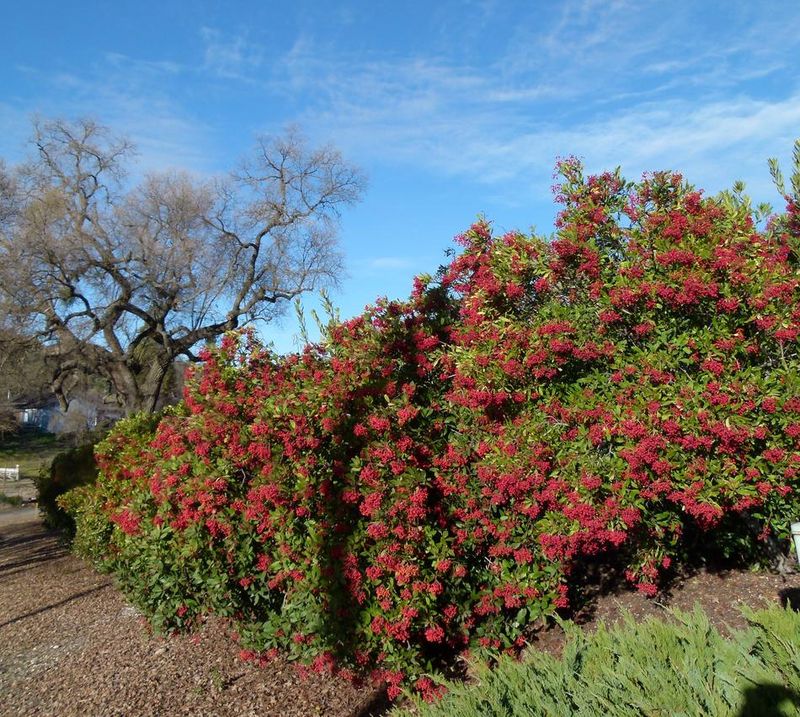
Hollywood actually got its name from this shrub, once called California holly. Toyon is a tough, drought-hardy native with leathery leaves and a cheerful show of red berries in winter.
Now, a fair warning. Those berries can fall if birds do not eat them, so toyon belongs along a back fence rather than hanging over your dining table.
In many yards, cedar waxwings and robins clean the branches quickly, but results vary by neighborhood.
Why include it? Few shrubs offer this much privacy on almost zero summer water once mature.
Its white summer flowers pull in native bees, and it can reach 8 to 15 feet. Prune lower branches to keep it shapely and lift any litter away from walkways.
4. Catalina Cherry Alternative: Hollyleaf Cherry Pruned as a Hedge (Prunus ilicifolia)
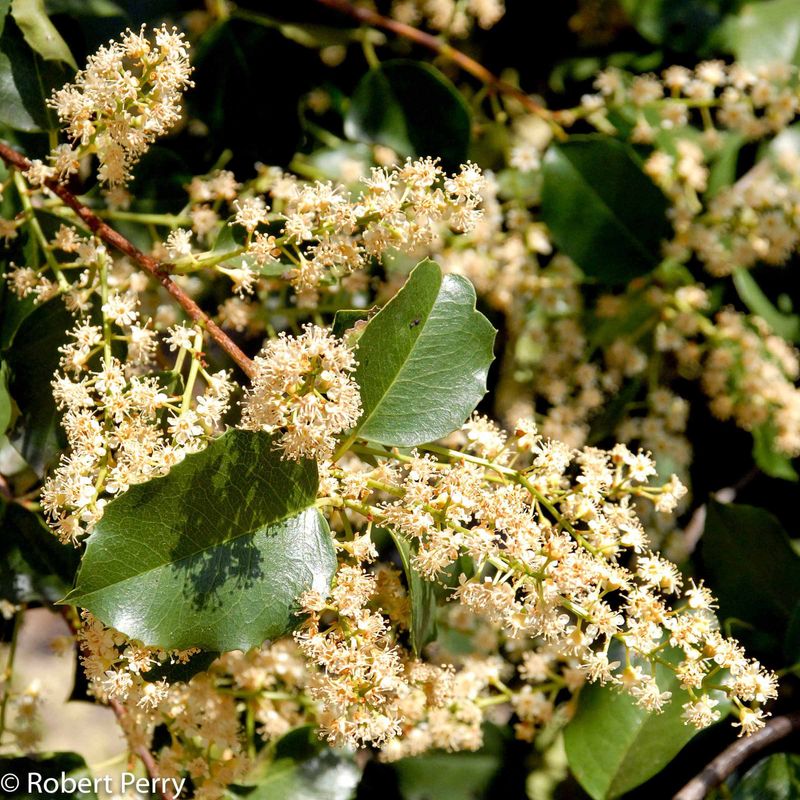
Picture a hedge that looks like holly but laughs at drought. Hollyleaf cherry has shiny, wavy-edged leaves and takes shearing better than most California natives.
The key to keeping it tidy is pruning. Left alone, it produces cherries that can drop and attract ants.
Regular clipping after spring bloom removes most flowers before fruit sets, giving you a clean formal screen.
It handles full sun, clay soil, and long dry summers across Southern California and inland valleys. Expect slow-to-moderate growth to around 10 feet if you let it climb.
For side yards where space is tight, a clipped row of hollyleaf cherry may be the neatest native wall you can grow.
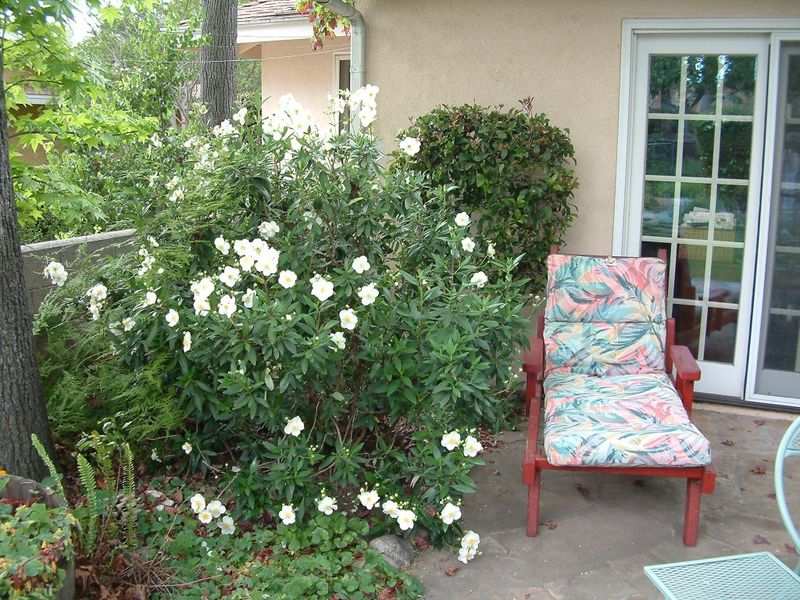
5. Bush Anemone (Carpenteria californica)
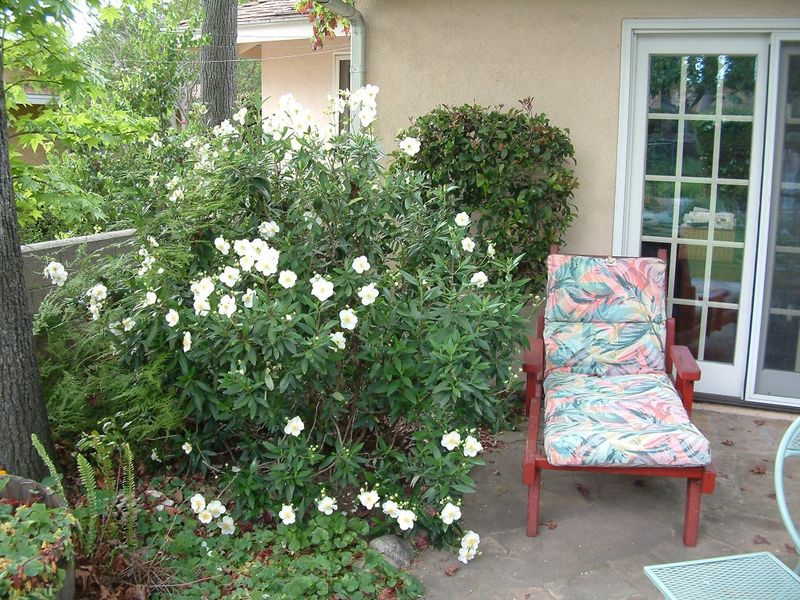
Late spring brings a burst of big white blossoms with golden centers that look almost like camellias. Bush anemone is rare in the wild, found naturally in just a few foothill spots in Fresno and Madera counties.
In the garden, it forms an evergreen mound about 6 feet tall and wide. The petals are papery and light, so the drop after bloom tends to blow off or break down quickly rather than turning slick and brown.
No messy fruit follows.
Give it some afternoon shade inland and occasional summer water. It shines near a seating area where you can enjoy the flowers up close.
Pollinators visit steadily, and the dense foliage softens views from neighboring windows.
6. Ceanothus ‘Ray Hartman’
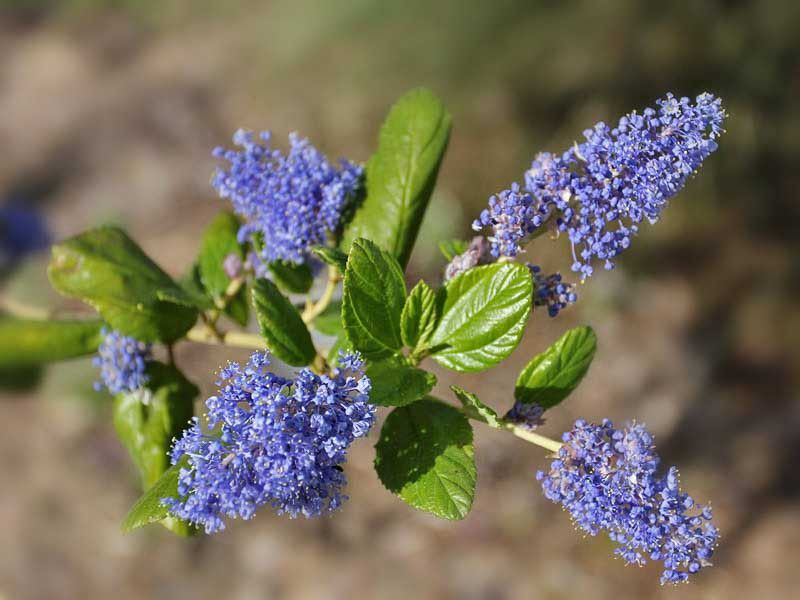
Bees go wild for this one. Each spring Ray Hartman ceanothus explodes with medium-blue flower clusters, and the hum around it can be heard from across the yard.
It grows fast, often reaching 12 to 15 feet, which helps when you need privacy within a couple of seasons. The tiny spent flowers fall like fine blue dust for a few weeks.
Most of the year, though, the glossy leaves hold tight and litter stays minimal.
Skip summer watering once it is established, since too much water can shorten its life. Plant it in well-drained soil and full sun.
If fire risk is a concern, keep it at least 30 feet from the house and maintain regular trimming of dead wood, following your local defensible-space rules.
7. Lemonade Berry (Rhus integrifolia)
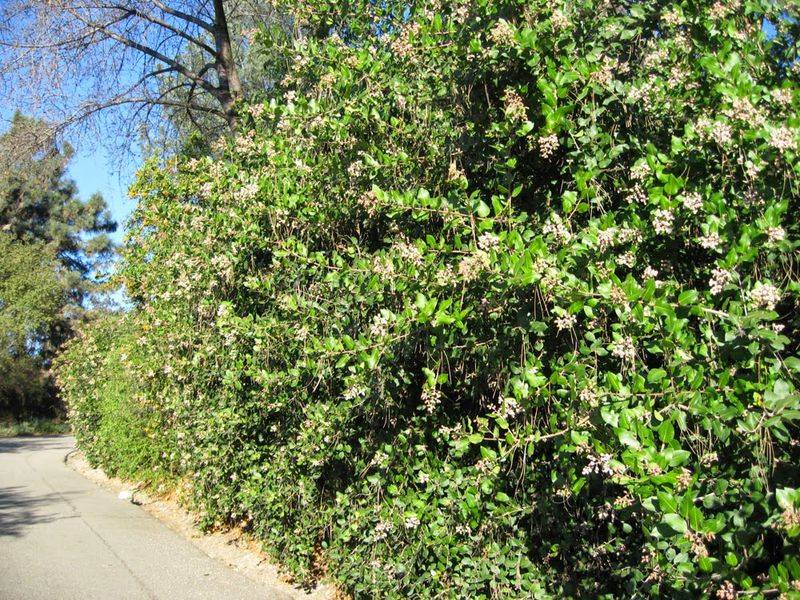
Early Californians soaked the sticky little fruits of this shrub to make a tart, lemony drink. That fun history comes attached to one of the toughest screening plants for Southern California.
Lemonade berry has thick, rounded leaves that resist wind and salt spray. It grows dense and evergreen, usually 6 to 10 feet tall.
The fruits are small and sticky but sparse, and birds often take them.
It needs almost no water after its first couple of years. Coastal sage scrub gardens and slopes suit it best.
Set it a few feet off hardscape, and you get a living screen that rarely asks for attention.
8. Island Bush Snapdragon (Gambelia speciosa)
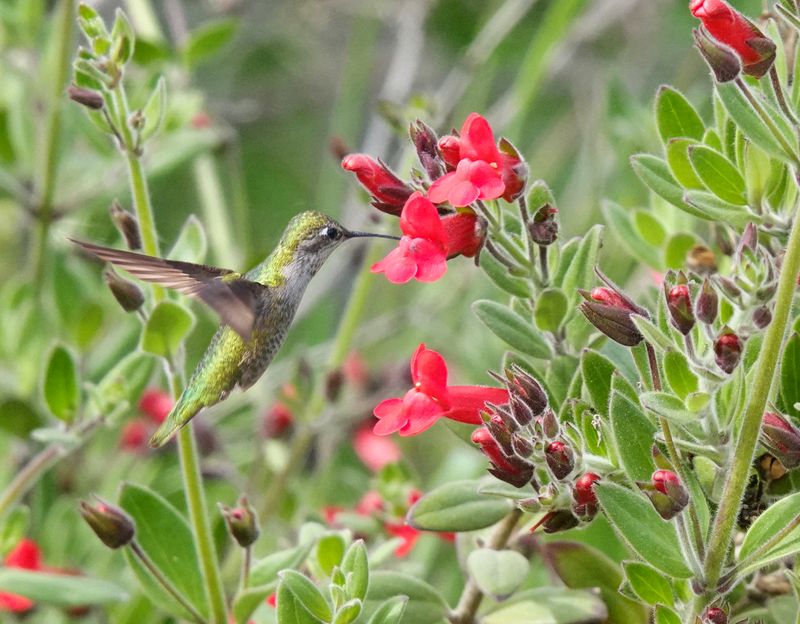
Short on space? Island bush snapdragon fits where bigger shrubs cannot.
It stays around 3 to 4 feet tall and works as a low screen along a patio edge or in large pots.
Bright red tubular flowers appear for months, and Anna’s hummingbirds treat it like a favorite diner. The blooms are small and drop sparingly, so cleanup is light.
There are no berries to stain anything.
Native to the Channel Islands, it tolerates coastal conditions and needs only occasional water. Pair it with taller shrubs on this list for a layered effect.
It may be the simplest way to add privacy at seated eye level while keeping your patio spotless.