
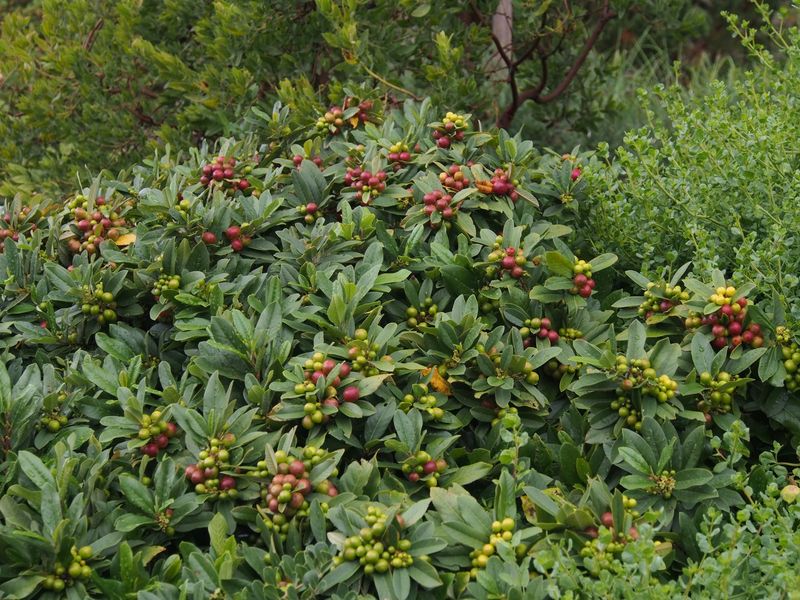
When winter rains roll into California, a lot of yards go bare just when birds need shelter and food the most. A hedge of the right native shrubs can fix that, giving robins, waxwings, towhees, and thrushes a place to hide and something to eat.
Many well-meaning homeowners plant thirsty exotic hedges like privet or photinia that offer little to local wildlife. The nine natives below stay leafy through the cool months, handle dry summers once settled, and turn your property line into a living bird feeder.
1. Toyon
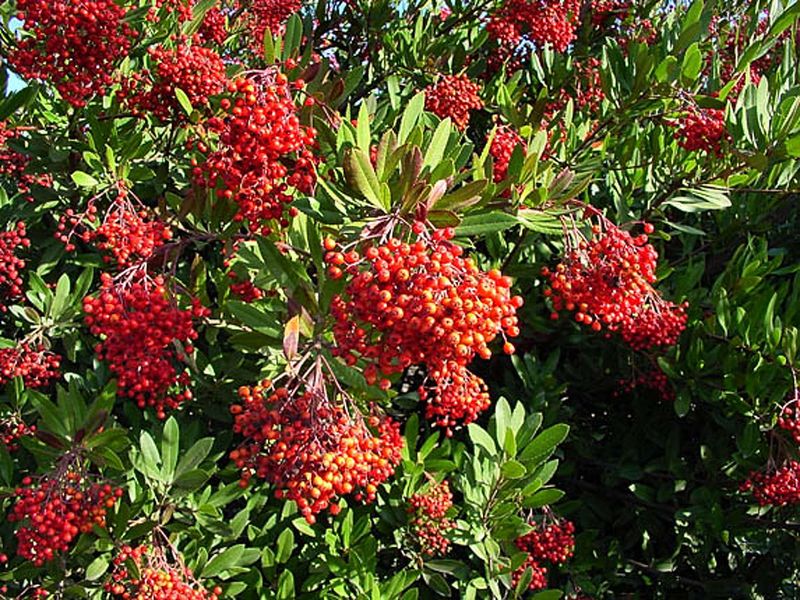
Hollywood was named for this shrub, or so the story goes, because early settlers mistook its red berries for holly. Toyon, also called California holly, is the closest thing to a perfect native hedge.
Its leathery leaves stay deep green all year, and the berries ripen right around the holidays.
Cedar waxwings, American robins, mockingbirds, and hermit thrushes can strip a loaded shrub in a few days. That timing matters, because winter is when insects are scarce and birds lean hard on fruit.
A row of toyon can act like a pantry that restocks itself every year.
Plant in fall so winter rain does the early watering for you. Space shrubs about 6 to 8 feet apart for a solid screen that reaches 10 to 15 feet tall.
Once established, it usually needs only an occasional deep summer soak inland and often none near the coast.
2. Coffeeberry
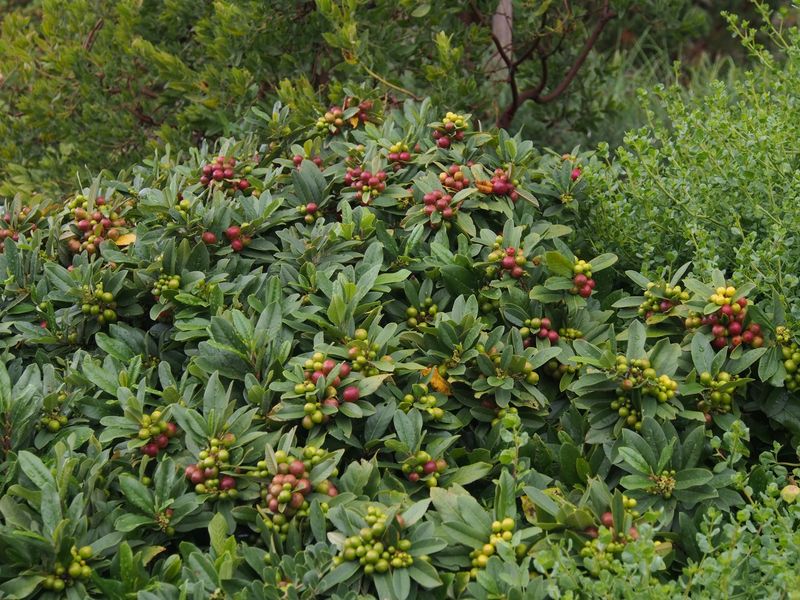
Picture a hedge that looks as tidy as a boxwood but quietly feeds half the neighborhood’s birds. That is coffeeberry in a nutshell.
Its fine, glossy foliage holds color through winter, and varieties like ‘Eve Case’ and ‘Mound San Bruno’ stay compact enough for front yards.
The berries shift from green to red to nearly black, so there is usually something ripe for a while. Thrushes, band-tailed pigeons, and jays all show up for them.
The small summer flowers also pull in native bees, so you get a pollinator bonus.
Coffeeberry tolerates clay, part shade, and summer dryness, which makes it forgiving for beginners. Light shaping after fruiting keeps it neat without cutting off next year’s crop.
3. Hollyleaf Cherry
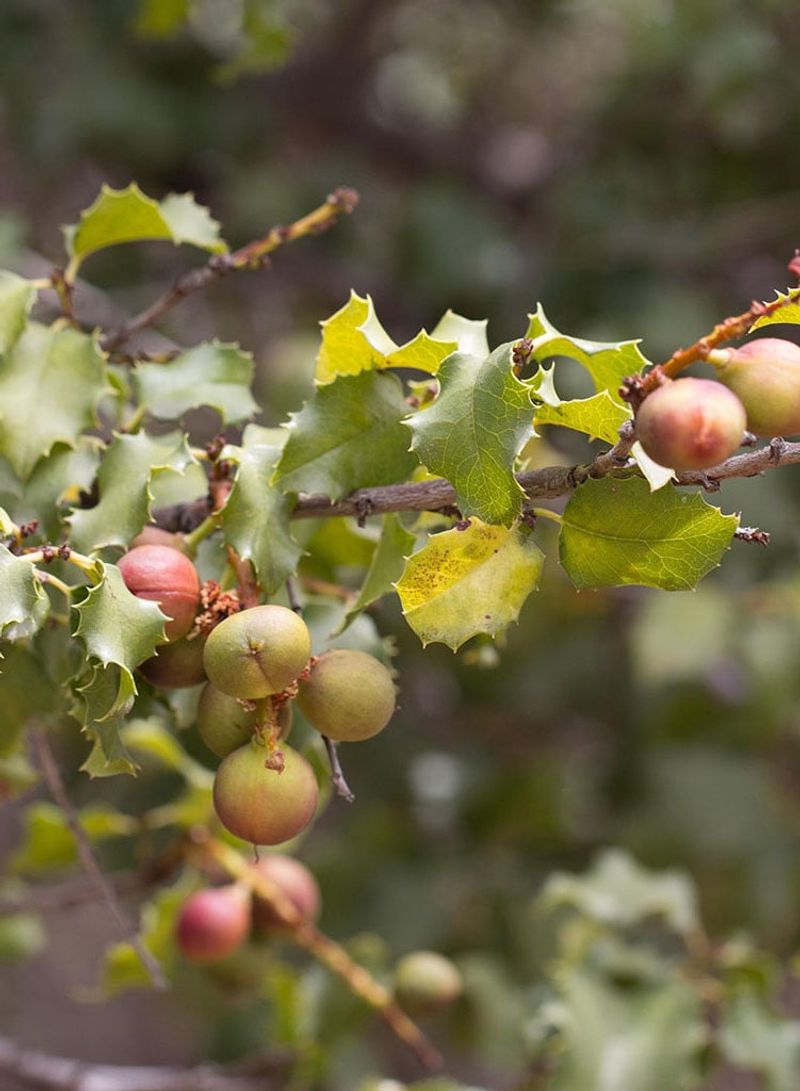
Spiny leaves, sweet fruit, and serious staying power. Hollyleaf cherry is the hedge for anyone who wants privacy that birds also treat as a fortress.
Its prickly, holly-like foliage stays dark and shiny in winter, and the tangle of branches keeps hawks and cats from reaching nesting songbirds.
Fruit ripens in late summer into fall, with some lingering into the cooler months. Grosbeaks, jays, and pigeons go after it eagerly.
Native Californians once ground the large pits into meal, a fun bit of history to share over the fence.
This shrub can reach 15 feet or more, so give it room. It is very drought tolerant once settled and does well on inland slopes.
Keep lower limbs trimmed and debris cleared if you live in a fire zone.
4. Pacific Wax Myrtle
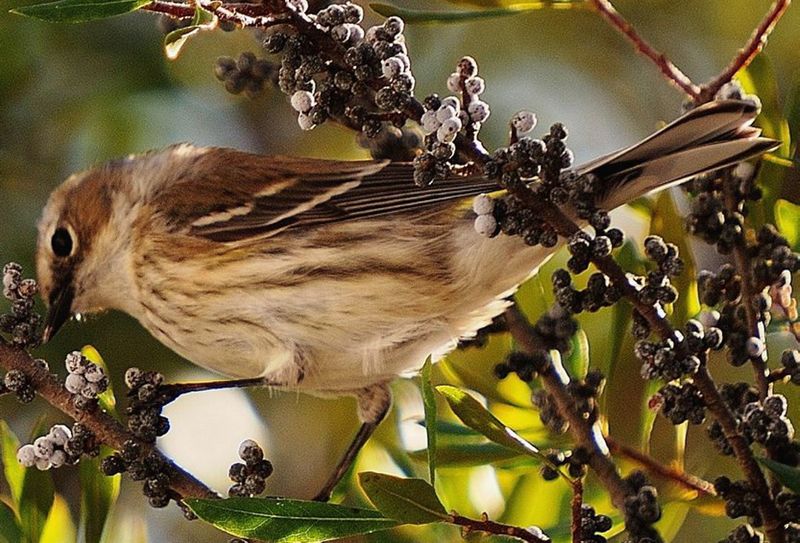
Coastal gardeners, this one is for you. Pacific wax myrtle grows into a thick, fragrant wall of narrow green leaves that shrugs off wind, fog, and salt spray.
It shears beautifully, so it can stand in for a formal hedge without the water bill of a lawn-style screen.
The tiny purple berries carry a waxy coating that yellow-rumped warblers can digest, which few birds manage. During winter, those warblers often flock to wax myrtle in noticeable numbers.
Bushtits and chickadees use the dense interior for cover on cold nights.
It appreciates more water than most natives here, especially inland, so it fits best near the coast or in yards with a bit of summer irrigation. Plant 5 to 6 feet apart for a tight screen.
5. Lemonade Berry
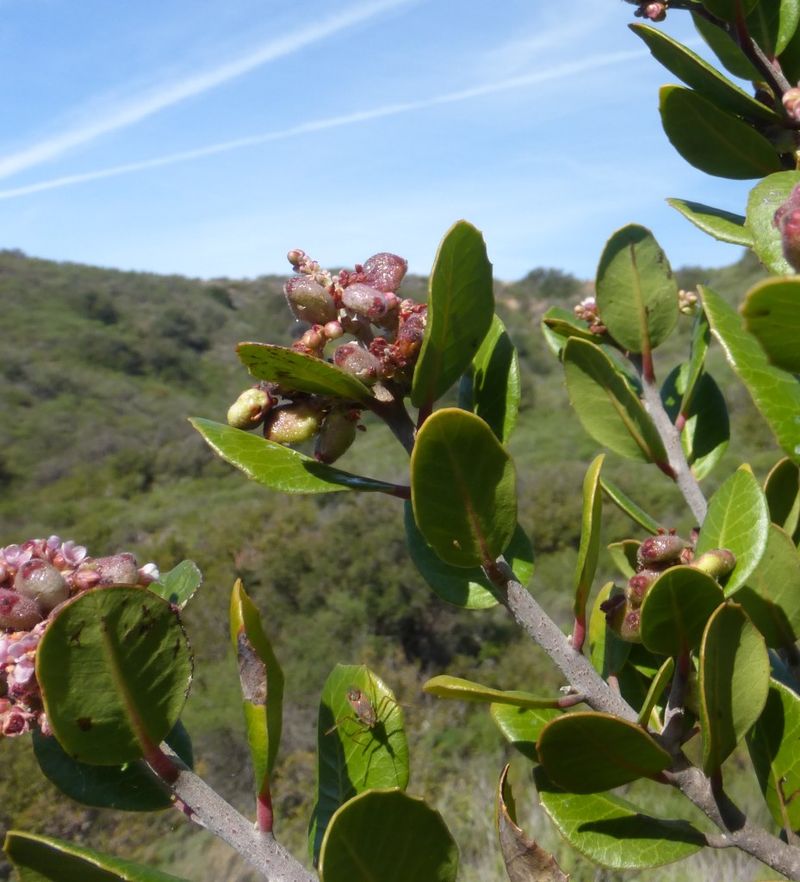
Kids love this one. Rub the sticky red berries in water and you get a tart, lemony drink, a trick Native peoples and early settlers both used.
Lemonade berry is a rugged Southern California native with thick, rounded leaves that stay green through every season.
Flowers appear in late winter, feeding early bees, and the fruit follows into spring and summer. Wrentits, quail, and thrashers nibble the berries and shelter under the low, spreading branches.
It thrives in sun, poor soil, and almost no summer water near the coast. Avoid overwatering, since that can shorten its life.
On slopes, it can also help hold soil in place.
6. California Wild Grape Screen
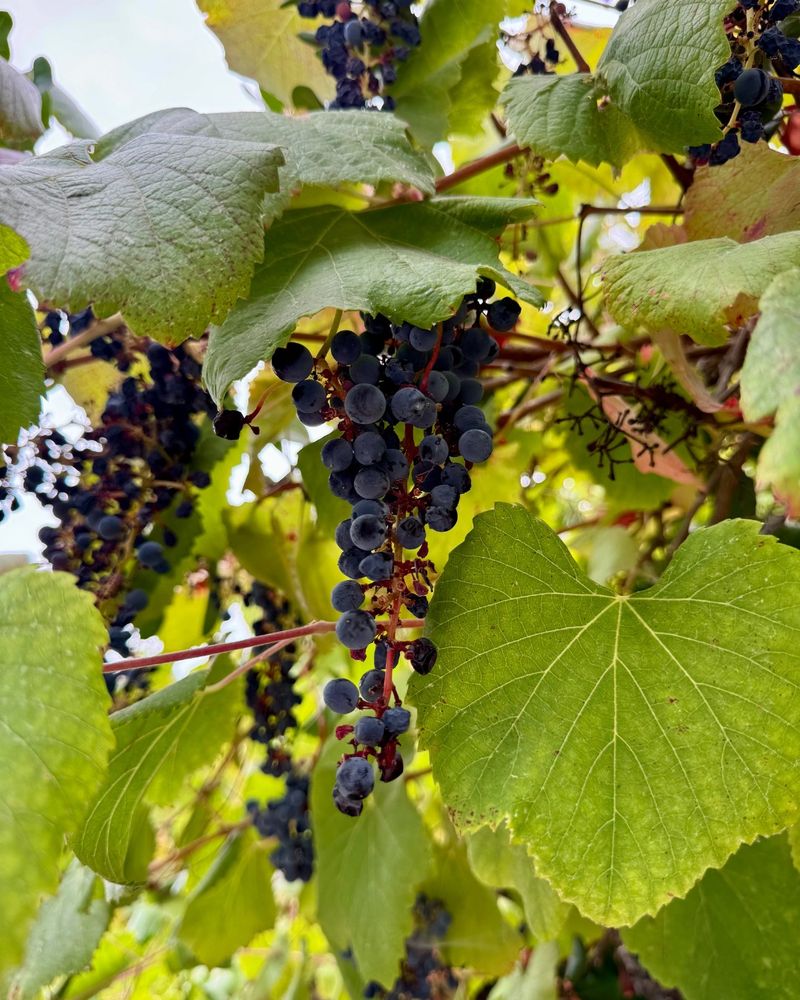
Okay, a vine is a bit of a curveball on a hedge list. Still, California wild grape trained on a fence becomes a leafy screen in a narrow side yard where a shrub would not fit.
In mild winters near the coast it may hold some leaves, though it usually drops them inland.
So why include it? The small purple grapes ripen in fall and feed bluebirds, robins, finches, and mockingbirds heading into winter.
Pair it in front of evergreen shrubs like toyon and you get both cover and an extra food layer.
It grows fast, handles heat, and needs only modest water once rooted. Prune hard in winter to keep it in bounds.
7. Catalina Cherry
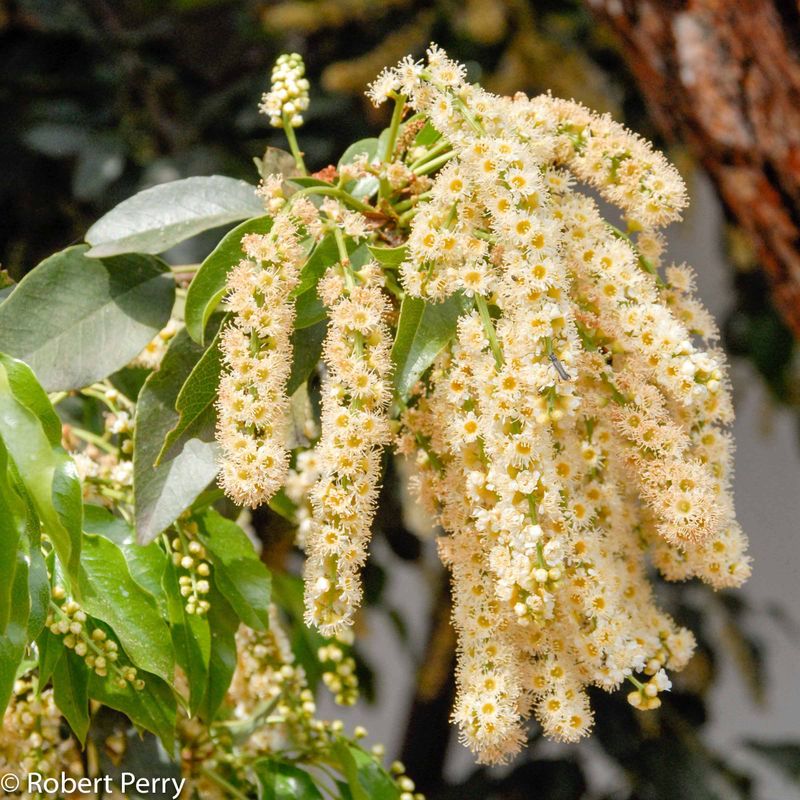
Native to the Channel Islands, Catalina cherry is the bigger, smoother-leaved cousin of hollyleaf cherry. Its glossy foliage looks lush even in January, giving a polished screen that fools people into thinking it needs regular watering.
It does not.
Purple-black cherries ripen in summer and early fall. Scrub jays, grosbeaks, and robins feast on them, and the fruit drop can feed ground birds too.
Keep it away from patios where fallen cherries might be messy.
Give it full sun to part shade and room to reach 20 feet or more. A single row can screen a two-story neighbor within several years.
8. Evergreen Currant
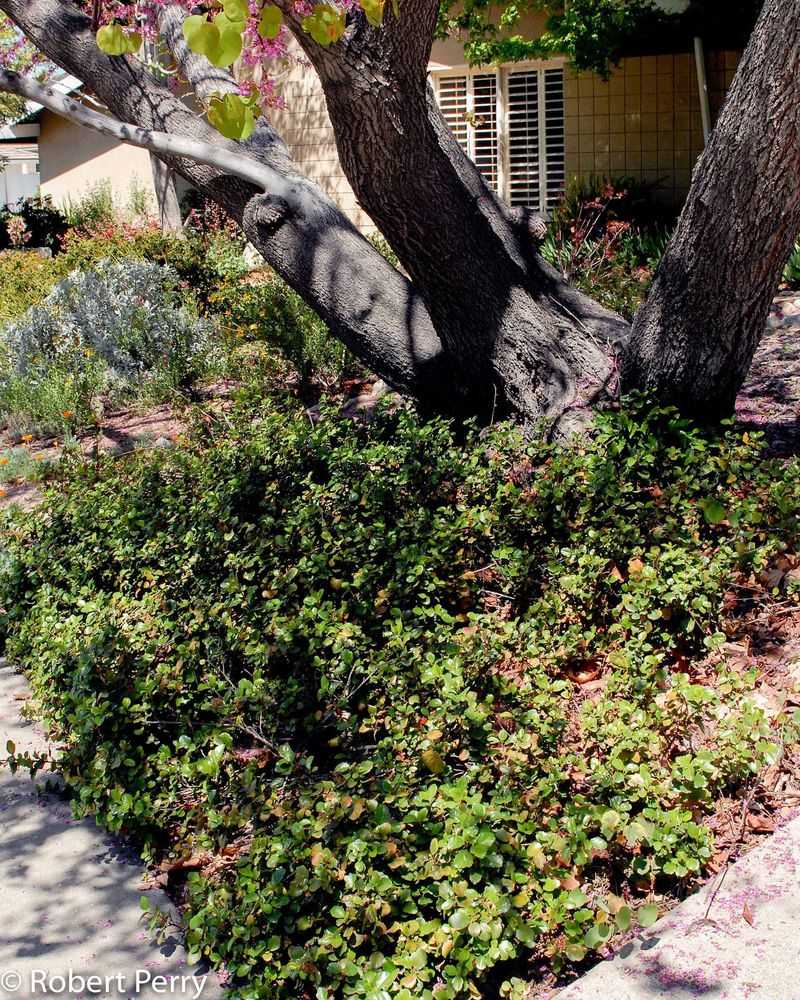
Shady spots under oaks frustrate many California gardeners. Evergreen currant, sometimes called Catalina currant, solves that with a low, arching mound of fragrant green leaves that thrives in dry shade where little else will.
It works as a short hedge or border, staying around 3 feet tall. Small pink flowers in late winter feed hummingbirds just as Anna’s hummingbirds are nesting.
Red berries follow and draw thrushes and towhees.
Keep it mostly dry in summer, especially under native oaks, which dislike irrigation.
9. Blue Elderberry
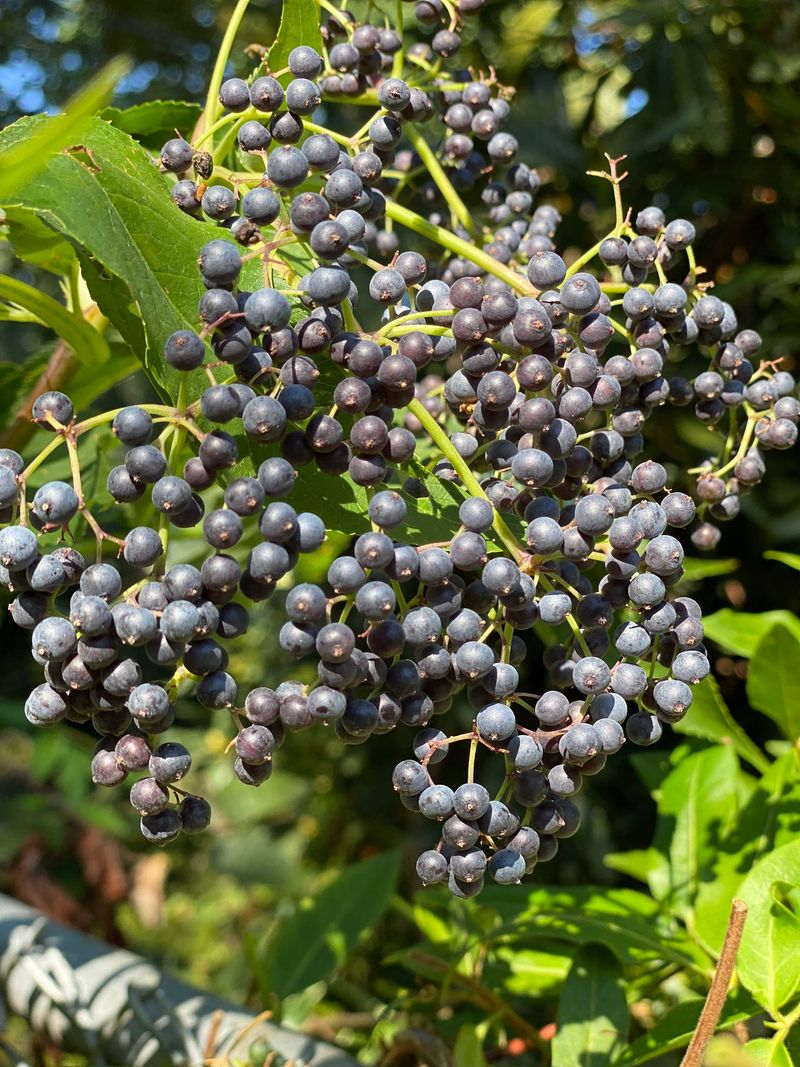
Think of blue elderberry as the anchor that ties a mixed hedge together. It is not fully evergreen inland, but near the coast it can hold leaves much of the year.
What it offers is sheer bird appeal.
Big clusters of dusty blue berries attract dozens of species, including bluebirds, phoebes, grosbeaks, and finches. Flat flower heads feed pollinators earlier in the season.
Mix it among toyon and coffeeberry so the hedge stays thick while elderberry adds a fruit surge.
It grows fast with little water. Leave some berries up for birds, and remember raw berries and stems are not safe for people.