
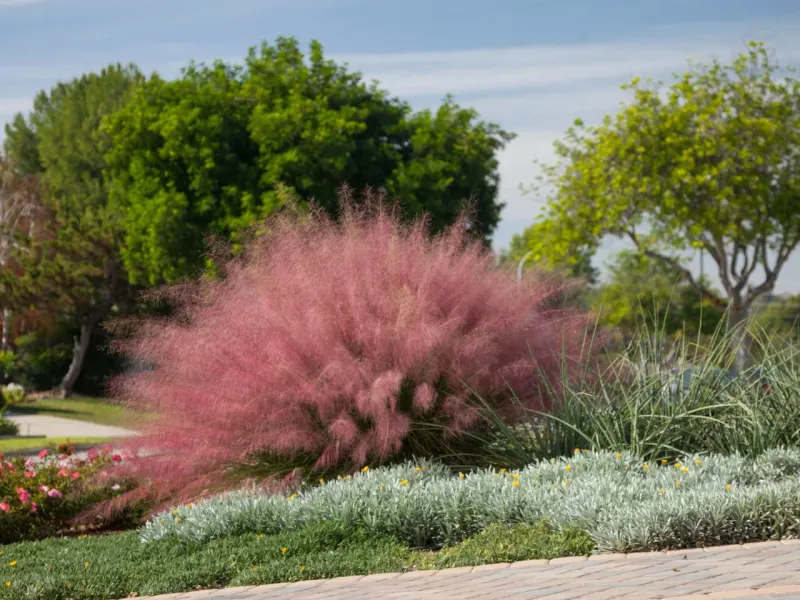
Picture a cloud of pink mist floating over a sunny Texas yard on a crisp fall morning. That soft glow comes from a grass many gardeners have seen along driveways, in beds, and in neighborhood plantings.
It can be planted during the cool months, when Central Texas weather often gives new roots a break from summer heat. Here is how to spot it, place it well, and give it a good start.
What creates that pink fall haze?
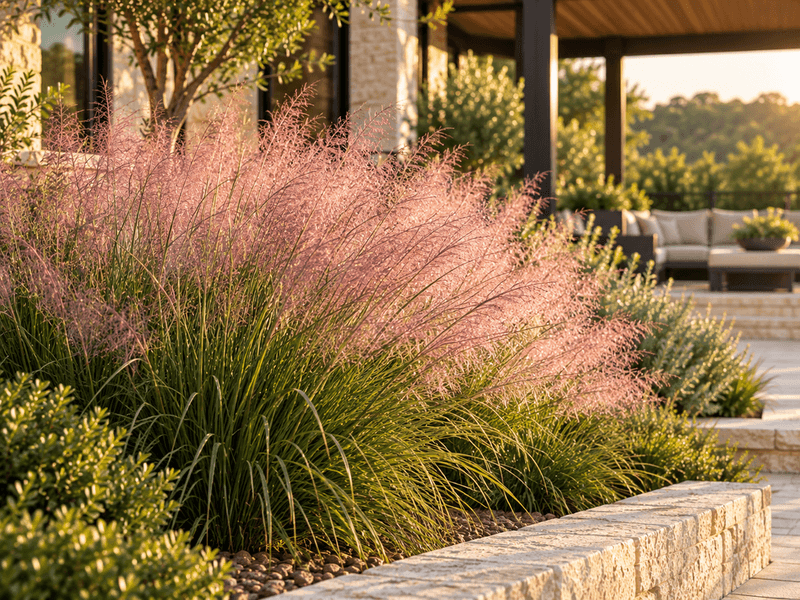
Drive through an Austin neighborhood in October or November and you may spot it: a fountain of fine green blades topped with a cloud of pink to purplish plumes. The grass behind that haze is Gulf muhly (Muhlenbergia capillaris), also sold as pink muhly or hairawn muhly.
It grows as a clumping perennial, so each plant forms a tidy mound instead of spreading across the yard.
The color comes from the flower heads. They are wispy and airy, and they catch the low light of fall so the whole clump looks backlit.
Sources describe the bloom as a fall event, with University of Georgia guidance listing September to October and NC State Extension listing September to November. Timing and drama shift with location and conditions, so one yard may peak weeks before another, and not every yard will put on the same show.
Then there is the phrase native Texas grass. Gulf muhly is native to Texas as a state, but that does not mean it belongs naturally to every part of Central Texas.
The City of Austin plant guide says it is not native to the Edwards Plateau or the Blackland Prairie, two ecoregions that cover much of the Austin area. Think of it as a Texas native that can be grown here, not a plant that was already growing wild in your yard.
Sun and drainage shape the display
Before you buy a single plant, spend a day watching your yard. Note which spots get sun from morning to late afternoon, and which ones hold puddles after a heavy rain.
Those two clues decide more about your fall show than anything else.
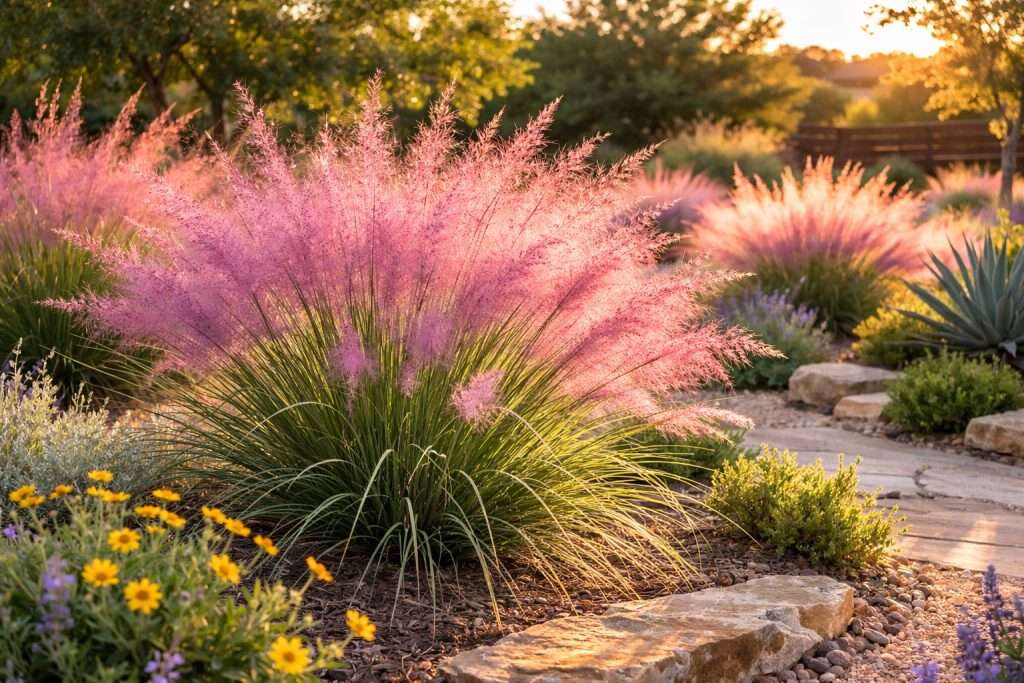
Gulf muhly does best in full sun. Light shade is tolerated, but Texas A&M’s plant portrait and NC State Extension point to sun as the better choice for flower color and form.
A clump in deep shade may stay green and leafy with thinner plumes, while one in a bright bed has a better chance at that full pink cloud. No site guarantees a particular intensity, but sun stacks the odds in your favor.
Drainage matters just as much. Choose a place where water drains away after rain, such as a gentle slope, a raised bed, or a gravelly border.
Skip low corners, spots near downspouts that overflow, and any area where the soil stays soggy for days.
A simple test helps. Dig a hole about a foot deep, fill it with water, and see whether it empties within several hours.
If water lingers into the next day, build up a mound or raised bed, or pick another site entirely.
Is winter a good time to plant in Central Texas?
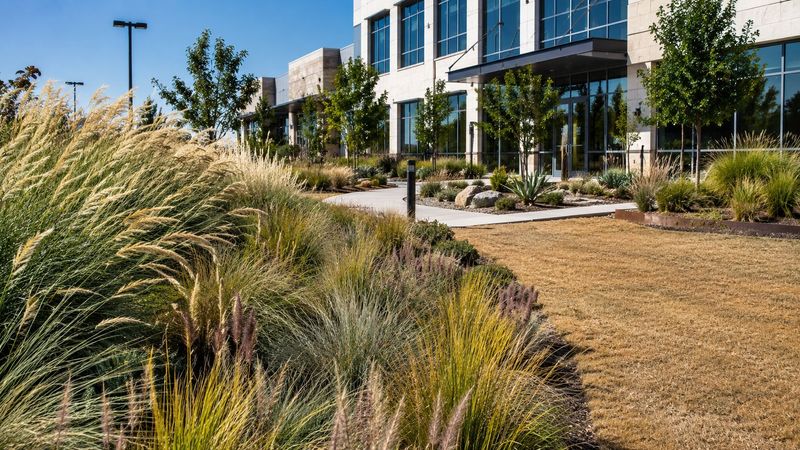
Winter planting sounds odd to gardeners used to colder states, but Central Texas runs on a different calendar. Cool months give roots time to settle in before summer heat arrives.
Texas A&M AgriLife guidance for Austin gardens recommends fall, winter, or very early spring for planting drought-tolerant landscape plants in general.
That is a window, not a ranking. Nothing here says winter is the easiest season for Gulf muhly in particular, and nothing says every winter day is fair game.
Austin’s October gardening checklist lists perennials and grasses among the things to plant, and it adds one condition: get them in before frost.
So read the weather, not just the calendar. A mild week in late fall or a calm stretch in January can work well.
A hard freeze forecast, soaked ground after days of rain, or a deep cold snap is a good reason to wait.
Your site counts too. A sunny, well-drained bed gives a new clump a far better shot than a soggy corner, no matter the month.
Cool-season planting gives you an opportunity, and the weather and the spot decide whether you can use it.
Nursery-grown clumps offer the simpler start
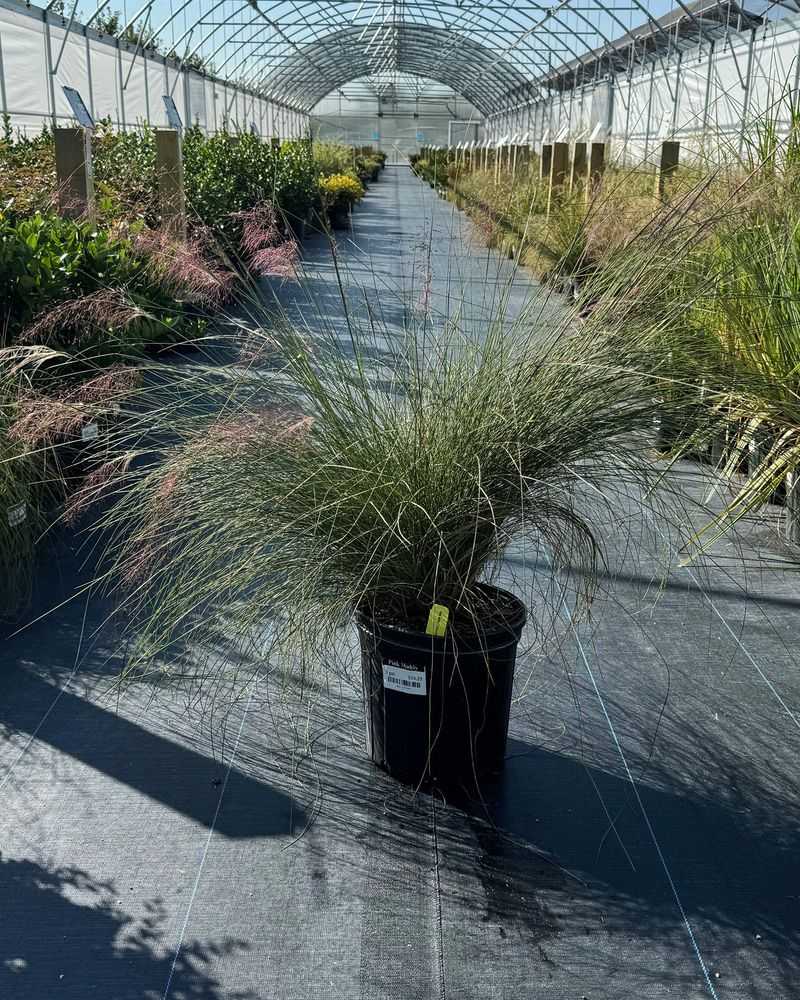
If you want a landscape result that is quicker and more predictable, buy plants from a nursery. A potted clump already has roots and a defined shape, so you are installing a plant, not hoping for one.
Seed is a different path. USDA’s fact sheet says winter sowing can produce plants ready for spring planting, which is a slower route than setting out a clump.
Seed also comes with a catch. Texas A&M’s plant portrait notes that germination can be low, so scattering seed in a cold bed is not the same as planting a mature clump.
At the garden center, read the tag. Gulf muhly is the pink-flowering grass most people picture, but ‘White Cloud’ is a cultivar with white blooms.
If pink is your goal, check the label and the cultivar name before you head to the register.
Spacing comes next. Allow roughly 2 to 3 feet between plants for natural clumps or a mass planting.
UF/IFAS lists 24 to 36 inches, and Austin’s plant guide lists a 2-foot spread. Tighter spacing fills in sooner, while wider spacing leaves each mound room to show its shape.
New plants need water, but not soggy roots
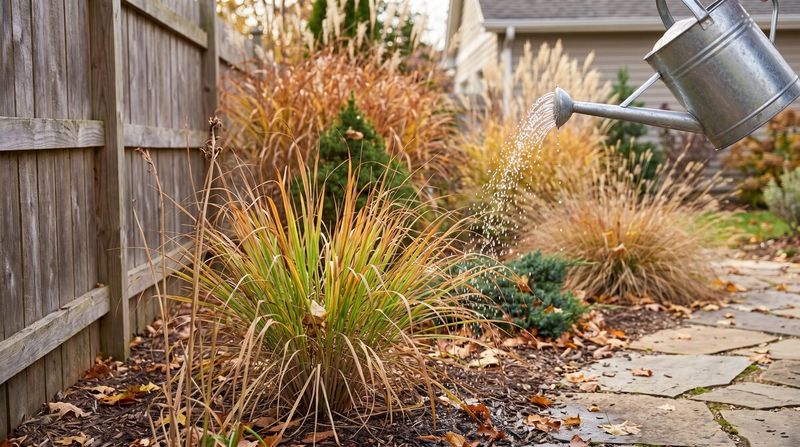
Established Gulf muhly handles dry spells well. A plant that went in last week is another story.
Its roots have not spread into the surrounding soil yet, so it depends on you for moisture while it settles in, as USDA’s fact sheet and general establishment practice suggest.
Water right after planting, then check the soil every few days. Push a finger a couple of inches down near the root ball.
If it feels dry, water slowly and deeply. If it feels damp, leave it alone.
Central Texas winters can surprise people because they are often dry. Texas A&M AgriLife’s Austin weather guidance reminds gardeners that dry stretches happen in the cool season, so a few weeks without rain may mean a new clump needs a drink.
Cooler temperatures slow evaporation, so you will water less often than in summer.
The flip side is too much water. Texas A&M notes a risk of root rot when Gulf muhly stays too wet in winter.
Yellowing, mushy crowns or soil that never seems to dry out are warning signs. Let the soil, not a fixed schedule, tell you when to water.
Late-winter cleanup prepares the clump for another season
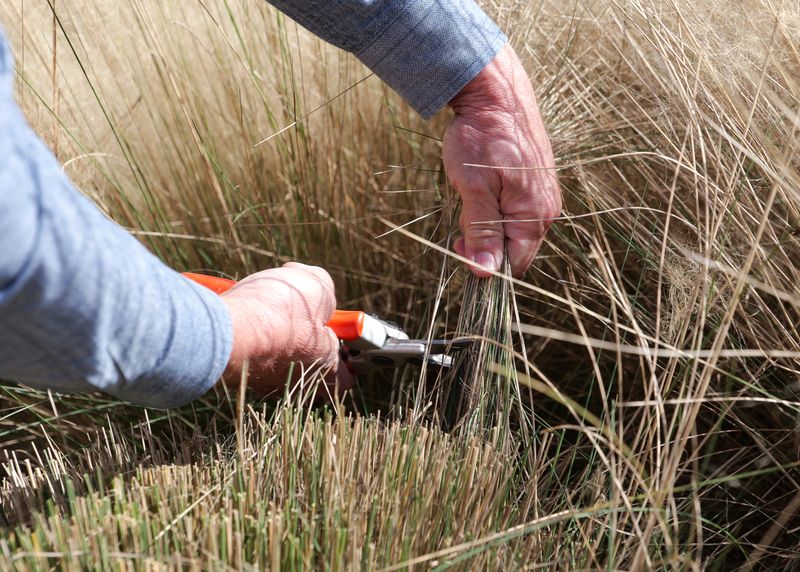
By late winter, last year’s Gulf muhly looks tired. The pink plumes have faded to tan, and the blades are dry and tangled.
This is the moment to tidy up.
Cut back the old foliage before new growth begins, as University of Georgia Extension advises for this grass. Sources do not agree on one cutting height, so follow the clump: remove the old growth and avoid damaging fresh green shoots coming up from the base.
Pruners or hedge shears both work, and a gathered bundle is easier to haul away.
Gulf muhly can give you a soft pink fall display at a sunny, well-drained site, but the show depends on your yard, the weather, and the plant you chose. Cool-season planting is an opportunity that works when conditions line up, not proof that this is the easiest choice.
A well-placed clump that gets a trim each year is a simple way to find out.