
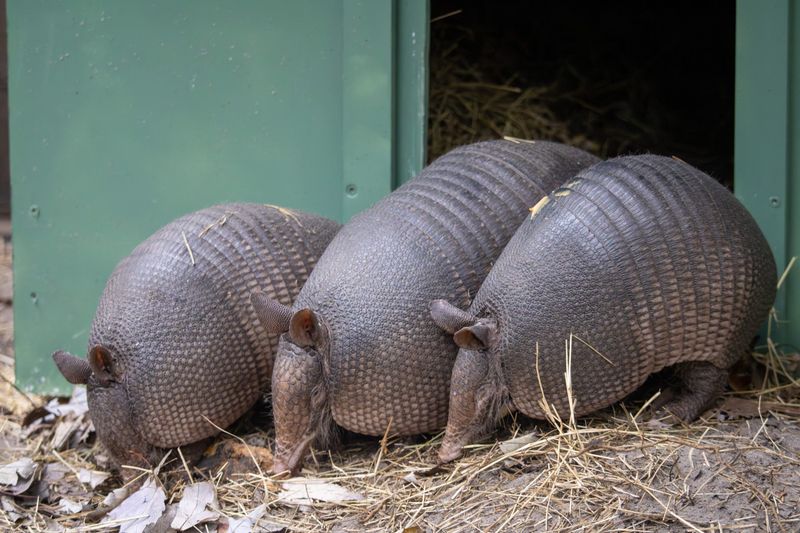
Wake up to fresh holes in the lawn, and you start wondering who was out there in the dark. In Central Texas, one possible answer is a small armored animal with a long nose.
It eats some creatures most of us do not want near the house, but it can also tear up turf. Here is what we know, what we do not, and what to do about it.
An armadillo is one possible nighttime digger
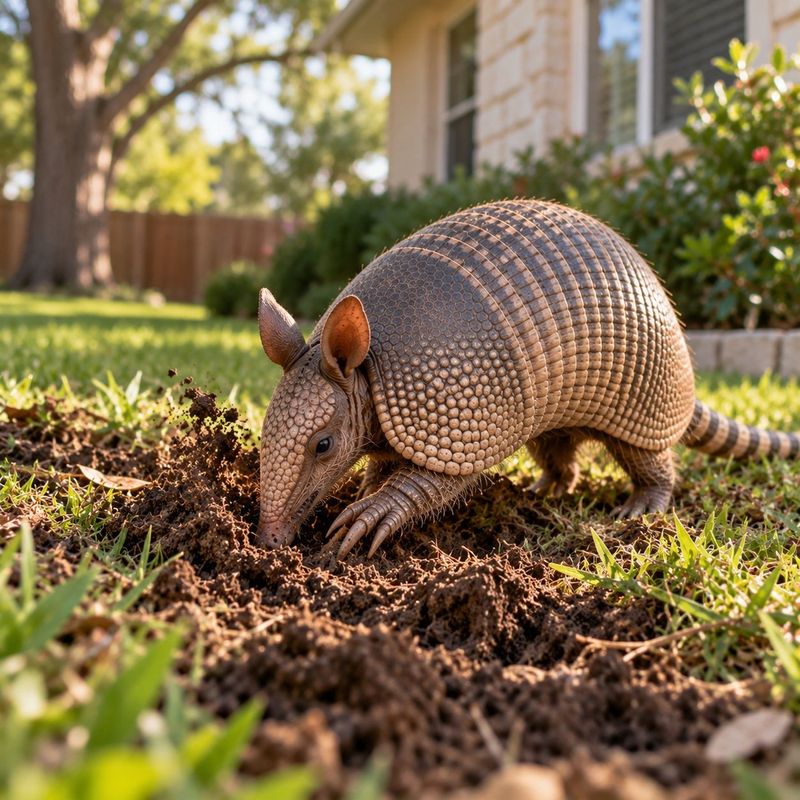
Fresh holes in the grass at sunrise point to something that worked in the dark. One plausible suspect is the nine-banded armadillo.
Texas Parks and Wildlife describes it as a nocturnal insect-eater found across most of Texas, except the western Trans-Pecos.
That range covers Central Texas, so the animal fits the neighborhood. Its foraging can leave holes in lawns, and it may also dig burrows.
Still, a statewide range does not point to one animal in your yard. Other creatures dig at night too, and a hole alone cannot tell you who made it.
So treat the armadillo as a candidate, not a verdict. Clues such as tracks, a burrow entrance, or a sighting on a trail camera would help narrow it down.
There is also a twist worth holding onto. An animal can eat things homeowners dislike and still leave a mess behind.
Both ideas can be true at once, and the rest of this article keeps them side by side.
Grub-seeking can leave visible holes
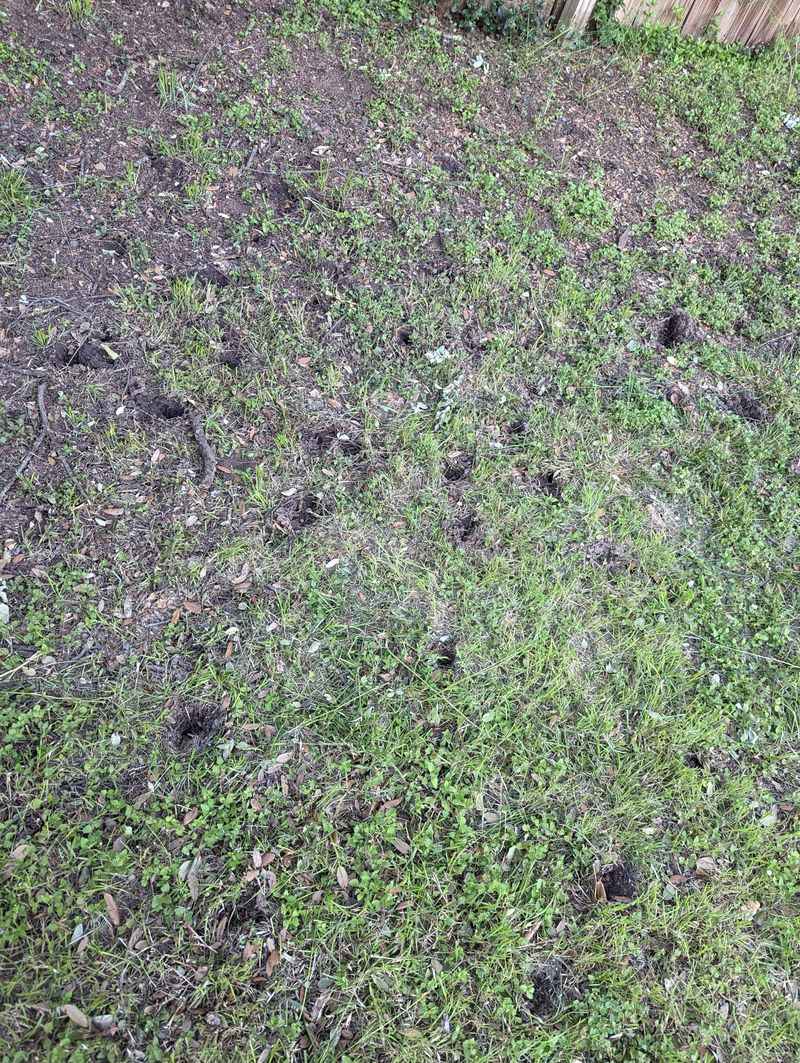
Armadillos use their noses and claws to root through soil. According to Texas Parks and Wildlife, they dig in lawns while searching for grubs, and they eat insects and other invertebrates.
The result can be small, scattered pits in turf.
That link between digging and food is useful, but it has limits. A hole does not prove an armadillo made it.
It also does not prove that grubs are harming your grass.
Think of the holes as a prompt to look closer. The animal has not diagnosed your lawn for you, and it has not solved a problem either.
It may be chasing a few grubs that were never hurting anything.
A good first step is simple. Walk the yard in daylight, note where the digging is clustered, and check whether the turf nearby looks thin, yellow, or loose underfoot.
Those details matter more than the holes themselves, and they set you up for the grub check described later.
Scorpions may be prey, but local control is unproven
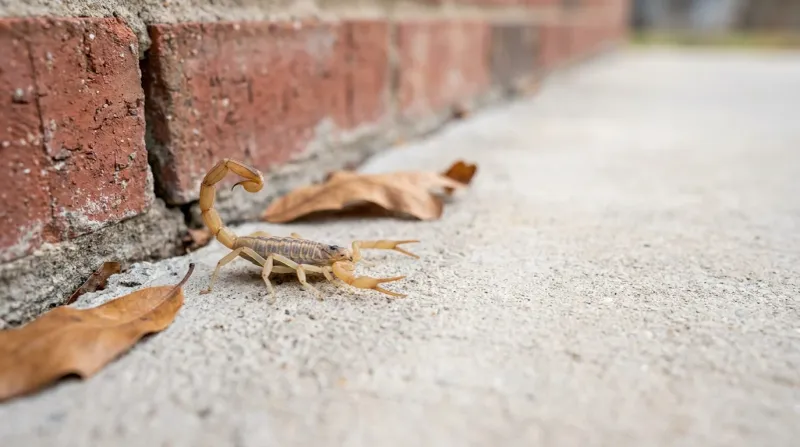
Scorpions give many Texans a reason to check their shoes. A University of Florida IFAS wildlife guide lists scorpions among the foods armadillos eat.
That tells us an armadillo may eat a scorpion if it finds one. It does not tell us that armadillos shrink scorpion numbers around Central Texas homes.
The guide comes from Florida, and it is not a count of scorpions before and after a visit.
So a night visitor is not a stand-in for home-focused prevention. Scorpions get into houses through gaps and shelter in clutter, and an animal rooting in the lawn does little about either one.
If scorpions worry you, put your effort where it counts, at the walls, doors, and woodpiles. A later section covers those steps.
The opossum tick-control claim does not hold up
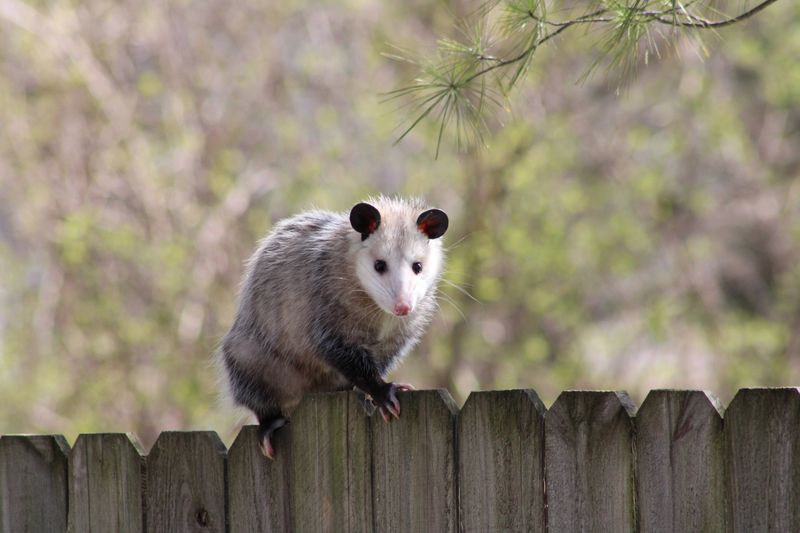
You may have heard that opossums gobble thousands of ticks each season. It is a popular line, but a peer-reviewed study found no ticks or tick parts in the stomachs of 32 wild Virginia opossums.
It also found none reported in 23 earlier diet studies.
The authors concluded that ticks are not a preferred food. That challenges the idea that opossums keep tick numbers down in a yard.
The study has a scope. Its 32 animals came from central Illinois, and it does not prove that an opossum could never swallow a tick by accident.
It simply shows no sign of the tick-vacuum behavior the myth describes.
This claim belongs to opossums, so do not move it over to armadillos. For ticks around your home, trimmed grass, cleared leaf litter, and checking yourself after time outdoors are better bets than counting on wildlife.
Foraging does not guarantee a healthier yard
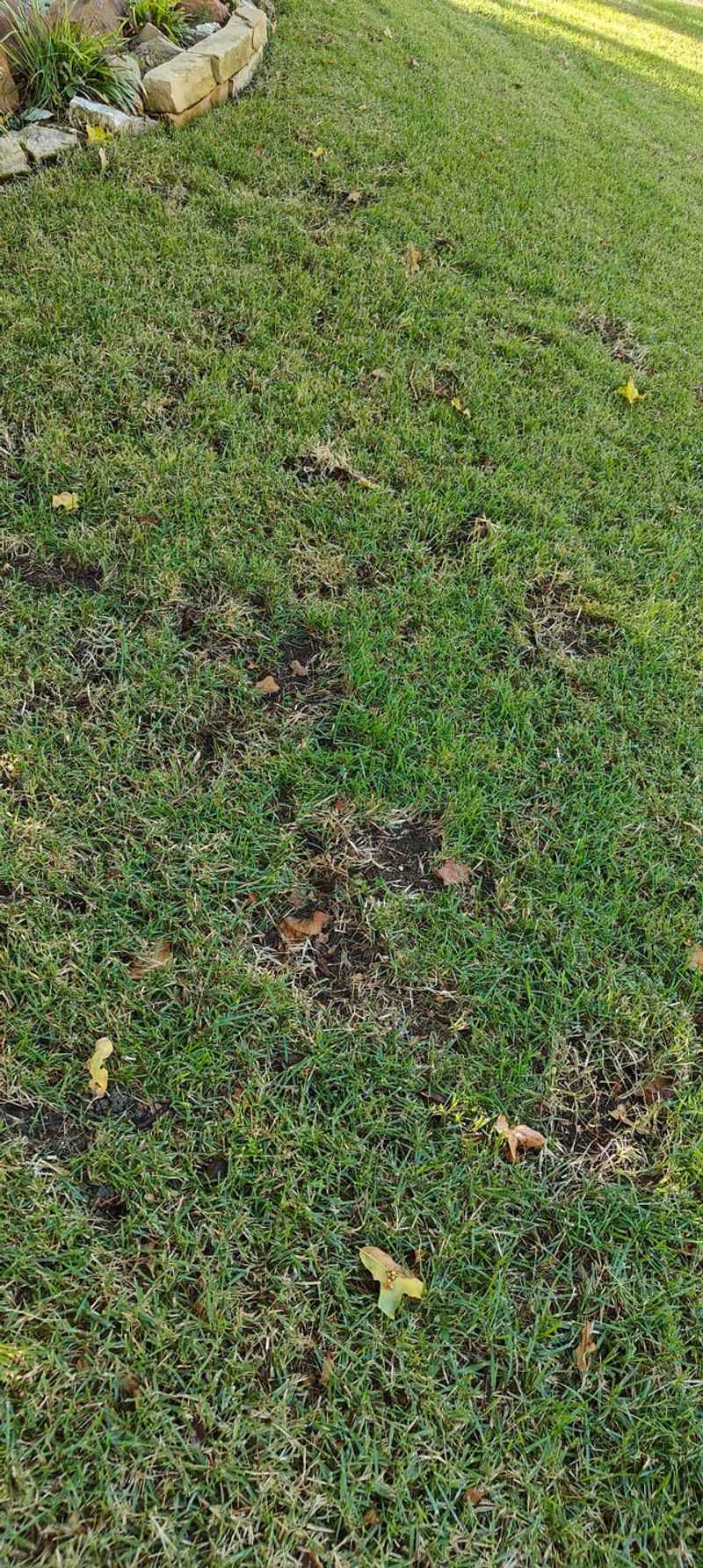
Every meal has two sides here. An armadillo may eat some insects, but its digging can damage lawns and gardens, as Texas Parks and Wildlife notes.
Nobody has measured whether the good outweighs the bad in a typical yard. We have no numbers showing better turf or healthier beds, and none showing yard-wide pest suppression.
So the overall effect is unknown.
That is why the holes should be read as a reason to inspect, not as a sign of help. Uprooted seedlings or torn sod are real costs you can see today.
It also does not mean every visitor must be chased off in a panic. Check the damage, learn what is going on below the surface, and choose a response that fits.
Calm information beats a quick reaction.
Confirm a grub problem before treating the lawn
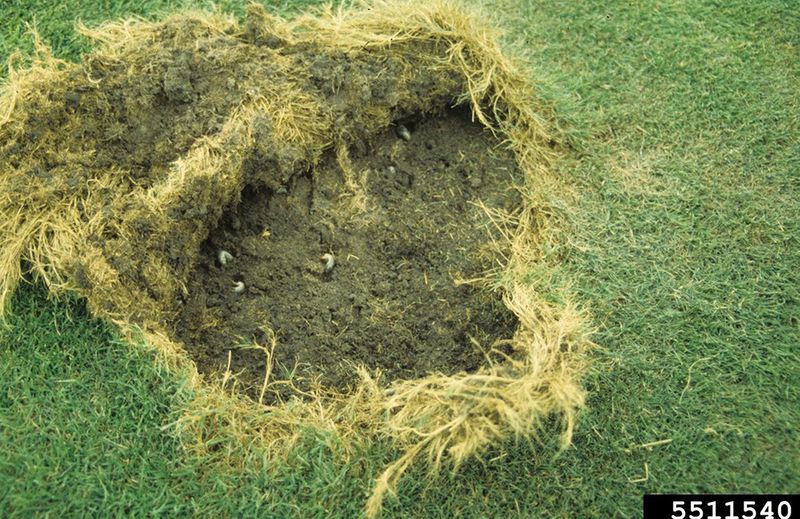
Before you treat anything, count. Cut back a small section of turf in several scattered spots, especially near damaged areas, and look for white grubs in the top few inches of soil.
Texas A&M AgriLife guidance on white grubs says more than five grubs per square foot can justify treatment. It also notes that some lawns with higher counts show no damage at all.
Treat that number as a lawn-management guide. It depends on the grub type and the turfgrass, and it says nothing about whether an armadillo helped or hurt your grass.
Confirm that grubs are the cause of the damage first. Digging alone is not proof, and thin turf can come from drought, shade, disease, or other pests.
If you do decide to treat, follow the directions on the product label closely. Label rules cover timing, amounts, and safety, and they exist for good reason.
A few minutes of sampling can save you money and spare soil life that was doing no harm.
Insecticide is not a dependable armadillo deterrent
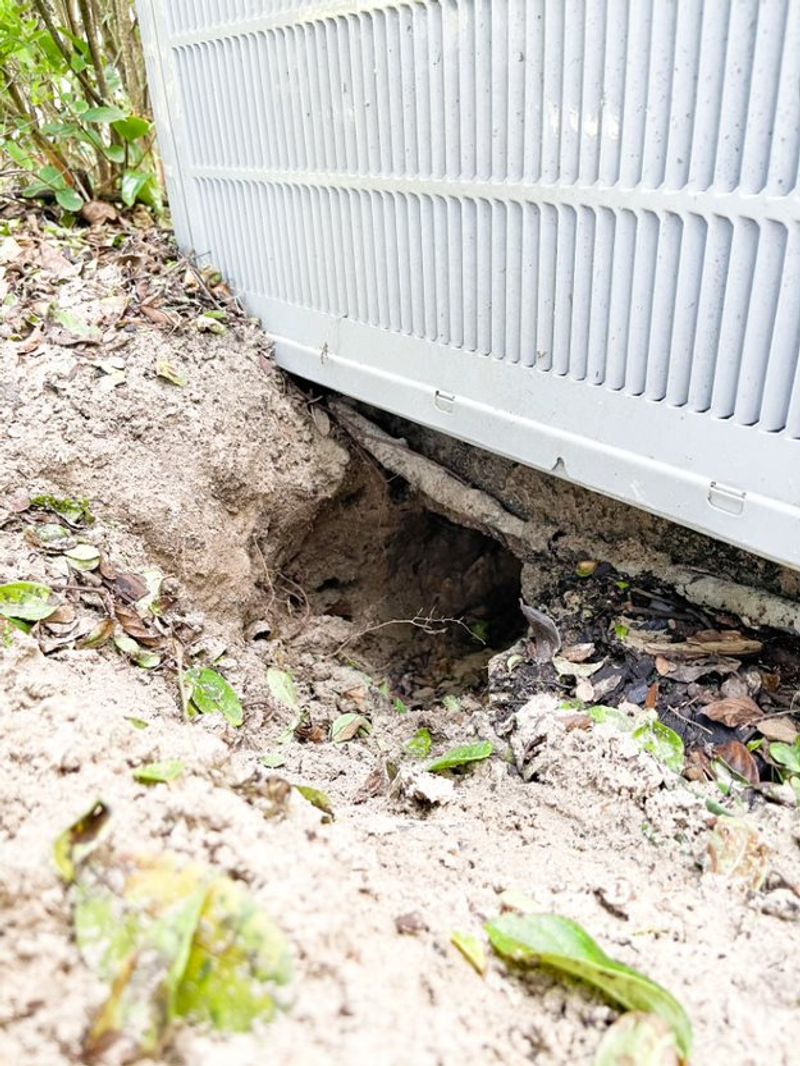
It seems logical that fewer grubs would mean fewer armadillos. A Texas A&M Wildlife Services guide warns otherwise: reducing soil insects may not stop the digging, and it could temporarily increase it as the animal searches harder for food.
Treatment can also affect other soil life, including organisms that help keep a yard healthy. Spending money and adding chemicals for a result that may not come is a poor trade.
This is different from treating a confirmed lawn problem. If your sampling shows a grub count and damage that call for action, follow the appropriate guidance and the product label.
The point is the reason for treating. Do it because the turf needs it, not because you hope to drive off a nighttime visitor.
Use bark-scorpion guidance to reduce access to the house
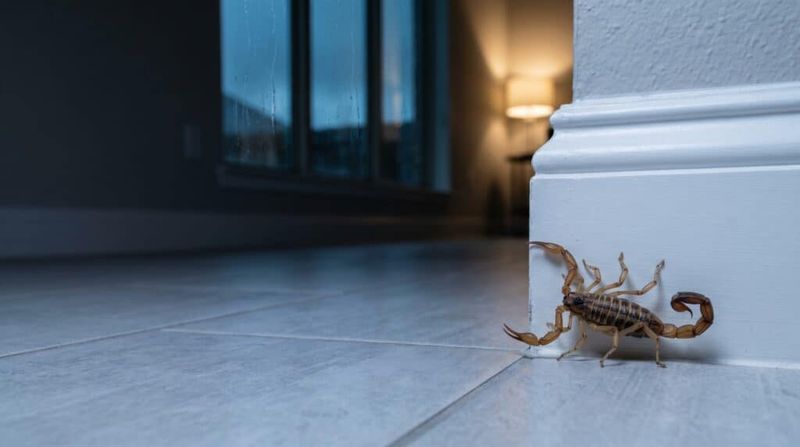
For scorpions, the work starts at the house. Texas A&M’s bark scorpion action plan focuses on keeping them out and removing places they hide.
Its steps include sealing cracks and utility gaps, keeping door sweeps and screens in good repair, and clearing debris or firewood from near the structure. The plan does not recommend relying on pesticides as the only control.
Keep the scope in mind. This guidance is written for bark scorpions, so it does not prove the same results for every scorpion species.
It also means an armadillo cannot take over the job. A walk around the house with a flashlight and a tube of sealant does more than any visitor in the yard.
Start with the doors and the pipe openings, then move the woodpile away from the wall.
Keep your distance and respond appropriately to a bite
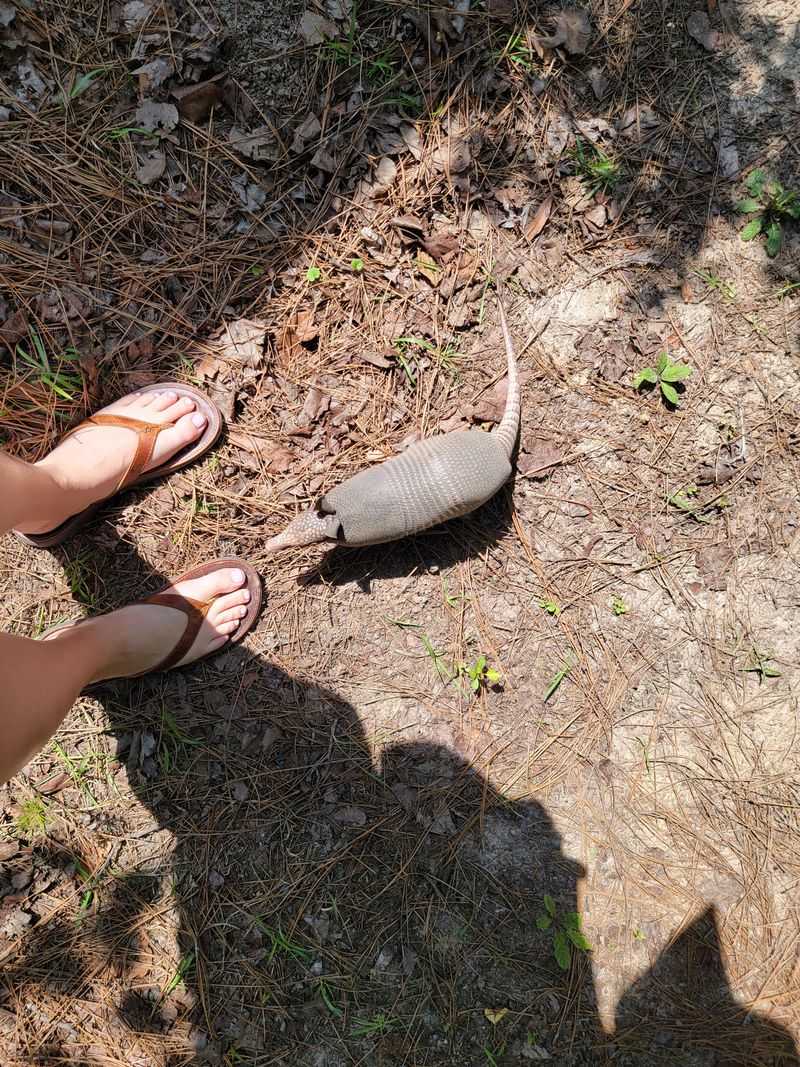
Watch from a distance and do not handle an armadillo. CDC guidance names prolonged or frequent direct contact with infected armadillos or their environment as a possible leprosy exposure route.
An ordinary sighting is not that.
Rabies is a separate matter. Texas health officials classify armadillos and opossums as low rabies risk, which is not the same as immune.
If one bites you or scratches through your skin, report it to your local rabies-control authority.
So where does that leave the nighttime visitor? It may eat grubs and perhaps a scorpion now and then, but that is possible prey, not proven pest control or yard protection.
The best view is a curious one from the patio window.