
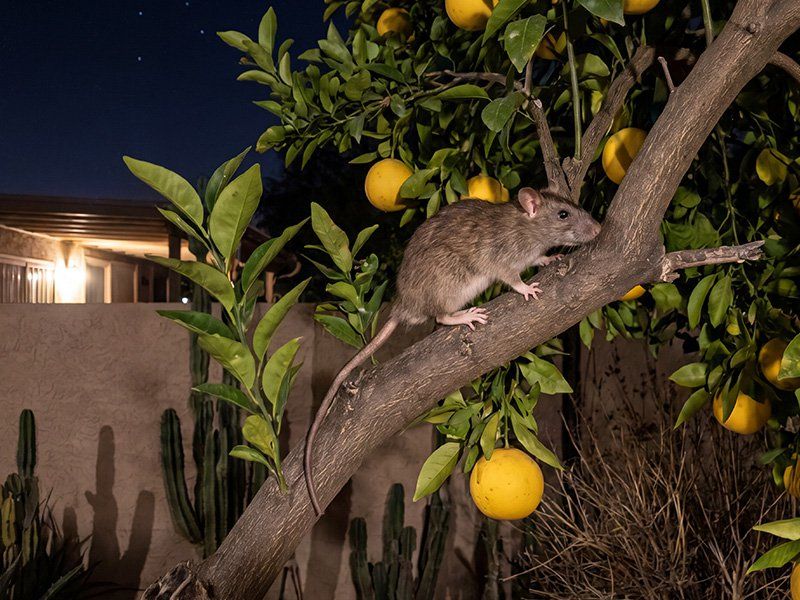
If you grow citrus in your California backyard, you may have walked out one morning to find oranges hollowed out and still hanging on the branch, with nothing but a thin rind left behind. Roof rats are expert climbers and well-documented citrus feeders, and as fruit ripens in late summer and fall, the damage can become hard to ignore.
Knowing what you are actually dealing with, and how to cut off the most common routes into your tree, can make a real difference without reaching for a single drop of poison.
Citrus is a well-documented target, not a universal first choice
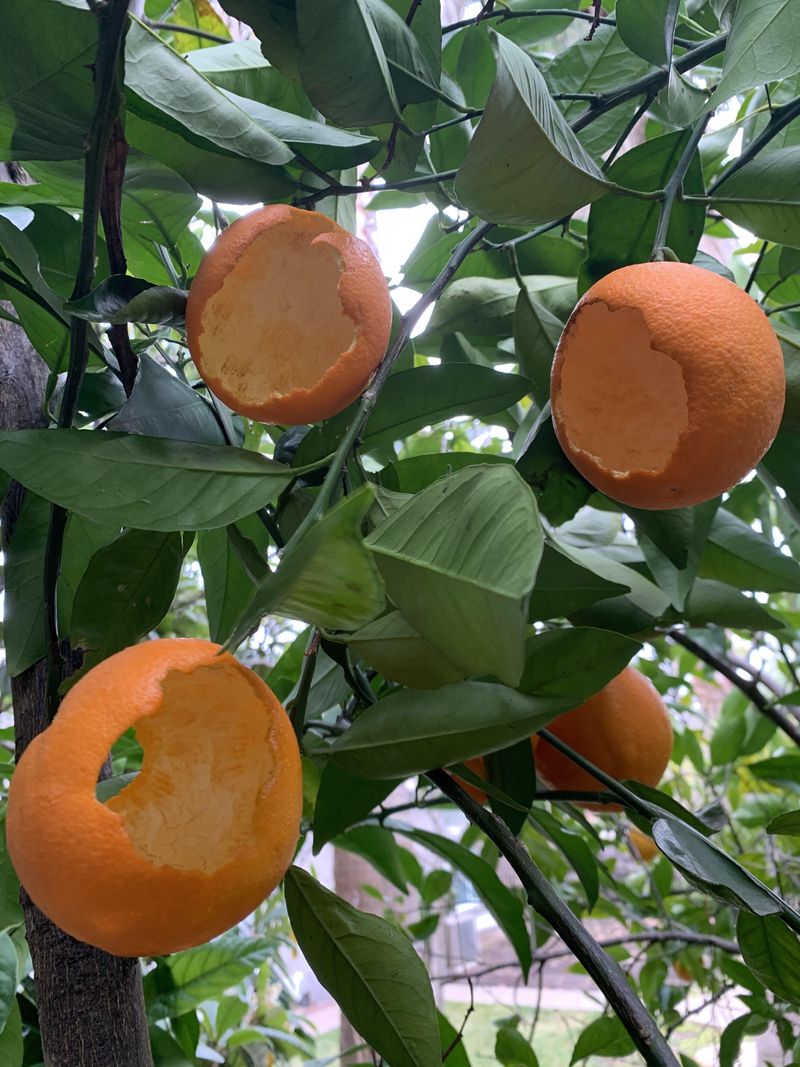
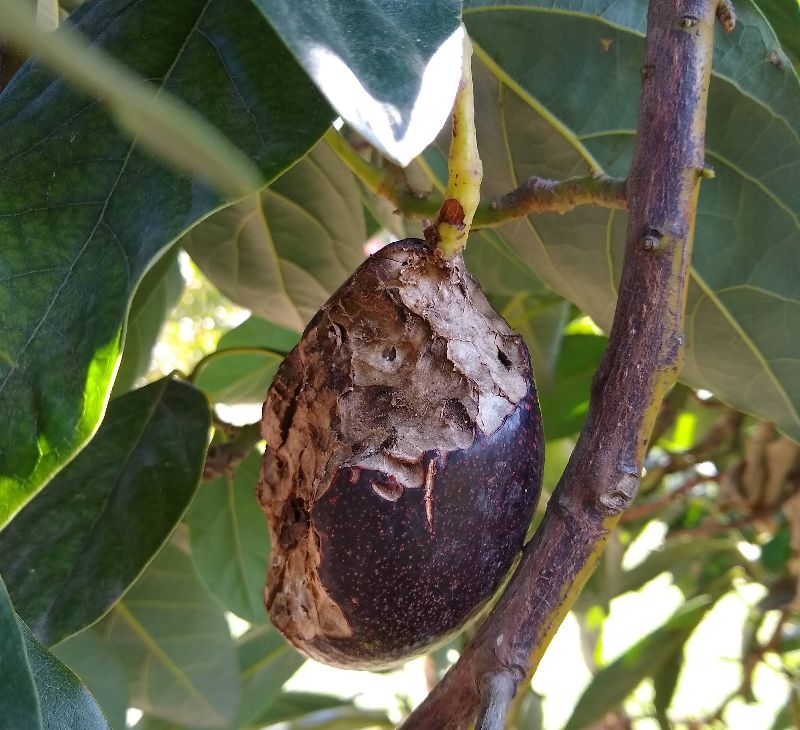
Roof rats have a well-earned reputation as citrus feeders in California, and that reputation is backed by solid documentation. UC IPM’s home and landscape pest notes specifically identify citrus and avocados as the tree fruits most commonly targeted by roof rats, describing the distinctive sign of hollowed orange rinds left hanging on the branch after rats remove the interior through a small hole.
That kind of damage is specific enough to be genuinely useful for identification, and it puts citrus at the center of the roof-rat conversation for California homeowners.
What the evidence does not support is the idea that citrus is always the first tree a rat will go after, or that every yard follows the same sequence. Feeding depends heavily on which fruit is currently ripening, how easily a rat can reach the canopy, what shelter is available nearby, and the size of the local rat population.
A yard with a mature lemon tree growing against a fence and a neighbor’s avocado hanging over the wall may see avocado damage first, or simultaneous damage on both trees, depending entirely on local conditions.
The UC IPM agricultural citrus guide also notes that roof rats feed on fruits, nuts, and a range of other foods, which means any yard offering multiple food sources gives rats options. Avocado is explicitly listed alongside citrus as a documented target.
So while an orange tree is a logical place to start your inspection, it should not be the only place you look.
A UC Master Gardeners Santa Clara County tip sheet adds a useful frame: rats tend to appear when fruit begins to ripen, which means the tree currently holding the most accessible, ripe fruit is the most likely first stop in any individual yard. Citrus earns its reputation as a frequent, well-documented target, and that is reason enough to treat it as your starting point for inspection and defense.
Fall can reveal damage without creating a rat season
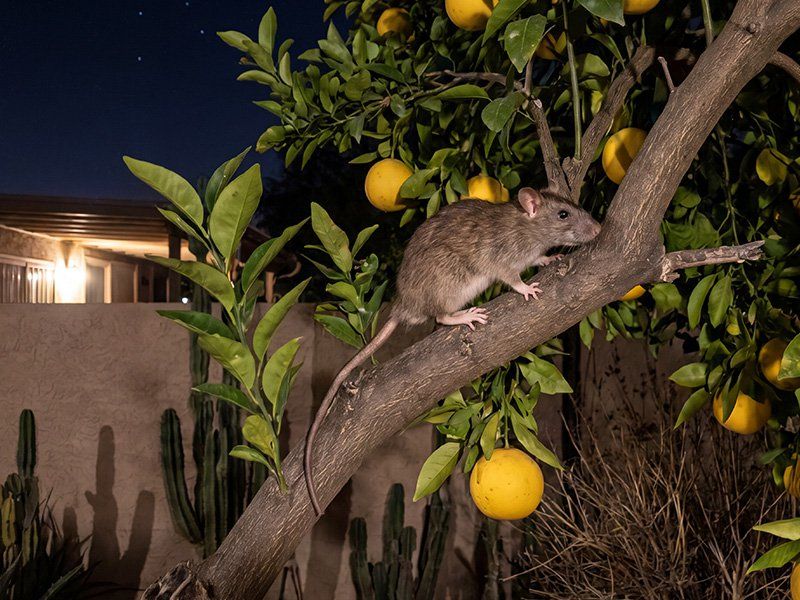
Roof rats do not hibernate, go dormant, or suddenly switch on in September. UC IPM’s citrus pest management guide states plainly that roof rats are active throughout the year.
The reason fall feels like a peak season to many California homeowners has less to do with rat biology and more to do with fruit timing: when oranges, mandarins, and other late-season citrus varieties begin to ripen and hold on the tree, the food source becomes more obvious, more accessible, and more attractive.
Fallen fruit also accumulates faster as temperatures drop and harvest timing gets irregular. A few overripe oranges sitting on the ground under a tree for several days is a reliable attractant, and the resulting damage is easy to notice when you finally go out to pick.
Timing varies considerably with citrus variety, local microclimate, and how consistently the tree is harvested. A navel orange ripening in November in the Central Valley may draw attention at a different point than a Valencia ripening in coastal Southern California in late spring.
A study monitoring roof rats in California citrus during autumn and winter measured rat abundance and evaluated monitoring methods during that period. It documented rat presence and activity, but it does not establish that fall is the universal high point for roof-rat populations statewide, and it does not rank fruit preferences.
The practical takeaway is straightforward: when your citrus is ripening or when fruit has been sitting on the tree or ground for days, your tree is more likely to attract feeding activity, regardless of the calendar month.
Year-round vigilance is more useful than a seasonal mindset. If you grow citrus, checking for damage and picking ripe fruit promptly is a habit worth maintaining from summer through winter, not just during the weeks when you expect rats to show up.
Hollow rinds and nighttime clues identify likely rat damage
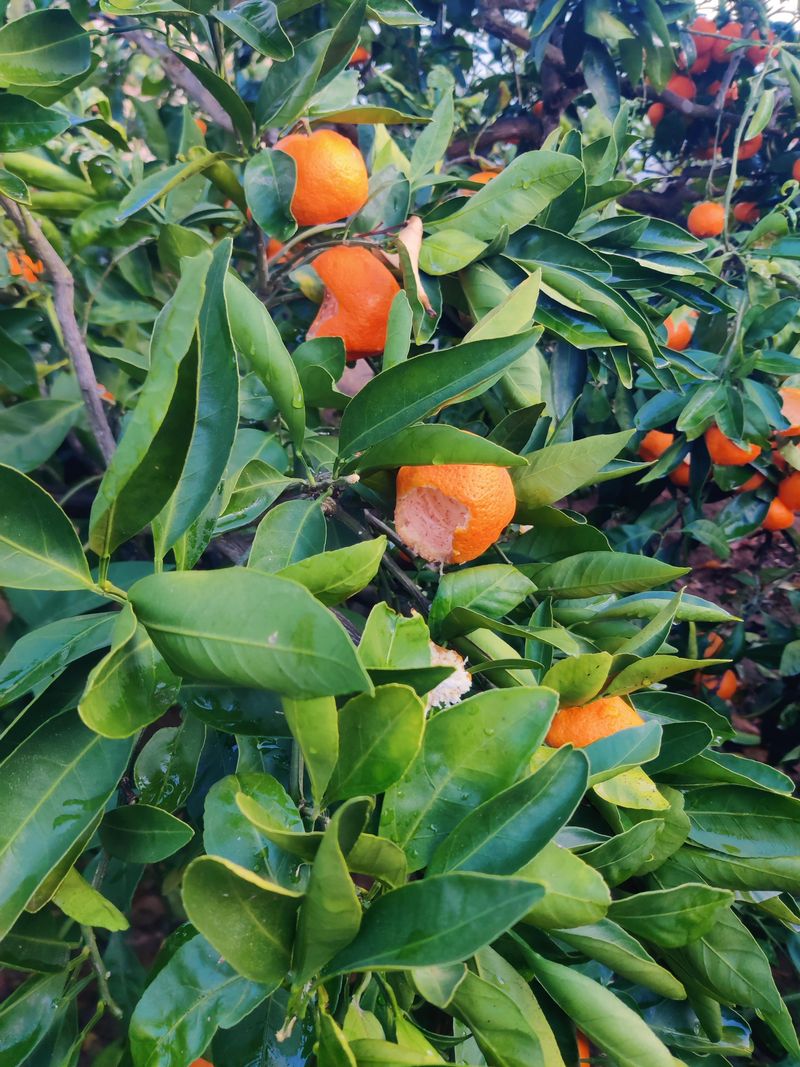
Finding a piece of missing fruit does not automatically point to rats. Squirrels, opossums, birds, and other backyard wildlife all feed on citrus and tree fruit, and their damage can look similar at first glance.
Before taking any action, look for the signs that are specific enough to narrow your diagnosis.
The most telling sign of roof-rat feeding on oranges is a hollowed rind left hanging on the branch. Rats typically chew a small hole and remove the interior, leaving the skin mostly intact.
On lemons, the pattern is slightly different: UC IPM’s home and landscape pest notes describe rats chewing the rind while leaving much of the flesh attached. Either pattern, combined with gnaw marks on nearby bark, limbs, or fruit stems, points more specifically toward rats than a fruit simply disappearing from the tree.
Supporting evidence matters. Rat droppings near the base of the tree, along fence rails, or on nearby ledges are a strong indicator.
Runways, the greasy, worn paths rats create along regular travel routes, may appear on branches, fence tops, or roof edges. Motion-activated cameras placed near the tree at night are one of the most reliable confirmation tools available to a homeowner, since roof rats are primarily nocturnal and rarely seen during the day.
UC IPM’s vertebrate damage identification guide for citrus and the corresponding avocado guide both note that opossums and other animals can produce similar damage, particularly on avocados. Squirrel damage tends to occur during daylight and often leaves more scattered debris on the ground.
One more identification step matters before any lethal control: California has native rodents that can resemble roof rats. UC IPM’s citrus roof-rat page specifically warns that endangered kangaroo rats and the riparian woodrat are protected by law and may be mistaken for pest rats.
If you are unsure what you are dealing with, consult your local UC Cooperative Extension office or a licensed pest control professional before setting any traps.
Break the canopy’s connections before rats reach the fruit
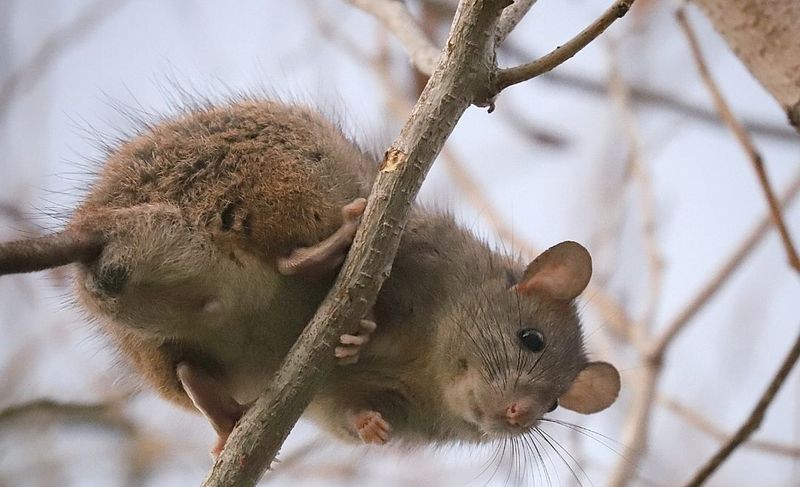
Roof rats are exceptional climbers, but they prefer to travel along connected routes rather than scaling an isolated trunk from the ground. Branches that rest against a fence, touch a neighboring tree, or brush against a roofline give rats a highway straight into your canopy.
Cutting those connections is the most direct physical step a homeowner can take to reduce access.
The practical target is a clear gap between your citrus tree and anything a rat might use to reach it. UC Master Gardeners Santa Clara County guidance recommends maintaining roughly a 2- to 3-foot separation between the tree and nearby fences, adjacent trees, and other climbing routes where that distance is practical.
That gap applies to lateral connections at the canopy level, not to every situation.
Roof clearance is a separate consideration. UC IPM’s pest notes recommend pruning limbs that come within about 3 feet of a roofline, and the detailed pest notes discuss removing limbs within 6 feet of roofs as a more conservative standard.
If your citrus is growing near a structure, use the UC guidance that matches your situation rather than applying a single number to every route.
Dense shrubs growing against the base of the tree or running along a fence line also deserve attention. Rats use thick ground-level vegetation as shelter and as a staging area before climbing.
Thinning those plants or pulling them away from the fence and tree base removes a step in the route.
Pruning reduces the most common access paths, but it does not seal every one. Rats can and do climb bare trunks, particularly if the trunk is textured or the tree is large.
They may also arrive along utility lines, from a neighboring yard with its own fruit trees, or from a roofline that connects to a nearby structure. Pruning is a meaningful first step, not a complete solution on its own, and it works best when combined with the sanitation and exclusion steps that follow.
Remove the food and shelter that keep rats nearby
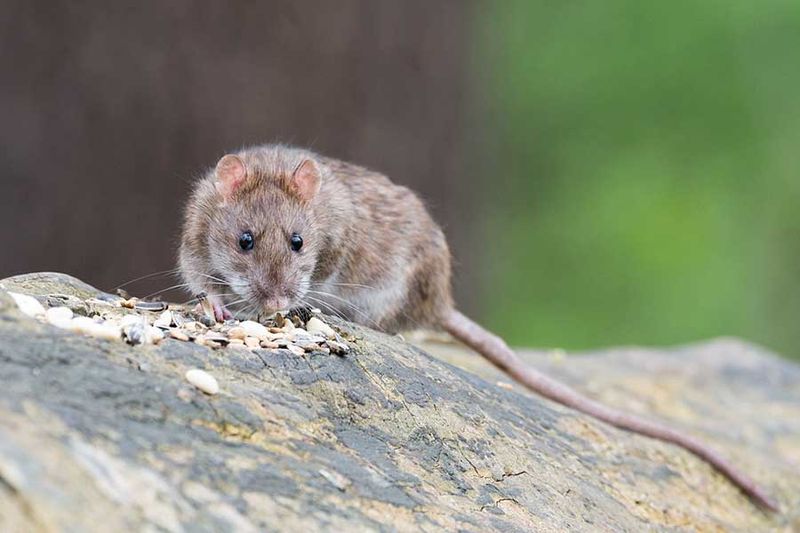
Pruning disconnects the easiest travel routes, but rats that are already established in a yard have other reasons to stay. Removing those reasons is what makes the pruning work more effectively over time.
The goal is to reduce the food and shelter available around the tree so the yard becomes a less attractive place to live.
Start with fallen and overripe fruit. Any citrus that drops to the ground or stays on the tree past peak ripeness is a food source that does not require a rat to climb at all.
Picking ripe fruit promptly and removing fallen pieces before they sit overnight cuts off the easiest feeding opportunity. The same logic applies to other trees nearby: fallen nuts, rotting avocados, or unharvested figs all add to the food supply that keeps rats in the area.
UC IPM’s home pest notes recommend removing woodpiles, garden debris, and dense ground-level clutter that provides shelter near the tree. Garbage cans should have tight-fitting lids, and pet food left outdoors overnight is a reliable attractant that is easy to eliminate.
Moving woodpiles away from fences and structures reduces the number of places rats can nest close to the tree.
Structural follow-through matters too. Keeping dense vegetation pruned back from the exterior walls of your house and sealing any openings larger than one-quarter inch around vents, pipes, and utility penetrations reduces the chance that rats traveling from the tree make their way inside.
Gaps around garage doors, crawl-space vents, and roof fascia are common entry points worth checking.
Sanitation and exclusion together reduce what the yard offers rats in terms of food and shelter. They do not guarantee that a rat population disappears, especially if neighboring properties provide alternative resources.
Consistent upkeep is more effective than a single cleanup effort followed by weeks of neglect.
Escalate carefully when pruning does not solve the problem

Pruning and sanitation reduce access and food, but they may not be enough if a rat population is already established or if rats continue arriving from neighboring properties, utility lines, or connected rooftops. When you are still finding fresh damage, droppings, or nighttime activity after a few weeks of consistent effort, the next step is trapping.
Rat-sized snap traps are the practical first choice for most homeowners. For roof rats specifically, placement matters as much as the trap itself.
Because these rats travel along elevated routes rather than open ground, traps placed at ground level in the open are often ignored. UC IPM’s pest notes recommend positioning traps along established travel routes, which for roof rats means fence tops, branches, ledges, or overhead beams, secured so the trap does not fall.
Keep traps out of reach of children and pets, and check them daily.
If you consider using rodenticide bait, the rules are specific and non-negotiable. Use only products labeled for your exact location and the pest you have confirmed.
EPA guidance on safe rodenticide use requires that outdoor consumer bait applications use appropriate tamper-resistant bait stations, and EPA restrictions on rodenticide products outline which formulations are available to consumers versus licensed applicators. Loose poison scattered near a fruit tree is not a legal or safe option, and it risks harming raptors, pets, and other wildlife that may encounter a poisoned rat.
Outdoor glue boards should not be used. UC IPM’s citrus roof-rat guide warns that outdoor glue boards trap birds, lizards, and other nontarget animals and are not appropriate for outdoor use.
If you are uncertain whether what you are seeing is actually a roof rat, or if damage continues despite consistent effort, professional help is the right call. California Department of Fish and Wildlife guidance on rodents is a useful reference for understanding which species may be present and which are protected.
A licensed pest control professional can confirm the species, assess the routes rats are using, and apply control methods that would not be practical or safe for a homeowner to manage alone.
Reduce access without promising a perfect barrier
A practical starting point is a slow walk around your citrus tree with fresh eyes. Look at every branch that touches or nearly touches a fence, a neighboring tree, a dense shrub, or a roofline.
Those contact points are the routes most worth addressing first, using the clearance guidance from UC IPM and UC Master Gardeners as your reference for how much separation to aim for on each type of connection.
After pruning, pick up any fallen fruit and harvest ripe fruit promptly. Check for droppings, gnaw marks, and hollowed rinds before concluding that rats caused the damage.
Motion-camera footage at night is the most reliable confirmation tool if you are still unsure.
UC Master Gardeners Santa Clara County and UC IPM both frame these steps as access- and food-reduction measures, not guaranteed barriers. Rats may still reach the canopy via the trunk, a utility line, or a neighboring yard.
If evidence of rats continues after consistent pruning and sanitation, move to trapping, structural exclusion, or professional assessment rather than assuming the tree itself is the problem. A well-managed yard makes life harder for roof rats without requiring you to give up your fruit trees to do it.