
Some trees look gorgeous at the nursery, but a few years later you are raking, sweeping, and scraping every weekend. In California yards, certain popular trees drop fruit, sap, pods, and leaves that pile up fast and can even stain your driveway.
Knowing which trees make the biggest mess before you plant one can save you countless hours and a lot of frustration. Here are the well-loved California trees that quietly turn your yard into a full-time cleanup job, plus what to do if you already have one.
1. Southern Magnolia
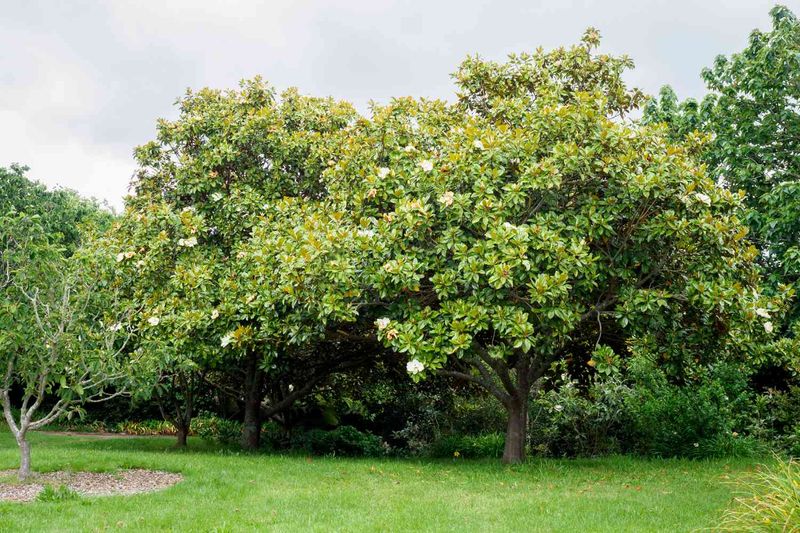
Everyone falls in love with those creamy white blossoms and shiny dark leaves, and for good reason. The Southern Magnolia looks like something out of a storybook, especially in a coastal California yard.
The trouble sneaks in after the show is over. Those thick, leathery leaves drop year-round and refuse to break down, so they just sit on your lawn like little brown boards.
The spent flower petals turn slimy and brown, and the seed cones drop a sticky, messy load in late summer.
Because the leaves are so tough, they clog mowers and smother grass underneath. If you want the beauty without the endless raking, plant it over a mulched bed instead of turf, and pick a smaller cultivar like Little Gem for a more manageable cleanup.
2. Chinese Pistache
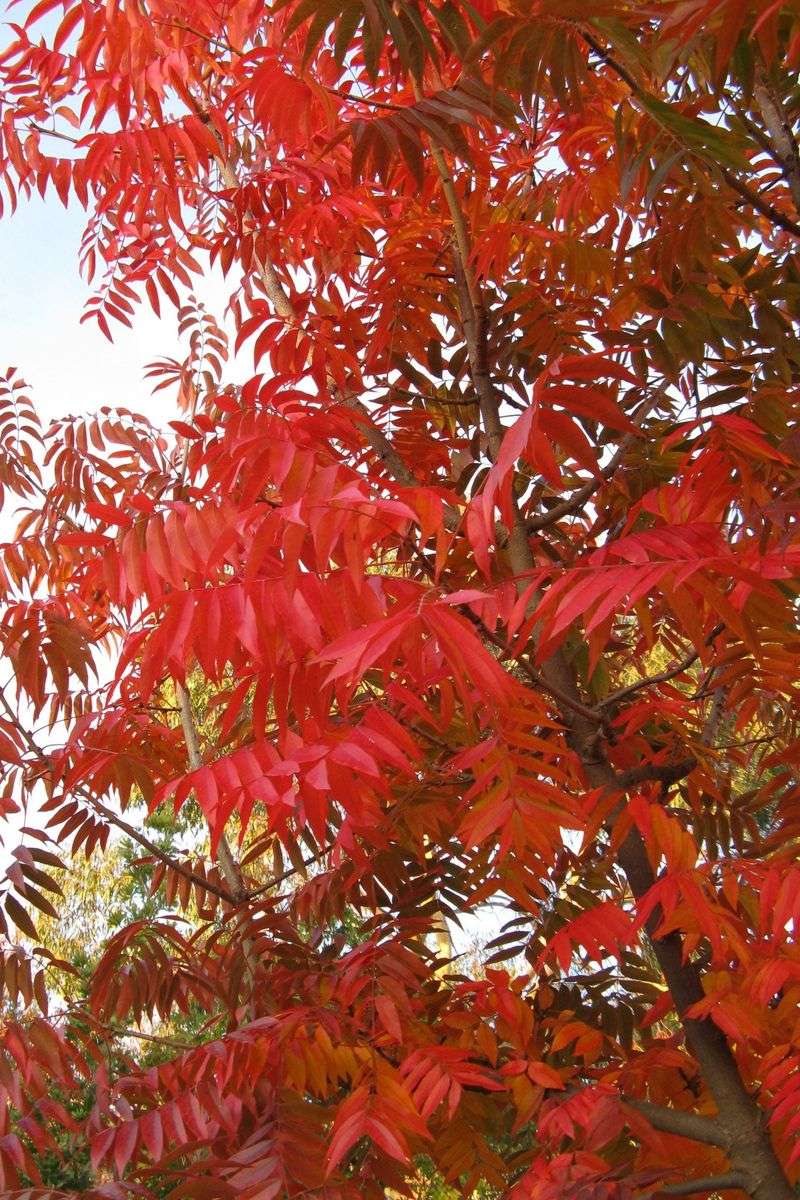
Prized across inland valleys for its fiery fall color, the Chinese Pistache is a water-wise favorite that handles California heat beautifully. Homeowners plant it expecting easy shade and a burst of autumn red.
Female trees have a secret, though. They pump out clusters of small berries that birds scatter everywhere, and the seedlings sprout up in your beds, gravel, and cracks for years.
The berries also stain patios and walkways with purple splotches.
The fix is simple if you plan ahead. Ask the nursery for a male, seedless cultivar such as Keith Davey, which gives you the same knockout color without the berry mess or the surprise saplings popping up all over your yard.
3. Liquidambar (Sweetgum)
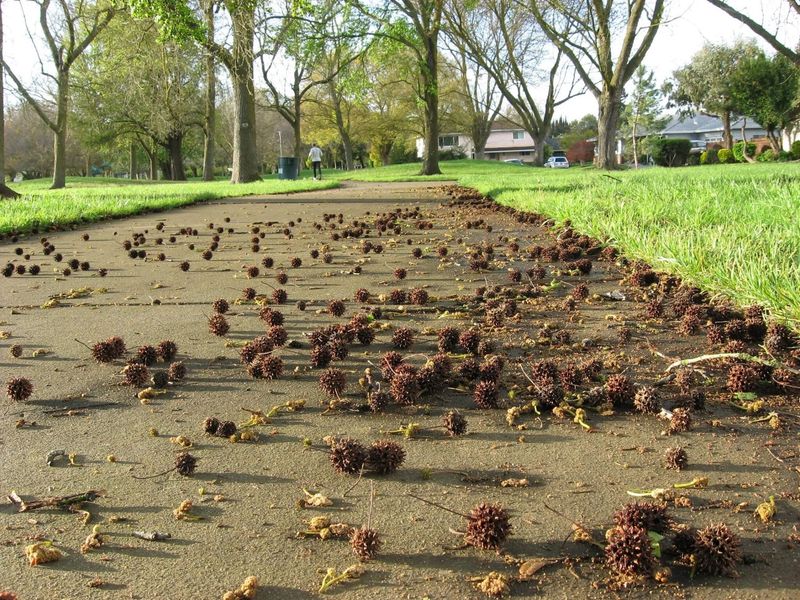
Talk about a tree with a hidden temper. The Liquidambar dazzles in fall with star-shaped leaves in purple, red, and gold, and it grew popular in California suburbs for exactly that reason.
Then come the gumballs. These spiky, hard seed pods drop by the hundreds, roll under your feet, jam lawnmowers, and hurt like stepping on a Lego when you walk barefoot.
They pile up in gutters and along fences too.
Raking them is a chore, and they seem to keep falling for months. If you already have one, a leaf blower and a rolling nut gatherer make life easier.
For new plantings, look for the fruitless variety Rotundiloba, which drops the color but not the painful little bombs.
4. Olive Tree
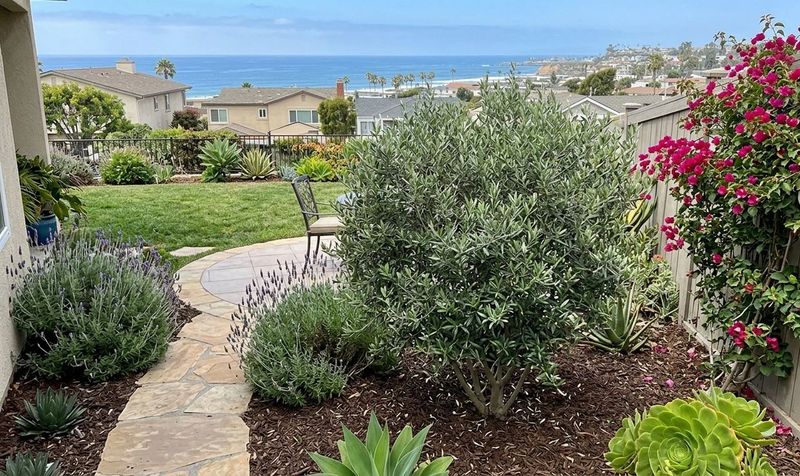
Silvery leaves, a gnarled trunk, and that dreamy Mediterranean vibe make olive trees a natural fit for California’s dry climate. They shrug off drought and look elegant near a patio or driveway.
Fruiting olives, however, are a staining nightmare. The ripe olives drop and squash into a dark purple mush that stains concrete, decks, and shoes, and it does not scrub off easily.
Pcollecting the fruit is a slow, sticky job most homeowners skip.
There is also a pollen issue, since olive trees are heavy allergen producers and some California cities restrict them for that reason. Choose a fruitless variety like Swan Hill or Wilsonii to keep the beauty, dodge the stains, and stay on the right side of local ordinances.
5. Jacaranda
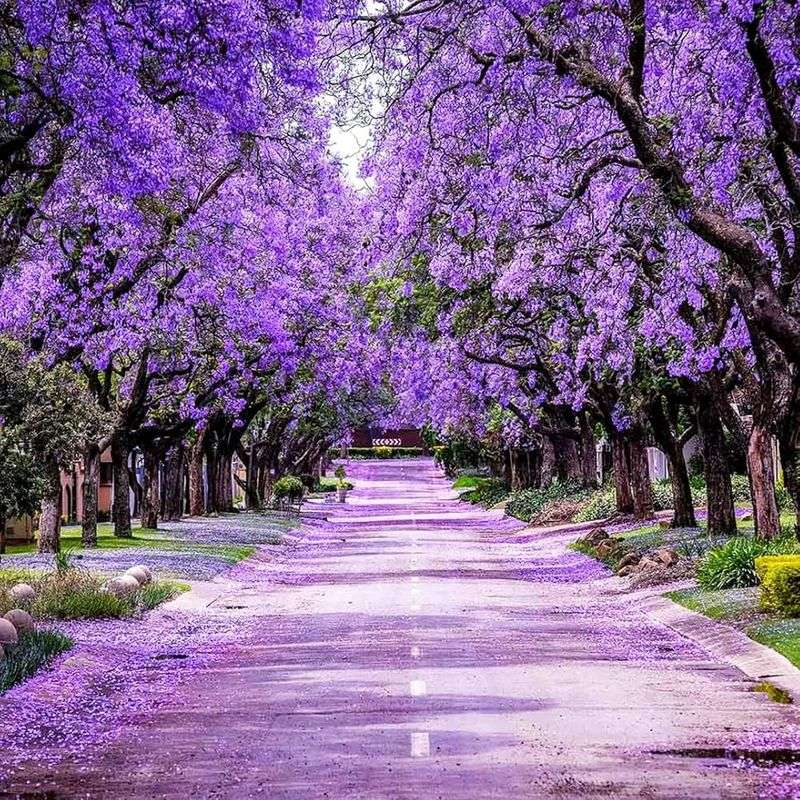
When Jacarandas bloom, entire California streets turn into rivers of purple, and it is genuinely breathtaking. Southern California cities are famous for them, and folks plant one hoping to bring that magic home.
Here is the part the photos never show. Those gorgeous flowers fall in massive quantities and turn into a slick, slimy carpet that stains cars, sidewalks, and driveways a sticky brown.
The sap can also leave a film on anything parked underneath.
After the blooms, the tree drops fern-like leaflets and hard woody seed pods, so cleanup runs across seasons. If you love the look, plant it well away from where you park and away from the pool, and be ready to sweep during bloom season in late spring and early summer.
6. Fruitless Mulberry
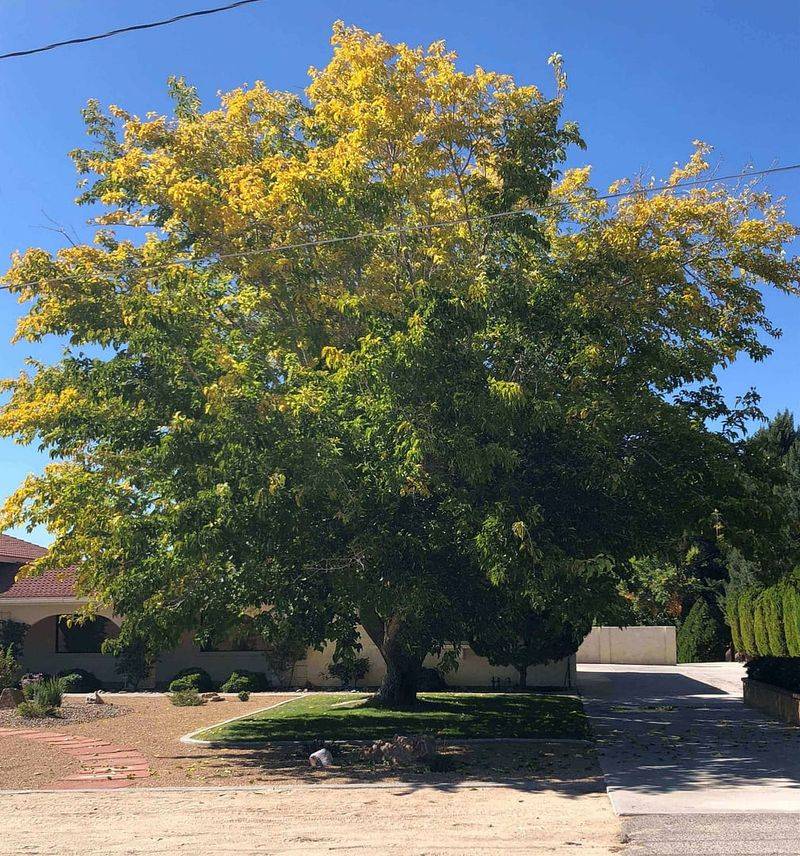
Sold for decades as the fast-growing shade savior for hot inland yards, the fruitless mulberry does deliver quick relief from valley summers. It grows dense and wide in just a few seasons.
The catch is that fast growth means constant maintenance. It drops a mountain of large leaves all at once in fall, needs aggressive pruning every year to stay in shape, and its greedy surface roots crack sidewalks and lift patios.
Its pollen is also notorious for triggering allergies, so much so that some California desert cities banned it outright. If shade is your goal, consider a slower but tidier native like a coast live oak, which supports local wildlife and behaves far better around hardscape.
7. Carrotwood
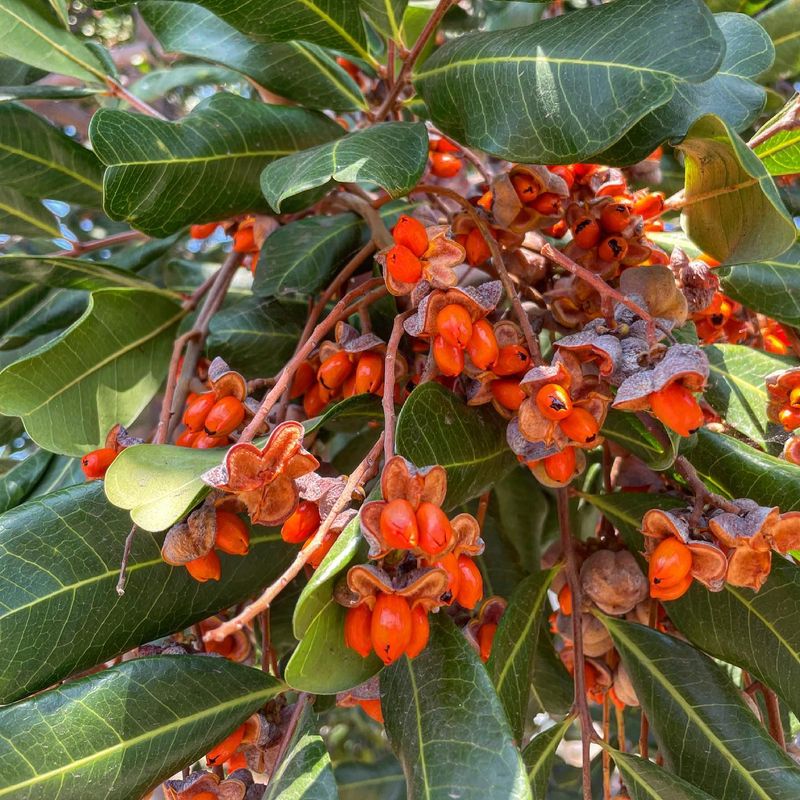
Landscapers pushed the carrotwood for years as a tough, tidy-looking evergreen that handles coastal conditions and salty air with ease. It seems like a low-fuss winner at first glance.
Underneath the good looks is a real problem. The tree drops a steady rain of small woody seed capsules and sticky fruit that litter the ground, and the seeds sprout easily wherever they land.
Birds spread them into wild areas, which is why carrotwood is now flagged as invasive in parts of California.
Beyond the yard mess, planting it can quietly harm nearby natural habitats. If you want a clean evergreen instead, native toyon or a well-behaved manzanita gives you year-round green plus berries that feed local birds without escaping into the wild.
8. Sycamore (California and London Plane)
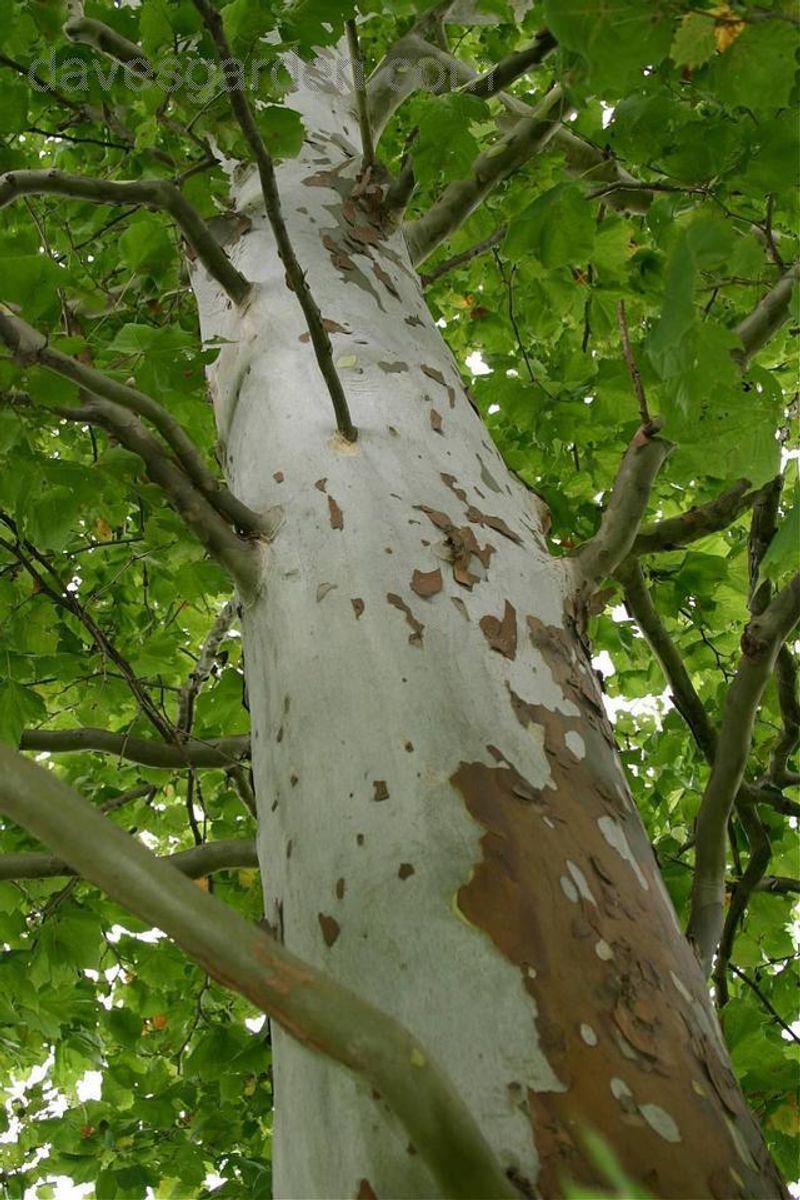
With its mottled peeling bark and enormous leafy canopy, the sycamore feels like a classic California shade tree, and the native version truly belongs here. It is a giant that makes summers bearable.
Giants make giant messes. The huge leaves drop in overwhelming heaps, the bark constantly flakes off in papery sheets, and the fuzzy round seed balls break apart into an itchy dust that gets everywhere.
That fuzz can irritate your eyes and throat during cleanup.
Sycamores also drop twigs after wind and can suffer from anthracnose, which sheds even more debris. They are wonderful in large, open yards where the mess can fall onto mulch, but keep them far from pools, gutters, and small patios where the cleanup will wear you out.
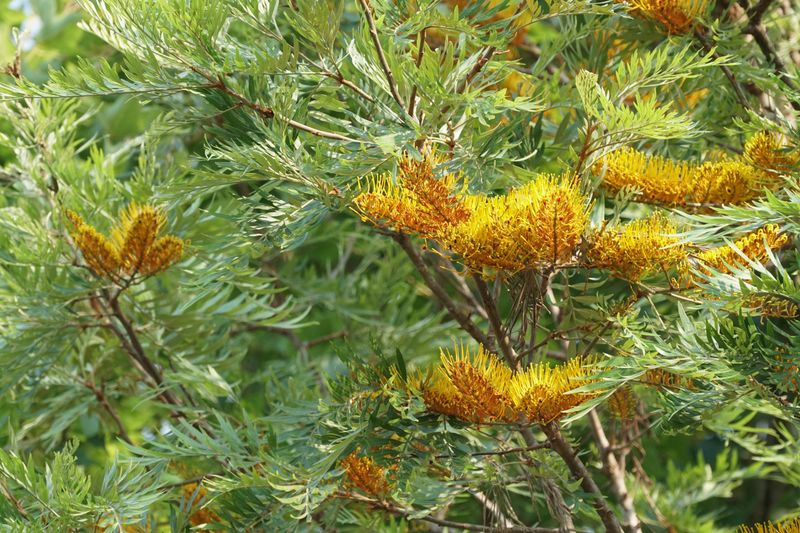
9. Silk Oak (Grevillea robusta)
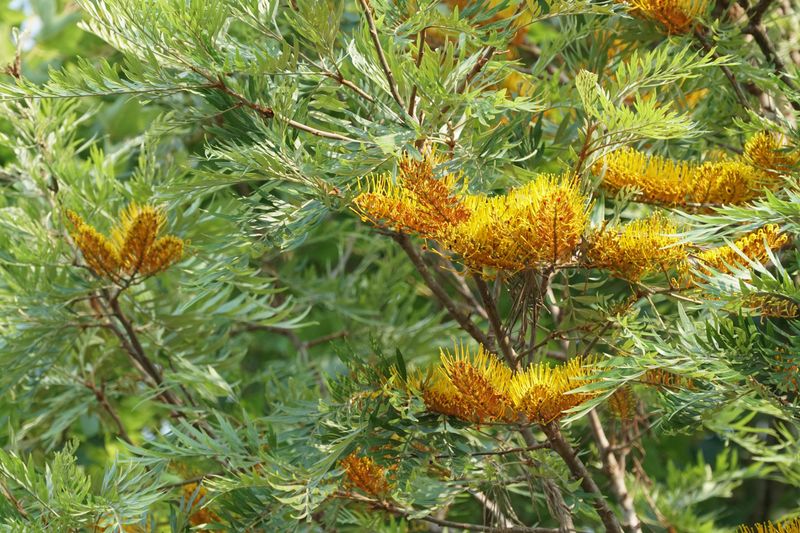
Feathery foliage and showy golden-orange flowers make the silk oak a striking choice, and its drought toughness earned it fans across warmer California zones. From a distance it looks like a graceful specimen tree.
Up close, it is a shedding machine. The tree drops fern-like leaflets almost year-round, sheds its bright flowers in sticky clumps, and scatters papery seed pods that blanket the ground below.
The fine leaf litter slips into pool filters and gutters with ease.
Some people also get skin irritation from handling the foliage, so gloves are a good idea during cleanup. It can work in a large low-traffic corner of the yard, but keep it away from pools, walkways, and anywhere you want to stay tidy without constant sweeping.