
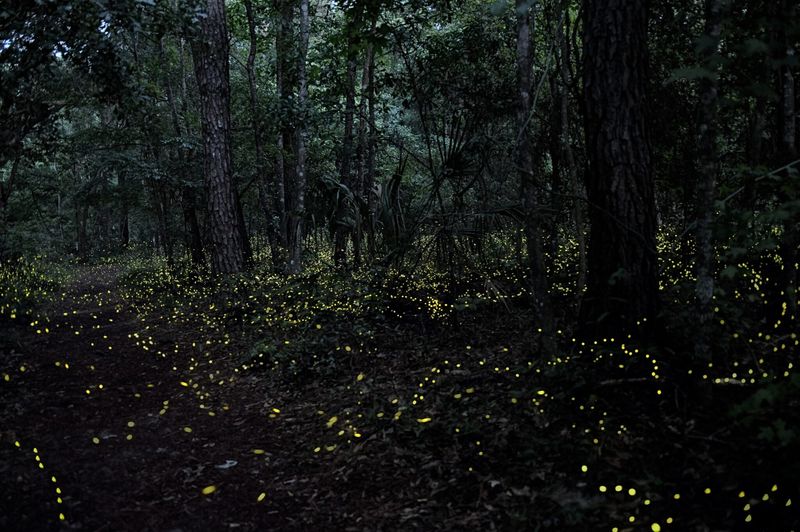
Fireflies lit up Florida backyards for generations, but many homeowners have watched them slowly disappear over the past few decades. The good news is that several manageable yard changes can make your property more welcoming to these beetles, even if you have never thought much about wildlife habitat before. Florida is home to at least 56 documented firefly species, each with its own preferences, so the goal here is not a guaranteed comeback but a genuinely better environment. Small shifts in lighting, ground cover, and chemical use can add up to a real difference.
Make one part of the yard more firefly-friendly
Fireflies are not one creature with one set of needs. UF/IFAS Gardening Solutions notes that Florida is home to at least 56 documented species, and those species use different habitats ranging from moist forest edges to damp open fields. That variety matters because it means no single yard layout works for every firefly, and it also means that improving conditions for even a handful of local species is a worthwhile goal.
A firefly-friendly yard brings together several qualities at once: relative darkness at night, some degree of moisture in the soil and litter, shelter from shrubs and taller vegetation, ground habitat that supports larvae and prey, and reduced chemical pressure. The Xerces Society identifies habitat loss and degradation, artificial light, pesticides, poor water quality, drought, climate pressures, and invasive species as interacting threats that vary in importance by species and location. No single cause explains every local absence, so the fix cannot be reduced to one single action either.
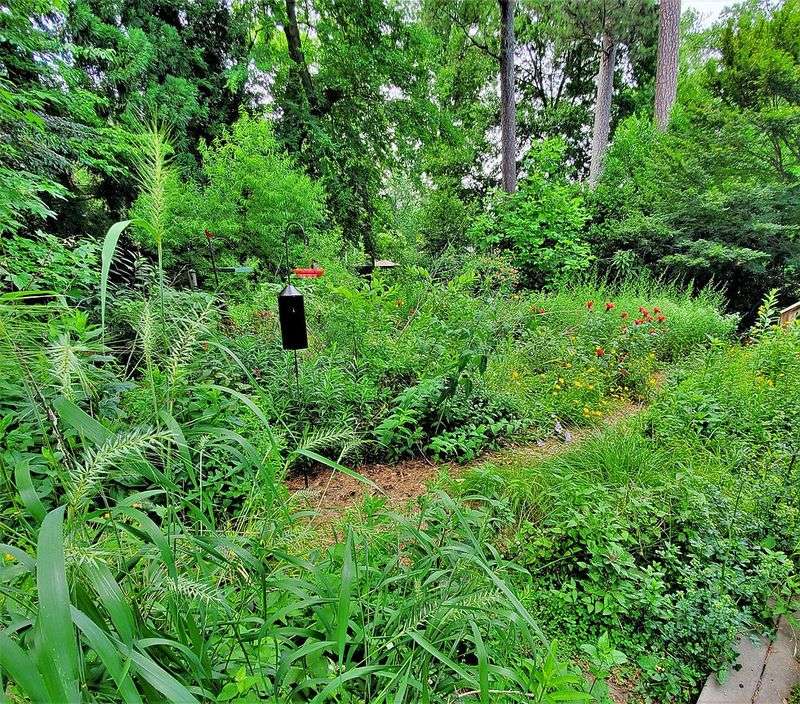
The most practical starting point for a Florida homeowner is to pick one contained area rather than attempt to transform the whole yard. A back corner, a shaded fence line, or a strip along a tree line can serve as a refuge while the rest of the property stays maintained as usual. UF/IFAS Extension Polk County points out that fireflies in Florida tend to favor edges where vegetation transitions from open to sheltered, which is exactly the kind of space a backyard refuge can mimic. Focusing effort on one manageable zone also makes every subsequent step easier to carry out without overwhelming the rest of the landscape.
Understand why artificial light can disrupt courtship
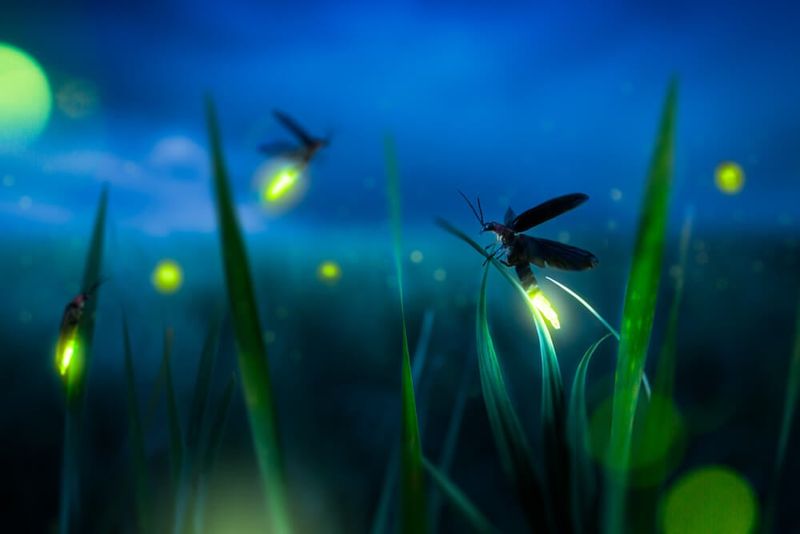
Most people think of fireflies as light-producers, and for good reason. Many species use species-specific flash patterns to find mates, with males flying and flashing while females respond from perches in the vegetation below. That back-and-forth of light signals is how many North American fireflies identify compatible partners, and anything that drowns out or confuses those signals can interrupt the process before mating even begins.
Controlled research has confirmed those concerns. A 2022 study by Owens and colleagues found that artificial light reduced female flash responses and mate-location success in tested firefly species, with effects varying by species and light intensity. Earlier experimental work by Firebaugh and Haynes also documented reduced mating activity under artificial light conditions. The full published version of the Owens 2022 study showed that some species experienced strongly impaired mating outcomes even at modest light levels, while other species showed comparatively little change, which underscores that there is no universal threshold that guarantees safety for every Florida firefly.
A few additional details are worth keeping in mind. Not every Florida firefly depends on visible light signals at all. UF/IFAS notes that some species communicate primarily through pheromones rather than bioluminescent flashes, so the lighting problem is real but not universal across the state’s full species list. Still, for the many species that do rely on flash communication, a yard lit up by porch floods, landscape uplights, or pool-area lighting creates a background glow that competes directly with the very signals fireflies use to find each other.
Reducing that competition is one of the most direct improvements a homeowner can make.
Turn off the light the refuge does not need
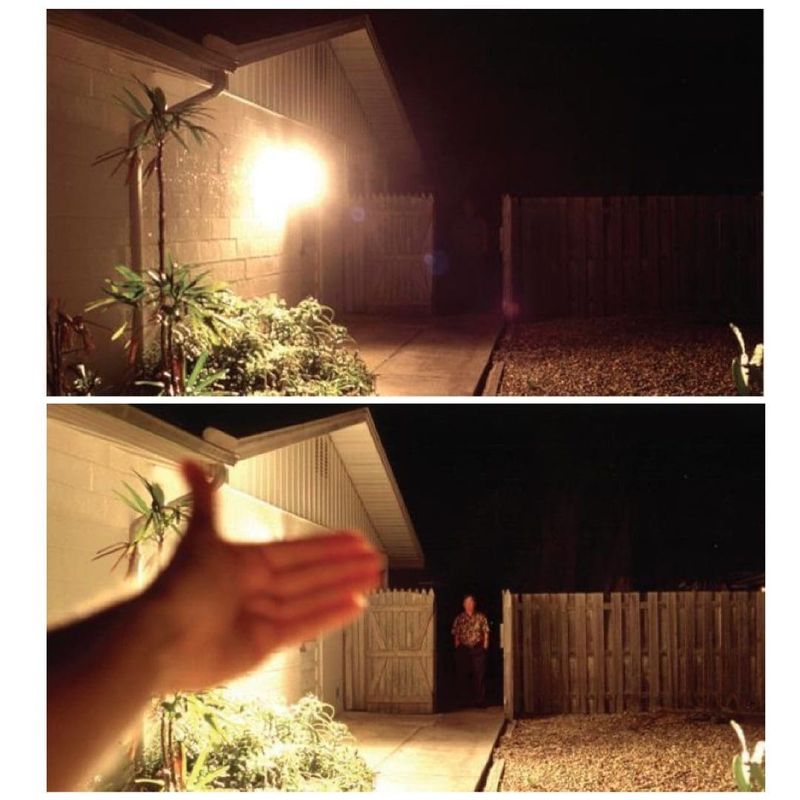
Knowing that light disrupts firefly courtship is only useful if that knowledge gets translated into action at the breaker switch or timer box. The most effective first move is simply to turn off every outdoor light that does not serve a genuine safety or security purpose near the refuge area. That typically means switching off porch lights, garage lights, floodlights, landscape uplights, and pool-area lighting during dusk and nighttime hours on the side of the property closest to the habitat zone.
The Xerces Society’s firefly-friendly lighting guidance recommends eliminating unnecessary light as the single highest-priority step, before worrying about bulb color or fixture type. UF/IFAS echoes that recommendation, specifically calling out outdoor lights as a factor worth reducing or eliminating near firefly habitat. For lights that truly cannot be removed, the Xerces conservation guidelines suggest four practical adjustments: add motion controls so lights are on only when needed, aim fixtures downward so the beam stays on the ground rather than spreading into vegetation, shield the bulb so light does not scatter sideways, and keep the illuminated area as small as possible.
One claim worth setting aside is that switching to a warm-white or amber LED automatically makes outdoor lighting firefly-safe. Intensity, direction, and timing all matter alongside color spectrum, and species respond differently. A dim, downward-aimed, motion-activated fixture will generally do less harm than a bright always-on light of any color, but no particular product eliminates the issue entirely. The goal is to give the refuge zone as many dark hours as possible, not to find a magic bulb that lets everything stay on.
Build a contained shelter along a yard edge
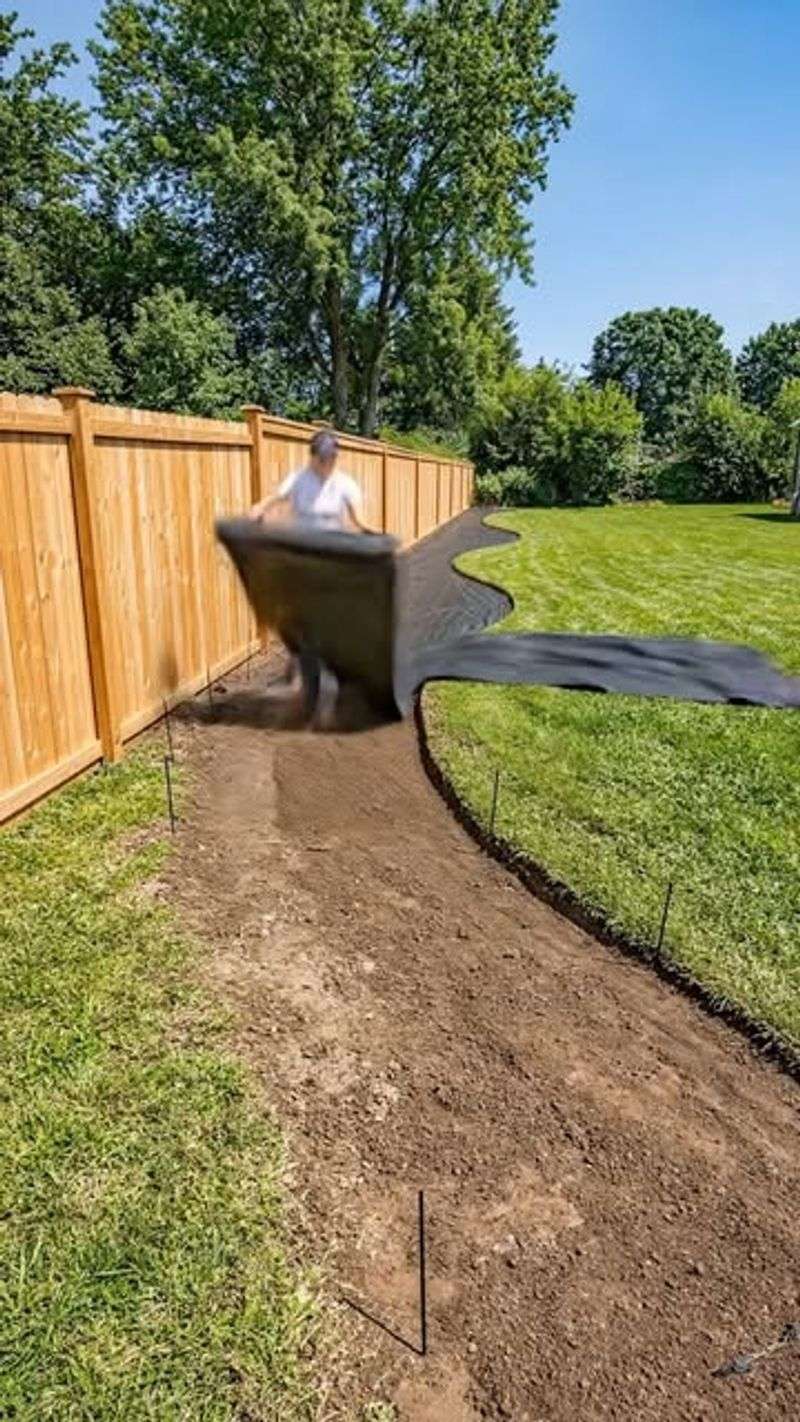
Picking a specific zone and committing to it makes the whole project manageable. A low-traffic corner, a fence line with existing shade, a strip along a tree line, or the back edge of the property where foot traffic is minimal are all solid candidates. The key quality is that the area stays relatively undisturbed once it is set up, because firefly larvae and flightless females spend most of their lives on or near the ground and are easily harmed by routine digging, mowing, or heavy foot traffic.
The Xerces Society recommends creating a dedicated habitat zone rather than trying to rewild the entire yard, which is both more realistic and more likely to produce consistent conditions over time. Within that zone, shrubs and taller vegetation do several jobs at once. They provide cover for adults resting during the day, give females perches from which to respond to flashing males at night, shade the soil to slow moisture loss, and create the kind of layered structure that fireflies associate with forest edges and shrubby margins. UF/IFAS specifically recommends letting yard edges grow into shrubby areas and using vegetation to shade the soil and preserve moisture.
Outside the refuge strip, the rest of the yard can stay exactly as it is. Mowed paths, maintained lawn areas, and regularly used outdoor spaces do not need to change. UF/IFAS Florida-Friendly Landscaping principles support this kind of zoned approach, emphasizing that the right plant in the right place matters more than blanket transformation. A clearly defined border between the maintained lawn and the habitat strip also helps keep the project tidy and prevents the refuge from creeping into areas where it creates problems.
Protect larvae and prey beneath the grass
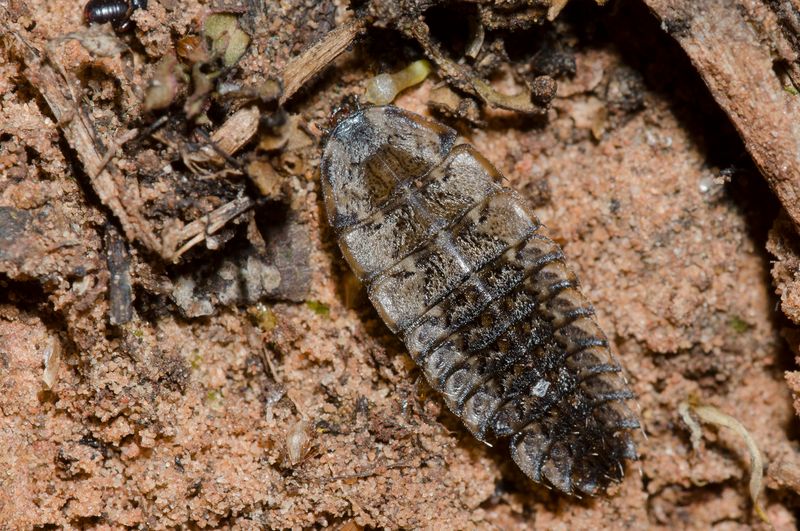
Adult fireflies are what most people notice, but the larval stage is where fireflies spend the majority of their lives. Depending on the species, larvae can develop in soil or leaf litter for several months, and some species take close to two years to complete that underground phase before ever emerging as adults. That long developmental window means ground conditions matter far more than most homeowners realize when they picture fireflies as a warm-summer-night phenomenon.
Larvae are predators. They hunt soft-bodied prey including snails, slugs, and earthworms, injecting a paralyzing fluid and digesting their catch in the soil or litter. Xerces Society guidance on habitat support and Penn State Extension’s firefly resource both point out that protecting ground habitat directly supports larvae and the prey populations they depend on. Leaf litter is particularly important because it shelters larvae, retains moisture, and supports the invertebrate community that larvae feed on.
Removing all leaf litter from the refuge area effectively strips away both the shelter and much of the food supply.
The Xerces Society identifies ground disturbance alongside habitat loss and light pollution as a documented threat to firefly populations. Within the designated refuge, mowing should be minimal or avoided entirely, digging kept to a necessary minimum, and foot traffic routed around rather than through the area. UF/IFAS notes that no universal Florida mowing height or schedule has been proven to restore every species, so the most reliable guidance is simply to leave the refuge floor as intact as possible and let it accumulate natural material over time.
Reduce pesticide pressure without blaming one product
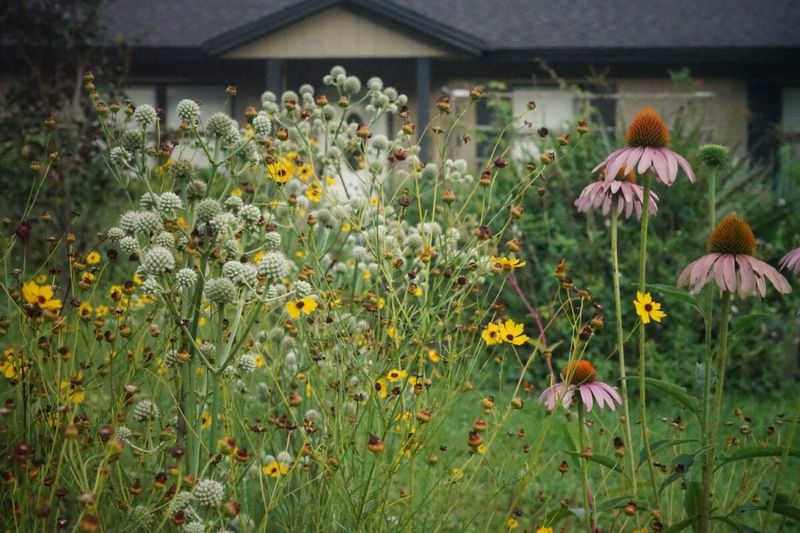
Fireflies spend most of their lives as ground-dwelling larvae hunting soft-bodied invertebrates, which puts them directly in the path of broad-spectrum insecticides applied to lawns and garden beds. Those products can harm fireflies in two ways: direct contact that affects the firefly itself, and secondary loss of the prey populations that larvae depend on for food. Either pathway can reduce the number of larvae that successfully complete development and emerge as adults.
The Xerces Society’s pesticide guidance for fireflies recommends avoiding unnecessary pesticide applications in and around firefly habitat, with particular attention to broad-spectrum insecticides, soil drenches, and systemic products that persist in plant tissue. Xerces also acknowledges that direct research specifically measuring the effect of individual pesticides on firefly larvae remains limited, so the guidance draws on related insect research and the precautionary logic that a predatory ground insect with a long larval stage is especially vulnerable to soil-applied chemicals. The Xerces conservation guidelines PDF extend that caution to herbicides and fungicides as well, since altering the plant structure and soil biology of the habitat can reduce prey availability even without directly targeting insects.
Mosquito spraying is a common concern for Florida homeowners, and it is a reasonable one to raise, but it should not be presented as the single confirmed cause of firefly disappearance in any particular yard. Multiple interacting pressures matter. The practical takeaway is straightforward: skip pesticide applications in the refuge area whenever possible, address pest problems in other parts of the yard using targeted rather than broadcast methods, and treat the habitat strip as a chemical-free zone to the greatest extent the rest of the yard management allows.
Manage Florida moisture and choose plants for the site

Florida’s sandy soils drain quickly, which is great for avoiding root rot but challenging for any habitat that depends on consistent ground moisture. Firefly larvae and their prey tend to favor moist conditions, and a refuge that dries out completely between rain events is less hospitable than one that retains some soil moisture through shade and organic matter. UF/IFAS guidance on Florida’s sandy soils explains that organic amendments and mulch can meaningfully improve water-holding capacity in fast-draining sites, which is useful context for building a refuge that stays workable through dry stretches.
Organic mulch is one of the simplest tools available. UF/IFAS landscape establishment guidance and UF/IFAS mulching materials guidance commonly recommend applying about 2 to 3 inches of organic mulch in plant beds, keeping it pulled back from plant stems and tree trunks to prevent rot and pest problems. Pine bark and pine straw are both identified as Florida-friendly options. In a firefly refuge, mulch does double duty: it retains moisture and also creates the layered ground texture that supports invertebrate prey.
Plant selection should follow right-plant-right-place logic rather than a fixed species list. UF/IFAS Florida-Friendly Landscaping guidance emphasizes matching plants to local light, drainage, soil type, and moisture conditions rather than assuming that any plant labeled native will thrive everywhere in the state. UF/IFAS firefly guidance recommends vegetation that shades the soil and helps preserve moisture, which points toward shrubs and taller plants with a canopy dense enough to slow evaporation at ground level. Plants alone do not attract fireflies, though.
Ground structure, litter depth, prey availability, and moisture all work together, so the plant layer is one piece of a larger habitat puzzle rather than a standalone solution.
Avoid ponds, mosquitoes, and fire hazards

Adding a pond or water feature is sometimes suggested as a way to attract fireflies, and while some Florida firefly species are associated with wetland edges or stream margins, a backyard pond is not a requirement for creating useful habitat. More importantly, any water-holding feature that is not properly maintained can become a mosquito breeding site within days. CDC guidance on mosquito control at home recommends emptying, scrubbing, or covering containers that hold water at least once a week, and CDC information on where mosquitoes live confirms that even small amounts of standing water in flower pots, tarps, or low spots are enough to support breeding. In a state where mosquito pressure is already significant, adding unmanaged water features near a habitat zone creates a problem that can undermine the whole project.
If a rain barrel or small water feature is already present or planned, keep it covered or screened, maintain appropriate circulation, and check it weekly during warm months. Soil moisture in the refuge can be managed through mulch and shade without introducing open water at all.
Leaf litter, brush piles, and taller vegetation also require some care in the Florida context. UF/IFAS firewise landscaping guidance calls for keeping combustible plant material separated from structures, removing dead and dry material in fire-prone areas, and maintaining defensible space around buildings. The habitat refuge should be positioned away from the house, outbuildings, fences attached to structures, and utility lines. UF/IFAS firefly guidance supports a contained habitat approach rather than spreading litter and brush across the whole yard, which aligns with keeping fire risk in check while still providing the ground cover that larvae and prey need.
Measure better habitat, not a guaranteed comeback
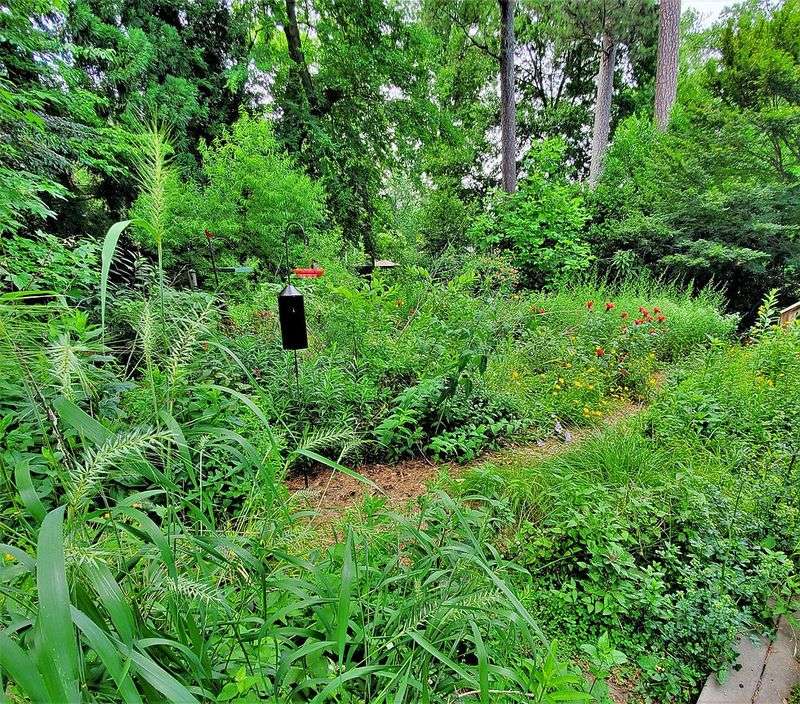
Habitat improvements are genuinely worth making, and the steps in this article are grounded in real evidence. Darker nights, sheltered ground cover, reduced pesticide use, and better moisture retention all move a yard closer to the conditions that support firefly life stages. What those changes cannot do is guarantee that fireflies will return, or establish a timeline for when adults might appear.
Xerces Society reporting on firefly status notes that many North American species are data deficient and that systematic population monitoring remains sparse. A 2024 study on firefly abundance and environmental drivers reinforces that local firefly presence depends on a combination of nearby source populations, surrounding habitat quality, weather patterns, and landscape-scale pressures that extend well beyond any single property. Xerces conservation documentation also points out that recolonization requires adults from nearby populations to disperse into the improved area, which means a yard surrounded by dense development and high light pollution faces different odds than one adjacent to a park or natural area.
The practical sequence is straightforward: reduce unnecessary outdoor lighting around the refuge, protect one moist and sheltered corner with leaf litter and shrubs, limit pesticide applications in that zone, and avoid routine ground disturbance. Then observe patiently. If no adults appear in the first season or two, that absence does not confirm a regional collapse. Larvae may still be developing underground, local populations may need time to expand, or conditions beyond the property may still be limiting.
The yard that has been made quieter, darker, and more structurally complex has done something real, even when the results take longer than hoped to show up on a warm summer night.