
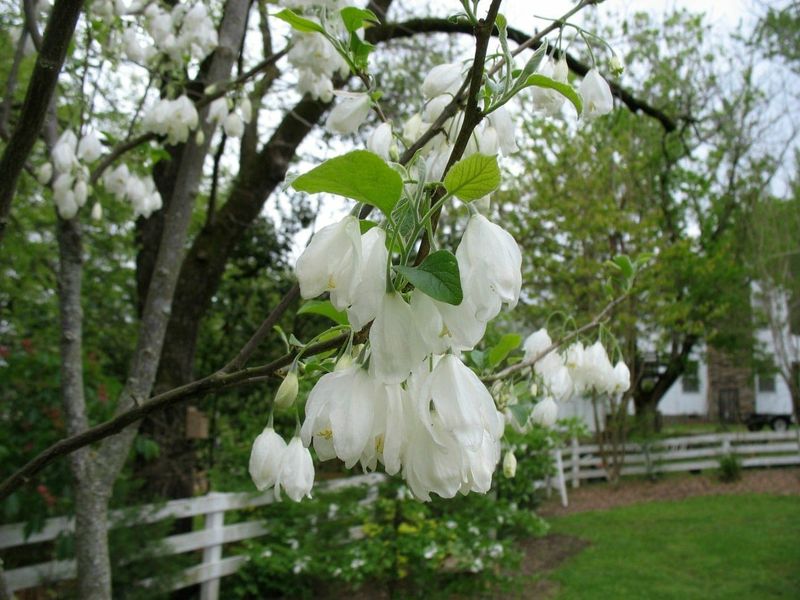
Drive through almost any mountain neighborhood near Asheville or Boone and you will see the same few trees over and over: Bradford pears, Japanese maples, and crape myrtles. Meanwhile, some of the prettiest small trees in the Blue Ridge grow wild just past the edge of the lawn, and hardly anyone brings them home.
These natives stay a manageable size, handle cold mountain winters, and feed birds, bees, and butterflies all year. Late September is a smart time to plan, because fall planting gives roots months to settle in before spring.
1. Serviceberry
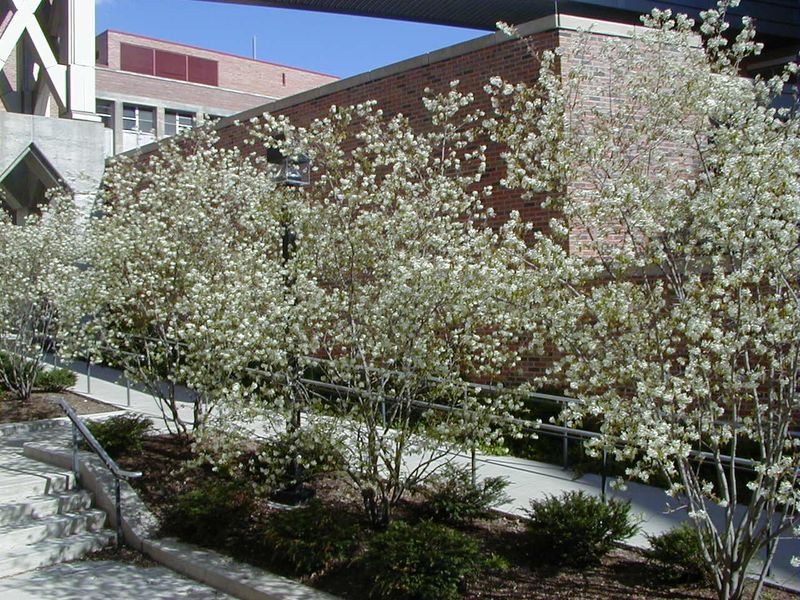
Old mountain folks say serviceberry bloomed right when the roads thawed enough for traveling preachers to reach remote coves and hold services. Whether or not that story is exact, the name stuck.
The tree itself is just as charming as the legend.
Serviceberry, or Amelanchier, bursts into white flowers in March or April, often weeks before most trees leaf out. By June, it carries small purple berries that taste a bit like blueberry with a hint of almond.
Cedar waxwings, robins, and catbirds may strip a tree in a single afternoon, so pick fast if you want a handful.
Most varieties top out around 15 to 25 feet, which fits nicely near a porch or along a property line. Fall color runs orange to red, giving you three seasons of show.
Plant it in sun to part shade with decent drainage, and it handles rocky mountain soil better than many nursery favorites.
2. Carolina Silverbell
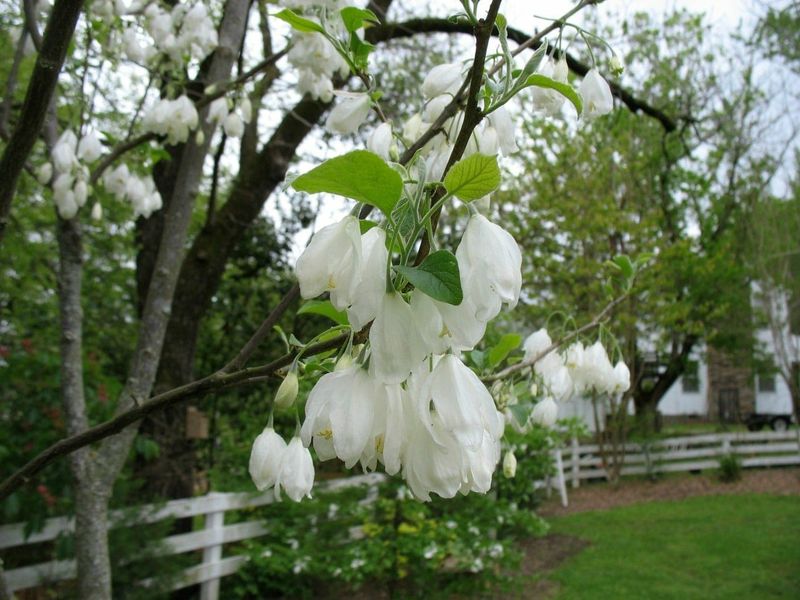
Picture hundreds of tiny white bells hanging from bare branches in April, swaying in the breeze. That is Carolina silverbell in full bloom, and once you see it, you will wonder why every mountain garden center does not lead with it.
Halesia tetraptera grows naturally in the coves of the Smokies and along stream banks across the region. In the wild it can reach impressive heights, but in a home yard it usually stays a modest 20 to 30 feet and grows at an easy pace.
Bees work the flowers hard on cool spring days when little else is open.
After flowering, it forms odd four-winged seed pods that hang on into fall. Give it rich, moist, slightly acidic soil and a spot with afternoon shade.
A planting under taller oaks or near a creek mimics its home turf and may reward you with the best bloom.
3. Pagoda Dogwood
Everyone knows flowering dogwood. Far fewer people have met its quieter cousin, and that is a shame for anyone with a shady mountain lot.
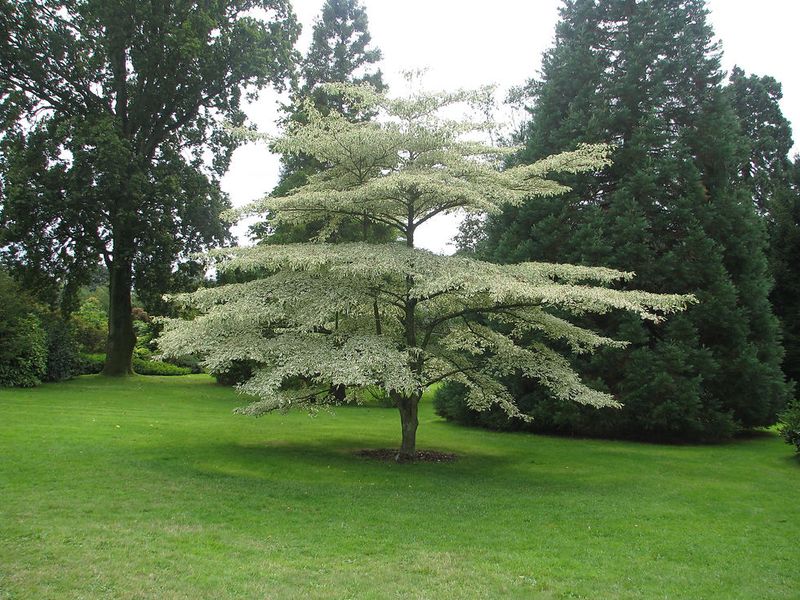
Pagoda dogwood, Cornus alternifolia, gets its name from layered horizontal branches that stack like the roof of a pagoda. The look is tidy and architectural even in winter.
Flat clusters of creamy flowers appear in late spring, followed by blue-black berries on bright red stalks that songbirds snap up quickly.
Here is why it earns a spot: it actually prefers cool, moist, shaded spots, the exact conditions where lawn struggles. Higher elevations around Boone, Banner Elk, and Highlands suit it especially well.
Keep it 15 to 25 feet from hot pavement, mulch the roots, and it can thrive where many ornamentals sulk.
4. American Hornbeam
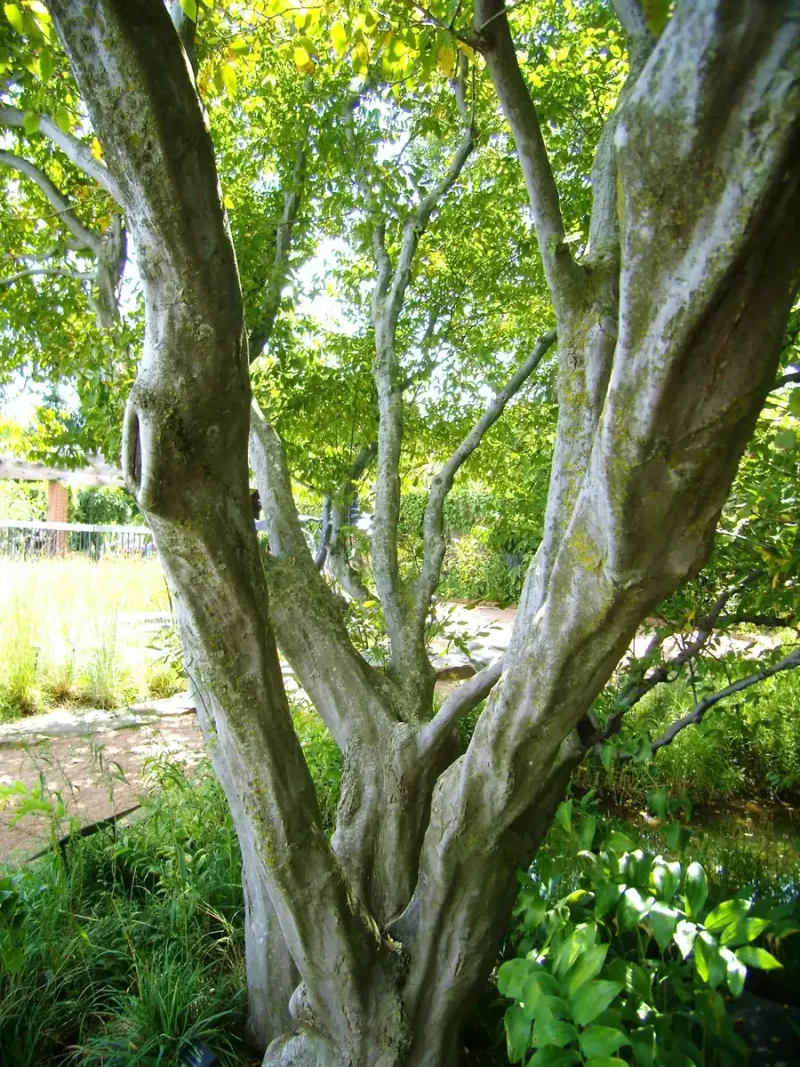
Run your hand along the trunk and it feels almost like flexed muscle. Smooth, gray, and rippled, the bark is the reason many people call it musclewood or ironwood.
American hornbeam, Carpinus caroliniana, is one tough small tree. It shrugs off shade, wet feet, and clay, and it rarely needs fussing once established.
Most specimens stay under 30 feet with a rounded, graceful crown.
Fall brings a mix of yellow, orange, and red, usually peaking in the mountains from early to late October depending on elevation. The small nutlets feed finches, grouse, and squirrels through winter.
If you have a soggy low corner where nothing seems happy, this native may be the fix you have been looking for.
5. Fringetree
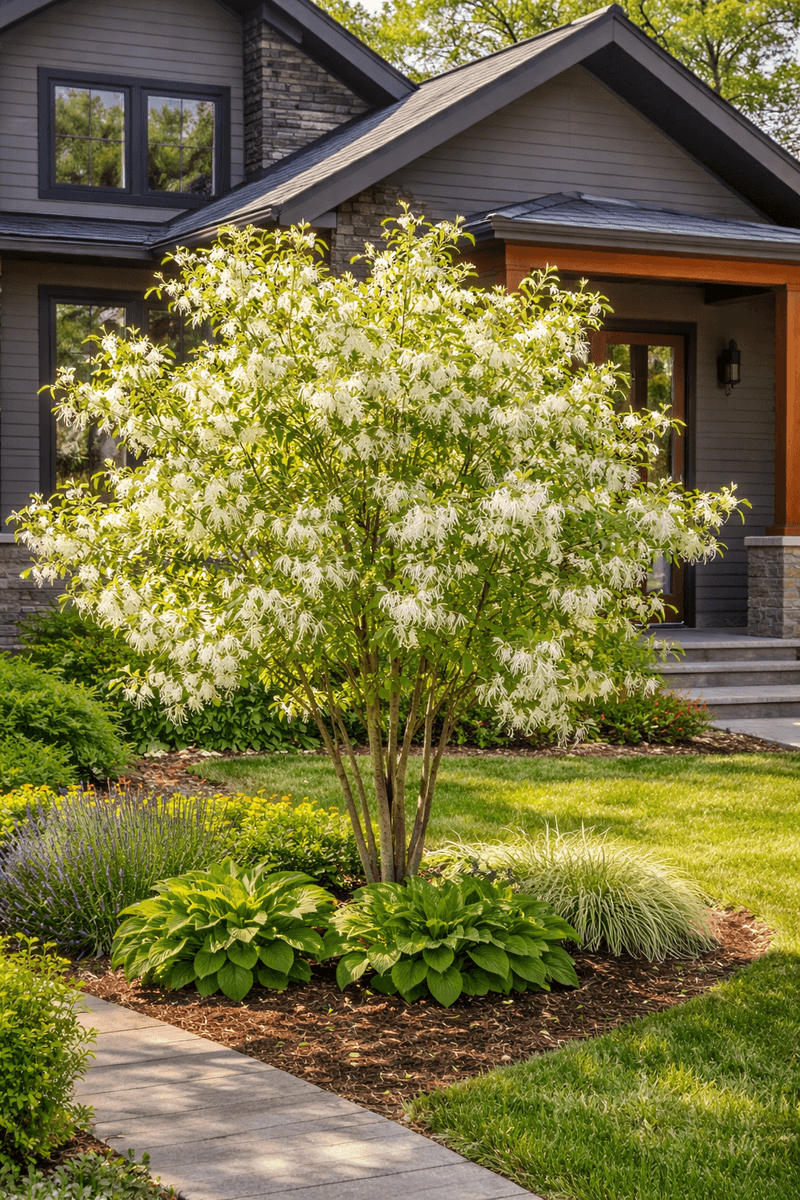
Southern gardeners nicknamed it Grancy Graybeard, and one look in May explains why. Fluffy white strands drape every branch like an old man’s beard, and the flowers carry a soft, sweet scent.
Chionanthus virginicus is slow growing and usually stays 12 to 20 feet tall, so it fits small front yards and foundation beds without crowding the house. Female trees produce dark blue fruit in late summer that birds love.
Plant one where you can catch the fragrance on an evening stroll.
One honest caution: native fringetree can be attacked by emerald ash borer, since it is in the olive family with ash. Watch for dieback and keep the tree healthy with good watering in dry spells.
Even with that risk, few natives deliver this much spring drama in such a compact package.
6. Pawpaw
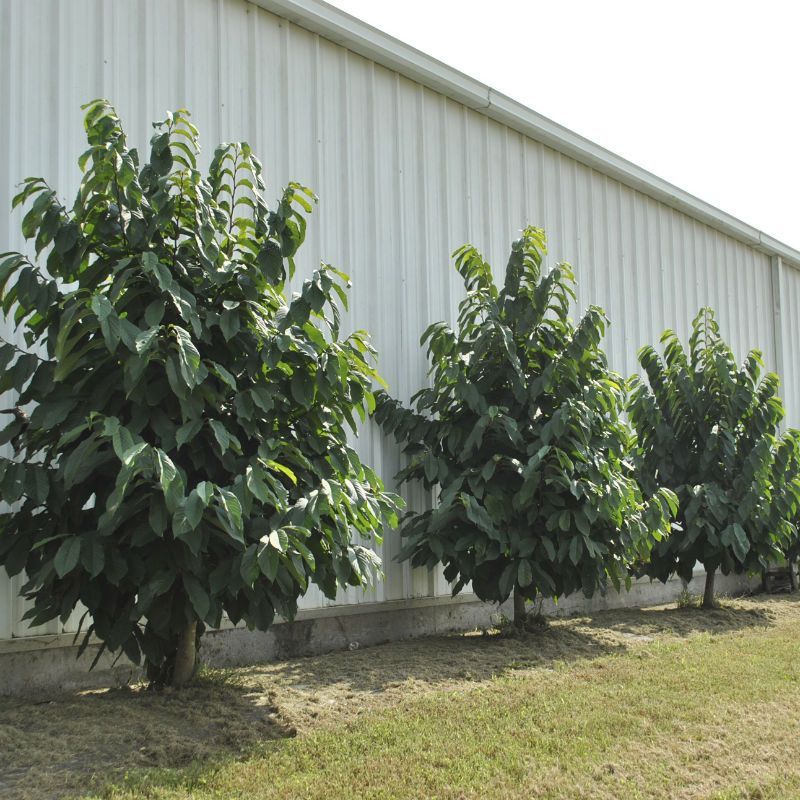
Mango, banana, and custard all rolled into one fruit, grown right in the Blue Ridge? It sounds made up, but pawpaw delivers exactly that, and September is harvest time.
Asimina triloba is the largest native fruit in North America, and it grows wild along mountain river bottoms like the French Broad. The trees stay small, usually 15 to 25 feet, and often spread into little groves.
Its big drooping leaves give a yard an unexpected tropical look before turning butter yellow in fall.
Pawpaw is also the only host plant for the zebra swallowtail butterfly, so you are supporting wildlife while growing dessert. Plant at least two different varieties for better fruit set.
Young trees like some shade their first year or two, then appreciate more sun as they mature.
7. Striped Maple
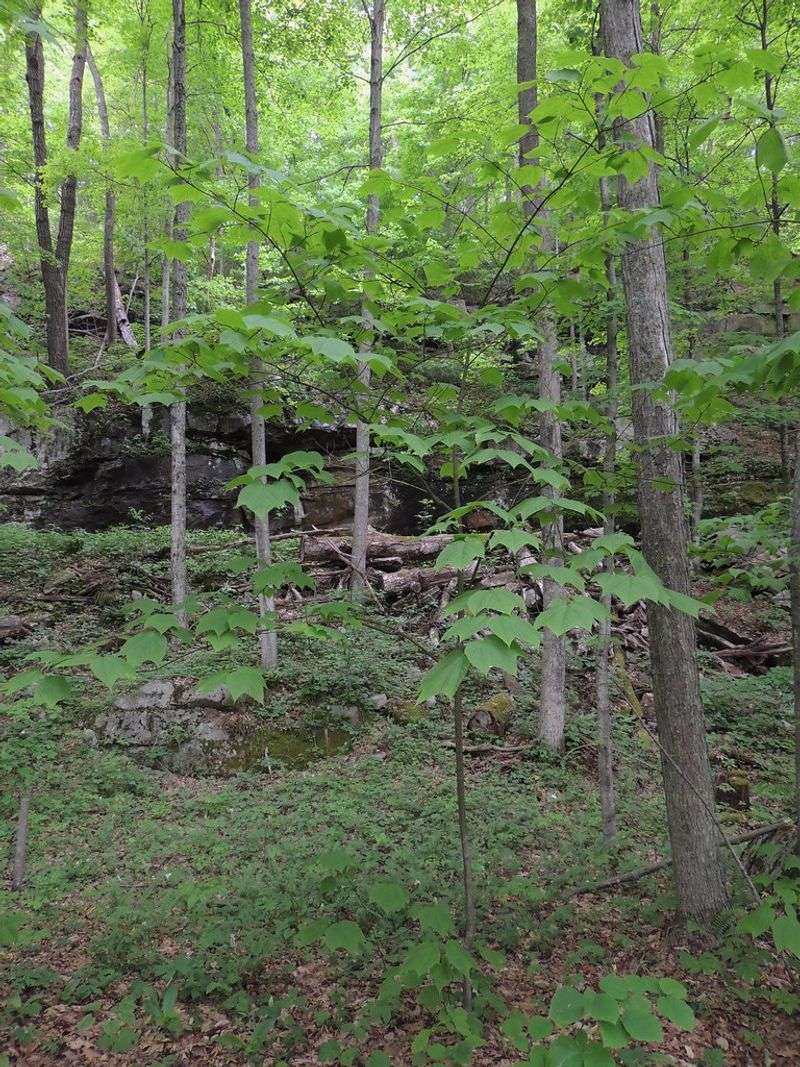
Hikers on the Blue Ridge Parkway pass it constantly without a second glance. Look closer and you will spot bark painted with green and white stripes, like a candy cane dreamed up by the forest.
Striped maple, Acer pensylvanicum, sometimes goes by moosewood or goosefoot maple thanks to its broad three-lobed leaves. It is an understory specialist, happiest in cool shade at higher elevations.
Above roughly 3,000 feet it tends to do best, so it suits yards in places like Blowing Rock and Cashiers more than lower valleys.
Fall color is a clear, glowing yellow that brightens dark woodland edges. Keep it out of hot afternoon sun and dry, compacted soil, both of which stress it.
In the right spot, it adds year-round interest, especially in winter when that bark really pops.
8. Witch Hazel
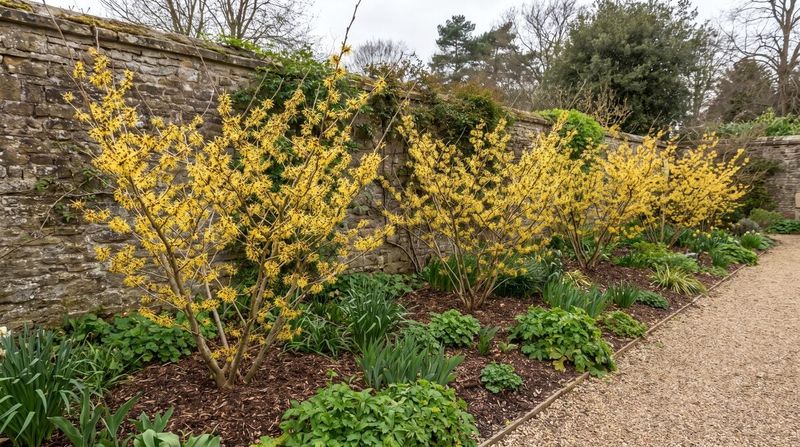
Just as your garden winds down for the year, one small tree is getting ready to bloom. American witch hazel flowers from October into December, long after most plants have called it quits.
Hamamelis virginiana produces spidery, ribbon-like yellow blooms that often appear while its leaves are turning gold. The effect is subtle but lovely on a crisp fall morning.
Late-season flies, gnats, and moths visit the flowers when few other nectar sources remain.
Growing 15 to 20 feet tall, it works well as a large shrub or small multi-trunk tree at the edge of woods. Part shade suits it, and it adapts to many soils.
Fun fact: the forked branches were once used as divining rods to search for underground water, which may be part of how it got its name.
9. Mountain Laurel
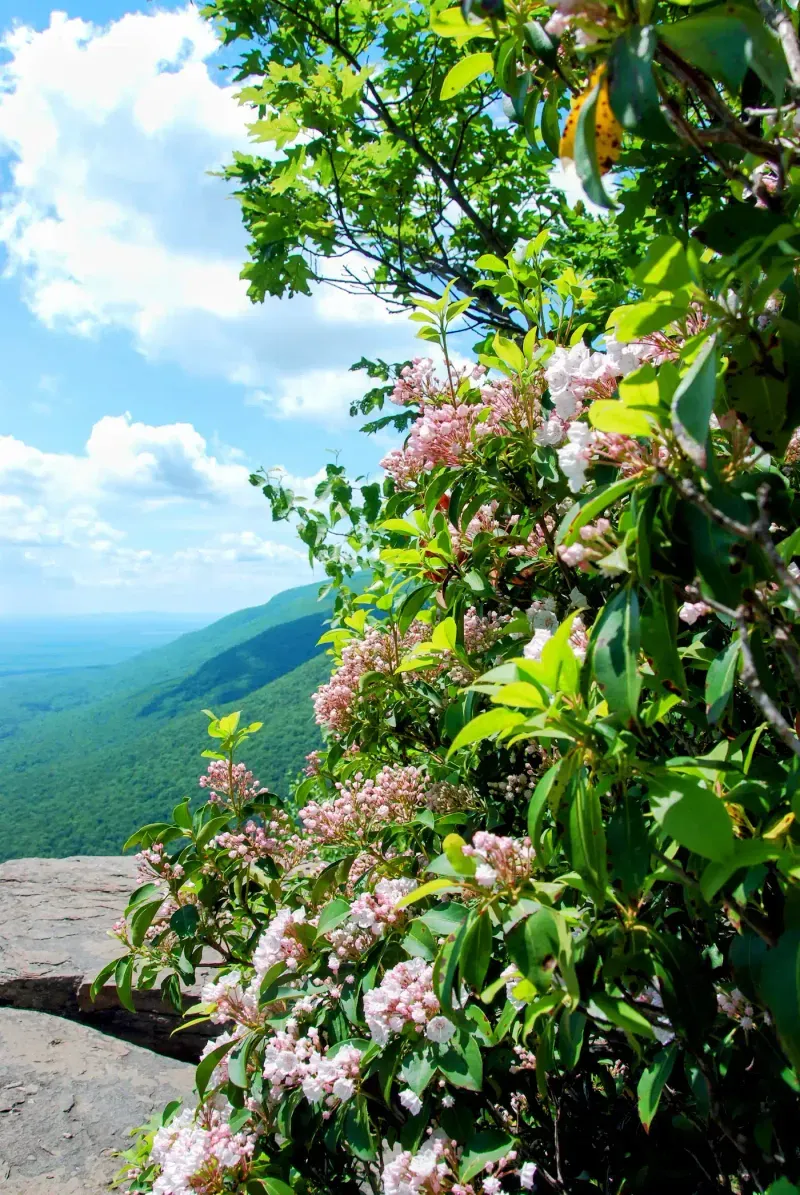
Locals call the dense thickets on mountain slopes laurel hells, because they can be nearly impossible to push through. In your yard, though, a single trained specimen is pure heaven in late May.
Kalmia latifolia can be grown as a small multi-trunk tree reaching 10 to 15 feet over many years. Its crimped pink and white flowers look like tiny piped frosting, and each bloom springs pollen onto visiting bees with built-in levers.
Evergreen leaves keep the yard green through snowy winters.
It prefers acidic, well-drained soil and dappled shade, much like native rhododendron. Note that all parts are toxic if eaten, so site it thoughtfully around pets and small children.
Fall is an excellent window to plant, giving roots time to establish before next spring’s show.