
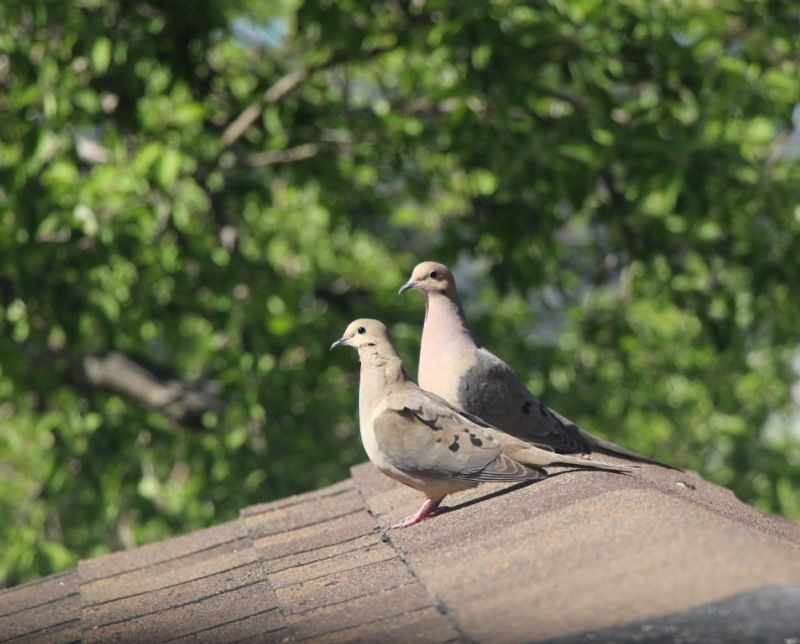
That slow, soft coo drifting across your Florida yard at sunrise is one of the most familiar bird sounds around. Many gardeners wonder if it means something about their plants, the weather, or the season.
The answer is more about the bird than about your yard. Here is what the call can tell you, what it cannot, and what to look for instead.
The familiar perch-coo is usually a social signal
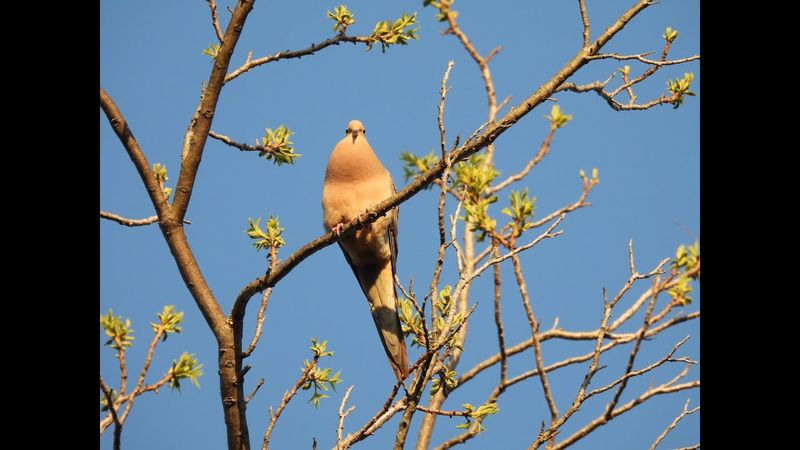
The sound most people picture is the perch-coo, a slow, rolling coo given from a branch, wire, or roof edge. It is not the only noise a mourning dove makes, and that matters for everything that follows.
Cornell Lab sound notes describe this call as mainly given by unmated males.
Why would a male coo from a perch? Cooing can advertise that he is there, both to rival males and to potential mates.
Think of it as a bird announcing his spot on the neighborhood map.
Researchers have looked closely at what drives this behavior. In a USGS-indexed study of perch coos, pairing was the primary factor associated with how often doves perch-coo.
In plain terms, whether a male has a mate shows up in how much he calls.
That is a pattern across many birds, not a decoder for the one outside your window. A single coo does not tell you the bird’s exact motive, and it does not prove he is without a mate.
Some birds coo a lot, some barely at all, and you rarely know the backstory.
What you can reasonably say is simple. A dove is using your yard or a perch close enough that you can hear him.
That is a nice thing to notice, and it is about as far as the call itself can take you.
Not every dove sound means courtship
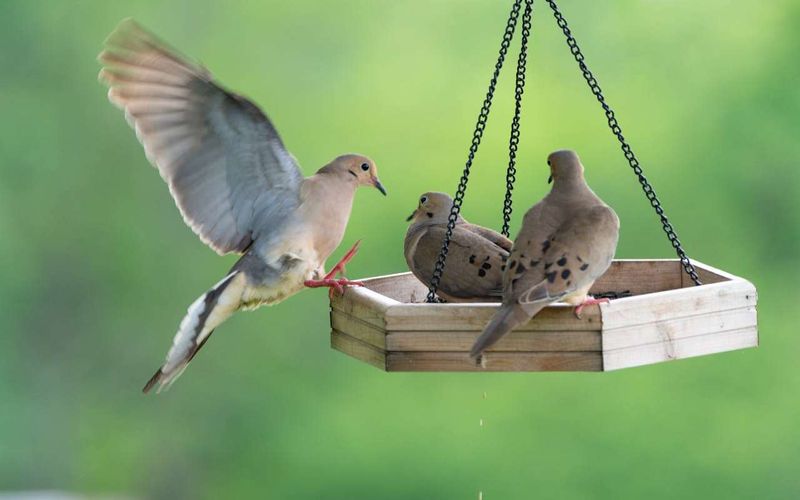
Dove sounds come in more than one flavor. Paired males give a separate nest call while nest-building, and females have a call tied to sitting on the nest, according to Cornell’s sound guide.
Hearing a coo does not automatically mean courtship, and it does not prove a nest is hiding in your hedge.
Wings make noise too. Doves can produce conspicuous wing sounds when they take off and land, so a sudden whistling flutter from the lawn may be a dove leaving, not calling.
Before you read meaning into a sound, work out which one you are hearing. A steady coo from a perch is one thing.
Soft calls near thick cover are another. A burst of wing noise is something else entirely.
Mix-ups happen with other species, too. Cornell’s species overview notes that a mourning dove’s coo can be mistaken for an owl, especially in low light.
The fix is easy and free. Find the bird with your eyes, then listen to the pattern of the call a few times.
Written spellings of bird sounds only go so far, and your own ears plus a clear view will settle the question faster.
A fall call does not reveal where the dove came from
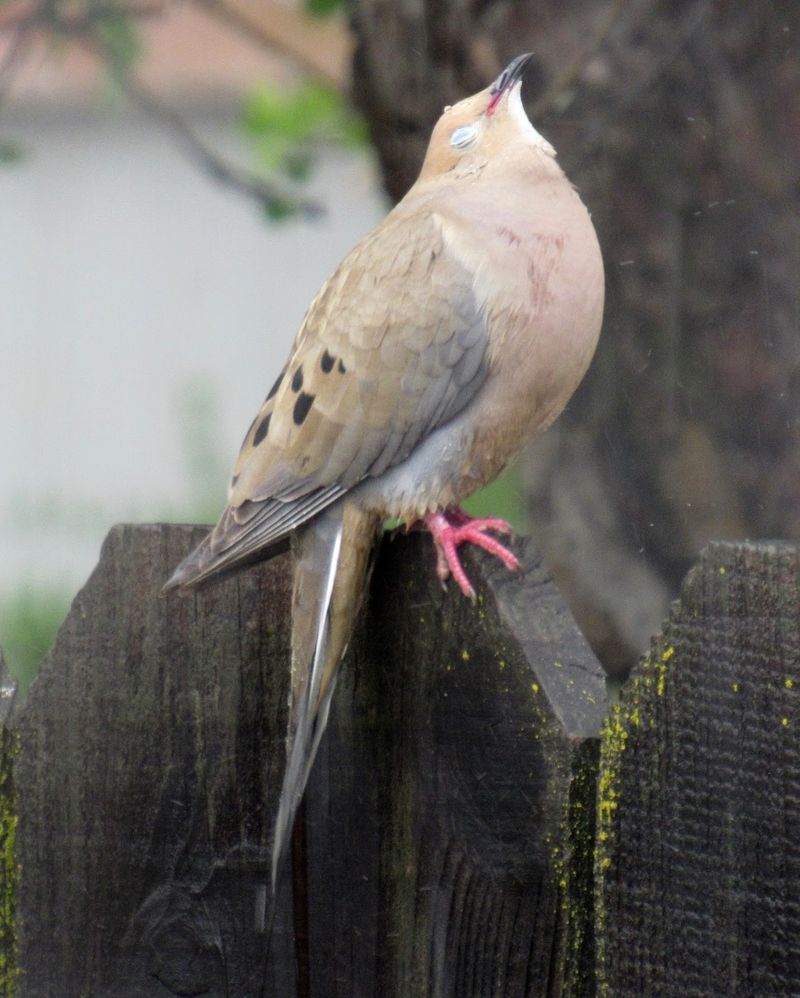
Hear a coo in October and it is tempting to think the bird just flew in from up north. Florida makes that guess unreliable.
UF/IFAS Extension says the state has both year-round resident mourning doves and seasonal migrants.
Both kinds look the same on your fence. A call does not carry a passport stamp, so it cannot tell you whether the bird hatched down the street or traveled a long way.
A fall coo is not a migration report.
Season adds another wrinkle. A Texas Parks and Wildlife account describes males setting up territories and cooing in spring.
That points to a breeding-related role for the sound, but it describes Texas in spring.
It does not mean every Florida fall coo happens for the same reason. With residents and migrants mixed together, a simple calendar story falls apart.
If you enjoy tracking birds, a better habit is to note what you actually see. Jot down how many doves show up, where they perch, and what they do on the ground.
Those notes will tell you far more than the timing of one morning coo.
Look at the yard, not the call, for habitat clues
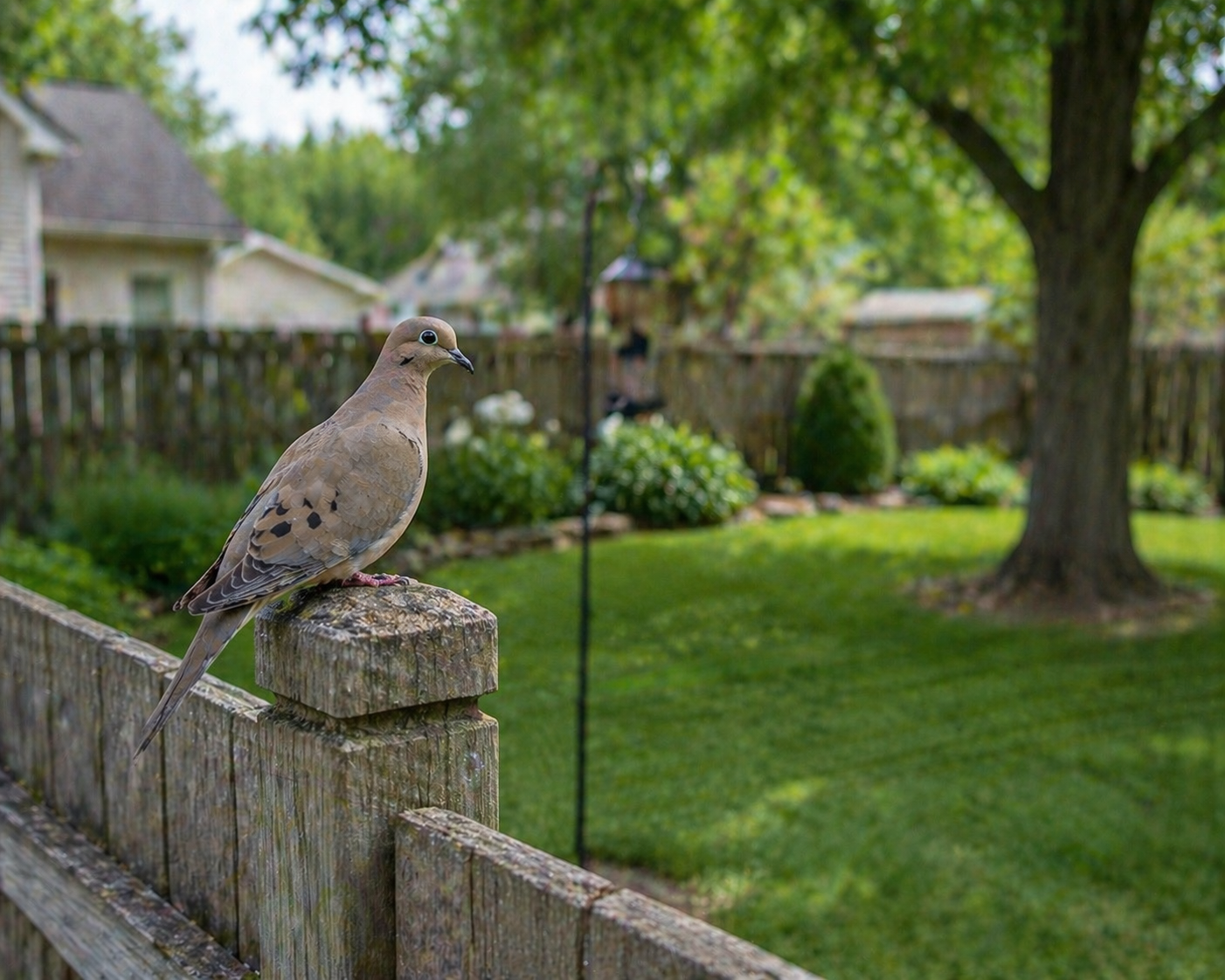
Your eyes will teach you more than your ears here. Mourning doves feed mostly on the ground, picking up seeds and grit, and they often sit on wires or other exposed perches, as described in Cornell’s mourning dove profile.
Watching where a dove walks, pecks, and rests shows how it actually uses your space.
Try a quick routine. Spend ten minutes with coffee and note whether the bird works over bare patches, mulch edges, or the base of a feeder.
Notice whether it drops from a wire to the lawn and back.
Keep the conclusions modest. Mourning doves are adaptable and live in many kinds of places, a point made in Texas A&M AgriLife dove habitat notes.
A dove showing up is compatible with lots of ordinary suburban yards, not only a carefully designed one.
That also means one sighting cannot tell you which resource drew the bird in. It could be seed, a perch, water, cover, or just a convenient path.
A single visit is not a grade for your yard.
Repeated, visible behavior is the useful clue. If doves keep returning to the same spot to feed or rest, that spot is working for them, and you can build on it.
Small yard choices can support doves without chasing a signal
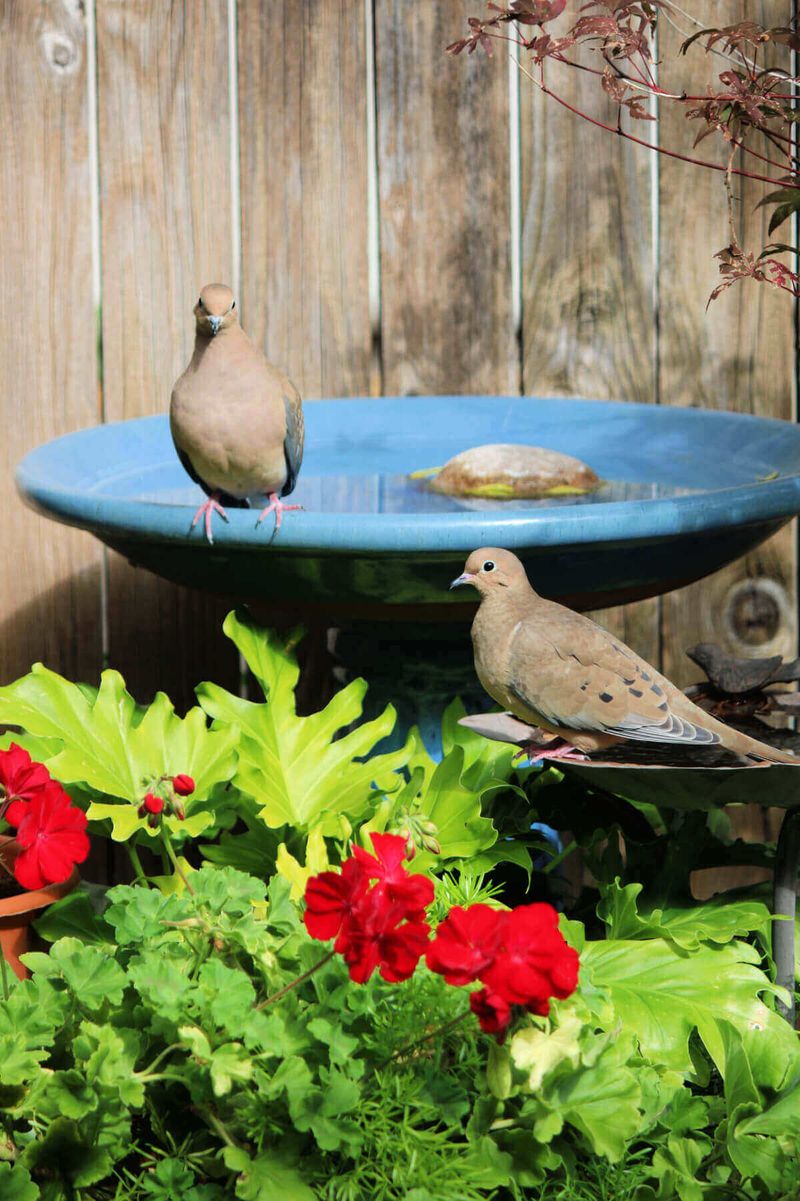
Supporting doves does not require reading their calls. It just takes a few steady habits that follow from how they live.
Leave some seed-producing plants in place and keep a little open, accessible ground where birds can forage.
Dense shrubs or evergreen trees can serve as cover, and Cornell’s guidance points to them for nesting cover. If you already have a thick hedge, you may not need to add anything.
These are general support measures, not a plan based on what any coo means.
If you decide to offer seed, keep it clean. Project FeederWatch advice is to clean seed feeders about every week or two, and more often during heavy use or wet weather.
Florida’s humidity can make that schedule matter even more.
Clear spilled seed and debris from the ground below feeders and birdbaths too. Old, damp seed is not a gift.
Skip tossing out handfuls of seed with no cleanup plan.
Finally, think about cats. Ground-feeding birds are especially vulnerable to prowling cats, so keeping pet cats indoors is one of the most helpful things you can do for doves.
Let the coo be a clue, not a yard score
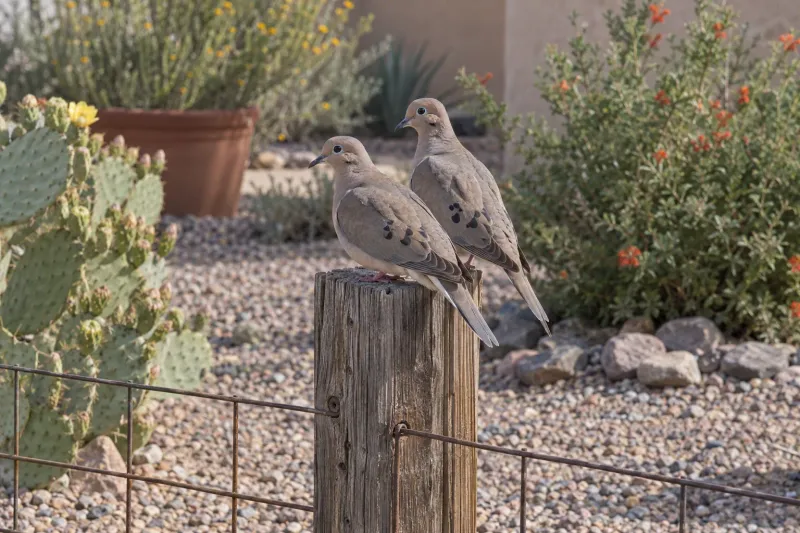
The perch-coo mostly points to social behavior, with a male dove using a nearby perch to announce himself. What the birds do on the ground and where they find cover says more about how your yard works.
A fall timing alone does not prove migration, since Florida hosts both residents and migrants.
For one easy action, protect a patch of open ground where seeds can be found, as dove habitat notes describe for ground-foraging birds. Then enjoy the sound for what it is: a neighbor saying hello.