
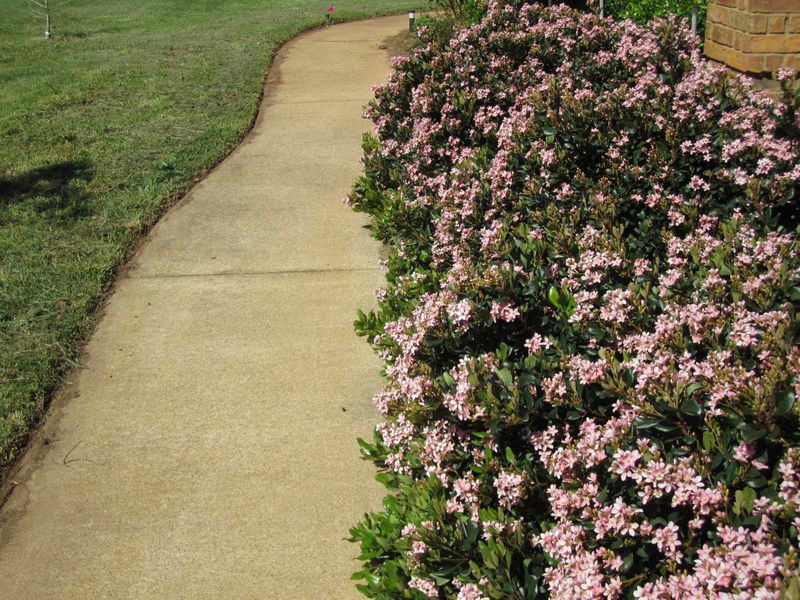
Texas clay soil swells when it rains and shrinks hard during dry spells, and thirsty roots near a slab can make that movement worse. That is why picking the right shrub for the bed beside your house matters more here than almost anywhere else.
The good news is that plenty of tough, good-looking shrubs stay compact, sip water politely, and keep their roots shallow and fibrous. Here are ten Texas-ready picks that can dress up your foundation beds without putting your slab at risk.
1. Dwarf Yaupon Holly
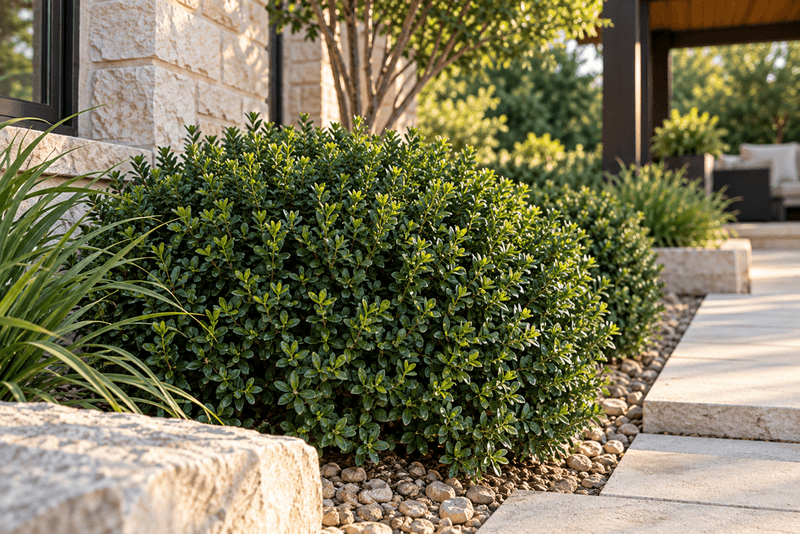
Walk down almost any street in Austin or Dallas and you will spot little green mounds hugging brick walls. Those are usually dwarf yaupon hollies, and there is a good reason builders love them.
They stay around 3 to 4 feet tall and wide with almost no trimming.
The roots are fine and fibrous rather than thick and woody, so they are far less likely to pry at a slab than a tree or large shrub. Once established, a Texas native like this can usually handle drought and heat with only occasional deep watering.
Plant them about 3 feet out from the wall so air can move and you can reach the siding. ‘Nana’ and ‘Schillings’ are the most common types at Texas nurseries, and both shrug off alkaline soil.
2. Texas Sage
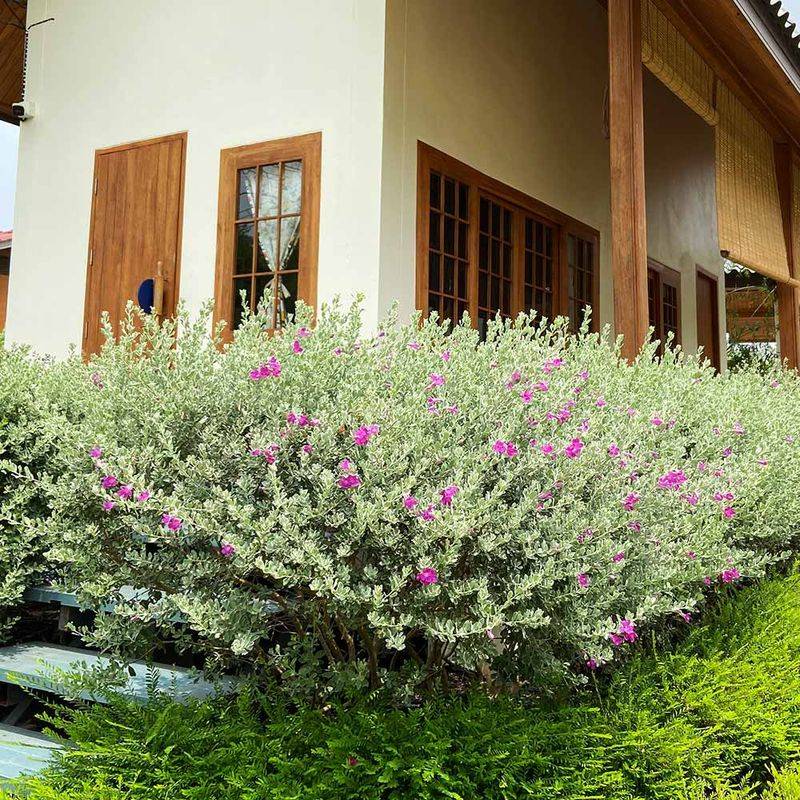
Old-timers call it the barometer bush, because it tends to burst into purple flowers right after a summer rain. That party trick alone makes Texas sage a fun neighbor for your front walk.
Its silvery leaves reflect heat, and it may need water only a few times a month in a dry summer once it settles in. Less water near the foundation means less swelling and shrinking of clay soil close to the slab.
Choose a compact variety such as ‘Compacta’ or ‘Green Cloud’ dwarf types, and give it full sun with good drainage. Soggy soil is the one thing it truly hates.
3. Dwarf Indian Hawthorn
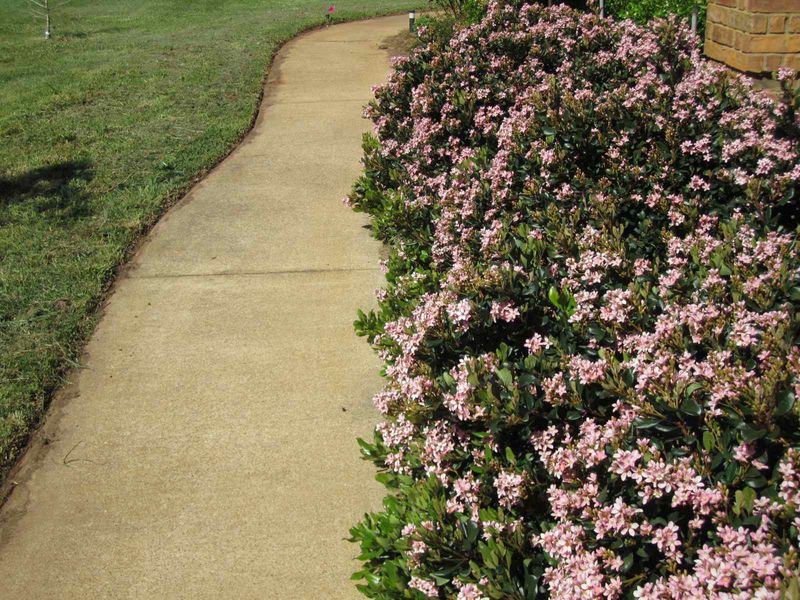
Spring in Houston often arrives with a pink and white froth along porches, courtesy of Indian hawthorn. These low evergreen shrubs typically top out between 2 and 4 feet.
Their compact root system makes them a sensible pick under windows, where taller shrubs would block views and need constant shearing. Glossy leathery leaves also hold up well to Gulf Coast humidity and salty breezes.
Look for disease-resistant varieties like ‘Snow White’ or ‘Eleanor Tabor’ to reduce leaf spot problems. Water at the base rather than overhead to keep foliage dry.
4. Flame Acanthus
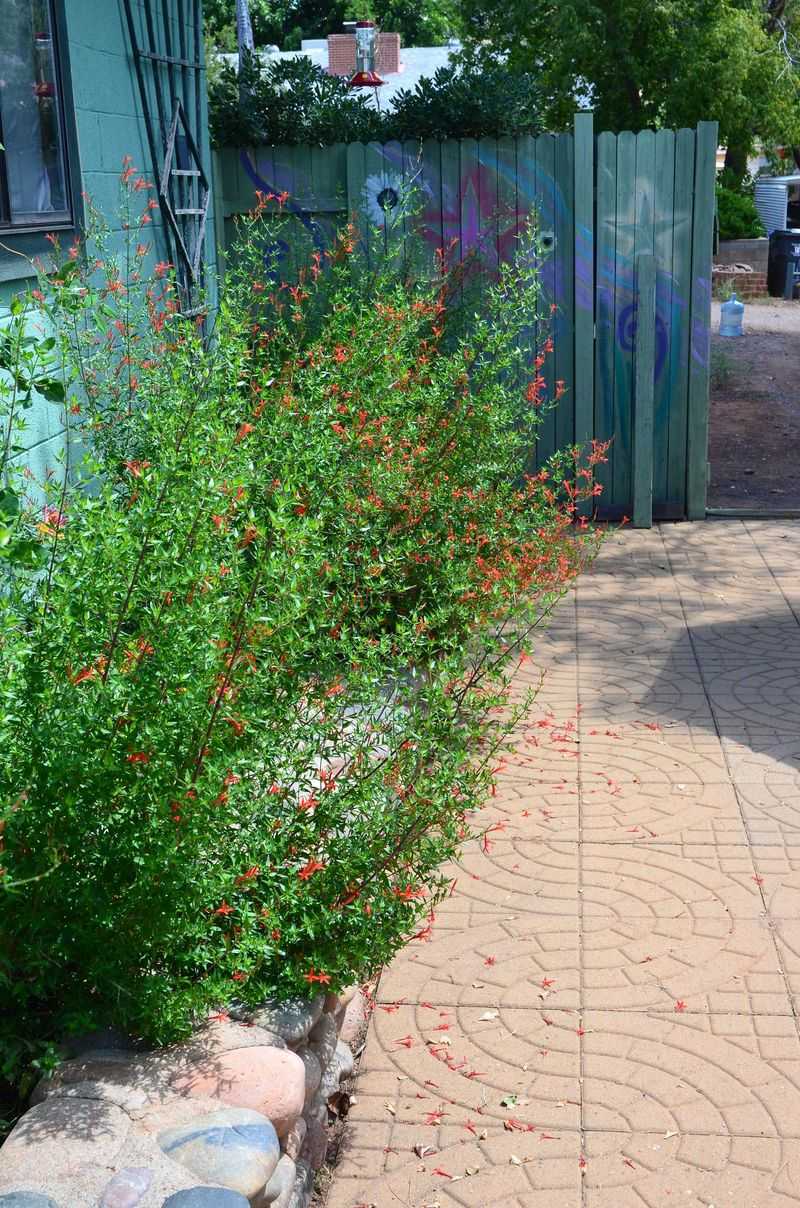
Want hummingbirds outside your kitchen window in August? Flame acanthus pumps out orange tubular flowers from midsummer to frost, right when many plants give up.
Native to the Edwards Plateau, it is a woody little shrub that usually stays 3 to 4 feet tall. Many gardeners cut it back hard in late winter, which keeps it tidy and its roots modest.
Once rooted, it can get by on very little supplemental water. That makes it a smart fit for beds where you want color without soaking the soil next to the slab.
5. Dwarf Abelia
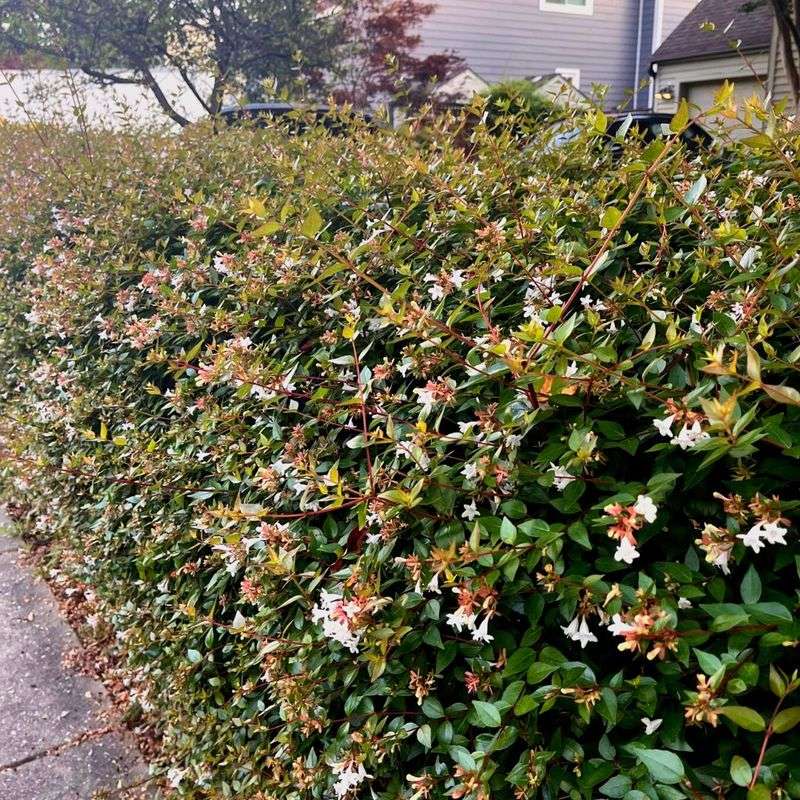
Some shrubs shout, and some just quietly look good all year. Dwarf abelia belongs to the second group, with small white flowers that bees adore and leaves that shift to bronze in cooler months.
Varieties like ‘Rose Creek’ and ‘Kaleidoscope’ stay roughly 2 to 3 feet tall. Their shallow, fibrous roots pose little threat to foundations.
Abelia tolerates partial shade, which helps on the north or east side of a house. Give it decent drainage and a layer of mulch, and it asks for little else.
6. Turk’s Cap
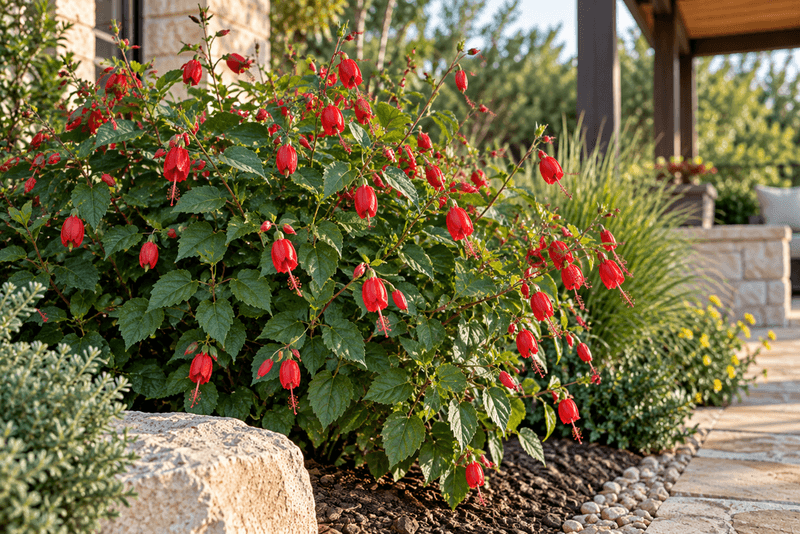
Shady spots along a house can be tough to fill, but Turk’s cap actually likes them. Its red flowers look like tiny swirled turbans and never fully open, which hummingbirds find irresistible.
Plants typically grow 3 to 5 feet and die back in hard freezes in North Texas, returning from the roots in spring. That seasonal reset keeps the shrub from getting woody and oversized.
It handles clay, shade, and drought better than most bloomers. Trim it back in winter and keep it a few feet off the wall for airflow.
7. Dwarf Barbados Cherry
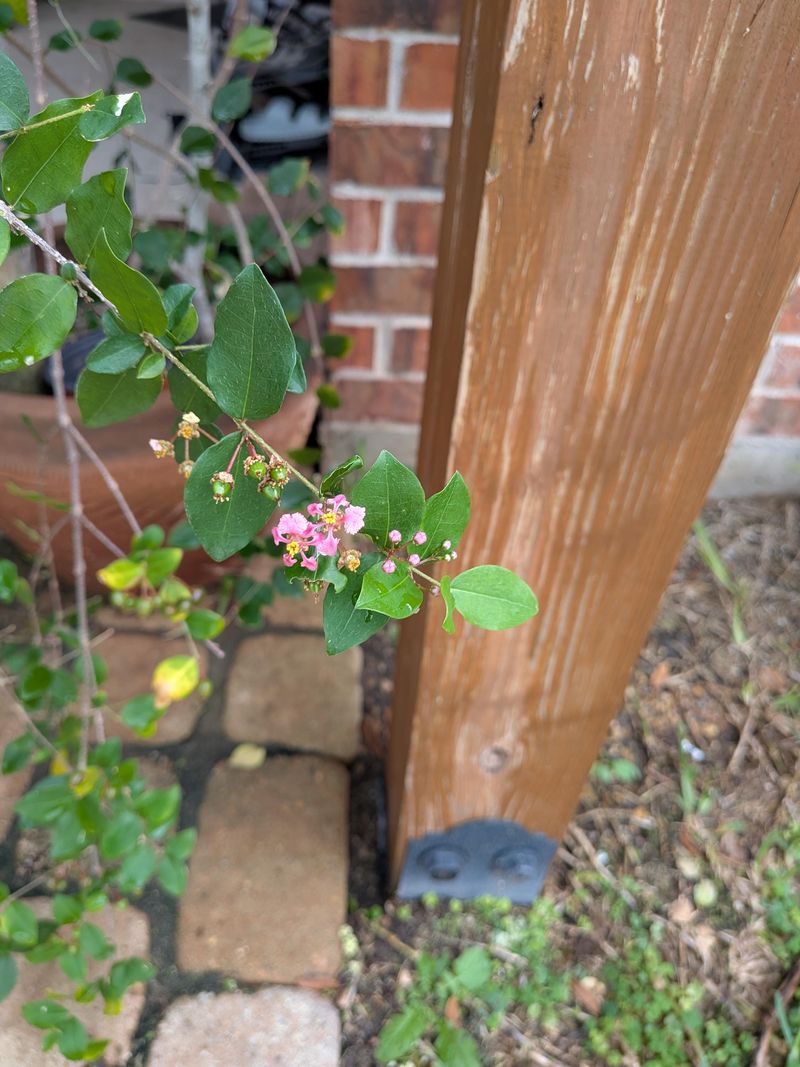
South Texas gardeners have a secret weapon for low hedges: dwarf Barbados cherry. Tiny pink flowers appear off and on through the warm season, followed by little red fruits that birds quickly claim.
The dwarf form usually stays 2 to 3 feet tall with small, glossy leaves. It fits under windows nicely and its roots stay compact.
Cold can nip it in the Panhandle, so it shines best from San Antonio south and along the coast. Light, regular watering in the first summer helps it settle in.
8. Damianita
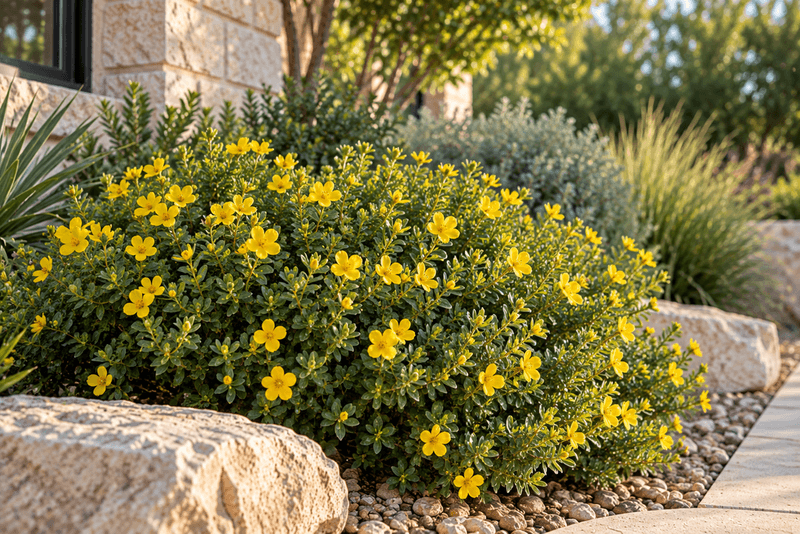
Here is a shrub so small you might mistake it for a groundcover. Damianita forms fragrant, needle-leaf mounds about a foot tall that glow with golden daisies in spring and fall.
Its tiny size and extreme drought tolerance make it ideal for the hot west-facing wall where reflected heat cooks other plants. Little water means little soil movement near the slab.
Gravel or decomposed granite mulch suits it better than heavy wood mulch. Perfect drainage is a must, so mound the soil slightly if your bed holds water.
9. Dwarf Wax Myrtle
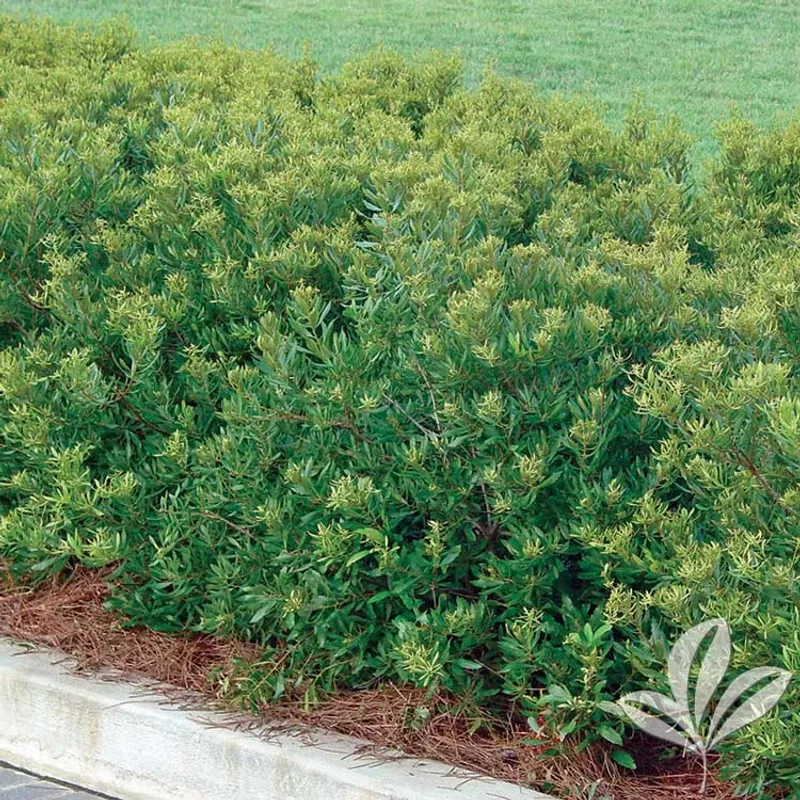
Need to hide the AC unit or a utility box? Dwarf wax myrtle builds a dense, olive-green screen that smells pleasantly spicy when you brush past.
Unlike the full-size wax myrtle, which can become a small tree, the dwarf form generally stays 3 to 5 feet. Keep it near that size with a light trim, and the roots remain modest.
It handles soggy coastal soil and salt spray, a plus in hurricane country. Plant it at least 3 feet from walls and equipment for service access.
10. Rock Rose
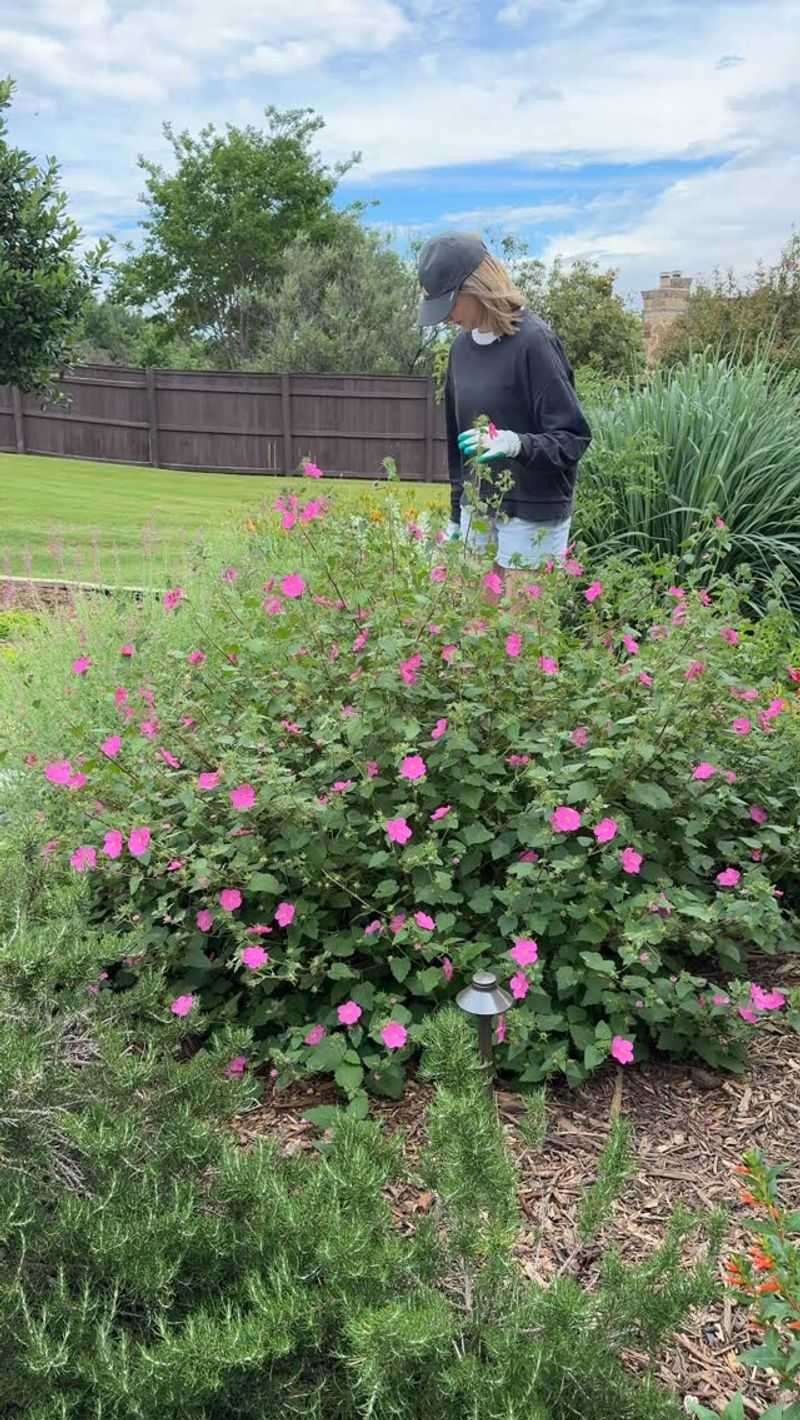
Every morning in summer, rock rose opens fresh pink blossoms that look a bit like tiny hibiscus. By evening they fade, and the next day brings a new crop.
This Texas native stays about 2 to 3 feet, with airy stems that never crowd the house. It is happy in rocky, alkaline soil and needs only occasional watering once established.
Shear it back by a third in late winter to keep it full. Pair it with damianita or Texas sage for a low-water bed that blooms for months.
One quick tip for any shrub on this list: water evenly year-round rather than in big swings, since steady moisture may help reduce clay soil movement under your slab.