
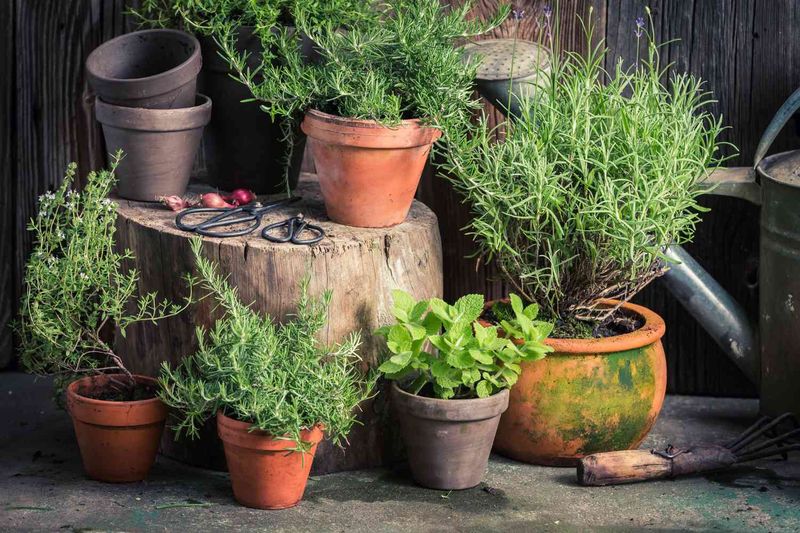
Most Florida porch owners grow rosemary because it smells great and looks sharp in a pot. What fewer people realize is that researchers have looked closely at rosemary’s natural compounds and what they do to certain insects and rodents. The findings are genuinely interesting, but they come with some important limits worth understanding before you swap your pest spray for a potted herb. Here is what the science actually shows, and how to get the most out of rosemary on a Florida porch.
Reset the promise and identify the right rosemary
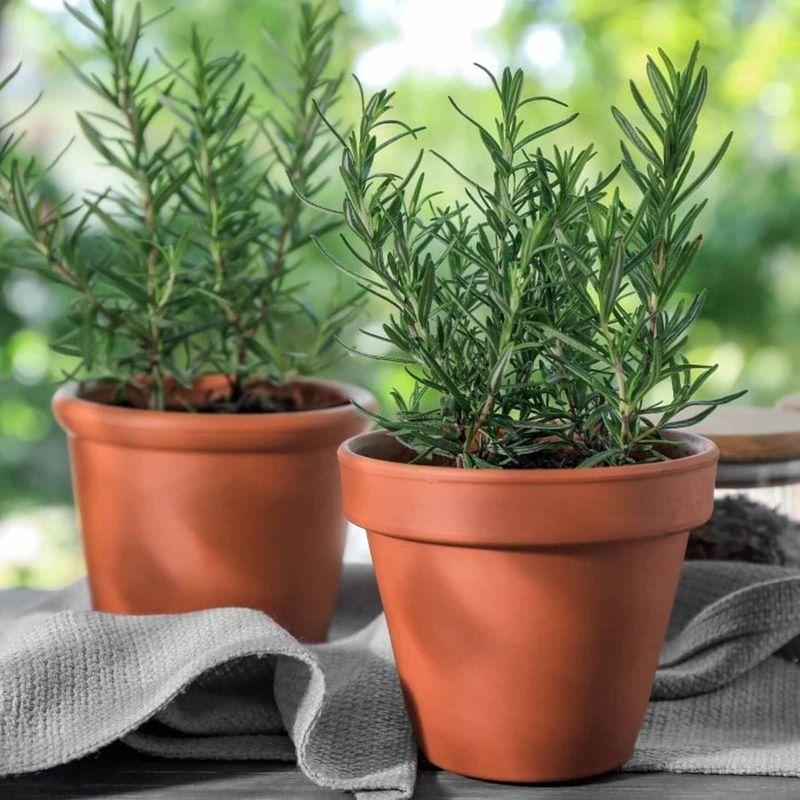
Culinary rosemary, known scientifically as Salvia rosmarinus, is a genuinely practical container plant for a Florida porch. UF/IFAS gardening guidance describes it as an attractive, drought-tolerant herb that thrives in containers, prefers at least six hours of direct sun each day, and asks only for well-drained soil and restrained watering. Those qualities make it an honest candidate for a sunny south or central Florida porch, even if the pest-control reputation attached to it needs a serious correction.
The plant that often gets tangled up in rosemary’s name is Florida rosemary, Ceratiola ericoides. That is a native Florida shrub with its own ecological role, documented in UF/IFAS native-plant publications, and it shares almost nothing with culinary rosemary beyond a common name. The two plants have different scientific names, different uses, different growing conditions, and completely different bodies of research. Any claim about one cannot be transferred to the other, so the rest of this article refers specifically to Salvia rosmarinus.
The headline claim that a single potted plant keeps both rats and cockroaches away from a Florida porch is not supported by current evidence. Laboratory studies have tested concentrated rosemary essential oil against specific cockroach species and found meaningful repellent effects. A separate line of research has examined plant-derived compounds and rodents. But as a systematic review of plant-based rodent repellents makes clear, results have been inconsistent, especially outside controlled settings.
A living container plant sitting on an open porch is a very different situation from a laboratory arena dosed with measured concentrations of extracted oil.
Rosemary earns a place on a Florida porch for its looks, its scent, and its usefulness in the kitchen. Its role as a decorative, aromatic herb is well supported. Its role as a reliable outdoor pest barrier is not.
Why culinary rosemary suits a Florida container
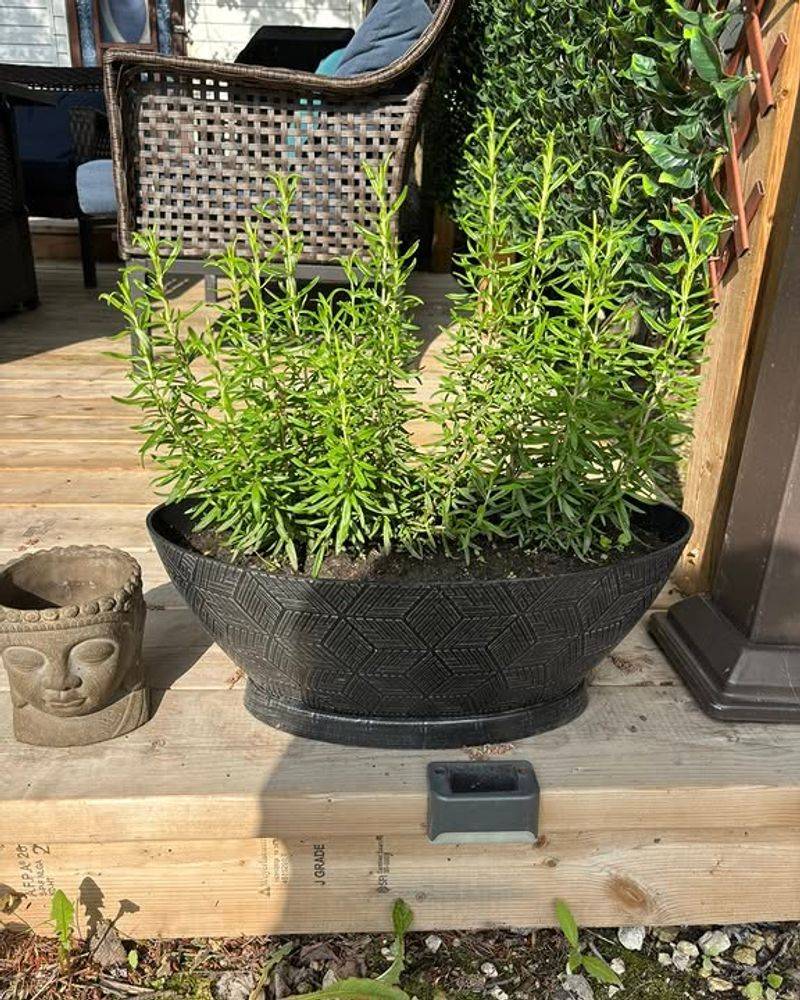
Florida’s sandy, fast-draining soil is usually the enemy of garden plants, but rosemary treats it as an advantage. UF/IFAS rosemary guidance recommends full sun with at least six hours of direct light each day, well-drained soil, and a watering schedule that lets the root zone dry out between sessions. Overwatering kills rosemary faster than Florida heat does, so the state’s tendency toward short, intense rain events followed by dry periods actually suits the plant well when drainage is managed properly.
Container growing keeps rosemary at a manageable scale. Plants grown in pots stay smaller than those planted directly in the ground, which makes them easier to position, prune, and relocate as needed. A container also gives you direct control over soil quality: you can fill it with a well-drained mix rather than relying on whatever native soil sits under your porch slab. UF/IFAS container gardening guidance recommends choosing a pot with adequate drainage holes and monitoring moisture carefully, since containers can dry out faster than ground beds during Florida’s summer heat.
Rosemary also accepts decorative shaping better than most herbs. UF/IFAS notes that rosemary can be trained into topiary forms, including spirals and standards, making a container plant look like a planned design element rather than a stray herb. Regular light pruning keeps the plant compact and encourages fresh, aromatic growth, which is also the growth you would harvest for cooking.
In most of Florida, rosemary can stay outdoors year-round. Gardeners in the northern part of the state or in areas that see occasional hard freezes should be ready to move the container indoors or cover the plant when temperatures threaten to drop below freezing. For the majority of the Florida peninsula, though, rosemary simply sits in its pot, asks for sun and occasional water, and does its job without much fuss.
What rosemary oil shows about cockroaches
The cockroach research tied to rosemary is more substantive than most plant-based pest claims. A laboratory study on brown-banded cockroach nymphs found that rosemary essential oil produced high repellency and substantial mortality at the concentrations tested. Brown-banded cockroaches, Supella longipalpa, are one of the species found in Florida homes, and the results were specific to that species under those controlled conditions.
A second line of research looked at American cockroaches, Periplaneta americana, which are the large reddish-brown roaches Florida homeowners frequently encounter near drains, garages, and outdoor areas. Research on repellency of essential oils against American cockroaches found that several plant-derived oils showed repellent activity, adding to the picture that volatile plant compounds can affect cockroach behavior in controlled settings.
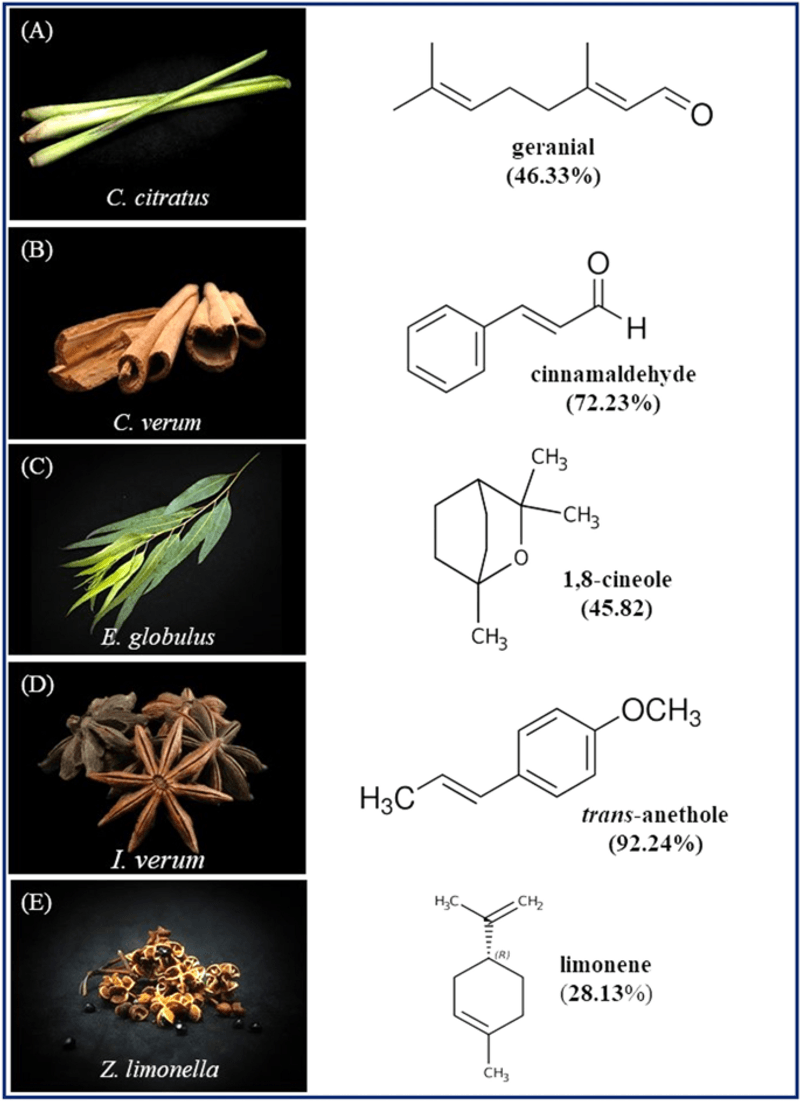
What makes these findings interesting is the mechanism. Rosemary contains compounds such as 1,8-cineole and camphor that appear to interfere with the nervous system of certain insects at sufficient concentrations. Those compounds are present in the plant’s leaves and are released more strongly when leaves are bruised or crushed than when the plant simply sits undisturbed.
The practical boundary around this research is firm, though. Every study tested extracted, concentrated essential oil applied at measured doses in a closed or semi-closed environment. None of them tested a live rosemary plant sitting on an open porch. Penn State Extension guidance on repellent safety reinforces the distinction between concentrated formulations and the ambient scent a plant releases naturally.
The laboratory result and the porch scenario are separated by a significant gap in dose, delivery, and environmental conditions.
Why the cockroach evidence does not prove a porch barrier
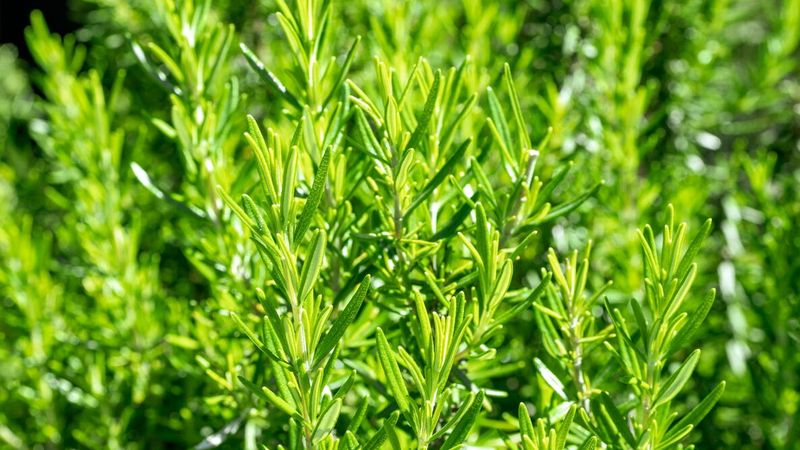
Laboratory studies use measured quantities of oil applied directly to a surface or to cockroach bodies in a confined space. A living rosemary plant on a ventilated porch releases volatile compounds at a fraction of that concentration, and the open air disperses them almost immediately. There is no controlled dose, no enclosed chamber, and no way to know how much scent actually reaches a cockroach moving along a baseboard several feet away.
Plant size matters too. A container-grown rosemary plant is compact by nature. The brown-banded cockroach study used concentrated oil at specific measured concentrations, not the ambient output of a small potted herb. Even if you crush a few leaves and briefly intensify the scent, the effect fades quickly outdoors.
Florida’s heat, humidity, and regular afternoon breezes further reduce how long any released compound lingers at a level that might affect insect behavior.
Species specificity is another real limit. The American cockroach essential-oil research and the brown-banded cockroach study each tested one species under specific conditions. Florida is also home to German cockroaches, smoky brown cockroaches, and several other species. A result from one cockroach species in a laboratory does not automatically transfer to a different species in a different environment.
Penn State Extension cautions that herbs generally do not directly repel insect pests in typical garden or home settings; at best, they may confuse or mask chemical cues in specific situations. That is a reasonable way to frame what a porch rosemary plant might do: it adds a competing scent to the environment, but it does not create a reliable barrier around your door.
The evidence for deterring rats remains inconsistent
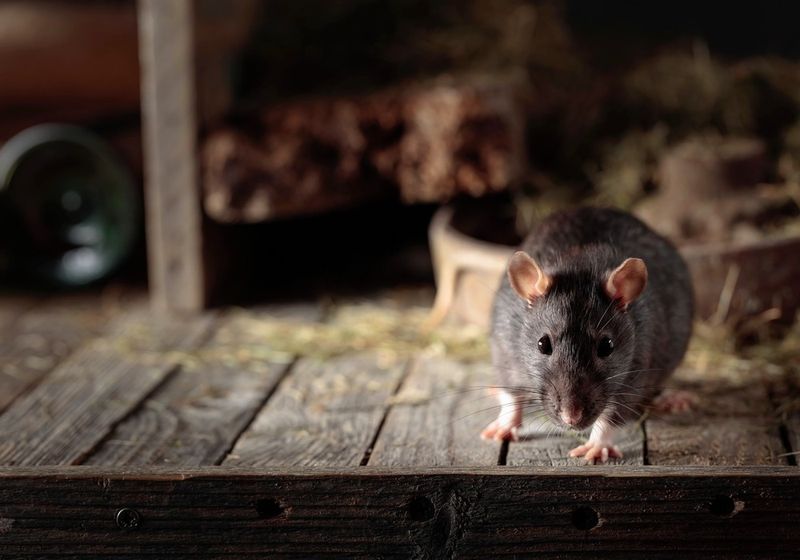
Rats deserve their own analysis rather than borrowed conclusions from cockroach research. The two pest categories involve different biology, different behavior, and a separate body of evidence. Rats are motivated primarily by food, water, and shelter, and they are persistent enough to investigate almost any area that offers those resources, regardless of nearby plant scents.
A systematic review examining plant secondary metabolites as rodent repellents found inconsistent performance across laboratory, enclosure, and field studies. Some experiments using peppermint oil or other plant extracts showed deterrent effects in controlled arenas, but those results did not hold up reliably when tested in more realistic settings. The review did not establish that a living herb plant keeps rats away from a home or porch.
The studies that do show some effect typically involve direct application of concentrated oil, cotton balls soaked in extract, or laboratory arenas where rats have limited options. A Norway rat or roof rat navigating a Florida neighborhood has far more choices and far more motivation than a lab animal in a small enclosure. Food scraps, pet food left outdoors, open garbage bins, and dense vegetation near the foundation are all stronger attractants than a rosemary plant is a deterrent.
CDC rodent-control guidance focuses on sealing entry points and removing food, water, and shelter sources, with no mention of aromatic plants as a meaningful control measure. EPA integrated pest management principles follow the same logic: address conditions that attract and support pests first, then monitor, and apply targeted control only when monitoring confirms it is needed. A rosemary plant can share porch space with those measures, but it should not be counted as one of them.
Grow rosemary for appearance and aroma first
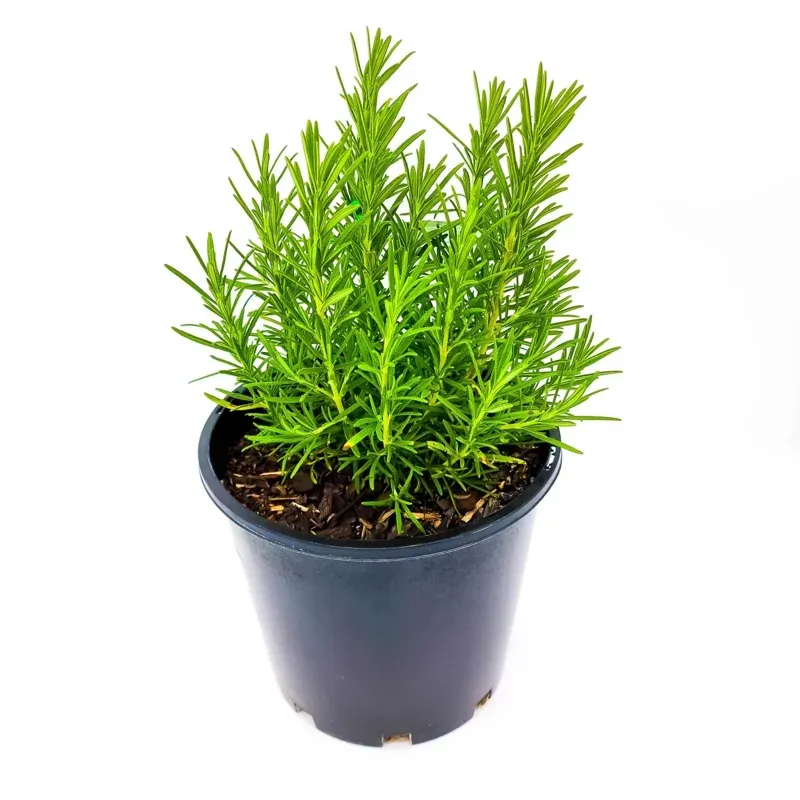
Setting up a rosemary container for a Florida porch starts with light. The plant needs at least six hours of direct sun each day, so a south- or west-facing porch position usually works well. Spots that receive only morning sun or heavy afternoon shade will produce a leggy, weak plant that is more vulnerable to root rot and less aromatic than one grown in full sun.
Soil and drainage matter as much as sunlight. UF/IFAS rosemary guidance is specific: use well-drained soil and let the root zone dry out between waterings. A heavy potting mix that holds moisture will kill rosemary through root rot long before Florida heat does. Choose a container with drainage holes and, if you tend to water on a schedule rather than by feel, consider adding perlite to the mix to improve drainage further.
Water deeply when you do water, then leave the plant alone until the top inch or two of soil is dry.
Pruning keeps the plant tidy and encourages the kind of fresh, volatile-rich growth that makes rosemary so aromatic. UF/IFAS rosemary topiary guidance explains that the plant can be shaped into spirals, standards, or simple mounded forms with regular trimming. Even without formal topiary shaping, a light trim every few weeks keeps the plant from becoming woody and sprawling. The clippings go straight to the kitchen, which is as useful a return as any container herb can offer.
Gardeners in northern Florida or areas that occasionally see hard freezes should treat the container as movable. When temperatures are forecast to drop below freezing, bring the pot inside or into a garage, or cover it with frost cloth. Most of the Florida peninsula does not need to worry about this regularly, but having a plan saves a plant that may have taken a full season to reach a good size. The decorative and aromatic purpose the plant serves does not require pest-control expectations layered on top of it.
Use exclusion and sanitation for actual pest management
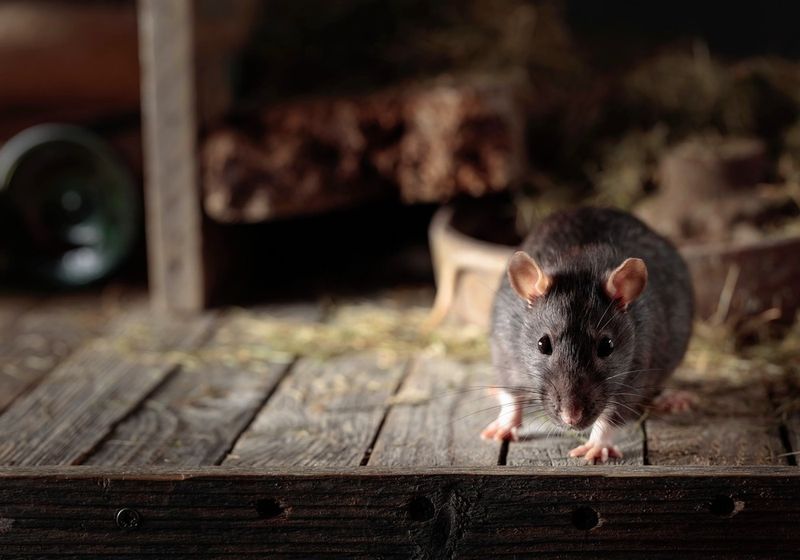
Rats and cockroaches share a common vulnerability: both depend on reliable access to food, water, and shelter. Remove those resources and you make any outdoor space significantly less attractive, regardless of what plants you have in pots. That is the logic behind the approach CDC rodent-control guidance and EPA pest management both recommend, and it applies equally to cockroach pressure on a Florida porch.
Start with entry points. Gaps around doors, utility lines, pipes, and vents are the primary routes rodents use to move from outside to inside. A rat can squeeze through a hole the size of a quarter; a mouse needs even less space. Seal gaps with steel wool, caulk, hardware cloth, or appropriate weatherstripping.
Check where the porch meets the main structure and where any utility lines pass through the wall or floor.
Food and garbage management comes next. Store pet food in sealed hard-sided containers rather than leaving bags open on the porch. Clean outdoor grills after each use, since grease residue is a reliable attractant. Secure garbage bins with tight-fitting lids, and do not leave food scraps, compost, or fallen fruit near the porch.
CDC post-disaster rodent guidance reinforces that removing food sources is the single most effective way to reduce rodent pressure around a home.
Clutter and vegetation provide shelter. Stacked wood, piles of leaves, overgrown shrubs against the foundation, and stored items under the porch all create nesting opportunities. Keep the area under and around the porch clear, trim vegetation back from the structure, and store items off the ground where possible.
EPA integrated pest management guidance recommends a specific sequence: address food, water, shelter, and entry routes first, then monitor for pest activity using traps or sticky cards, and use chemical controls only when monitoring confirms that the pest pressure warrants it. Rosemary on the porch can coexist with all of these steps, but it does not replace any of them.
Handle essential oils, pets, and storms carefully
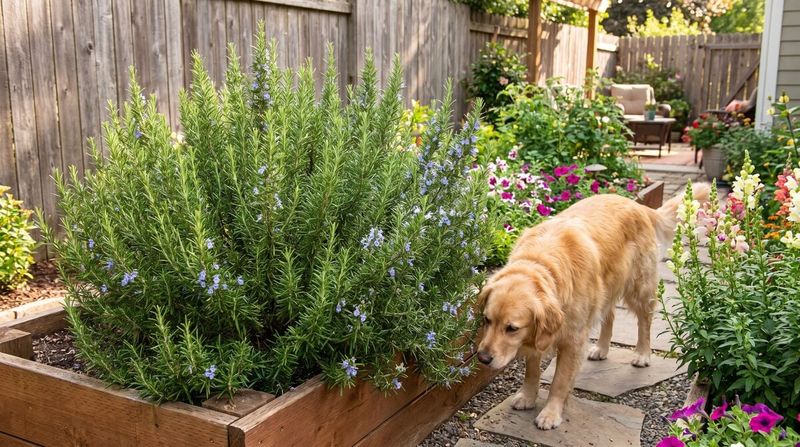
One distinction worth making clearly: the rosemary plant and rosemary essential oil are not the same thing from a safety standpoint. ASPCA lists the rosemary plant as non-toxic to dogs and cats, which means a pet that brushes against the pot or chews a leaf is not in immediate danger. That is genuinely reassuring if you share your porch with animals.
Concentrated essential oils are a separate matter entirely. ASPCA warns that concentrated essential oils can harm pets through ingestion, skin or coat exposure, and inhalation. The concentration level in a commercial or homemade essential-oil preparation is far higher than anything a plant releases on its own. Diffusing oils on a porch where pets rest, applying homemade sprays near food preparation areas, or leaving open bottles within reach of animals all create risks that the intact plant does not.
Pet Poison Helpline specifically identifies peppermint oil as hazardous to cats, and the general warning about concentrated plant oils extends across multiple species. If you are considering any kind of essential-oil application around your porch as a pest deterrent, the safety profile for pets, children, and wildlife is not controlled the way it is in a commercial registered pesticide. The intact plant is the safer, more practical option.
Florida’s hurricane season adds one more practical consideration for any container plant. UF/IFAS hurricane landscaping guidance lists container plants and hanging baskets among the loose objects that need to be secured or moved indoors before a storm. UF/IFAS Okaloosa County extension also recommends moving potted plants to a sheltered location ahead of storm conditions. A rosemary container is light enough to bring inside quickly, which makes storm prep straightforward.
Choose rosemary as a decorative extra, not a pest solution
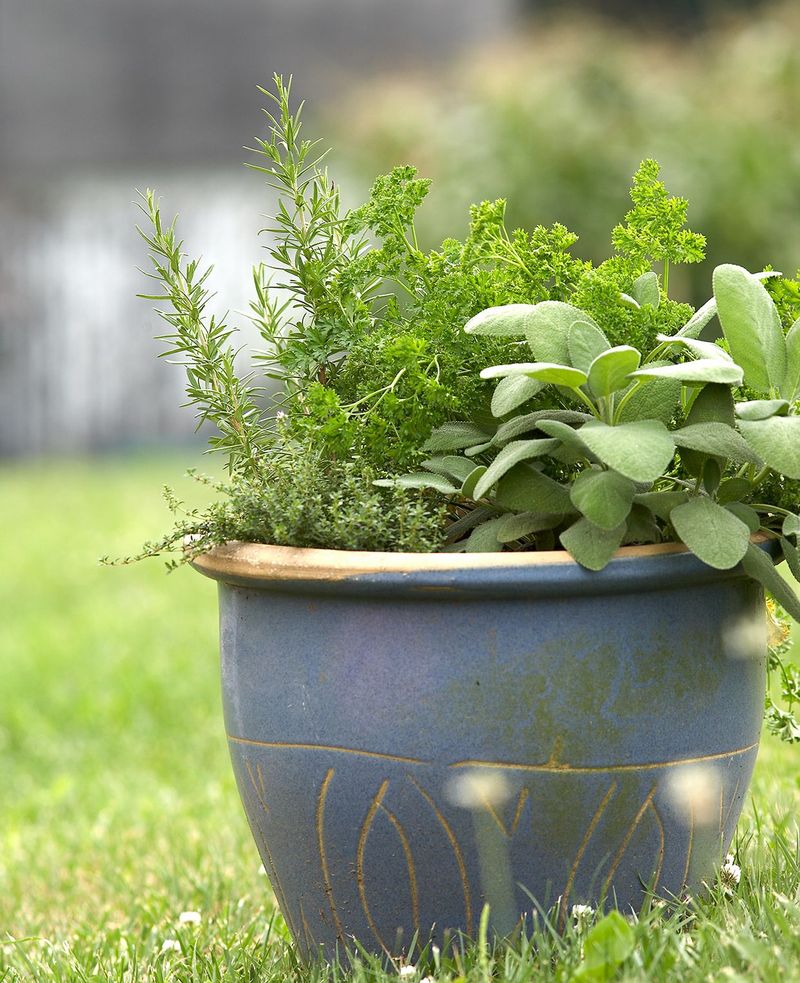
Culinary rosemary earns a place on a Florida porch through its own merits. UF/IFAS confirms it as a container-friendly, drought-tolerant herb suited to the state’s sun and drainage conditions. It looks sharp, it smells good when you brush past it, and it gives you a ready supply of fresh herb for cooking. Those are real, consistent benefits that hold up regardless of what the pest-control headlines say.
Any outdoor pest-deterrent effect from the living plant is possible but limited and unproven in real-world conditions. The laboratory evidence involving concentrated rosemary oil and specific cockroach species is worth knowing about, but it does not translate directly to a porch scenario. For rats, the evidence is weaker still. A single container plant has not been shown to stop either pest from visiting an outdoor space.
When rats or cockroaches become a persistent problem, CDC and EPA integrated pest management guidance point to inspection, exclusion, sanitation, and targeted control as the reliable path forward. Rosemary can share porch space with all of those measures. The herb that does its best work in a cast-iron skillet probably does its second-best work simply by making your porch look and smell better than a bare concrete slab.