
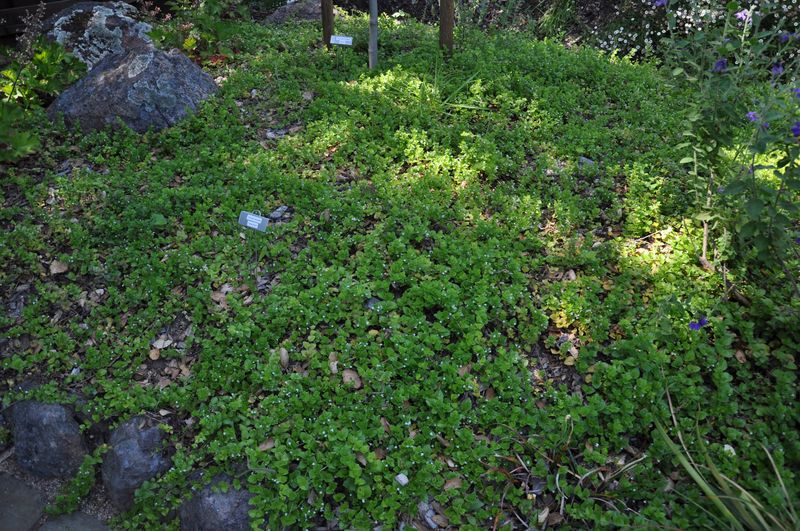
Watering the ground under a native oak in summer can slowly kill the tree, yet many California homeowners do it every week without knowing. Valley oaks and coast live oaks evolved with wet winters and bone-dry summers, and warm, damp soil around their trunks invites root rot fungi.
The good news is you don’t need bare dirt under your oak. The plants below grow happily in dry shade, feed local wildlife, and ask for nothing once summer arrives.
1. Hummingbird Sage (Salvia spathacea)
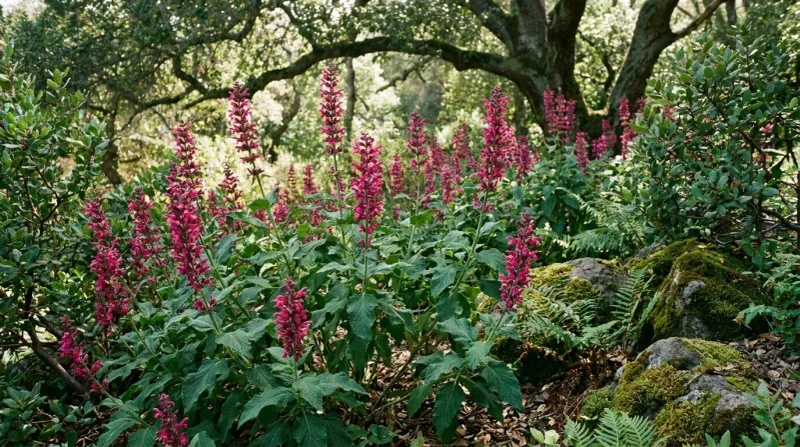
Picture a hummingbird zipping in at eye level, hovering over a spike of deep magenta blooms in the shade of your oak. That scene plays out every spring wherever hummingbird sage gets settled in.
Its wrinkly, fruity-scented leaves spread slowly by underground runners, forming a loose carpet that can fill the dry ring under a coast live oak. Flowers usually arrive from late winter into spring, right when Anna’s hummingbirds are nesting and hungry.
Come summer, the plant may go a bit dormant and dusty-looking. That’s normal, so resist the hose.
Trim spent stalks in fall and let the winter rains wake it up again.
2. Douglas Iris (Iris douglasiana)
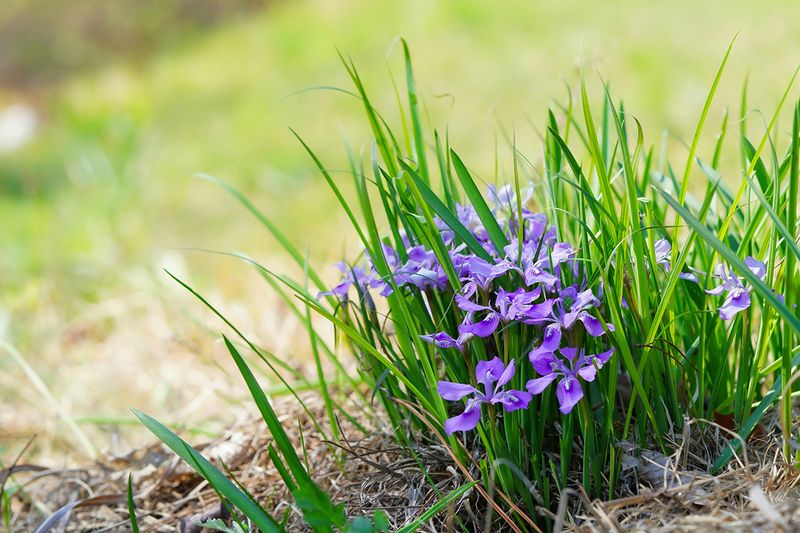
Few natives deliver this much spring color for this little effort. Douglas iris forms tidy clumps of strappy evergreen leaves, then bursts into purple, lavender, cream, or yellow flowers around March and April.
Along the coast and in the Bay Area, it handles oak shade with ease. Inland gardeners in hotter valleys may find it prefers the brightest, morning-sun edge of the oak’s canopy.
Once established, it typically gets by on rainfall alone. Bumblebees work the blooms, and the clumps can be divided in fall to stretch your planting at no cost.
3. Creeping Snowberry (Symphoricarpos mollis)
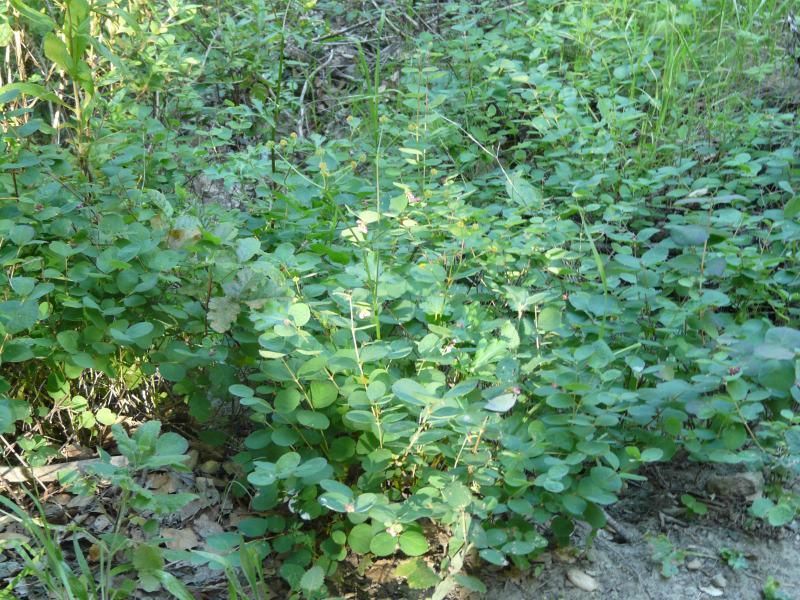
Ever notice a low, twiggy shrub with round leaves and little white berries growing wild in oak woodlands? There’s a decent chance you were looking at creeping snowberry, a plant that has spent thousands of years living exactly where your oak sits.
It rarely tops two feet and spreads through runners, which makes it handy for holding soil on shady slopes. The pale berries hang on into fall and winter, and birds like thrushes and towhees may pick through them.
Plant it in fall so the rains can do the hard work. After a year or two, summer water usually isn’t needed at all.
4. Yerba Buena (Clinopodium douglasii)
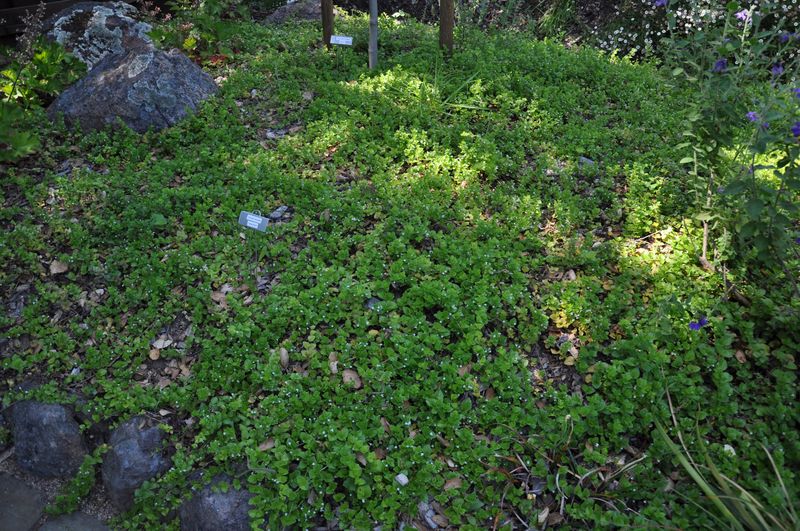
San Francisco was once named after this humble little mint. Spanish settlers called the area Yerba Buena, meaning good herb, after the trailing plant growing on its hillsides.
Brush the leaves and you’ll get a sweet, minty scent that’s lovely along a shaded path. The stems creep and root as they go, softening rocks and edging stepping stones under the oak canopy.
Honest note: in hot inland areas, yerba buena may brown out during a long dry spell. Coastal gardeners usually see it stay greener, and it bounces back with fall rain either way.
5. California Fuchsia (Epilobium canum)
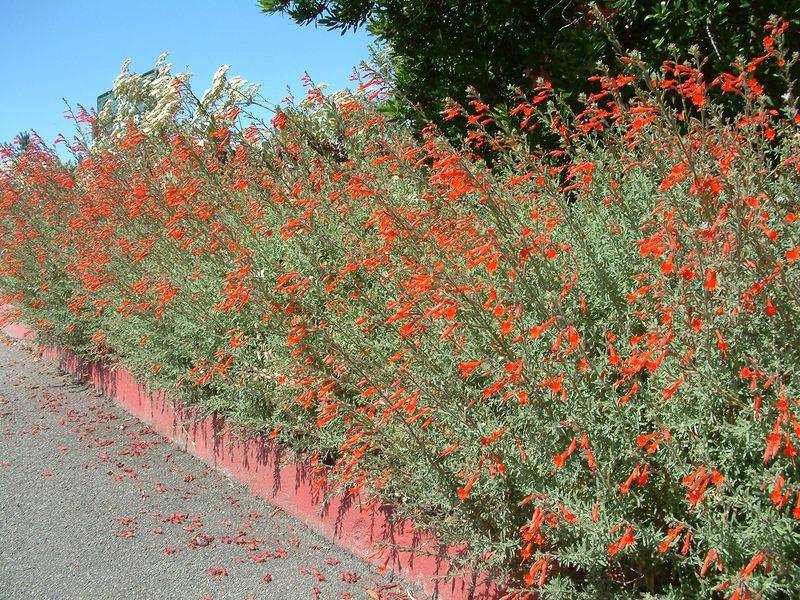
Most gardens look tired by September. California fuchsia waits until then to put on its show, lighting up with scarlet trumpet flowers right as summer heat peaks.
Place it at the drip line or sunny edges of your oak rather than deep in the shade, since it likes some light. Silvery-gray varieties look especially sharp against oak bark and fallen leaves.
Hummingbirds rely on it heavily during late-season migration, when few other natives are flowering. Cut it back hard in winter and it returns fuller each year.
6. Pacific Coast Hybrid Irises
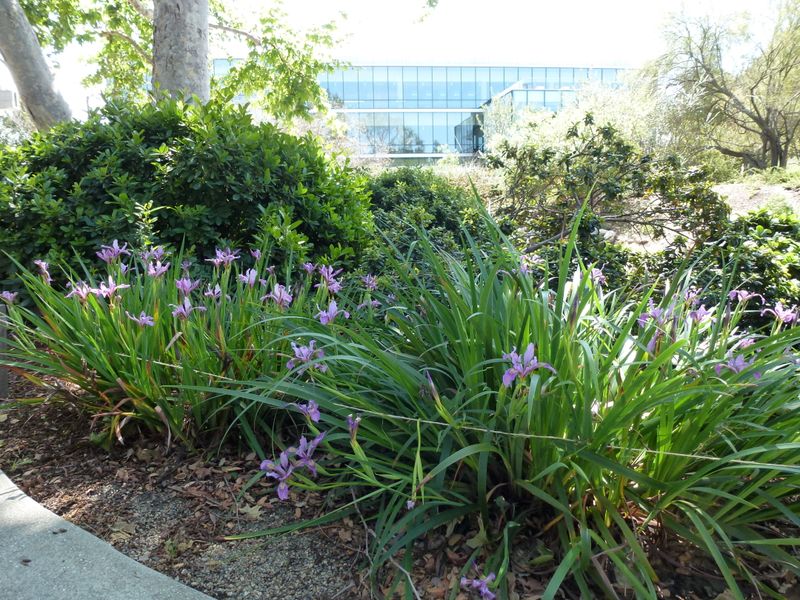
Love Douglas iris but want more colors? Pacific Coast hybrids cross several West Coast iris species, giving you blooms in rusty orange, deep wine, sky blue, and bicolor patterns.
They earn their own spot because they work as a designer’s palette under oaks. You can group colors in drifts for a front yard that turns heads each spring, all without summer irrigation once roots settle.
Buy from native nurseries where possible, since some hybrids handle inland heat better than others. Ask staff which selections do well in your specific zone.
7. Coffeeberry ‘Little Sur’ (Frangula californica)
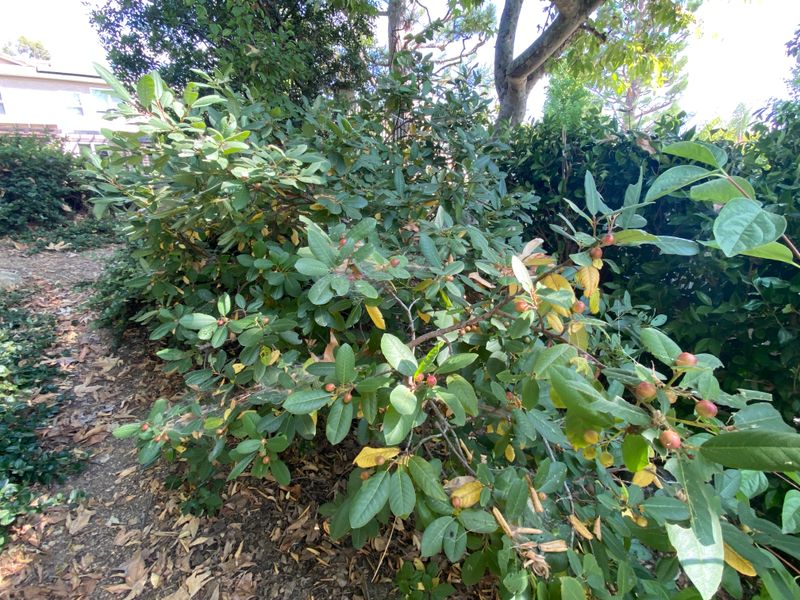
Sometimes you need something with a little more backbone than a flower. Low forms of coffeeberry, like ‘Little Sur,’ give evergreen structure under oaks while staying knee-high.
The glossy leaves stay handsome all year, and berries ripen from green to red to nearly black. Bees visit the small flowers, and birds clean up the fruit.
Keep it a few feet away from the trunk, as with every plant on this list. In fire-prone areas, follow local defensible-space rules on spacing and keep dead material cleared.
8. Wild Ginger (Asarum caudatum)
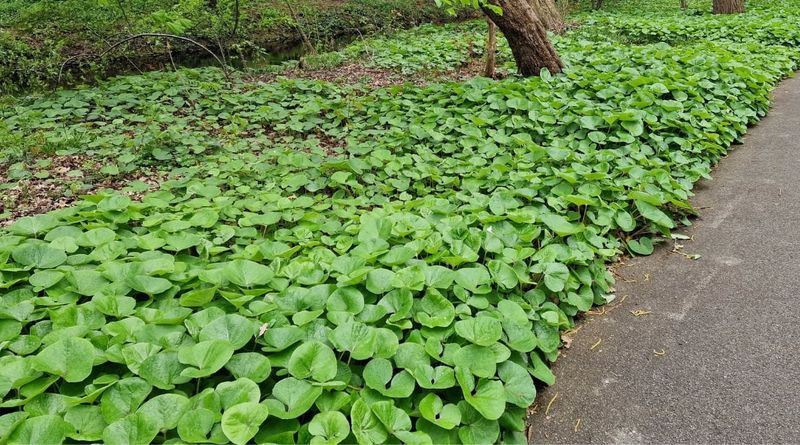
Lift a heart-shaped leaf of wild ginger and you’ll find an odd, maroon, three-tailed flower hiding at ground level. Scientists believe beetles and other crawling insects help with pollination, which explains the low-slung design.
This one is best for cooler, coastal or north-facing spots with deep shade. Its glossy leaves form a lush mat that feels almost like a woodland floor.
Inland, it may struggle without occasional water, so place it where fog and leaf mulch help hold moisture. Under coastal oaks, it can thrive on what nature provides.
9. Oak Leaf Litter
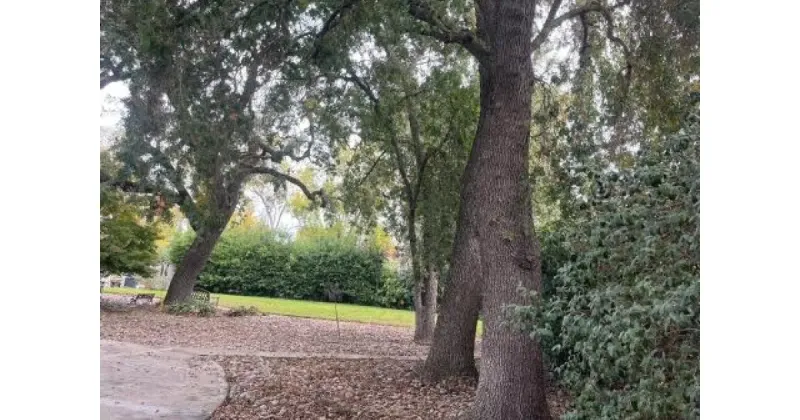
Here’s the groundcover you already own. The fallen leaves under your oak are a natural mulch, and raking them away is one of the most common mistakes California homeowners make.
Leaf litter cools the soil, slows evaporation, and feeds the fungi that partner with oak roots. It also shelters native bees, beetles, and the insects that birds need to raise their chicks.
Leave a few inches in place, keep it pulled back slightly from the trunk, and tuck the plants above into it. In fire zones, check local rules, as some areas may require clearing near structures.