
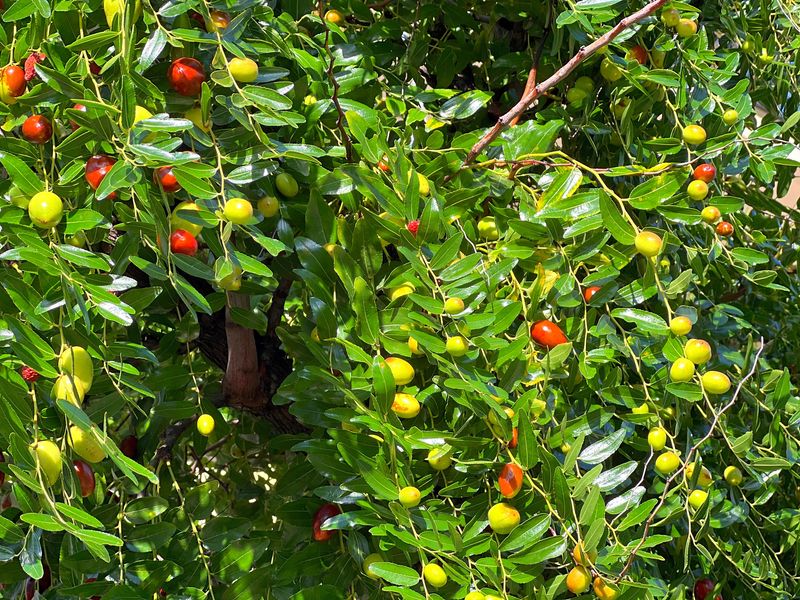
Most California backyard gardeners chase the same short list of fruit trees, planting citrus, stone fruit, or avocado while a remarkably resilient option sits quietly overlooked at the nursery. The Chinese jujube, also called Chinese date or red date, has a track record of handling heat, lean soils, and dry summers that few familiar fruit trees can match.
Extension horticulturists specifically point to hot inland valleys as an ideal fit, and the tree’s manageable care routine makes it worth a serious look for anyone tired of babying finicky varieties.
Chinese jujube deserves a qualified low-maintenance introduction
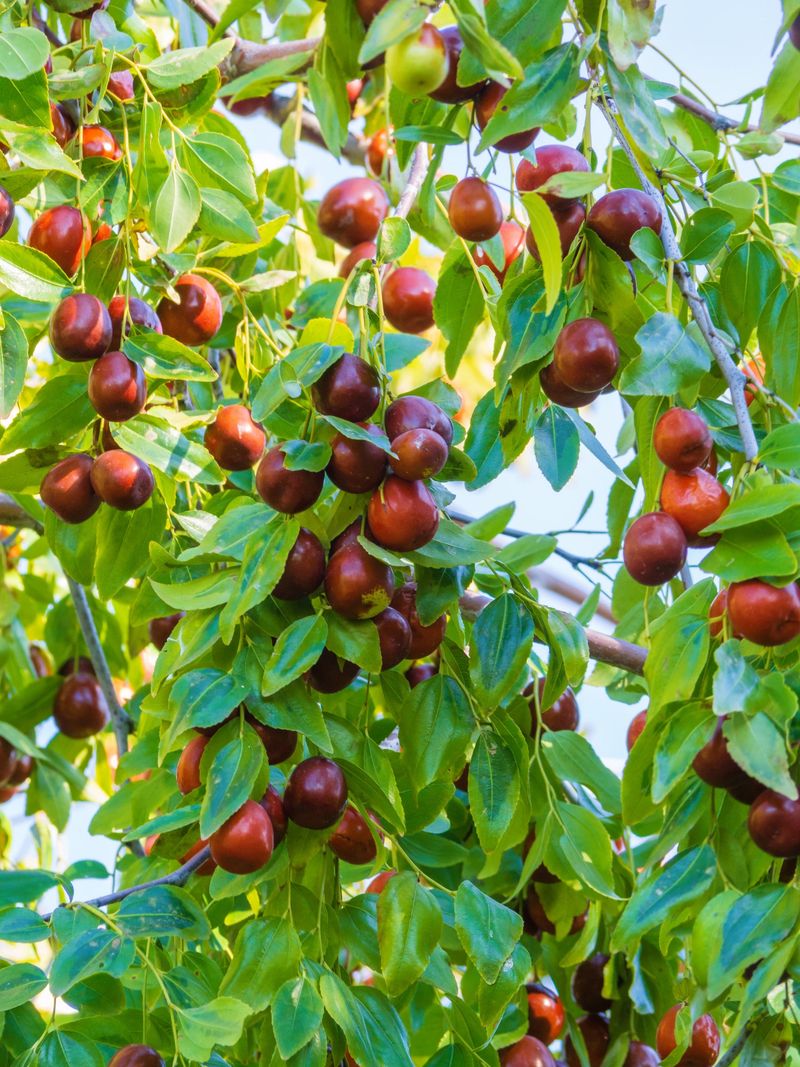
The Chinese jujube, known botanically as Ziziphus jujuba and commonly called Chinese date or red date, is a fruit tree that earns its low-maintenance reputation through genuine resilience rather than marketing. UC Cooperative Extension guidance describes it as drought-tolerant once established, broadly adaptable to varied soils and climates, and needing only limited pruning compared with many backyard fruit trees.
That combination of traits puts it in a different category from peaches, cherries, or avocados, which each demand more precise conditions and more frequent intervention.
The “overlooked” angle in this article’s headline has a plausible basis. UF/IFAS extension research notes that Chinese jujube is mostly unknown to Western consumers, and a UC food blog on alternative Southern California fruit trees describes it as less common in the region.
That said, no reliable statewide survey has measured exactly how many California homeowners have or haven’t planted one, so calling it universally neglected overstates the case.
What the evidence does support is this: Chinese jujube is a strong low-maintenance candidate that competes favorably with other drought-tolerant options like pomegranate, fig, and loquat. UC guidance on alternative backyard fruit trees consistently includes it as a sensible choice for California home orchards, particularly in regions with hot summers.
Its relative unfamiliarity in Western gardens is real enough to make it worth introducing, and its care profile is genuinely lighter than most – though “lighter” does not mean absent.
Low maintenance still includes real work
Calling Chinese jujube low-maintenance is accurate in a specific, practical sense: it does not need the spray schedules, chill-hour management, or heavy annual pruning that stone fruits and some citrus demand. Extension sources confirm that it has relatively few serious U.S. pest and disease problems, tolerates a wide range of soil types, and keeps its pruning needs modest.
Those characteristics genuinely reduce the routine workload compared with more demanding backyard trees.
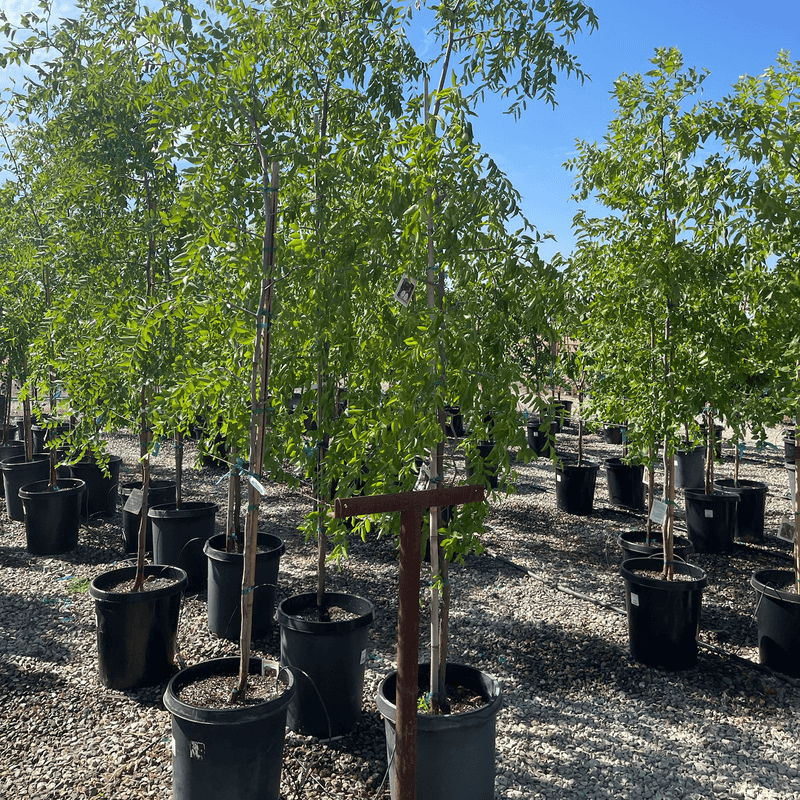
Still, “low maintenance” is not a synonym for “no maintenance.” Before planting, a homeowner must identify a site with the right sun exposure, adequate drainage, and enough room for a tree that commonly reaches 15 to 30 feet at maturity. During the first year or two, University of Arizona Cooperative Extension guidance on Chinese jujube emphasizes that consistent watering is essential while the root system establishes.
Skipping that step risks losing the tree entirely, regardless of how tough it becomes later.
Ongoing tasks include removing dead or crossing branches, controlling the root suckers that Chinese jujube reliably produces, and selecting a cultivar that fits both the site and the household’s fruit goals. UC extension notes on jujube also flag that harvest and fallen-fruit cleanup are recurring responsibilities rather than one-time events.
The tree earns its easier reputation by keeping that list shorter and less specialized than most fruit trees, not by eliminating it.
Hot inland California offers the clearest fit
Chinese jujube thrives where summers are long, hot, and dry, which is exactly what inland California delivers for months at a stretch. UC extension guidance on alternative backyard fruit trees specifically identifies hot inland valleys as a strong fit for the species.
The Central Valley, the Inland Empire, and similar regions give the tree the heat accumulation it needs to ripen fruit reliably and produce a consistent harvest season after season.
The picture changes meaningfully as you move toward the coast. Cool marine summers reduce the heat units available for fruit development, which can affect both yield and quality.
Coastal fog and high humidity are not the conditions this tree is built for, and gardeners in those areas should temper their expectations or consult local extension advice before committing to a planting. UC’s home orchard climate guide makes clear that California’s climate diversity means no single fruit-tree recommendation applies uniformly across the state.
Mountain and high-elevation sites introduce a different set of variables. Late spring frosts can damage blossoms, and shorter growing seasons compress the window for fruit maturation.
Desert areas may support the tree, but extreme summer heat combined with low humidity and alkaline soils requires careful irrigation management to keep fruit quality acceptable. UC IPM’s site-selection guidance for fruit trees recommends evaluating local frost dates, drainage patterns, and sun exposure before choosing any species.
California’s Department of Water Resources plant and landscape guide also encourages gardeners to match selections to their regional water conditions, which vary considerably from one county to the next. Checking with your county’s UC Cooperative Extension office is one of the fastest ways to confirm whether jujube is a realistic choice for your specific address.
Plan for sun, drainage, and a full-size tree
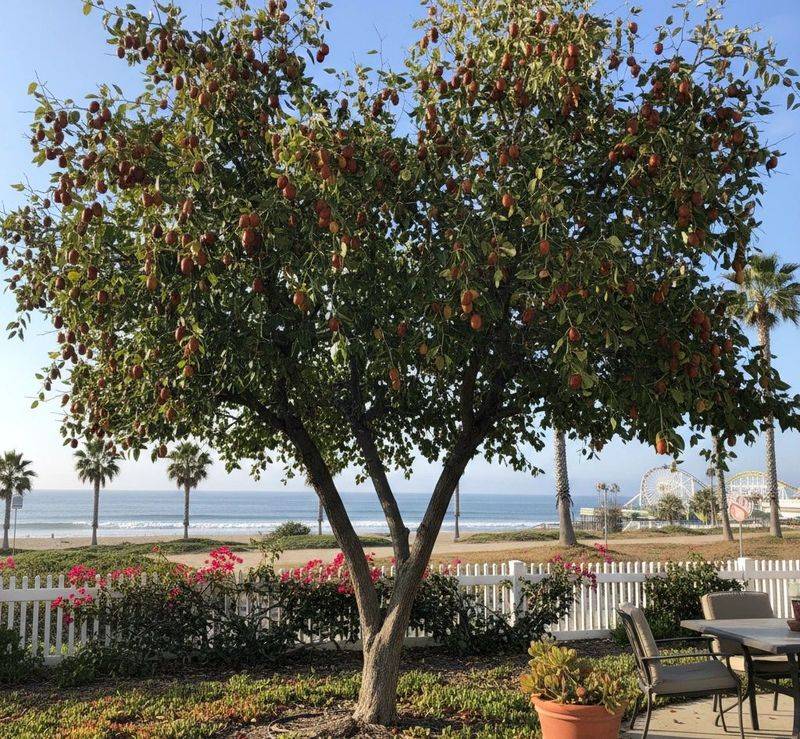
Translating climate suitability into a planting decision starts with three non-negotiable site requirements: full sun, well-drained soil, and adequate space. UF/IFAS jujube production guidance confirms that the tree needs full sun for productive fruit development, and UC home orchard guidance commonly recommends six to eight hours of direct sunlight for fruit trees expected to produce a reliable crop.
A partially shaded spot might keep the tree alive, but fruit set and quality will suffer noticeably.
On soil, Chinese jujube is genuinely flexible. University of Arizona Cooperative Extension notes that it tolerates alkaline and somewhat saline soils that would stress many other fruit trees.
That broad tolerance does not extend to waterlogged ground, however. Roots sitting in poorly drained soil will struggle with reduced oxygen uptake, and the tree’s growth and fruiting performance will decline.
If your yard has clay-heavy or compacted soil that drains slowly, amending the planting area or building a raised bed before planting is a worthwhile investment.
Space planning matters more than many homeowners expect. Chinese jujube typically reaches 15 to 30 feet tall depending on cultivar and pruning history, and the canopy can spread proportionally.
Planting one too close to a fence, a structure, or a neighboring tree creates a management problem within a few years. Reserve a planting spot that gives the mature tree room to grow without competing for light or requiring constant hard cutbacks to stay contained.
Measuring out the anticipated canopy footprint before you dig the hole is a simple step that prevents a frustrating correction later.
Water for establishment and fruit quality
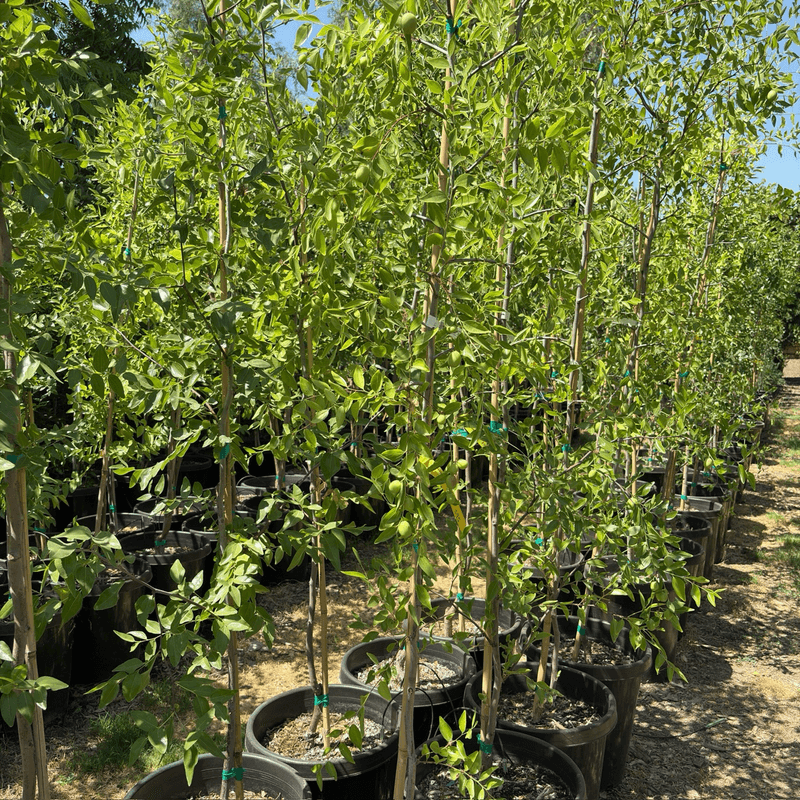
Drought tolerance is one of Chinese jujube’s most cited strengths, but that description applies to established trees, not newly planted ones. A bare-root or container-grown tree put in the ground in spring needs consistent, dependable moisture while its root system expands and anchors into the surrounding soil.
Cutting back on water too early is one of the most common reasons a healthy-looking nursery tree stalls or declines in its first season.
UC IPM guidance on watering fruit and nut trees recommends deep, uniform soil moisture over shallow, frequent applications. Deep watering encourages roots to follow moisture downward, building a more resilient root system that will support the tree through dry summers once it matures.
Shallow watering keeps roots near the surface, where they are more vulnerable to heat stress and soil moisture swings.
Once a jujube is well established, typically after two to three growing seasons of good care, it can handle periods of reduced irrigation better than most fruit trees. UC extension notes on jujube and University of Arizona Cooperative Extension both distinguish between survival-level drought tolerance and productive-orchard performance.
A tree that survives a dry summer without irrigation may still produce noticeably fewer, smaller, or less juicy fruits than a tree receiving regular deep watering during fruit development. For a homeowner who wants a meaningful harvest rather than just a living specimen, maintaining appropriate irrigation through the growing season is worth the effort.
Use simple pruning to fit the tree to the yard
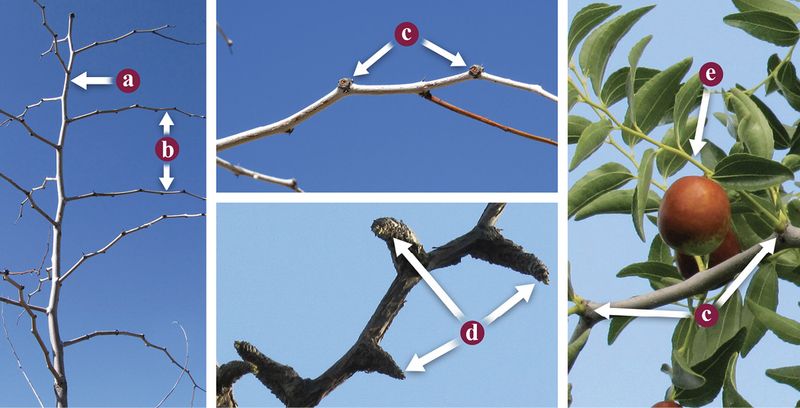
Pruning a Chinese jujube does not require the detailed annual programs that peaches or apples demand. The basic goals are straightforward: shape the canopy, manage height so harvest stays reachable, remove dead or crossing branches, and cut out any root suckers before they turn into a thicket.
UC extension guidance on jujube describes this as a limited pruning program rather than a major yearly task, which is one of the concrete reasons the tree belongs in the low-maintenance category.
For training a young tree, homeowners can choose between a central leader form, which creates a single dominant upright trunk with lateral branches, or an open-center form, which removes the central leader and encourages several main scaffold branches to spread outward. UF/IFAS jujube guidance notes that many home-grown trees are also maintained with multiple trunks, which is a practical option for growers who prefer a more informal shape or want to keep the overall height lower.
None of these approaches requires specialized knowledge – a clean pair of bypass pruners and a basic understanding of branch structure is enough to get started.
Root suckers deserve attention every season. UC’s Under the Solano Sun blog flags sucker production as a recurring characteristic of Chinese jujube, and letting suckers go unchecked can create unwanted shoots well outside the intended canopy footprint.
Removing them while they are small, cutting as close to the root as possible, is far easier than managing a mature sucker that has begun to branch on its own. Staying ahead of this task during the growing season keeps the tree tidy without requiring a major cleanup effort.
Choose a named cultivar for predictable fruit
Picking up an unnamed jujube seedling at a discount nursery is a gamble that experienced growers generally avoid. Seedling trees can vary widely in fruit size, flavor, texture, and ripening time, and there is no reliable way to predict quality until the tree matures and fruits, which takes several years.
University of Arizona Cooperative Extension guidance on Chinese jujube recommends named, grafted cultivars when consistent, predictable fruit quality is the goal.
Two cultivars that appear regularly in California nurseries and extension materials are ‘Li’ and ‘Lang.’ Yolo County Master Gardener resources and UC Cooperative Extension materials from Stanislaus County both reference these two as commonly available and well-suited to California inland conditions. ‘Li’ tends to produce large, round fruit with a mild flavor, while ‘Lang’ typically bears elongated fruit with a slightly different texture and ripening window. Each has its own character, and trying a fruit sample before committing to a tree is worth the effort if a local nursery or grower offers that opportunity.
Pollination planning affects how much fruit you actually harvest. Many jujube cultivars can set some fruit on their own, but UF/IFAS extension research notes that two compatible cultivars often improve production.
For a one-tree yard, choosing a cultivar described as reliably self-fruitful is the safer starting point. If space allows a second tree, pairing ‘Li’ and ‘Lang’ is a commonly recommended combination, though pollination behavior can vary by cultivar and local growing conditions, so nursery staff familiar with California results are a useful resource.
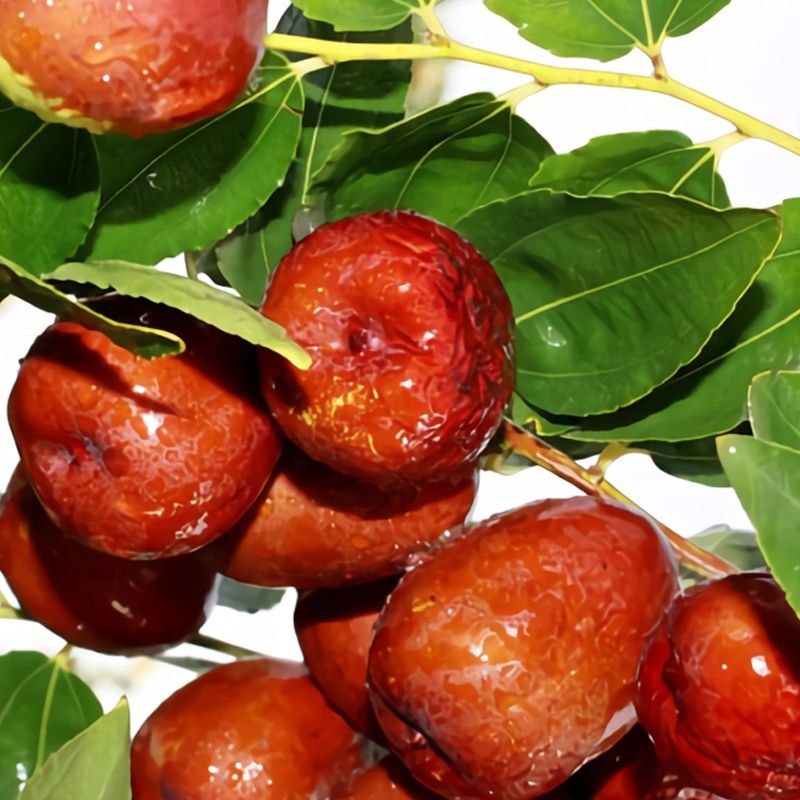
Harvest unfolds gradually rather than all at once. Fruits start green and shift through yellow to reddish brown or deep mahogany as they ripen.
At the partially colored, firm stage they taste crisp and mildly sweet, similar in texture to an apple. Left longer, they soften and wrinkle, developing a denser, date-like sweetness.
That staggered ripening means several picking sessions spread over weeks rather than a single overwhelming harvest, which suits a home grower better than a commercial-scale flush of ripe fruit.
Place thorns, suckers, and fruit litter away from traffic
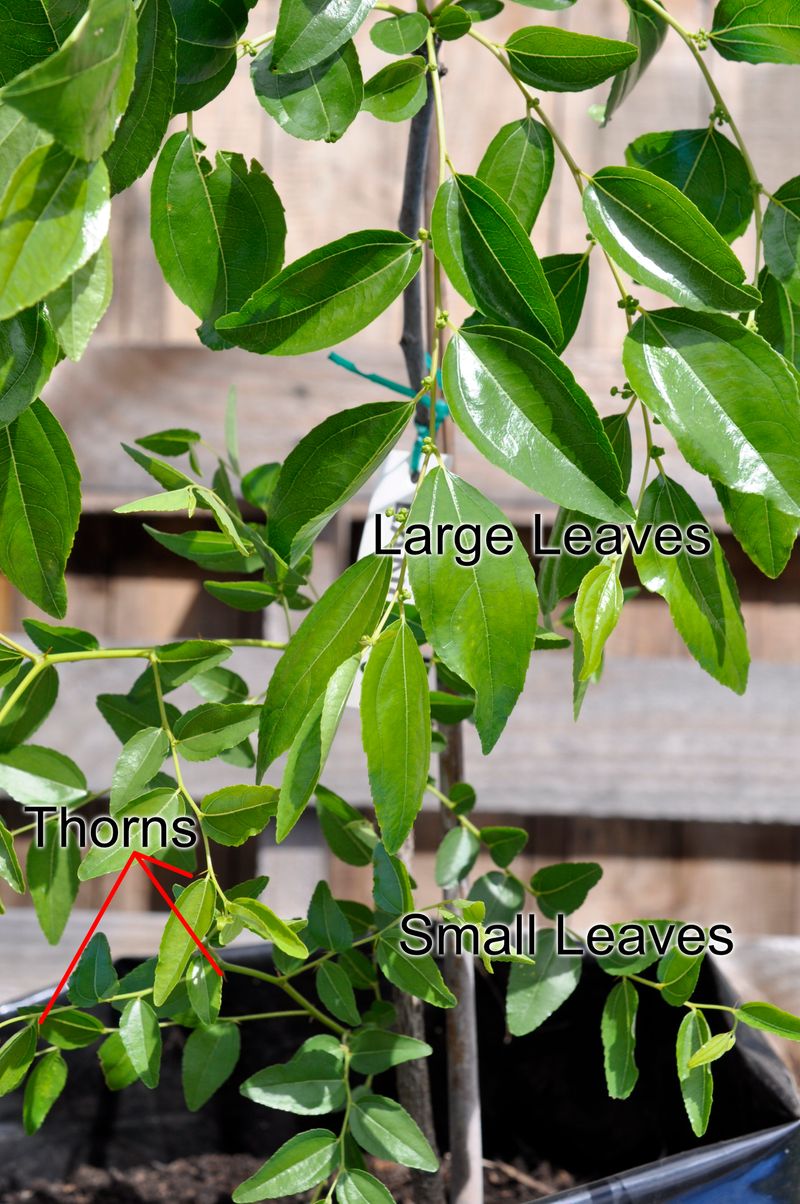
Honest placement guidance is where a lot of jujube enthusiasm gets qualified in practice. Many cultivars carry noticeable thorns on their branches, and those thorns create a real hazard near anything that involves regular foot traffic, reaching hands, or curious children and pets.
UF/IFAS jujube guidance flags thorns as a characteristic to account for during siting, and UC extension notes on jujube suggest wearing gloves when pruning or harvesting thorny varieties. Thornless selections exist, so if a specific site is near a walkway or play area, asking the nursery specifically about thorn habit before purchasing is a practical step.
Root suckers complicate placement near hardscape. Suckers that emerge through mulch in a garden bed are easy to pull or cut.
Suckers pushing up through a lawn or along a fence line require more effort, and those appearing near paved surfaces can eventually cause cracking if left unchecked for years. Keeping the tree in a defined mulched bed away from concrete edges reduces the cleanup burden considerably.
Fallen fruit is the third siting factor worth thinking through before you choose a spot. UF/IFAS Baker County jujube fact sheet notes that dropped fruit can create litter under the canopy, and UF/IFAS Gardening Solutions guidance on jujube reinforces that the tree is deciduous, losing its leaves each winter and leaving bare branches that may not suit every landscape aesthetic.
A mulched bed beneath the canopy makes fallen fruit and leaf cleanup straightforward. Placing the tree over a patio, a driveway, or a main entrance creates a messier situation that undermines the low-maintenance argument entirely.
Match the tree to the site before calling it easy
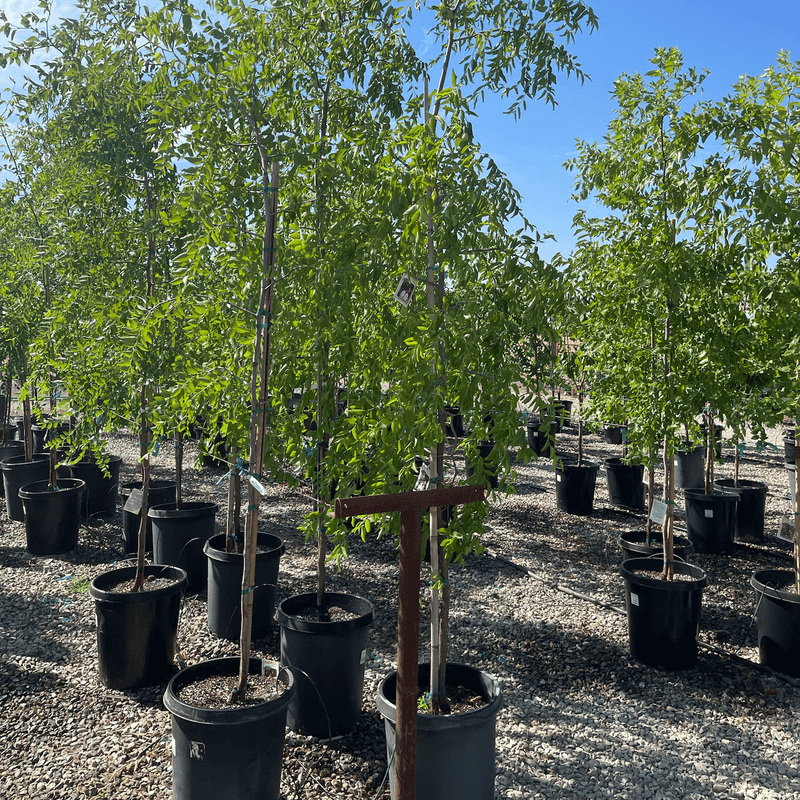
Chinese jujube earns its low-maintenance reputation honestly, but that reputation depends on a reasonable match between tree and site. For California homeowners in hot inland areas who can offer full sun, well-drained soil, room for a mature canopy, and dependable water during the first two to three growing seasons, UC extension guidance supports it as a genuinely sensible and productive backyard fruit tree.
The lighter pruning, broad soil adaptability, and relatively limited pest and disease pressure are real advantages, not marketing claims.
The decision gets more complicated outside those conditions. Coastal gardeners, mountain growers, and anyone in a frost pocket or a site with poor drainage should consult UC IPM’s fruit tree site-selection guidance and local extension resources before purchasing.
Choosing a named, grafted cultivar, planning for pollination, and thinking through placement relative to paths and play areas are the remaining decisions that separate a successful planting from a frustrating one.
UF/IFAS research on jujube sums up the appeal well: the tree is attractive and low-maintenance for home growers willing to give it the right start. That is a fair description of what Chinese jujube actually delivers – a fruit tree that asks less of you over time, provided you invest thoughtfully at the beginning.
A well-sited jujube is not a miracle tree, but in the right California yard, it may be the most rewarding one you have not planted yet.