
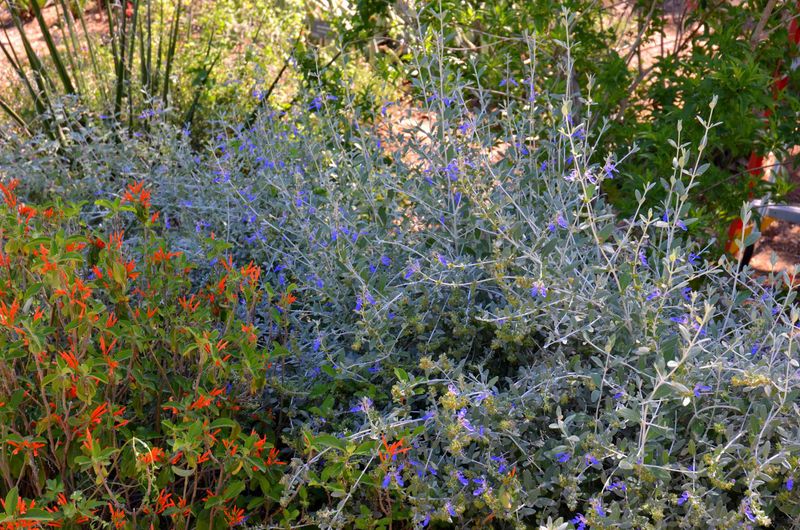
A silvery Mediterranean shrub called bush germander has been catching the attention of California gardeners who want something more structured, lower-maintenance, and water-wise after establishment. The plant, especially the cultivar Teucrium fruticans ‘Azureum’, thrives in the same hot, dry conditions that make California summers brutal for thirstier plants.
Whether it belongs in your yard depends on your soil, your climate zone, and what you actually want your garden to do, so the comparison with lantana is worth taking seriously before you dig anything up.
Bush germander offers an alternative—not proof of a quiet trend
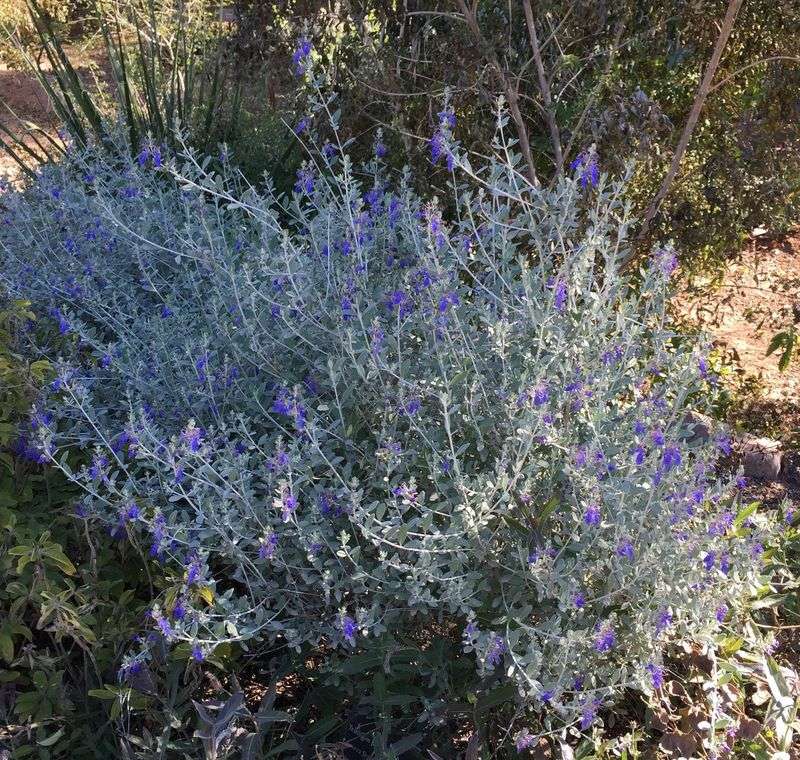
Scroll past enough gardening forums and you will start to notice a name popping up alongside glowing descriptions of silvery leaves and soft blue flowers: bush germander, specifically Teucrium fruticans ‘Azureum’. The title of this article teases a statewide swap in progress, but no reliable adoption data, survey, or market evidence backs that narrative.
What the evidence does support is something more useful: bush germander is a genuinely capable alternative for certain California gardens, and it deserves a fair look on its own terms.
The plant is evergreen, with gray-green to silvery foliage that holds its color year-round. Lavender-blue flowers appear over a long season, and the shrub can reach roughly 4 to 8 feet tall and 8 to 10 feet wide at maturity, depending on cultivar, pruning, and growing conditions.
UC Davis landscape trial data for ‘Azureum’ show it performing well under low-irrigation conditions and earning recommendations from California Master Gardener demonstration gardens.
One clarification matters before going further. Bush germander is not a California native.
Calflora’s species records confirm it originates from the Mediterranean region. When gardeners or plant sellers call it a “California shrub,” they mean it adapts well to California’s Mediterranean-type climate, not that it evolved here.
That distinction matters if native-plant goals are part of your decision.
UC Cooperative Extension Sonoma County guidance describes it as tolerant of heat, wind, poor soil, and drought after establishment, which lines up with what many California homeowners actually need. The case for considering it is real.
The case for calling it a proven replacement that every switched gardener prefers is not.
The low-water case depends on establishment and site
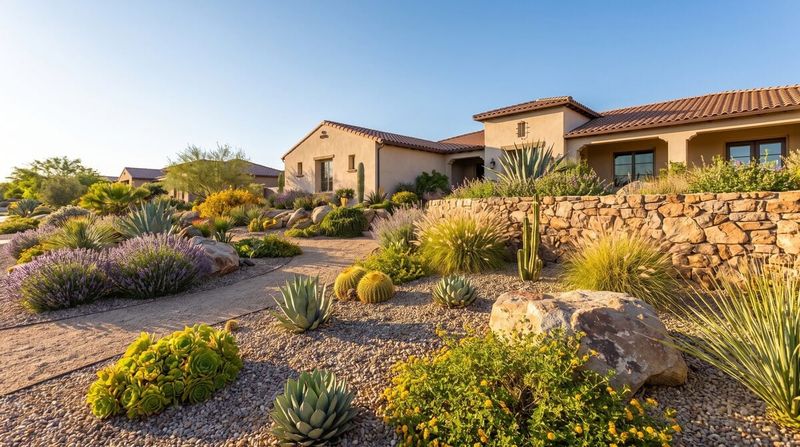
The phrase “low-water shrub” can create unrealistic expectations if a gardener plants in June and stops watering by August. The UC Davis trial results for Teucrium fruticans ‘Azureum’ tell a more specific story.
The plant performed best under the two lowest irrigation treatments in the trial, meaning it stayed attractive and healthy with minimal water once roots were settled. At a somewhat higher but still relatively low irrigation level, flowering and overall growth were strongest.
Translating that into practical terms: ‘Azureum’ is genuinely drought tolerant after establishment, but it is not water-free, and the irrigation sweet spot sits low rather than at zero. The UC Davis Plant Irrigation Trial data make clear that the plant can thrive without heavy watering, while also showing that a modest bump in irrigation supports better bloom and vigor.
What the trial cannot tell you is exactly how much water your specific plant will need. Climate, soil type, sun exposure, plant size at installation, and how lush you want the shrub to look all shift the answer.
A coastal garden in Marin or Santa Cruz will behave differently from an inland valley garden in Fresno or a foothill site in Placer County. UC ANR’s drought and water conservation guidance makes the same point plainly: drought-tolerant plants may still need irrigation in warmer inland areas, and no plant becomes drought resistant immediately after going in the ground.
One more thing worth stating clearly: the sources reviewed do not establish that bush germander saves more water than lantana. Lantana is itself described as drought tolerant in multiple authoritative sources.
A fair comparison would require matched irrigation trials under identical conditions, and that data does not exist. The honest framing is that both plants can perform with low water after establishment, and bush germander’s advantage is more about form and structure than about measurably lower water demand.
Its strongest selling point is evergreen structure
Gardeners who have grown lantana know its rhythm: explosive color from late spring through fall, followed by a period of reduced interest once cooler weather arrives. Bush germander works on a different calendar and delivers a different kind of beauty altogether.
UC Davis trial records for ‘Azureum’ document flowering from roughly September through May, which means lavender-blue blooms appear during the cooler months when many other garden shrubs go quiet.
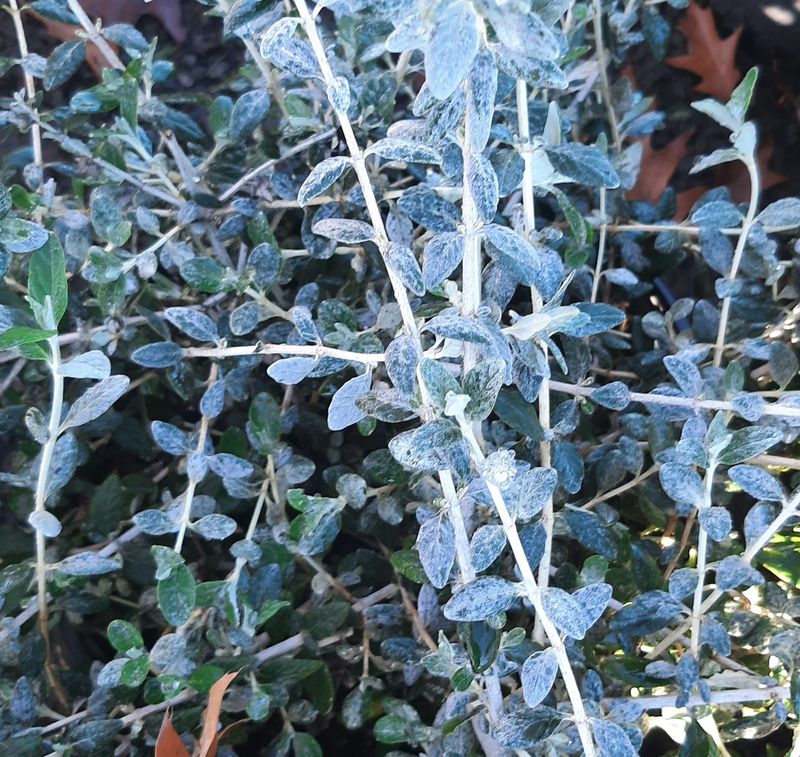
The foliage itself carries the show year-round. Silvery gray-green leaves give the plant a soft, luminous quality that reads well against warm stucco walls, gravel mulch, or dark wood fencing.
At mature dimensions of roughly 4 to 8 feet tall and up to 10 feet wide, a single established specimen can anchor a border or fill a corner that would otherwise require multiple plants.
UC Cooperative Extension Sonoma County notes that bush germander responds well to pruning and can be shaped into a formal hedge, a rounded mound, a loose screening shrub, or even a topiary. That flexibility is genuinely useful for homeowners who want a more permanent, structured planting instead of a loose, sprawling mass.
Lantana, for its part, does not lend itself to tight shaping and tends to look best when allowed to billow freely.
The contrast is worth naming directly. Lantana delivers bold, multicolored flower clusters in hot shades of orange, yellow, red, and pink, and it blooms heavily through summer heat when bush germander’s flower show has slowed.
UC Master Gardeners San Luis Obispo County coverage of lantana highlights that warm-season display as one of the plant’s biggest draws. Choosing bush germander means trading that summer color for cooler-season blooms, year-round silvery foliage, and the ability to shape the plant into whatever form the space requires.
Neither trade-off is wrong; they serve different design priorities.
Match the shrub to the yard before planting
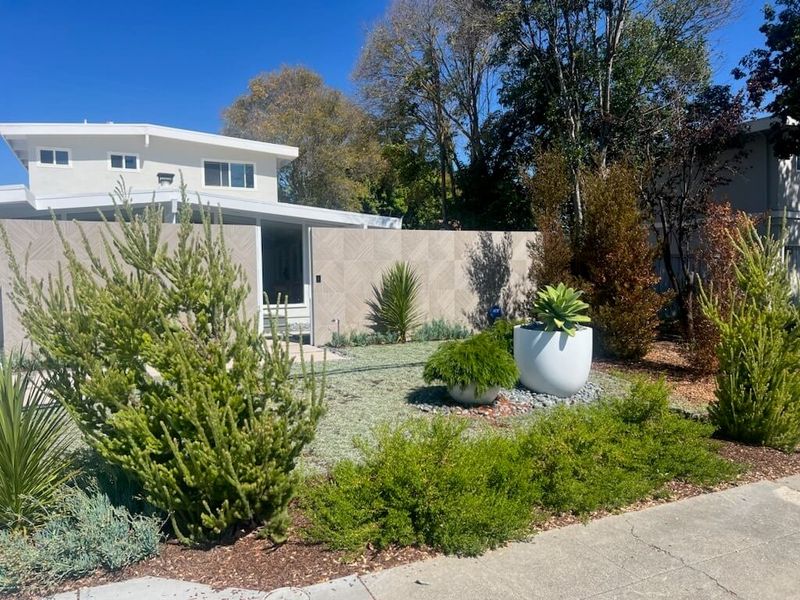
Before ordering any plants, spend a few minutes reading your site honestly. Bush germander performs best in full sun to part shade with well-drained soil.
It handles heat, wind, poor or rocky ground, and dry conditions after establishment with little complaint. Those qualities make it a reasonable fit for many California yards, but the match is not automatic everywhere.
UC Cooperative Extension Sonoma County guidance includes a practical caution that often gets skipped in plant descriptions: rich soil and excessive moisture can push the plant into lush, rangy growth or contribute to poor performance. If your yard has heavy clay that stays wet in winter, or if you tend to overwater, bush germander may struggle or grow in ways that require constant corrective pruning.
Amending for drainage before planting is worth the effort.
Climate zone matters just as much as soil. A coastal garden in the Bay Area or San Diego often stays mild enough that bush germander needs very little supplemental water once established.
Move inland to the Sacramento or San Joaquin Valley, the foothills of the Sierra Nevada, or a desert-edge location in Southern California, and summer heat intensifies. In those conditions, UC Davis trial findings suggest the plant still performs well at low irrigation levels, but “low” in an inland valley in August means something different than it does on the coast in June.
Colder foothill sites add another variable, since bush germander is Mediterranean and not reliably frost-hardy in locations that see hard freezes.
The most reliable guidance will come from local sources rather than a general statewide recommendation. UC ANR’s water conservation resources point gardeners toward region-specific water-use databases and local Cooperative Extension offices for irrigation estimates tailored to their climate.
A plant that coasts through summer in Sonoma may need regular deep watering in Riverside, and your local Master Gardener program can help you calibrate.
Lantana still solves problems bush germander does not
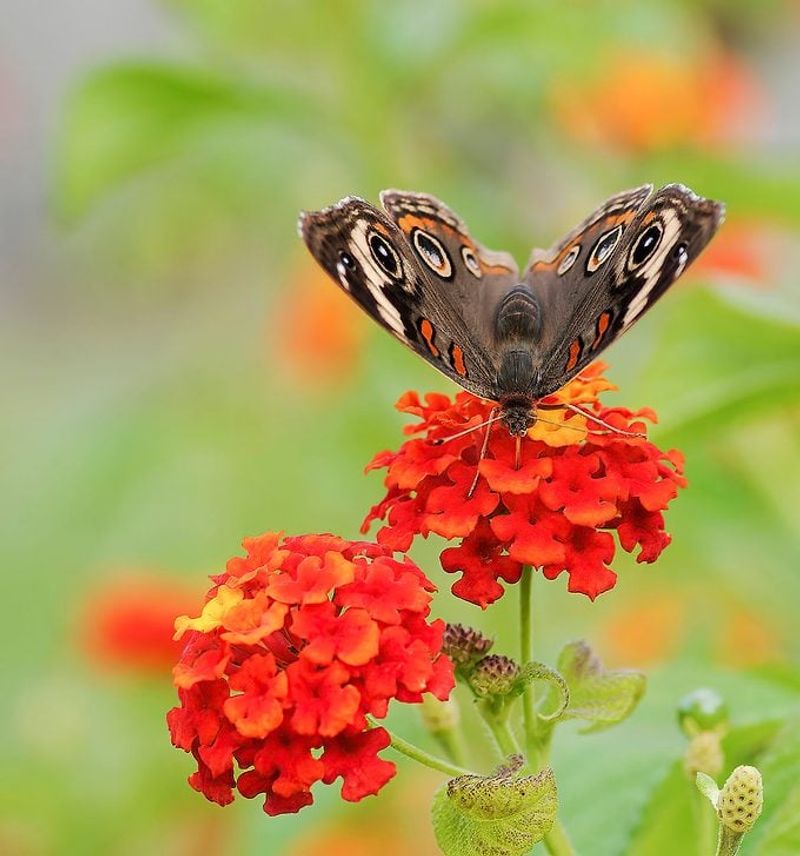
Replacing lantana is not the obvious choice it might appear to be. The plant has a genuinely strong track record in California gardens, and any honest comparison has to acknowledge that.
UC Master Gardeners San Luis Obispo County coverage describes lantana as heat tolerant, drought tolerant, and capable of flowering over an exceptionally long season. Butterflies and hummingbirds visit it regularly, which matters to gardeners who have built their yards around supporting local wildlife.
Bush germander does attract pollinators, including bees. The case for it as a wildlife plant is real.
What the available evidence does not support is claiming it provides better overall habitat value than lantana. Both plants support some visitors; head-to-head habitat studies under California conditions have not been conducted, and declaring a winner would go beyond what the research shows.
The reasons a gardener might choose bush germander anyway are worth naming clearly. Permanent evergreen structure, the ability to prune it into a hedge or topiary, silvery foliage that holds visual interest through winter, and a cooler-season bloom period all offer something lantana does not.
For homeowners who want a more formal, lower-maintenance long-term planting, those differences can tip the decision.
California’s invasive-plant picture for lantana is more nuanced than it first appears. Cal-IPC lists Lantana camara as a Watch species, meaning it is considered a high future risk but is not currently classified as invasive statewide and is not subject to a blanket ban.
Not all lantana species, hybrids, and cultivars carry the same risk profile, and local conditions affect whether and how the plant spreads. UF/IFAS guidance for Florida draws sharper distinctions between invasive common lantana and sterile cultivars, which illustrates why species and cultivar identity matter when assessing risk.
One safety note applies regardless of which plant you choose to keep or remove. UC guidance on lantana safety warns that lantana foliage can cause skin irritation and that berries and other plant parts carry toxicity risks, particularly for animals.
UC’s toxicology reference materials reinforce that warning. Lantana is not a harmless plant around children and pets, and that factor belongs in any honest assessment of whether to keep it in the yard.
Give the new shrub time to become drought tolerant
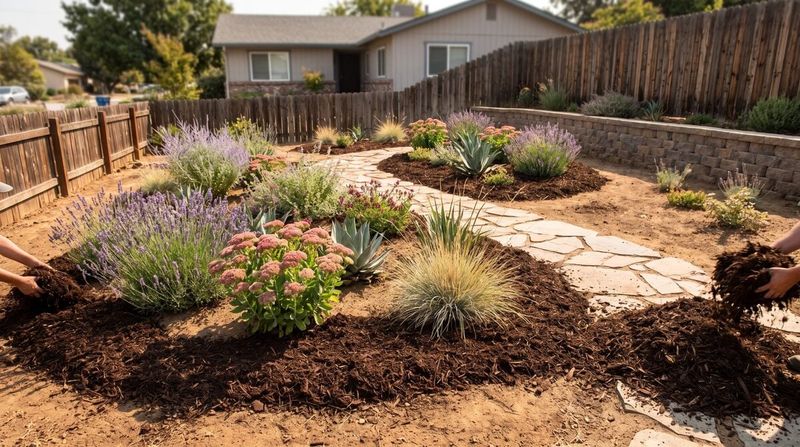
Every drought-tolerant shrub starts its life in your yard as a plant that needs regular water. That is not a contradiction; it is just how root systems work.
Until the roots have spread into surrounding soil and can pull moisture from a larger area, the plant depends on whatever water you give it. Skipping that establishment phase is the most common reason drought-tolerant plants fail in California gardens.
UC ANR planting guidance commonly places the establishment period at one to two years, with some shrubs needing longer depending on climate, soil, plant size, and the vigor of the individual specimen. Fall planting, before the rainy season, gives roots cooler conditions and some help from natural rainfall, which is why it is generally recommended for drought-tolerant shrubs in California.
A plant put in the ground in October starts its establishment journey with a running start compared to one planted in July.
Early watering needs to be consistent. UC Cooperative Extension Sonoma County drip irrigation guidance suggests watering daily for roughly the first month in many situations, then reducing frequency gradually to approximately one to three times weekly as roots develop.
Soil type, weather, plant size, and irrigation method all affect how quickly you can pull back. Sandy soils dry faster; clay holds moisture longer but can also suffocate roots if drainage is poor.
A 2 to 4 inch layer of mulch spread over the root zone conserves moisture, moderates soil temperature, and reduces weed competition. Keep it a few inches away from the trunk or crown to avoid rot and pest issues.
UC Cooperative Extension Sonoma County notes on bush germander also point out that the plant can be left informal or shaped with periodic pruning, but shaping does not eliminate the need for attentive watering during the first year or two. Once establishment is complete, the irrigation demands drop significantly, which is when the low-water promise of the plant actually kicks in.
UC ANR’s water conservation resources reinforce that patience during establishment is what separates a thriving drought-tolerant landscape from a yard full of struggling plants.
Choose the plant that fits your actual goal
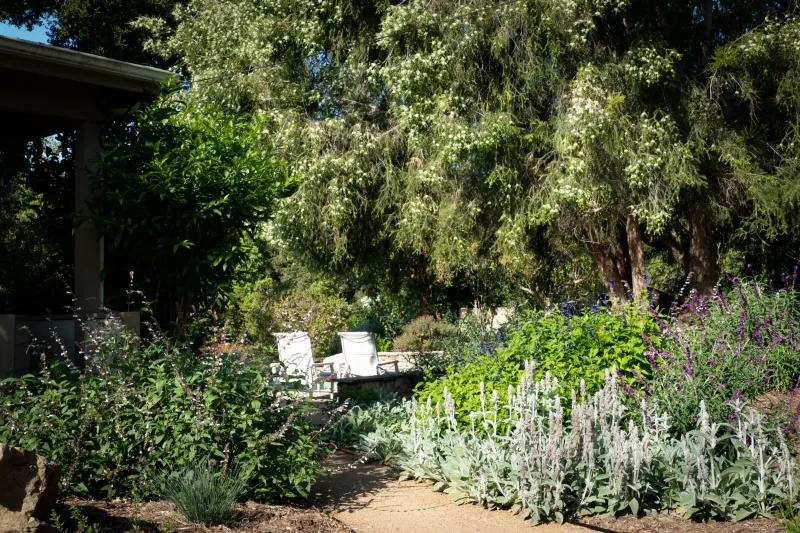
Matching a plant to a garden starts with being honest about what the space actually needs. Bush germander earns a serious look when the priority is a silvery, evergreen shrub that holds structure year-round, responds well to shaping, and settles into low-water performance after establishment.
It works as a hedge, a border anchor, a screening plant, or a soft textural contrast against warm-colored walls and gravel. For those specific goals, it is a strong candidate in many California climates.
Lantana remains the better answer when the goal is maximum warm-season color, documented appeal to butterflies and hummingbirds, and reliable performance through brutal summer heat. Its Cal-IPC Watch listing is worth knowing about, and the toxicity risks around children and pets are real considerations, but neither factor automatically rules it out for every yard.
Gardeners who value its long flowering season and wildlife visits have legitimate reasons to keep it.
If native plants are the goal, neither bush germander nor lantana qualifies. Calflora confirms bush germander is Mediterranean in origin, and it should not be presented as a native alternative.
A site-appropriate California native, such as coyote brush for coastal and inland sites, is the right direction for that goal. UC Cooperative Extension Sonoma County’s coyote brush resource is a useful starting point for gardeners exploring that path.
The California recommendation also does not transfer cleanly to other states. UF/IFAS guidance for Florida treats common lantana as invasive and recommends sterile cultivars or Florida-native species instead.
Texas Master Gardener resources describe lantana as a valued heat-tolerant landscape plant in many parts of the state. Each region has its own evidence base, and a California-specific assessment does not override those local realities.
For homeowners in wildfire-prone areas, one point applies regardless of which shrub you choose. CAL FIRE home-hardening guidance and fire hazard severity zone requirements govern what can be planted and where near a structure.
Drought tolerance is not the same as fire safety, and no shrub should be treated as a defensible-space solution without checking local rules first. The best plant for your yard is the one that fits your climate, your soil, your design goals, and the real conditions of the space you are actually managing.