
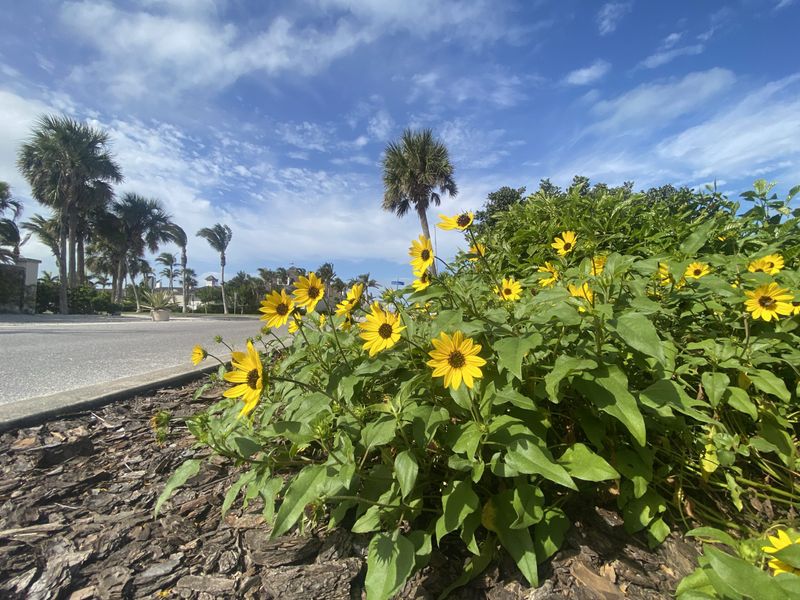
South Florida gardeners know the cycle well: plant a bed of colorful annuals, watch them struggle through summer heat, and start over when they fade. For some sunny, sandy spots in the yard, there is a Florida-native perennial that can hold color through the hottest months without a seasonal reset. Beach sunflower (Helianthus debilis) is not a fix for every flower bed, but it fits a specific kind of site surprisingly well. Understanding where it works, and where it does not, is what makes the difference between a thriving groundcover and a disappointing planting.
A perennial alternative makes sense only in the right kind of bed
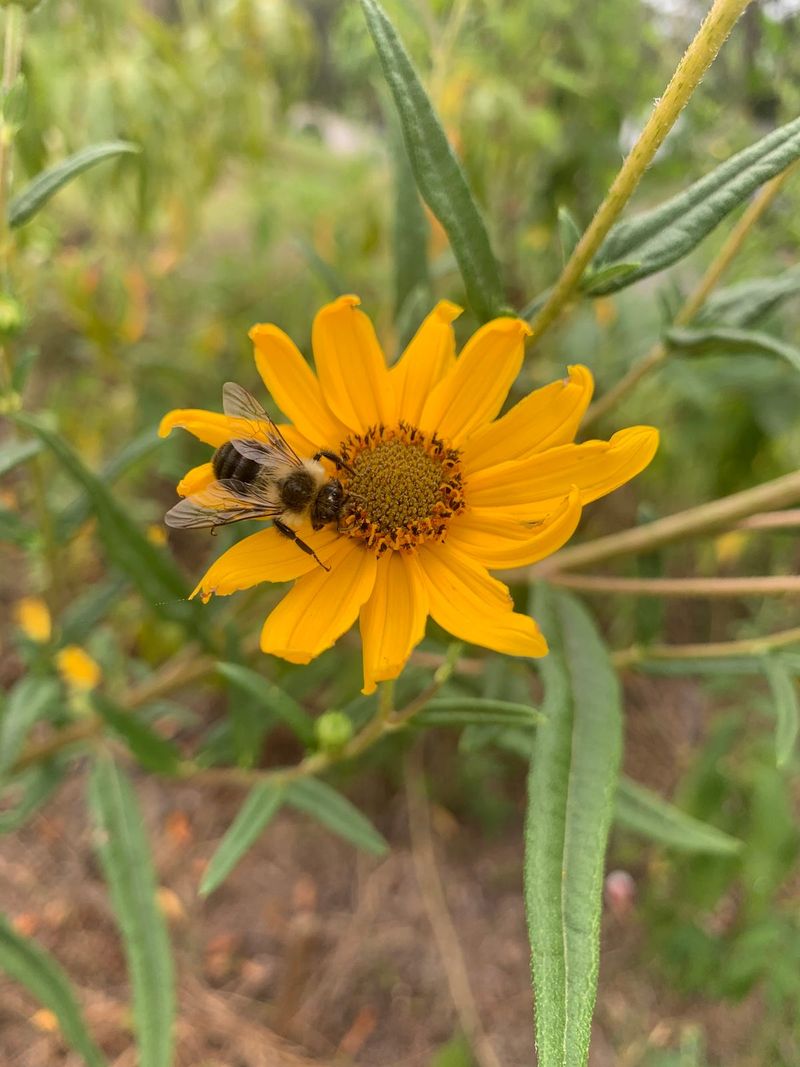
Annual flowers give gardeners something valuable: flexibility. You can swap colors with the season, keep beds tidy and geometric, and respond to whatever the landscape needs at a given moment. Many South Florida gardeners choose annuals deliberately, not because they have run out of options, but because that seasonal control suits their design goals. Calling all annual beds high-maintenance misses the point of why people plant them in the first place.
Florida also has warm-season annuals that hold up through summer heat and humidity better than cool-season types. UF/IFAS guidance on summer bedding plants lists options like pentas, vinca, and torenia that can carry a bed through the hottest months without immediate replacement. So the question is not whether annuals fail in summer, because some do not. The question is whether a particular bed, in a particular location, would actually benefit from a perennial groundcover that stays put year after year.
Some beds genuinely fit that description. An open, full-sun strip along a fence or driveway, planted in sandy soil that drains fast after rain, may never need a formal or geometric look. A coastal property with salt exposure and poor soil may be a poor candidate for repeated annual plantings that need richer conditions to thrive.
For those specific spots, a spreading native perennial starts to make practical sense. The decision comes down to site conditions and what you want the bed to look like, not a blanket judgment that annuals are too much trouble. Matching the plant to the place is always the starting point, and UF/IFAS recommendations for low-maintenance South Florida landscapes consistently emphasize that principle before naming any specific plant.
Beach sunflower replaces a bedding style, not every annual
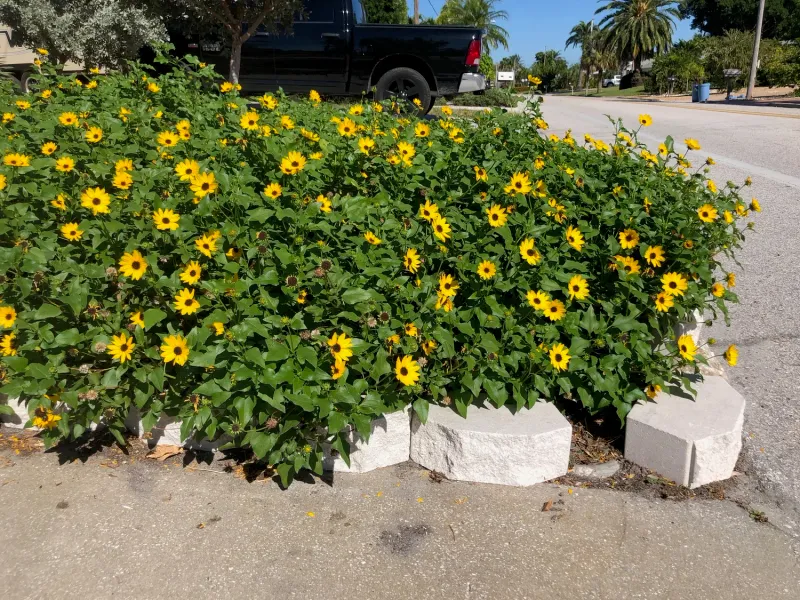
Helianthus debilis goes by several names, including beach sunflower, dune sunflower, and cucumberleaf sunflower. It is native to Florida, and that origin matters in practical terms: the plant evolved alongside South Florida’s sandy soils, intense sun, and coastal salt exposure. UF/IFAS describes beach sunflower as a fast-growing, dense, spreading perennial groundcover with small sunflower-like yellow flowers and dark centers that can appear year-round under favorable conditions.
What sets it apart from a typical annual bedding plant is how it grows. Beach sunflower spreads through underground runners and can also produce seedlings, which means it fills open ground over time rather than staying in the tidy cluster you planted. UF/IFAS profiles give a spread range of roughly 2 to 4 feet per plant, while a Treasure Coast planting guide reports that some plants can spread up to 6 feet. Neither figure is a guarantee, and local conditions, soil type, water availability, and plant age all influence how wide any individual plant actually gets.
That spreading habit is exactly what makes it useful as a groundcover in the right bed, and exactly what makes it a poor fit for a formal annual border. A compact row of marigolds or pentas along a sidewalk has a clean edge and a predictable silhouette. Beach sunflower does not work that way. Its natural form is loose, cascading, and naturalistic, more like a flowering mat than a structured planting.
Readers expecting a tidy, manicured look will be disappointed; readers who want ground-level color that fills a sunny, open space on its own terms will find it genuinely useful.
Understanding that distinction before you buy plants saves frustration later. Beach sunflower replaces a certain bedding style, specifically the open, sunny, informal groundcover bed, not the full range of annual displays South Florida gardeners use.
Its warm-season color depends on favorable conditions
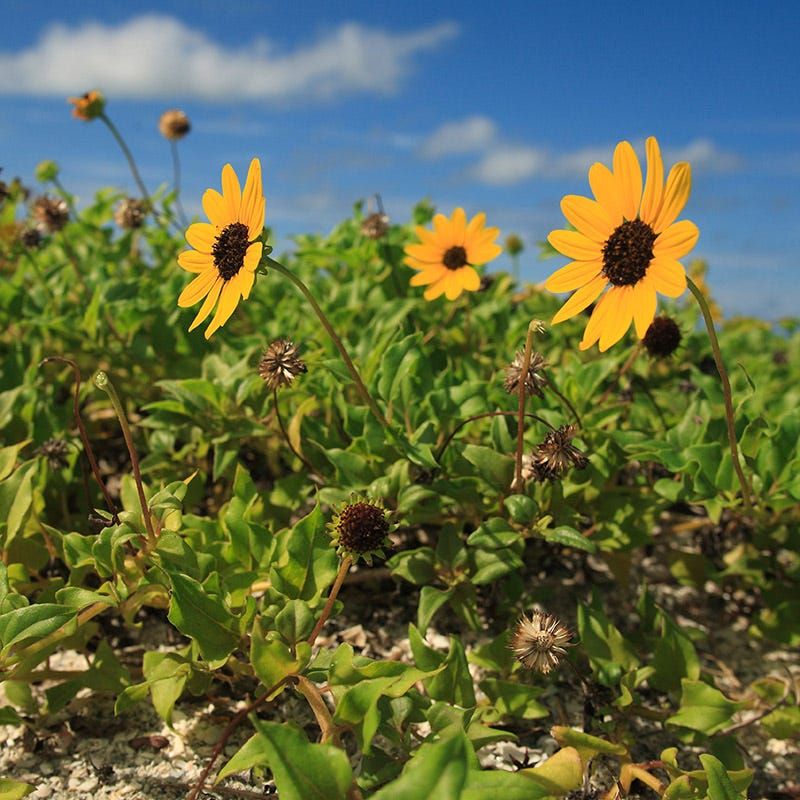
Part of what draws South Florida gardeners toward beach sunflower is its reputation for warm-season color when other plants struggle. UF/IFAS lists the plant as capable of flowering year-round, which is a meaningful trait in a region where summer heat can shut down many ornamentals. That listing reflects what the plant can do when it is well sited, well drained, and fully established, not a promise of constant, perfectly even bloom from January through December.
A separate UF/IFAS native-wildflower source describes the beach form as flowering mainly from June through August. Both descriptions come from credible extension sources, and together they paint a more accurate picture than either statement alone. Expect recurring, heat-compatible yellow flowers through the hottest months of the year. Expect that flowering intensity will vary with light levels, soil drainage, plant age, and how recently the planting was established.
Do not expect a uniform carpet of blooms at every point in the calendar.
The traits that support South Florida performance are real and worth naming plainly. Beach sunflower thrives in full sun, handles sandy soil without amendment, tolerates drought after it is established, and shrugs off salt exposure that would stress many ornamentals. Those four traits line up directly with the conditions that define a lot of South Florida’s open, coastal, and roadside landscapes. A plant that checks all four boxes in the same package is genuinely uncommon.
Salt tolerance deserves a brief clarification here. It means the plant handles airborne salt spray and salty soil conditions that come with coastal proximity. It does not mean the plant tolerates standing floodwater, storm surge, or prolonged inundation. Those are different stressors entirely, and beach sunflower is not documented to handle them.
Site the plant where water moves through quickly after rain, and the salt tolerance becomes one more reason it belongs on a coastal South Florida property.
Screen the site before you buy the plants

Before spending money on plants, spend five minutes testing the site. Walk out to the bed after a typical afternoon rainstorm and look at what the water does. If it drains away within an hour or two, leaving the soil moist but not puddled, the drainage is probably adequate. If water sits on the surface for several hours or the ground stays soggy into the next day, beach sunflower is the wrong plant for that location.
Overwatering and poor drainage are documented causes of decline for this species, and no amount of sun or sandy soil elsewhere in the yard fixes a wet root zone.
UF/IFAS guidance on right-plant-right-place landscape design makes the case that matching a plant to its site conditions is the foundation of low-maintenance performance. Beach sunflower earns its reputation on sites where it fits; it underperforms or declines on sites where it does not. That principle applies across South Florida’s varied landscape types, from coastal Broward lots with sandy, shell-mixed soil to inland Miami-Dade yards with compacted or alkaline fill.
Full sun is non-negotiable. Beach sunflower needs direct sunlight for the majority of the day to flower well and maintain its spreading, dense habit. Partial shade slows growth, reduces bloom, and opens the planting to competition from weeds. If the bed gets filtered light under a tree canopy or sits in the shadow of a fence for part of the day, a shade-tolerant annual or groundcover will outperform it.
Shaded beds, poorly drained yards, drainage swales, and areas near downspout outlets are all poor candidates regardless of how well the plant performs elsewhere on the property. Salt tolerance is a coastal asset, not a flood tolerance claim. Storm surge, prolonged inundation, and hurricane-force wind damage are separate conditions that beach sunflower is not documented to withstand. Screen the site honestly, and the planting decision becomes straightforward.
Plant for coverage while planning for establishment
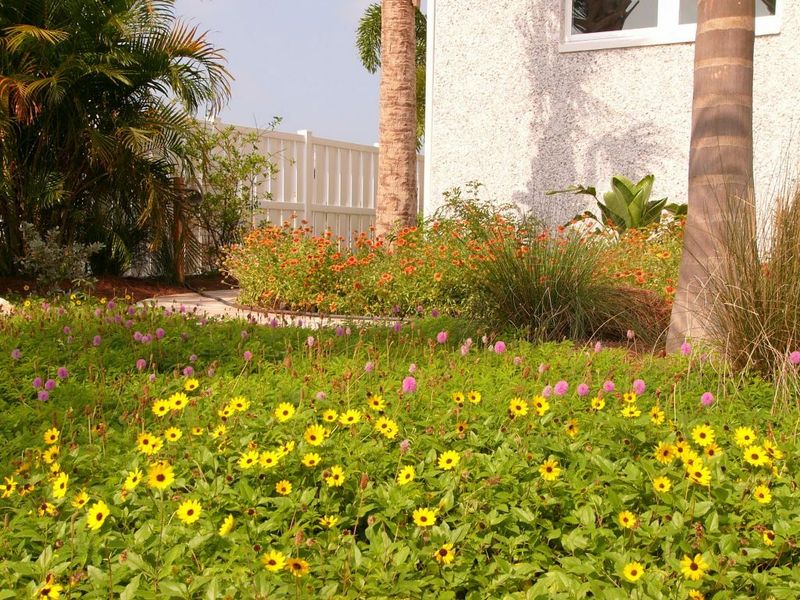
Spacing choices at planting time set the pace for how quickly the bed looks finished. UF/IFAS recommends placing beach sunflower plants 18 to 24 inches apart. At 24-inch spacing, the plants will eventually grow together and cover the ground, but the bed will look sparse for the first few months. At 18-inch spacing, coverage comes faster because runners and neighboring plants meet sooner, but you will need more plants to fill the same area, which raises the upfront cost.
Neither spacing is wrong; the choice depends on how quickly you want visual coverage and what your budget allows.
Establishment irrigation is not optional. Beach sunflower earns its drought-tolerant reputation only after the root system is fully developed, which takes time after planting. New plants need regular watering during the first weeks in the ground, especially through South Florida’s dry season or any stretch of low rainfall. Once established, the plant’s water needs drop considerably, and supplemental irrigation can be reduced or eliminated during rainy periods.
Overwatering an established planting is a real risk: UF/IFAS specifically warns that excess moisture can slow growth and cause decline, so back off irrigation once the plants are actively spreading on their own.
Fertilizer is a tool for establishment, not a routine requirement. One or two light applications per year can help new plants put on growth and fill the bed faster. Overfertilizing pushes excessive leafy growth at the expense of flowers and can cause other problems, so more is not better here. Once the planting is established and spreading, fertilizer needs drop further.
Source your plants from a native-plant nursery or reputable grower that propagates beach sunflower from seed or cuttings. UF/IFAS coastal plant guidance cautions against collecting plants or seeds from protected natural areas, including dunes and coastal habitats. Those populations are part of functioning ecosystems, and removing material from them is both ecologically harmful and, in many locations, illegal. Nursery-propagated stock is the right starting point, and UF/IFAS notes that beach sunflower is somewhat available through native-plant nurseries, though you may need to look beyond a standard garden center to find it.
Let it spread, but keep the bed within its boundaries
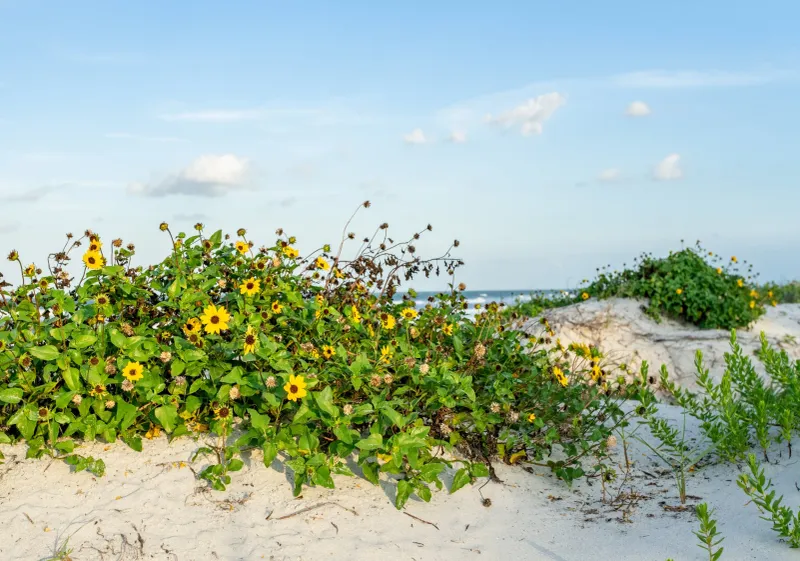
Once beach sunflower settles in and starts sending out runners, the planting takes on a life of its own. That self-spreading habit is one of its most useful traits in a large, open bed, because the plant fills bare ground without requiring you to add more plants. Runners move along the soil surface and underground, and seedlings can appear beyond the original planting area. In a contained raised bed or a narrow strip bordered by pavement, that movement will need periodic attention.
Edging the bed two or three times a year keeps runners from crossing into lawn, adjacent plantings, or walkways. Thinning overcrowded sections occasionally improves air circulation and keeps the planting looking intentional rather than overgrown. Neither task is demanding, but calling beach sunflower maintenance-free would be inaccurate. UF/IFAS plant-selection guidance frames the goal as reduced maintenance when the plant fits the site, not zero maintenance under any condition.
Height is worth managing expectations around as well. UF/IFAS profiles describe beach sunflower reaching roughly 18 inches in groundcover use, but the same profiles note a potential height of 2 to 4 feet and a spreading, sometimes cascading habit. Plants grown in very fertile soil or with excess water may push taller and floppier than expected. Occasional cutting back can refresh the planting and encourage new flowering growth from the base.
On the pest and disease front, UF/IFAS reports that serious pests are not normally seen on beach sunflower. That is a useful baseline, not a guarantee. Stressed plants in poor drainage or excessive shade can develop problems that healthy, well-sited plants avoid. Keep the site conditions right and most pest concerns stay minor.
The realistic summary: a well-matched planting needs boundary management and occasional refreshing, but not the kind of intensive seasonal attention that comes with repeatedly replacing an entire bed.
Choose beach sunflower when its look and site match
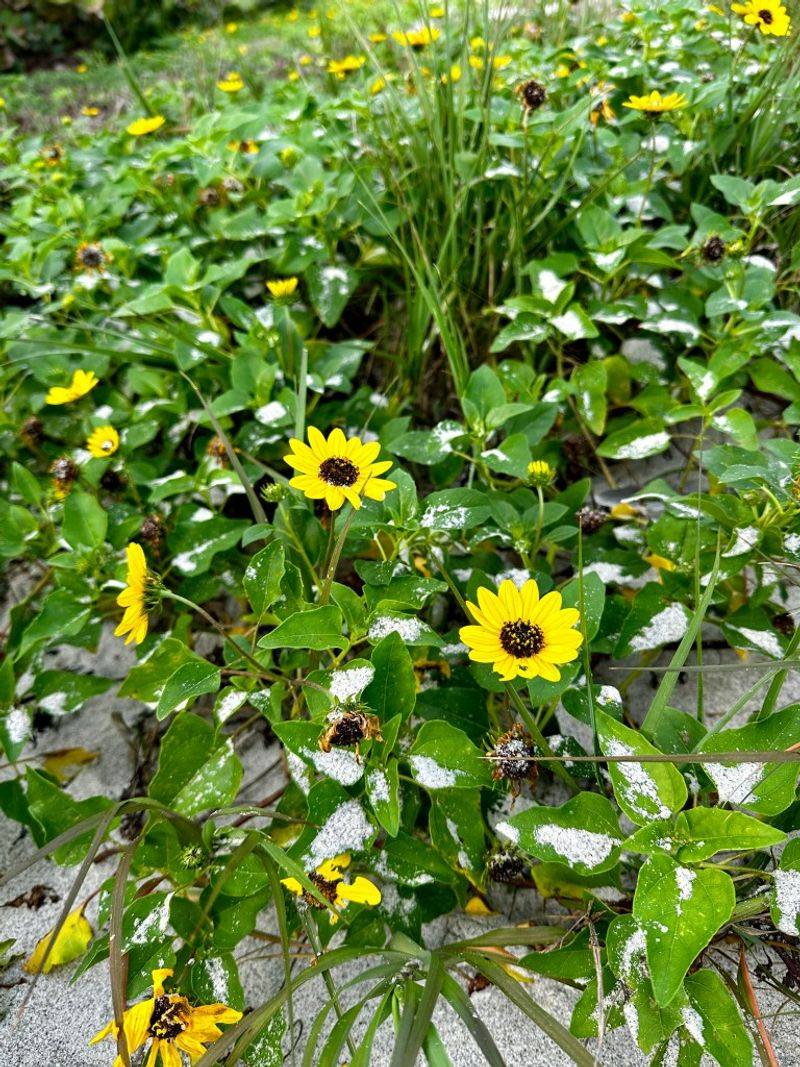
The decision framework here is straightforward. If the bed gets full sun most of the day, drains quickly after rain, sits in sandy or well-drained coastal soil, and does not need a formal, clipped look, beach sunflower is a plausible and well-supported alternative to repeated annual plantings. UF/IFAS guidance on annuals, perennials, and bulbs makes clear that both plant categories have legitimate roles in Florida landscapes, and choosing between them is a matter of site fit and design intent.
Annuals remain the better choice for formal geometric borders, compact edging along walkways, beds in partial shade, plantings where a specific flower color is required, or any display that changes with the season. No spreading native groundcover replaces those uses, and beach sunflower does not try to. Its value is in a different kind of bed: open, informal, sun-drenched, and suited to a plant that fills space on its own terms over time.
For coastal South Florida properties especially, where salt, sand, and heat narrow the list of reliable performers, beach sunflower’s documented tolerance of those exact conditions makes it worth serious consideration. Establishment takes patience and some early irrigation. Boundary management is an ongoing task. Bloom intensity varies with season and site.
Those are real trade-offs, and a gardener who goes in knowing them will get more out of the planting than one expecting a zero-effort solution.
Judge beach sunflower by how well it fits your specific site and the look you want from that bed. A plant chosen for the right reasons, in the right place, tends to reward that care quietly and consistently, which is a better outcome than replanting the same bed twice a year hoping for different results.