
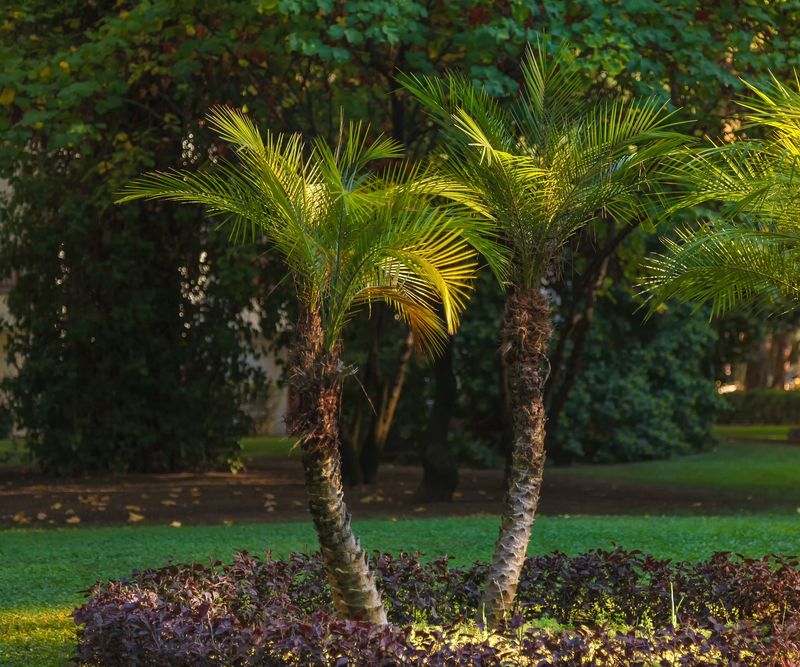
A yellowing palm in January makes you want to grab a saw or a fertilizer bag right away. Both feel like quick fixes, but neither one is the winter shortcut it seems to be.
Florida palms respond best to patience in the cool months and good timing the rest of the year. Here is what University of Florida experts actually recommend, and what you can do today.
Winter care is not a guaranteed green-up
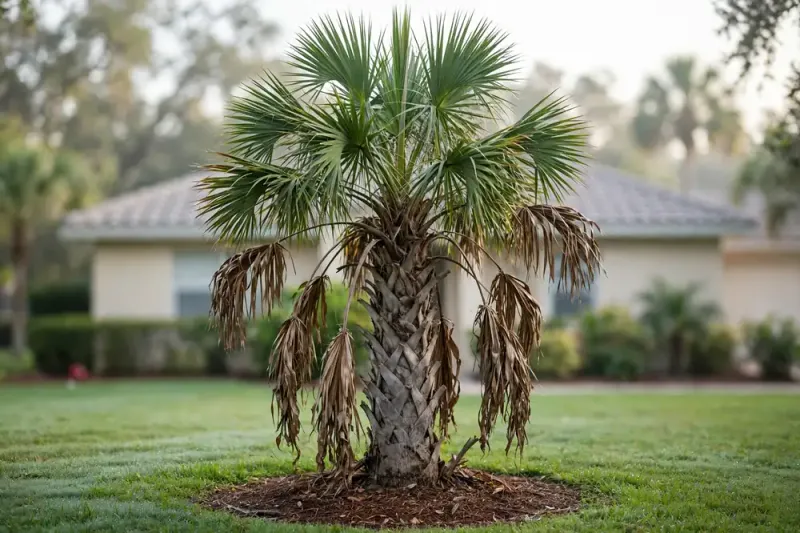
Here is the honest answer up front: no single winter step is proven to keep palms greener than any amount of trimming. Quick fixes are tempting when fronds look tired in January, but palms do not work that way.
Timing matters most for feeding. UF/IFAS palm nutrition guidance says to fertilize during the growing season, when palms are actively growing, and not in winter when growth slows.
A fertilizer bag opened in January does not give the palm much to work with.
There is a useful difference between winter feeding and good nutrition before cold arrives. UF/IFAS research on cold damage in palms reports that routinely fertilized coconut palms had less chilling-related leaf damage than unfertilized ones.
It also says palms with balanced nutrition going into the coldest weeks are more likely to survive and recover than nutrient-starved palms.
That does not mean a winter feeding will green up your palms. Cold injury depends on the species, the age and health of the palm, where it stands, and how severe and long the cold snap is.
Neither good nutrition nor leaving fronds in place can promise a particular look or prevent freeze damage.
So what can you do? Keep healthy fronds, prune only for good reasons, feed on the right schedule, and handle freezes carefully.
The next sections walk through each of those steps.
Why green fronds should usually stay
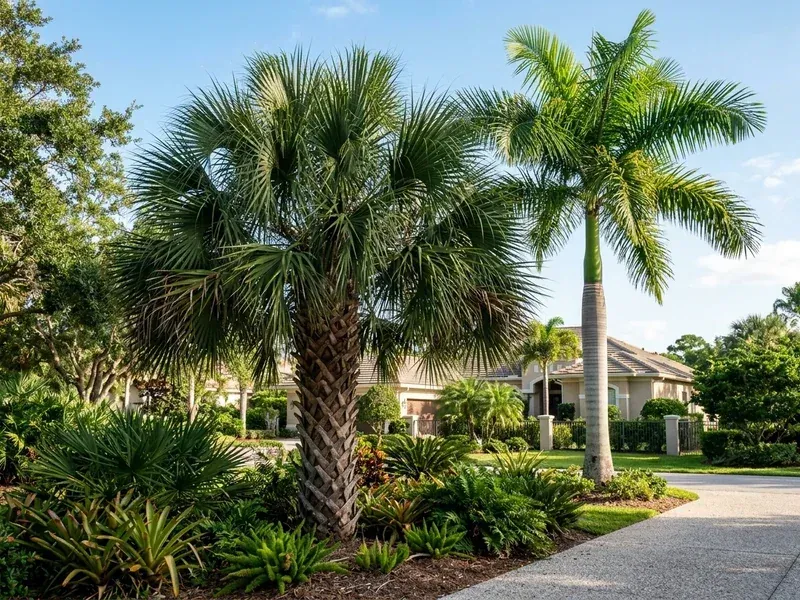
Picture a frond as a small solar panel and a pantry in one. Green and partly green fronds keep making food through photosynthesis, and they can pass stored nutrients to the new growth at the center of the crown.
That is why cutting them off can backfire. According to UF/IFAS Extension in Hillsborough County, removing leaves that still have green in them can speed up nutrient loss, especially in a palm that is already short on something.
A deficient palm that loses its older fronds loses the very nutrients it is trying to recycle.
Take a palm with yellow-orange older fronds in February. Trimming them off may make the crown look tidier for a few weeks, but it can leave the palm with less to draw on when spring growth begins.
The UF/IFAS publication on pruning palms backs this up by cautioning against routine removal of healthy or partly green fronds.
Keep the claim modest, though. Leaving fronds on is a way to avoid causing harm, not a guaranteed way to get greener leaves.
It also does not shield a palm from cold. Think of it as not taking away resources your palm is still using.
When pruning makes sense
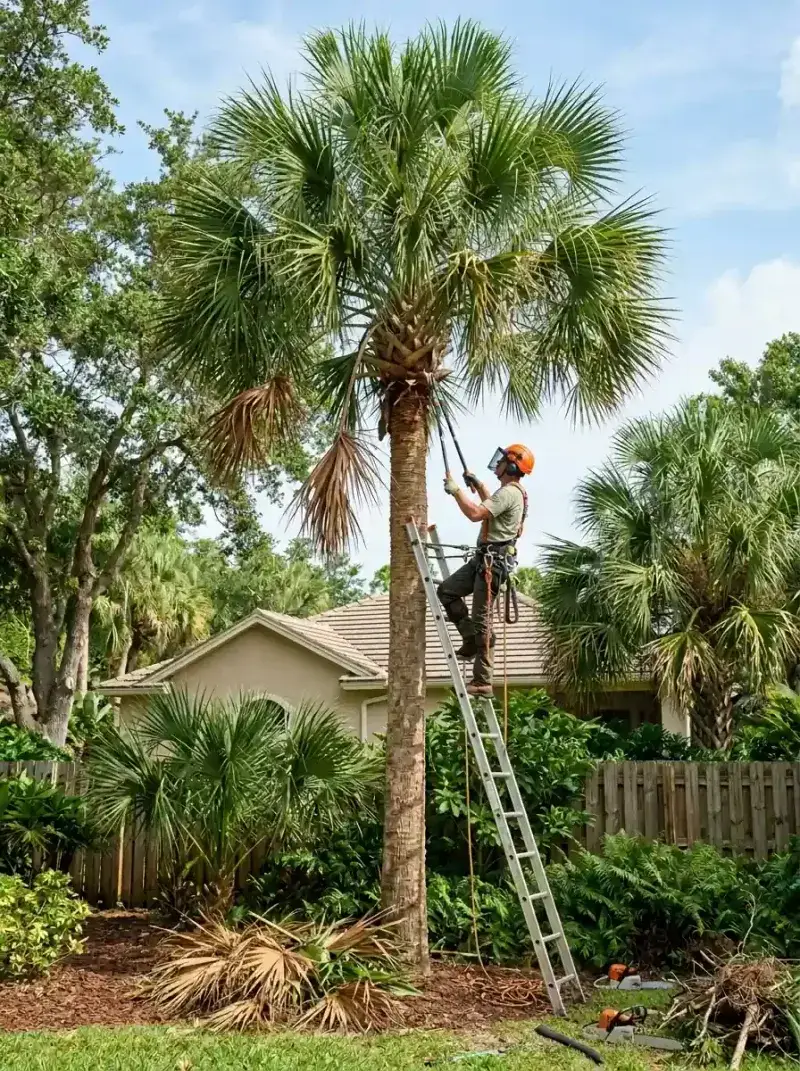
Leaving fronds alone does not mean the pruning saw stays in the shed forever. Some jobs are perfectly reasonable.
Completely dead brown fronds are fine to remove. So are broken leaves hanging by a thread, and fronds that threaten a roof, a walkway, or a power line.
Fruit or flower stalks that make a mess or create a hazard are another fair reason to cut.
The UF/IFAS guide to pruning palms draws the line at routine removal of healthy or partly green fronds, and at severe cuts often called hurricane cuts. Those heavy cuts strip the crown and stress the tree without making it any safer in a storm.
You may also have heard of the 9-and-3 rule, where a palm is trimmed so fronds point no lower than nine o’clock and three o’clock. UF/IFAS Extension in Hillsborough County describes it as a widely misunderstood rule of thumb.
Treat it as a ceiling on how much to remove, not a shape to chase.
A simple test helps. If a frond is fully brown or a true hazard, cut it.
If it still has green and is only unsightly, let it be. A natural, full crown is the goal.
Diagnose yellowing before adding fertilizer
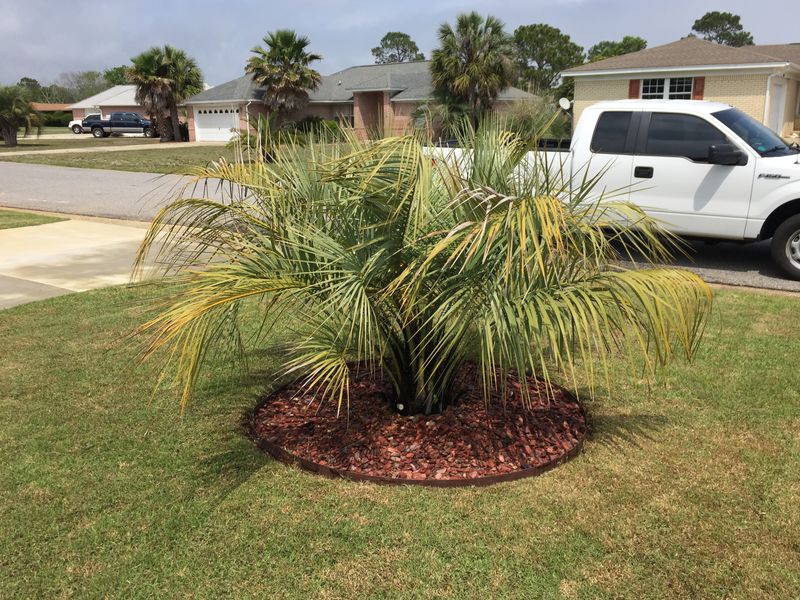
Yellow leaves look like a hunger signal, so it is natural to reach for a fertilizer bag. Yellowing alone, though, does not prove a palm needs feeding.
According to UF/IFAS palm nutrition guidance, nutrient symptoms can be hard to diagnose. The same yellow color can come from several different problems, and the palm type and the site both matter.
Look for clues. Is the yellowing on older fronds or on new ones?
Is it a whole crown or a few leaves? Has the palm sat through a cold night, a dry spell, soggy soil, or recent root disturbance?
A palm planted in a lawn that is regularly fertilized is in a different situation than one in bare sand.
Species matter too. Florida native palms, such as sabal palmetto and saw palmetto, usually do not need supplemental fertilizer.
Adding more to a native in decent soil is often wasted effort.
Extra or unsuitable nutrients can also make a deficiency worse, so more is not safer. When you cannot tell what is going on, take photos and contact your county Extension office.
They can help identify the palm and the likely cause before you spend money or change anything.
Plan appropriate nutrition for the growing season
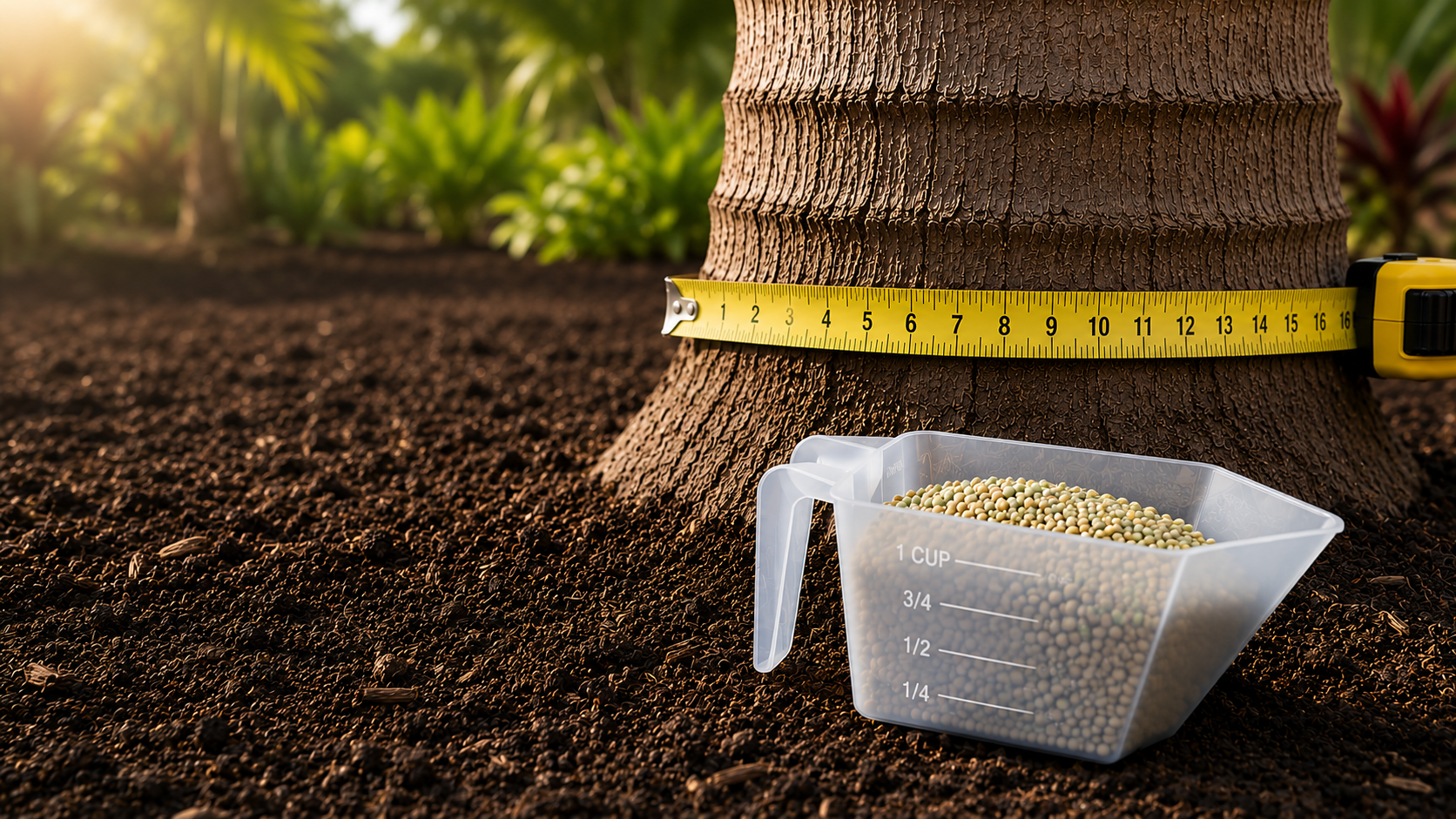
If a palm really does need feeding, the better plan runs from spring through fall, when it is growing. Skip the blanket winter schedule.
UF/IFAS homeowner guidance, described in its palm nutrition and fertilization page, is three applications a year from spring through fall. That is a homeowner guideline, not a statewide calendar.
Detailed recommendations vary by region, soil, fertilizer product, and local rules.
For product choice, UF/IFAS gives 8-2-12+4Mg or 8-0-12+4Mg as examples of palm fertilizers. Look for slow- or controlled-release nutrients and suitable micronutrients.
Spread the product evenly across the root zone, which reaches well past the trunk, and follow the label rather than guessing at an amount.
Check local rules before you buy. Some Florida counties and cities limit nitrogen and phosphorus in certain seasons, since runoff can carry nutrients into waterways.
UF/IFAS answers common questions about urban fertilizer ordinances, and your county Extension office can tell you what applies at your address.
Finally, be patient. Correcting a deficiency can take six months to two or three years.
Fertilizer will not turn leaves that are already yellow or damaged back to green. What you are really feeding is the new growth that comes next.
A good habit is to mark the calendar for spring, check your local restrictions, and judge the palm by its newest fronds over the next year, not by this week’s crown.
After a freeze, wait before pruning or feeding
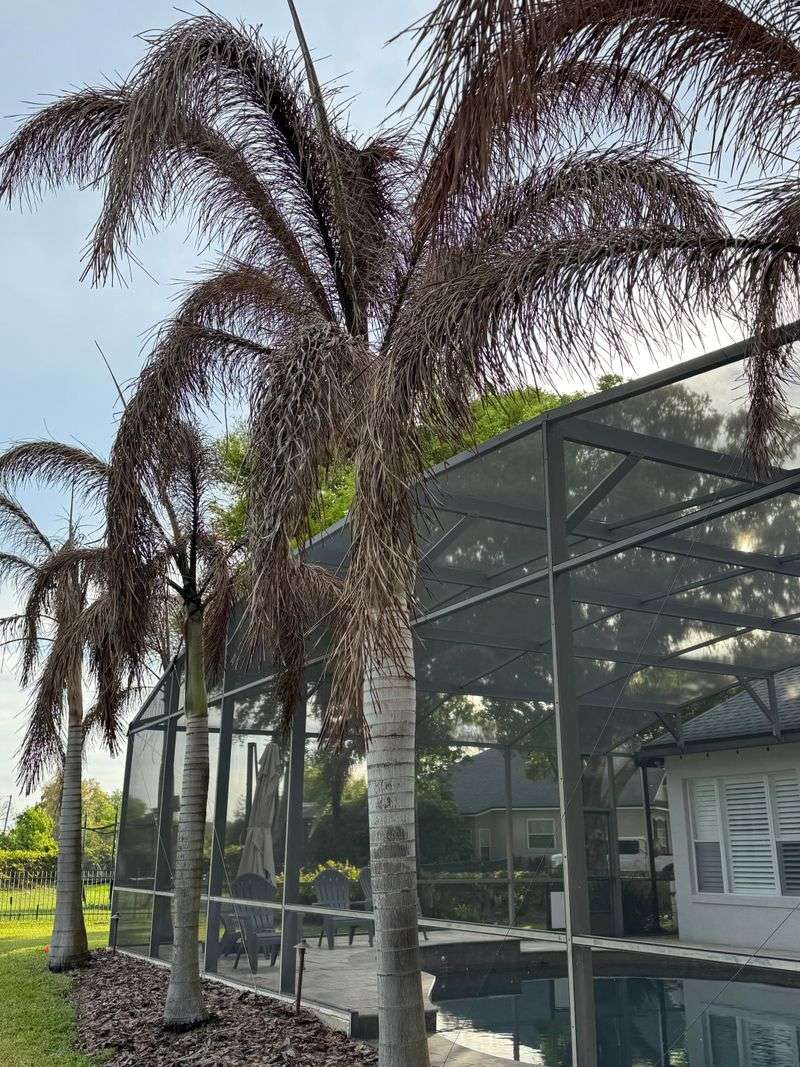
A hard freeze can leave palms looking scorched, and the urge to clean up fast is strong. Waiting is usually the wiser move.
Guidance from LSU AgCenter on freeze-damaged palms advises against rushing to cut off cold-damaged fronds, especially if any green remains. Wait until new growth appears and the danger of more hard freezes has passed.
Damaged fronds can also offer some cover for the crown during later cold nights.
The same goes for fertilizer. Feeding a cold-damaged palm too early can prompt new growth before cold weather is over, and that tender growth is easily hurt again.
Hold off until spring growth is under way, then follow the growing-season plan from the earlier section and the advice in UF/IFAS palm nutrition guidance.
Do not expect every palm on the street to look the same afterward. As UF/IFAS notes on cold damage explain, results depend on the species, the palm’s age and health, how exposed it is, and how severe and long the cold lasts.
In the meantime, you can water normally and watch the center of the crown for new spears. Recovery takes time, and the palm will show you when it is ready for tidying.
Patience in the weeks after a freeze often does more for a palm than any tool in your garage.