
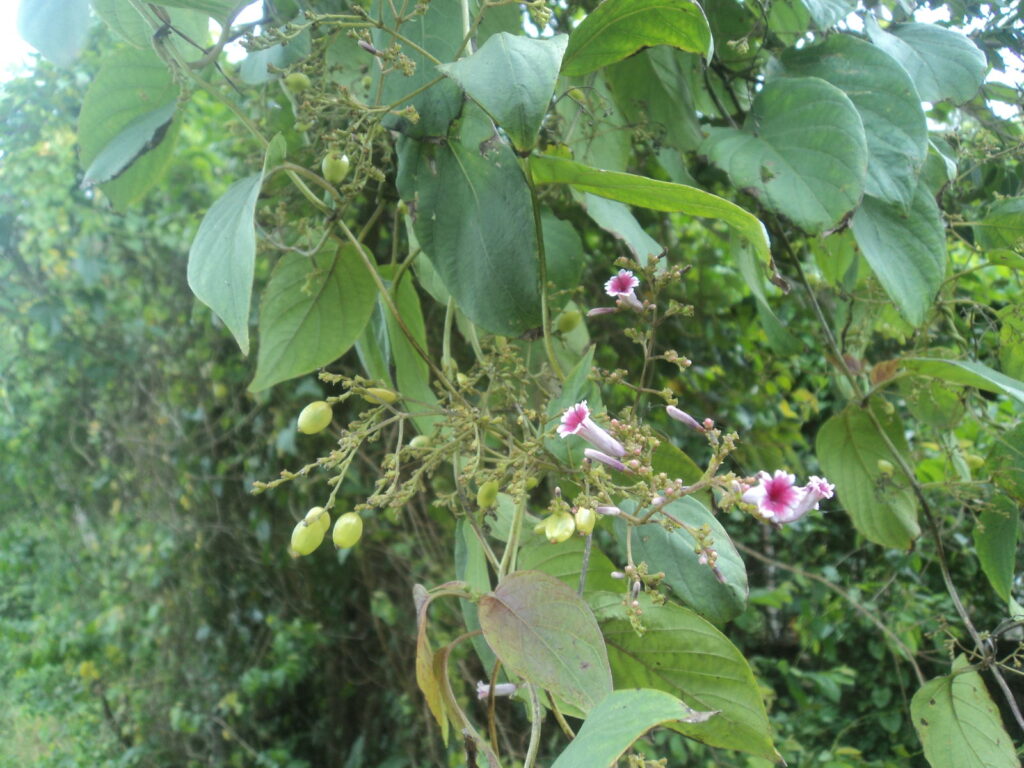
Crush a leaf of skunkvine and you will know why it earned its name. This fast-growing invasive vine can blanket shrubs and trees across Florida yards and natural areas.
Fall is a good time to walk your property and look for it, even though flowering times vary. Here is how to spot it, remove it with care, and keep an eye out for its return.
Fall is a useful inspection window, not a guaranteed bloom date
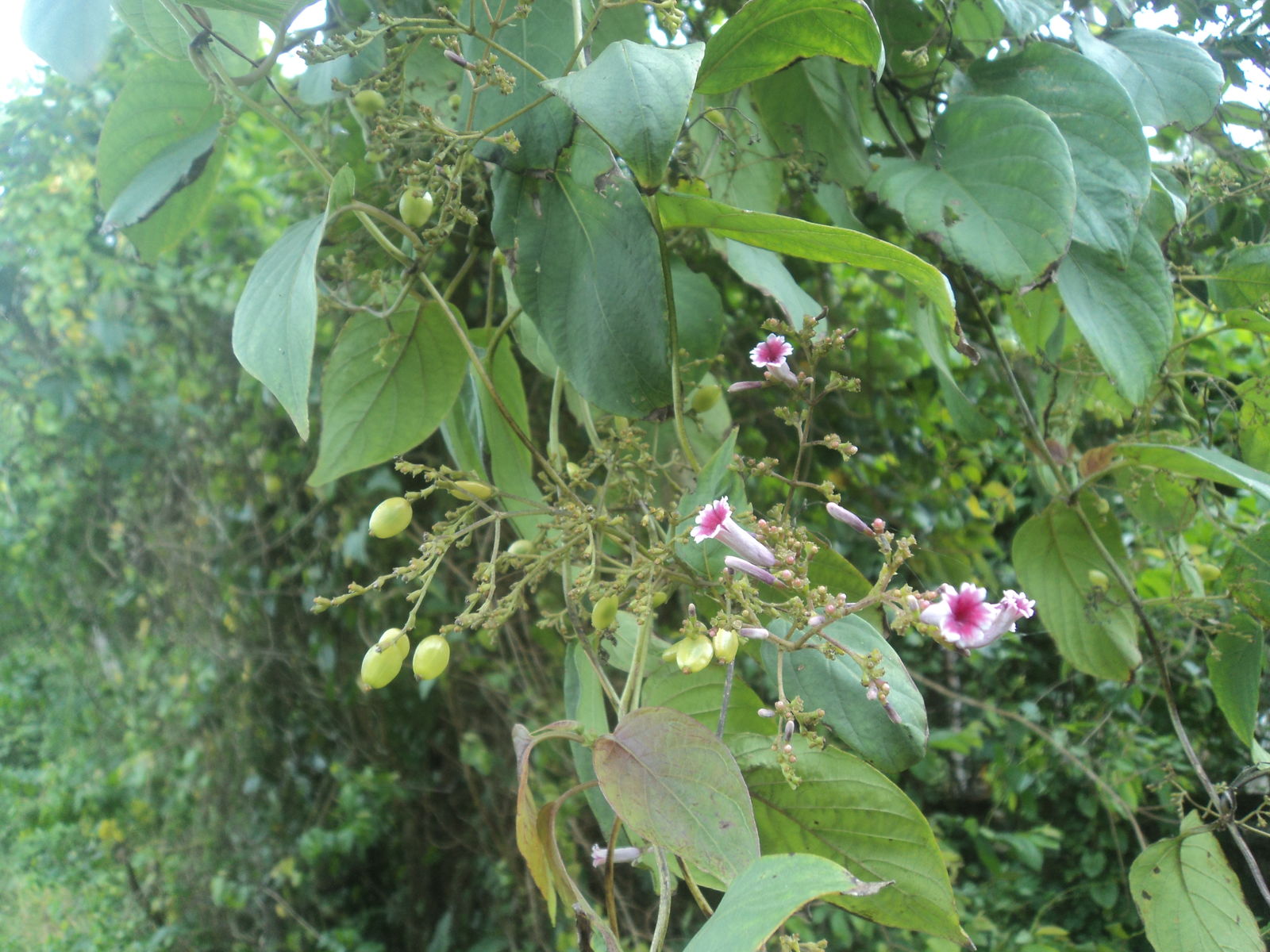
Skunkvine does not follow one tidy calendar. UF/IFAS Extension describes flowering in late summer and fall, and the Florida Museum of Natural History offers a similar picture for the state.
Other accounts give a wider window. The U.S.
Forest Service reports that flowers may appear from May through August in Florida. So a vine in your yard might be in bloom, setting fruit, or between stages, depending on where you live and the year’s weather.
That is why the best plan is to look at the plants themselves instead of trusting a date. The UF/IFAS management guide notes that fall can be a useful time for treatment and that fruit set happens in fall, so a fall walk-through often pays off.
Check fences, shrubs, tree trunks, and the edges of wooded areas. Look for small flowers, round fruits, or just the twining stems themselves.
If you find none of those, the vine may simply be at a different stage, and the chance to act has not necessarily passed.
Treat early fall as a reasonable time to scout, then keep checking through the season. Finding a vine sooner generally gives you more options than finding it later.
What does skunkvine look and smell like?
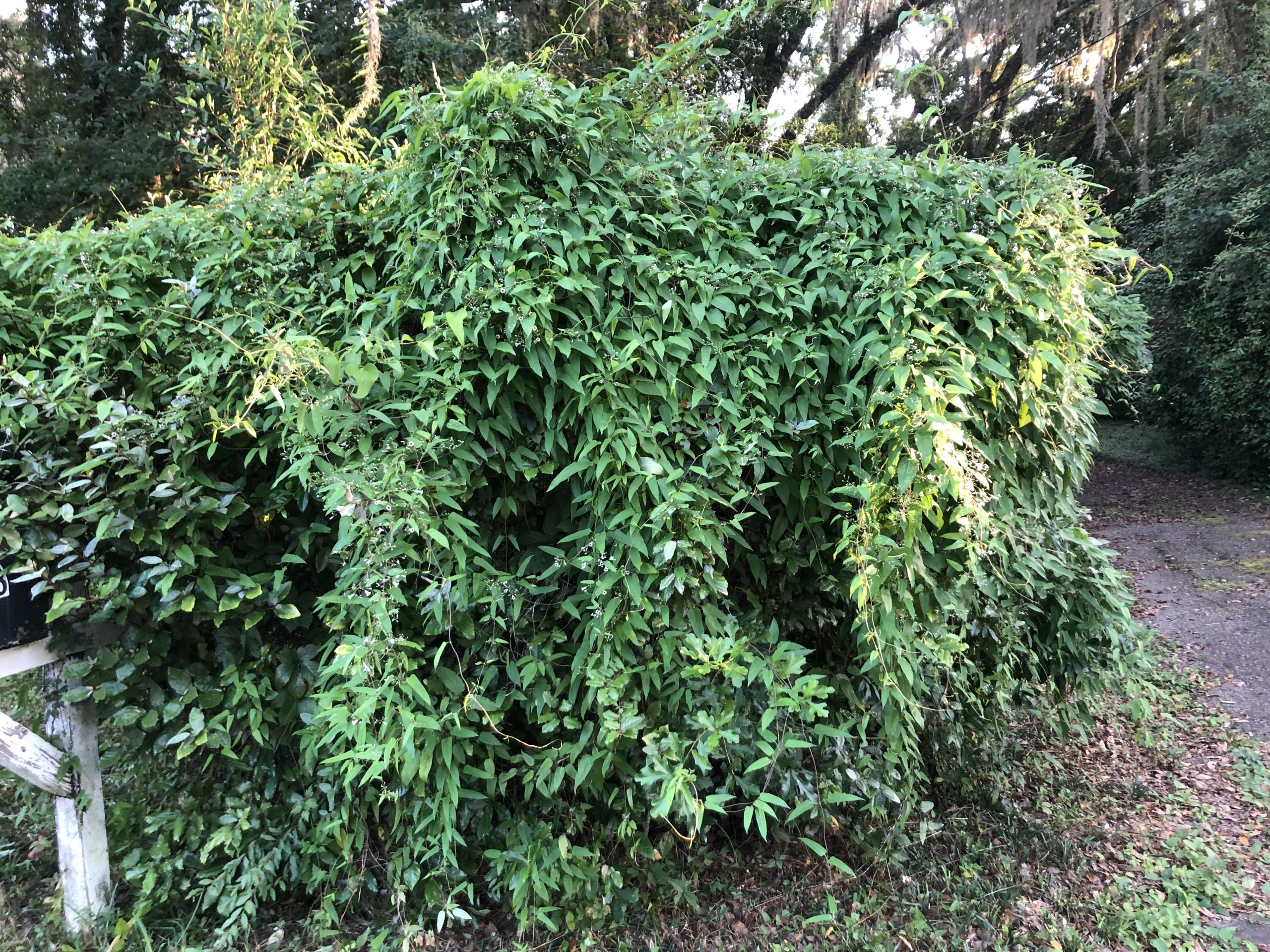
Start with the growth habit. Skunkvine is a twining vine, so its stems wrap around fences, branches, and other plants as they climb.
Its leaves grow in opposite pairs, have smooth edges, and are often lobed near the base.
Then comes the smell. According to UF/IFAS Extension, the odor is unpleasant and gets stronger when leaves or stems are crushed.
A gentle scratch of a leaf is usually enough to tell you something.
Flowers and fruit are helpful extra clues, though you do not need them to identify the plant. The flowers are small, tubular, and grayish-pink or lilac.
The fruits are nearly round.
A similar plant called sewer vine (Paederia cruddasiana) can cause mix-ups. Its fruits are flattened and its seeds are winged, while skunkvine has round fruit and wingless seeds.
If fruit is present, it is the most reliable way to tell the two apart.
Do not lean on smell or leaf shape alone when you are unsure. Take clear photos of leaves, stems, flowers, and any fruit.
Then ask your county UF/IFAS Extension office to confirm before you start pulling or spraying.
Dense growth can deprive trees of light

Skunkvine is a vigorous climber that spreads over whatever it can reach. UF/IFAS Extension describes how dense growth can shade and damage the plants beneath it.
Picture a young shrub or a small tree with a green blanket draped over its leaves. Leaves that sit in shade get less light to work with, and a plant that cannot photosynthesize well may weaken over time.
Weight is a second concern. The Florida Museum of Natural History notes that the weight of vines can contribute to trees toppling in high winds or heavy rain, which matters in a state with hurricane season.
These are risks, not certainties. Not every infested tree will die or fall, and a healthy mature tree may tolerate some vine cover for a while.
Smaller or already stressed plants are more vulnerable.
The practical takeaway is that a vine climbing your landscape plants is worth dealing with before it gets heavier. Acting sooner gives you a smaller problem to manage.
Small infestations call for careful removal
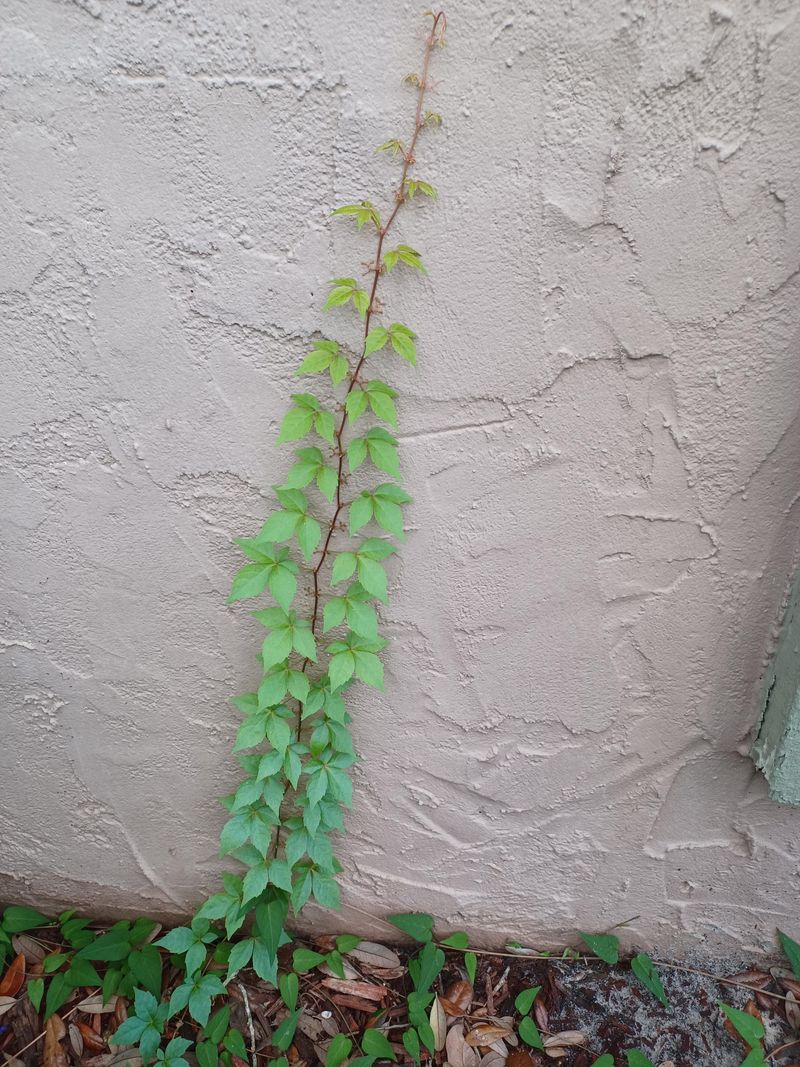
When only a few young plants have shown up, hand removal is one option. It works best on small, new growth, and it is not a universal fix for established vines with deep, tangled stems.
Wear gloves and work slowly. Rather than yanking a vine out of a tree canopy, cut stems at a reachable height, loosen the roots, and remove what you can from the ground.
Pulling hard from above can snap stems and leave pieces behind.
What you do with the material matters. Both UF/IFAS Extension and the U.S.
Forest Service point out that fruit and stem fragments can spread the plant. Seeds may germinate and stems may root where they land.
Bag removed vines, especially any with fruit, and dispose of them in the trash. Skip the compost pile and do not leave cuttings lying on the ground.
Expect to repeat the job. Cut stems can regrow from below, so one pass rarely settles things.
Mark the spot on your calendar and look again in a few weeks.
Fall herbicide timing depends on the site
Some infestations are too big or too established for hand removal. The UF/IFAS invasive plant management guide says fall can be an effective period for herbicide treatment.
It also advises treating by early flowering when possible, to prevent seed production.
Timing is only part of the picture. Which product to use, and how, depends on the label and on your site.
Nearby desirable plants matter, and so does whether standing water is present.
Herbicides can injure plants they were never meant to touch. Vines tangled through your favorite shrubs or hedges are a real concern because spray or drift can reach them.
Keep contact with nontarget vegetation to a minimum.
Follow the label from start to finish. The EPA’s pesticide safety tips likewise advise using products only as directed and observing the precautions listed.
No single product, rate, or method suits every yard, so this article does not prescribe one. Also, UF/IFAS Extension notes that one application may not control an infestation.
If you are unsure, your county Extension office can help you choose an approach that fits your property.
Plan to revisit the area
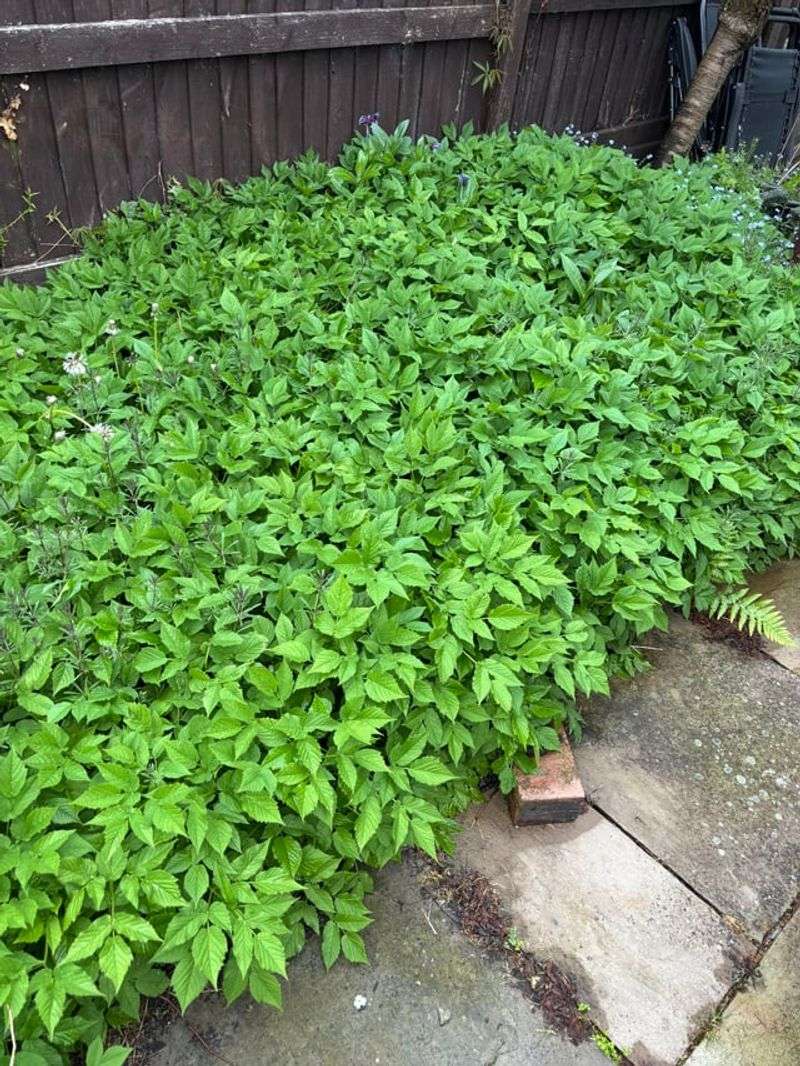
A workable plan has four steps. Confirm the plant is skunkvine, pick removal or treatment that suits the size of the problem and your site, bag the plant material, and come back to look for new growth.
Details on each step are in the sections above.
Plan on more than one visit. Cutting or pulling an established vine may not settle things in a single pass, since UF/IFAS Extension notes that stems can regrow and seedlings can appear.
A quick check every few weeks through the growing season catches most resprouts while they are easy to handle.
That follow-up can help reduce future spread and canopy pressure. It cannot promise that a particular tree will be saved next year.
Skunkvine rewards the gardener who keeps showing up.