
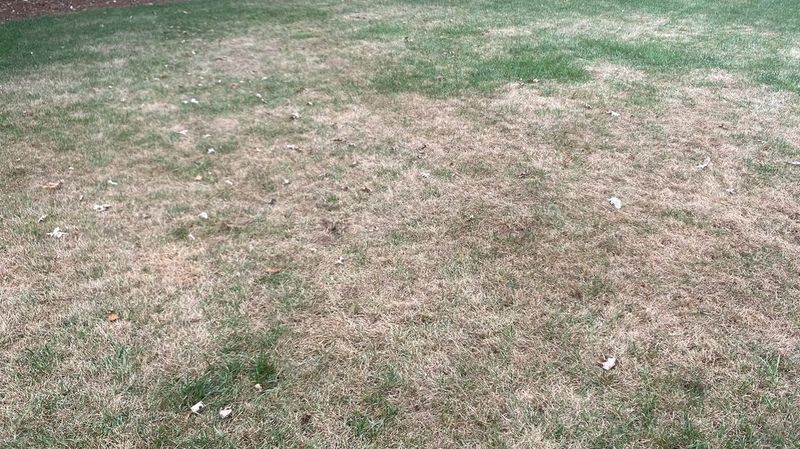
A brown patch that grows overnight can make any Texas homeowner nervous. In fall, one possible cause is a hungry caterpillar that chews grass faster than you might expect.
Other problems can look just the same, so a quick check can save you time and money. Here is how to look closely, rule out lookalikes, and decide what to do next.
Armyworms can remain active into early November
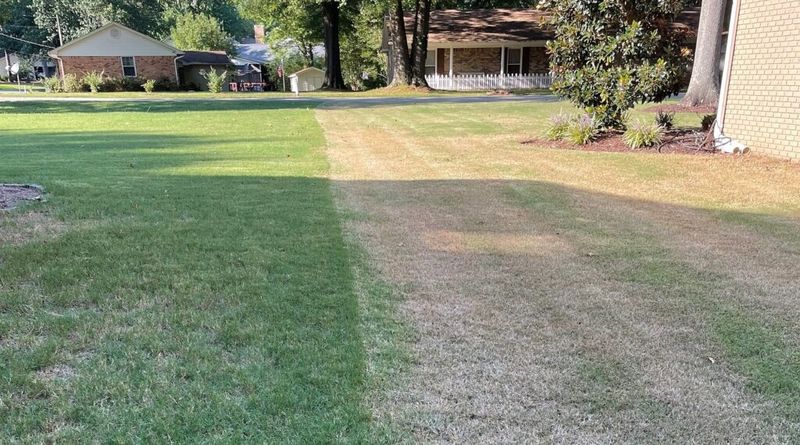
Autumn rain and a fresh round of watering can set the stage for a lawn surprise. Texas A&M AgriLife entomology guidance says fall armyworms are most abundant from midsummer through early November.
It also notes that outbreaks in lawns and pastures often follow rain or irrigation.
That timing makes a quick look worthwhile if a patch seems to be growing fast. Still, the same guidance describes outbreaks as sporadic and hard to predict.
Some yards get hit while the one down the street stays fine.
To be clear, the sources reviewed do not confirm a widespread November 2026 outbreak anywhere in Texas. This article is a guide for checking one lawn, not an alert about the whole state.
A seasonal window means armyworms are possible, not that they are the answer.
Another point to keep in mind is that “armyworm” covers several species. Texas A&M turf guidance lists fall, true, beet, and yellowstriped armyworms as possible lawn visitors.
Fall armyworm is the one that causes the most trouble in home landscapes, but not every caterpillar you find will be that species.
The next few sections walk through what fresh damage looks like, what else can turn grass brown, and how to check your turf before you reach for any product.
Fresh feeding and visible larvae make a stronger case than brown color
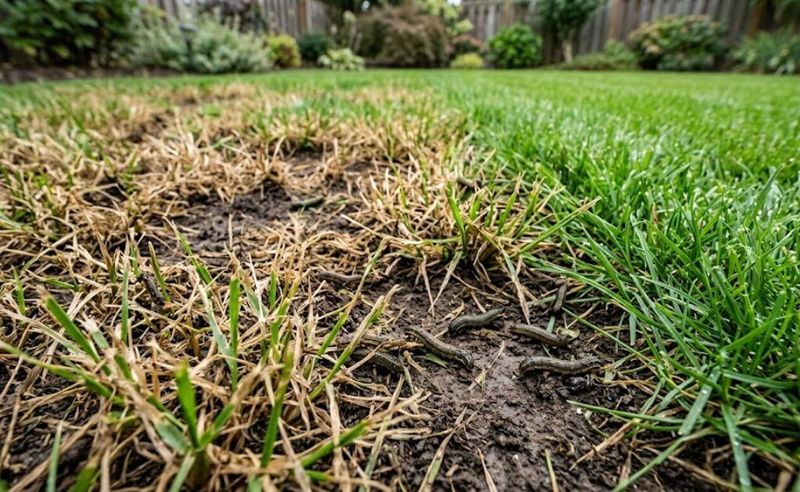
Color alone tells you very little. What matters is whether the grass shows signs of recent chewing and whether you can find the culprit itself.
Early feeding often leaves translucent “windowpane” spots or blade tips that look eaten. As caterpillars grow, they strip leaves more heavily, according to Texas A&M fall armyworm identification guidance.
Heavy feeding can leave sharply contrasting brown and green areas, with a fairly clear line between damaged and healthy turf.
Look closely at the grass blades along that line. Chewed, ragged edges point toward an insect.
Smooth, thinning, or evenly faded grass points somewhere else.
Next, go looking for larvae. They are easiest to spot early or late in the day, when they feed in the open.
Midday heat often sends them down into the thatch, so a quick afternoon glance can miss them.
A helpful identifying clue is a pale inverted Y on the head of a fall armyworm. Think of it as one useful marker, not a final verdict.
Texas lawns can host several armyworm species, so a caterpillar without that mark may still be an armyworm of another kind.
If you find chewed blades and caterpillars together, you have a much stronger case. If you find only brown grass, keep investigating before you decide.
What else can turn a Texas lawn brown?
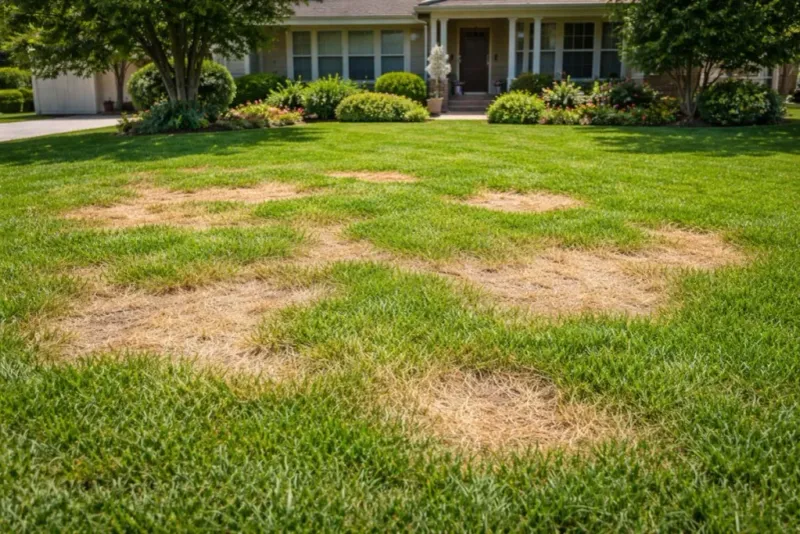
Plenty of lawn problems start with a brown spot, and armyworms are only one of them. Guessing wrong can mean spraying for the wrong thing while the real issue keeps growing.
Brown patch disease is a good example. The Texas Plant Disease Handbook describes it as a fall, winter, and spring disease that can cause light-brown, thin areas in turf.
That is a different picture from grass that has been chewed down to stubs.
Chinch bugs are another suspect, especially in St. Augustinegrass. Texas A&M chinch bug guidance notes that their injury can resemble drought or disease.
A lawn that looks dry even after watering deserves a closer look at the soil surface and the grass edge.
Drought stress and natural dormancy can also leave grass tan or brown. As nights cool in fall, warm-season turf may begin fading on its own, and that fading can look patchy in some yards.
Other turf problems can add to the confusion.
None of these can be diagnosed from color alone. Check for chewed blades, caterpillars, or tiny insects, and think about recent weather and watering.
If the signs stay unclear, contact your local Texas A&M AgriLife Extension office for help. Confirming the cause first is cheaper than treating the wrong problem.
How to inspect the damaged area
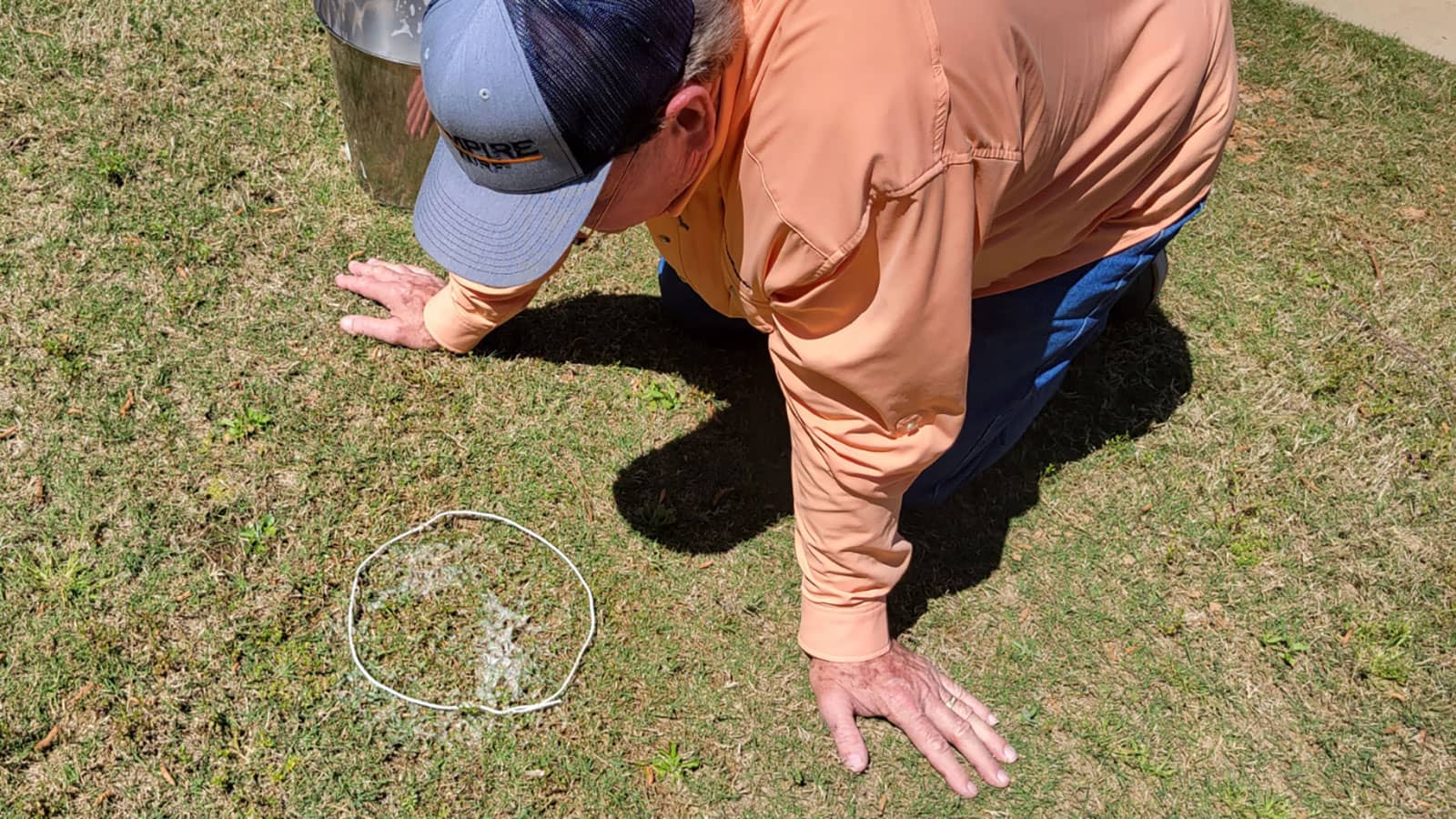
A little routine goes a long way. Start in the morning or evening, when caterpillars are more likely to be out feeding.
Get down low and part the grass at the damaged area and along its green edge, where feeding is often freshest. Texas A&M guidance on armyworms in pastures and lawns recommends frequent, thorough scouting and sampling several sites instead of trusting a single spot.
So check more than one location. Look at the edge of the patch, a nearby green area, and another spot across the yard.
Larvae can be unevenly spread, and one empty patch does not clear the whole lawn.
If you cannot see any caterpillars but suspect them, try a soap flush. UF/IFAS suggests mixing one tablespoon of liquid dish soap into a gallon of water.
Pour it over a 4-by-4-foot area near the damage, then watch for caterpillars to come up through the grass.
The flush is simply another way to find larvae. It does not diagnose the problem on its own, and it is not a treatment.
Jot down what you find at each spot, including how many caterpillars and whether the blades look freshly chewed. Those notes will help you decide what comes next.
Treat only when active feeding and larvae support the decision
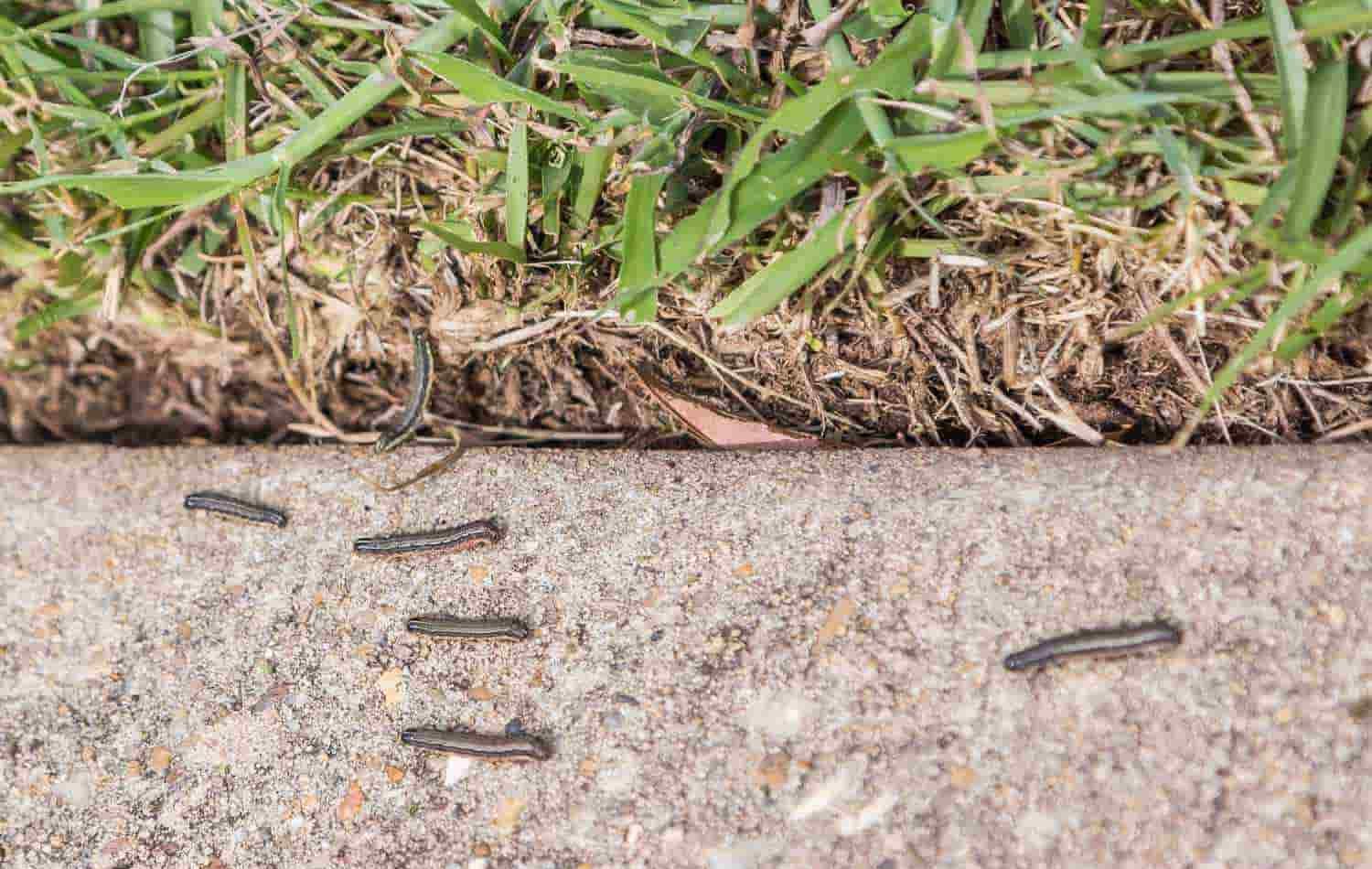
Finding a few caterpillars does not automatically call for a spray. Numbers and ongoing damage matter.
Texas A&M guidance gives roughly three or more worms per square foot as a point where lawn treatment may be considered. Treat that as a rough guide only, since thresholds vary with conditions and the figure is not a universal rule for every homeowner.
If you find many larvae and feeding is active, Texas A&M turf guidance says to act promptly with a product labeled for that lawn use. Read the label before buying and again before applying.
Follow its directions exactly, because the formulation and use instructions matter.
Bt products are a selective option for small larvae, as described in Texas A&M fall armyworm control guidance. Selective does not mean harmless, though.
UF/IFAS cautions that Bt can harm butterfly caterpillars, and that wet spinosad spray can harm bees and other beneficial insects. Blanket applications across the whole yard add risk without adding benefit.
Birds, beetles, and parasitic wasps help hold armyworms down, but their presence does not prove you can skip treatment, and it does not prove you have armyworms either. Base the decision on what you actually find in the grass.
Recovery may take longer than the remaining warm-season growth
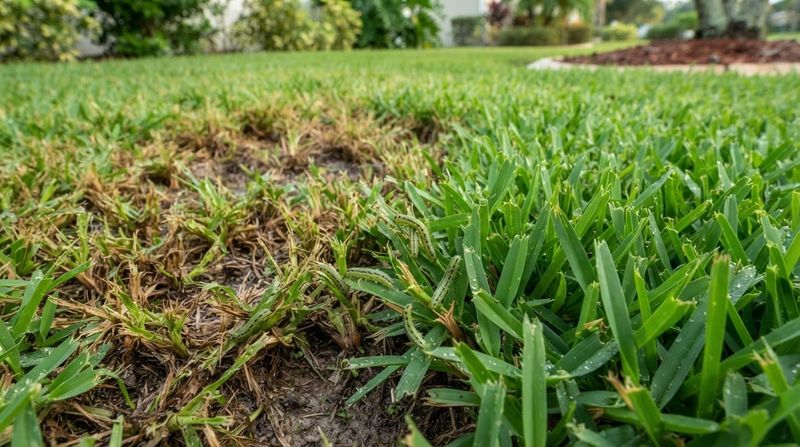
Stopping the caterpillars is only half the story. Grass has to grow back, and fall does not give it much time.
According to Texas A&M guidance, healthy bermudagrass often recovers after defoliation. Newly established bunch-type grasses such as ryegrass or fescue may be more severely harmed, since they do not spread to fill gaps the way bermudagrass can.
Warm-season turf also slows down as it heads toward dormancy. Texas A&M turfgrass mowing recommendations reflect that seasonal rhythm for warm-season lawns.
Less growth means less regrowth, even once feeding has stopped.
So treatment can stop the damage, but a green lawn before winter is not guaranteed. Recovery depends on grass type, how severe the damage was, how established the turf is, and how much growing weather is left.
If your patch is still brown after a few weeks, that does not necessarily mean the treatment failed. The lawn may simply be running out of time.
Some yards will bounce back, and others may show their recovery only once spring growth returns.
Check the damaged area occasionally for fresh chewing. Seeing no new damage is a good sign, even if the color has not returned yet.
Confirm the cause before you act
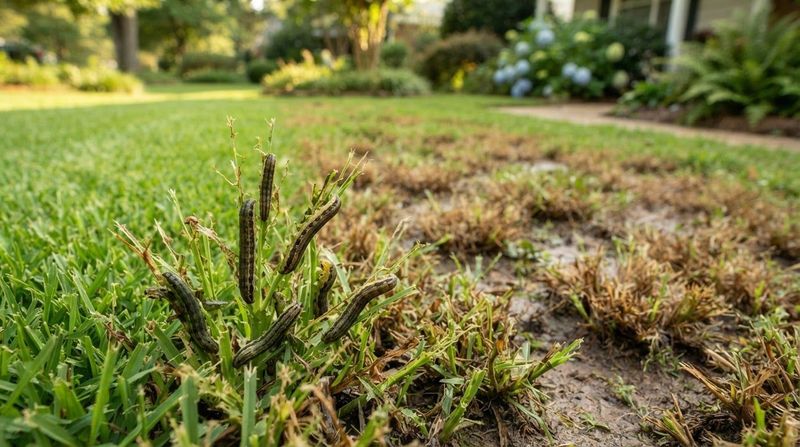
Start with fresh damage and look for larvae, using the scouting steps from Texas A&M’s armyworm guide. Check several spots, and rule out lookalikes such as brown patch disease.
Treat only when what you find and the product label agree.
An early November window makes armyworms possible, not a statewide outbreak, and recovery before dormancy is still uncertain. A lawn tells its story best to those who look closely first.