
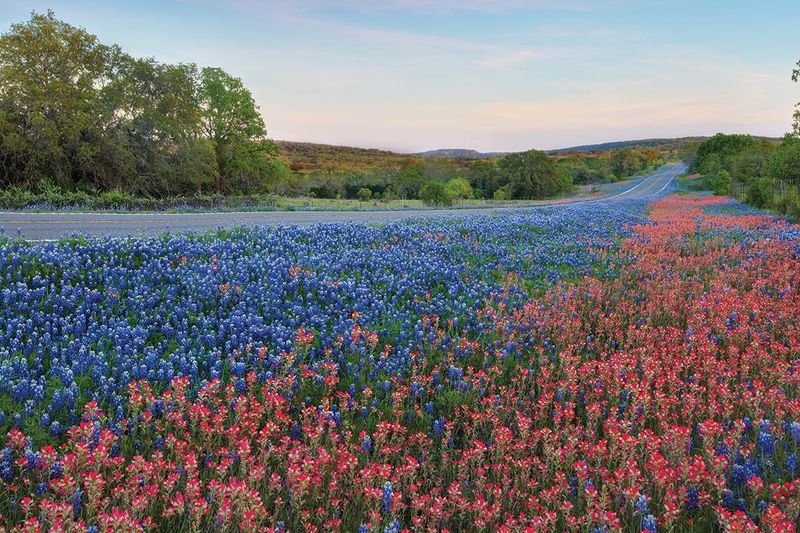
Cool-season seedlings pop up in Central Texas beds every fall and winter, and many gardeners yank them without a second look. Some of those unfamiliar sprouts might be Texas paintbrush, a native wildflower that can light up spring with orange and red.
A quick pause and a little checking can keep you from pulling something you would have loved. Here is how to decide what to do.
Could those fall seedlings be Texas paintbrush?
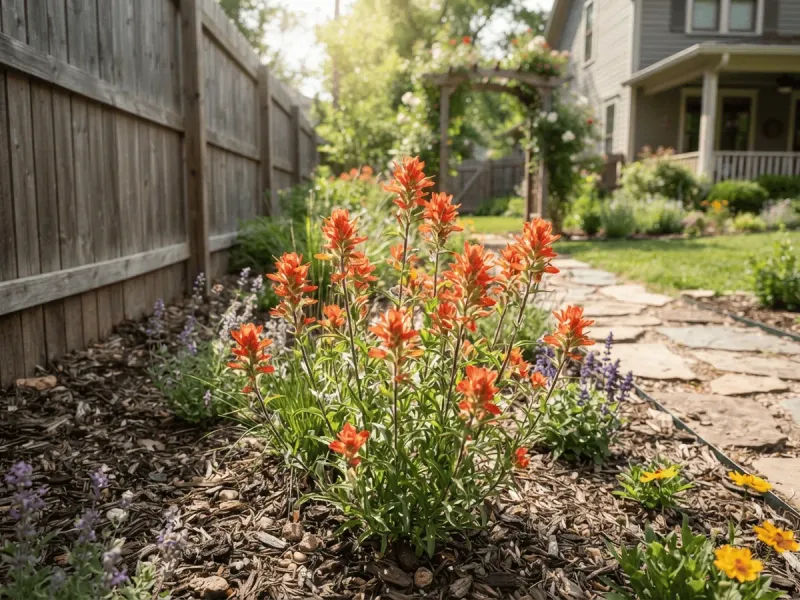
Walk a Central Texas bed in November or January and you will find all kinds of new green growth. Some of it is weeds, some is leftover garden plants, and some could be native wildflowers getting an early start.
Texas paintbrush (Castilleja indivisa) is one of those possibilities. Texas Parks and Wildlife Department material on Indian paintbrush reports that its seeds germinate in fall and winter, with cold temperatures helping trigger that sprouting before spring growth.
The University of Texas at Austin lists Castilleja indivisa in Central Texas regions and records its flowering months as March through June. So a paintbrush seedling showing up in a cool-season bed is a reasonable idea, not a wild guess.
Plausible, though, is not the same as confirmed. Plenty of other plants also sprout in fall and winter, so the calendar alone cannot tell you what any single seedling is.
Think of timing as a reason to look closer, not as an answer. If the seedling is in a spot where you did not plant anything and you have not scattered wildflower seed there, note its location and give it a little time before you decide.
A simple habit helps: snap a photo now, then another every couple of weeks. Changes in leaf shape and size will give you far more to work with than a single glance at a tiny sprout.
Can a feathery look confirm the plant?
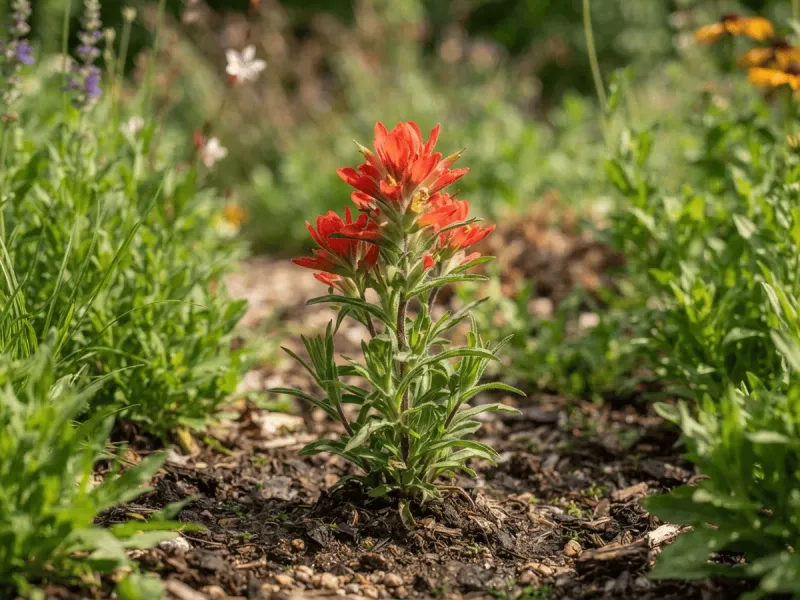
A soft, feathery look is how many people describe tiny sprouts, but it is a loose term. Dozens of plants have fine, wispy early leaves, so that look cannot settle the question.
The published plant descriptions focus on the mature plant. The UT Austin Williamson County plant description lists it as an annual that is hairy and taprooted, with narrow, long-tapered leaves.
Those details describe later growth, and nothing in them confirms “feathery” as a seedling marker.
Names add another wrinkle. “Indian paintbrush” also refers to a whole genus, and Texas has more than one paintbrush species. The TPWD overview of the genus makes that clear, and the UT Austin species page focuses on C. indivisa specifically.
So a fine-textured seedling might be Texas paintbrush, another paintbrush, or something else entirely. Nobody can responsibly name it from a description alone.
What helps instead is comparison over time. Look for hairy, narrow, tapering leaves as the plant grows, and compare it with photos of the species.
Local native plant groups and county extension offices can also look at a clear photo and weigh in.
Leave a possible seedling in place while you check
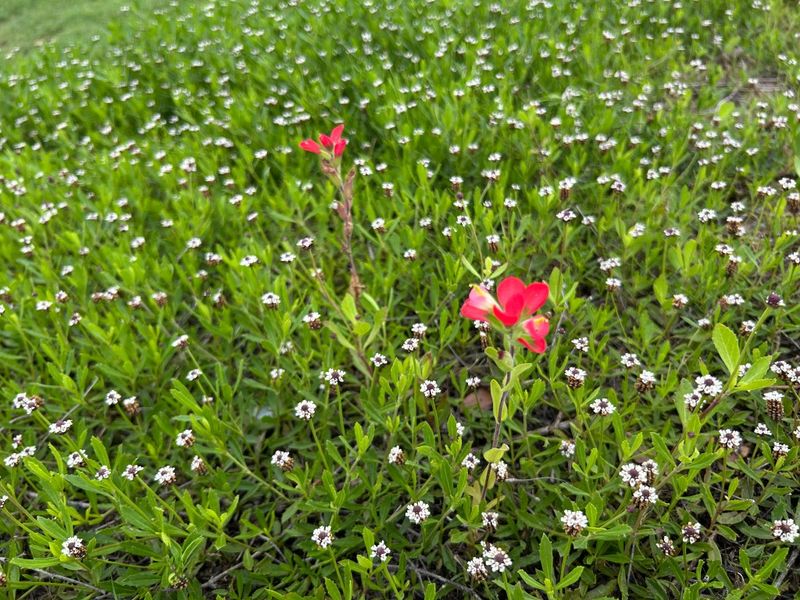
Once you suspect a seedling might be paintbrush, the best first move is the easiest one: leave it alone. Mark the spot with a small stake or a stone so you do not weed over it by accident.
Resist the urge to dig it up and move it somewhere tidier. TPWD warns that transplanting paintbrush may kill it.
Two features of the plant help explain why. It grows a taproot, and TPWD describes it as drawing on nearby plants for some of its resources.
Digging up a seedling can damage that root and cut it off from its neighbors.
Meanwhile, keep checking. Photograph it every week or two and watch how the leaves develop.
If it grows narrow, hairy leaves and a bud spike in spring, your hunch gets stronger.
Waiting does not mean keeping every mystery plant forever. If the seedling turns out to be a weed, or it is crowding something you care about or sits where you need space, you can remove it.
The goal is to identify first and decide second.
Also remember that a seedling may not thrive no matter what you do. Abundance varies from year to year, so treat any bloom as a bonus rather than a promise.
Paintbrush shares resources with nearby plants
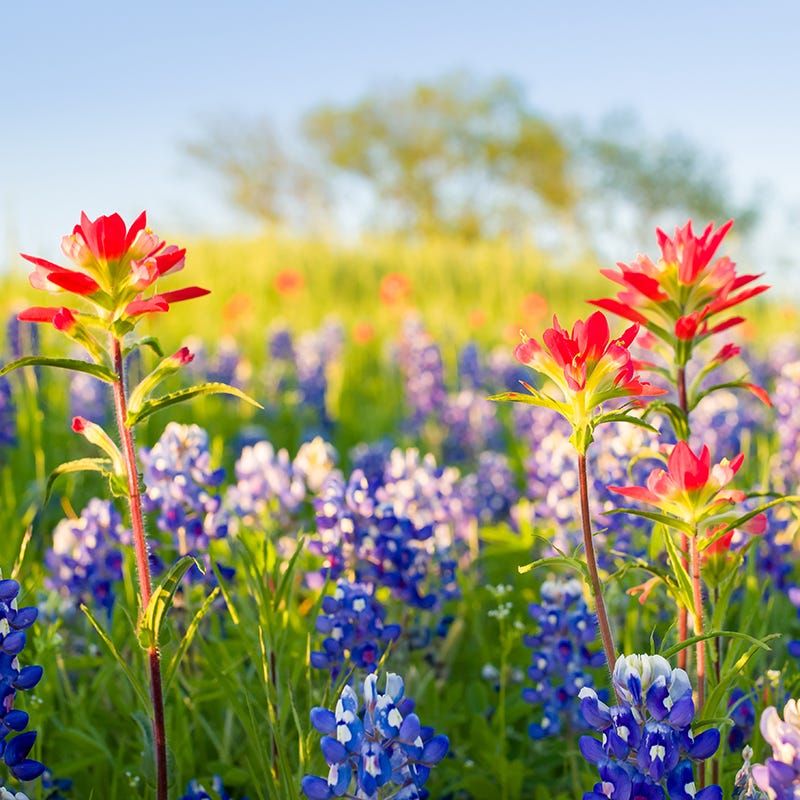
Paintbrush has an unusual lifestyle. Botanists call it hemiparasitic, which means it makes its own food through photosynthesis but can also tap into nearby plants for some water and nutrients.
You may hear that it needs a grass partner. That is too narrow.
TPWD says hosts vary and can include grasses or forbs, and notes that some plants can grow without host help.
A Texas field experiment backs up that variety. Research published in Ecology studied paintbrush growing with both grass and bluebonnet hosts.
Some gardeners worry that a plant like this will strangle its neighbors. The term only means it can take some resources through host roots.
It does not mean every plant nearby will be killed.
For you, the takeaway is mostly reassurance. A paintbrush seedling sharing a bed with grasses or other wildflowers is behaving the way the plant does in the wild.
There is no special host planting plan to follow, and no need to invent one.
If a seedling sits next to a prized plant, simply keep an eye on both. Healthy, established neighbors are usually the better judge of whether the arrangement works.
Spring flowers offer a reason to wait
If a seedling does turn out to be Texas paintbrush and conditions go its way, spring can bring a payoff. The UT Austin species page lists March through June as flowering months for Castilleja indivisa.
The blooms are also useful to wildlife. TPWD identifies paintbrush flowers as a nectar source for hummingbirds and insects, including butterflies and bees.
No one can promise that a particular volunteer will bloom, thrive, or come back in the same spot. Think of flowers as a hopeful possibility, not a guarantee.
After the show, patience matters. TPWD’s wildflower guidance says to wait until flowers have withered and dropped seed before mowing or cutting back.
It gives late June or early July as a typical window for wildflower patches in general.
That date is not specific to paintbrush, so let the plants guide you. If blooms are still fading or seed has not dropped, hold off a little longer.
Cutting too early removes the seed that could produce next season’s seedlings. A few extra weeks of slightly messy beds is a small price for that chance.
Pause before you pull
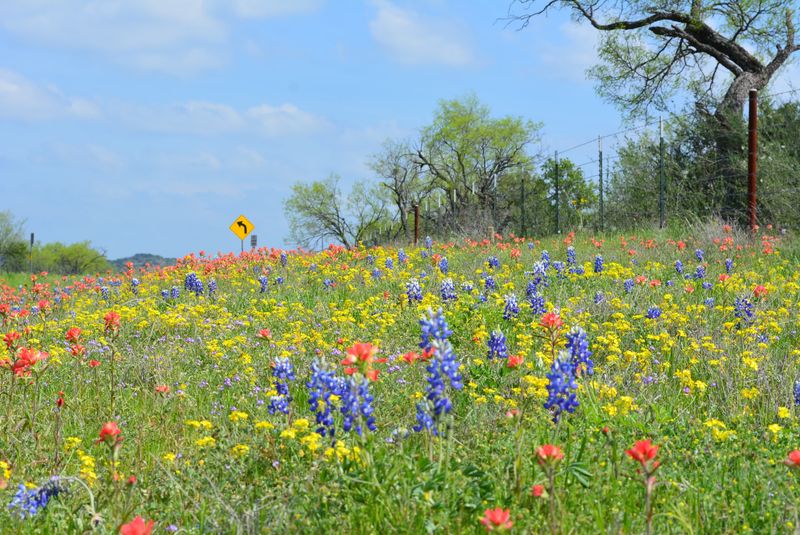
Fall or winter timing makes Texas paintbrush a candidate, and TPWD reports that seeds germinate in those seasons. Looks alone cannot confirm it, though.
So leave a suspected seedling undisturbed, check it as it grows, and compare it with the UT Austin species description. If it proves to be something else, or it simply does not belong in your bed, you are free to pull it.
A seedling that earns a few extra weeks is a small gamble with a lovely possible reward.