
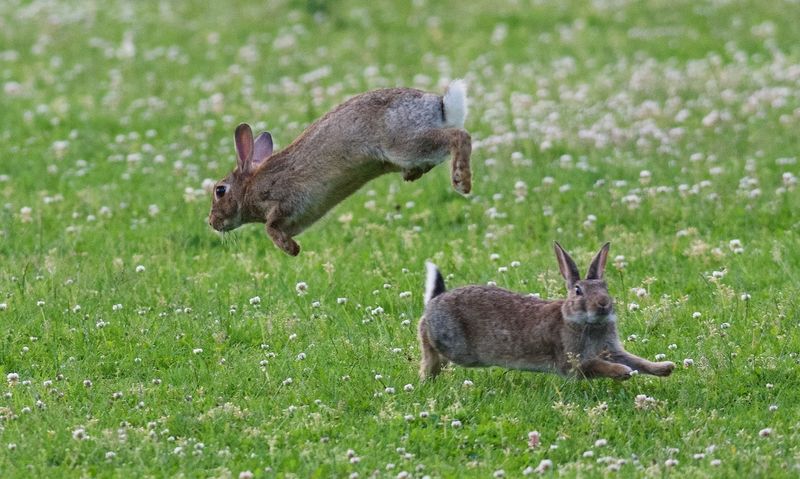
Something crossed your lawn while you slept, and the wet ground kept the receipt. Tiny handprints, split hoof marks, and muddy slides can help reveal which animals visited your Florida yard.
Reading those clues can save you from treating the wrong lawn problem or disturbing an animal that means no harm. Here are ten visitors to look for, plus simple ways to protect your grass and give wildlife space.
1. Raccoon
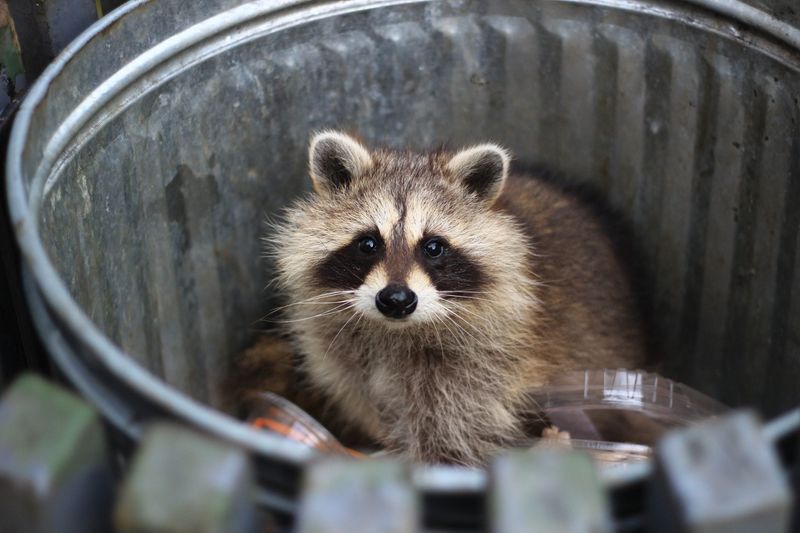
Little muddy handprints beside the patio often belong to a visitor with very busy fingers. Raccoons have five toes on each foot, and their narrow toes can leave surprisingly human-looking marks in soft Florida soil.
Look for smaller front prints paired with longer hind prints along a fence, drainage swale, or pond edge. Clear tracks often measure roughly 2 to 4 inches long, although wet mud can stretch their shape and make them look larger.
A raccoon may simply be passing through, but loose sod, disturbed mulch, or an open trash lid suggests a feeding stop. They search for insects and other food, so digging alone does not prove your lawn needs a pesticide treatment.
Secure garbage lids, bring pet food indoors, and clean fallen fruit before nightfall. If turf damage repeats, photograph the prints beside a ruler and use a trail camera to confirm the visitor before choosing a response.
Keep your distance from any raccoon that seems sick or behaves strangely. Never corner one or try to feed it by hand.
2. Virginia Opossum
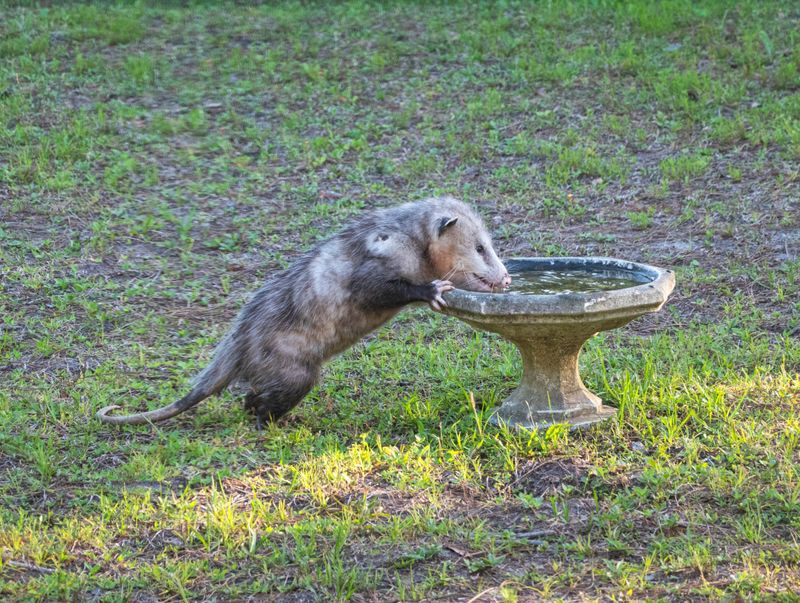
A sideways thumb in the mud is one of the best clues a backyard animal can leave. The Virginia opossum has a widely separated big toe on each hind foot, giving a clear print an unusual, almost grasping shape.
Both front and hind feet have five toes, but the hind thumb lacks a claw. A faint tail drag sometimes appears between footprints, although its absence tells you very little because many opossums leave no tail mark.
Follow the route with your eyes rather than pushing into shrubs. In Florida neighborhoods, opossums often travel beside fences, beneath thick planting beds, and around sheds while searching for insects, fallen fruit, and other easy meals.
An occasional crossing usually calls for no action at all. Pick up spilled birdseed, close crawl-space openings only after checking for animals, and remove outdoor pet food to make the yard less inviting.
Skip mothballs and homemade chemical repellents. If an animal appears to be living under a structure, get advice from a qualified wildlife professional before sealing its entrance.
3. Nine-Banded Armadillo
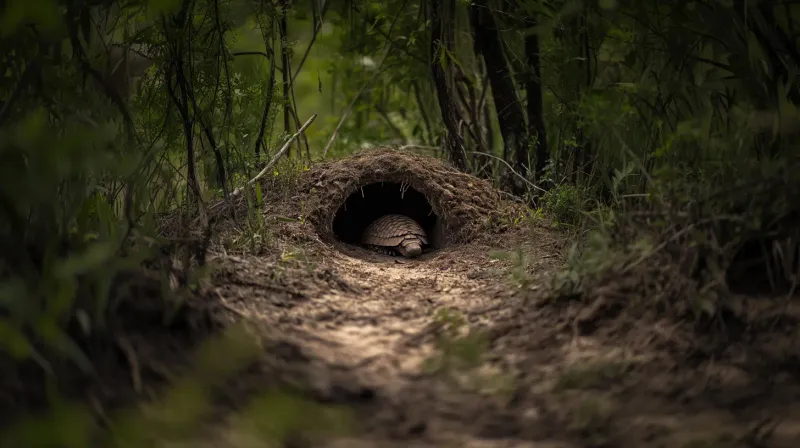
Rows of little digging pits can make a lawn look as though someone tested it with a spoon. When those pits sit beside narrow, claw-marked tracks, a nine-banded armadillo deserves a place on your suspect list.
Its front feet have four toes and its hind feet have five, though not every toe registers clearly. Strong digging claws often stand out more than the footpads, especially where rain or irrigation has softened exposed sand.
Armadillos hunt below the surface for insects and other small creatures. Their feeding holes are different from the broad sheets of overturned turf that feral hogs can leave, and finding them does not automatically mean you have a damaging grub population.
For a frequently damaged flower bed, a sturdy barrier with a buried or outward-facing lower edge can reduce access. Ask your county UF/IFAS Extension office about a design suited to your soil and the area you need to protect.
Avoid handling armadillos, filling an occupied burrow, or pouring anything into it. Confirm repeated activity before paying for removal or treating the lawn.
4. Feral Hog
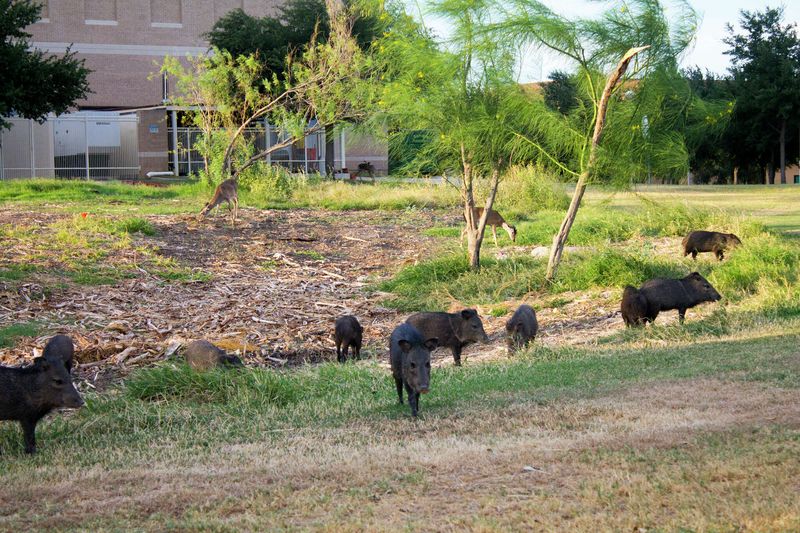
When a neat patch of grass becomes rough, overturned ground overnight, think bigger than a small garden visitor. Feral hogs can root through large areas while searching for underground food, leaving damage that looks more like hurried tilling than scattered digging.
Their tracks show two main hoof halves, often with blunter tips than deer tracks. Smaller dewclaw marks may appear behind them in soft mud, but those marks alone cannot identify a hog because deer can leave them too.
Check the whole scene: churned sod, repeated woodland entry points, muddy rubbing areas, and hoof shape together make a stronger case. Rural properties and neighborhoods near large natural areas are more likely settings than enclosed urban yards.
Keep children and pets away from fresh activity, especially if hogs are still nearby. Never approach a group or block an animal’s escape route.
Extensive rooting deserves professional help rather than a homemade deterrent experiment. Contact a qualified wildlife-control provider or FWC for current guidance, and ask about lawful control options and fencing before repairing the same lawn repeatedly.
5. White-Tailed Deer
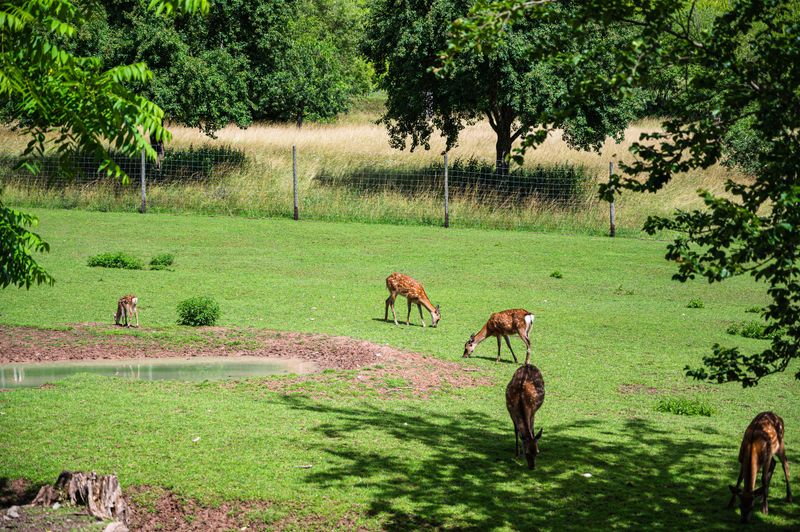
Two pointed halves pressed into the mud can look like a small broken heart. That familiar split-hoof shape often signals white-tailed deer, especially when the trail leads toward freshly nibbled shrubs or a vegetable bed.
Many adult tracks fall around 2 to 3 inches long, but age, soil, and movement change their appearance. Deer usually leave more pointed prints than feral hogs, although a blurred impression is not enough for a firm identification.
Browse damage supplies another clue. Deer often tear plant tips rather than leaving the clean cuts associated with rabbits, and they can reach leaves well above the ground.
Protect valuable young plants with securely supported fencing or individual cages. For a vegetable garden with regular visits, a properly designed deer fence generally offers more dependable protection than scent tricks.
Choose landscape plants using local UF/IFAS guidance, remembering that deer-resistant does not mean deer-proof. Avoid feeding deer, and keep gates closed so your carefully protected planting area does not become an easy overnight buffet.
6. Coyote
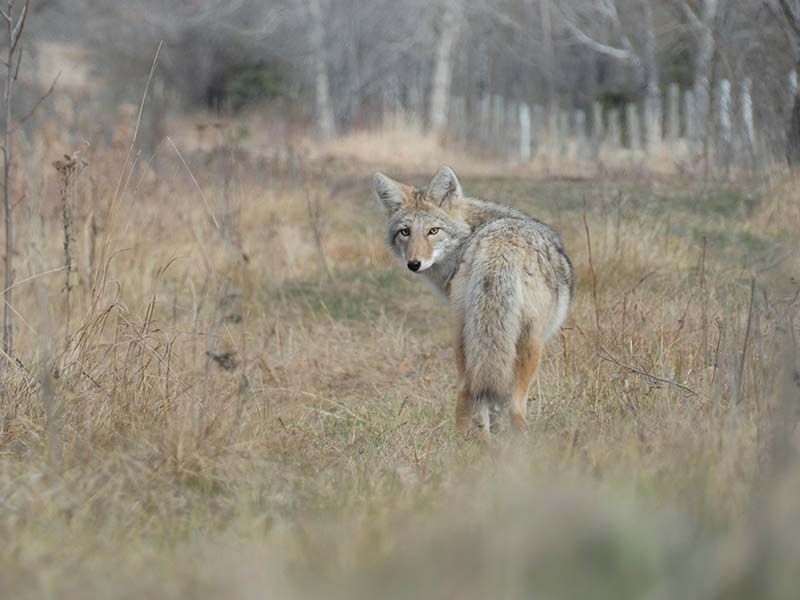
A tidy line of paw prints may record a purposeful traveler rather than a dog wandering around the yard. Coyotes often move efficiently along open routes, including neighborhood edges, drainage corridors, and quiet streets after dark.
Look for an oval print with four toes and small claw marks when conditions preserve them. Coyote tracks often appear narrower and more compact than those of many domestic dogs, but size and shape overlap enough that one print cannot settle the question.
A trail camera can help separate a wild visitor from a neighbor’s loose pet. Place it on your property facing the travel route, not toward someone else’s windows or private outdoor space.
The most useful yard changes remove easy food: secure trash, collect fallen fruit, and stop leaving pet bowls outside. Keep cats indoors and supervise small dogs, including during early-morning bathroom trips.
If you encounter a coyote, keep your distance and do not run. Follow current FWC advice for responding to an approaching animal, and report behavior that suggests a public-safety concern.
7. Bobcat
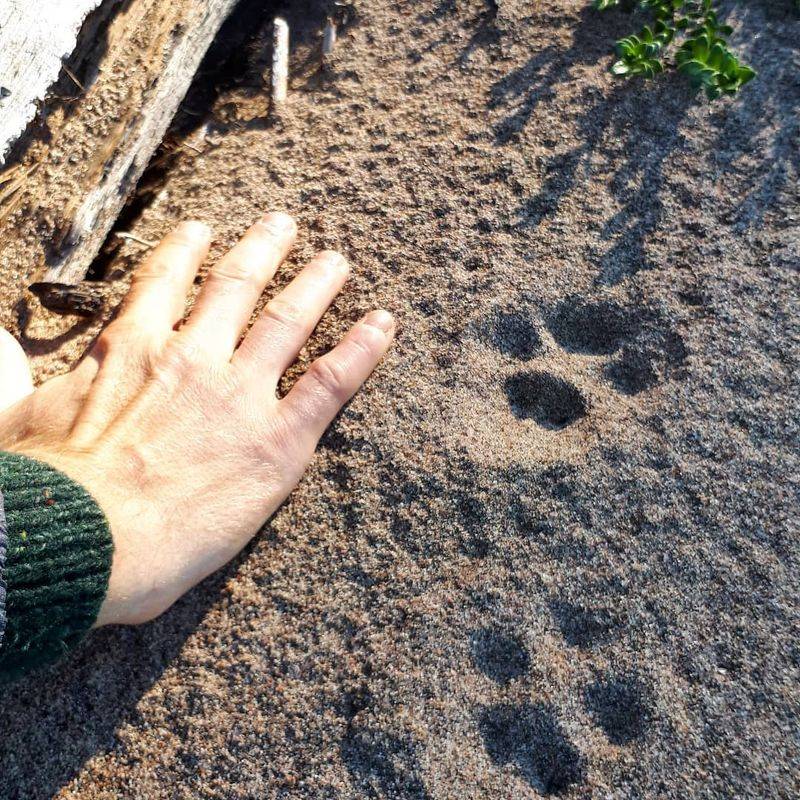
Round paw marks with no obvious claws bring a different kind of hunter into the picture. A bobcat’s four-toed print usually looks more rounded than a coyote’s, with a broad heel pad and toes that are not perfectly even.
In a sharp impression, the heel pad shows two lobes along its front edge and three along the rear. Claws usually stay retracted, but sliding or unusual footing can leave claw marks, so their presence does not completely rule out a cat.
Domestic cats leave similar tracks, generally smaller ones. Measure several clear prints and check a camera before deciding that a wild cat crossed your Florida lawn.
Bobcats may visit yards where rabbits, rodents, and thick cover provide hunting opportunities. A quiet passage without damage is usually a reason to observe from indoors, not to chase the animal or remove every shrub.
Protect poultry with a sturdy, fully enclosed run, and keep small pets supervised. Never use food to lure a bobcat closer for a photograph or attempt to handle one.
8. North American River Otter
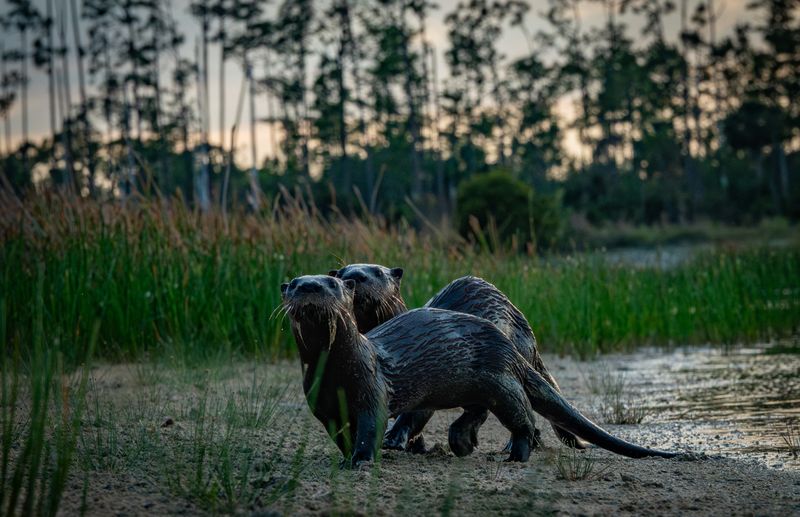
Near a pond or canal, a smooth muddy slide can tell a story that ordinary footprints miss. River otters sometimes slide across slick ground, leaving a broad smear mixed with groups of bounding tracks.
Their feet have five toes, and clear prints may show webbing, though ordinary backyard mud often hides that detail. Look for the combination of toe marks, travel pattern, and a direct connection to freshwater rather than trusting a smear alone.
Otters can cross lawns between water bodies, especially where development separates ponds and wetlands. A passing animal does not mean your grass has a pest problem, and lawn treatments will not solve a regular waterside travel route.
Watch from a distance and keep dogs away from the shoreline while the animal is present. Do not offer fish or other food, which can encourage closer contact with people.
If you maintain an ornamental fish pond, ask a pond specialist about a secure cover or suitable exclusion design. Avoid loose netting that could entangle wildlife, and get advice before changing a natural bank or wetland edge.
9. Eastern Cottontail
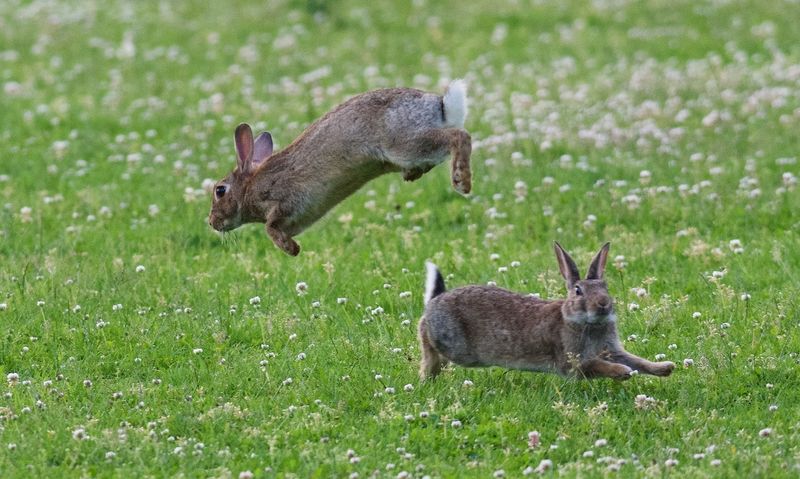
Four prints in a leapfrog pattern can expose the smallest lawn raider on this list. A hopping rabbit brings its larger hind feet forward, so those longer impressions land ahead of the smaller front prints in its direction of travel.
In suitable Florida upland yards, an eastern cottontail may be responsible. Marsh rabbits also occur in Florida, especially near wet habitats, and a faint track pattern alone may not distinguish the two.
Look for clipped seedlings, low feeding damage, and small round droppings nearby. Rabbit toes are often hard to see because fur softens the impression, especially in sandy soil that crumbles as it dries.
A low, small-mesh fence can protect vegetables when its bottom is secured against digging and gaps. Keep gates snug, and check around irrigation lines where a small opening can defeat the rest of the barrier.
Before mowing a rough patch, look for shallow nests lined with grass and fur. A nest without an adult nearby is not necessarily abandoned, because mother rabbits normally visit briefly rather than staying beside it.
10. American Alligator
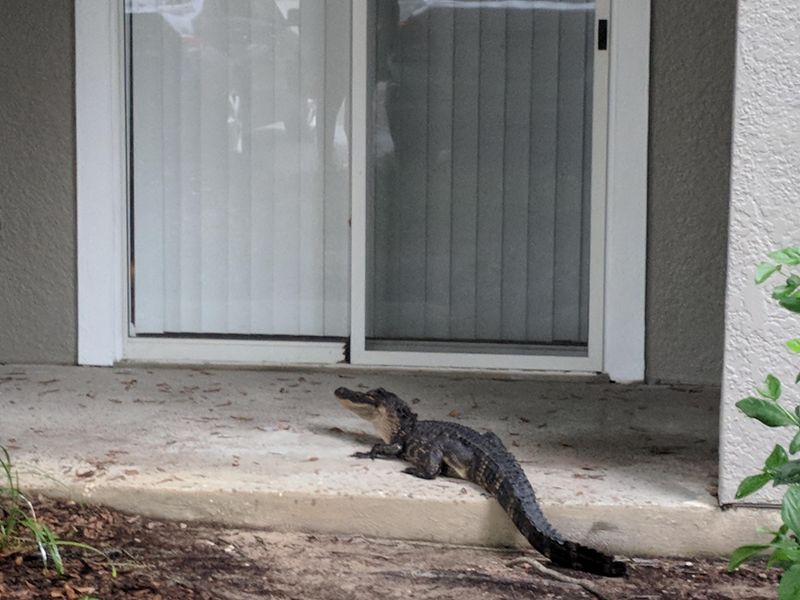
A heavy tail groove leading from the water deserves space, not a closer inspection. On Florida properties beside ponds, lakes, or canals, an American alligator can occasionally leave a muddy route across a bank or lawn.
Its front feet have five toes and its hind feet have four, though a track rarely displays every detail clearly. Broad footprints, scrape marks, and a winding tail drag together are more useful than any single muddy line.
Tail marks alone are not proof, and alligators do not always leave an obvious drag. If the trail connects to water and the animal may still be nearby, stop investigating and move children and pets away.
Never bait a camera with food, approach for a photograph, or try to push an alligator back toward the pond. Do not swim in water where alligators may occur, and keep pets away from the edge.
Report an alligator that poses a concern through FWC’s Statewide Nuisance Alligator Program at 866-392-4286. Call 911 for an immediate emergency rather than attempting removal yourself.