
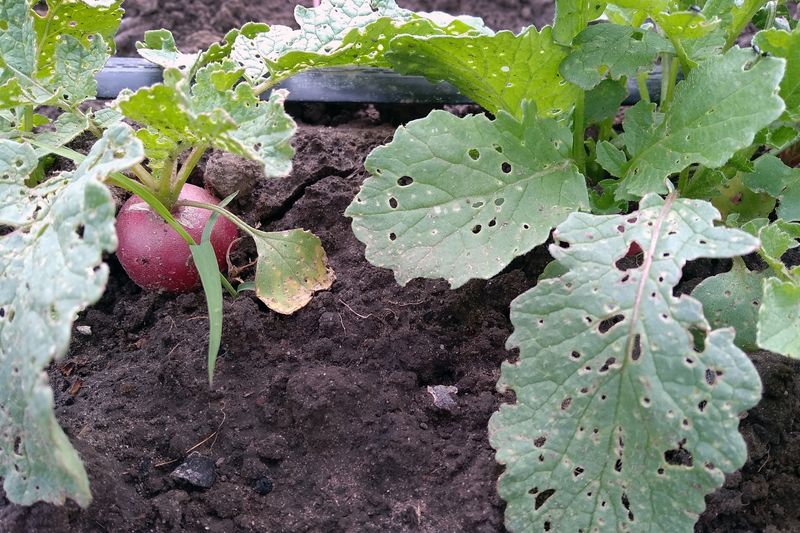
You walk out to the garden and your fall collards look like someone fired tiny pellets at them. Those little holes can be alarming, especially when you were counting on a big pot of greens.
The good news is that the pattern gives you a useful clue, and a simple barrier may help keep new leaves cleaner. Here is how to check what is going on and how to protect what is still growing.
Those pinprick holes may point to flea beetles
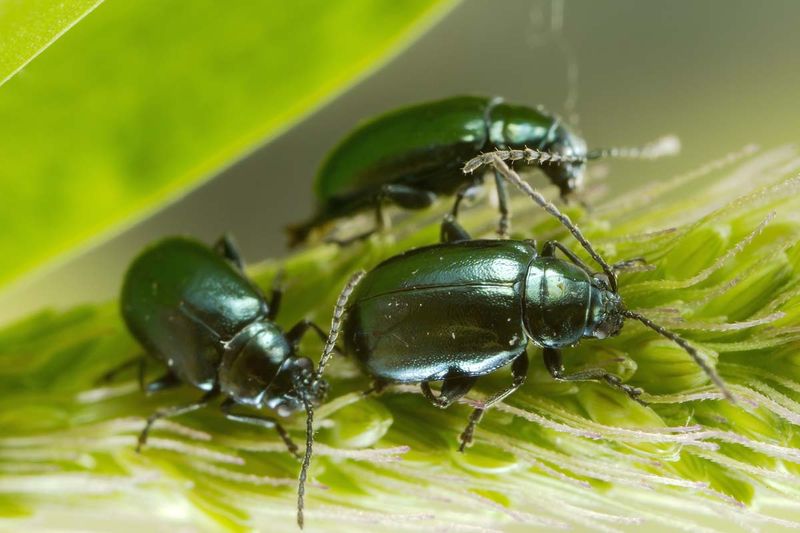
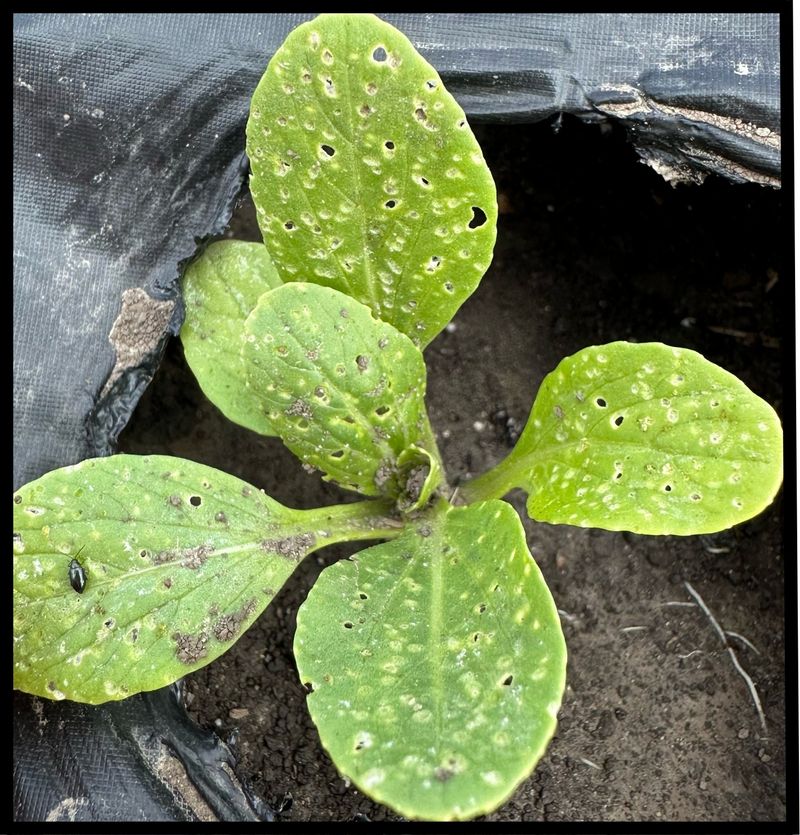
Hold a damaged collard or mustard leaf up to the light and you will probably see dozens of tiny, shallow holes. University of Minnesota Extension describes flea-beetle feeding as leaving many small holes, often less than 1/8 inch across.
That shot-hole look is characteristic of flea beetles, but it is a clue, not proof.
Young plants take the biggest hit. Utah State University Extension notes that seedlings are the most sensitive stage, since a small plant has little leaf area to spare.
A transplant chewed up in its first couple of weeks may stall, while a bigger plant often shrugs off the same holes.
Not every fall planting in Florida or Texas will face heavy pressure. Beetle numbers shift with location, season, and crop stage, so a neighbor’s lacy leaves do not guarantee yours will follow.
Treat the holes as a reason to look closer, not a reason to panic.
Look for the beetles before you cover the bed
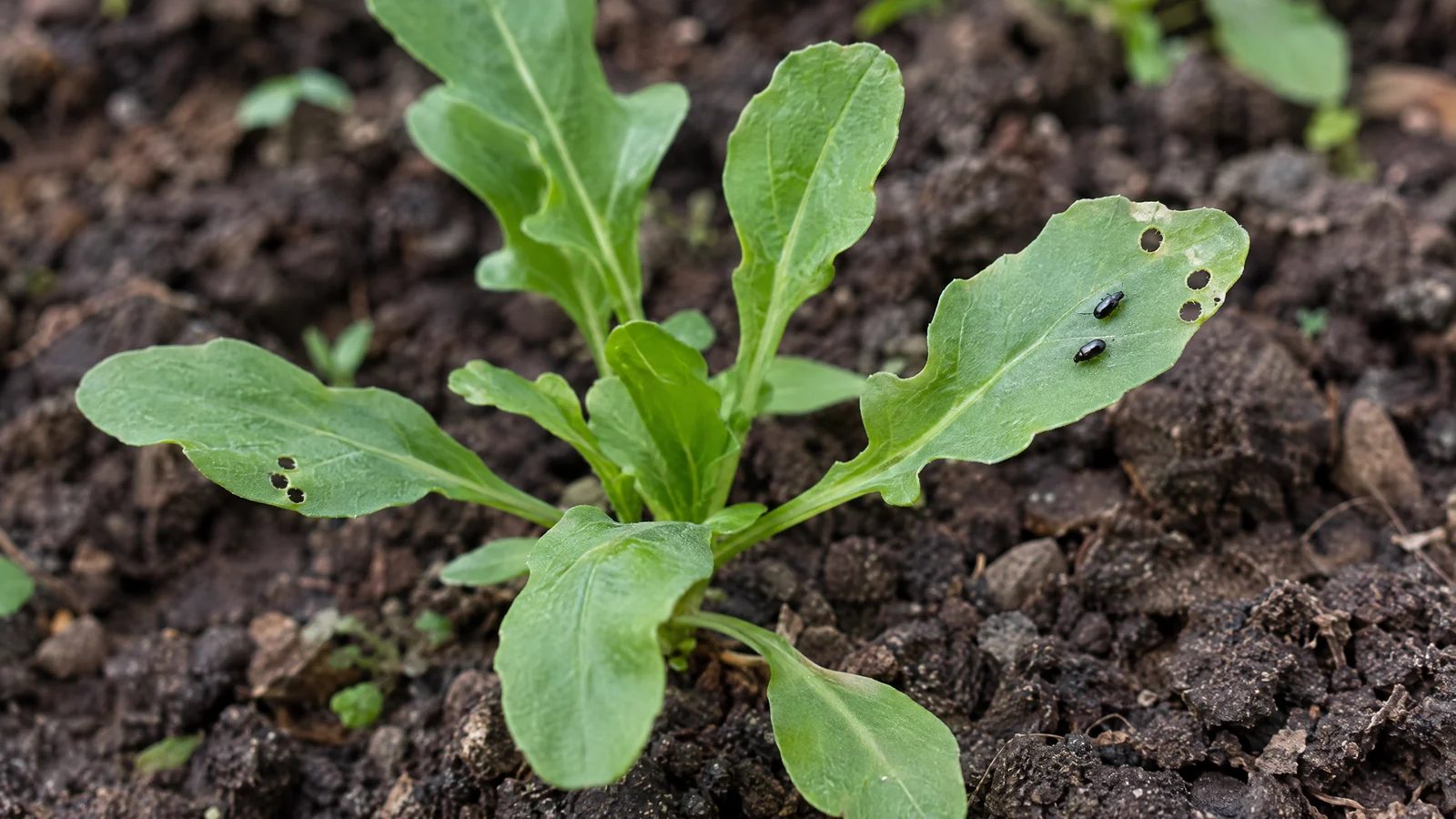
Leaf damage tells you what happened, but only the insects tell you who did it. Flea beetles are tiny and tend to jump when disturbed, according to University of Minnesota Extension.
Walk up slowly, brush a hand across the leaves, and watch for specks springing off.
Check in the morning or evening, and look at the undersides of leaves and the soil around the stems. Even a few jumping beetles alongside fresh holes strengthens your case.
If you see none, keep looking over a few days before you commit to a fix.
Other pests chew brassicas too. In the Gulf Coast region, UF/IFAS documents the yellowmargined leaf beetle as a pest of collards and mustard.
It is larger than a flea beetle, so size and behavior help you tell them apart.
A row cover blocks new feeding, not old damage
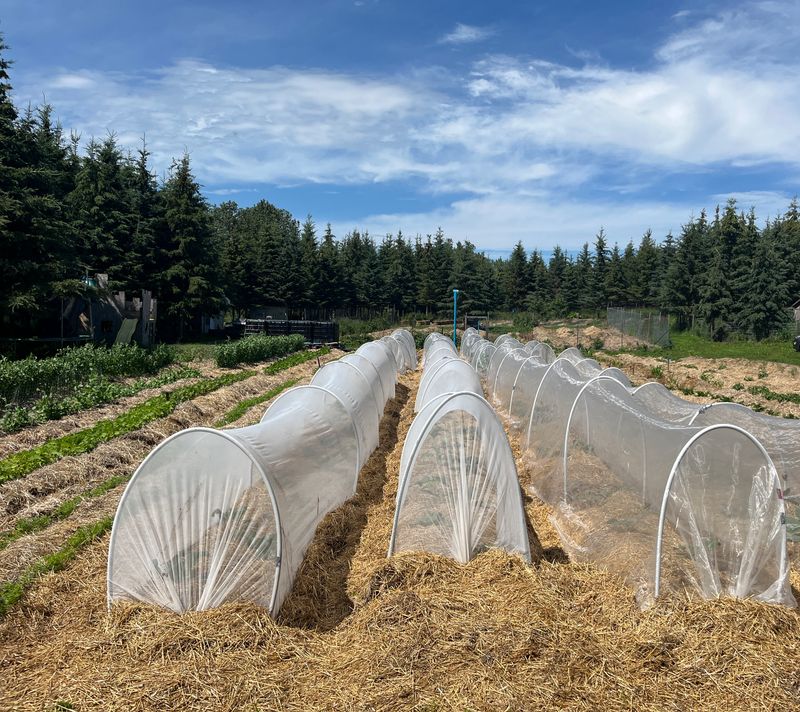
Picture a row cover as a screen door for your greens. Lightweight floating fabric or suitable insect netting sits between the plants and the beetles, so the insects cannot reach the leaves.
Cornell Cooperative Extension describes row covers as a physical barrier used for pest management.
Set your expectations accordingly. A cover can help protect new growth, but it cannot heal holes that are already there.
Leaves that were chewed last week will stay chewed, and the plant’s fresh leaves are what you are protecting.
Timing matters most. Exclusion works best when the cover goes on before beetles arrive.
Utah State University Extension cautions that beetles already on the plants, or hiding beneath the cover, can keep feeding right through the barrier you just built.
Seal the cover from the ground up
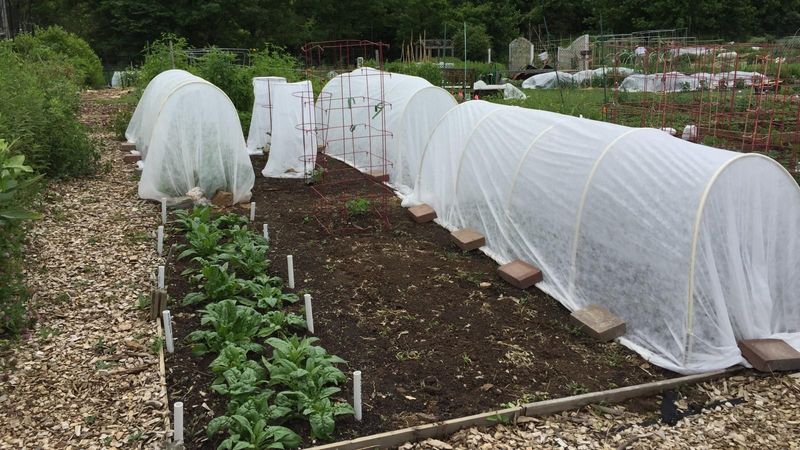
Start by shaking or inspecting the plants and pulling any beetles you find. Then drape lightweight row-cover fabric or suitable insect netting over the bed, leaving slack for growth.
Utah State University Extension advises sealing the edges, and soil, boards, or other weights all work.
Walk the whole perimeter and look for gaps, especially at corners and where the fabric meets a raised-bed frame. A beetle only needs a small opening.
Each time you open the cover to weed, inspect, or harvest, close it up again right away, as Cornell Cooperative Extension recommends.
Think about bed history too. Utah State warns that beetles can emerge beneath a cover placed over a previous host-crop site.
If you grew brassicas there last season, rotate the planting to a new spot and use the cover alongside that move.
Monitor heat and choose the right cover
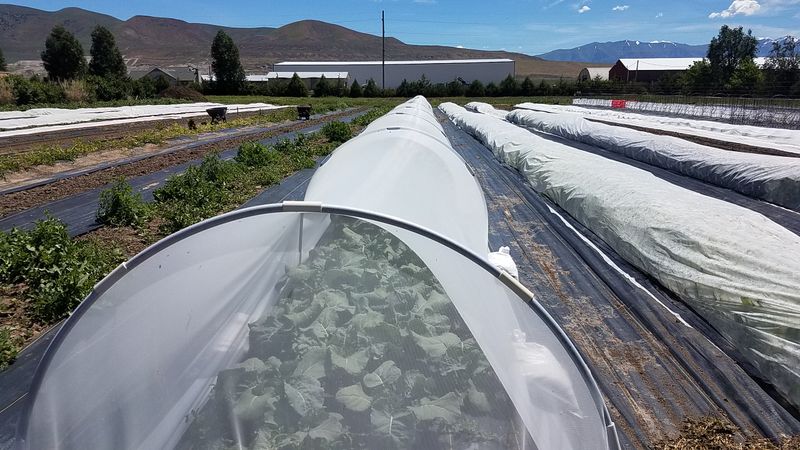
Southern falls can stay warm well into October and beyond, so a cover is not always a comfortable home for greens. Row covers can add heat, as noted by Utah State University Extension.
Slip a thermometer under the fabric and check it during warm spells, then lift or remove the cover if plants look stressed.
Material choice changes the heat picture. Floating covers hold in warmth, while insect netting generally retains less heat and offers little or no frost protection, according to University of Massachusetts Amherst.
For a hot early fall planting, netting may be the better match.
Covers also make chores harder. University of Minnesota Extension points out that weeding gets trickier under a cover, so pull weeds before you seal the bed.
No single material suits every yard or every week of the season.
If damage continues, recheck the diagnosis and the barrier
Fresh holes under a cover mean it is time to troubleshoot. Walk the edges first and press down any loose spots.
Then lift a corner and look for beetles trapped inside, since Utah State University Extension notes that pests already beneath a cover can undermine it.
If the barrier is tight and the bed is clean, reconsider the culprit. Yellowmargined leaf beetles or caterpillars could be at work, so look closely at the leaves.
Remember that row covers are exclusion tools, and they protect new growth rather than repairing old holes.
Before reaching for a spray, read the current product label for your crop and pest. University of Georgia guidance says Bt products are ineffective against beetles.
Plenty of good greens come from a patient gardener with a tight seal.