
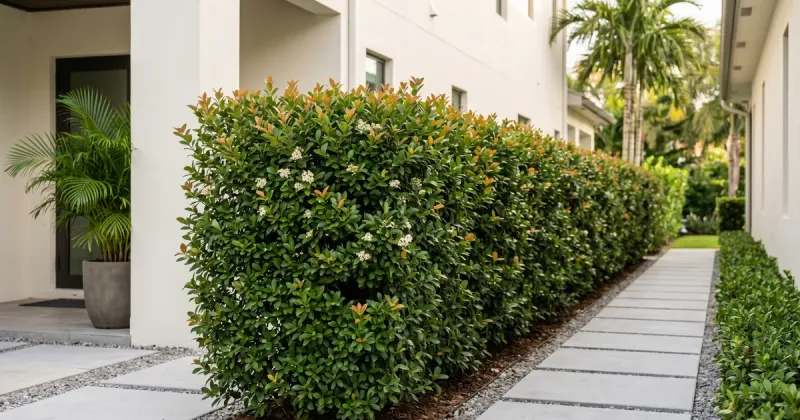
A fence should hide the neighbor’s patio, not become another repair job. Florida sun can fade or damage some vinyl fences over time, though product quality makes a difference.
Native shrubs offer another way to build privacy, with green leaves, shelter for birds, and no panels to replace. These seven choices suit different Florida yards, so you can match your screen to your space, soil, and winter temperatures.
1. Wax Myrtle
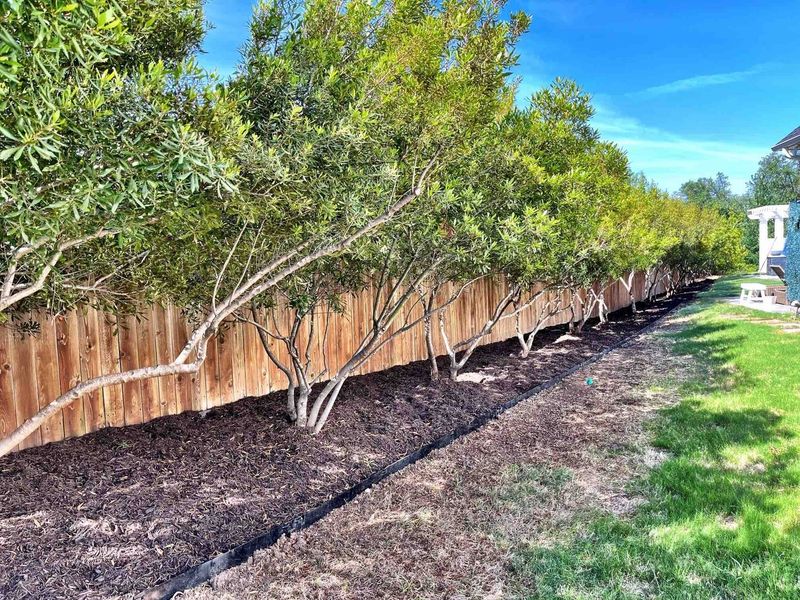
Need to soften a wide-open property line without waiting forever? Wax myrtle, Morella cerifera, is one of the faster-growing native options for a loose, natural privacy screen.
Its fine leaves create a softer backdrop than a flat wall of clipped greenery.
This large evergreen shrub grows across Florida and commonly reaches 10 to 20 feet tall, sometimes more. Full sun encourages fuller growth, while partial shade produces a more open shape.
It handles sandy soil and periods of wet ground, but new plants still need regular watering until their roots spread.
For a broad screen, spacing around 6 to 8 feet apart is a useful starting point, adjusted for your available room. Keep the lower branches rather than pruning every plant into a small tree.
Selective trimming helps preserve coverage near eye level.
Female plants produce waxy berries when pollinated by a nearby male, feeding birds such as yellow-rumped warblers. Give this shrub room away from walls and crowded corners, where its spreading habit could become a chore instead of a benefit.
2. Simpson’s Stopper
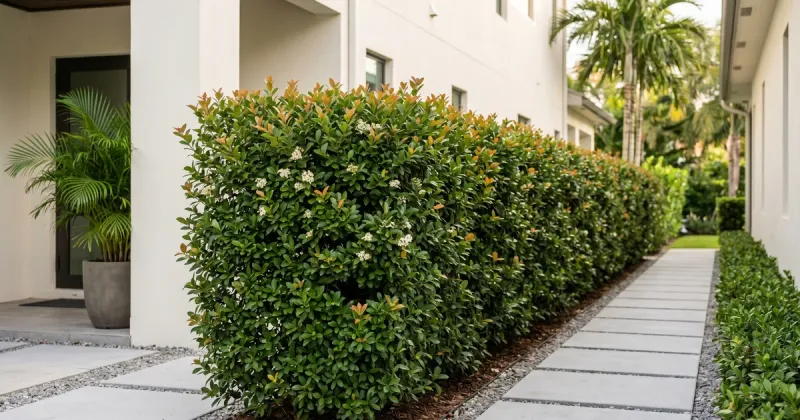
A privacy hedge can do more than block a view. Simpson’s stopper, Myrcianthes fragrans, adds fragrant white flowers, colorful fruit, and attractive bark as it matures.
It feels especially at home beside a patio where those details are easy to enjoy.
Best suited to Central and South Florida, this evergreen native can reach roughly 10 to 20 feet tall or more, depending on conditions. Choose a full-size plant for screening, since compact selections may stay too short.
Sun to partial shade works, with denser growth generally developing in brighter spots.
Plant it in well-drained soil and allow about 5 to 8 feet between plants for an informal screen, depending on the expected width. Water during establishment, then adjust irrigation to rainfall and soil moisture.
Established plants tolerate dry spells better than freshly planted nursery stock.
Light pruning keeps the hedge tidy without cutting away every flower or fruit cluster. Birds eat the orange-red fruit, and the flowers draw pollinators.
Near a walkway, leave enough room for branches to grow without constant shearing.
3. Cocoplum
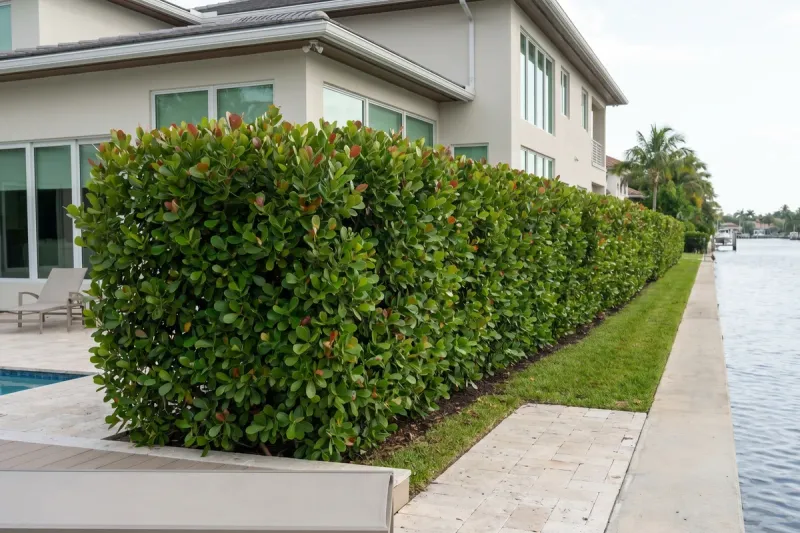
For the classic thick, green backyard boundary, cocoplum is hard to overlook in warm parts of Florida. Its broad, rounded leaves overlap to create strong visual coverage, and some selections add coppery-red new growth.
That combination makes a practical screen look polished rather than plain.
Cocoplum, Chrysobalanus icaco, belongs mainly in South Florida and suitable warm coastal parts of Central Florida. Freezing weather can damage it, so it is not a dependable statewide substitute for fencing.
Many landscape forms grow 10 to 15 feet tall or larger if left untrimmed.
Choose full sun for the densest hedge and provide well-drained soil. Ask the nursery about the plant’s form and salt tolerance, since coastal and inland selections differ.
A starting spacing of roughly 4 to 6 feet often suits hedge plantings, but check the mature width of your selection.
Keep the base slightly wider than the top so sunlight reaches lower leaves. Occasional selective pruning can reduce the need for repeated shearing.
Its fruit also feeds wildlife, giving the living boundary a purpose beyond hiding the neighbor’s pool equipment.
4. Florida Privet

Not every useful hedge needs showy flowers or shiny leaves. Florida privet, Forestiera segregata, earns its place by making a sturdy, branching screen that suits relaxed Florida landscapes.
Despite its common name, it is a native plant, not one of the invasive exotic privets.
It commonly reaches about 10 to 15 feet tall and can grow larger. It is especially useful in Central and South Florida, including suitable coastal sites, where it tolerates salt exposure and dry conditions once established.
Full sun to partial shade works, provided the soil drains well.
Allow roughly 5 to 7 feet between plants when planning a roomy hedge. Early, light tip pruning encourages branching, but avoid stripping the lower stems if ground-level privacy matters.
Its shape can stay informal without looking neglected.
Female plants bear dark fruit when a male plant is available for pollination, offering food for birds. Foliage may thin or drop during cold or drought, so do not expect an equally solid barrier every week of the year.
Use it where adaptability matters more than a perfectly uniform finish.
5. Walter’s Viburnum
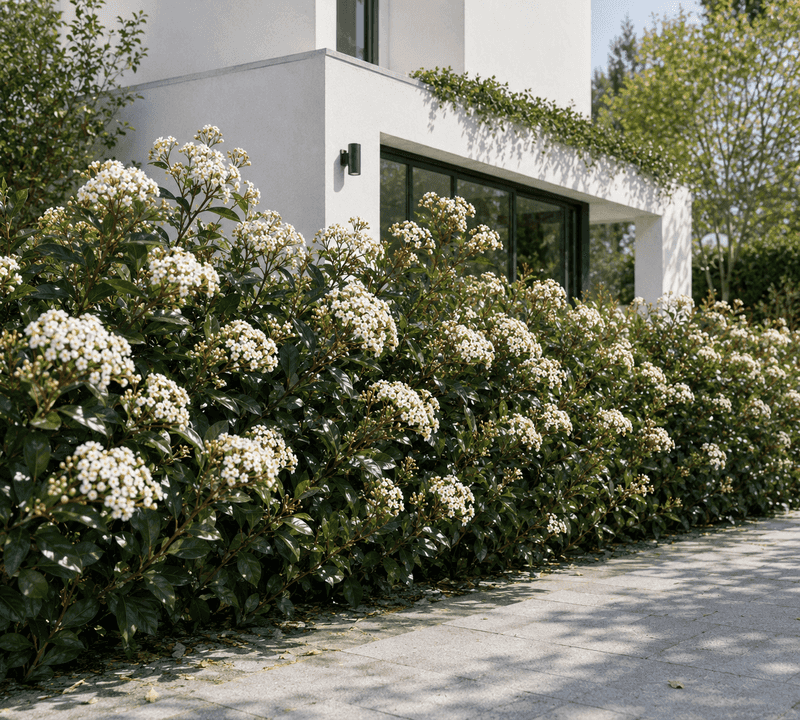
Early spring brings a bonus to this screen: clusters of small white flowers that brighten the yard before many summer bloomers get moving. Walter’s viburnum, Viburnum obovatum, combines that seasonal display with small leaves and a naturally twiggy framework.
It is especially useful for North and Central Florida gardens.
Shopping carefully matters here. The species can reach 10 to 20 feet tall or more, while many named cultivars stay much smaller.
Tell the nursery you need a tall privacy screen, not a low foundation shrub.
Give it sun to partial shade and soil that does not stay excessively dry. It naturally occurs in moist habitats and tolerates occasional wet conditions, making it worth considering for a lower part of the yard.
Establishment watering remains necessary, even when planting during Florida’s wetter months.
Space full-size plants according to their expected spread, often around 5 to 8 feet apart for a screen. Prune after flowering if shaping is needed.
Because foliage can thin in colder weather and plants may sucker, allow a natural planting bed rather than squeezing them into a narrow strip.
6. Yaupon Holly
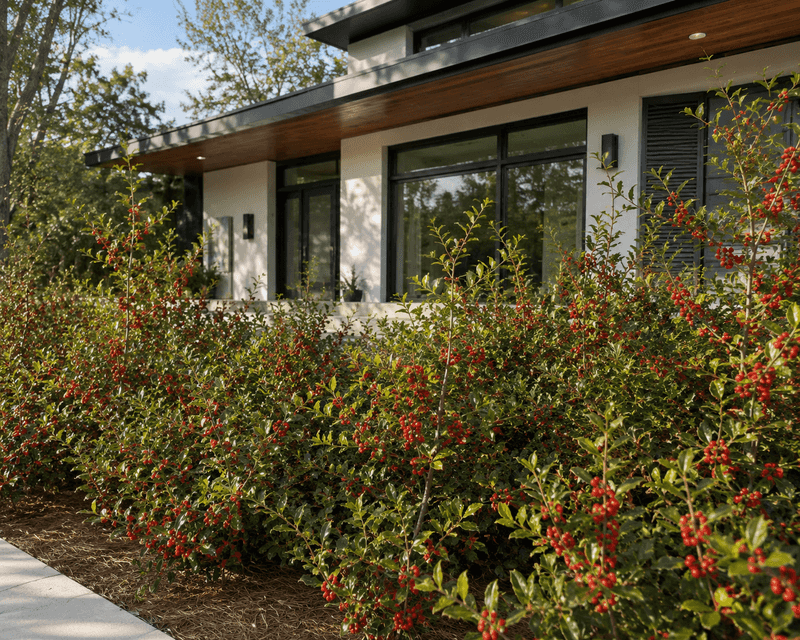
Red berries against green leaves give a winter yard something worth looking at. Yaupon holly, Ilex vomitoria, offers that color while holding its foliage through the year.
For North and Central Florida homeowners, it is a dependable choice where cold rules out more tropical shrubs.
Standard yaupon can grow 15 to 25 feet tall, sometimes taller, so leave room for a substantial plant. Dwarf selections are useful elsewhere in the garden but will not create a tall screen.
Choose nursery stock with branches close to the ground rather than a tree form with bare trunks.
Sun or partial shade is suitable, and established plants handle a range of Florida soils, including sandy sites. Set plants roughly 6 to 8 feet apart for a broad informal boundary, then adjust for their expected width.
Water consistently during establishment and mulch without piling material against the stems.
Only female plants produce berries, and they need pollen from a male yaupon nearby. Birds enjoy the fruit, but people should not eat it.
Selective pruning maintains a dense outline while leaving more berries than frequent shearing would.
7. Buttonwood
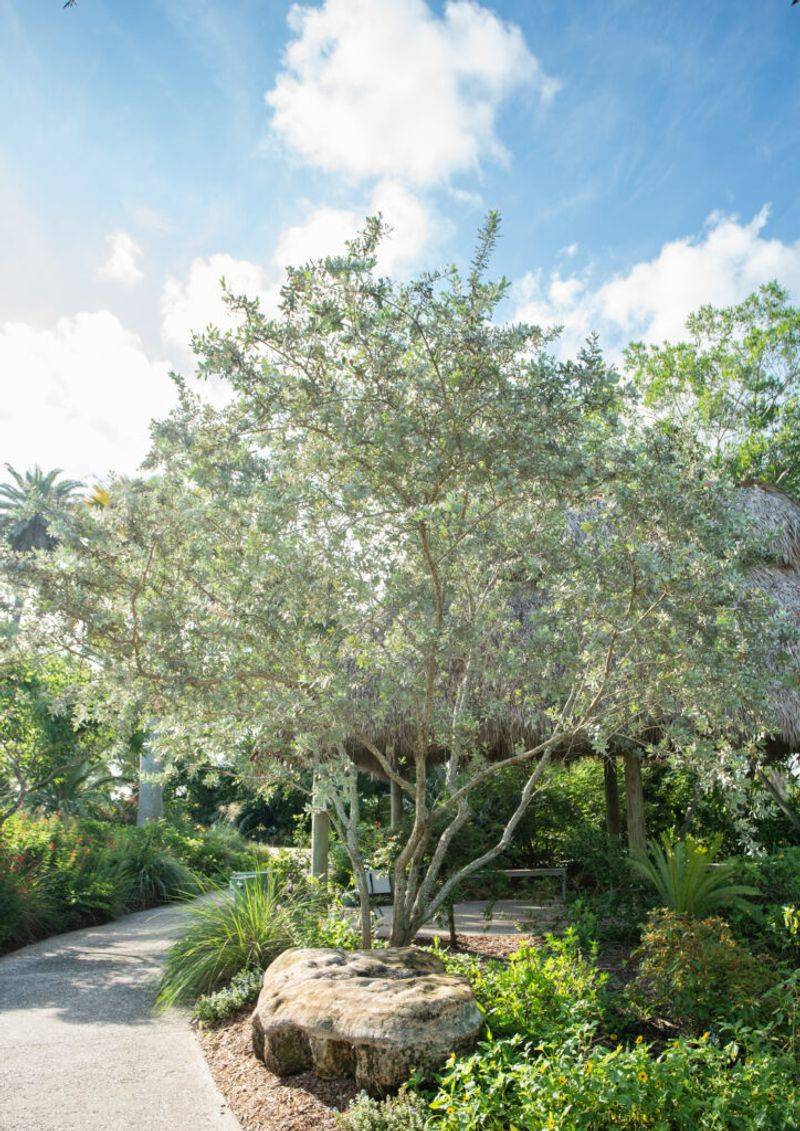
Salt in the breeze changes the plant list fast. Buttonwood, Conocarpus erectus, stands out for warm coastal yards where a screen must handle bright sun, sandy ground, and salt exposure.
Green and silver forms offer different looks, with silver foliage adding a striking contrast beside a lawn or patio.
This native belongs in South Florida and suitable warm coastal areas of Central Florida. It can become a tree 20 feet tall or more, so a hedge requires room and planned pruning.
It is not a good choice for a tight strip beneath low roof edges or utility lines.
Plant in full sun and well-drained soil, allowing roughly 6 to 10 feet between plants depending on the form and intended size. Salt tolerance does not mean a newly planted shrub can skip irrigation.
Water the root area while plants establish, then reduce watering as conditions allow.
Keep lower growth intact and prune selectively to build coverage without creating a crowded wall of weak shoots. In coastal locations, check local rules before cutting existing buttonwoods, especially near mangroves or protected shorelines.
For the right warm, open site, this is a screen with a distinctly coastal character.