
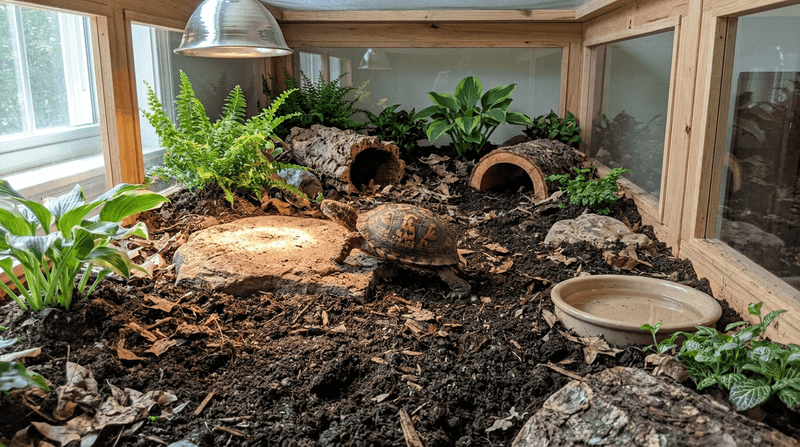
A slow, domed shell moving between your tomato cages is hard to ignore. Many North Carolina gardeners wonder if the visit says something good about their beds.
A box turtle can tell you a few things about how wildlife uses your yard, but soil health is not one of them. Here is what the sighting means, what it does not, and how to respond.
Why might a box turtle enter a garden bed?
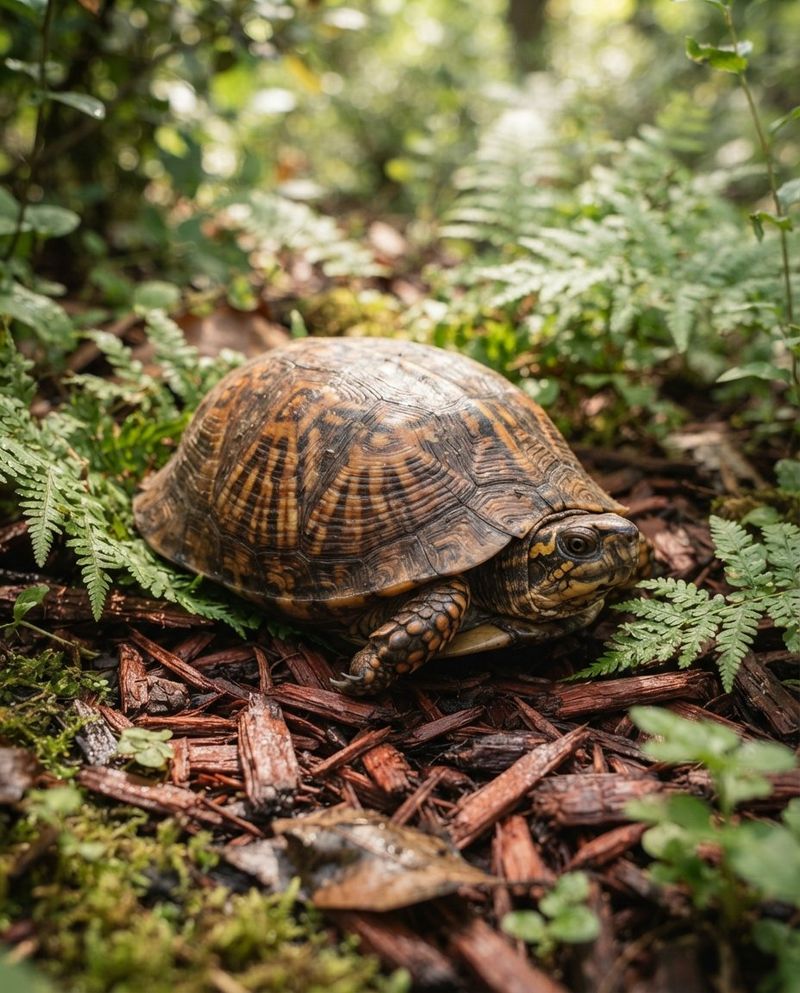
Eastern box turtles live in fields and forests across North Carolina, and the state wildlife agency notes they also turn up in neighborhoods. So a turtle near your beds is not strange, whether you garden in the mountains, the Piedmont, or the coastal plain.
Each turtle lives within a home range, an area that holds its favorite food and hiding places. Your garden might sit inside that range.
The turtle could be looking for a meal, tucking under damp vegetation or leaf litter for shelter, or simply passing through on the way to somewhere else.
Any of those explanations fits a single sighting, and you cannot tell which one applies just by looking. One visit also does not prove the turtle comes by often.
It might have wandered through once and never return, or it might cross your yard every week.
That is why the most honest reading is a simple one. You saw a wild animal using a patch of habitat.
Think of it as a small piece of local wildlife news, not a report card on anything below the mulch.
A varied diet is not pest control
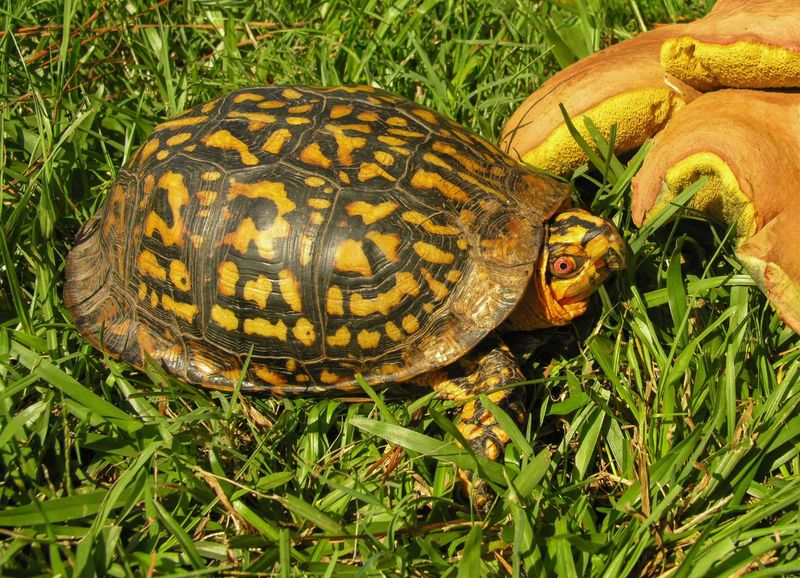
Box turtles are not picky. According to North Carolina State Parks, their menu is opportunistic, and slugs and snails are only part of it.
Mushrooms, earthworms, insects, fruit, and berries are all fair game too.
Eating something that is available is a long way from controlling it. A turtle that nibbles a slug on Tuesday might ignore slugs for the rest of the month in favor of a fallen berry.
Nothing about its diet promises a steady dent in your garden pests.
The same goes for reading pest levels from a visit. Seeing a turtle does not show that slugs are plentiful, that your beds are in balance, or that pests are being kept in check.
The animal may have come for fungi or fruit instead.
If slugs are chewing your hostas, handle that problem directly. Check beds in the evening, remove hiding spots like boards, and use targeted steps.
Treat any turtle help as a happy bonus, never a plan.
Soil health needs a real measurement
Wondering about your soil is fair. The answer just does not come from wildlife.
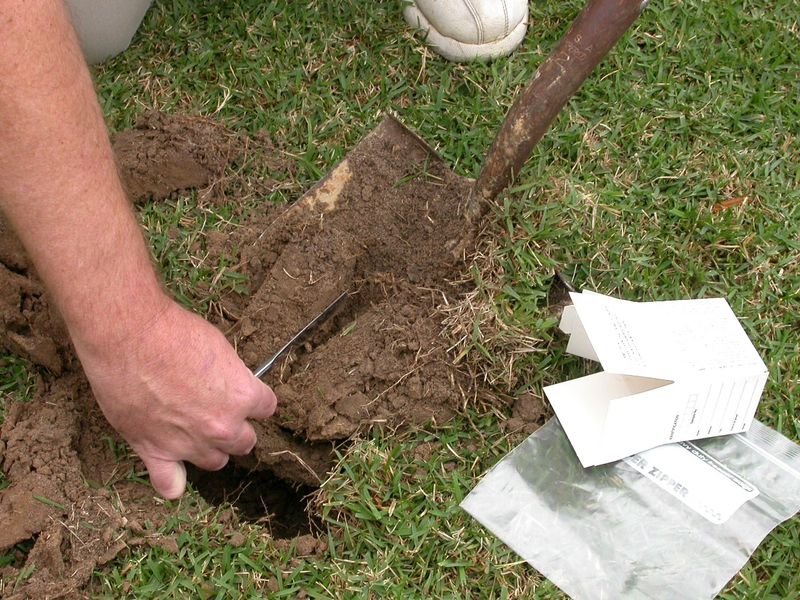
For fertility questions, NC State Extension recommends a laboratory soil test, which reports details such as pH and plant-available nutrients.
That information tells you what to do next. You learn whether beds need lime, which nutrients are low, and how much fertilizer is useful.
Sample each bed or planting area separately, and collect from several spots to make a fair mix.
Broader soil-health tests are a different tool. They try to capture things beyond nutrients, but NC State notes they can be hard to interpret without regional field calibration.
Its review of North Carolina trials also found that different tests gave differing ratings.
So no single number gives a complete or final grade for your soil. Pair a fertility test with what you can see: how water drains, how roots grow, and how plants perform through the season.
A turtle crossing the bed is not part of that toolkit.
Leave an uninjured turtle in place
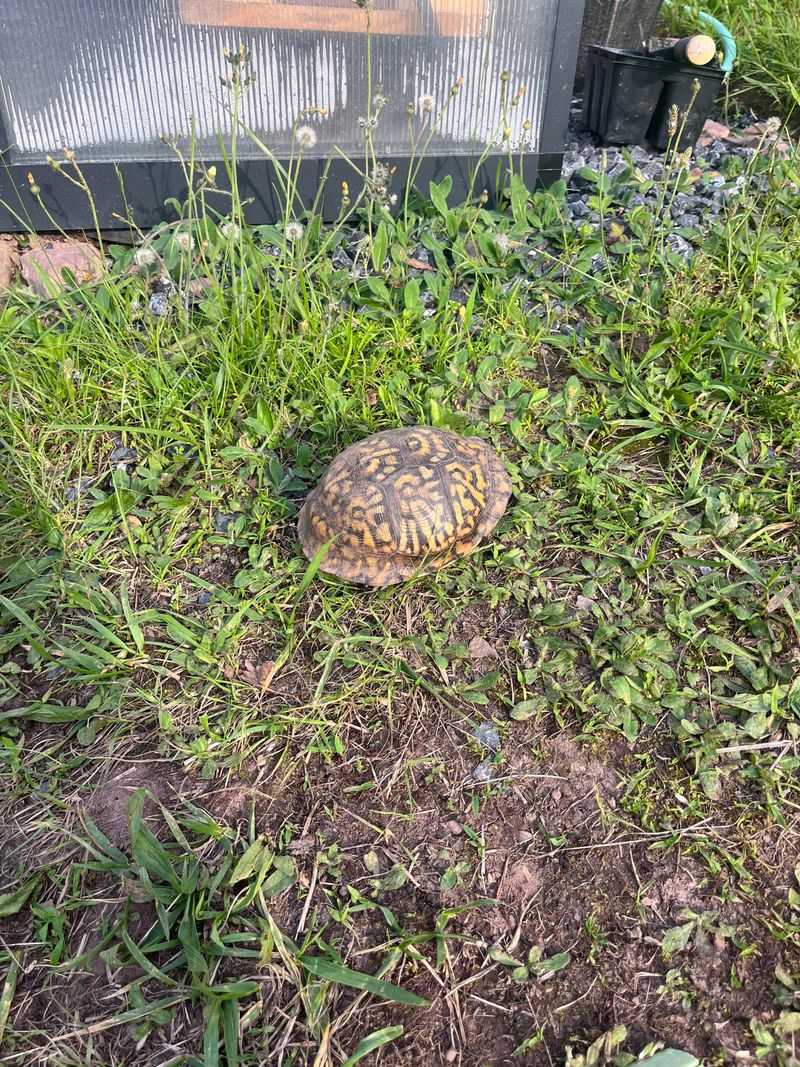
Finding a turtle by the squash? Step back and enjoy the moment.
If it looks uninjured, the best move is to leave it where it is.
Keep dogs and cats from nosing, mouthing, or flipping it. A curious pet can stress or hurt a turtle, so a leash or a short stay indoors works well until it moves on.
Do not carry it somewhere else, even with good intentions. The NC Wildlife Resources Commission advises against moving box turtles outside their home range.
A relocated turtle may spend its energy trying to find its way back, often crossing roads. Collecting one is not harmless either, since collection can hurt local populations.
Roads are the exception. If a turtle is crossing and you can help safely, check traffic first, then carry it in the direction it was already heading.
Set it on the far side, not back where it started and not somewhere you think is nicer.
Target pesticide use to the problem
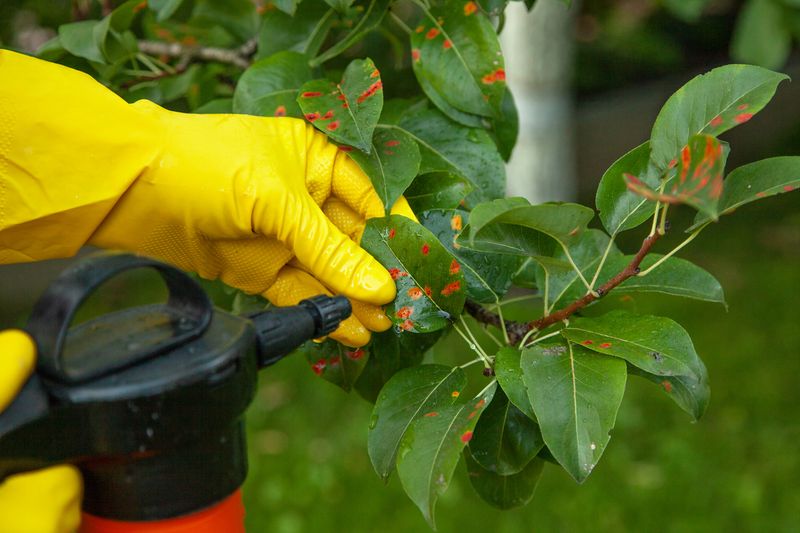
Garden sprays do not know who is standing nearby. The EPA warns that pesticides can harm wildlife when label directions are not followed, and a turtle at ground level can be exposed more easily than you might guess.
A few habits keep risk down. Spray only when a problem truly needs it, and confirm what the pest is before you buy anything.
Treat just the plants or patch that need help rather than a whole yard, and read the label start to finish for amounts and timing.
Notice what a turtle sighting cannot do here. It does not show that your yard is pesticide-free, and it does not show that your yard has been exposed.
Nothing about the animal reveals your spray history.
Try hand-picking caterpillars or beetles, rinsing aphids off with water, and trimming damaged leaves first. Those steps are quiet and precise, and they leave ground-dwelling wildlife alone.
Nesting season calls for a quiet patch
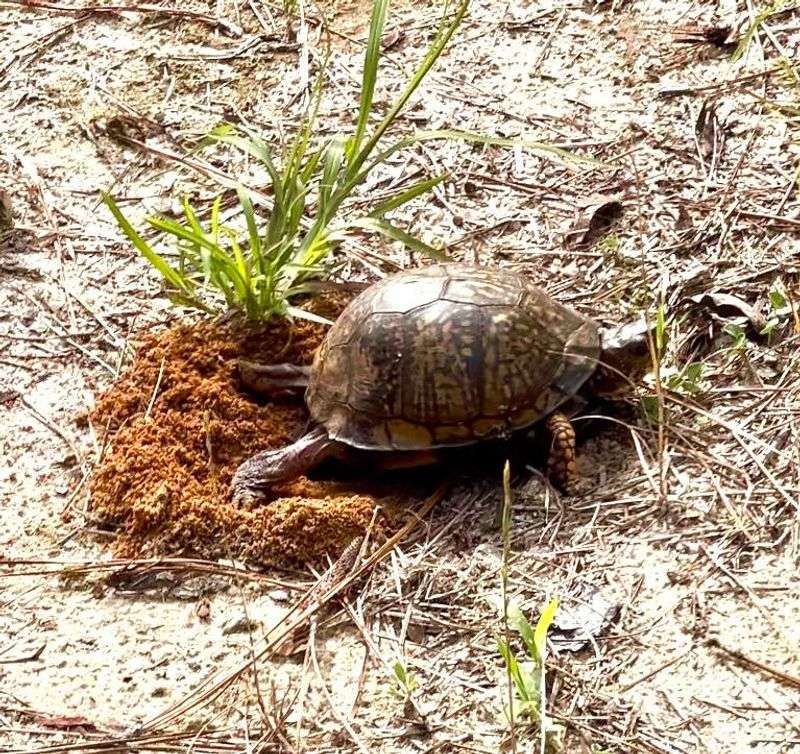
Late spring and summer bring a special reason to be gentle. The NC Wildlife Resources Commission lists May through July as the eastern box turtle’s nesting period.
If you spot a turtle that seems to be digging, give it room. Skip raking, tilling, or planting in that small area for now, and keep pets away.
This is a sensible precaution, not a garden-bed procedure laid out by the agency, which gives the nesting window but no step-by-step instructions.
Watch from a distance, then go about your work in other beds. You do not need to block off your whole garden.
A little patience around one patch of loose soil is enough.
If you cannot tell whether a turtle was nesting, treating a recently disturbed spot with care costs you very little.
Treat the sighting as a cue, not a scorecard
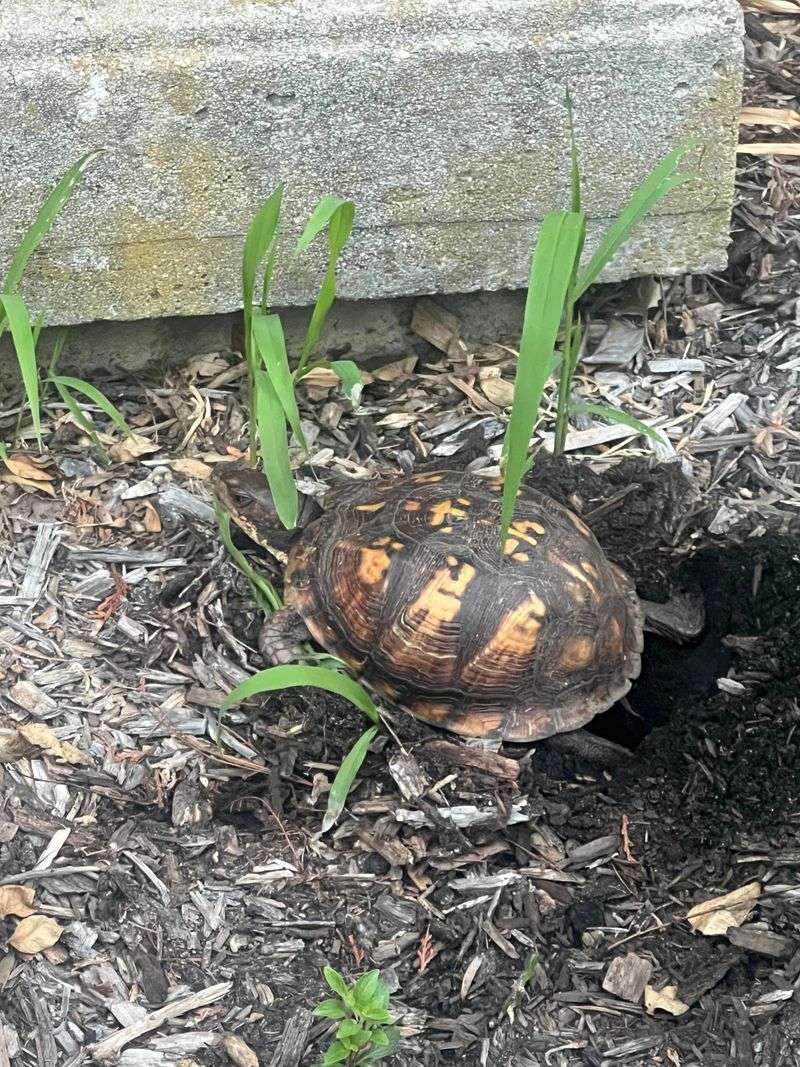
A box turtle shows that wildlife is using your yard, as state wildlife guidance on its habits makes clear. Leave an uninjured one alone, and send soil questions to a lab soil test.
The turtle is a neighbor passing through, and the test is your measuring stick.