
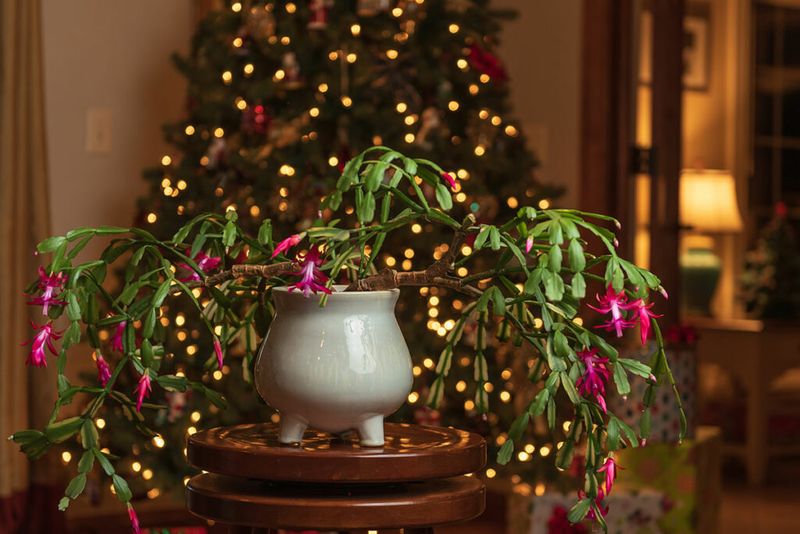
A Christmas cactus with only a few buds in November can feel like a missed deadline. Many gardeners wonder if switching up the fertilizer now will save the show.
The honest answer is more nuanced, and it starts with what really tells these plants to flower. Here is what you can still do this month, and how to get a fuller display next season.
A November feeding change cannot guarantee a holiday display
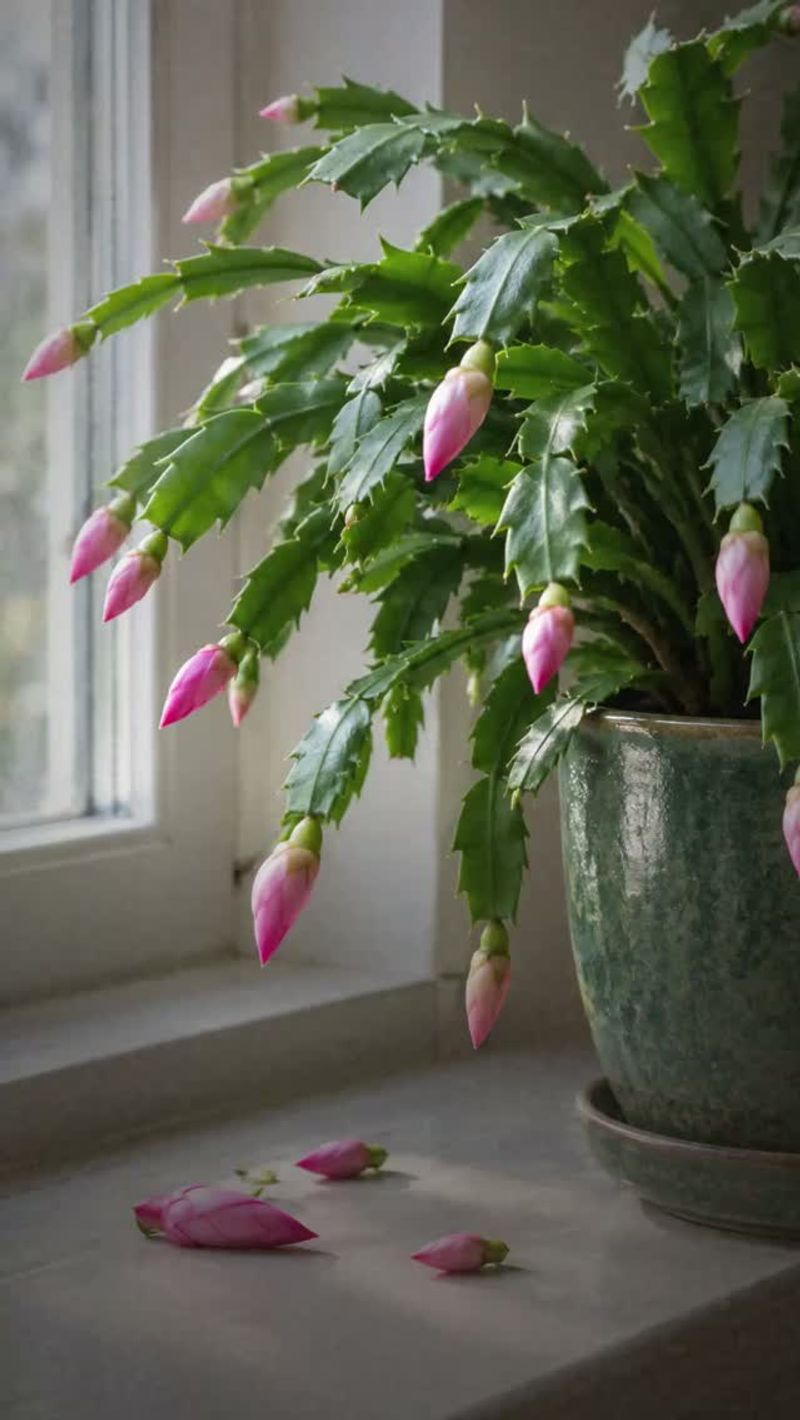
Stopping fertilizer now is sensible seasonal care, but it cannot reliably turn a sparse plant into a full one this winter. Buds are set weeks earlier, in response to the changing length of nights and to temperature, not to whatever went into the watering can last week.
According to N.C. Cooperative Extension, holiday cacti need more than 13 hours of continuous darkness each night to set buds.
Clemson Extension describes a roughly six-week bud-setting period that begins around mid-September.
By early November, a plant with few buds may already have missed much of that window. That does not mean you did something wrong, and nothing here shows that a feeding slip caused the thin show.
Light, temperature, and plant type all play a part.
Plant type matters too. Many plants sold as Christmas cactus are really Thanksgiving cactus, which usually blooms several weeks earlier.
If yours has pointed, sawtooth-like edges on its stem segments, its normal timing may be well ahead of December 25.
So think of a November change as housekeeping, not rescue. The goal now is to protect what the plant has and to plan better for next year.
Long, uninterrupted nights help trigger flowering
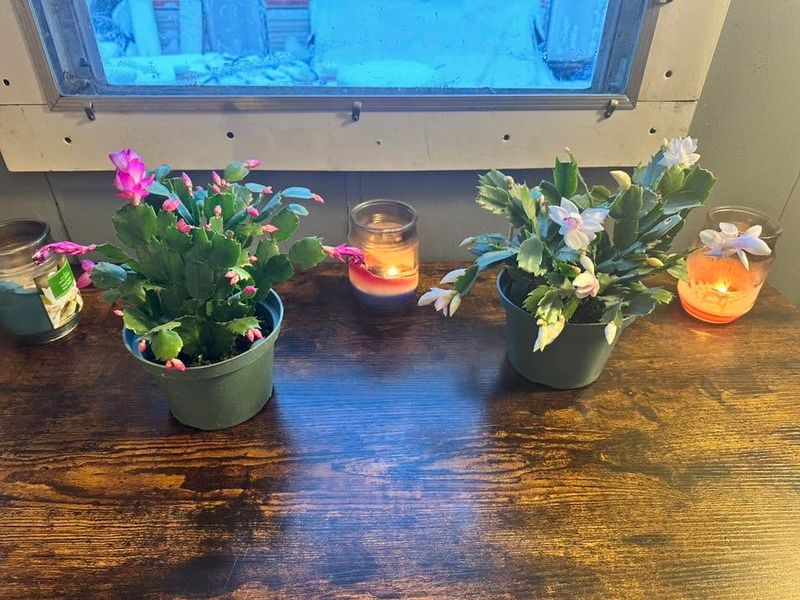
Flowering in holiday cacti is controlled mainly by day length and temperature. Commercial greenhouse guidance from UMass Amherst reports exactly that, which is why a fertilizer tweak alone rarely makes the difference.
NC State advises more than 13 continuous hours of darkness. Clemson recommends at least 14 continuous hours for about six weeks, starting around mid-September.
The darkness needs to be unbroken, so a few dark hours here and there are not the same thing.
Watch for stray light. A streetlight outside a window, car headlights sweeping across a room, or a lamp switched on at midnight can interrupt the night.
Moving the plant to a spare room or closet at dusk is one way gardeners handle it.
Temperature counts as well. Clemson gives 60 to 68 degrees F as a good range for fall growth and warns that temperatures above 90 degrees F after buds set can cause bud drop.
NC State warns that readings over 90 or under 50 degrees F after bud set may lead to dropped buds.
A brief warm afternoon will not necessarily cost you buds. Sustained extremes are the concern, such as a plant left on a hot porch or in a cold garage.
None of this means fertilizer is pointless in general plant care, only that it is not the main flowering switch.
Pause routine feeding instead of chasing a bloom booster
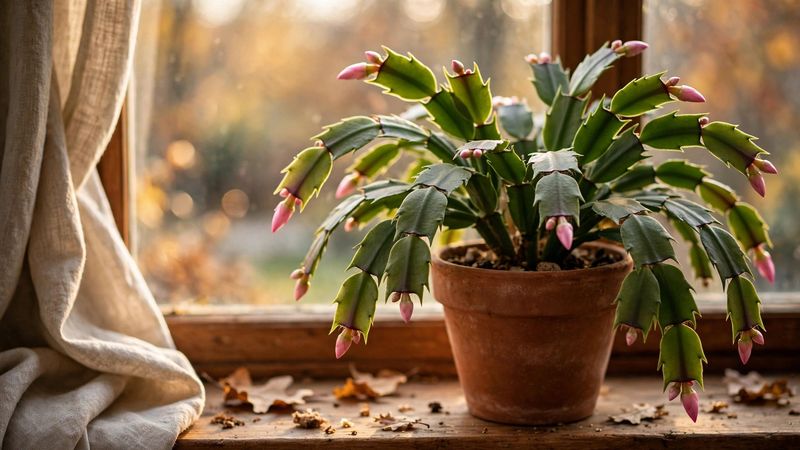
For a North Carolina plant heading into its cool-season flowering period, the practical call is simple: skip routine winter fertilizer. NC State Extension says feeding is unnecessary in winter, and Clemson recommends stopping in late summer.
That is different from saying nitrogen alone caused your sparse buds. No source reviewed shows that.
Pausing feeding is about matching the plant’s season, not fixing a past error.
You may see bloom booster products promoted for this time of year. University of Minnesota Extension suggests a low-nitrogen, higher phosphorus and potassium fertilizer in fall.
Clemson, meanwhile, simply says to stop.
When trusted extension services differ, no single formula is proven essential. Commercial guidance from UMass Amherst even reports successful production with balanced fertilizer, though greenhouse conditions are not a home schedule.
So there is no need to buy a special product this month. Put the fertilizer away until growth resumes, and spend your effort on steady conditions instead.
Steady care helps protect buds already set
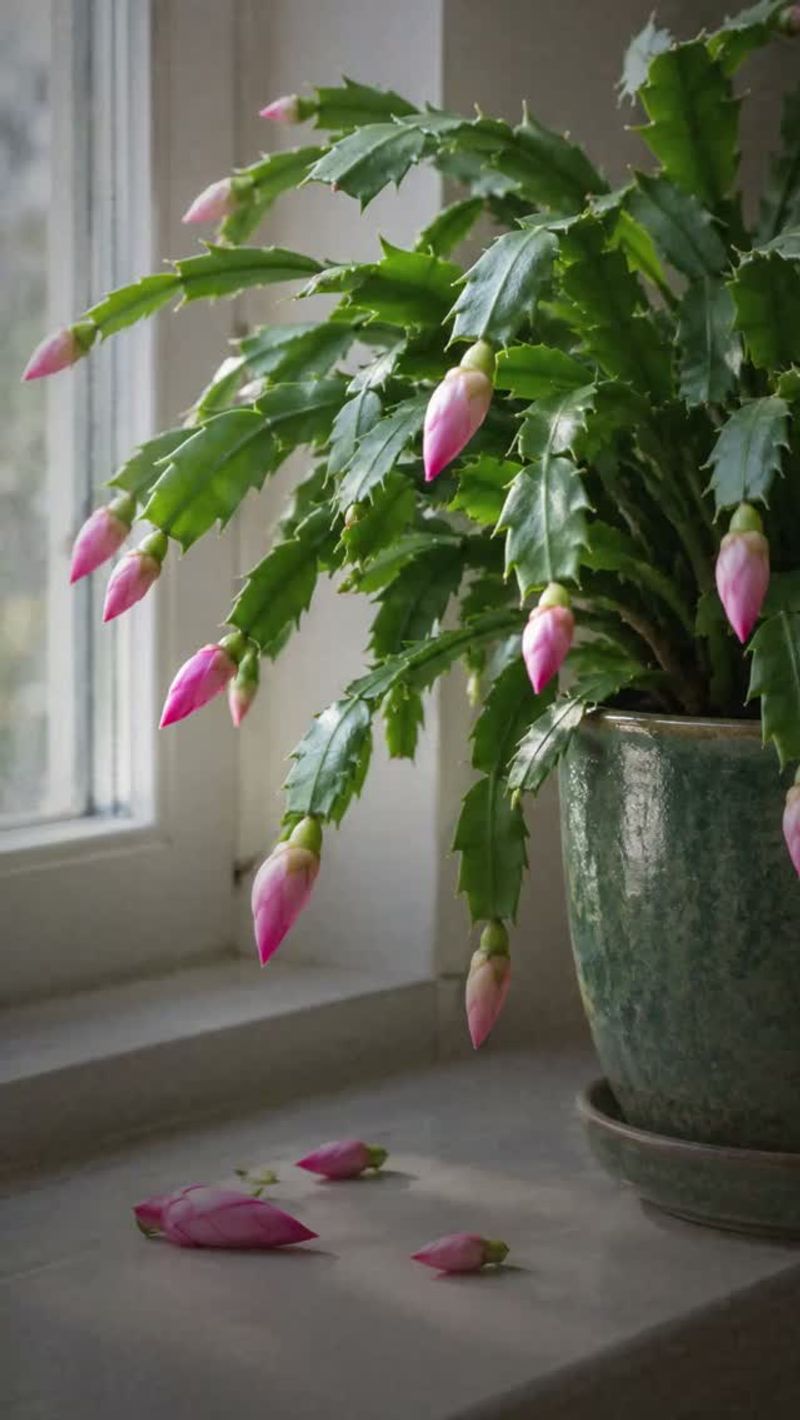
If your plant has buds now, the job shifts to keeping them. Water when the top inch of the mix feels dry, as UF/IFAS suggests, and use a pot that drains.
Empty the saucer so roots do not sit in water.
Both extremes cause trouble. Clemson warns against waterlogging and against letting the plant dry out completely after buds set.
Withholding water to force flowering is not a good idea, since water stress can reduce bud set.
Consistency is the next goal. Drafts from doors, heat from vents or fireplaces, and sudden swings in light, temperature, or watering routine can all contribute to bud drop.
Moving the plant around the house is a common culprit.
Pick a bright spot out of direct drafts and leave it there. If you must turn it, do so rarely.
In many Piedmont and mountain homes, a cool room near an east window works well, while coastal homes may need to watch for warm afternoon sun.
These steps cannot make new buds appear. They simply give existing buds the best odds of opening.
Build more flowering tips before next fall
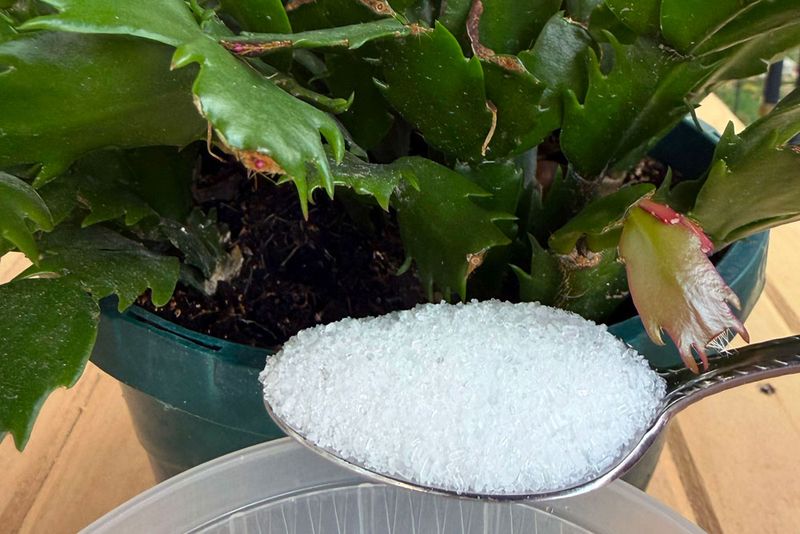
A fuller plant starts months before bloom season. Clemson recommends pinching stems in early June to encourage branching.
Each pinch can lead to more branches, which means more tips where flowers may form.
Branching raises the potential, not the promise. More tips do not guarantee a set number of blooms, since darkness and temperature in fall still decide what happens.
Feeding fits into the same calendar. Clemson suggests half-strength soluble fertilizer monthly, beginning with new growth in late winter or early spring and continuing through summer, then stopping in late summer.
NC State’s Pender County guidance also points to feeding during active growth and skipping winter.
Extension schedules vary a bit, so treat the dates as a range. A plant on a shaded Wilmington porch may grow on a different clock than one in a Asheville living room.
Mark early June and late summer on your calendar now. Those two reminders do more for next year’s display than any November purchase.
Plan around the plant’s flowering window
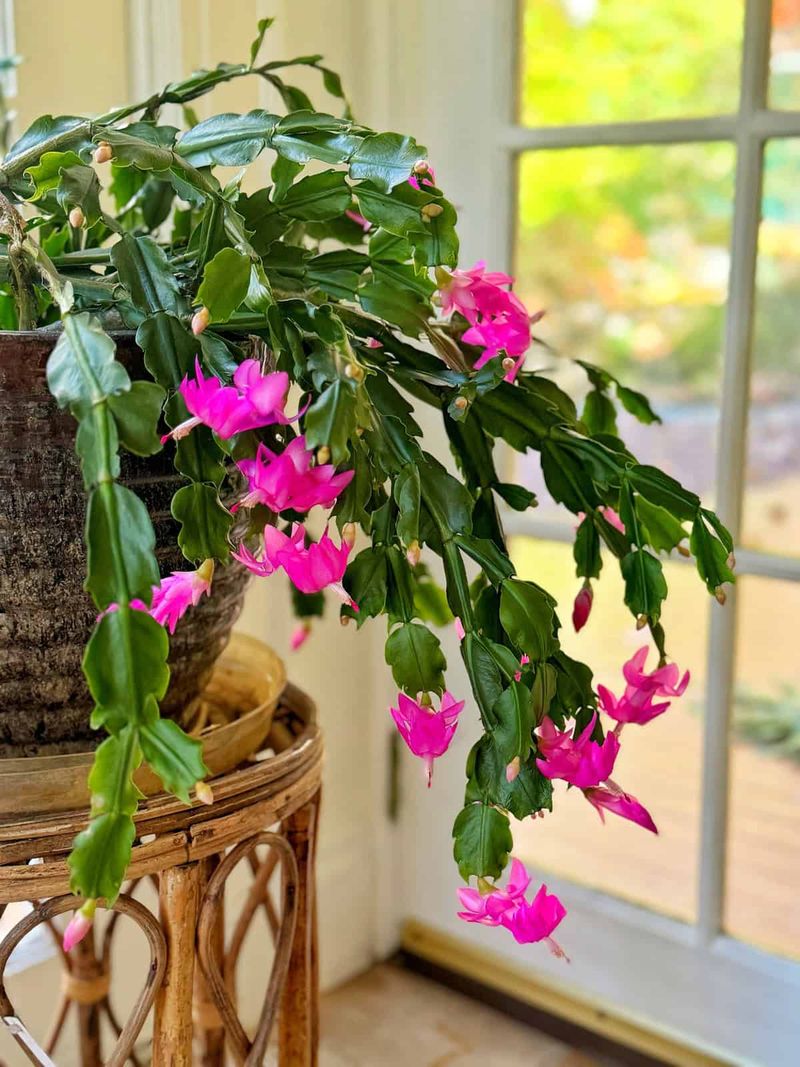
Skip the November fertilizer rescue. Care steadily for the buds you have, then start earlier next year with fall darkness, a seasonal feeding plan, and a June pinch.
Remember that plant type shifts the schedule, so aim for a fuller holiday season rather than a sure Christmas Day bloom. Guidance from N.C.
Cooperative Extension is a good place to start.
A holiday cactus rewards the gardener who plans in September, not the one who panics in November.