
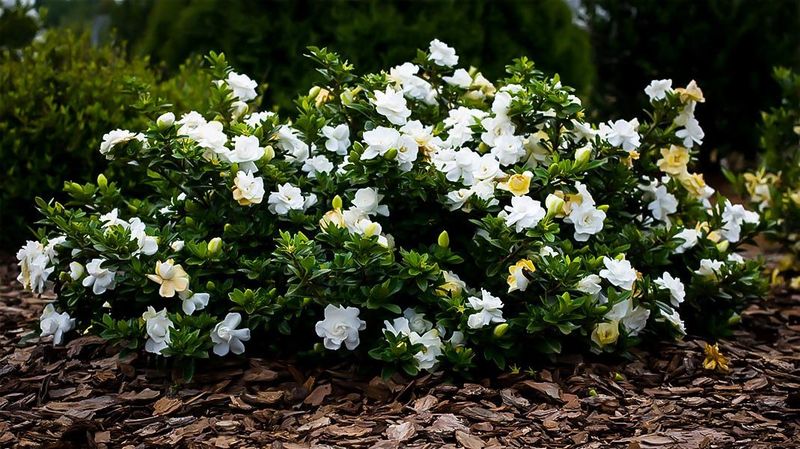
Gardenias have a way of looking perfectly healthy right up until the buds hit the ground. In California, where summer heat, alkaline water, and dry spells all stack up at once, that bud drop can feel like a mystery with no clear answer.
The truth is that your gardenia is not asking for one magic product – it is asking you to check several interacting conditions before you reach for anything. This guide walks through those conditions in order, so you can figure out what your specific plant actually needs right now.
Support summer blooms by diagnosing stress, not chasing a miracle product
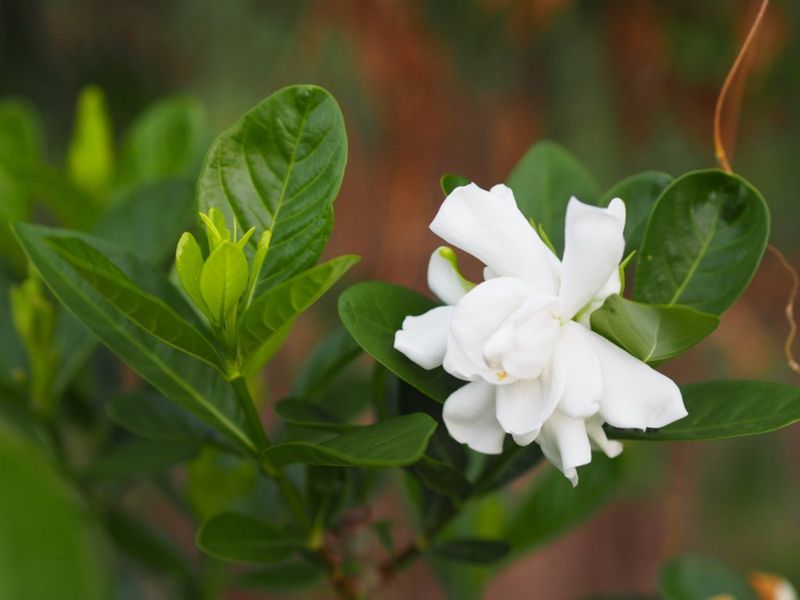
Bud drop on a gardenia that looks otherwise fine is one of the more frustrating things a California gardener can run into. The foliage stays glossy and dark green, new growth keeps coming, and then the buds fall before they open.
The temptation is to grab something off the shelf and feed or spray the plant back into bloom, but that approach tends to miss the actual problem.
UC IPM’s guidance on leaf and bud drop identifies drought, excessive heat or cold, abrupt soil-moisture changes, nutrient problems, and the plant’s narrow temperature range for flowering as the main contributors to bud drop. Notice that the list has multiple entries.
Gardenias rarely drop buds because of one isolated problem – they drop buds when several stresses pile up at the same time.
A few fallen buds scattered across the season are not automatically a sign of disease or serious failure. Texas A&M’s plant disease handbook notes that some bud drop is a natural condition.
The signal worth paying attention to is sudden or widespread loss, especially when buds drop at a consistent stage of development.
When that kind of loss happens, a systematic check works better than a single product. Start with root-zone moisture and drainage, since both drought and saturated soil can produce identical-looking symptoms.
From there, evaluate afternoon heat and light exposure, then look at soil pH and nutrient availability, and finally inspect buds and new growth for pests before considering any treatment. Clemson Extension confirms that no single chemical treatment cures gardenia bud drop – what matters is identifying the underlying stress.
The sections that follow move through that sequence step by step.
Check moisture below the mulch before changing the watering schedule
The most reliable thing you can do for a struggling gardenia right now costs nothing: push your finger two inches into the soil and feel what is actually there. Watering by a fixed schedule during California summers is risky because temperatures, wind, and container size all change how fast the root zone dries out.
A Monday-and-Thursday schedule that worked in June may leave the root zone parched by mid-August, or it may keep a poorly drained bed soggy all week.
Gardenias need even moisture during flowering, but the risk runs in both directions. Texas A&M’s gardenia disease guide lists both drought stress and waterlogged soil as contributors to bud drop and root problems.
When you water, the goal is to moisten the full root zone and then let excess water drain away completely – not to keep the soil permanently wet. If water pools around the base of the plant for more than an hour after irrigating, drainage is the problem to fix, not the watering frequency.
Texas A&M’s water-efficient landscape guidance recommends watering deeply and infrequently rather than lightly and often, which encourages roots to grow deeper where soil moisture is more stable. For gardenias, that deeper moisture reservoir matters most during heat spikes when surface soil can dry within hours.
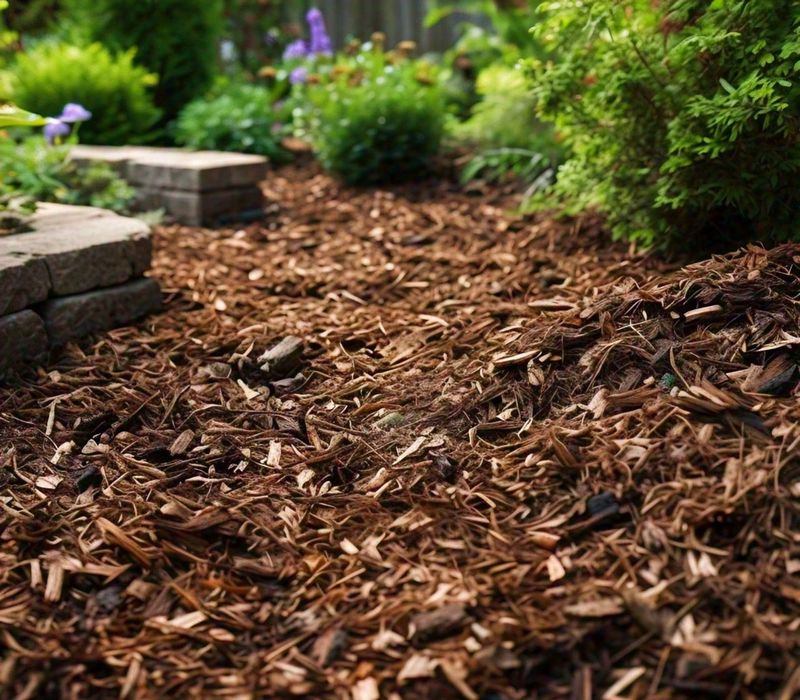
Mulch is one of the most practical corrections you can make right now. UC IPM’s gardenia page notes that mulch conserves water and reduces soil-temperature swings, both of which help the root zone stay stable when air temperatures climb.
Aim for roughly 2 to 3 inches of organic mulch, and keep it pulled back a few inches from the stem at the base of the plant to avoid rot. The UC Master Gardener summer checklist for Contra Costa County includes mulching as a standard summer care step for landscape plants, not just a drought-emergency measure.
Containers and newly planted gardenias need more frequent checks than established shrubs in the ground. Container soil can dry out completely within a day or two during a heat wave, while a poorly drained in-ground bed may stay saturated long after a deep watering.
Knowing which situation you have changes the corrective action entirely.
Adjust light and afternoon heat to the California microclimate
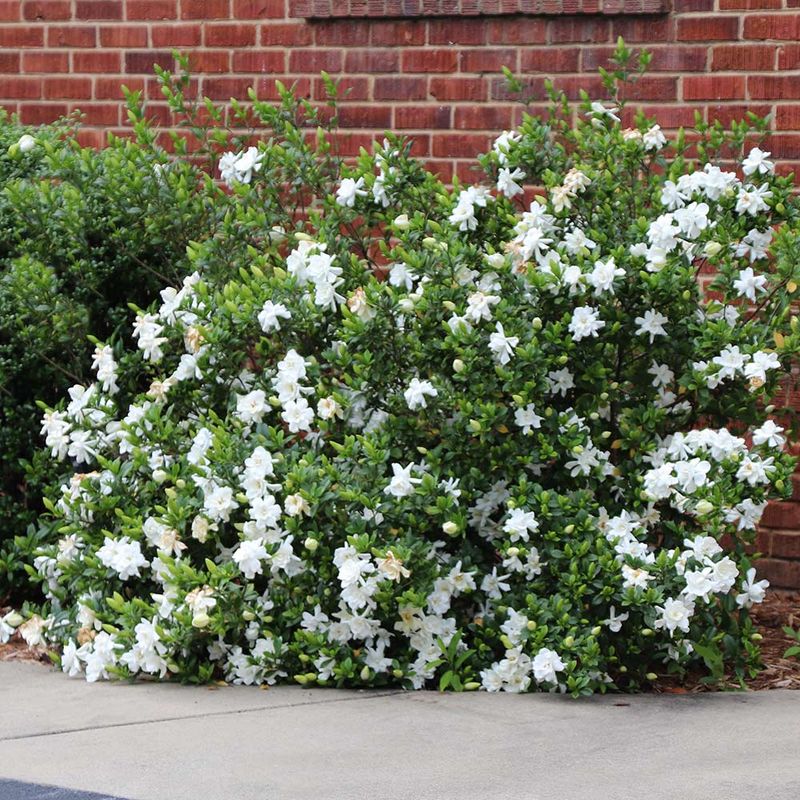
Gardenias across California do not all need the same sun exposure, and giving every plant the same light prescription can make things worse rather than better. Where you live in the state matters as much as how you water.
Gardeners along the coast, where afternoon temperatures rarely push past the mid-70s even in August, generally find that gardenias handle full or nearly full sun without a problem. Enough light is actually necessary for reliable flowering, so moving a coastal gardenia into heavy shade to “protect” it can reduce bloom rather than encourage it.
UC IPM’s gardenia care guide specifically recommends full sun in cooler coastal areas while advising partial shade for plants in hot inland valleys – a distinction that matters a great deal in a state with as many microclimates as California.
Inland valley gardeners, and anyone in Southern California locations where afternoon temperatures regularly exceed 90 degrees Fahrenheit, should look at whether their gardenia is taking direct sun during the hottest part of the day. Afternoon sun from roughly 1 p.m. onward can push leaf and bud temperatures well above the air temperature, and UC IPM links excessive heat to bud drop alongside drought and moisture fluctuation.
Filtered light through a shade cloth, the canopy of a nearby tree, or a west-facing wall can reduce that heat load without pushing the plant into full shade.
A UC Master Gardener plant guide for the San Joaquin Valley describes gardenias as blooming in spring and summer with appropriate care, but notes the importance of siting for the local climate. Reducing afternoon heat stress in an inland garden lowers the chance of bud drop without guaranteeing a specific number of flowers – it removes one stressor so the plant can direct energy toward the buds it has already set.
Check acidic soil before adding fertilizer or iron
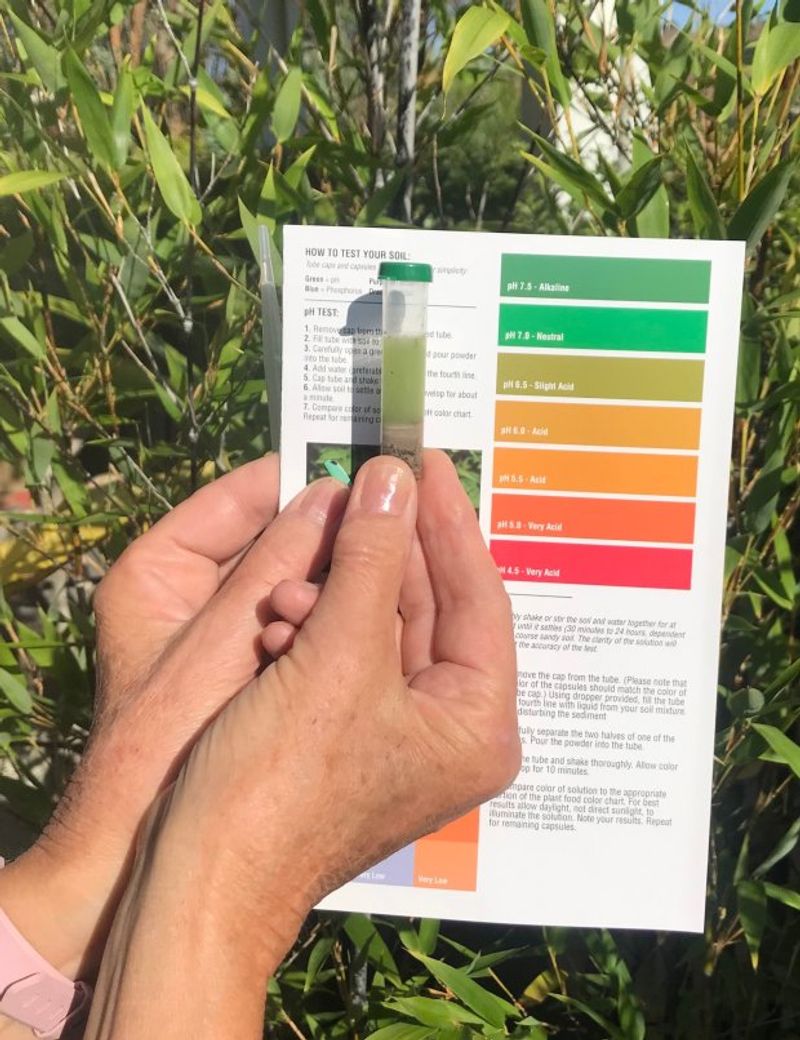
Reaching for fertilizer when a gardenia looks stressed is understandable, but adding nutrients to a plant that cannot absorb them does nothing useful. Before applying any fertilizer, acidifier, or iron product, find out what the soil is actually doing.
A basic soil test from your county cooperative extension office or a garden center kit takes the guesswork out of this step and can prevent you from adding something the plant does not need.
Gardenias prefer acidic soil. UF/IFAS gardenia guidance gives a target pH range of 5.0 to 6.5.
In that range, nutrients including iron are generally available to the plant’s roots. Above pH 6.5, and especially above 7.0, iron becomes chemically unavailable even when it is physically present in the soil, which is one reason gardenias growing in alkaline conditions develop yellow new leaves.
The challenge in California is that many native soils are alkaline, and irrigation water in much of the state adds additional calcium and bicarbonates that push pH higher over time. UC ANR’s publication on soil management notes that amending pH in soils with high calcium carbonate content is difficult and often temporary.
UC IPM’s pH problem page reinforces that point, explaining that acidifying amendments may work in some situations but that the underlying soil chemistry keeps pushing back. For gardeners dealing with strongly alkaline native soil, UC Master Gardeners suggest that container culture with an acidic potting mix may be more practical than repeated attempts to change in-ground soil chemistry.
Yellow new leaves are not automatic proof of iron deficiency. Root damage from overwatering, nematodes, poor drainage, or disease can create nearly identical symptoms because damaged roots cannot take up nutrients regardless of soil pH.
Clemson Extension’s gardenia problem guide lists root rot and nematodes alongside nutrient deficiency as causes of yellowing and decline. Fix the root environment first, then reassess whether an iron or pH amendment is still warranted.
On the fertilizer question: applying nitrogen to push new growth during drought or water stress increases the plant’s water demand at the worst possible time. UC Cooperative Extension guidance for Southern California landscapes advises against fertilizing during drought stress for exactly this reason.
Clemson’s fertilizing guide for trees and shrubs also recommends basing applications on soil test results and observed plant need rather than a fixed calendar schedule. If your soil test shows adequate nutrients and the plant is drought-stressed, holding off on fertilizer is the right call.
Inspect buds before reaching for a spray
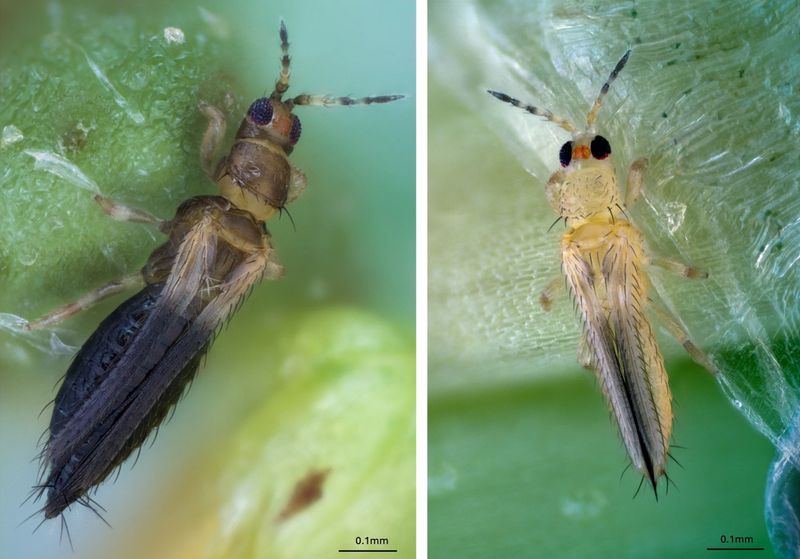
Pest damage and stress-related bud drop can look almost identical from a few feet away, which is why grabbing a spray bottle before you know what you are dealing with is rarely the right move. A closer look at the buds themselves takes about five minutes and tells you whether a pest is actually involved.
Thrips are the insect most commonly associated with gardenia bud and flower damage. They feed inside developing buds, which can distort petals, cause brown streaking, and contribute to premature drop.
Clemson Extension’s gardenia pest guide describes a practical identification method: hold a damaged flower or bud over a sheet of white paper, tap it firmly, and examine what falls off with a hand lens. Thrips are tiny – roughly 1 to 2 millimeters – and may appear as slender, fast-moving specks.
If you see them, that confirms the pest. If you do not, bud drop is more likely related to the cultural stresses covered in earlier sections.
UF/IFAS gardenia guidance also notes that scale insects and whiteflies can affect gardenias, so check the undersides of leaves and along stems while you are inspecting. Sooty mold growing on leaf surfaces often signals that sap-feeding insects are active above, since the mold grows on their sticky excretions.
When you do confirm a pest, integrated pest management comes before any product. Remove and dispose of heavily damaged buds and flowers, which reduces the pest population and removes breeding sites.
Improving overall plant vigor through the moisture, light, and soil corrections in earlier sections makes the plant more resilient. Clemson’s disease and problem guide is direct: no chemical treatment specifically cures bud drop, and treatment should target an identified pest or disease rather than a symptom.
If a pesticide is warranted, the product label is the controlling document – not general advice about what is usually safe. Clemson’s main gardenia factsheet recommends avoiding insecticide applications to plants in bloom when possible to protect pollinators.
Insecticidal soaps and horticultural oils are not automatically harmless: one EPA-registered soap label lists gardenia as a plant that may be sensitive and recommends testing a small area before full application. Another registered product label warns against applying to drought-stressed plants, and a third label specifies precautions around heat and sunlight.
During a California summer heat event, that kind of label language is worth reading before you spray anything.
Avoid late-summer practices that can reduce future flowering
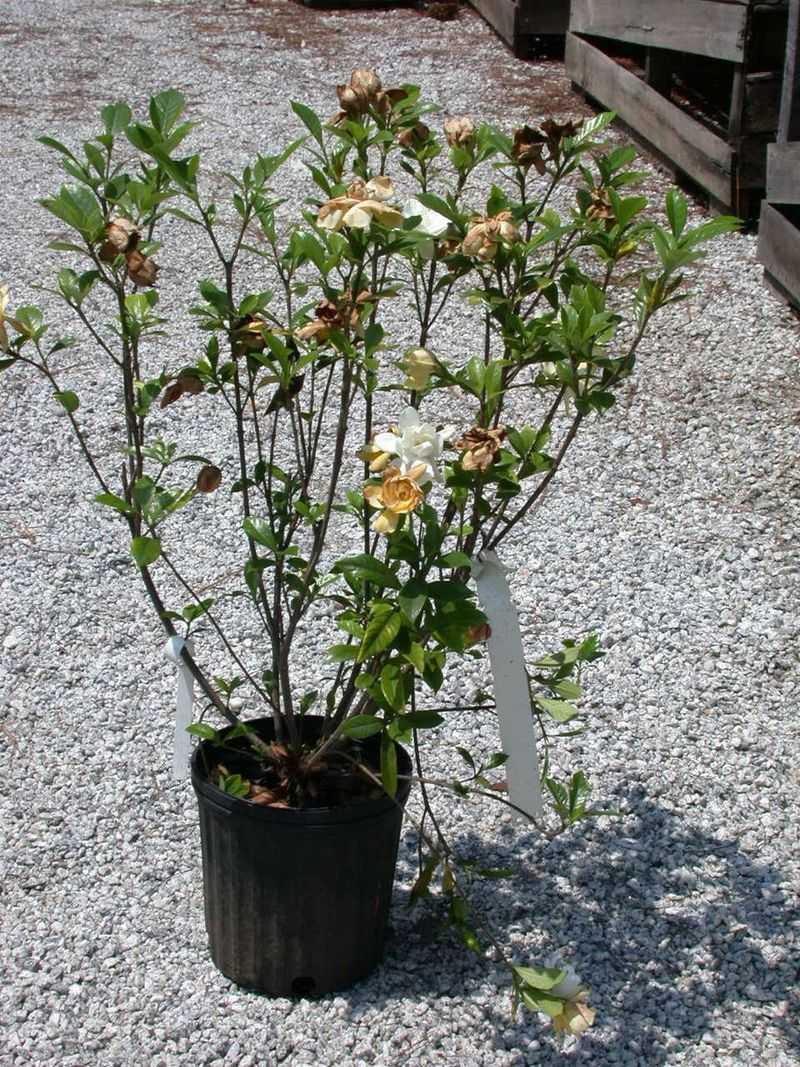
Some of the damage done to gardenias in late summer happens not from neglect but from well-intentioned care applied at the wrong time or in the wrong way. Two practices in particular are worth pausing on: how you water and whether you prune right now.
Watering at the soil line, rather than overhead, reduces the time foliage stays wet. Clemson Extension and Texas A&M’s plant disease handbook both connect persistently wet foliage with leaf spot diseases and their spread.
Overhead watering does not cause every disease problem, but keeping leaves wet for extended periods in warm weather creates conditions where fungal pathogens can establish more easily. A drip emitter, a soaker hose laid at the root zone, or simply directing a hose wand to the base of the plant rather than over the top of it is a low-effort adjustment with real benefit.
Pruning deserves separate consideration. Gardenias set next season’s flower buds on wood that develops after this year’s flowering finishes, so cutting into the plant now – especially hard cuts – can remove that developing wood and reduce how much the plant blooms next year.
UF/IFAS and UF/IFAS Gardening Solutions both recommend pruning after flowering and before the plant sets new buds, which for most California gardenias means shortly after the main spring-to-early-summer flush, not in August. If you have not pruned yet and the plant is still carrying buds, hold off until after those buds open and drop naturally.
Container plants, newly planted shrubs, and root-damaged gardenias all have less buffer than established, well-drained in-ground plants. The UC Master Gardener summer checklist highlights containers as needing more frequent monitoring in hot weather.
Texas A&M EarthKind publications also note that newly established plants need closer attention to moisture than plants that have been in the ground for several years. Avoiding unnecessary pruning and keeping water at the root zone are two straightforward ways to reduce risk without requiring any new products.
End with a realistic late-summer bloom forecast
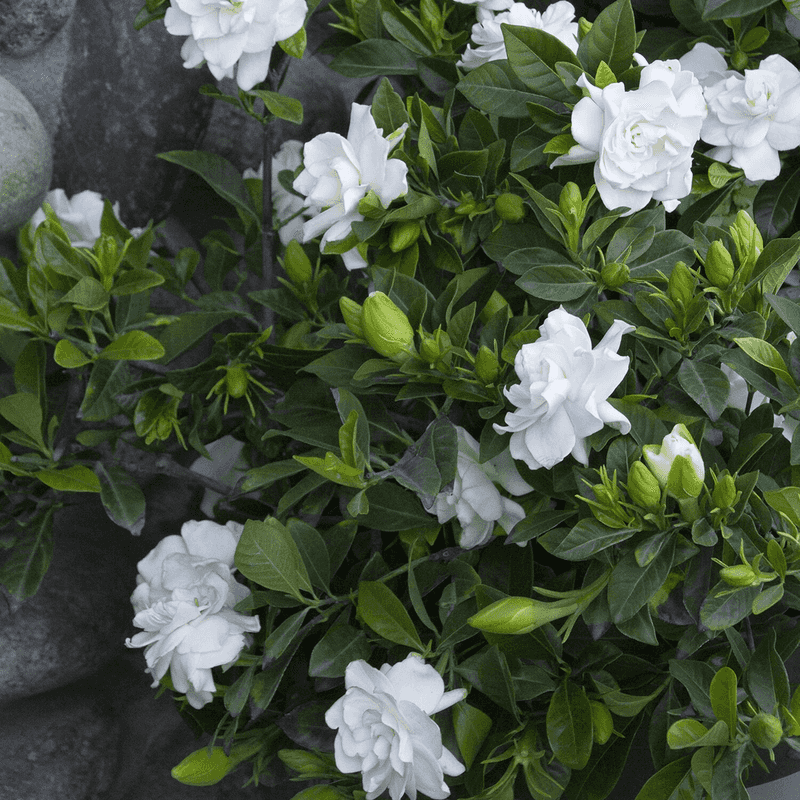
Here is a practical sequence for the rest of summer: check soil moisture two inches below the surface before each watering decision, confirm that drainage is working, and add mulch if it is thin or missing. If your garden is in an inland valley or another hot location, evaluate whether afternoon shade could reduce heat stress on the plant.
Before adding any fertilizer, iron supplement, or pH amendment, run a soil test so you know what the plant actually needs. Inspect buds and new growth for thrips or other pests before considering any spray, and follow the product label exactly if treatment is warranted.
Clemson Extension describes gardenias as flowering primarily in May and June, with sporadic blooms possible through summer. UC Master Gardener guidance for the San Joaquin Valley also describes spring-and-summer flowering for gardenias grown in appropriate California conditions.
What neither source promises is continuous bloom regardless of heat, cultivar, plant age, or stress level – and that honest qualification matters.
The goal these steps point toward is stable growing conditions, not a guaranteed flower count. A gardenia that has even moisture, reasonable heat protection, workable soil chemistry, and no active pest infestation is in the best position to keep producing buds when conditions allow.
UC IPM puts it plainly: bud drop reflects stress, and reducing that stress is the most reliable path forward. Steady conditions, not a single late-summer intervention, are what gardenias are actually asking for.