
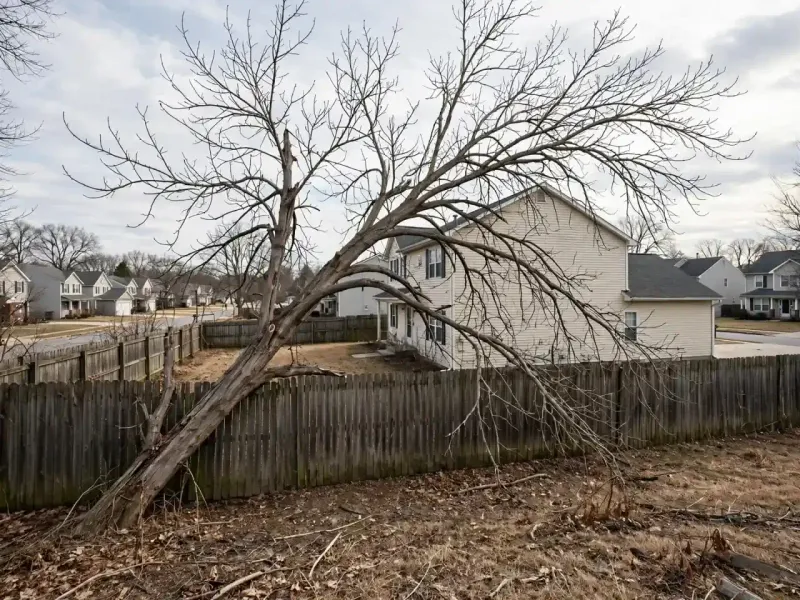
A big oak limb lands in your yard after a storm, and it clearly came from next door. Who hauls it away, and who pays if it cracked your fence or roof?
Florida’s answer is less simple than many people expect. Knowing a few basics can save you money, stress, and a feud with the folks next door.
A storm-felled limb usually becomes a cleanup issue for the property it lands on
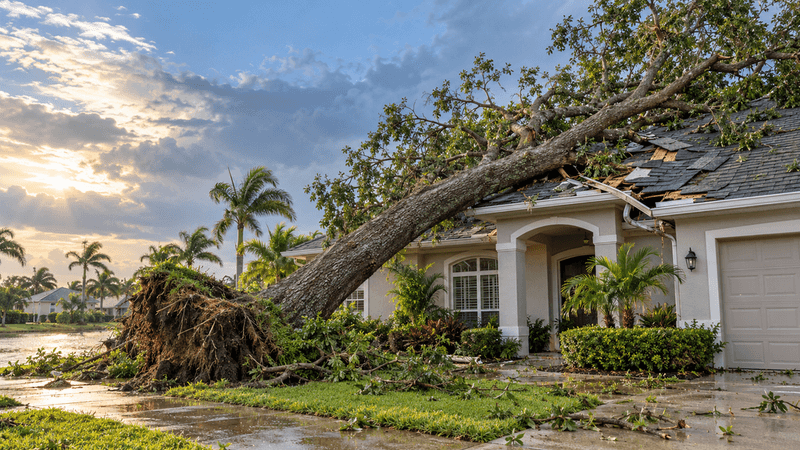
Picture the morning after a summer thunderstorm. A heavy limb from the neighbor’s live oak is stretched across your St. Augustine grass, and the first question is who has to move it.
For an ordinary storm fall, the practical answer is usually you. Citizens Property Insurance guidance says neighbors are generally not responsible for removing a storm-felled tree from someone else’s property, and that the owner of the affected property is usually responsible for debris on that land.
That is insurer guidance for claims, not a court ruling on every dispute. It tells you how cleanup tends to work in practice, but it does not decide every question about fault.
Where the tree grew does not, by itself, make its owner responsible. A healthy tree that loses a limb in a strong wind is usually treated as a weather event, not as someone’s mistake.
A different picture emerges when the tree was already a problem. Think of a trunk with fungus along the base, a limb that has been dead for a year, or a tree that has dropped branches before.
Those clues point toward a possible hazard rather than routine storm debris, and we will look at how that changes things in a later section.
For now, a calm first step helps. Photograph the limb, the spot where it landed, and any damage before you move anything.
Then decide whether the cleanup is something you can handle safely or something that needs a professional.
Cleanup costs and insurance coverage are separate questions
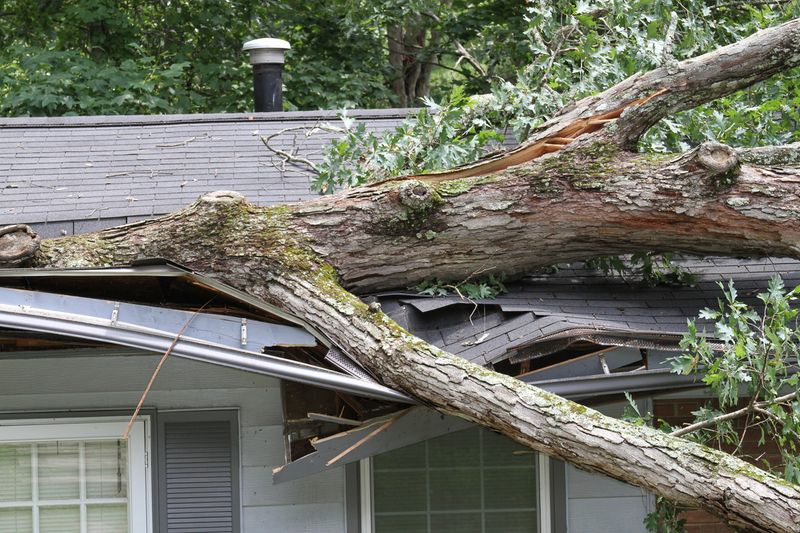
Knowing who usually handles debris does not tell you whether an insurer will pay for it. Those are two different questions, and mixing them up leads to unpleasant surprises.
The Florida Department of Financial Services explains that many homeowners policies cover tree removal when a tree damages insured property. If a limb lands on your roof, shed, or fence, coverage may come into play.
If it simply lies on the grass, removal may not be covered at all.
Policy language drives the outcome. Limits on tree removal, deductibles, and exclusions vary from one policy to another, and a hurricane deductible can change the math for storm damage.
The same Citizens guidance that describes the usual cleanup rule also points readers toward their policy when property is damaged. A neighbor’s limb landing in your yard does not guarantee that anyone will pay for it.
A practical path looks like this. Take dated photos, keep any receipts, and read the tree debris section of your policy.
If insured property was damaged, contact your insurer promptly and ask how your policy treats removal and repairs.
Also keep legal responsibility in its own box. Whether your insurer pays and whether your neighbor is legally at fault are separate matters, and one does not settle the other.
If the cost of damage is high, your insurer may handle questions with the neighbor’s side, but you should not assume that will happen.
Evidence that an owner knew about a hazardous tree can change the analysis
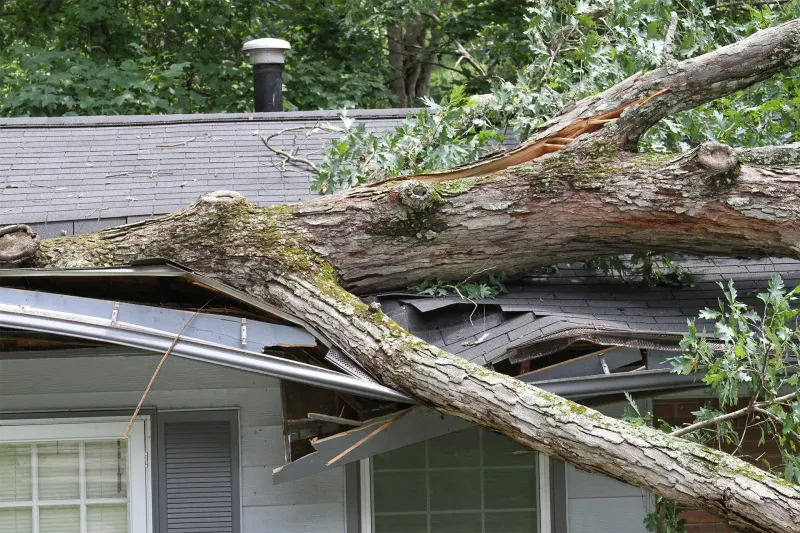
Some tree problems are not a surprise. Florida’s Sixth District Court of Appeal addressed that kind of situation in Vaughan v.
In that case, the complaint alleged the owner knew for years that a tree was rotten, had received complaints about falling limbs, and left it standing until it damaged a neighboring home. The court held those allegations were enough for the negligence complaint to go forward at the pleadings stage.
That is a narrow result. The court did not find the owner liable.
It decided only that the case could continue so the facts could be tested. It also does not mean every dead branch or storm fall creates liability.
The opinion also reports that it is not final until the rehearing period expires and any timely motion is resolved. So treat it as a developing signal, not settled law.
What does this mean for you in daily life? If you can see a hazard, such as large dead limbs, a hollow trunk, or heavy leaning, write down what you see.
Take dated photos and note any earlier limbs that fell.
Telling the tree owner about your concern may help show what they knew and when. A friendly written message or email can work.
A certified letter can create a clear record, but neither notice nor a particular type of letter guarantees a successful claim. A claim still has to show that the owner failed to act reasonably, that this caused harm, and what the damages were.
If the situation is serious, consider asking a qualified arborist to assess the tree, and speak with a Florida attorney about your specific facts.
You may trim encroaching branches back to the property line
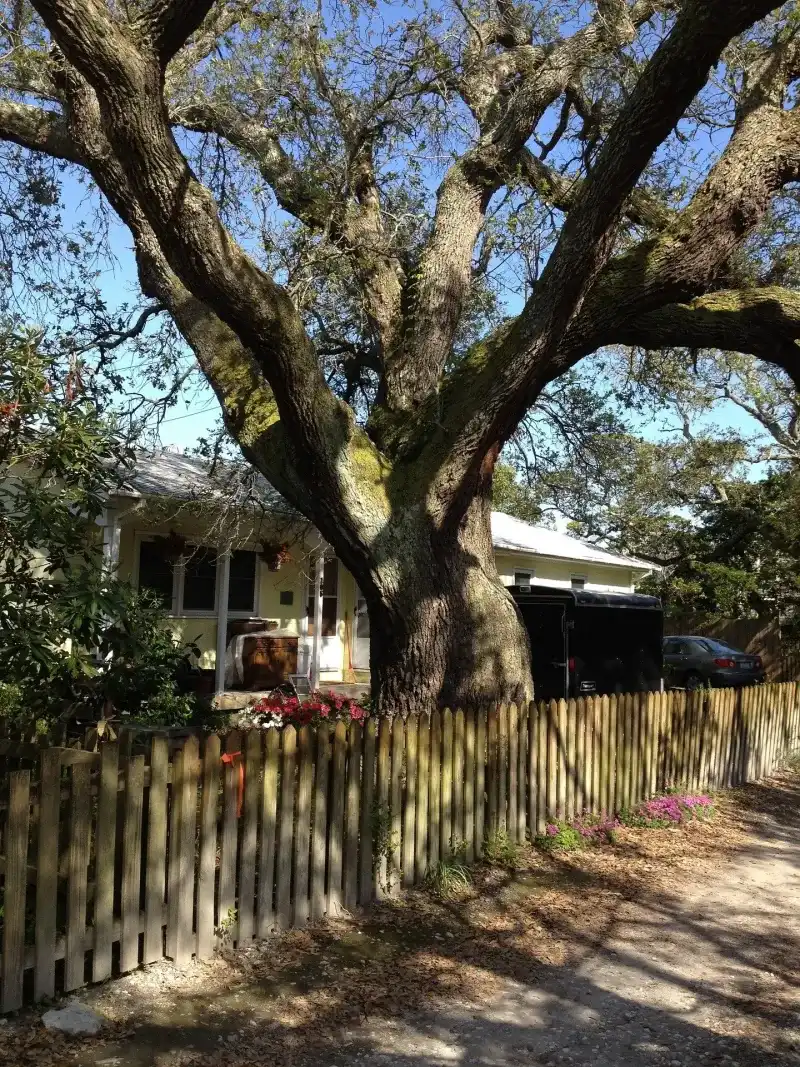
Branches creeping over your fence are a common frustration, and Florida homeowners do have a self-help option. The UF/IFAS Handbook of Florida Fence and Property Law says an adjoining owner may trim encroaching branches back to the property line, at their own expense.
Notice how narrow that is. The right covers growth that has crossed onto your side, and it stops at the boundary line.
It does not let you step onto the neighbor’s land to cut. It also does not cover branches that stay on their side, even if they look untidy or you worry they might fall someday.
The cost falls on you. The neighbor is not required to pay for trimming you choose to do.
This right is also separate from the question of who pays when a limb falls. Being allowed to trim overhanging branches does not mean a neighbor must cover damage from a storm-felled limb, and it does not mean you are responsible for damage if you skip trimming.
Before you start, locate your property line using a survey or plat so you are not guessing. Pick small, low branches you can reach from the ground with hand tools, and wear eye protection.
Anything heavy, high, or tangled with wires belongs with a professional. Talking to the neighbor first is often the easiest route, since many owners will trim their own tree once they know it bothers you.
Trimming that damages the tree can create a separate dispute
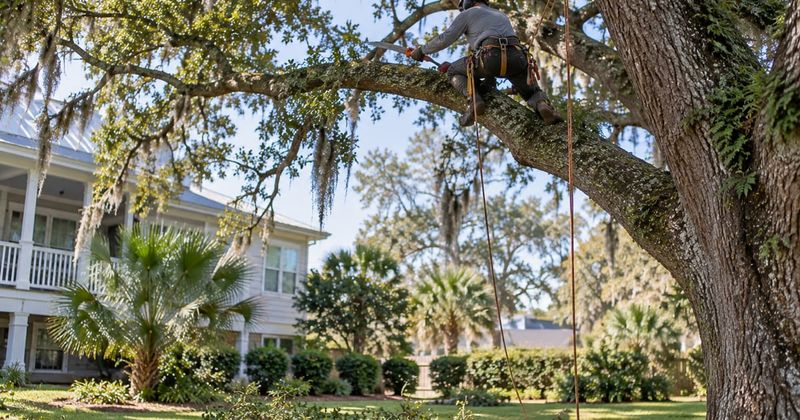
Having the right to trim can feel like permission to cut as much as you like. It is not a shield if the work harms the tree itself.
Imagine a contractor lopping off half the canopy to clear your roof, leaving the tree lopsided and stressed. The neighbor sees a damaged tree and may argue it has lost value or become unsafe.
Florida appellate law leaves real uncertainty here. In Balzer v.
Ryan, the First District Court of Appeal dealt with a dispute involving trimming and a neighbor’s tree, and the law around it does not support a blanket promise either way. You cannot safely assume that trimming at the property line is always protected, and you cannot assume it always leads to liability.
The UF/IFAS guidance on trimming describes the right in limited terms, covering encroaching branches back to the line. It does not promise immunity for harm to the tree.
A few habits lower the odds of a dispute. Remove only what actually crosses the line, avoid cutting into the trunk or leaving large torn stubs, and take photos before and after.
If the tree’s health or appearance could change, tell the owner before you start. Hiring a qualified arborist to do careful, standard cuts also helps show you acted reasonably.
If a neighbor claims your trimming killed or hurt their tree, stop cutting and consider talking with a Florida attorney before the conversation turns into a letter or a lawsuit.
Use qualified professionals for dangerous cleanup and check applicable tree-work rules
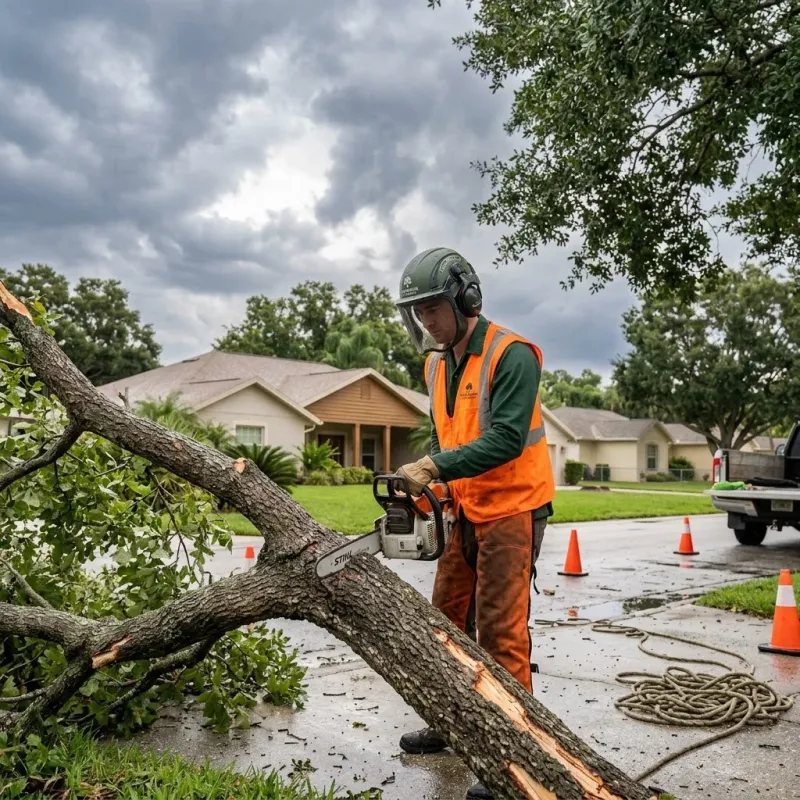
Some cleanup is not a weekend chore. UF/IFAS hurricane cleanup guidance advises hiring an ISA-certified arborist for leaning trees near targets, broken limbs that require climbing, or major restoration.
Hanging limbs, branches under tension, and anything that needs a ladder or a climb are risky to handle yourself. Never work on trees near power lines, and report limbs touching lines to the utility.
Only qualified line-clearance arborists should work near electrical lines.
Permits are another check. Florida Statute 163.045 limits when local governments may require permits or mitigation for tree work, but only on qualifying single-family residential property and only when specified risk-assessment documentation from an ISA-certified arborist or Florida-licensed landscape architect exists.
It is not a blanket exemption, so call your city or county before major removal.
A simple decision path helps. First, decide whether the limb is ordinary storm debris or a sign of a known hazard, such as long-term decay or earlier falling limbs.
Second, check your insurance separately for any damage to covered property. Third, keep any trimming to encroaching branches at the line, and hand anything dangerous to a professional.
The best tree dispute is the one you never have, so a quick friendly word with the neighbor often beats any legal theory.