
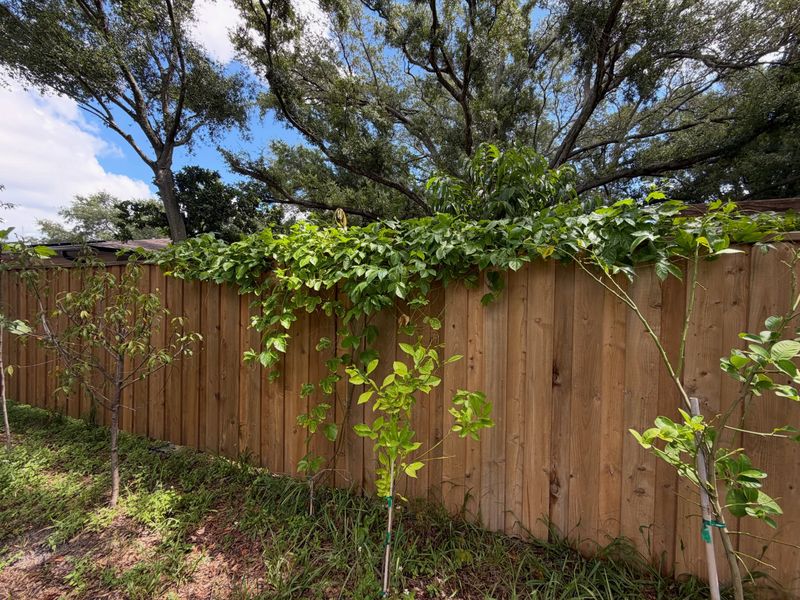
A vine can go from a few green tendrils to a thick curtain over your fence in a single summer. Many Florida homeowners wonder how much they can cut before a garden chore turns into a fight with the neighbor.
Florida courts have given a fairly clear boundary rule for trimming, but it has limits. Knowing where those limits sit can save you money, a fence, and a friendship.
The fence may not mark your property line
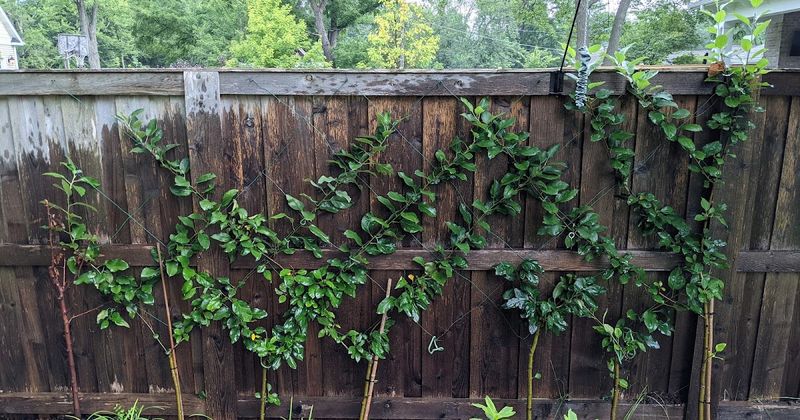
Two separate questions come up when vines cover a fence. First, where does your property actually end?
Second, how much of the plant has crossed onto your land? The fence only helps you see the vine.
It does not answer either question.
Many fences sit a little inside or outside the real boundary. UF/IFAS’s Florida property-law handbook explains that a fence alone is not enough to establish a boundary by acquiescence.
So measuring from the fence can leave you wrong by a foot or more.
If the line matters to your plans, look at your property records or hire a surveyor to mark it. A survey stake or a recorded plat is far better evidence than a fence that someone built years ago.
Settle this point first, because every trimming rule that follows depends on it.
Florida recognizes a right to trim encroaching vegetation
Florida’s appellate courts recognize a self-help remedy. If vegetation from next door has grown onto your property, you may trim it back, at your own expense, up to your property line.
The cost of the work is yours, not the neighbor’s.
The clearest example is Scott v. McCarty, a 2010 decision from Florida’s Fourth District Court of Appeal.
The court affirmed dismissal of a neighbor’s damages claim involving encroaching branches and roots. In doing so it repeated older common-law wording that covers tree roots or branches and “other vegetation” growing onto the adjoining owner’s land.
That case was about trees, not vines. Still, it shows that the trimming remedy is built around growth that has actually crossed the line.
The UF/IFAS handbook on trees and landowner responsibility discusses the same idea in plain terms for Florida property owners.
What that rule means for vines
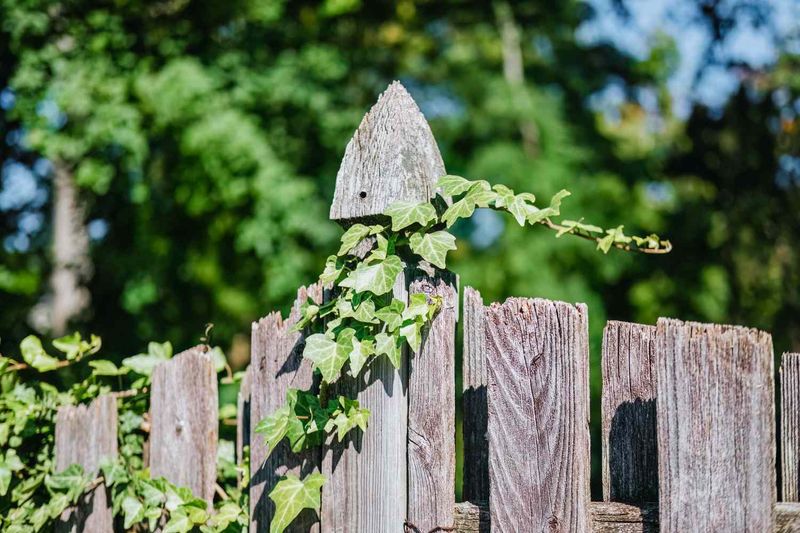
Does the trimming rule cover a vine? The best reading is yes, when the vine has grown onto your property.
The courts’ broad words “other vegetation” are what support that application. A vine is a plant, and the rule is not limited to trees in its wording.
Be careful about how far that goes. The decisions located deal with tree branches and roots, so no Florida appellate court has been found ruling on a vine swallowing a fence.
That means the vine application rests on broad wording, not on a case with those exact facts.
The same gap means there is no court-approved method for cutting vines. Nothing settles how to handle every fence setup, such as a vine growing through a shared fence.
The Scott opinion and the UF/IFAS handbook are useful guides, but they are not vine-specific answers.
Keep every cut on your side of the line
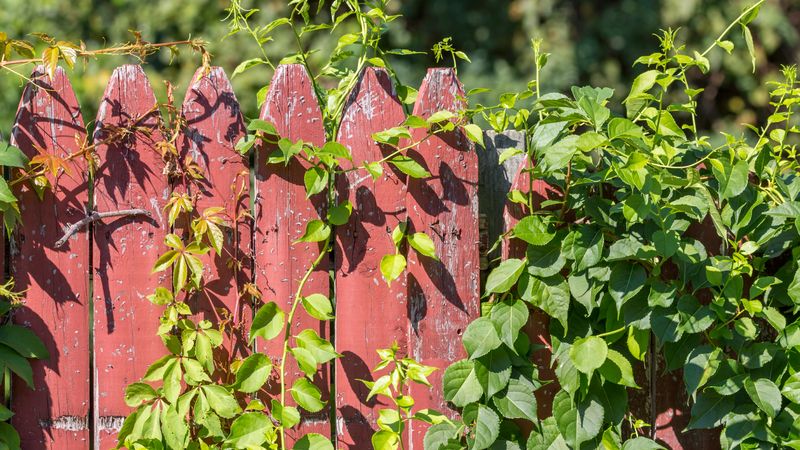
Here is a rule you can actually use. Trim only the growth that has crossed onto your parcel, and stop at the real property line.
You pay for the work, whether you do it yourself or hire someone.
The rule does not let you step onto the neighbor’s land. It also does not let you chase the vine back to where it is rooted and cut it there.
The plant’s starting point does not decide your rights, and neither does the fence.
Seeing a vine on the fence is not enough reason to cut it. If the fence sits on the neighbor’s side of the line, the vine on it may still be on their land.
As the Scott case frames it, the remedy is about growth that has come onto your property. The UF/IFAS handbook takes the same boundary-focused approach.
A simple habit helps. Run a string along the surveyed line, and cut only what hangs past it toward you.
Remove vines without tearing up the fence
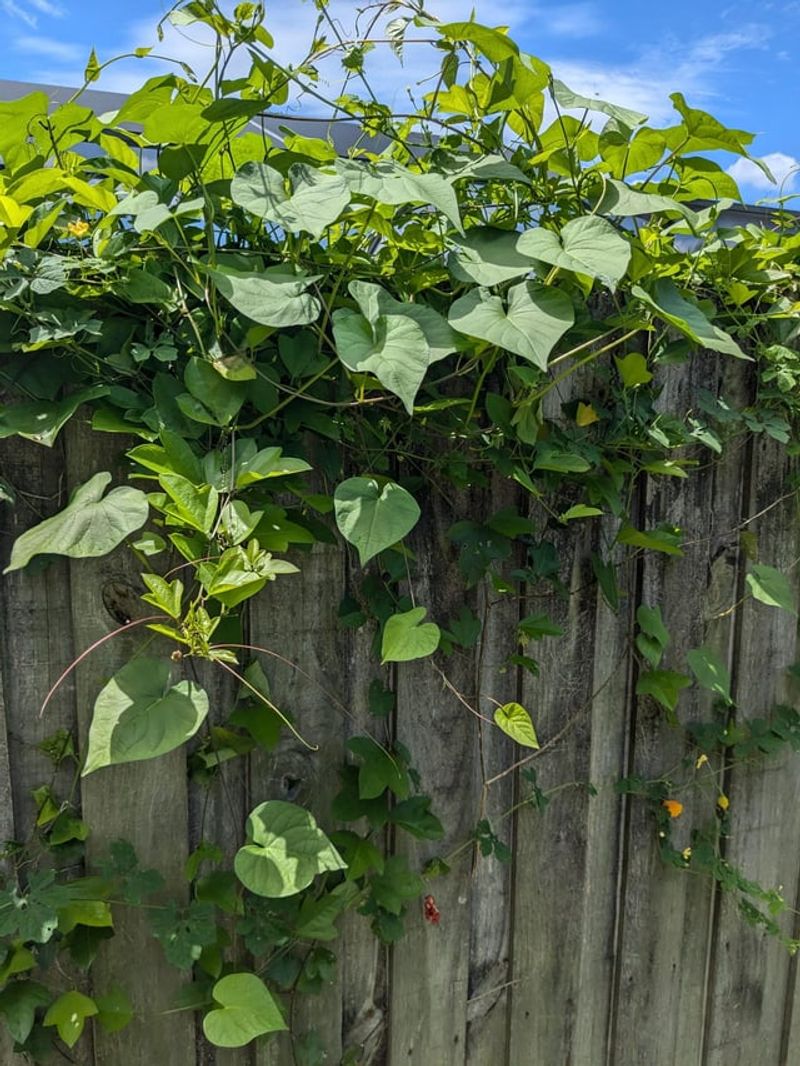
Yanking is the worst way to clear a fence. Vines cling tightly with tiny rootlets and tendrils, and pulling them down can snap boards, bend wire, or loosen posts.
UF/IFAS gardening guidance on removing problematic vines warns against pulling vines off a fence or other support for exactly this reason.
For growth you are lawfully removing from your own side, cut it instead. Snip the stems into manageable sections with pruners or loppers, working carefully around the fence.
Then give the attached pieces time to dry out and decay.
Dead vine that stays attached usually loosens over time and comes off with little force. That is gentler on the wood, the wire, and the hardware.
This advice is only about growth on your side of the line, not a reason to reach over to the neighbor’s.
A trim is not automatic permission to kill the plant
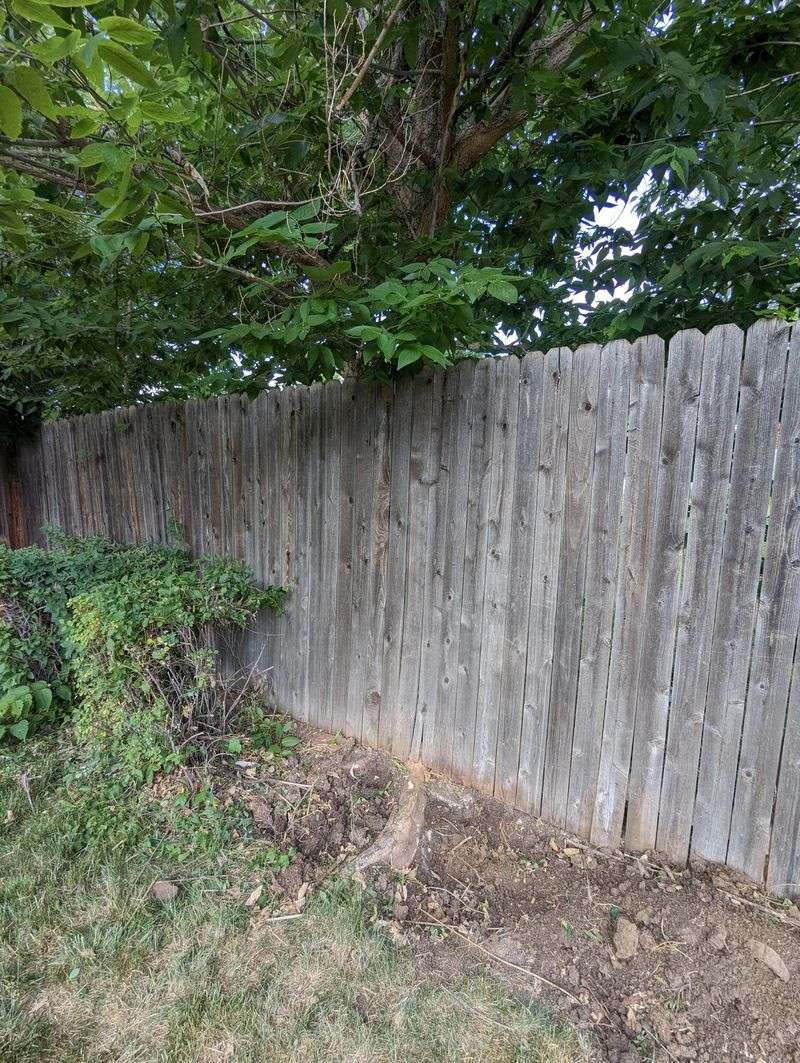
A right to trim is narrow. It covers cutting back growth that came onto your land.
It does not mean you can destroy the whole plant, even if cutting seems to hurt it.
The law here is unsettled. In Balzer v.
Ryan, Florida’s First District said no controlling Florida precedent answered whether a person is liable when cutting encroaching tree roots damages the tree. The court denied review under the narrow standard for that type of proceeding.
So it did not decide the question either way.
Herbicide raises a similar concern. The UF/IFAS handbook flags that the legal status of using a product that could travel through the plant and kill all of it is unclear.
This article offers no herbicide steps and cannot promise you will be free of liability. If cutting could seriously harm the main plant, pause and talk with a Florida attorney first.
Check the plant and the situation before cutting
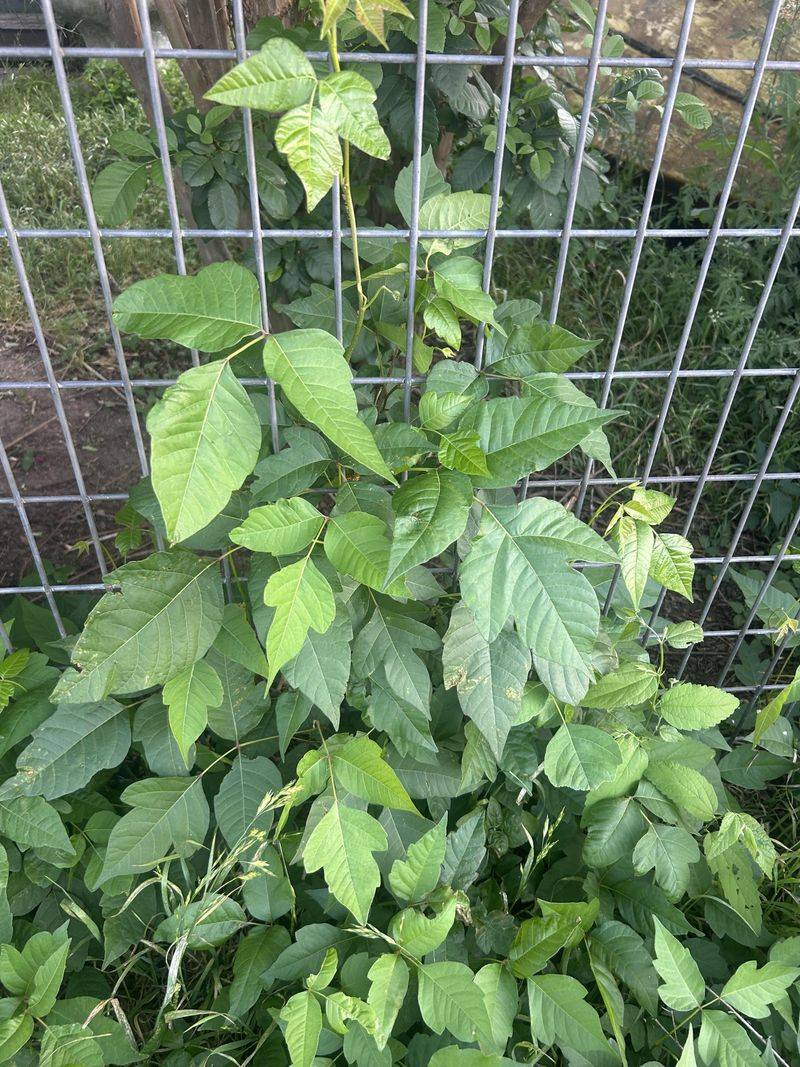
Some situations call for a pause. The first is an uncertain property line.
The second is visible fence damage, and the third is a vine you cannot name.
In those cases, take dated photos and consider talking with your neighbor before you cut. Florida cases do not make either step a legal requirement.
Think of them as ways to lower the chance of a dispute. If the boundary is unclear, UF/IFAS boundary guidance points you to records or a survey.
The trimming remedy in Scott v. McCarty only helps once you know what has crossed.
Identify the vine too. CDC/NIOSH guidance advises long sleeves, long pants, boots, and gloves around poison ivy, oak, or sumac.
Never burn a plant you suspect might be one of them. The smoke can cause serious breathing problems.
The practical limit is the property line
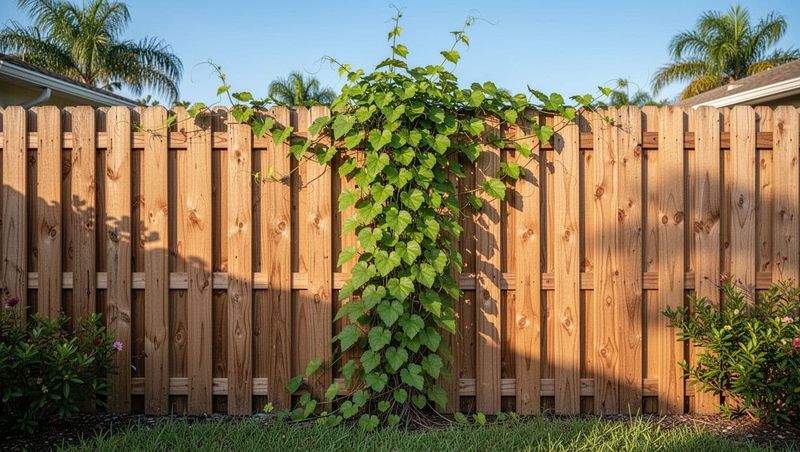
Find the real boundary, then trim only what has grown onto your side, at your own cost. Stay off the neighbor’s land, and do not count on a right to destroy the whole plant.
The Scott decision and UF/IFAS boundary guidance both point you back to the line. A vine may start next door, but your pruners stop at the stake.