
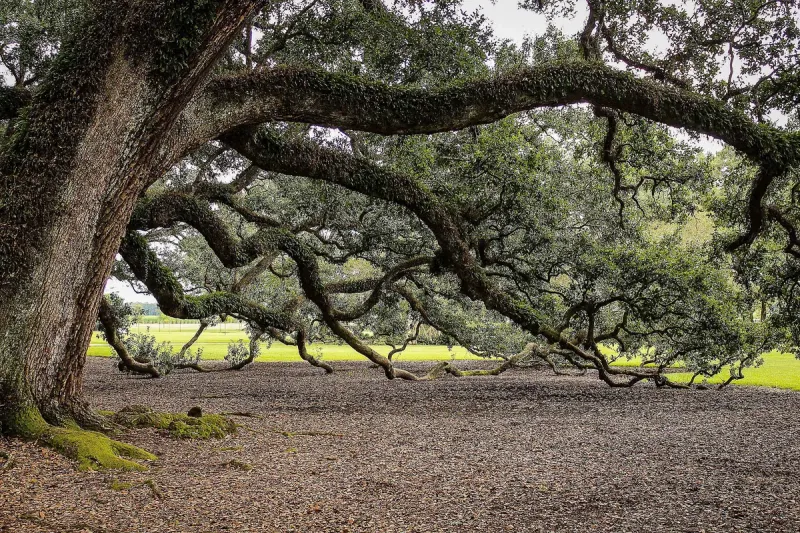
If a neighbor’s oak roots have lifted your driveway, Florida law usually puts the repair bill on you, not on the tree owner. You may also trim the roots that cross onto your own land, but only there.
Cutting the wrong roots can hurt the tree and leave you facing a new set of problems. Here is what the law lets you do, and what to check first.
The driveway owner usually pays for damage from healthy-tree roots
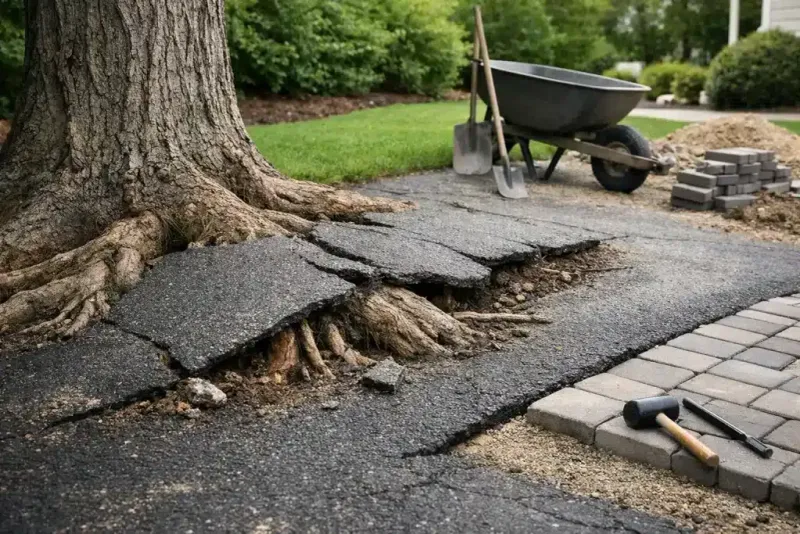
Florida’s general rule is simple, and many homeowners do not like it. When roots from a healthy neighbor’s tree grow onto your property and crack your driveway, you usually pay for the repair.
The tree owner is not normally the one who foots the bill.
The best-known example is Gallo v. Heller, a Florida appeals court case from 1987.
In that case, a neighbor’s tree roots cracked a cement walkway. The court rejected the damages claim and said the tree owner was not liable for that kind of damage.
The court pointed out that the homeowner could cut the roots that had crossed onto his land, at his own expense.
University of Florida extension experts describe the same approach in their handbook on Florida fence and property law. Think of it as a starting point.
It covers encroaching roots from a healthy tree. It does not settle every tree dispute, and later sections look at where the rule stops.
In practice, that means a quote from a paving contractor lands on your desk, not your neighbor’s. A friendly conversation with the neighbor is still a good idea, since they may agree to share costs even though the law does not force them to.
Your right to trim stops at the property line
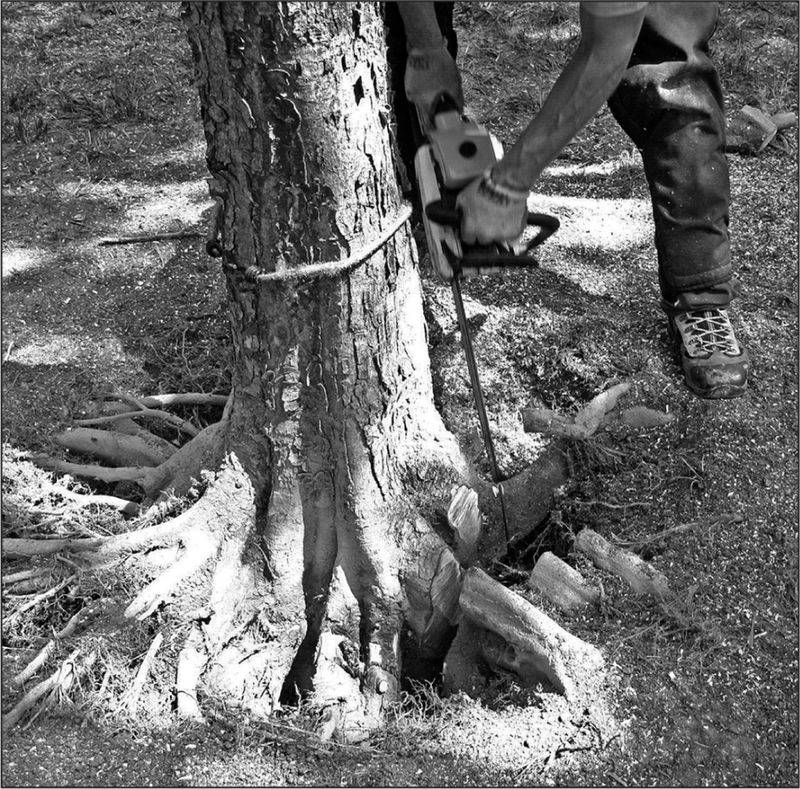
Florida law lets you deal with roots that have grown onto your land. You may trim those encroaching roots, and you pay for the work yourself.
That is the self-help right the courts have recognized, and both Gallo and the UF/IFAS handbook describe it this way.
The key word is encroaching. The right covers only roots that have crossed into your yard.
It does not let you step onto the neighbor’s land, dig up their soil, or cut roots that are still on their side of the line.
Picture a root that runs under your driveway and back to the trunk. The part under your pavement is on your property.
The part beyond the boundary belongs to the neighbor’s land, and you have no right to touch it.
Before any crew shows up, confirm where the line actually runs. Fences are often off by a few feet.
Check your survey, your plat, or hire a surveyor if the line is unclear. A wrong guess about the boundary turns a repair job into a dispute.
Also tell your neighbor what you plan to do. It costs nothing and can prevent hard feelings later.
Root-cutting damage can raise an unsettled legal question
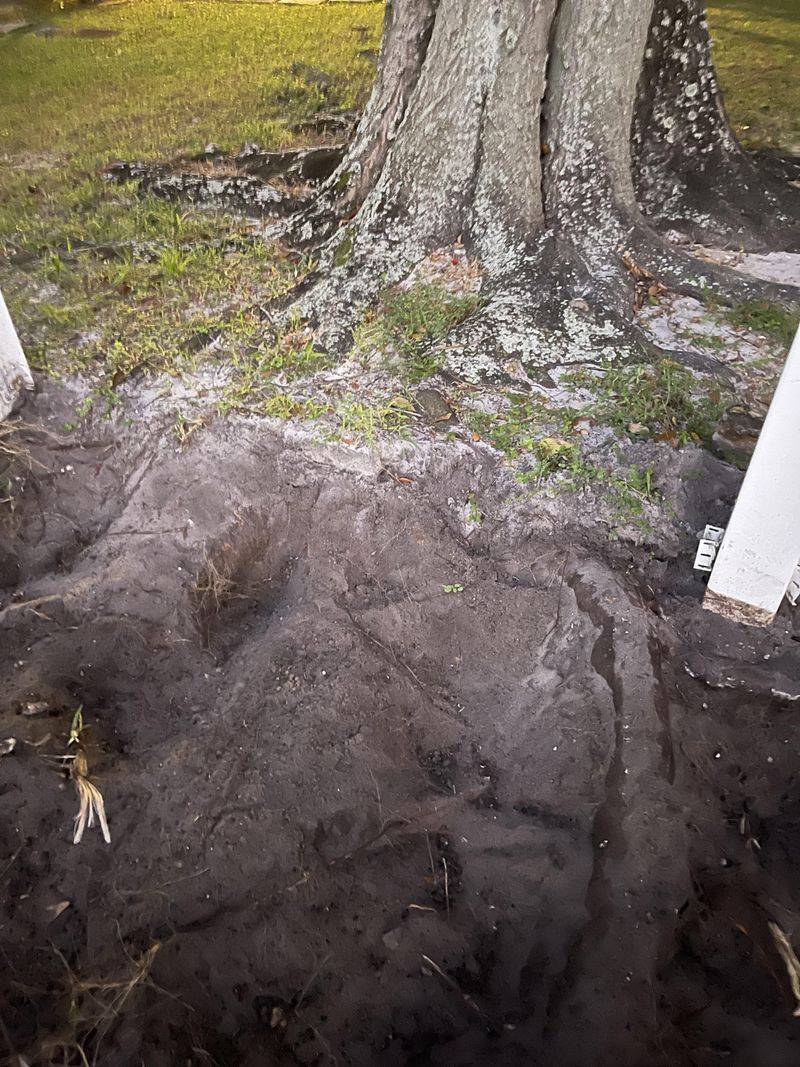
Having the right to trim is not the same as having a promise that every cutting method is safe. A Florida court looked at this gap in Balzer v.
Ryan, a 2018 First District Court of Appeal decision.
The court recognized that a landowner may cut encroaching roots. It also noted that no Florida case had addressed whether the neighbor who cuts could be held liable for damage to the tree caused by that cutting.
In other words, the question was left open.
That matters because oak roots do more than drink water. Many of them hold the tree upright.
If cutting weakens the tree, the tree owner could argue that you caused the harm.
No one can say for sure how a Florida court would rule on that. This article does not predict the outcome, and you should not assume the courts would side with you.
What you can say is that Florida appellate law has not settled the point, so the risk is real.
The practical lesson is to avoid heavy cuts and keep records. Take photos before and after any work, and keep invoices and any professional reports on file.
Check local tree rules before work begins
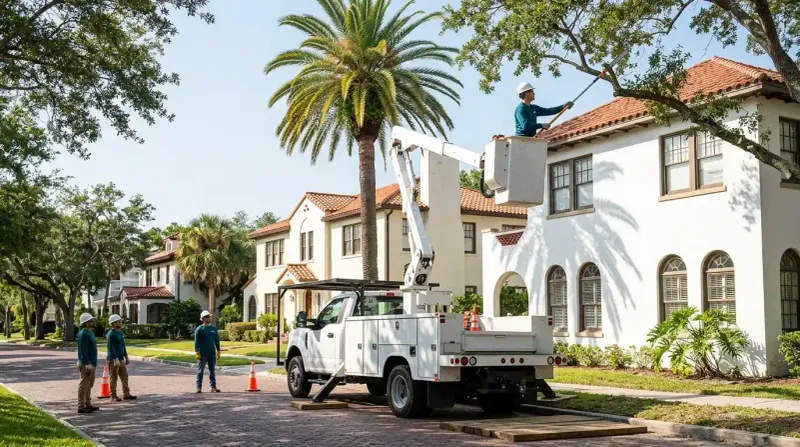
State court cases are only part of the picture. Your city or county may protect certain trees or regulate how roots can be pruned.
Call the local tree or planning office before you start, since rules differ from place to place.
Sarasota offers a local example. The city’s tree protection page sets root-pruning requirements for protected and grand trees.
That is Sarasota’s rule, not a statewide one. Your area may be stricter, looser, or just different.
Large live oaks are exactly the kind of tree many communities choose to protect. So do not assume that a permit is never needed because the roots are on your side of the line.
You may also hear about Florida Statute 163.045. It is narrow.
It applies to qualifying single-family residential property and limits certain local permitting requirements for pruning, trimming, or removal when the owner has specified documentation of unacceptable risk. You can read the statute itself.
It is not a blanket exemption for cutting roots. It does not replace a call to your local office.
Ask what applies to your lot, and get the answer in writing if you can.
Ask an arborist about roots and pavement options
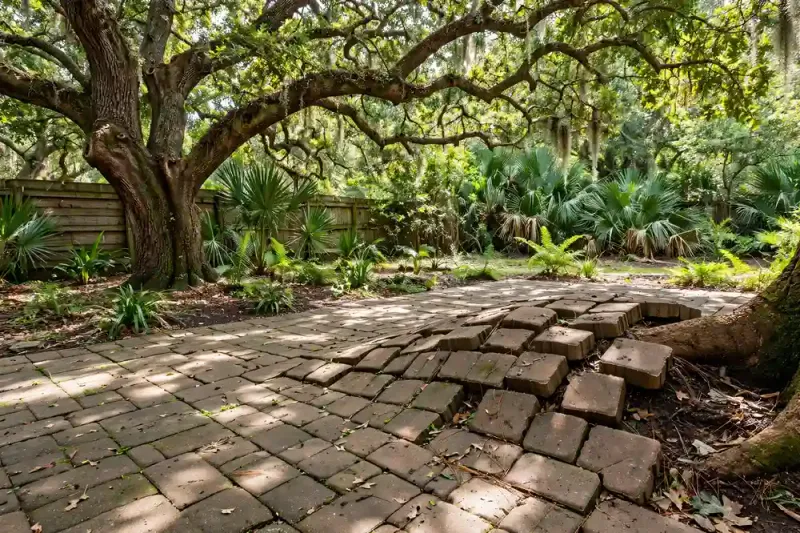
Before anyone cuts a major root, have a qualified arborist look at both the roots and the planned work. A certified arborist can tell which roots are small feeders and which ones help hold the tree up.
University of Florida experts explain in a guide on tree safety that root problems can raise the chance of a tree failing. Their page on tree root problems also points to a certified arborist when root issues or tree safety are a concern.
Do not cut large or structural roots on your own. A tree that leans or falls after root cutting can hurt people and property, and it can lead to a dispute with your neighbor.
Ask the arborist about changing the pavement instead. UF/IFAS discusses alternatives to rigid pavement and warns that cutting anchoring roots can compromise stability.
Options might include ramping the concrete over a root, using flexible materials such as pavers, or shifting the driveway edge. None of these is guaranteed to work on every driveway.
Roots, soil, and slab layout differ, so treat each as an option to price out and discuss, not a sure fix.
A known rotten tree presents a different issue
Everything above is about roots from a healthy tree. A claim about a tree the owner allegedly knew was rotten is a different kind of dispute.
A recent example is Vaughan v. USMI Properties Five, LLC, from Florida’s Sixth District Court of Appeal.
The complaint there alleged that the owner knew a tree was rotten and that it fell and harmed neighboring property.
The court let a negligence claim go forward at the pleadings stage. That means the case was allowed to continue.
It did not decide that the owner was liable.
Vaughan involved a fallen tree, not roots lifting a driveway. It did not decide who pays for driveway damage from roots.
It also did not overrule Gallo or answer the root-cutting question from earlier.
The useful takeaway is about warning signs. A tree with fungus, hollow areas, dead limbs, or a lean may call for a different conversation than a healthy oak with spreading roots.
If you see such signs, document them with dated photos and talk to an arborist and a Florida attorney about your situation.
Verify the boundary and rules before deciding what to cut
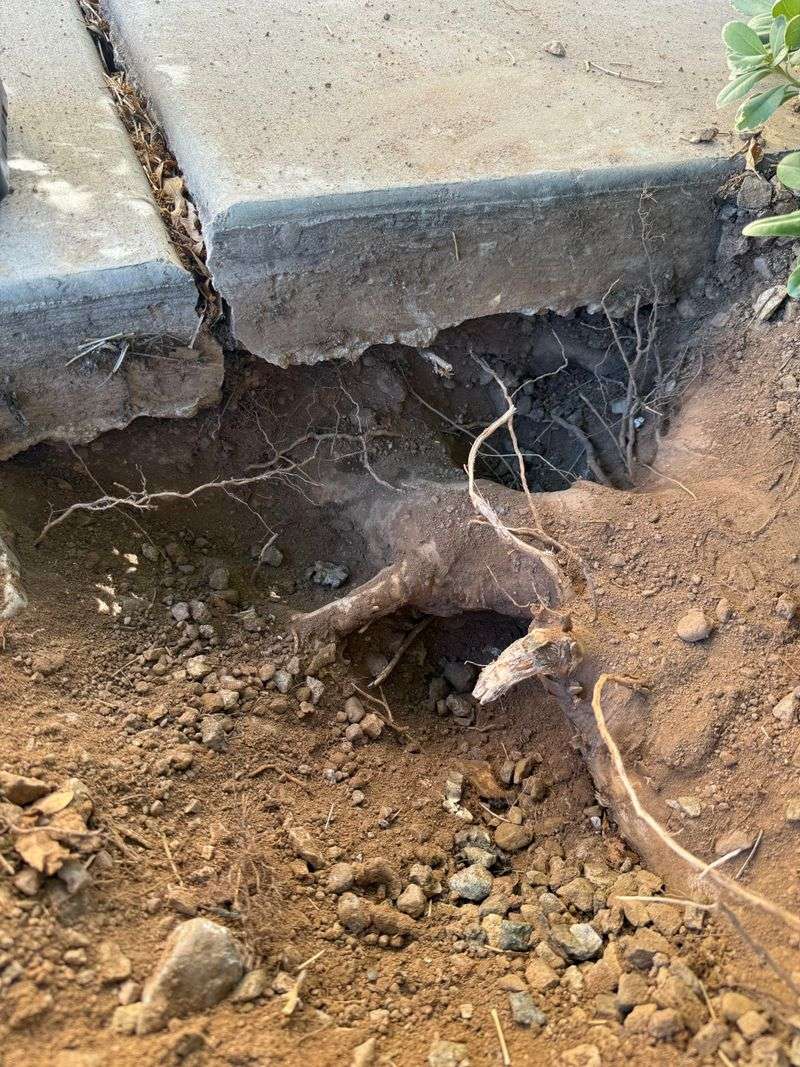
Run through this list before any saw comes out. First, confirm the property line, using the UF/IFAS rule that your right covers only roots on your side.
Second, ask your city or county about tree rules, such as Sarasota’s guidance as one local model. Third, get a qualified assessment before cutting roots that could affect the tree.
Paying for your own driveway repair does not make major root cutting safe. As Balzer shows, the liability question is still open.
A cracked slab can be fixed, but a damaged oak cannot.