
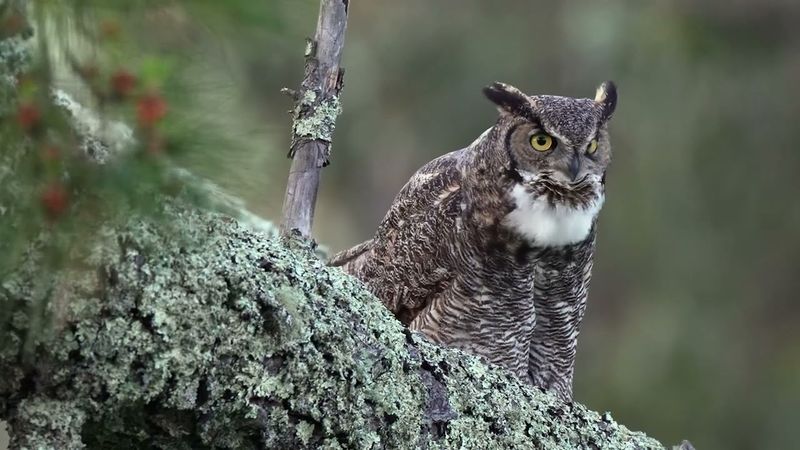
Step outside on a cold California evening and you might hear a deep, steady hoo-h’HOO-hoo-hoo drifting through the dark. That sound is often a Great Horned Owl, and winter is a busy season for them.
What the hooting means, and what it does not mean, can help you share your yard with these birds in a smart and safe way. A few simple habits can protect the owls, your pets, and your own pest-control plans.
Great Horned Owls may begin courtship before winter ends
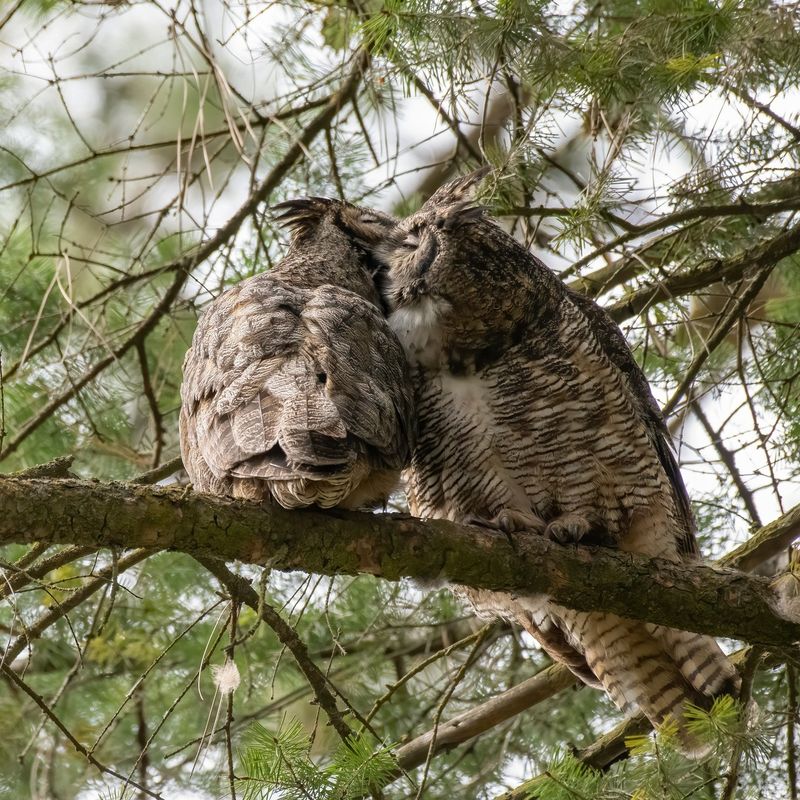
Late-year and early-year nights are when many Great Horned Owls get noisy. Pairs may form, court, and start claiming territory well before spring wildflowers show up.
California’s wildlife life-history account describes a broad breeding period from mid-January through June, with a peak in March through May.
Local timing can run earlier than that statewide picture. A Palo Alto parks ranger notes that owls there may nest in January or February.
So think of early winter courtship as a general pattern, not a calendar that every owl in every California neighborhood follows.
Coastal fog belts, inland valleys, foothills, and desert edges can all run on different schedules. An owl hooting in December in one town may tell you little about what an owl is doing across the county.
Hearing courtship-season calls also does not mean your yard holds a nest. Great Horned Owls often reuse old nests built by hawks, crows, or squirrels, or use tree hollows and ledges, and they may be settled well away from your property.
The sound carries far on still winter nights. Enjoy it as a sign that wild neighbors are active nearby, without assuming your own trees are the nursery.
A hoot can mark territory, but it cannot locate a nest
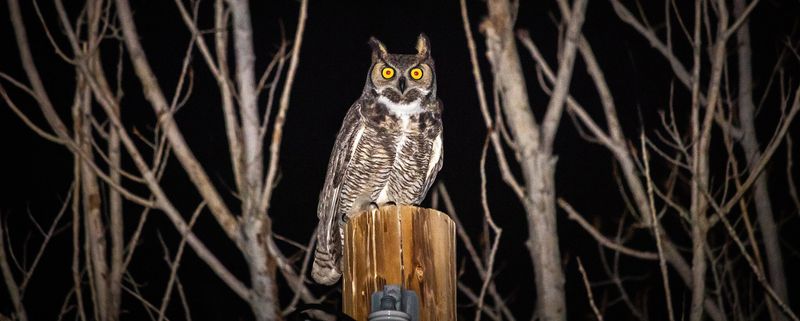
Owl calls can feel like clues, but they are fuzzy ones. Great Horned Owls may call in any season, and fall and winter hooting is often tied to advertising or defending territory.
Courtship is another possible reason.
Two voices answering each other might be a pair. They might also be neighbors trading warnings across a property line.
Sound alone is a poor way to count owls or pinpoint where they sit, since hoots bounce off houses, hills, and trees.
The classic call is a series of low, muffled notes, and the Cornell Lab of Ornithology has recordings you can compare with what you hear. Listening a few evenings in a row can tell you whether the calling is regular, but it will not tell you who is calling or from where.
A practical way to treat it: note the date and time, enjoy the show, and leave the investigating to the owls. One caller, a duet, or a rotating chorus all fit several different stories.
None of them prove a nest in your yard, and none require you to change your routine.
Owls eat rodents, but they are not a guaranteed pest patrol
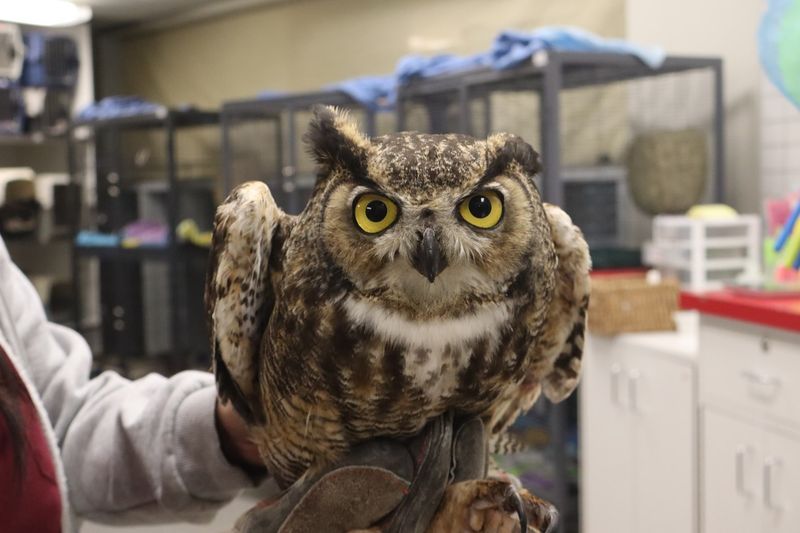
Yes, Great Horned Owls eat rodents. Their menu can include mice and pocket gophers, plus rabbits, other mammals, birds, reptiles, amphibians, and insects, according to the U.S.
Forest Service species review. The mix shifts from place to place with whatever prey is easy to find.
The review’s summary of a Sierra Nevada study shows why that matters. Cottontails were the main food item, woodrats came second, and pocket gophers were only a minor part of the diet.
An owl with that many options is not going to focus on the gophers chewing up your lawn.
So an owl nearby may add a bit of natural pressure on prey animals across a wide area. That is a real ecological benefit, but it is not a service you can count on at one address.
Your neighbor’s cat, a coyote, a hawk, or simply the available food in your yard may matter more for how many rats and gophers you see.
Think of owls as a bonus, not a plan. If you have rats in the attic or gophers in the vegetable beds, the fix still lies in what you do on the ground, from removing food sources to blocking entry points.
Safer rodent management protects predators that eat rodents
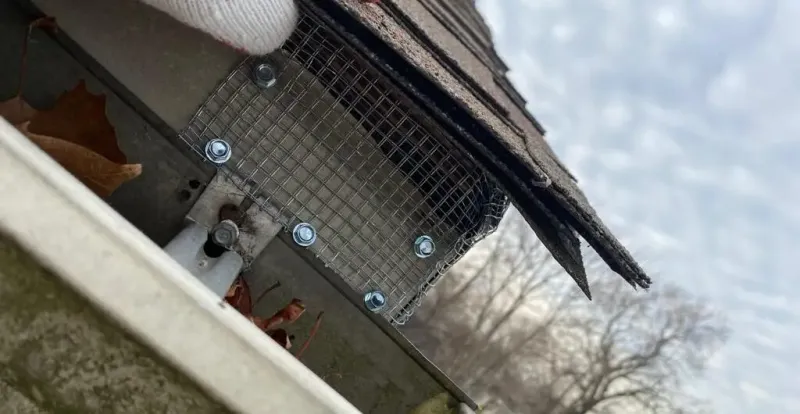
Poison can travel up the food chain. California’s Wildlife Health Lab documents secondary exposure when predators eat poisoned rodents, and it recommends habitat changes like sealing building holes and removing food attractants.
A slow-moving poisoned rat is an easy meal for an owl.
Start with the basics. Seal gaps in sheds, garages, and eaves with metal mesh or hardware cloth.
Store pet food and birdseed in lidded metal bins, pick up fallen fruit, and keep compost closed.
When you need to remove rodents, snap traps placed in covered stations are a more targeted choice than bait. For gophers, burrow traps set by hand are another option.
Check traps often so no other animal is harmed.
On the rules, keep it simple. California restricts specified anticoagulant products and uses, and the state’s 2025 reevaluation report describes those limits and a few exemptions.
That is not the same as banning every rodenticide, so legality depends on the active ingredient and use.
If you do consider bait, read EPA guidance on using rodent bait products safely, and weigh whether prevention would work first.
Give owls and any suspected nest plenty of space
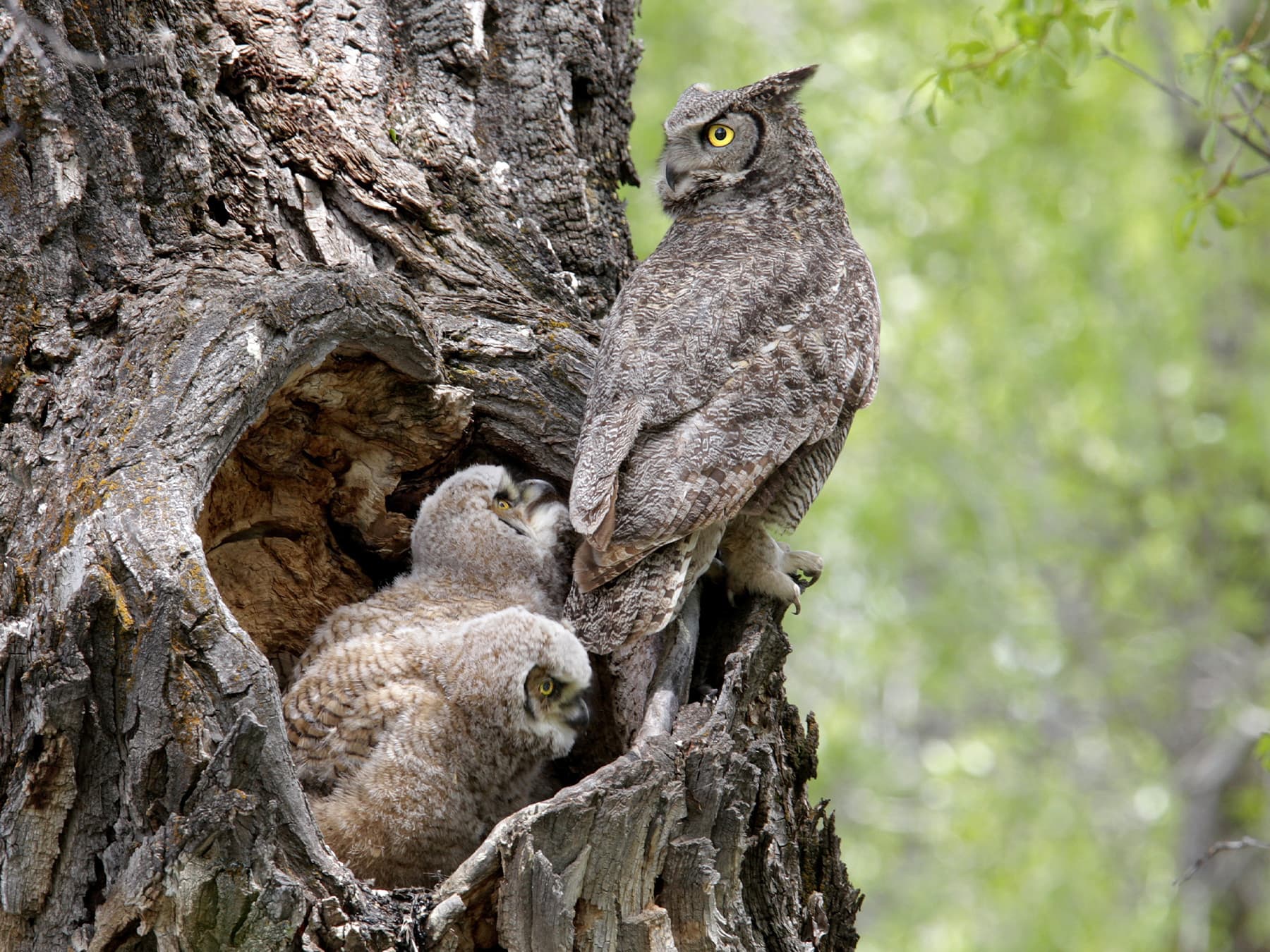
Good owl manners come down to distance. If you spot a Great Horned Owl, or think a nest might be in a nearby tree, watch from afar and let the birds go about their business.
Binoculars work better than footsteps.
California backs this up. The state’s raptor information from the Department of Fish and Wildlife notes that birds of prey are protected.
Fish and Game Code section 3503.5 covers birds of prey and their nests and eggs.
That does not mean a hoot in the night puts your yard off limits. You can still garden, grill, and take out the trash.
What matters is not harassing an owl or disturbing a suspected nest.
Skip the urge to hunt for the nest. Do not climb trees, shine bright lights at the birds, play recordings to draw them in, or trim a tree you suspect is in use.
If tree work is planned during winter and spring, check first with a local wildlife agency or a certified arborist.
Owls that feel safe tend to stay calm. Keep dogs leashed near suspected nest trees, and keep kids and visitors at a comfortable distance too.
Secure small pets and poultry after dark
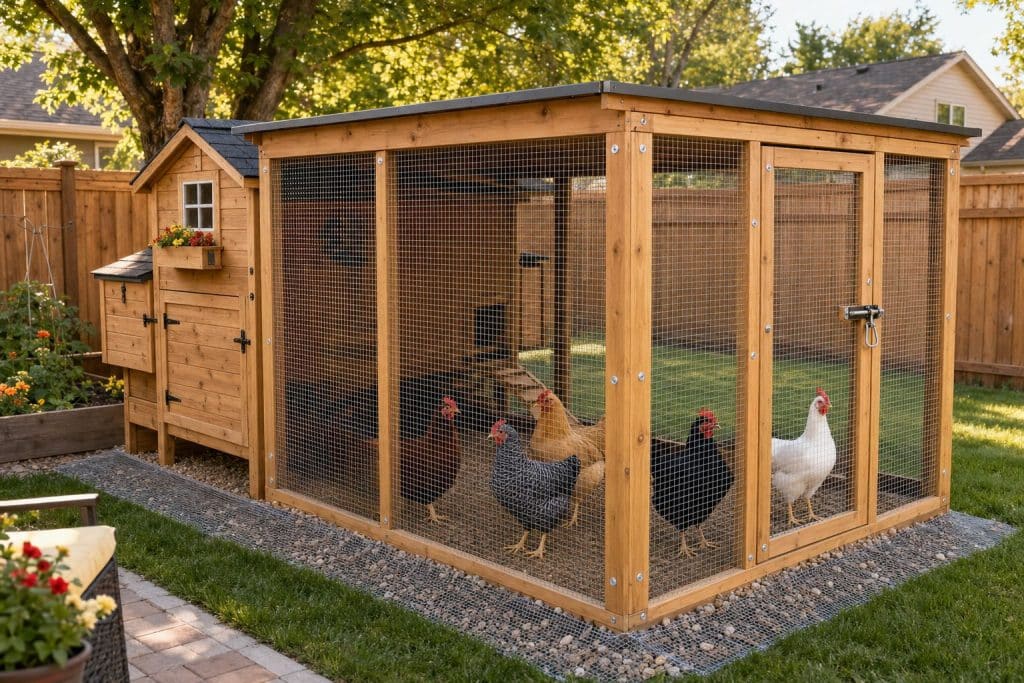
Owls are wild predators, and that cuts both ways. Great Horned Owls can take small pets and domestic birds, as Florida’s wildlife commission notes in its species profile.
That is no reason to assume the owl you hear is eyeing your animals, but it is a reason to plan.
For small dogs, cats, and rabbits, stay with them outside after dusk. A short leash, a porch light, and a few minutes of company are simple habits.
Indoors at night is safest for cats.
Chickens, ducks, and other small domestic birds do best in a fully enclosed coop and run. Use sturdy hardware cloth rather than chicken wire, add a solid or wire roof, and latch the door every evening.
Free-ranging flocks are most exposed at dawn and dusk, so close them in early. Fixing these gaps also helps against raccoons, hawks, and coyotes, so the work pays off beyond owls.
Welcome the sound without expecting a service
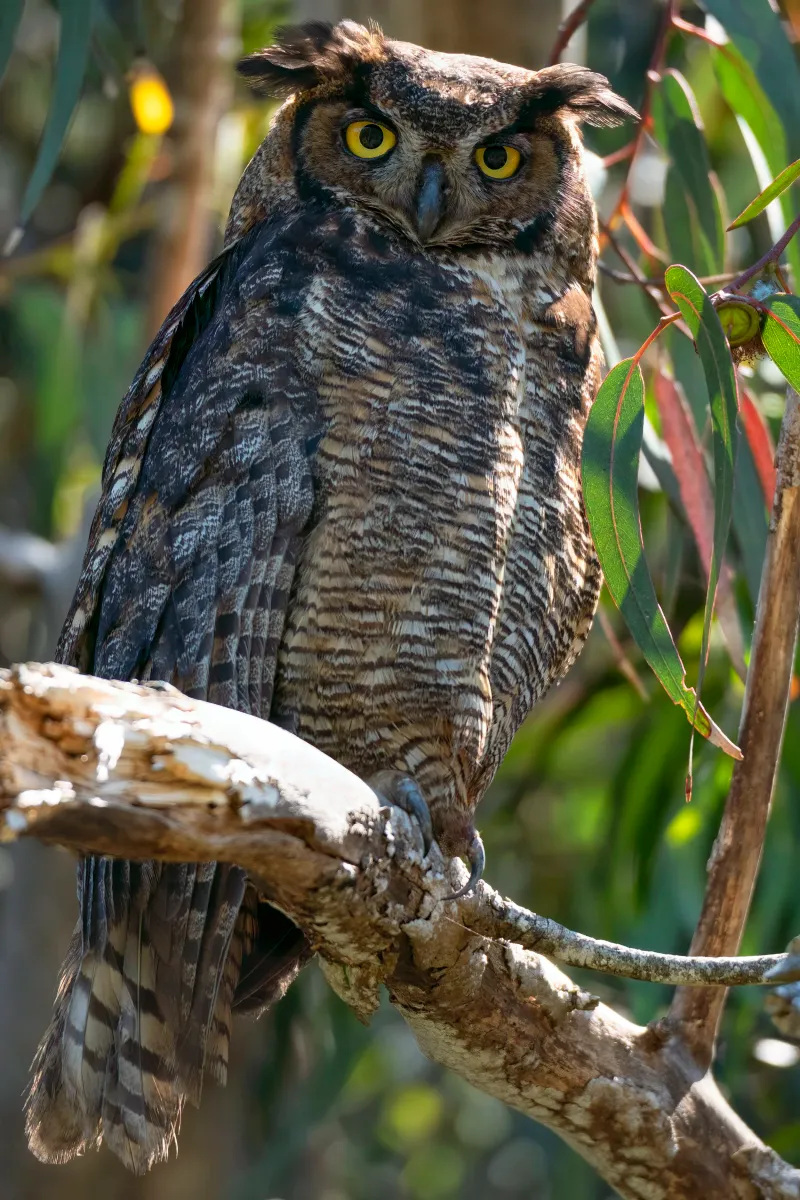
Treat winter hooting as a free nature show. Listen, keep your distance, and let the owls have their space under California’s raptor protections.
Handle rats and gophers yourself by sealing entry points and cutting off food, and keep small pets and poultry safe after dark.
Owls may add some natural prey control, but with such a varied diet, they are not a pest crew on call. The best yard is one where the owl is a guest, not an employee.