
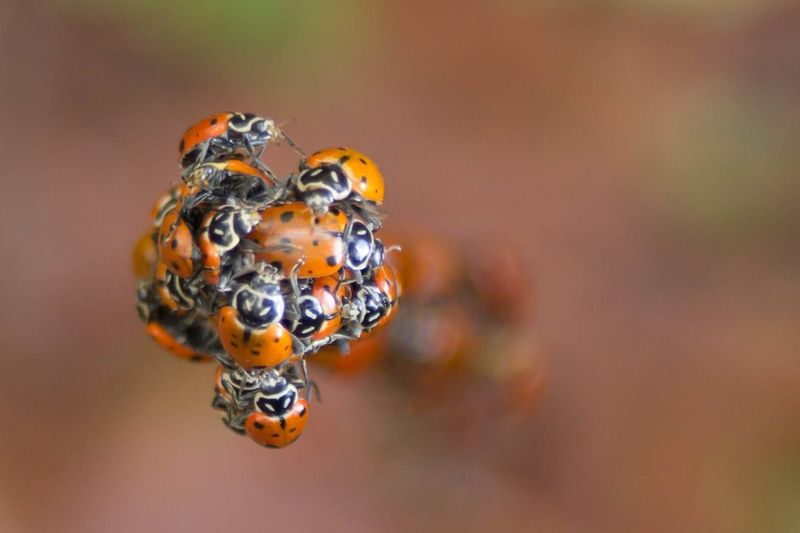
You step outside on a crisp fall morning and spot a crowd of tiny red beetles packed together on a branch or fence. It looks odd, and you may wonder if something is wrong with your garden.
In California, that gathering may be a normal part of a lady beetle’s yearly routine. Knowing what it could mean helps you decide what to do, and the answer is often very little.
A fall cluster may signal seasonal behavior, not a yard problem
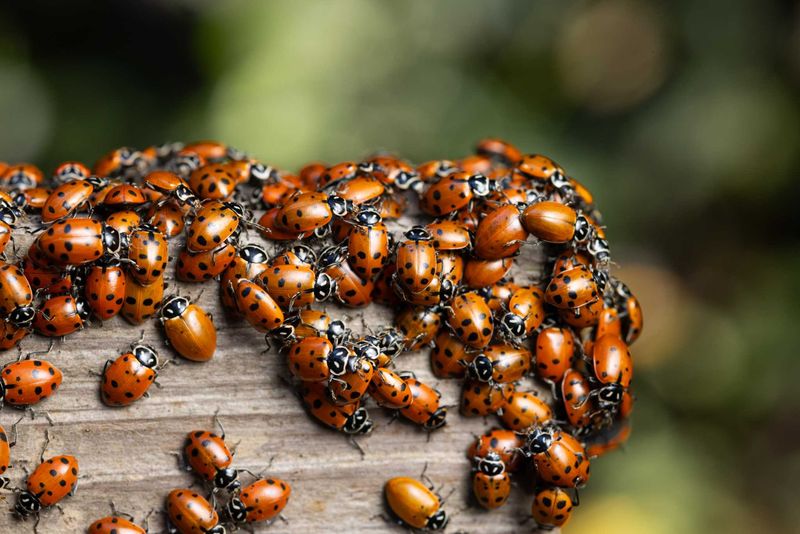
Spotting dozens of lady beetles huddled together can feel alarming, but a crowd of them is not proof of a pest outbreak. In California, one plausible explanation is that the beetles are convergent lady beetles getting ready to overwinter.
University extension information on the convergent lady beetle describes fall aggregation as a characteristic behavior of this species.
Overwintering means spending the cold months in a resting state instead of feeding and breeding. Gathering in numbers is one way these beetles pass that season.
So a cluster may simply be a pit stop in a seasonal routine that has little to do with the health of your yard.
There is a catch, though. From a glance at a cluster, nobody can say for sure which species it is or where the beetles are headed next.
California is home to many lady beetle species, and, as the National Park Service’s ladybug overview explains, they do not all share the same diet or habits. Convergent lady beetles are a reasonable guess, not a certainty.
What you can say is that a cluster of lady beetles, by itself, is not a sign your plants are in trouble. Most lady beetles are predators, and seeing them around is more often a good omen for a wildlife-friendly garden than a warning.
If your plants look healthy, there is nothing here that needs fixing.
Think of the cluster as a short visit from a neighbor passing through. Watch, enjoy the show, and give the beetles room to carry on with their season.
Convergent lady beetles move between California valleys and mountains
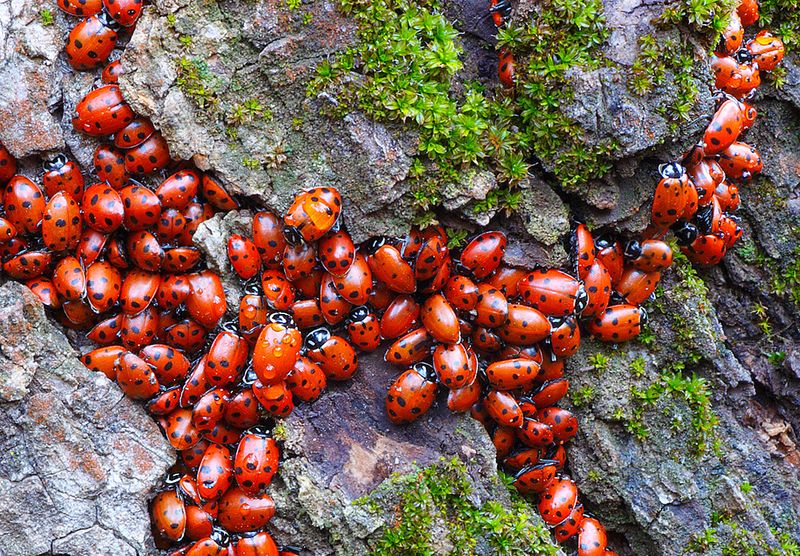
Here is where California’s story gets interesting. Convergent lady beetles in this state live a bit like seasonal commuters.
They feed in lower-elevation areas, then head uphill when the weather cools.
According to Pinnacles National Park, these beetles gather at higher elevations to overwinter, and in spring they move back toward valleys and fields. The mountain gatherings can be large, with huge numbers of beetles packed together in sheltered spots.
While there, the beetles enter diapause. That word simply means a long pause in activity, a bit like hibernation.
The beetles slow down, burn very little energy, and wait out the cold months without feeding much.
Keep the scope in mind. This valley-to-mountain pattern is described for California’s convergent lady beetles.
It should not be stretched to cover every lady beetle species or every region of the country. The National Park Service notes how varied ladybugs are, and extension sources tie the aggregating habit to this particular species.
For a backyard observer, the practical point is modest. A fall cluster at your place could be beetles on the move or briefly gathering, and you cannot tell from the ground whether they are bound for the mountains.
A yard cluster does not identify the species
Quick quiz: is a ladybug a bug? Not quite.
Lady beetles are beetles, and the name covers a big, varied family. The National Park Service points out that most are predators, but some eat plants or fungus.
That variety is why a cluster in your yard cannot be labeled from afar. Several species may gather, and behavior alone will not tell you which one you have.
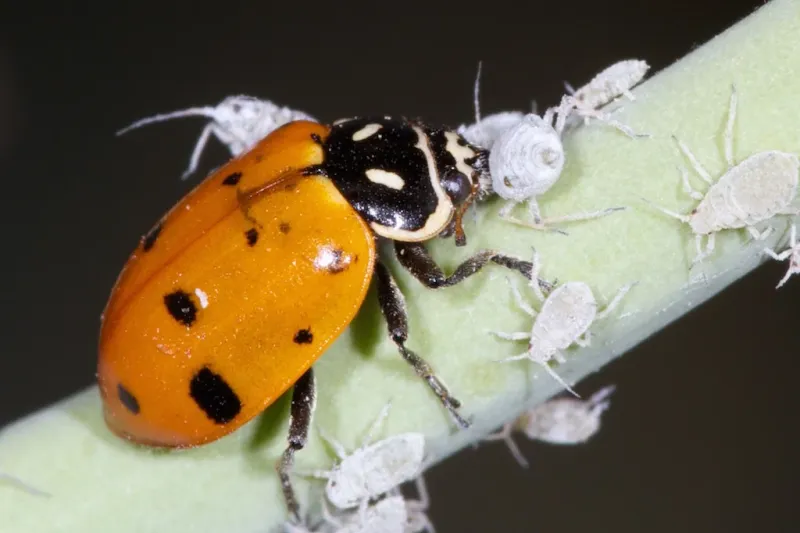
If you want a closer look, the convergent lady beetle offers a helpful clue. It has white marks on the thorax, the section just behind the head, and those marks converge toward the head.
UC ANR describes this feature and notes that the species is common in California.
Even so, a quick glance at a pile of tiny beetles is not a reliable ID. Wing color, spots, and size vary, and a photo or a clear close-up is far better than a guess.
So treat the seasonal explanation as a good possibility rather than a verdict. It fits many California fall clusters, but your own cluster might be something else entirely.
Either way, the calm response stays the same.
Spring feeding can bring aphid-eating beetles back to lower elevations
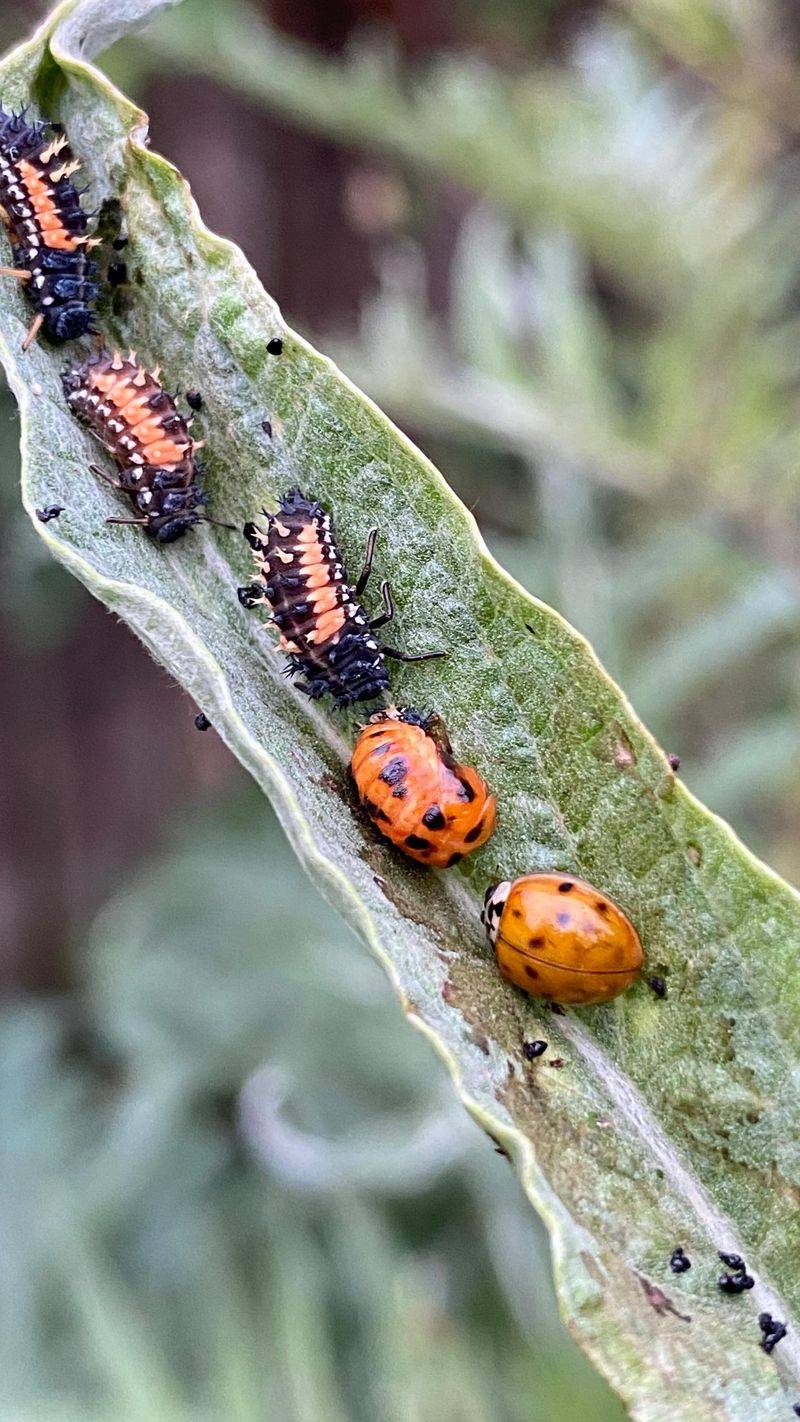
Come spring, the movement reverses. Pinnacles National Park explains that convergent lady beetles travel back toward valleys and fields, where adults look for aphids and places to lay eggs.
That seasonal return is what many people mean when they say the beetles come back.
Here is the fine print. Sources describe a return to feeding areas, not to a particular backyard.
Your garden may get visitors, but nobody can promise the same beetles will show up again.
When lady beetles do arrive, they are useful. Both adults and larvae eat aphids, and the larvae, which look like tiny spiky alligators, are often overlooked.
UC IPM recommends checking your plants and considering natural enemies before treating aphids, since low to moderate numbers often do not harm garden plants.
Still, beetles are not a guarantee. UC IPM notes that predators may not show up in strong numbers until aphids are already plentiful.
Natural enemies can help, but they do not replace watching your plants and acting when problems grow.
A practical habit: look closely at aphid-infested stems before reaching for a spray. If you spot beetles or larvae among the aphids, give them time to work.
Leave outdoor clusters undisturbed
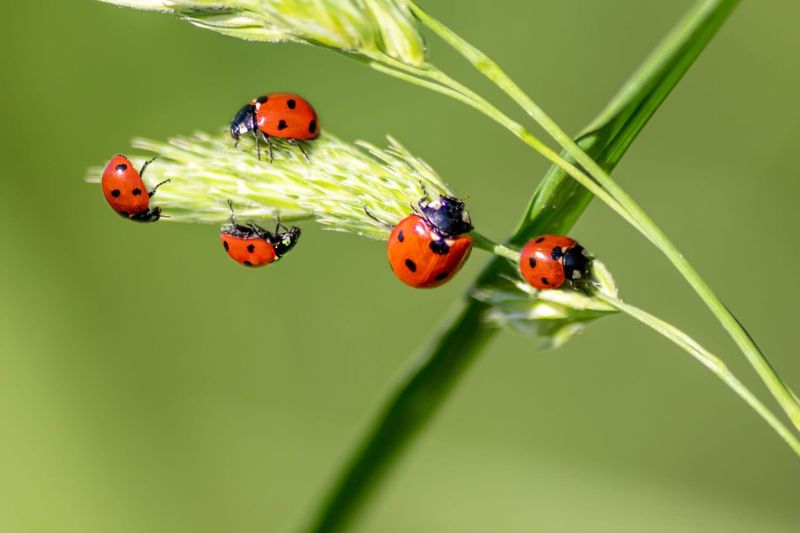
When it comes to a lady beetle cluster outside, doing nothing is often the best move. Skip the hose, the broom, and especially the spray bottle.
The beetles are not hurting your plants, and they will likely drift off on their own schedule.
Spraying is a poor idea for a bigger reason. UC IPM warns that broad-spectrum insecticides can kill beneficial insects along with pests.
A cluster of lady beetles is potentially exactly that kind of helpful insect, so a blast of chemicals could wipe out the very allies you want.
Leaving them be is a wildlife-friendly choice, but keep expectations honest. It does not guarantee the beetles will protect your plants, and it does not mean they will come back to your yard next year.
It simply avoids needless harm to creatures that may be doing their natural thing.
Here are a few easy ways to put that into practice:
Keep pets and kids from swatting at the group. Hold off on pruning the branch or shrub for a few days if you can.
Choose gentler, targeted aphid controls in spring, and only when plants truly need help.
If you feel guilty about how you treated beetles in the past, you are in good company. Now you know a calmer approach works, and it takes less effort.
Indoor beetles call for a different response
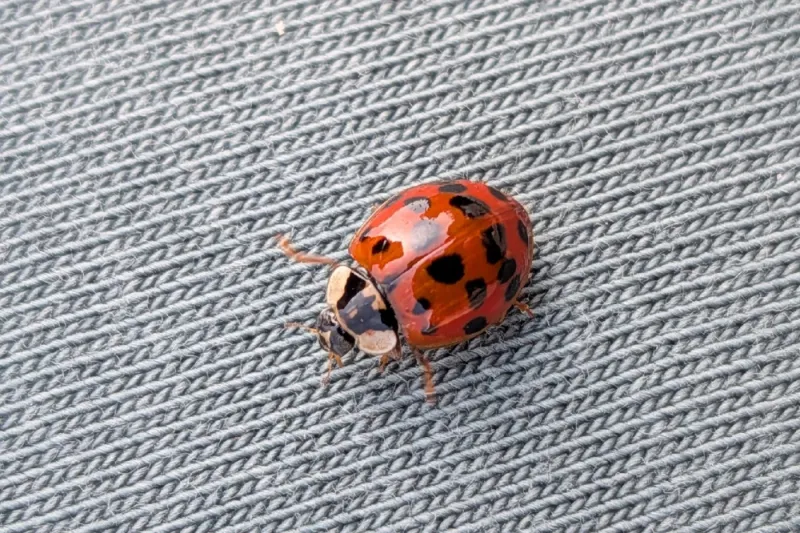
Beetles inside the house are a separate matter from a cluster on a backyard shrub. Different rules apply, and they may not even be the same species you saw outside.
According to UC guidance on nuisance pests, multicolored Asian lady beetles can overwinter indoors in aggregations in California. When they pile up in a house, the advice is to vacuum them up and seal the entry points they used to get in.
Good places to check include gaps around window frames, door sweeps, and vents. Closing those gaps helps keep new arrivals out, and a vacuum handles the ones already inside.
None of that changes the plan for the yard. Outdoor clusters can stay put, while indoor accumulations get handled as a household nuisance.
One small thought to carry into fall: the beetle on your fence is a guest, and the one on your windowsill is a stowaway.