
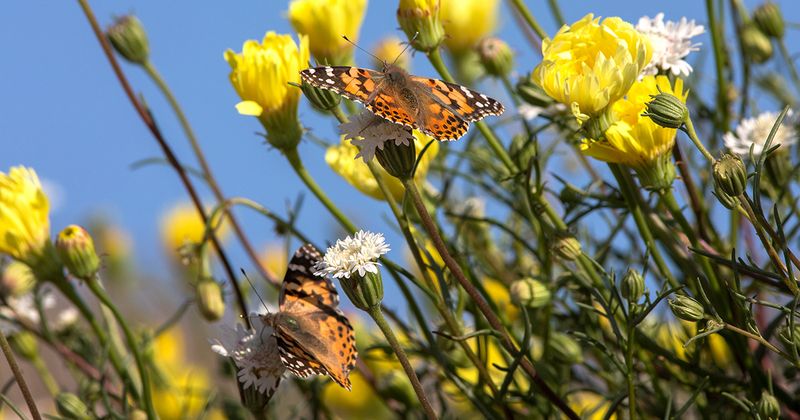
One spring morning, your yard fills with orange-and-brown butterflies all flying the same direction. It looks like a parade, and it raises a fair question: what are they doing here?
The answer says something about rain, plants, and travel, but it also has limits. Knowing both helps you set up a yard where these visitors can find a meal.
A painted lady stream can mark seasonal movement
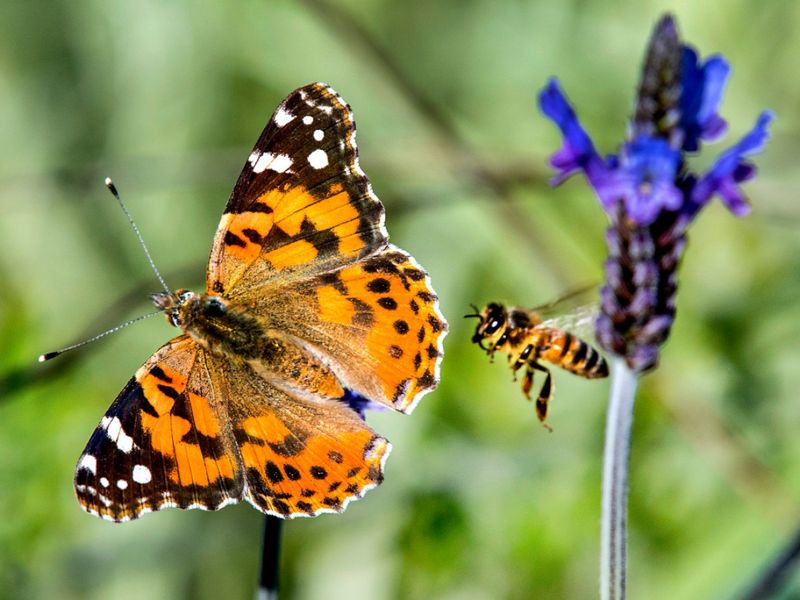
Painted lady butterflies (Vanessa cardui) sometimes pass through California in eye-catching numbers. A steady stream through your yard is consistent with seasonal movement, often heading north in spring from western Mexico and Southern California toward the Pacific Northwest.
Researchers have followed these flights for years, and UC Agriculture and Natural Resources describes how the butterflies can move through the state in waves.
That is a likely explanation, but it is not a guarantee. Not every painted lady you see is on a long trip.
UC Riverside entomologists note that California also has resident painted lady populations, so some of the butterflies fluttering around may simply live here.
It also does not mean your yard is a breeding site. Passing butterflies may only be gliding over, sipping a bit of nectar, or resting for a few minutes.
Watching which way they fly can help. Butterflies all moving in one steady direction suggest travel, while ones circling a patch of flowers are probably feeding.
Why do some years bring big streams and others bring few? Weather and plant growth far away play a major role, and that connection is the story of the next section.
Wet winters can support larger movements, not forecasts
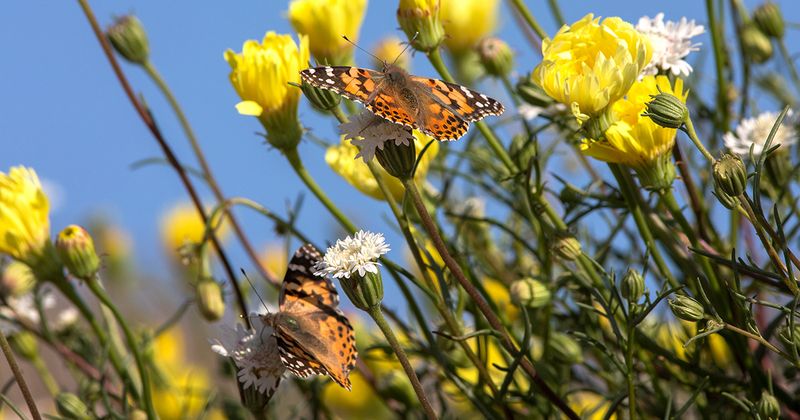
Rain in desert breeding areas sets the stage. When winters are wet, plants that painted lady caterpillars eat can grow thickly.
More food for caterpillars can support more butterflies later, which is one reason big movements often follow wet winters, as described by UC Agriculture and Natural Resources.
Notice the direction of that chain. Rain affects plants, plants affect caterpillars, and caterpillars affect butterfly numbers.
It does not run the other way. A stream of butterflies in your yard is not a forecast of rain, drought, or any other future event.
Numbers also change from year to year, so one dramatic passage tells you little about the bigger picture. UC Riverside points out that there are not enough baseline data to measure a painted lady population decline.
By the same logic, a spectacular year does not prove the species is thriving across the state.
So enjoy the show for what it is: a natural event tied to weather and food plants. It is a good reason to think about what your own yard offers when the butterflies come through.
A yard sighting does not prove the butterflies are breeding there
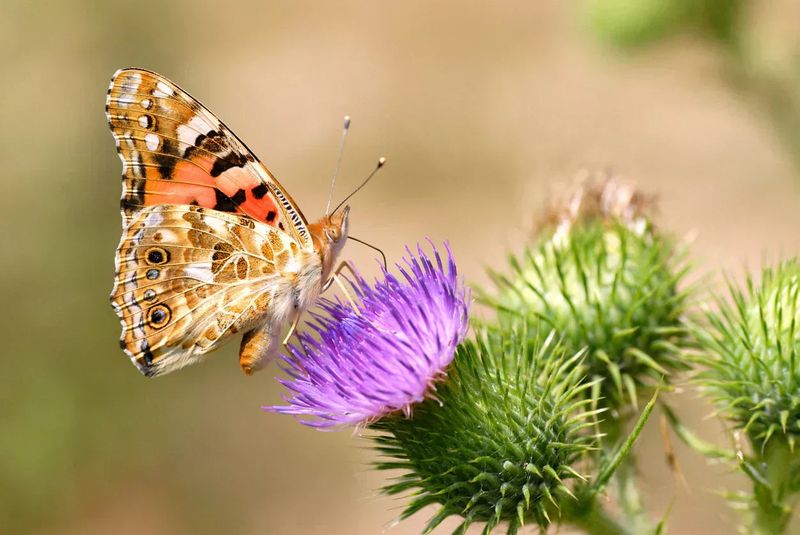
Standing in your yard, you can only see a small slice of the story. A few butterflies might be migrants, and others might be local residents.
As UC Riverside notes, California has resident painted lady populations too.
Seeing them also does not tell you what they are doing. Sightings alone cannot show whether butterflies are migrating, feeding, or laying eggs.
Even a crowd of adults on your flowers is not proof that eggs are being laid, a point echoed in UC ANR coverage of painted lady movements.
Clues can help you sort it out. Butterflies that dip to a leaf and curl the abdomen against it may be laying eggs.
Tiny caterpillars, or leaves with silk shelters, point to breeding. Butterflies that move from bloom to bloom with their tongues out are feeding.
UC Davis butterfly gardening guidance, such as this Sacramento Valley page, treats nectar plants and caterpillar plants as separate needs. That is a handy way to look at your own yard: check for flowers first, then look for host plants.
Flowering plants give adults places to refuel
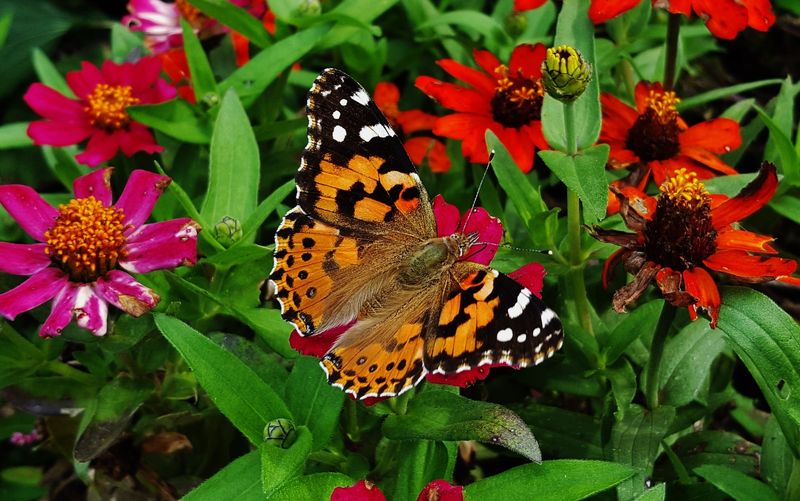
Adult butterflies drink nectar for energy, so flowers are their fuel stops. A California study of community-science photos looked at painted ladies visibly feeding in California sage scrub, and its results show they visit a wide variety of plants.
Among the native plants often seen in that study were rabbitbrush, common fiddleneck, black sage, wild heliotrope, and desert lavender. These are leads, not a ranking.
The study recorded where butterflies were seen feeding, not which plants are best for every yard.
Researchers also saw painted ladies on garden ornamentals, including lantana, butterfly bush, and rosemary. If you already grow one of these, you may be offering a useful meal.
Keep in mind that some ornamentals can spread in certain areas, so check local guidance before adding new ones.
California covers coastal, valley, foothill, and desert settings, so a plant that thrives in one yard may struggle in another. Look for species suited to your local conditions, and try to include plants that flower at different times so nectar is available over a longer stretch.
A local native plant nursery can help you match choices to your area. UC Riverside’s painted lady summary highlights how many different plants these butterflies use.
Caterpillars need host plants as well as nectar
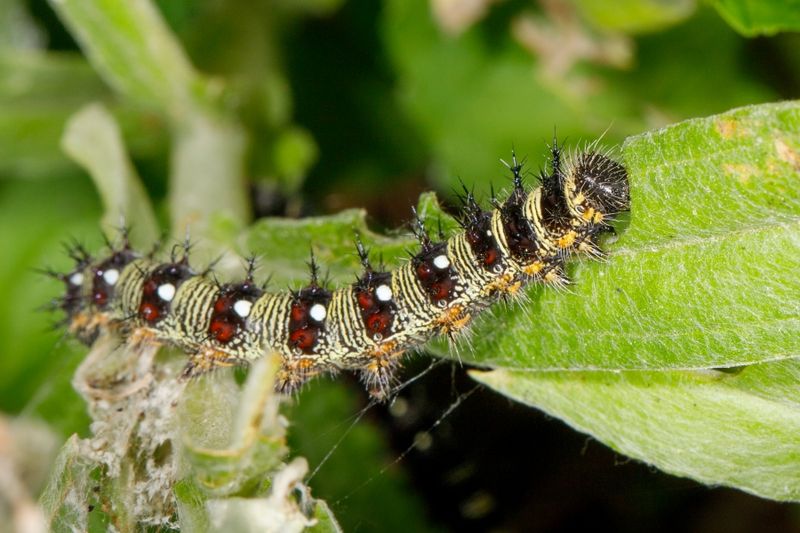
Nectar flowers feed adults, but caterpillars eat leaves. A yard with only blooms covers just one life stage.
To support the next generation, you need host plants too.
UC Davis lists fiddleneck and thistles as painted lady host plants, along with alkali mallow, cheeseweed, and hollyhock, in its Sacramento Valley butterfly gardening guide. For a more locally native approach, native fiddleneck and native mallows are good candidates to explore.
Thistles need a careful hand. Some are native and some are invasive, so planting thistle without checking which one is a poor blanket recommendation.
A host plant on a list is also not a promise. A 2024 laboratory study found that caterpillar survival varied among plants, and its authors caution that seeing caterpillars on a plant does not prove they can grow into adults on it.
So think of host plants as a reasonable offering rather than a guarantee. Plant a few suited to your site, give them time, and expect some leaf chewing if caterpillars do show up.
Ragged leaves are often a sign that the plant is doing its job.
Protect the plants and butterflies from avoidable harm
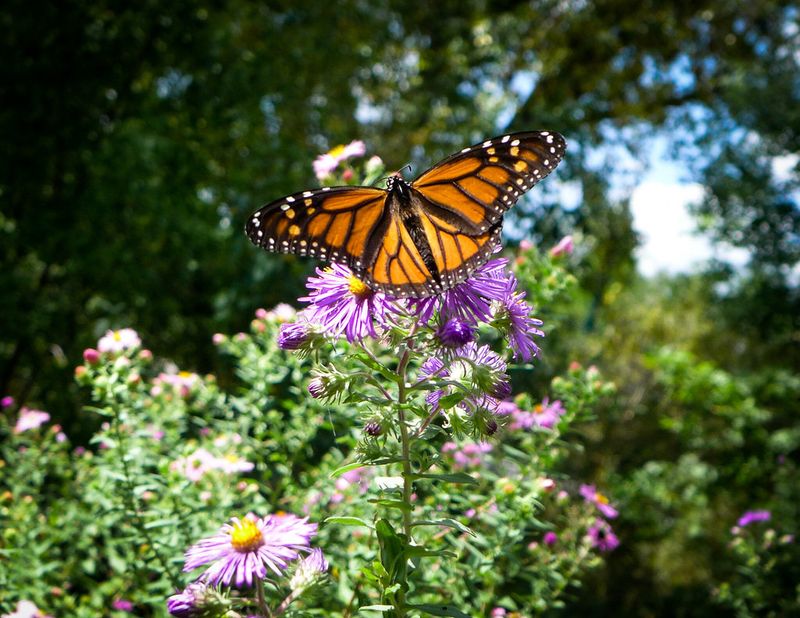
Seeing caterpillars chew your plants can tempt you to reach for a sprayer. Resist that urge.
UC IPM says control of painted lady larvae is seldom needed.
If your goal is a butterfly-friendly yard, insecticides work against you. UC Davis advises against them in butterfly gardens, and that includes Bt, a product sometimes thought of as gentle.
You can read that advice in the UC Davis butterfly gardening guide.
There is another avoidable mistake: planting the wrong thistle. Older butterfly gardening advice has mentioned yellow star-thistle as a nectar source, but the California Invasive Plant Council identifies it as a highly invasive California weed.
Do not plant it.
Instead, choose regionally appropriate, noninvasive host plants such as native fiddleneck or native mallows, and ask a local native plant nursery what suits your area. If a favorite plant gets chewed, tolerate it for a few weeks and let it recover.
Let the garden do the feeding
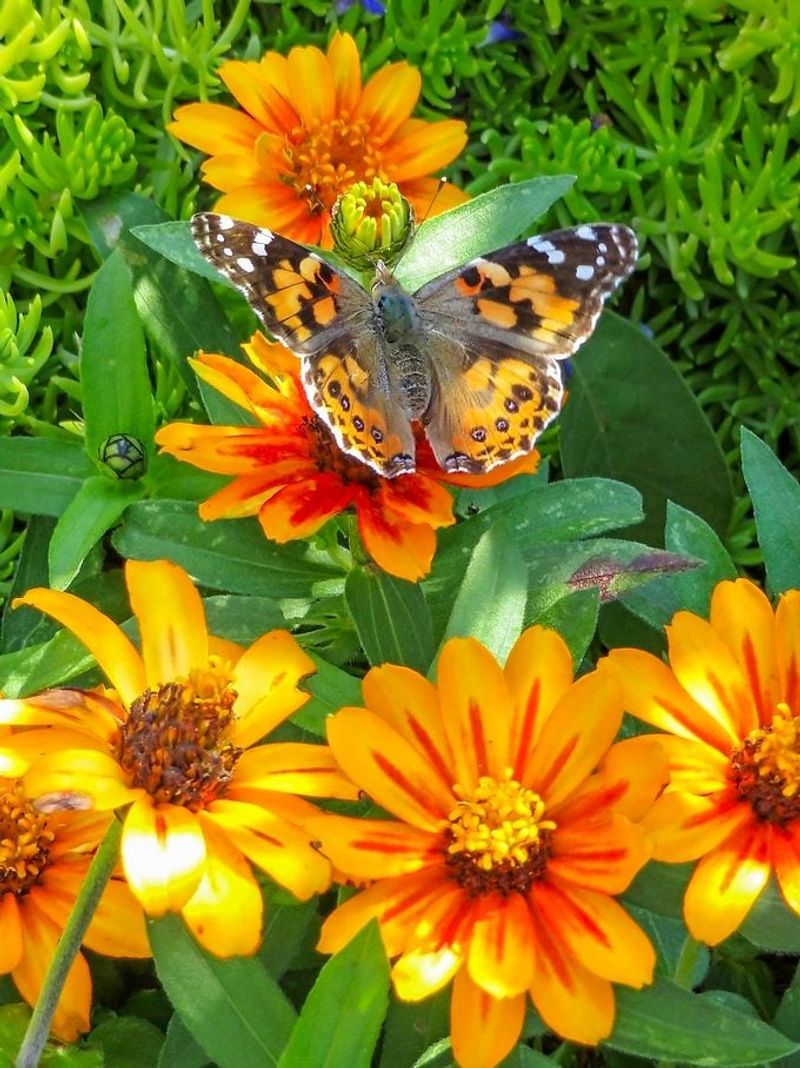
Feeding painted ladies comes down to planting. Offer flowers adults visit for nectar, and add carefully chosen host plants for caterpillars, as in UC Davis guidance.
Skip routine insecticides, per UC IPM, and leave out yellow star-thistle.
The sources describe natural feeding, so there is no need for hand-feeding or a sugar-water feeder. A well-chosen bed does the work, and the butterflies handle the rest.