
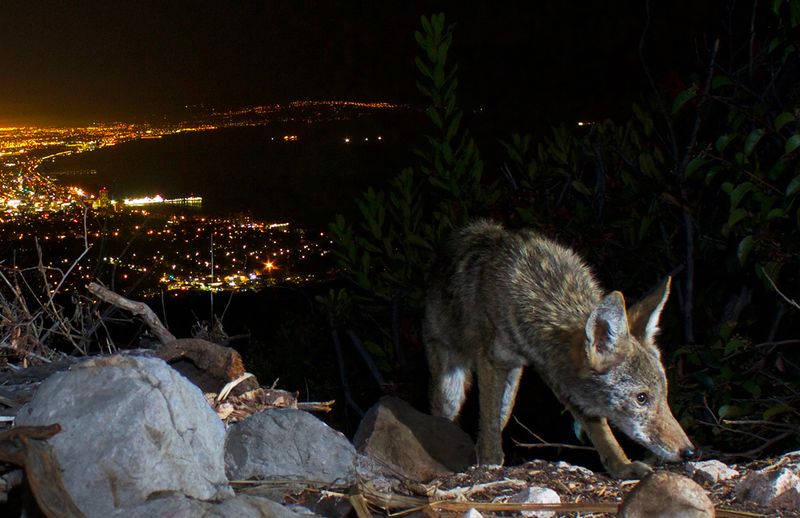
Spotting a coyote trotting through your California backyard can stop you cold, and the first instinct for many homeowners is to assume the worst. But that reaction, and one specific mistake that often follows, can turn a passing visit into a recurring problem.
Understanding what actually draws coyotes into suburban yards, and how to read their behavior honestly, makes a real difference in keeping your family, pets, and local wildlife safer.
A backyard sighting usually signals opportunity, not an attack
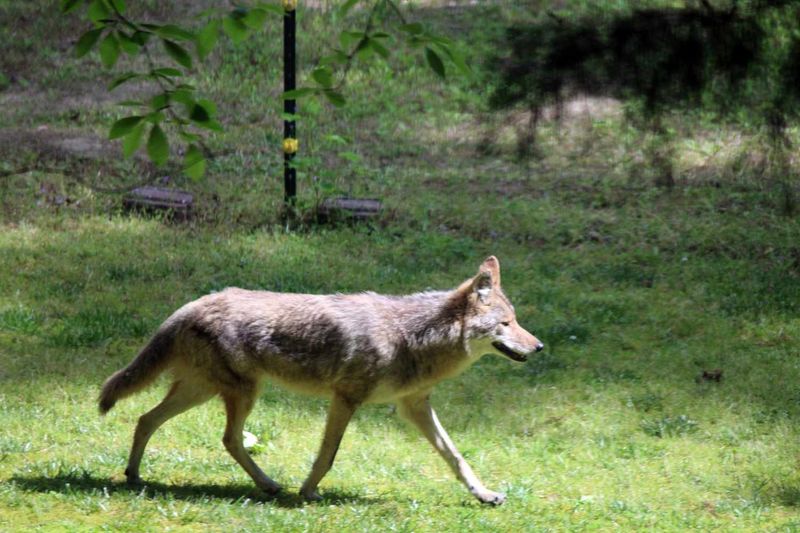
Coyotes are native California wildlife, and they have lived alongside human communities for a very long time. CDFW’s living-with-wildlife guidance notes that coyotes occupy deserts, coastal areas, suburban neighborhoods, parks, and open spaces across the state.
When one slips into a backyard, it is almost always responding to something the surrounding landscape offers: food, water, shelter, prey, or simply a convenient path between two points.
A coyote that moves through without pausing, keeps its distance, and continues on its way is behaving very differently from one that approaches people, follows a walker, or refuses to leave when a human is present. Behavior is the meaningful signal here, not the presence of the animal itself.
A distant, departing coyote is not the same situation as one that closes the gap between itself and a person or a pet.
Some California homeowners notice more coyote sightings than they did a few years ago and assume the state has more coyotes everywhere. The fuller picture is more nuanced.
Encounters can increase as neighborhoods expand closer to natural habitat, and widespread smartphone cameras and neighborhood apps mean more sightings get reported and shared. UC IPM’s coyote resource describes coyotes as highly adaptable animals that are especially capable of using urbanized landscapes, but that is different from claiming every California neighborhood is experiencing a confirmed population surge.
The more useful question to ask when you see a coyote in your yard is not “Why is this animal trying to harm me?” but rather “What might make this spot accessible or attractive?” Shifting from panic to that practical question is the first step toward a response that actually helps.
Several ordinary yard features can make a property attractive
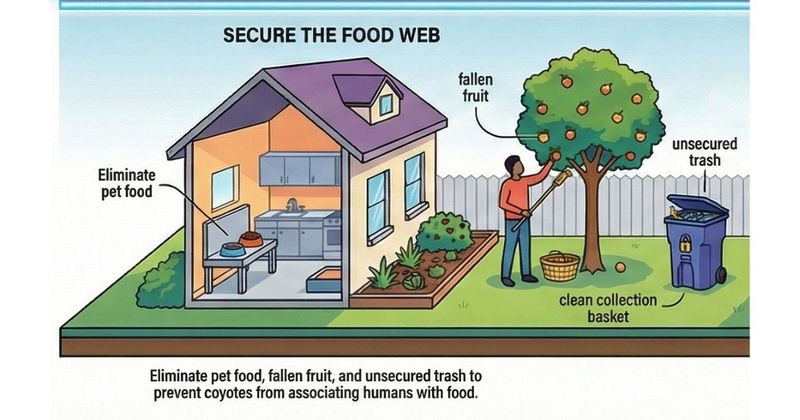
Yards rarely offer just one thing to a passing coyote. More often, a property provides some combination of resources that together make the stop worthwhile.
Unsecured garbage, pet food and water left outside, fallen fruit, compost piles, birdseed spilled beneath a feeder, and conditions that support rodents or rabbits can all factor in. UC IPM’s coyote guidance identifies these as among the most common attractants that bring coyotes into contact with people in suburban settings.
Coyotes have broad diets. They eat rabbits, rodents, insects, fruit, and plants, as well as garbage and pet food when those are accessible.
A 2025 California study of coyote food use in the southern San Joaquin Valley found that human-associated food items increased along an urban gradient but were not necessarily a major or required part of the diet in every area studied. Natural prey remains important even in suburban contexts.
Shelter matters too. Dense brush, wood piles, spaces under decks or sheds, and overgrown corners can all provide cover that makes a yard feel like a safer resting spot.
Small pets, especially cats and dogs under about 25 pounds, can also attract attention from a coyote that treats them as prey.
None of this means that one citrus tree or a bird feeder caused a coyote to appear. Removing accessible rewards is far more defensible than stripping a yard of every plant or wildlife-friendly feature.
The goal is to reduce easy pickings without turning a California garden into a bare, ecologically empty space. Focus on what is genuinely accessible and rewarding to a passing animal, not on eliminating everything that might theoretically appeal to wildlife.
Direct feeding is the reaction most likely to backfire
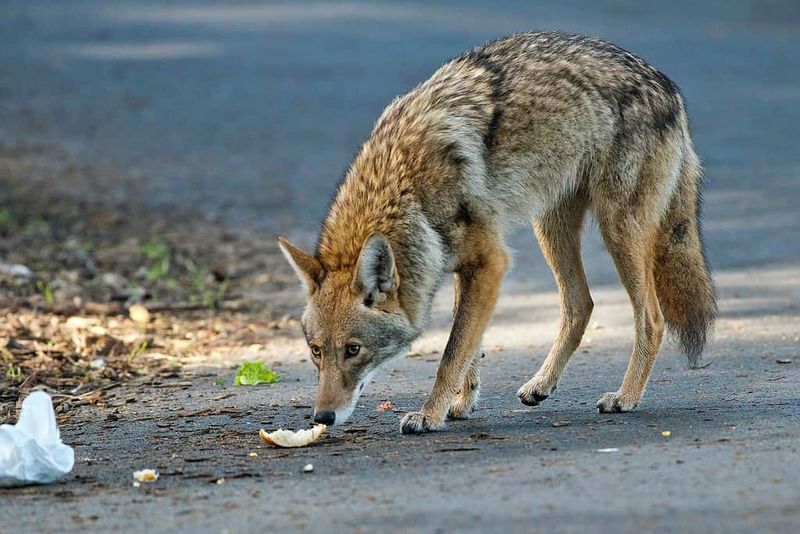
Of all the mistakes a homeowner can make after spotting a coyote, the one most likely to create a real problem is feeding the animal, whether intentionally or by leaving food out where it becomes a reliable reward. CDFW’s human-wildlife conflict guidance on coyotes specifically warns that food conditioning and habituation can reduce a coyote’s natural wariness of people and increase the risk of conflict over time.
Direct feeding is the clearest version of this problem. Some homeowners, trying to keep a coyote away from one part of the yard, place food elsewhere to redirect it.
That approach backfires. A coyote that receives food from or near people learns to associate human presence with a reward, and that association can make future encounters more likely and potentially more dangerous.
The instruction is straightforward: do not feed coyotes, and do not place food somewhere else as a workaround.
Ordinary attractants, such as unsecured garbage cans, pet food bowls left on the patio, water dishes, fallen citrus or avocados, compost bins, and spilled birdseed, are a separate category. CDFW’s living-with-wildlife page notes that these items can make a yard more attractive, and that repeated access to human-associated food may increase habituation or conflict risk over time.
But an unsecured garbage lid does not automatically mean a coyote has been taught to associate people with food in the same way that hand-feeding does.
The practical takeaway is to manage attractants consistently. Bring pet food and water dishes inside after use, secure garbage lids, pick up fallen fruit regularly, and manage compost so it is not an open buffet.
Those steps reduce the reward available to a visiting coyote without requiring you to abandon every wildlife-friendly element of a California yard.
Behavior matters more than the time of day
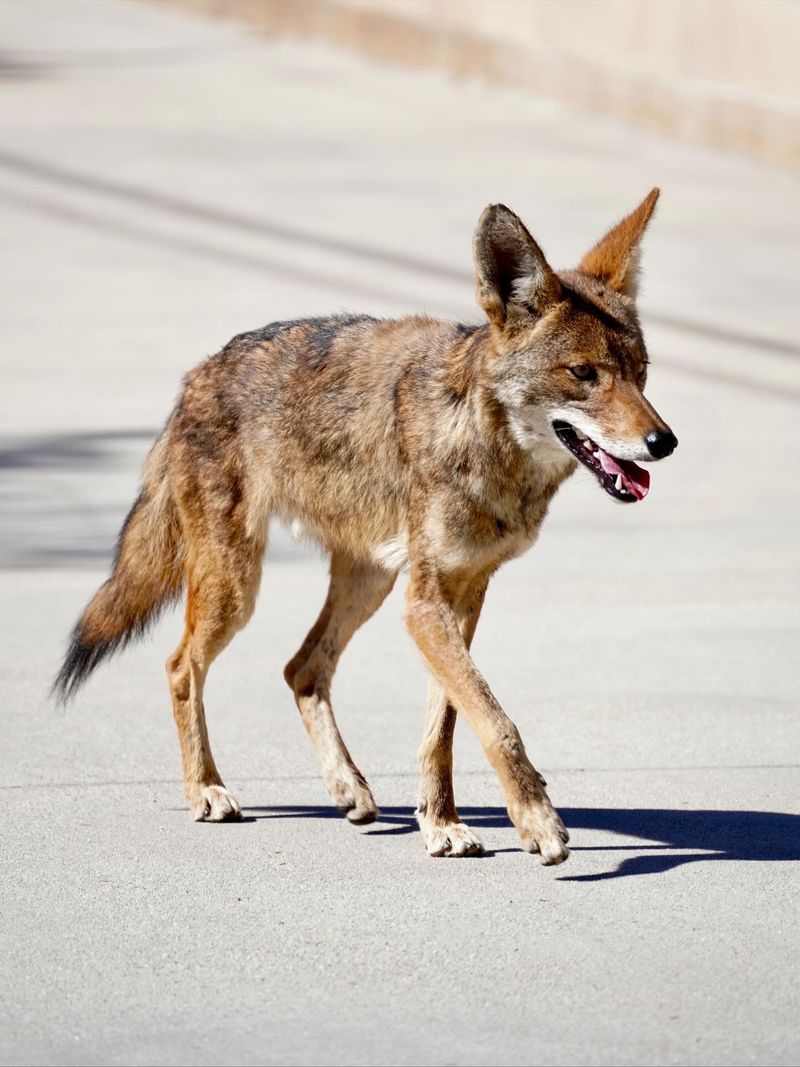
One of the most common misconceptions about urban coyotes is that a daytime sighting automatically signals illness, rabies, or imminent danger. CDFW’s living-with-wildlife guidance states plainly that wild animals, including coyotes, may be active during the day while searching for food, raising young, or seeking mates.
Coyotes are not exclusively nocturnal, and seeing one in the afternoon is not, by itself, evidence that something is wrong.
What actually matters is what the animal is doing. A coyote that moves through a yard at a distance, glances toward the house, and keeps going is behaving very differently from one that walks toward a person, follows a dog-walker down the street, chases a pet, or stands its ground when a human approaches.
UC IPM describes a recognizable progression from nighttime sightings to daytime approaches, pet attacks, and eventually aggression toward people, with each stage representing a meaningfully different level of concern.
Persistent fearlessness is a key indicator. A coyote that does not respond to a normal human presence, that enters areas where children are playing, or that returns repeatedly to the same spot despite people being present is showing a pattern worth taking seriously.
A coyote that retreats when it notices a person is not in that category.
Orange County Animal Care’s coyote encounter guidance reinforces that reporting decisions should be based on approach, boldness, pursuit, or attack, not on a daytime sighting alone. Calling in every glimpse of a coyote during daylight hours treats a normal behavior as an emergency, which is not a useful standard for either homeowners or the agencies that respond to genuine conflicts.
If the coyote approaches, make yourself difficult to ignore
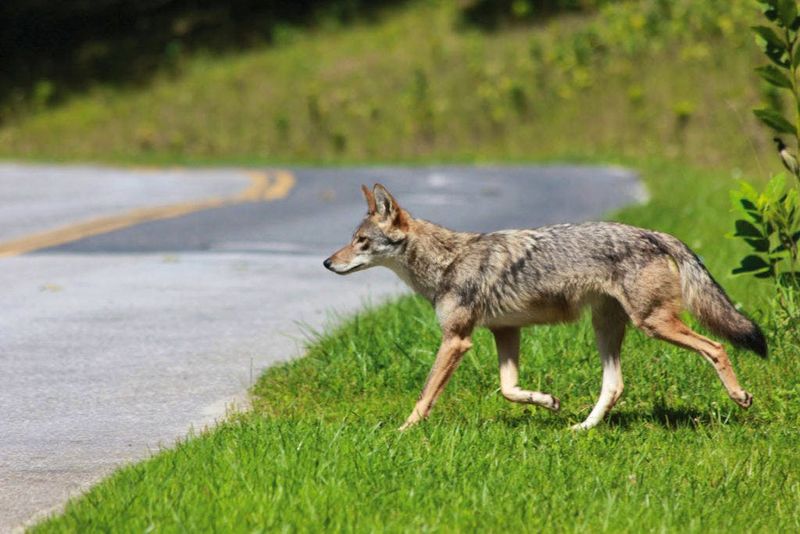
When a coyote moves toward you rather than away from you, the response needs to be immediate and assertive. Get children and small pets inside, or pick them up if it is safe to do so without getting closer to the animal.
Then face the coyote directly, stand as tall as possible, wave both arms overhead, and shout in a firm, loud voice. If the animal does not retreat, throw objects toward it, not at it, such as sticks, rocks, or a water bottle.
CDFW’s coyote hazing Q&A instructs residents to keep this up until the coyote actually leaves the area, not just until it takes a few steps back.
Two actions make the situation worse: running and letting a dog confront the coyote. Running can trigger a pursuit response.
A dog, even a large one, can escalate the encounter or get injured, and the confrontation can make hazing less effective. Turn toward the coyote, not away from it, and keep your dog leashed and behind you.
Hazing is best understood as an immediate safety response, not a permanent fix. Recent field research on urban coyote hazing found that coyotes usually retreated during individual hazing events, but found no consistent evidence that repeated community hazing changed later coyote wariness or reduced conflict reports over time.
A separate study found that hazing effectiveness may depend on whether the animal has previously been fed. Do not expect one assertive encounter to permanently keep a coyote away.
There are situations where hazing is not appropriate. Do not attempt it if the coyote is cornered with no clear exit, if it appears injured, or if it is with pups and has limited room to retreat.
In those cases, maintain distance, give the animal a clear escape route, back away slowly, and contact local animal control or wildlife authorities for assistance. Community-level hazing research also notes that hazing works best as part of a broader approach that includes removing attractants, not as a stand-alone strategy.
Make the yard less rewarding without removing its wildlife value
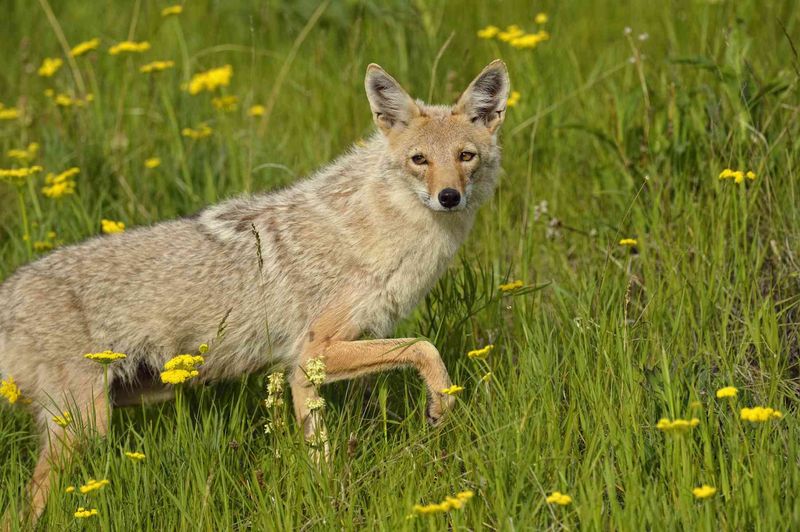
After an encounter, the practical follow-up is a walk around the property with fresh eyes. Secure garbage can lids so they cannot be knocked open, and bring pet food and water dishes inside after each use.
Pick up fallen fruit from under trees regularly, especially citrus, figs, and stone fruit, which are common in California yards. Manage compost bins so food scraps are not accessible from the outside, and clean up seeds spilled beneath bird feeders.
UC IPM’s coyote management guidance also points to conditions that support rodents and rabbits as indirect attractants. Dense ground cover that harbors mice, gaps under sheds or decks, and wood piles close to the house can all contribute.
Addressing those conditions reduces the natural prey base that may make a yard worth visiting repeatedly.
Cats and small dogs deserve extra attention. Keep cats indoors or in a secure outdoor enclosure, particularly from dusk through dawn and in any neighborhood with a documented history of pet attacks.
Walk dogs on a standard leash rather than a long retractable lead, which gives you less control if a coyote appears nearby. Supervise small dogs in the yard rather than letting them out alone, especially in the early morning and evening hours.
UC ANR guidance on coyotes in California’s urban areas notes that physical exclusion can be a site-specific option for poultry and other outdoor animals. Coyotes can both dig under and jump over standard fencing, so effective barriers need to account for both.
Check local ordinances and HOA rules before installing or modifying fencing, and consider consulting a professional if the property presents challenges. None of this requires converting a water-wise California garden into a bare, animal-unfriendly space; the focus is on removing easy access, not eliminating every plant or habitat feature that has ecological value.
Know when to call local authorities
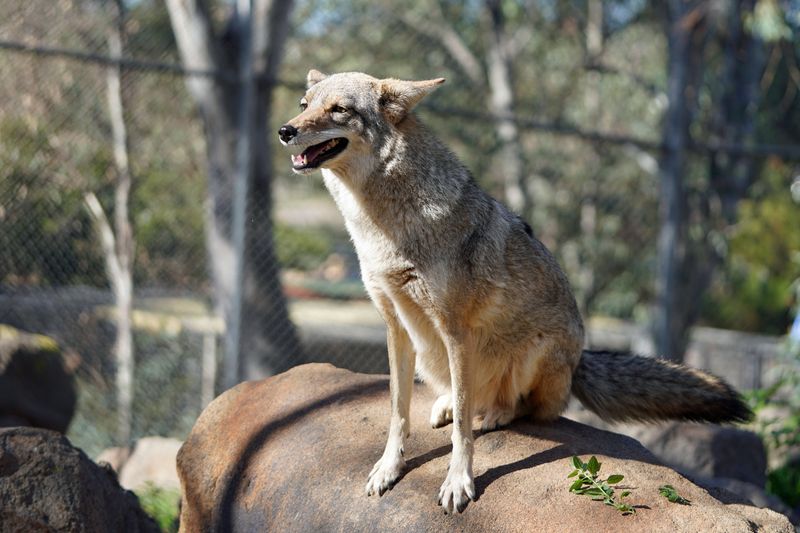
Not every coyote sighting warrants a call to animal control, and treating routine sightings as emergencies can overwhelm agencies and dilute attention from cases that genuinely need a response. The right threshold for reporting is a coyote that approaches people, pursues pets, repeatedly enters areas where children are present, shows persistent fearlessness despite human presence, or has bitten or scratched a person or animal.
Orange County Animal Care’s coyote encounter page provides a clear summary of the behaviors that cross into territory where professional assistance is appropriate.
For documented problem animals, professional or agency involvement may be necessary. Do not attempt to handle the situation with poison, improvised traps, or personal relocation of the animal.
Poison can harm pets, non-target wildlife, and scavengers. Relocation is not a practical or legal solution in California; CDFW has stated that wildlife cannot simply be trapped and moved elsewhere without creating new problems.
Firearms are not a routine backyard response, and any use must comply with applicable California and local laws, including California Penal Code Section 596 and relevant provisions of the Fish and Game Code.
If a person is bitten or scratched by a coyote or any wild animal, wash the wound thoroughly with soap and water right away. Then contact a medical professional or public-health authority.
CDC guidance on rabies prevention recommends seeking a professional assessment for rabies exposure after any wild animal bite or scratch; do not try to diagnose the animal yourself or delay care while waiting to see if symptoms develop.
For ongoing concerns about a specific animal, UC Cooperative Extension guidance on coyotes in the urban landscape and CDFW’s regional offices can help homeowners understand what options are available under California law and which ones are most appropriate for a documented conflict situation.
Remove the reward, not the wildlife

Three decisions shape how well a California homeowner handles a coyote sighting. Judge the animal by its behavior, not by the time of day or the simple fact that it appeared.
Remove accessible food and other attractants from the yard consistently, because CDFW’s human-wildlife conflict guidance identifies repeated access to human-associated food as a meaningful contributor to habituation and conflict risk. Keep children and small pets protected, especially during higher-activity periods and in areas with a history of encounters.
Direct feeding is the mistake most likely to make things worse, but attractant removal does not mean stripping a California yard of every plant, tree, or habitat feature that has value. The goal is reducing easy pickings, not eliminating a garden’s ecological purpose.
CDFW’s hazing guidance supports using assertive responses when a coyote approaches and conditions are safe, while making clear that hazing works best alongside attractant management rather than as a substitute for it.
Report genuinely concerning conduct rather than every daytime glimpse. A yard that offers fewer rewards and clearer consequences for approaching people is a yard that most coyotes will pass through without stopping twice.