
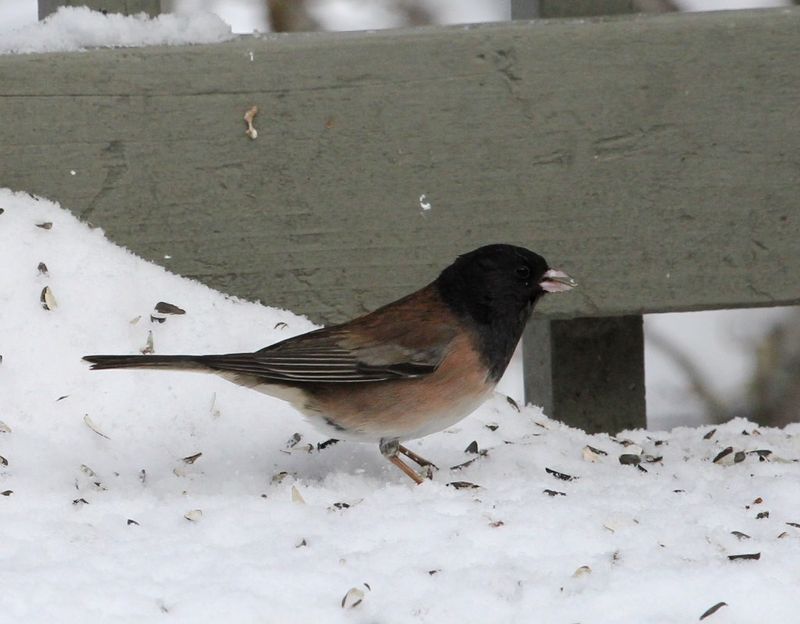
Small gray birds with white bellies are suddenly hopping around under your feeder, and you wonder why. They are dark-eyed juncos, and many North Carolina yards see them through the cooler months.
Folks call them snowbirds, which makes people think they predict snow. Here is what the visit really tells you and how to welcome them the right way.
A junco signals winter-bird season, not a snow forecast
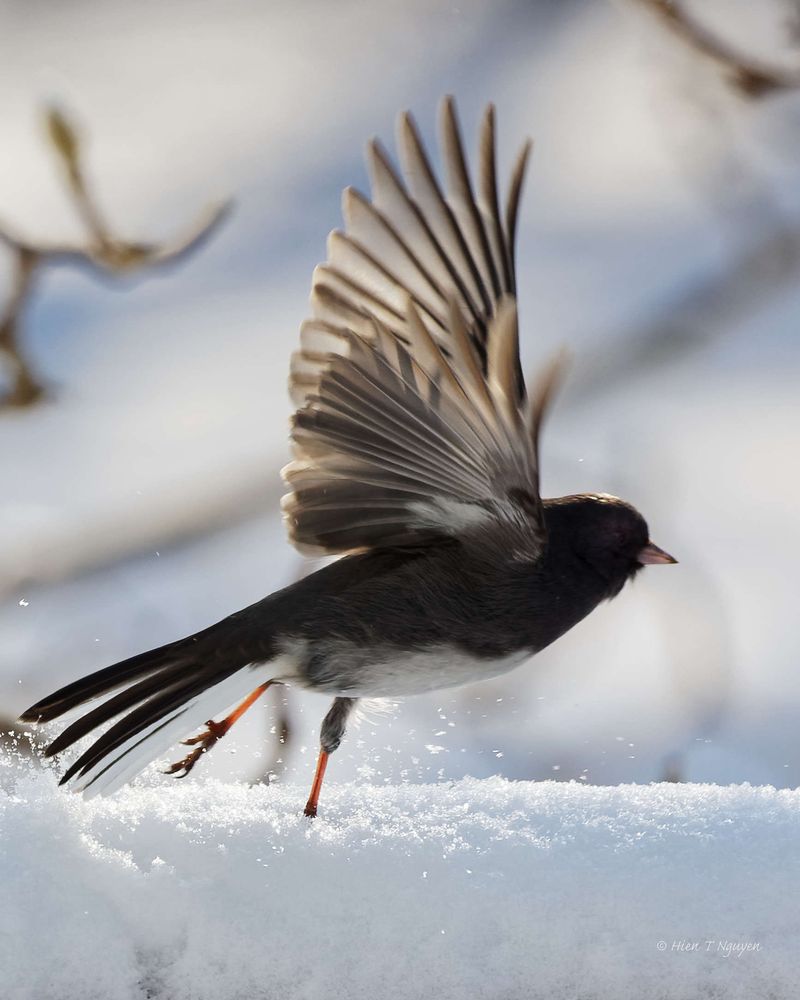
Spotting a junco under your feeder in November usually means the winter-bird season is underway. Audubon’s field guide describes these sparrows as birds of winter across much of the eastern United States, and in North Carolina they are widespread winter residents.
Here is the part that surprises people. The nickname snowbird does not give the bird any forecasting power.
A junco at your feeder is not a warning that snow, a harsh winter, or a cold snap is on its way. Cornell Lab of Ornithology describes seasonal movement and winter presence, not weather prediction.
So how should you read the visit? Think of it as a simple calendar marker.
Winter birds have settled in, and your yard is part of their routine. The Carolina Bird Club account backs up that seasonal picture for the state.
Keep your weather app handy for the forecast, and keep your eyes on the ground for the birds. Watching where juncos feed, how long they stay, and which other birds join them is a fun way to learn your own yard.
The rest of this article shows how to make that spot useful and safe without treating the bird as a sign of anything dramatic.
Why November is not one statewide arrival week
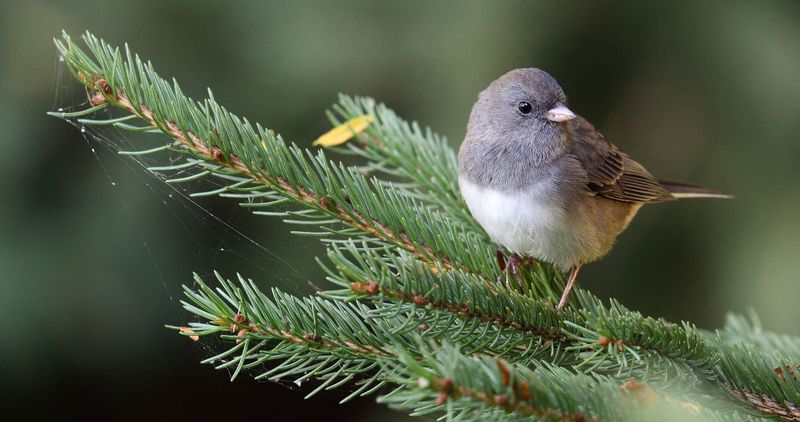
If you hoped for one magic arrival week, North Carolina does not offer one. The Carolina Bird Club account says most juncos arrive in October, and the earliest recorded arrival is September 20.
A November junco may have been in your area for weeks before you noticed it.
The mountains add another twist. Some juncos breed in North Carolina’s high country, mostly above about 3,000 feet.
When winter closes in, some of those birds simply move downslope to lower elevations, which is a much shorter trip than a long migration.
Some Appalachian populations do not migrate at all, according to Cornell’s range map. That means a junco in Asheville and one in Raleigh or Wilmington may have very different stories.
Here is a practical way to use this. If you live in the Piedmont or coastal plain, juncos you see are likely winter arrivals from farther north or from the mountains.
If you live in the mountains, you may see them nearly year-round, with numbers shifting as winter settles in.
Either way, a November sighting is a normal seasonal event, not a statewide first. Your own notes on when you first see them each year will tell you far more than any single week on the calendar.
Why are they hopping under the feeder?
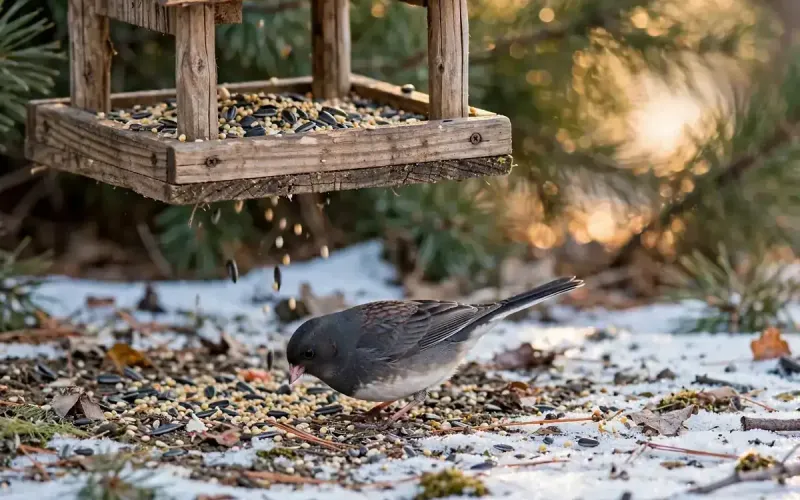
Watch a junco for a few minutes and you will see a hopping, scratching, shuffling bird. That is ordinary ground-foraging behavior.
Audubon notes that juncos forage by hopping and running on the ground and often feed beneath trays.
There is a good reason they hang out down there. In winter, juncos eat lots of seeds, including seeds from grasses and weeds.
Seeds that drop from your feeder, or that sit in leaf litter and garden edges, are exactly the kind of meal they look for.
Other birds toss seed overboard while they sort through a feeder, so the ground below becomes a buffet. Juncos are happy to clean up that scattered food.
Here are a few clues that tell you everything is fine. The bird moves briskly, looks alert, and keeps its feathers smooth.
It darts off when startled and returns soon after. White outer tail feathers flash as it flits away, which is a handy way to pick out juncos in a mixed flock.
None of this means the bird is searching for snow or reacting to a forecast. It is simply looking for lunch.
A fluffed, sluggish bird that sits still and does not flee is a different matter, and later sections explain what to do if you ever see that.
Offer a modest amount of seed where juncos feed
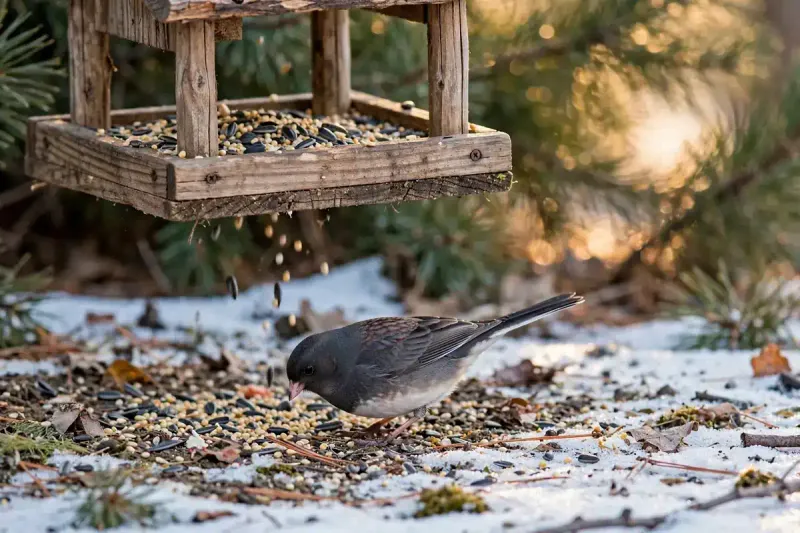
If you would like to feed juncos, keep it simple. Put out a small amount of white proso millet in a low tray with good drainage, or scatter a little on a clean, suitable ground-feeding spot.
Cornell’s seed guide lists millet as a favorite of juncos and other ground-feeding birds.
Millet is popular with other birds too. Cowbirds, blackbirds, and House Sparrows also like it, and they can crowd out smaller visitors.
If those birds are a worry in your yard, Cornell suggests skipping millet.
Black-oil sunflower is a good alternative. It attracts many of the same ground-feeding birds, including juncos, and it works in a tray or a hopper feeder.
Quantity matters more than most people think. Offer only what the birds can finish fairly quickly, such as a handful.
Large or never-ending piles of seed on the ground are not a good idea.
Check the tray each day. If seed sits uneaten, or if it gets wet or spoiled, stop offering it.
Dump the old seed, let the tray dry, and try again later with a smaller amount. Rainy stretches are common in North Carolina, so good drainage is not a small detail.
Feeding is optional. Many juncos do fine on natural seeds alone, so treat your tray as a bonus.
A clean feeding patch reduces avoidable risks
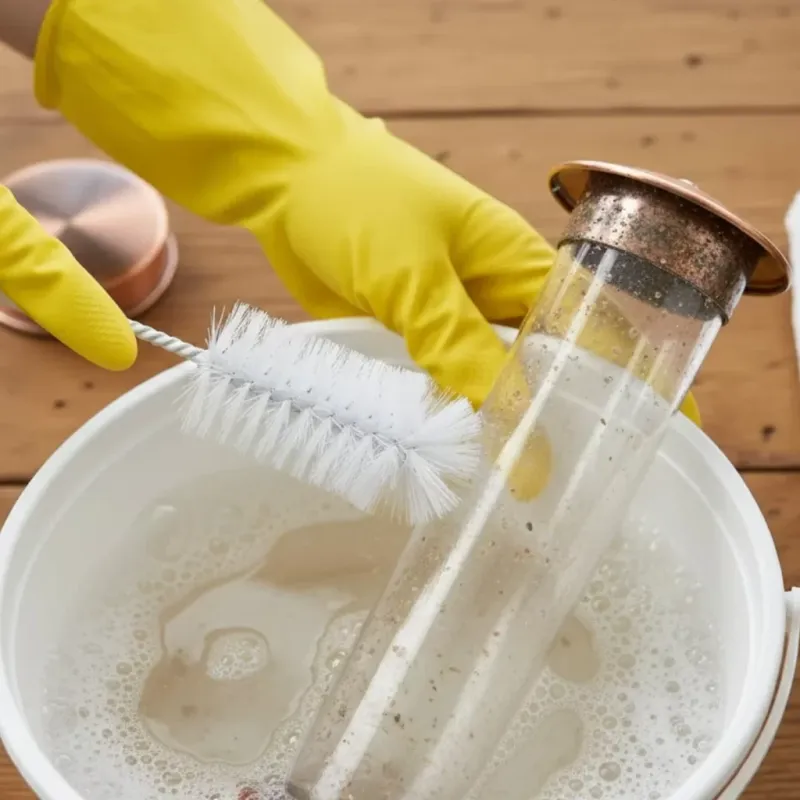
A tidy feeding area keeps birds healthier and your yard cleaner. Sweep up discarded or moldy seed and empty hulls often.
N.C. Cooperative Extension notes that spilled food can attract rodents and insects, and the U.S.
Fish and Wildlife Service also recommends removing old seed beneath feeders.
For feeders, a good routine is to clean them every one to two weeks, and sooner if they look soiled. Do the job outdoors when you can.
Scrub, rinse thoroughly, and let the feeder dry completely before refilling it.
Placement counts too. Keep cats away from feeding areas, since birds on the ground are easy targets.
The North Carolina Wildlife Resources Commission advises placing feeders near escape cover and keeping cats indoors.
Windows are another concern. Birds can hit glass, so think about where your feeder sits relative to your windows.
No placement removes the risk completely, but you can watch for strikes and adjust if you see any.
Finally, know what to do if a bird looks sick or turns up dead. CDC guidance says not to handle the bird, and to take down feeders and baths for two weeks.
That pause gives sick birds less reason to gather and spread illness.
These steps take only a few minutes a week, and they make a real difference.
Natural food belongs in the winter plan, too
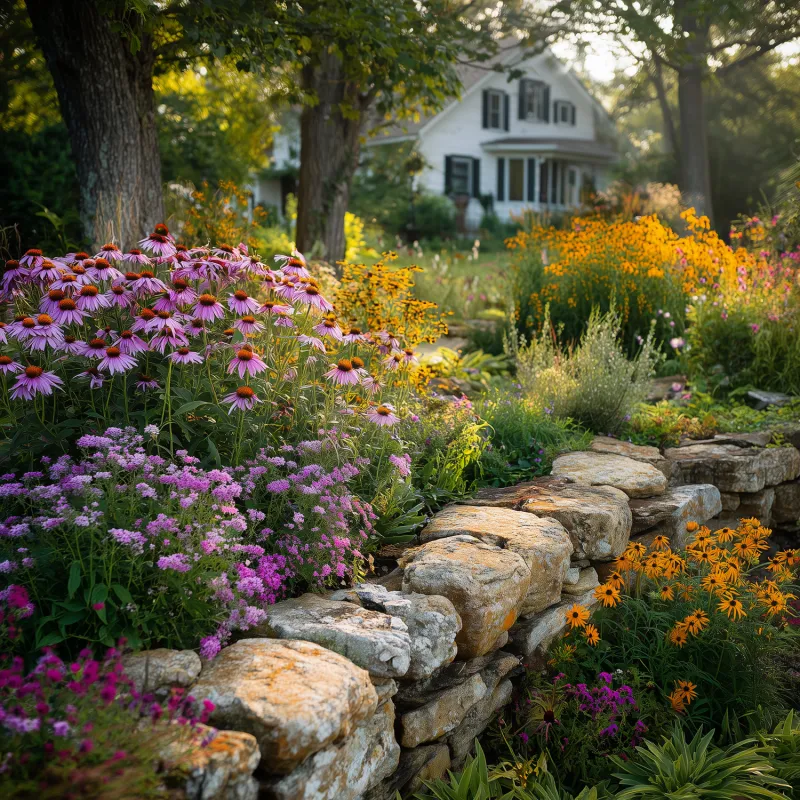
Feeders are a nice extra, but they are not the main event. NC State Extension describes native plants and their lasting seeds and fruits as important winter food for birds, so your landscape does a lot of the work.
Leaving seed heads standing on native grasses and perennials, and keeping some leaf litter in the beds, gives juncos the kind of weedy seeds they naturally hunt. A few berry-producing native shrubs help other winter birds too.
So the plan is easy. Enjoy the junco as a seasonal visitor, offer a little seed if you like, and keep the feeding area clean.
The best bird forecast you will ever get is a yard full of quiet, busy sparrows scratching through the leaves.